Loading...

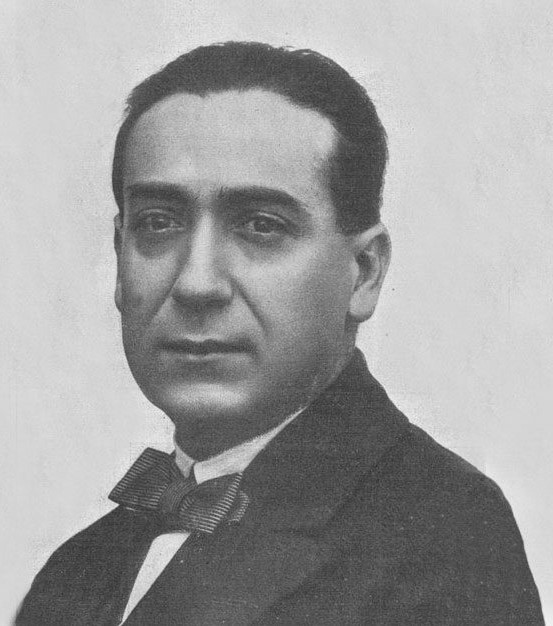
Campúa
(Jerez de la Frontera, 1870 - Madrid, 1936)
Demaría López, José Luis. Campúa. Jerez de la Frontera (Cádiz), 1870 – Madrid, 22.09.1936. Photojournalist, war correspondent, journalist and theatre impresario.
He learnt the rudiments of the trade in the studio of Manuel Compañy, a renowned portraitist. Towards the end of the century, when Compañy acquired and refurbished the famous Greco gallery located at Calle de Alcalá 19 and formerly owned by Eduardo Díaz Otero —one of the best photographers of the time— he entrusted its management to his most trusted assistant. Encouraged by the popularity of his chronicles of events among readers of the press, Demaría López decided to set himself up as an independent photographer.
In keeping with the fashion of the times, he chose an evocative nom de plume: Capua, a city in the region of Campania captured in the Punic Wars; epitome of a challenge to the customs (of war) without renouncing the pleasures of life. Unfortunately the printer committed an error, and when he picked up his cards, his pseudonym had been spelled Campúa. Although he had intended to throw away the lot, he was later fascinated by the resulting spelling and adopted it as his own. And thus López remained Campúa, the signature of a bold correspondent and a contractor of illusions, such was the portrait of his character.
Daring and spontaneous in his reporting, opportunism and impudence in political chronicles were his journalistic hallmarks. Proof of the former is his snapshot (in February 1905) of a peasant woman from Extremadura throwing herself at the feet of Alfonso XIII's horse to beg for a pardon for her husband, who had been condemned to death. An example of the latter is his photomontage of a non-existent interview granted by the monarch to Maura, which he executed with an unusual degree of impertinence: he cut out the face of an anonymous aristocrat and replaced it with that of the Mallorcan politician.
As a war correspondent, he astonished readers with his panoramic photograph (27th September 1909) of the Spanish advance guard approaching Zelúan, the photographer having reached the enemy position before the troops. —Lopez had skirted the citadel and, mingling with the fleeing inhabitants, climbed the ramparts—. This feat garnered him a commendation by General Marina and a return to staged snapshots: the capture (29 September) of the feared Gurugú was a theatrical conquest (the Riffians had abandoned their positions), which occupied the front page of Mundo Gráfico -Campúa became its editor in 1920- a publication whose triumphalist headlines enabled it to sell 266,000 copies.
The tragic events of 1921 would later take him back to wartime Morocco. Although lacking the creative vigour of previous campaigns, Campúa ran his firm of editors and photojournalists with the panache of his early career and a defiant commitment to the most radical colonialism. He followed the military operations in Rif and Yebala until 1923 when he returned to the Peninsula. He gradually he abandoned his career as a photographer to become a successful businessman: his control of the Romea, Royalty and Madrid Cinema theatres made him wealthy.
His connections with the uppermost ranks of the military and his personal fortune, made him a figure of resentment and envy for many. On the night of 22nd September 1936, in an anarchic Madrid enraged by the news of the advance of Franco’s troops, Campúa was arrested at his home and shot in the street. The abandoned body of José Luis Demaría was buried in the cemetery of La Almudena. His exceptional archives -combining his private collections, plus those of the magazines La Ilustración Española y Americana, Nuevo Mundo and Mundo Gráfico- suffered years of neglect and deterioration, stored in the Madrid headquarters of the Prensa del Movimiento (the Press of the Movement). In the winter of 1947, this extraordinary collection of records of the Restoration-era Spain was piled into trucks and the drivers ordered to dump their fragile cargoes -mostly glass-backed negatives- in the landfills of La China (near Arganda del Rey).
Source: Royal Academy of History (https://www.rah.es)