The Royal Collections Gallery uses its own and third-party cookies, mainly
for technical purposes, which are necessary to provide our services and provide you with
relevant content. More information in our cookies policy.
Cookies Policy.
ACCEPT to confirm that you have read the information and accepted their installation. You can change your browser settings.
We use own and third party cookies to improve your browsing experience. More information in Cookies policy.
About cookies on this website
close
About cookies on this website
Technical
Technical cookies are those essential and strictly necessary for the proper functioning of the Website and the use of the different options and services it offers, including those that the editor uses to enable the operational management of the website and enable its functions and services. For example, those used for session maintenance, response time management, performance or validation of options, use of security elements, sharing content with social networks, etc. The website cannot function properly without these cookies.
Social networks
Social network cookies
Marketing
Descripcion
Técnica
Las cookies técnicas son aquellas imprescindibles y estrictamente necesarias para el correcto funcionamiento del Sitio Web y la utilización de las diferentes opciones y servicios que ofrece, incluyendo aquellas que el editor utiliza para permitir la gestión operativa de la página web y habilitar sus funciones y servicios. Por ejemplo, las que sirven para el mantenimiento de la sesión, la gestión del tiempo de respuesta, rendimiento o validación de opciones, utilizar elementos de seguridad, compartir contenido con redes sociales, etc. La página web no puede funcionar adecuadamente sin estas cookies.
Author
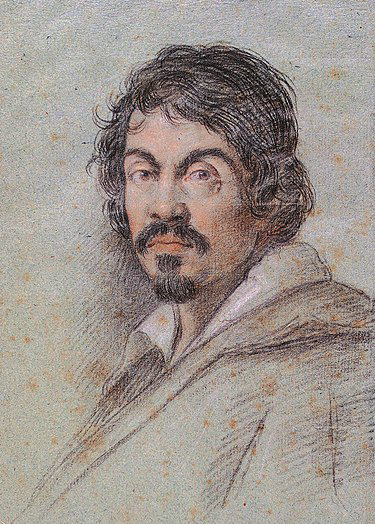
Caravaggio
(Milan, 1571 - Porto Ercole, 1610)
Michelangelo Merisi da Caravaggio (Milan, 29th September 1571 - Porto Ercole, 18th July 1610), also known as Caravaggio, was an Italian painter active in Rome, Naples, Malta and Sicily between 1593 and 1610. His paintings combined a realistic observation of the human figure, both physical and emotional, with a dramatic use of lighting, which had a decisive influence on Baroque painting.
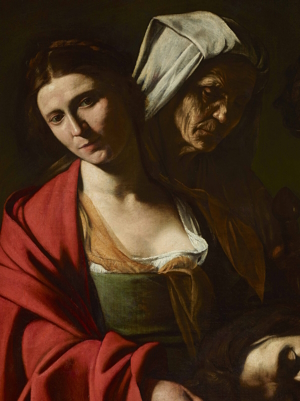
Caravaggio’s combination of careful anatomical observations with a dramatic use of chiaroscuro came to be known as Tenebrism. He made this technique a dominant stylistic element, darkening the shadows and transfixing his subjects in brilliant rays of light. He vividly depicted crucial moments and scenes, often of violent struggles, torture and death. He preferred working quickly with live models, forgoing sketches to work directly on the canvas. He had a profound influence on the new Baroque style that emerged from Mannerism and which may be traced in the works of great masters such as Peter Paul Rubens, Jusepe de Ribera, Rembrandt and Diego Velázquez, as well as countless artists of the following generation, who were called "Caravaggists" or "Tenebrists” because of his marked influence on them.
Caravaggio's pictorial innovations inspired Baroque painting, but this style adopted the drama of his chiaroscuro without its psychological realism. Amidst evolving styles and changing fashions, Caravaggio’s popularity wanted. In the 20th century, there was renewed interest in his works and his importance in the development of Western art was acknowledged. According to André Berne-Joffroy, art historian, "What begins in the work of Caravaggio is, quite simply, modern painting."
A small number of his paintings survive today, of which fewer than 78 have been confirmed as genuine while the rest are attributed to him amidst controversy and debate.