The Royal Collections Gallery uses its own and third-party cookies, mainly
for technical purposes, which are necessary to provide our services and provide you with
relevant content. More information in our cookies policy.
Cookies Policy.
ACCEPT to confirm that you have read the information and accepted their installation. You can change your browser settings.
We use own and third party cookies to improve your browsing experience. More information in Cookies policy.
About cookies on this website
close
About cookies on this website
Technical
Technical cookies are those essential and strictly necessary for the proper functioning of the Website and the use of the different options and services it offers, including those that the editor uses to enable the operational management of the website and enable its functions and services. For example, those used for session maintenance, response time management, performance or validation of options, use of security elements, sharing content with social networks, etc. The website cannot function properly without these cookies.
Social networks
Social network cookies
Marketing
Descripcion
Técnica
Las cookies técnicas son aquellas imprescindibles y estrictamente necesarias para el correcto funcionamiento del Sitio Web y la utilización de las diferentes opciones y servicios que ofrece, incluyendo aquellas que el editor utiliza para permitir la gestión operativa de la página web y habilitar sus funciones y servicios. Por ejemplo, las que sirven para el mantenimiento de la sesión, la gestión del tiempo de respuesta, rendimiento o validación de opciones, utilizar elementos de seguridad, compartir contenido con redes sociales, etc. La página web no puede funcionar adecuadamente sin estas cookies.
Author
Loo, Louis-Michel van
(Toulon, 1707 - Paris, 1771)
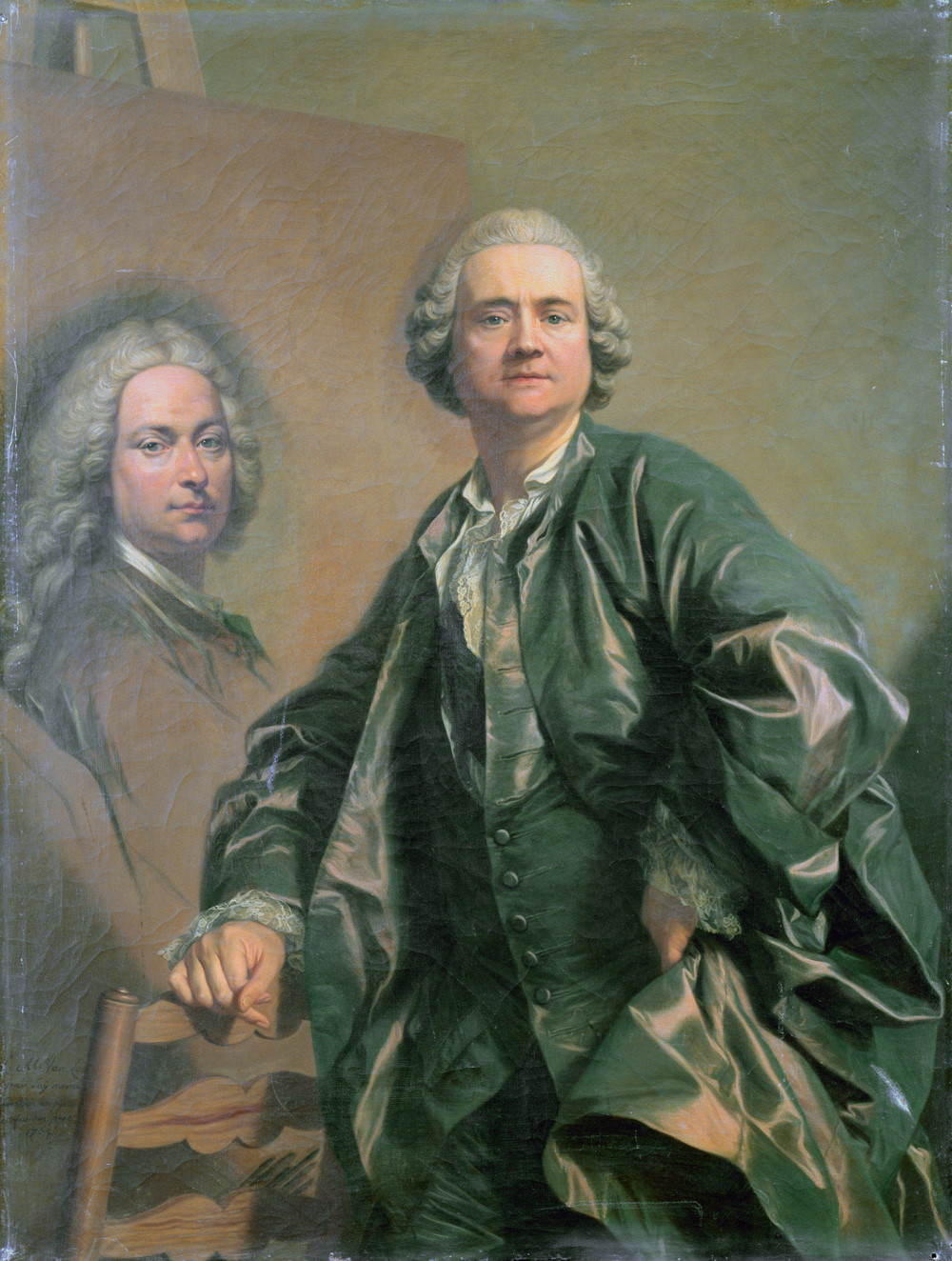
Loo, Louis-Michel van. Toulon (France), 02.03.1707 - Paris (France), 20.03.1771. Painter.
French painter descended from a family of Dutch artists dating back to the 16th century, of whom Jacob van Loo stood out as a 17th-century master of genre paintings and portraits. Louis-Michel trained in the workshops that were opened one after another by his father, Jean-Baptiste Van Loo, in Turin and Rome, having previously worked, like other members of the saga, in various towns in Provence. To complete his training, the young artist travelled to Paris and entered the Académie Royale, where he won the Grand Prix de Rome in 1726. He returned to the Eternal City in 1727 with his brother François and his uncle Carle, where he remained until 1732.
Following his return to Paris, he was admitted as a lecturer in 1733 for his Apollo and Daphne, and became Assistant Professor of Portraiture in 1735. During this period, his work reflects the influence of Rigaud in the lavishness of the courtly figure, surrounded by sumptuous details that contribute to the general impression of splendour.
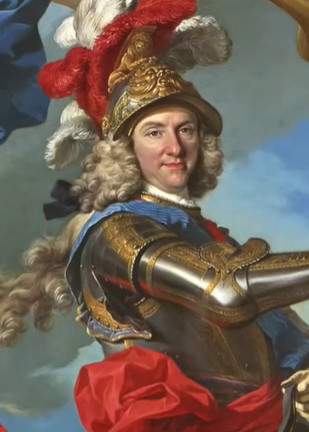
Upon the death of Jean Ranc, the official portraitist of the Spanish court, Rigaud himself suggested Van Loo as Ranc’s replacement, which was accepted by Philip V. He arrived in Madrid in 1737 and immediately afterwards, painted a portrait of the King where, without forgetting the genre conventions imposed by his master and sponsor, he essentially followed Ranc’s prototype of a knee-length portrait of the King on foot bearing the Golden Fleece on his shining armour and holding a flare in one hand. However, Van Loo was able to move away from the usual arid depiction of his predecessor and endow the figure with an unprecedented vitality by means of broad brushstrokes, at the same time displaying his technical virtuosity in depicting the accessories, such as the colourful sash displaced by the wind.
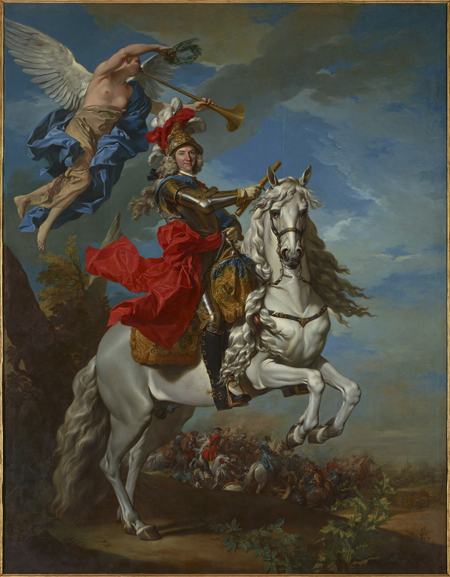
Soon afterwards, he painted the Equestrian Portrait of the King, in which Philip V, once again in armour and a scarlet cummerbund, appears in a triumphant pose on a vigorous white horse, and an angel hovering over him with a laurel wreath and trumpet. Meanwhile, and in line with Ranc's earlier equestrian portrait of the monarch, a battle rages on in the lower part of the portrait. Despite portraying the King as a mature individual, the painter has ennobled his features in keeping with the moment of war, turning the depiction into a glorifying apotheosis.
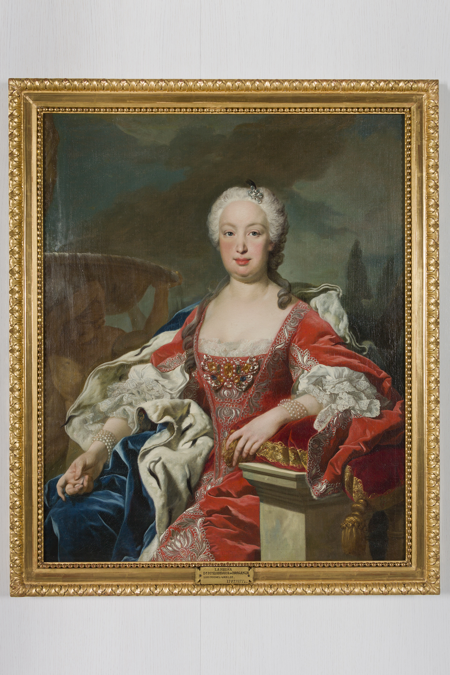
He painted the Queen, Elisabeth Farnese, on several occasions, as may be seen in a portrait at the Prado Museum where she appears in luxurious court dress and a pearl bracelet with a miniature of her husband on her left wrist, while her right hand points to the royal crown placed on a cushion. In another large painting, now hanging in La Granja, the tall lady appears with her usual poise in a spacious setting filled with ample fabrics that envelop and emphasise her silhouette, such as the large red cloak resting on an armchair of the same colour, or the drapery that looms over the figure like a canopy.
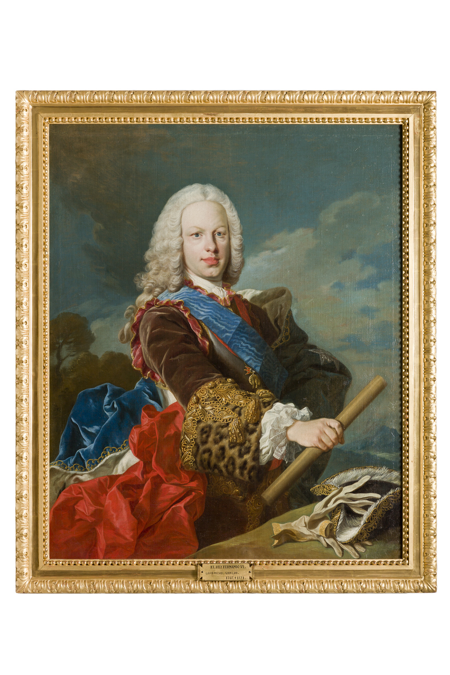
This taste for arranging his sitters in rooms decorated with columns and other symbols of distinction, together with his skill in depicting the quality of the fabrics, jewels and insignia and the careful and elegant positioning of the figures, were highly appreciated by other members of the Royal Family, as may be seen in the paintings of Philip of Bourbon and his wife, Louise-Élisabeth of France, the future Dukes of Parma, and the Cardinal Infante Luis of Bourbon, later Duke of Chinchón. He also painted individuals such as Gregorio Mayáns y Ciscar, a writer and scholar appointed to the post of Royal Librarian in 1733, depicting the sitter turning his serene face to the viewer while leaning one elbow casually on the back of the chair.
In the field of mythology, he painted Diana in a Landscape in 1739, showing the goddess of the woods fast asleep next to a tree, with her bow and quiver to one side and, as an example of another of her attributes, a small crescent moon above her head. Van Loo depicts the deity in a complex, pleated garment, although the generous neckline of her shirt, her pearly skin and the suggestive placidity of her sleep reveal a voluptuousness that contrasts with the chastity that characterises the goddess.
In 1743, he painted the spectacular portrait of The Family of Philip V, a work where he skilfully envelops the main figures in a monumental architectural setting. An enormous curtain of intense red frames the Queen and the group around her in singular relief, without forgetting the musicians’ balcony or the arcade leading to the garden, which alleviates the imposing presence of the columns that decorate the room.
After being disappointed by Houasse and Ranc, Philip V, who had already been painted as a child in The Great Family of the Dauphin, an ostentatious painting by Mignard, was at last able to contemplate a large canvas of his family in splendour and featuring him in a display of luxurious clothing, from Bárbara of Braganza with her husband, the future Ferdinand VI, to Cardinal Infante Luis, not forgetting the Infante Philip and his wife Louise-Élisabeth of France, or a gentle and stylised Charles, by then already king of Naples. The central figure of the composition is a haughty Elisabeth Farnese, seated not far from her husband.
In 1744, Van Loo was officially appointed first chamber painter, and continued to enjoy the favours of the Court, since he was appointed the King's first painter ¡ upon Ferdinand VI's accession to the throne in 1746. As such, he was responsible for painting the official portraits of the monarchs.
Later he was appointed Director of the Preparatory Board of the future Academy of San Fernando, helped to draft the articles of the institution which was finally created in 1752, and then assumed the post of Director of Painting. Previously, and at the request of the Board members to decorate the institution, he painted Venus and Mercury Teaching Cupid in 1748, an oil painting where the figures are softly modelled with a profiled drawing and sober colouring, and have a polished finish with an almost neoclassical touch. This scene was intended to praise the educational values of the Academy, which explains the lesson that Mercury, symbolising erudition and culture, gives to Cupid in the emphatic presence of Venus.
Almost immediately after he began teaching at the Academy, the homesick artist applied for and was granted permission to return to France in October, whereupon he regularly participated in the Salons with great success, between 1753 and 1769. In 1765 he took over his uncle Carle's position as Director of the École Royal des Éleves Protégés, where he prepared awardees for their journey to Rome. Highly appreciated by the Royal Family, he worked at Versailles and repeatedly portrayed Louis XV; in the 1760 painting depicting the monarch wearing the great royal mantle, van Loo successfully married the pomp of Rigaud's portrait of Louis XIV to Antoine-François Callet, who portrayed Louis XVI in a similar manner in 1779.
He also painted other members of the royal family or prominent figures of his time, such as the 1753 portrait of the playwright Marivaux, or the painting of Diderot, which was presented at the Salon of 1767 and gifted to the philosopher by the painter at the heights of the former’s creativity, or the portrait of the architect Soufflot, and that of the landscape painter Joseph Vernet with his wife, circa 1768. They are highly accurate and expressive paintings, devoid of any idealisation or ostentation and successfully capturing the psychological profiles of the sitters.
After a long and illustrious career as an artist, Van Loo died in Paris on 20th March 1771.
Source: Royal Academy of History (https://www.rah.es)