Loading...

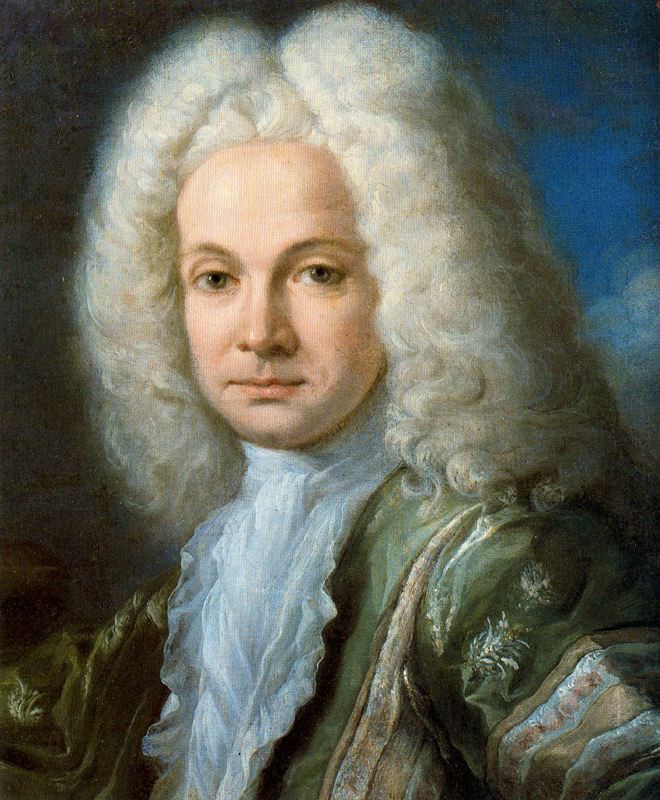
Meléndez, Miguel Jacinto
(Oviedo, 1679 - Madrid, 1734)
Meléndez, Miguel Jacinto. Oviedo (Asturias), 1679 – Madrid, 25.08.1734. Painter.
Miguel Meléndez (or Menéndez, according to the original form of the surname) is the first representative of a long line of painters extending well into the 19th century. His brother Francisco was the first to propose the creation of an Academy of Fine Arts in Madrid, which he presented to Philip V in 1726; he was the painter of miniatures for the Royal Household and, together with his sons Luis (who became the best 18th-century still-life painter of Spain) and José Agustín, he produced splendid miniatures for the choirbooks of the new Royal Palace in Madrid. Francisca, the daughter of José Agustín, born in Cádiz in 1770, was admitted to the Royal Academy of Fine Arts of San Fernando in 1790 as an academician of merit, and appointed painter and Miniature Portraitist of the Chamber in 1794. She died in 1825.
Miguel was the son of the tailor Vicente Menéndez de Rivera and of Francisca Díaz de Lloxu. At the end of the 17th century, the Menéndez family moved to Madrid where, according to Ceán Bermúdez, Miguel and Francisco became apprentices in the workshop of José García Hidalgo, one of Carreño's disciples. Francisco left for Italy in search of a brighter artistic environment than Madrid. After the deaths of the last three great Baroque painters, Carreño, Rizi and Herrera el Mozo in 1685, the only remaining important figure was the Italian Luca Giordano.
Miguel began to carve out a good position for himself at court.
In 1712, after submitting the portraits of the monarchs Philip V, his first wife Maria Luisa Gabriella of Savoy —both inspired by engravings by Van Dyck— and the Crown Prince Luis (Madrid, Cerralbo Museum) for examination, he was appointed honorary painter to the King, which authorised him to represent the Royal Family. This made it possible for him to achieve a solid social and economic status thanks to commissions from private individuals and institutions who required a portrait of the King in their households and premises; however, he was not paid the official remuneration granted to the King’s painter until 1727.
In the meantime, the French painter Jean Ranc had arrived in Madrid in 1723, in response to the king’s summons. With his workshop, Ranc monopolised all Palace commissions and created a new portrait of Philip V which was decreed the official portrait, in a style that was very different from that of Meléndez.
While Ranc's influence on the works of Meléndez is evident, he nonetheless maintained his own style in this field: a personal synthesis of the best Madrid Baroque tradition, the considered compositions of Van Dyck, and the brilliant expression of the French, but what sets his court portraits apart from all the others is their simple elegance and the slightly melancholic and gentle air of his figures, a characteristic that would become dominant in the Rococo period.
More than twenty portraits of Philip V painted by Meléndez are known to date, the earliest of which dates back to 1707. Already in those early years, Meléndez had created an archetype of the King's face that emphasised certain features inherited from his Habsburg ancestors: a prominent prognathic jaw, a large mouth, especially the lower lip, and an equine nose. Although the painter would repeat this prototype over twenty years, he gradually idealised it so that the features not only became more balanced and the excessiveness of the first portraits disappeared, but the King's face acquired a melancholy beauty and dignity, increasingly distanced from reality, while still retaining the smoothness and brilliance of his past youth.
His most representative works as a portrait painter of the Royal Family consist of six paintings commissioned in 1726 by the Royal Public Library, currently the National Library, which he delivered the following year. This cultural institution, the first of its kind to be established the Bourbons in Spain, was founded by Philip V in 1712. The portraits of the King, his second wife, Elisabeth Farnese, and their children, Ferdinand (VI), Charles (III), the Infanta Mariana Victoria and Philip, Duke of Parma, were to preside over the library's reading room. The portraits of the King and Queen —undoubtedly the best painted by a Spanish artist at the time— are well composed and have, on one hand, an elegance reminiscent of Van Dyck and which Meléndez borrowed from the engraved prints of the series Icones Principum, Virorum, Doctorum, Pictorum [. ...], fourteen of which were owned by the painter according to an inventory of his possessions in 1716; and on the other hand, a marked French influence evident in details such as the King's attire, including the breastplate of the cuirass under his coat, or the Queen's headdress of jewels and satin ribbons. The Spanish portrait tradition is also evident in the fact that the depiction places the sitters in dark rooms which are offset by the powerful illumination of the figures, achieving beautiful chiaroscuro contrasts. With regard to colour, Meléndez achieved a splendid symphony of steely greys, purples, whites and golds which, by contrast, highlight the other more intense patches of colour, such as the blue sash of the Order of Saint Esprit and the reds of the cummerbund and the book of the founding statutes of the Royal Library held by Philip V.
But Meléndez did not limit himself to portraits of the Royal Family. His portrait of the Marquess of Vadillo in 1729 (Museum of Fine Arts of Asturias) is another excellent example of Madrid Baroque portraiture.
Towards the end of his life, Meléndez devoted himself above all to religious paintings in which, at the request of his clients, he occasionally almost literally copied models by great masters such as Carreño, Cerezo and Claudio Coello, although his brushstrokes are tighter and his colours somewhat cooler. Around ten paintings of the Immaculate Conception by Meléndez have been found to date, almost all of them of excellent quality, such as the one in the Museum of Fine Arts of Asturias or the one in the Lázaro Galdiano Museum in Madrid. His best original paintings possess the brilliance and theatricality of late Baroque works of Madrid. These include a large Annunciation (private collection) which, due to its quality and splendid Baroque style, was attributed to Claudio Coello until the signature was discovered upon restoration; the Song of Simeon in the Musée Condé de Chantilly; and The Betrothal of the Virgin in the seminary in Toledo. He also painted numerous smaller devotional images, such as The Virgin of the Milk in the Monastery of La Visitación de las Salesas Reales in Madrid and Saint Anthony of Padua in the Museum of Fine Arts of Asturias, which already bears traces of the new Rococo style.
His death in 1734 prevented him from completing what would have been the most ambitious work of his life: two paintings more than seven metres long for the transept of the church of San Felipe el Real in Madrid, depicting the miracles of Saint Augustine warding off the locust plague and The Burial of the Count of Orgaz. Very detailed sketches of these paintings have survived (Museo del Prado), and they would have established him as the last representative of Baroque painting in Madrid, in the mid-18th century.
Source: Royal Academy of History (https://www.rah.es)
