Loading...

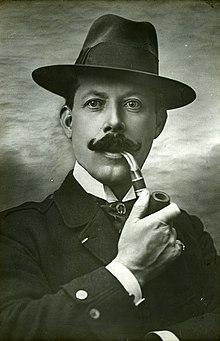
Tournassoud, Jean-Baptiste
(Montmerle-sur-Saône (France), 1866 - Montmerle-sur-Saône (France), 1951)
Jean-Baptiste Tournassoud (3rd May 1866 - 5th January 1951) was a French photographer and military officer.
Jean-Baptiste Tournassoud was born in the village of Montmerle-sur-Saône (Ain, France) in 1866. In 1887 he exchanged the shoemaking trade that he had inherited from his father for military service, and in 1895 he graduated from the Military Academy at Versailles. At the same time in 1892, as he started his military career, he also developed an extraordinary love of photography, using his camera to record snippets of daily life in the military, thus compiling a body of photographs that were aesthetically in tune with pictorial iconography, taking great care with both the lighting effects as well as the compositions. In 1890, he met the brothers Auguste and Louis Lumiére who introduced him to black and white photography techniques and later to the Autochrome process, of which he was a pioneering exponent in the wartime context of World War I.
His wife, Giorgette Michel, introduced him to the artistic circles of Lyon where he met artists such as Bruneton, Mangier, Villar and Moriceau, who taught him the essentials of composition and the behaviour of light. When World War I broke out, Tournassoud left for the front, where his talent was immediately recognised and he was assigned to photographic missions at the start of the conflict. He was also awarded the Military Cross for his bravery in battle, and received special recognition for his achievements as a photographer. In 1918, he was assigned to the Directorate of Photographic and Cinematographic Services of the French Army, reporting directly to the War Minister. During the Great War, which he spent almost entirely on the frontlines, Tournassoud took around 3,000 photographs at various points on the front and more than 800 autochromes.
Source: Wikipedia
View on Wikipedia
View in timeline