Loading...

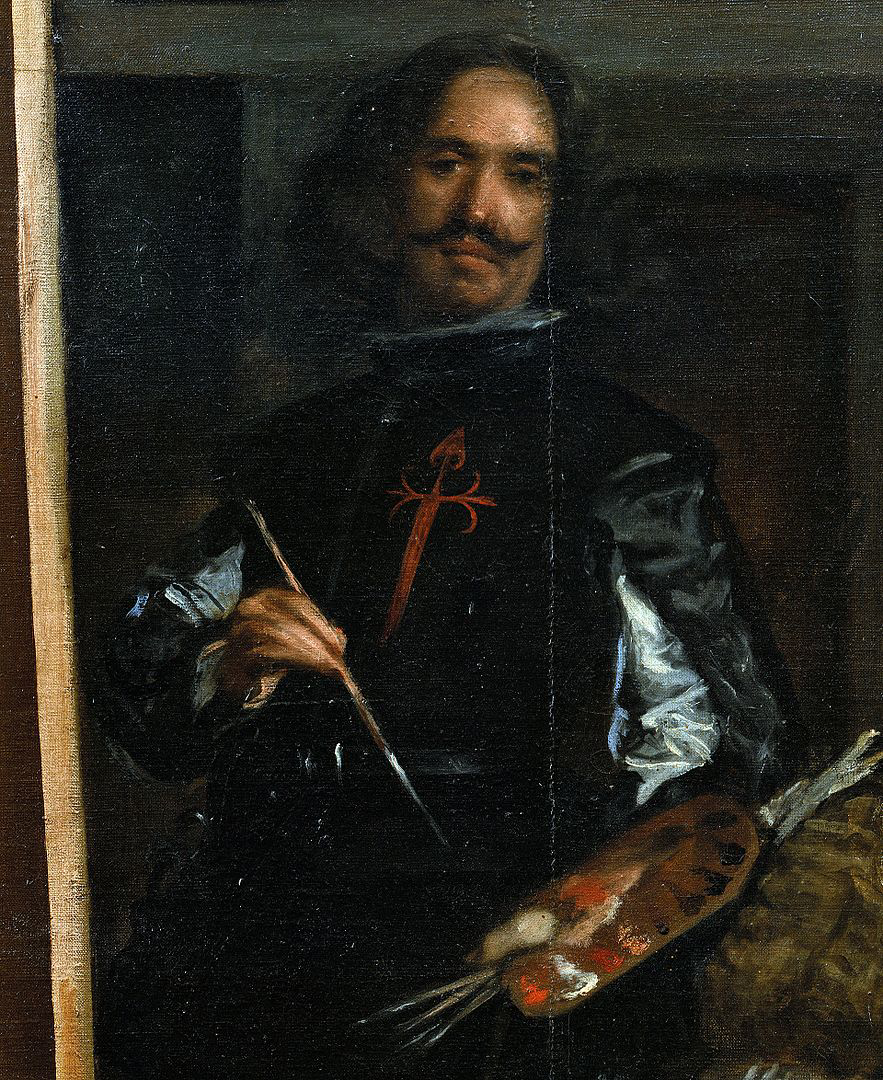
Velázquez, Diego
(Seville, 1599 - Madrid, 1660)
Rodríguez de Silva y Velázquez, Diego. Velázquez. Seville, 06.06.1599 baptised. – Madrid, 06.08.1660. Painter.
Born in Seville to a Portuguese father (Rodríguez de Silva) and a mother from Seville (Velázquez), he was baptised on 6th June 1599. His father was an ecclesiastical notary in the Seville Chapter, and this brought him in touch with books and people of culture at an early age.
In 1609, and not quite ten years old, he spent a few months at the workshop of Francisco de Herrera the Elder.
The master's bad temper soon drove Velázquez away from his workshop, and on 17th September 1611, he signed an apprenticeship contract with Francisco Pacheco, undertaking to stay at his new master's house for six years.
Pacheco was a man of culture, well-acquainted with the literary circles of Seville - nobles, clerics, doctors, poets - who gathered at his house, much like an academy, to discuss matters of literature and the arts. To this Velázquez owed his intellectual training, which must have been much broader than was usual for Spanish artists of his time, and a desire for social advancement that was to be the driving force behind his activity from very early on.
On 14th May 1617, when the apprenticeship contract expired, he appeared before the inspectors of the guild of painters and having passed the examination, obtained a licence to set himself up as an independent painter, train apprentices, and open an establishment according to the rules of the painters' guild of Seville.
The following year, he married his master's daughter, Juana Pacheco, on 23rd April 1618. The couple had two daughters, but only one of them survived.
For the next four years, he executed commissions for the convents of Seville and broke new ground with his still lives or popular scenes inspired by Flemish painting, which probably contained literary allusions or plays on wit, based on local sayings or proverbs. These include An Old Woman Cooking Eggs, The Musicians, or his renowned Water Carrier of Seville. He also painted a number of genre paintings of which Christ in the House of Martha and Mary, or The Supper at Emmaus are noteworthy examples. His religious works, which display an intense and truthful naturalism, include the Adoration of the Magi at the Prado Museum, or the pair of paintings, The Immaculate Conception and Saint John the Evangelist on the Island of Patmos, which were housed at the chapterhouse of the Convent of Nuestra Señora del Carmen in Seville, and are today in the National Gallery in London.
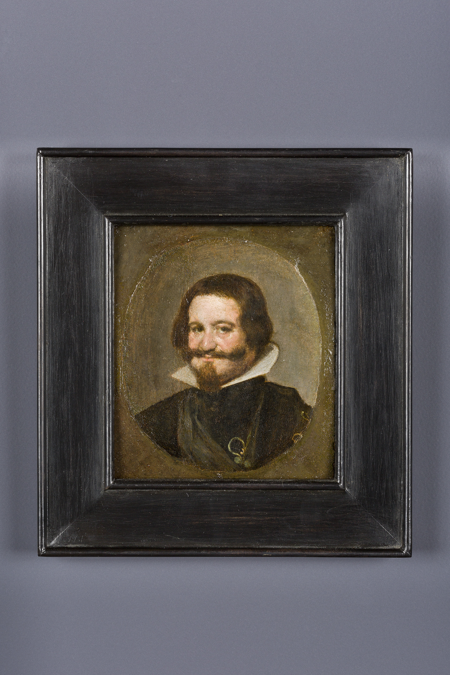
In 1621 Philip III died and Philip IV ascended the throne, aided by his favourite, Gaspar de Guzmán, Count of Olivares, a nobleman of Seville who would soon become the Count Duke of Olivares. This presented an opportunity for royal patronage to numerous intellectuals and artists of Seville and Velázquez was no exception. Most likely at the behest of his father-in-law, he travelled to the Court in 1622 where he made profitable contacts within the Count Duke’s inner circles and began to make a name for himself as an excellent portraitist, albeit he did not paint the royalty rather intellectuals such as Góngora.
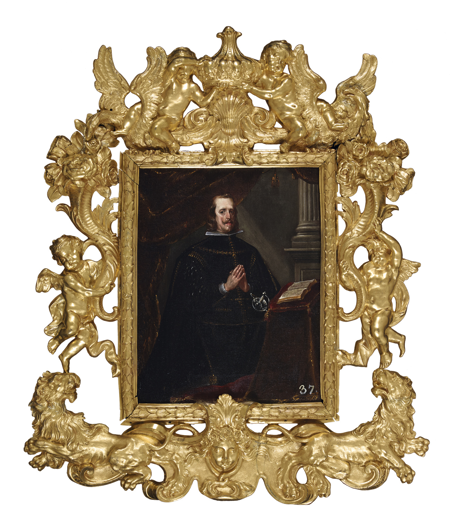
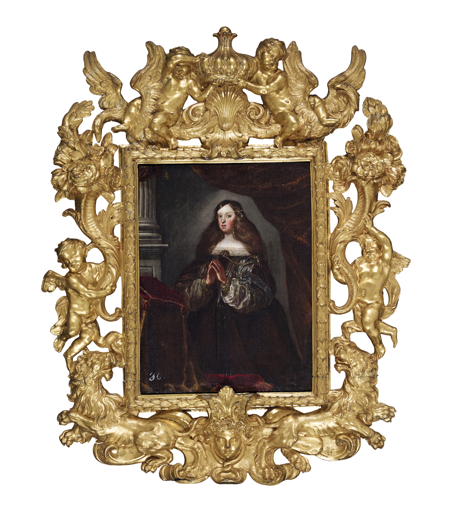
In the summer of the following year, 1623, he returned to Madrid at the request of Fonseca, a friend of Franciso Pacheco and the Count Duke's favourite, to paint the King’s portrait. The resounding success of his first portrait led to his immediate appointment as the King's painter on 6th October 1623. He thus began an administrative career which, coupled with his success as a painter, led him to occupy important palatial positions that freed him from the social and financial constraints common amongst Spanish painters of his time. The patronage of both the Monarch and his favourite —which also made him the subject of much envy and slander at court— freed him, among other things, from having to cater to the clergy, which was the almost unique domain of his colleagues in Seville. Nevertheless, there remain vestiges of his Seville education in works executed during the early days of his stay in Madrid such as his Saint Rufina, a divine portrait of a specific and close individual, directly related to one of his last works in Seville, the Imposition of the Chasuble on Saint Ildephonsus, for the Town Hall of Seville and today hanging at the Diego Velázquez Research Centre in Seville (Focus-Abengoa Foundation).
Source: Royal Academy of History (https://www.rah.es)