Loading...

In Motion. Vehicles and Carriages of Patrimonio Nacional
Exhibition sponsored by Fundación Banco Santander
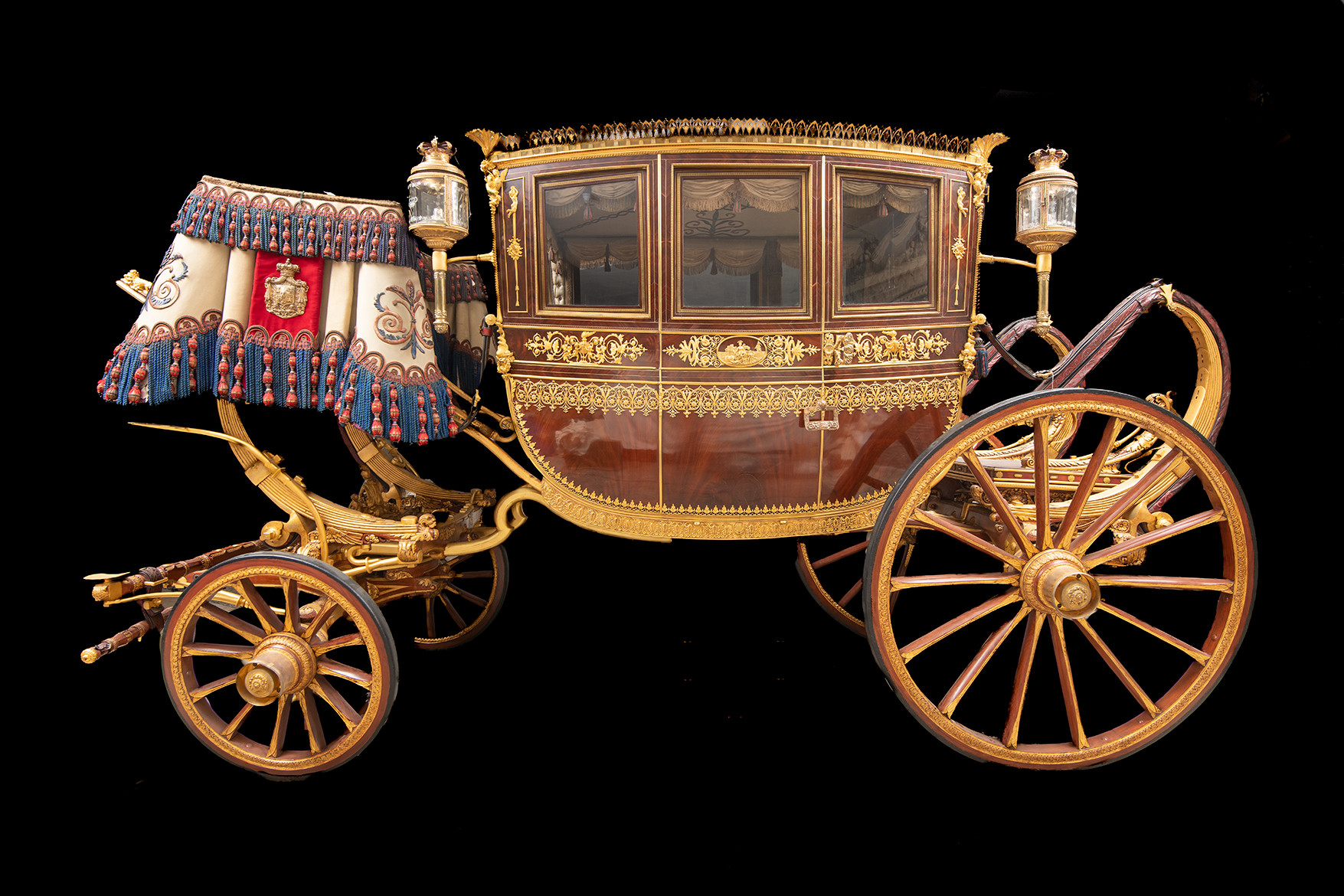 Go Down
The exhibition In Motion. Vehicles and Carriages of Patrimonio Nacional is an extraordinary opportunity to explore a collection of exceptional value but one that is little known to the general public, as the exhibits are stored in warehouses or locations that are difficult to access.
The Royal Collections include seventy-six horse-drawn carriages, ten automobiles and six sedan chairs, in addition to a series of items related to travel and processions of great historical and cultural importance. For these exhibition, seven coaches, five small vehicles and two automobiles have been selected.
The exhibition and catalogue explore different topics related to journeys by the monarchs and the use of carriages at court, an essential element of representation of the monarchs and the aristocracy. They also explain technical and ornamental developments in highly specialised trades that were of great importance in the past.
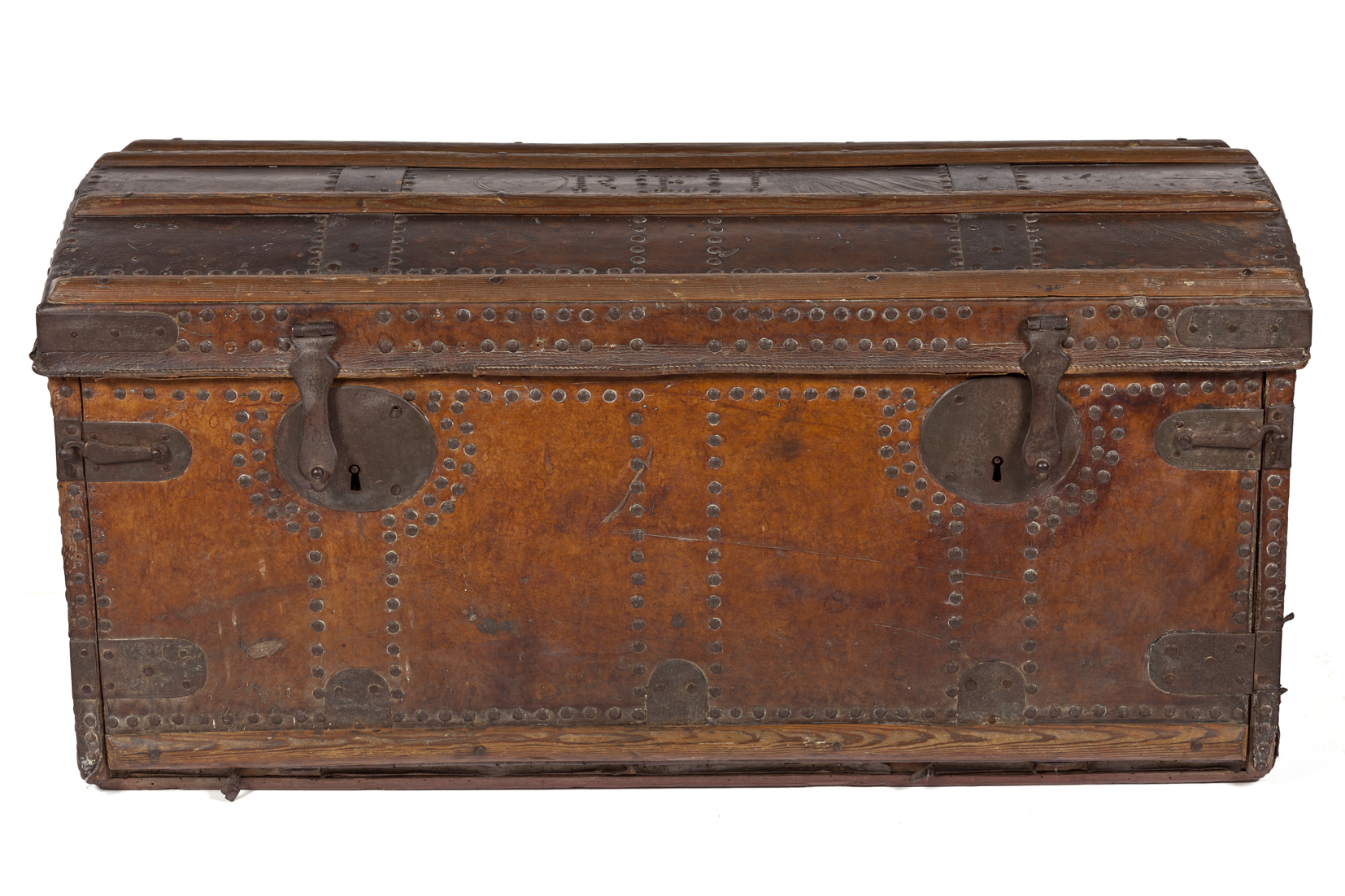
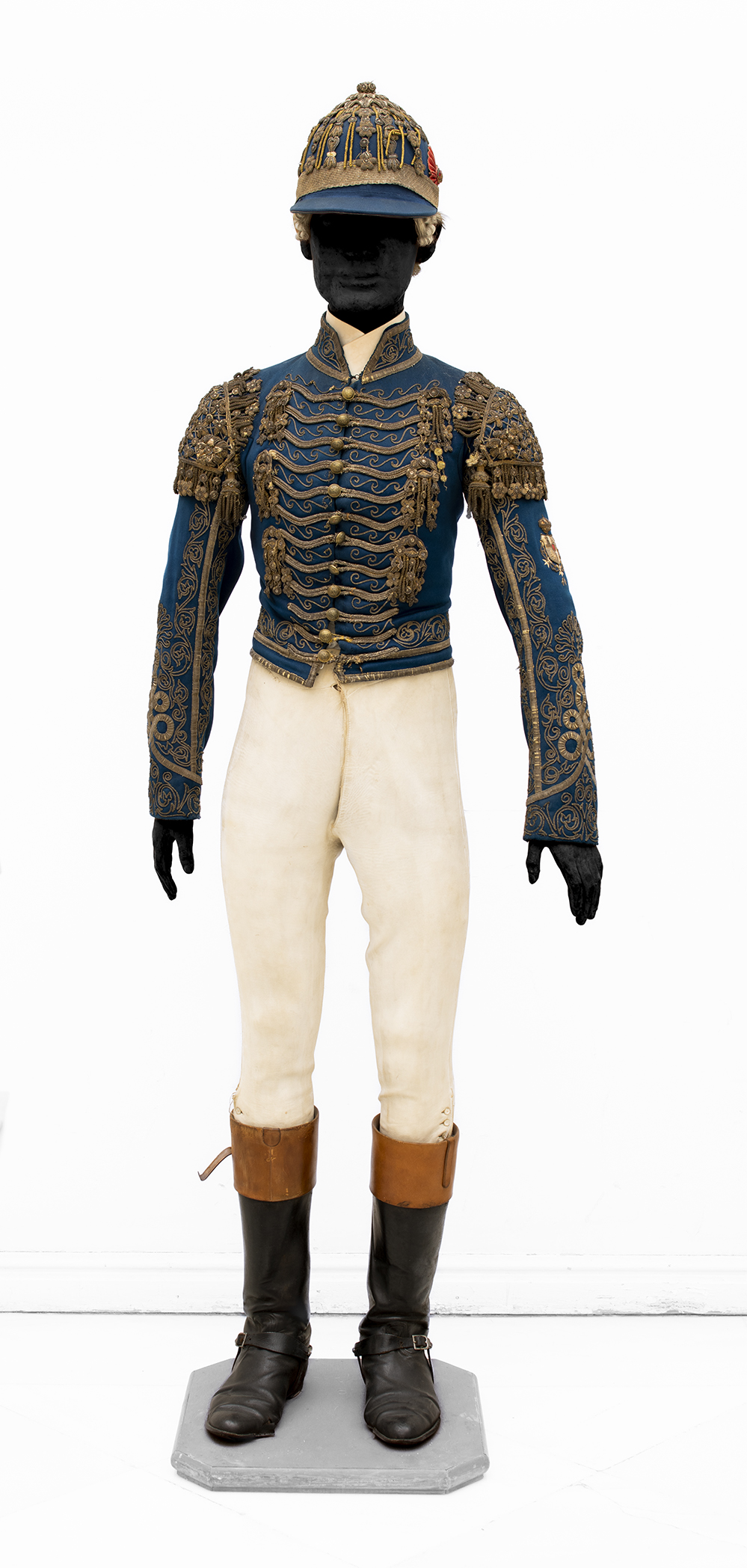
This project seeks to bring the world of carriages to a wider public. For this reason, the coaches are exhibited alongside paintings, tapestries, trunks, uniforms and other objects that provide additional visual or documentary information, and enable a better understanding of how they were used and in which contexts.
.-
Opening Hours
Monday to Saturday 10am to 8pm, Sundays and holidays 10am to 7pm
-
Admission
Cuesta de la Vega (admission to Temporary Exhibition only) Plaza de la Armería (admission to Royal Collections Gallery and Temporary Exhibition)
-
Organised by
Patrimonio Nacional
-
Sponsored by
Fundación Banco Santander
Introduction
The exhibition is divided into four different sections and concludes with an audiovisual presentation in an adjoining hall that explains some of the uses these carriages were put to throughout history.
This exhibition takes visitors on a chronological and thematic journey of the history of the carriage in Spain, and its role in the outdoors representation of the monarchy from the 16th to the 20th century.
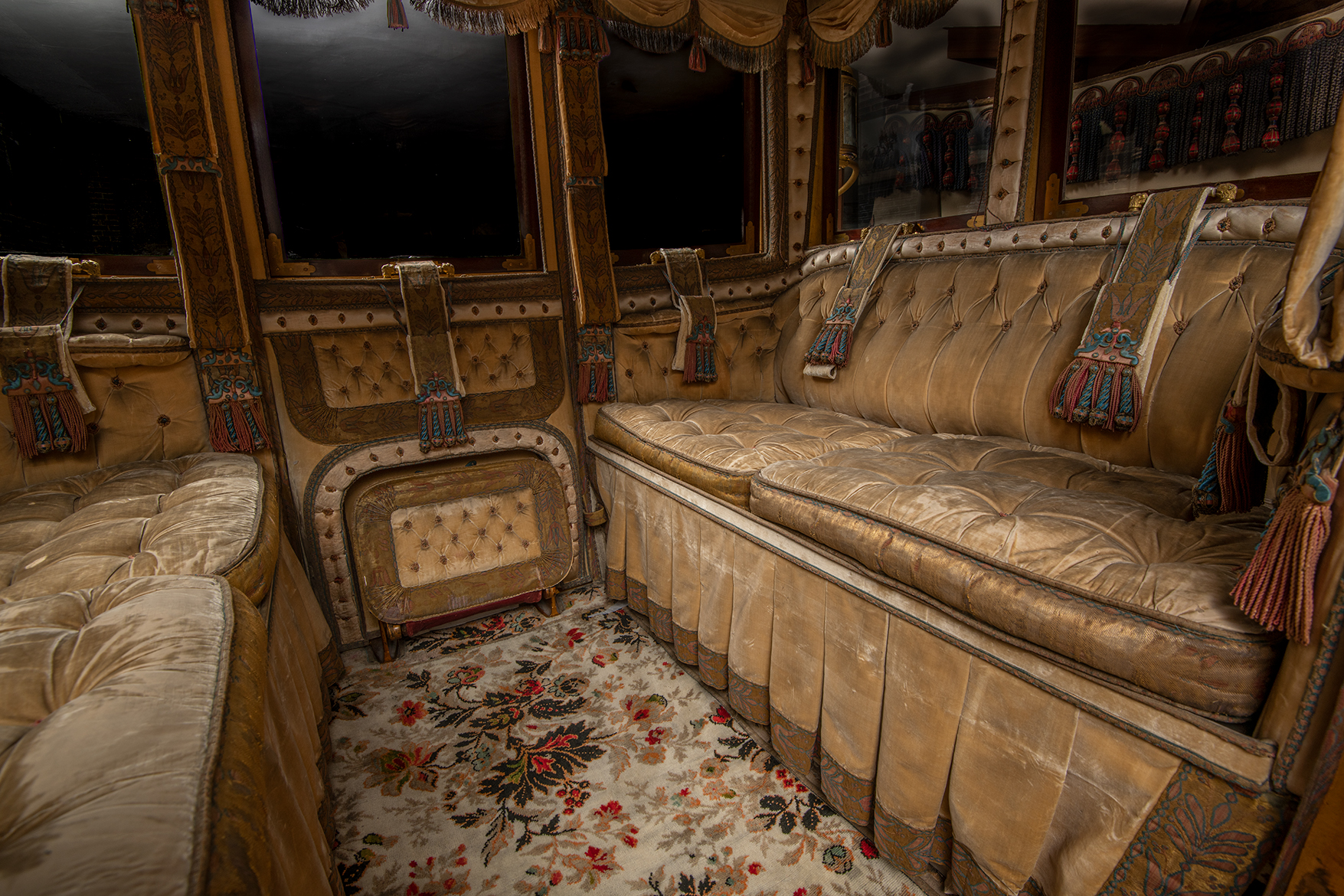
These vehicles were made by highly specialised craftsmen who were experts in combining technical perfection with a great deal of creativity, and had an eye for beauty. These carriages are, therefore, works of art that also provide comfort and safety for their passengers.
The exhibition discusses various topics related to the journeys made by the monarchs and the use of carriages at court. For this purpose, it includes a significant number of paintings and other objects which provide visual or documentary information essential to understanding who used these horse-drawn carriages and how.
Travelling in Comfort
The modern European states were consolidated in the 16th century, and the monarchy had a key role in exercising political power. Kings and Queens had to travel frequently to control and enforce their rule over vast territories, within a context of multiple conflicts. Marriage alliances were arranged to consolidate the power of certain dynasties, and for this purpose, royal persons or their representatives were often required to make long journeys.
The 16th and 17th centuries witnessed the development of the carriage, not only as a more complex means of transport to make journeys more bearable, but also as a result of changes in the etiquette governing the relationship between monarchs and their subjects.
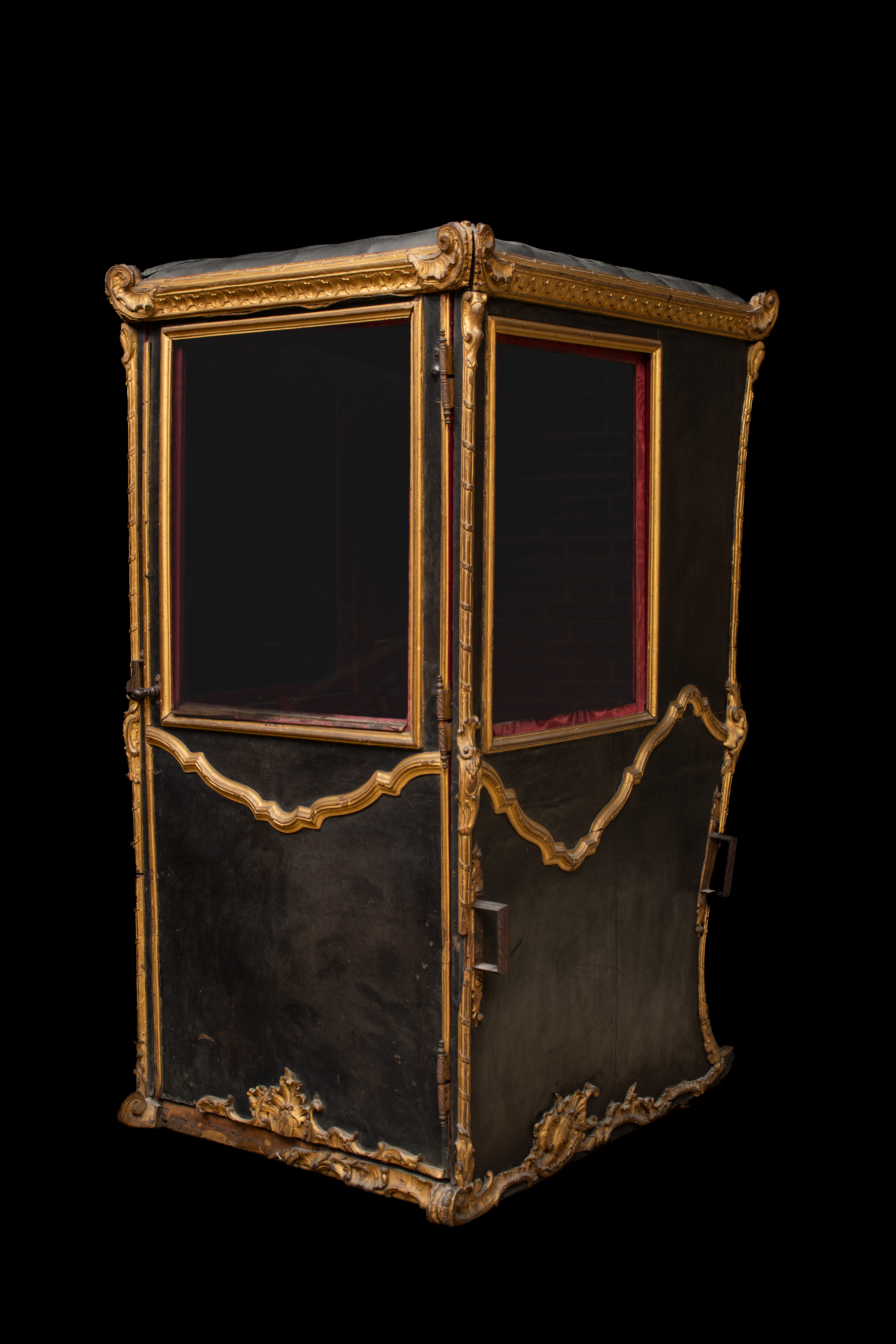
Alongside these novelties, sedan chairs continued to be used, above all, by noblewomen and queens. Men however continued to ride on horseback, an activity reserved for noblemen and sovereigns.
Carriages for Ceremonies at Court
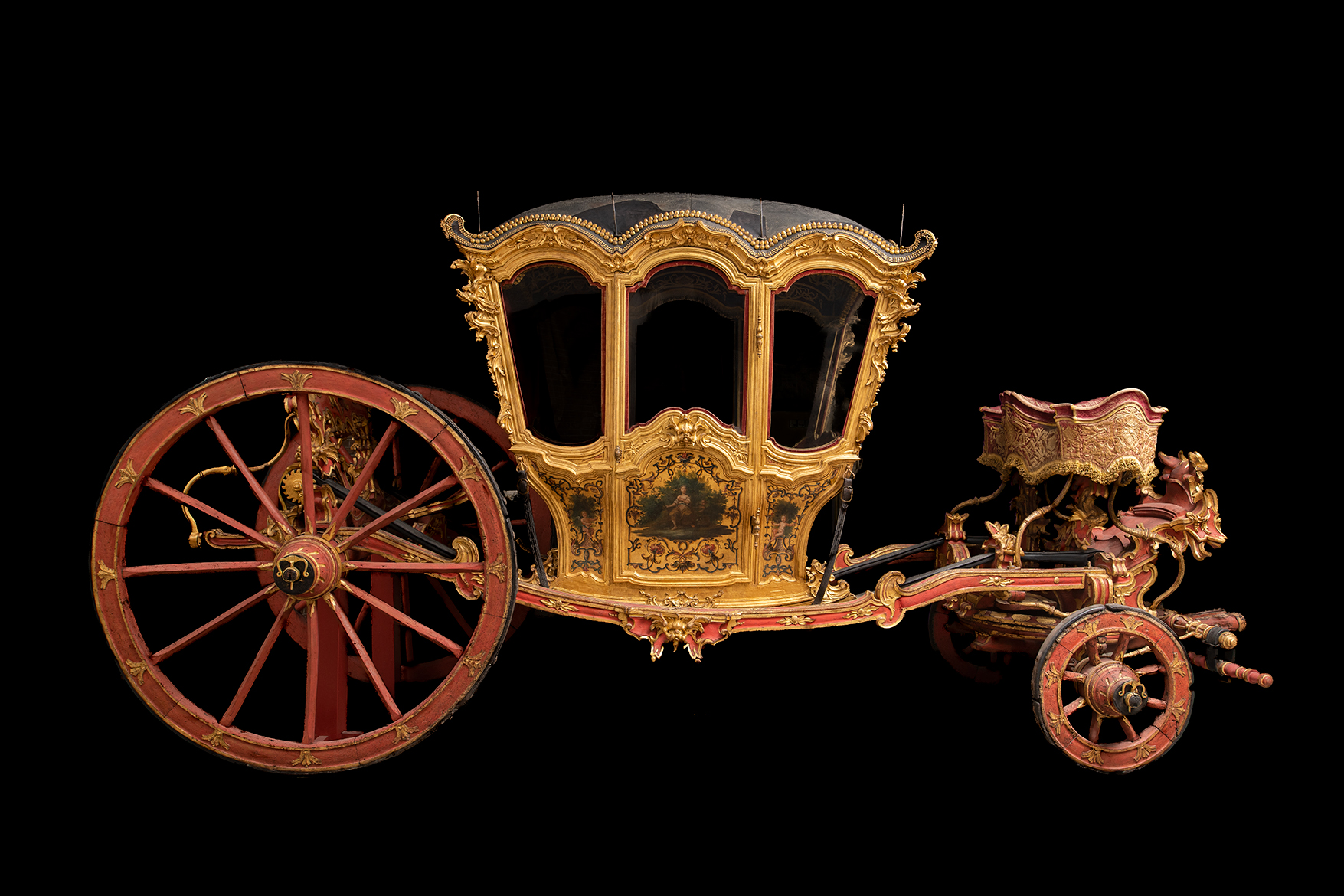
The role of carriages in the symbolic representation of monarchical power reached its moment of splendour at the Baroque courts. The royal court was both a political reality and a cultural and social construct. Within this scenario built around the monarchs and royal power, there were many social groups with different interests and functions: the aristocracy, ministers, clergy, gentry, servants, secretaries, ambassadors and a long list of etcetera's. Very strict codes of conduct consolidated what was a highly hierarchical social structure.
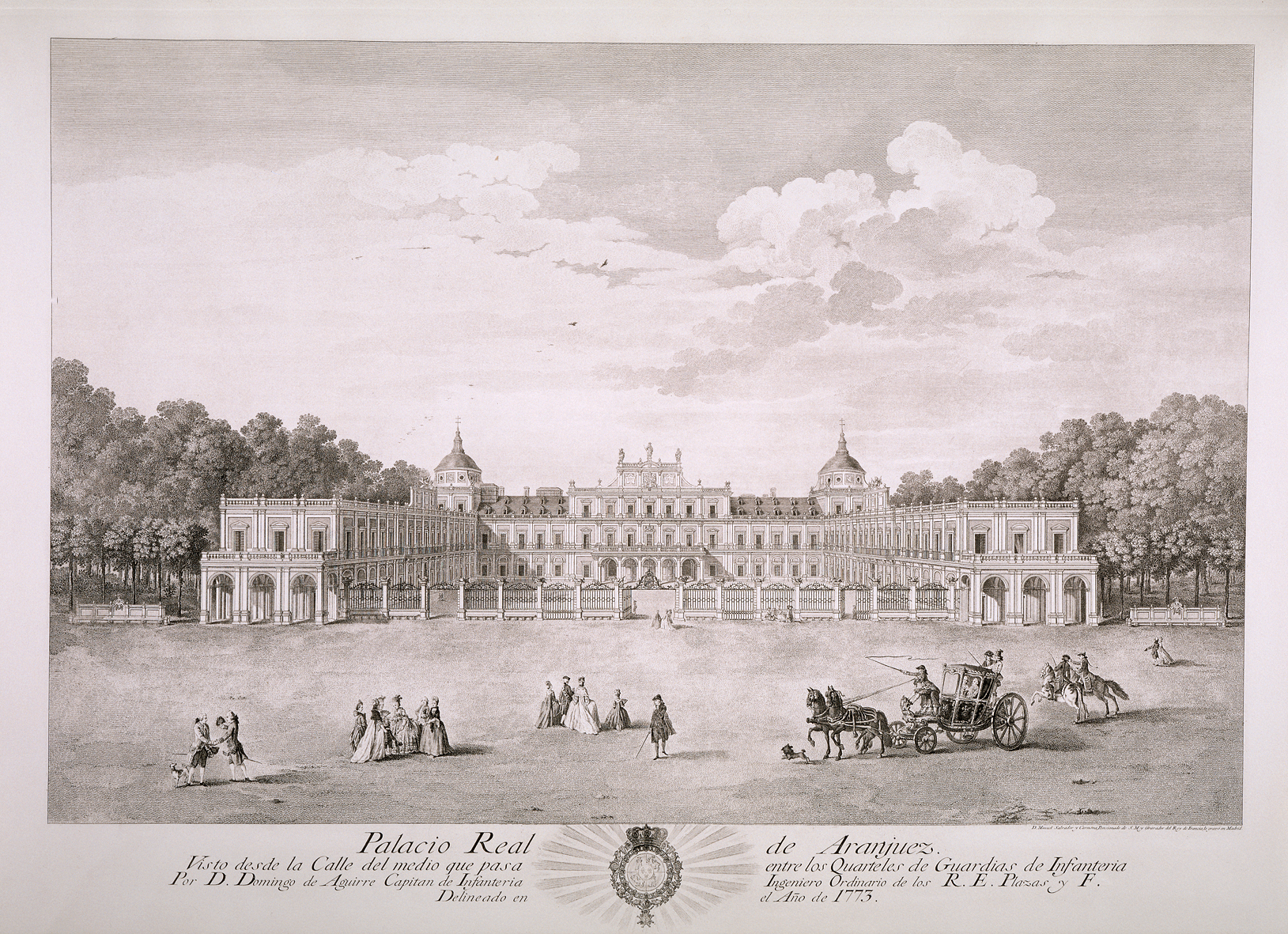
Within the city and in its buildings, squares and avenues, an entire staging of monarchical representation was played out. It involved holding ceremonies, festivals and solemn entrances, with carriages in a highly visible role as reflections of the power and status of their owners.
The use of horse-drawn carriages increased during the reign of Philip III (1598-1621) but their presence in cities underwent a significant expansion in the second half of the 17th century and throughout the 18th century across Europe.
The 19th Century: the Speeding Up of Technological Innovation
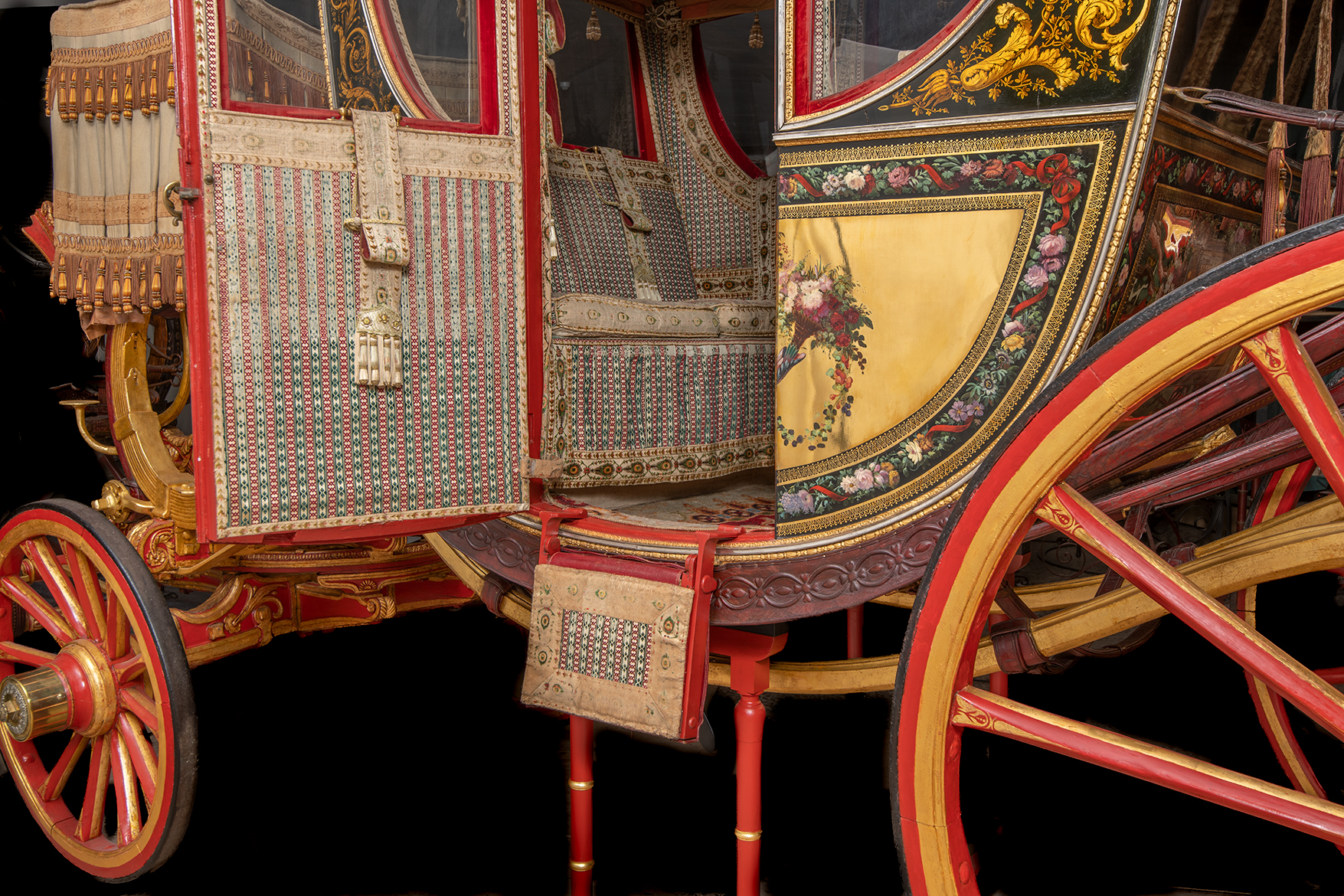
During the last third of the 18th century, a number of technical innovations had emerged in England and spread throughout Europe. Improvements in suspensions with the introduction of S-shaped steel leaf springs and steel lances that increased their resistance, helped to boost the development of vehicles and coaches throughout the 19th century.
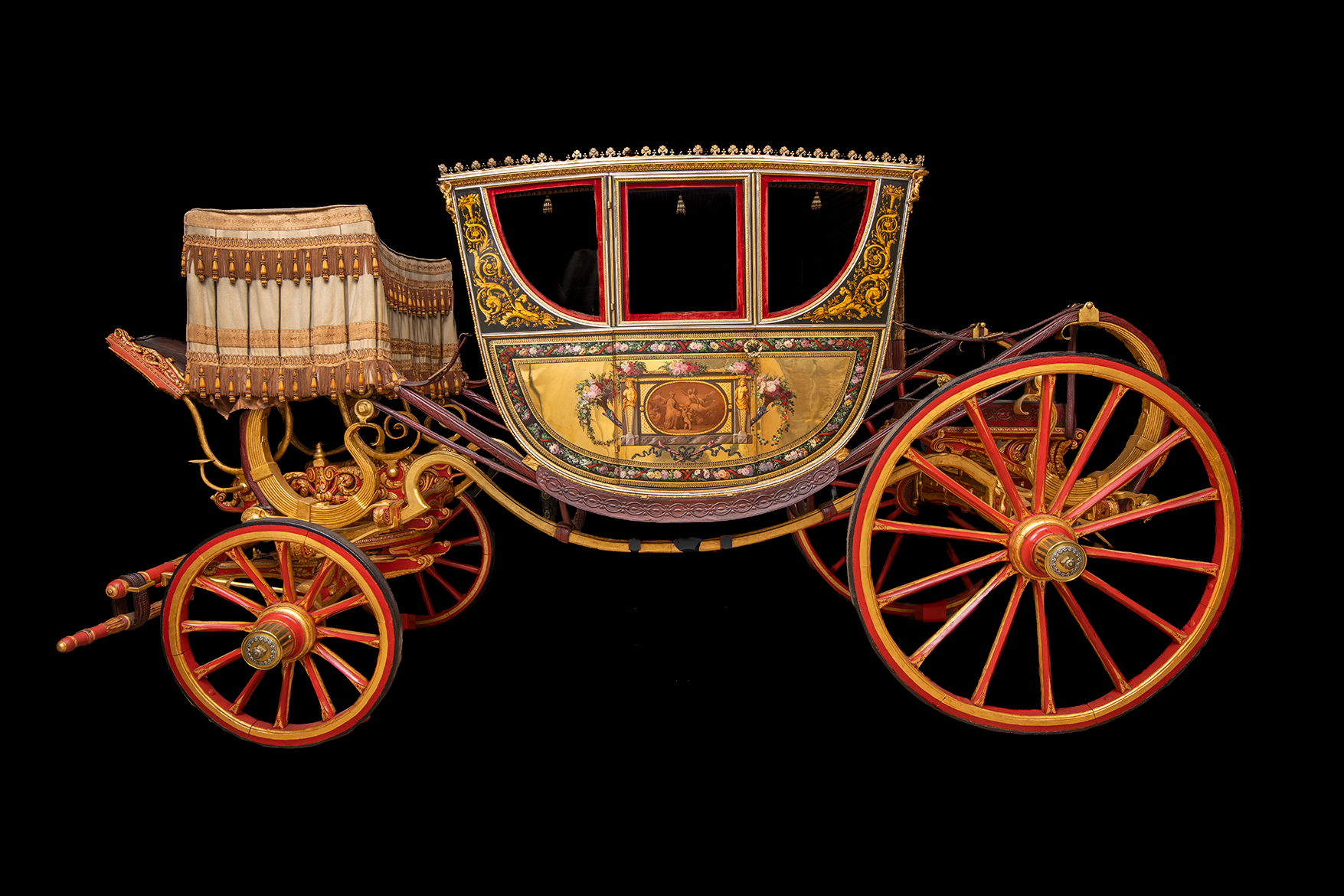
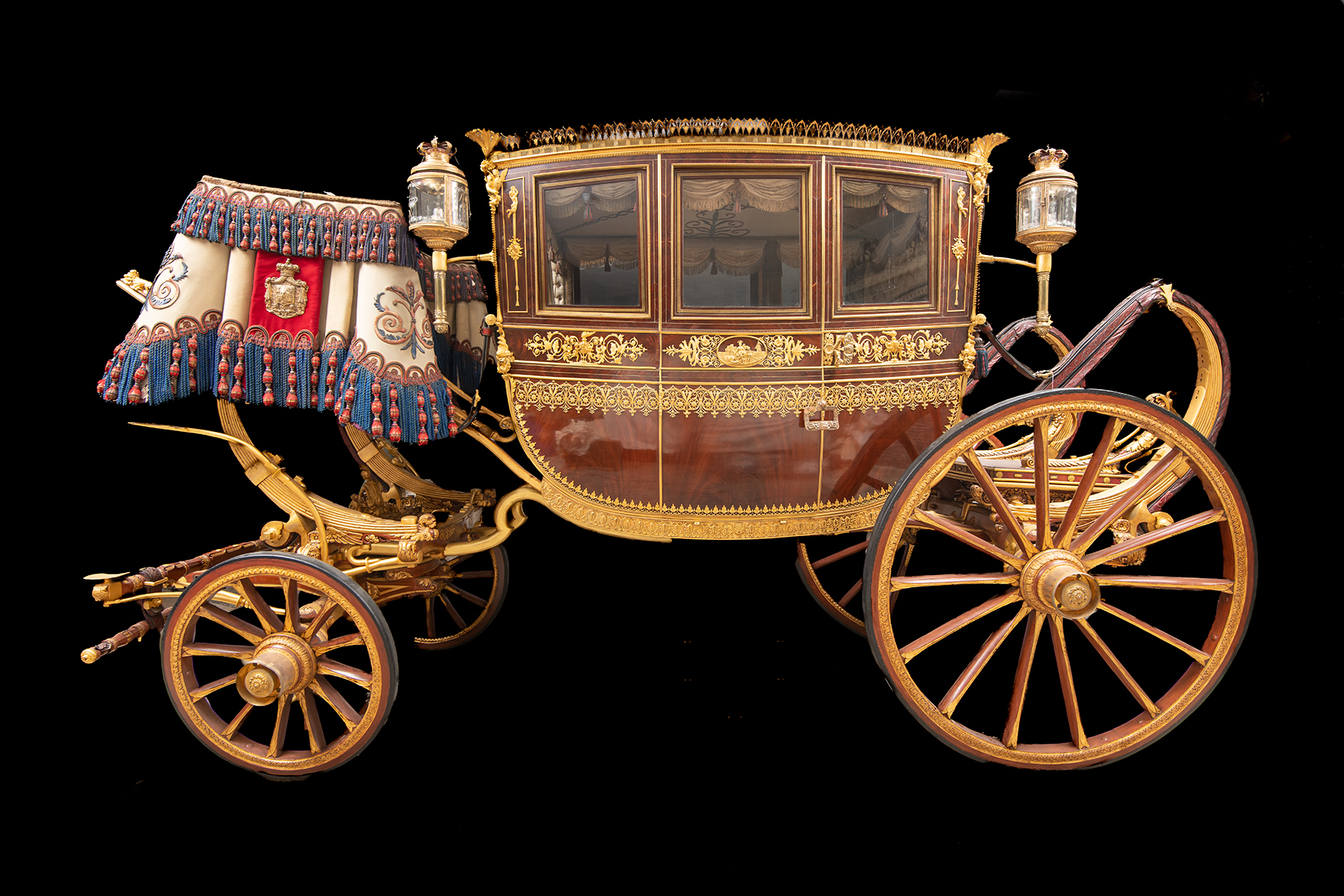
This period witnessed significant advances in vehicle design, such as the introduction of coiled and leaf springs and wheels with one-piece rims. They led to improvements in vehicle safety and comfort, as well as enhanced aesthetics.
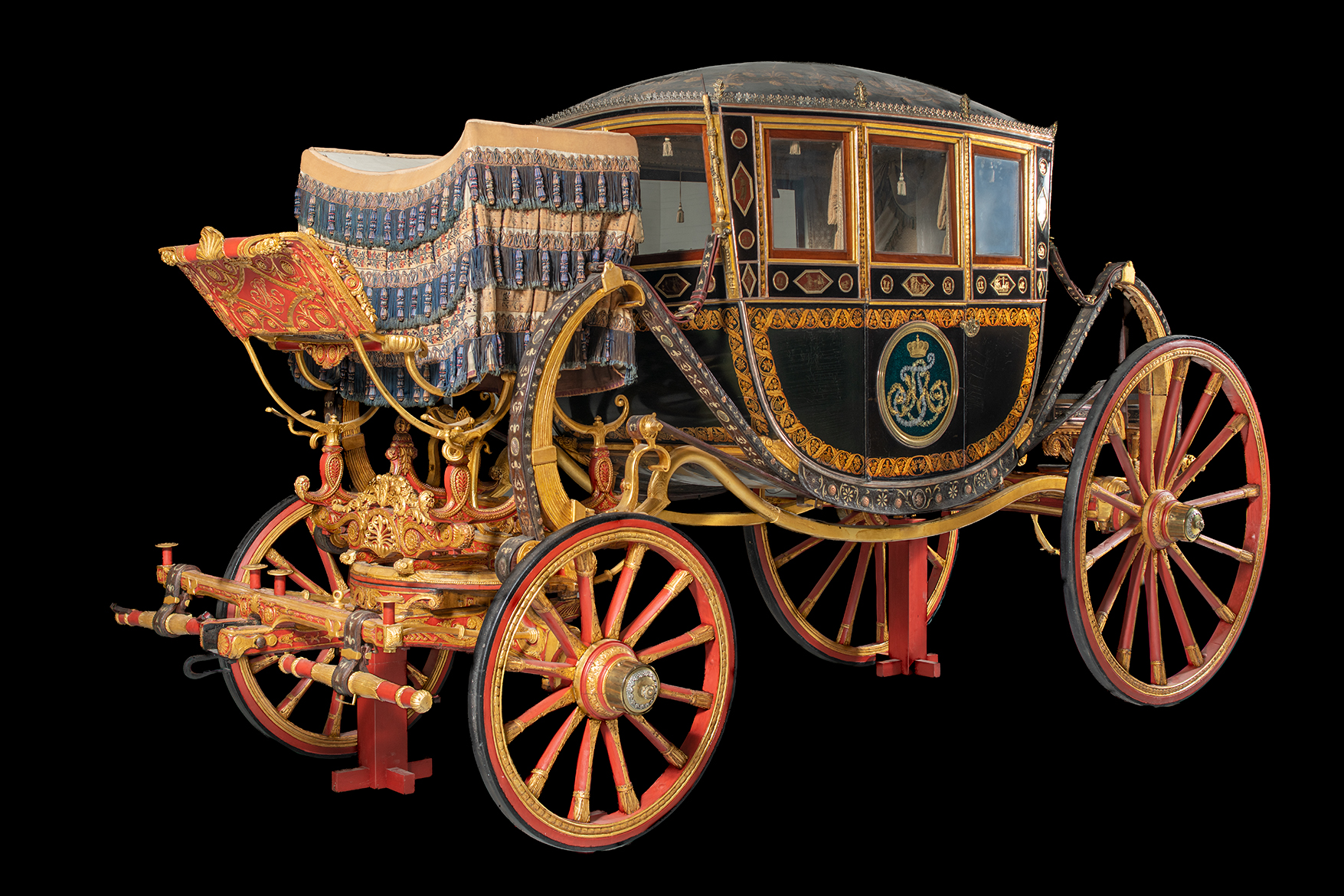
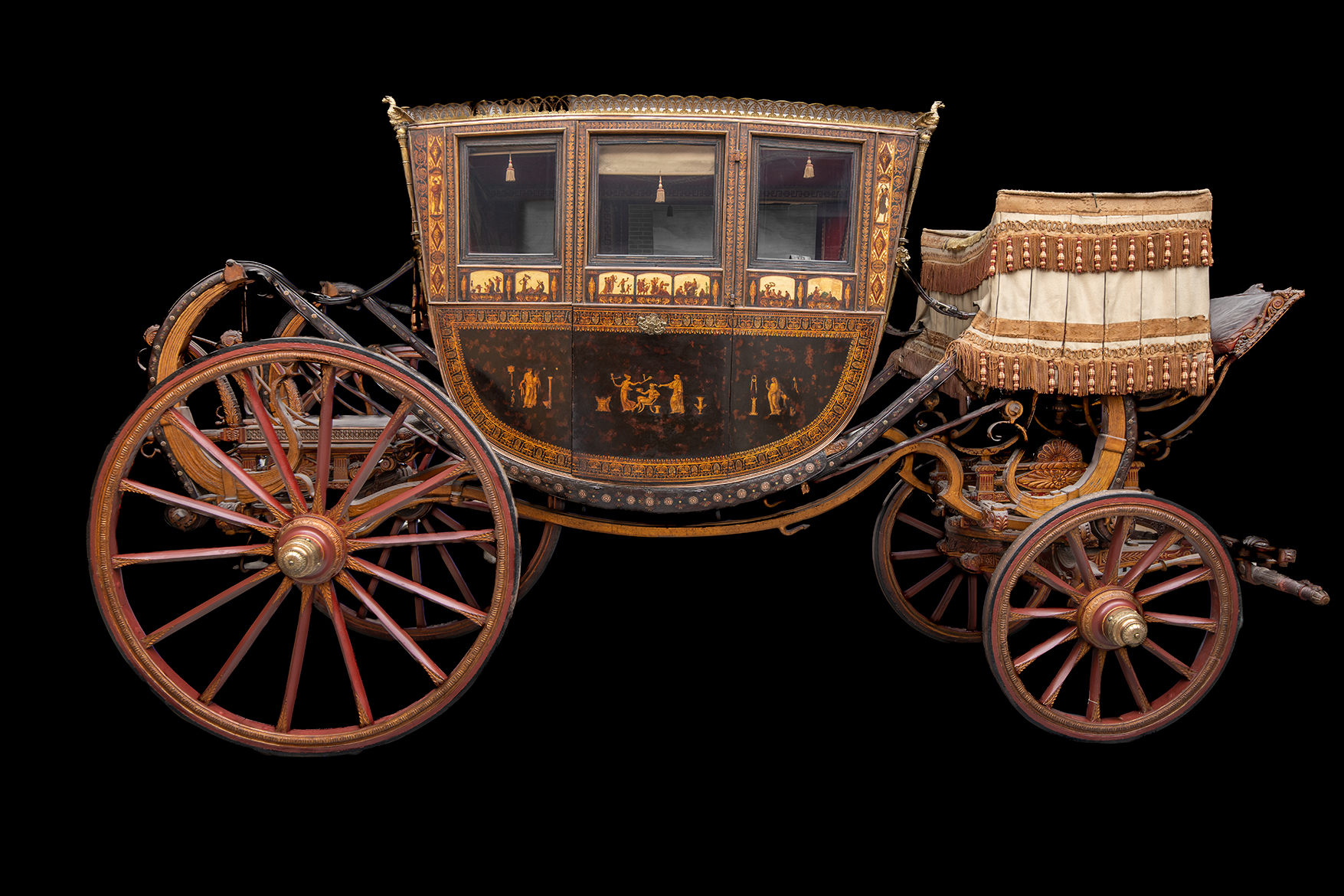
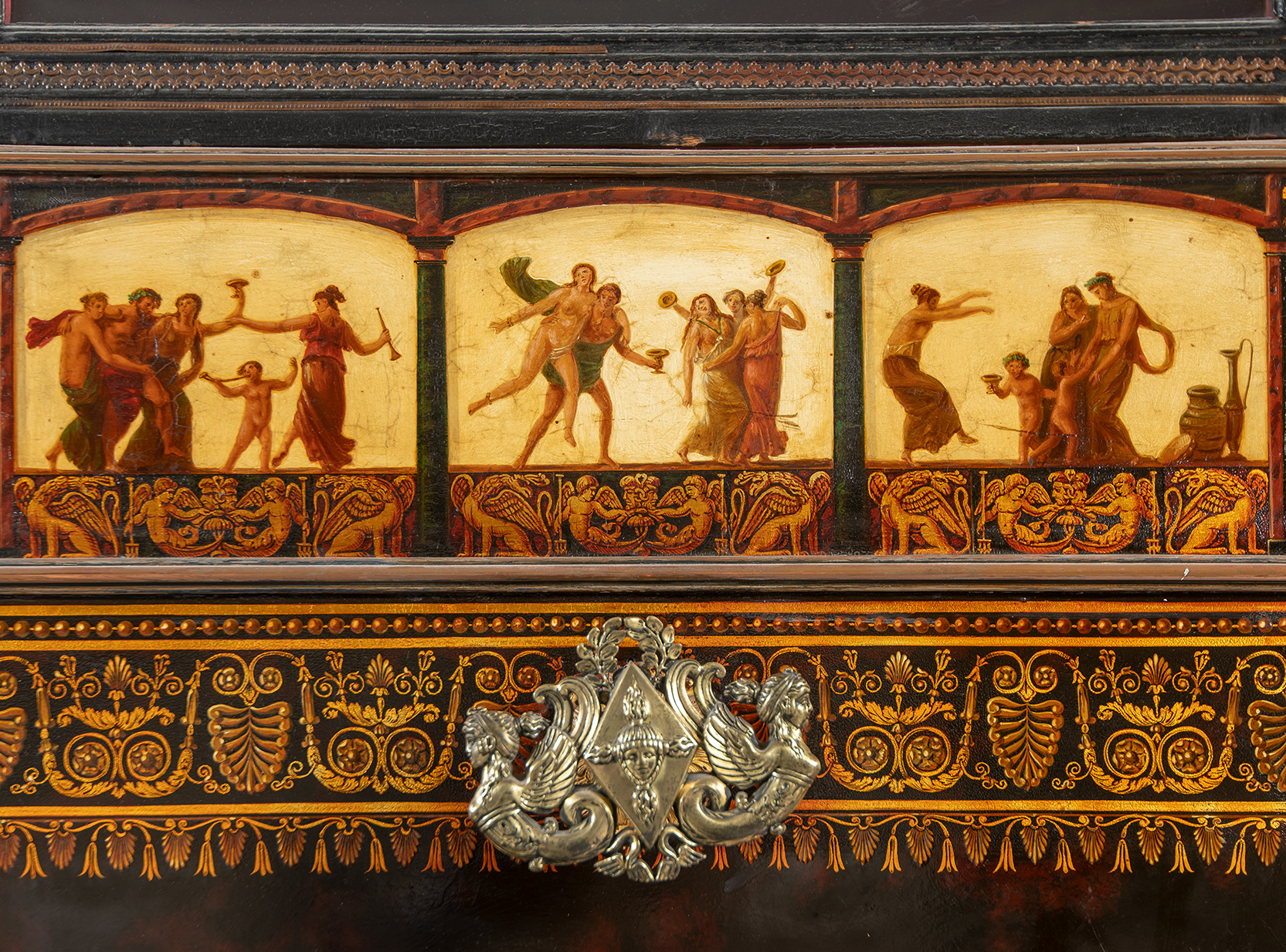
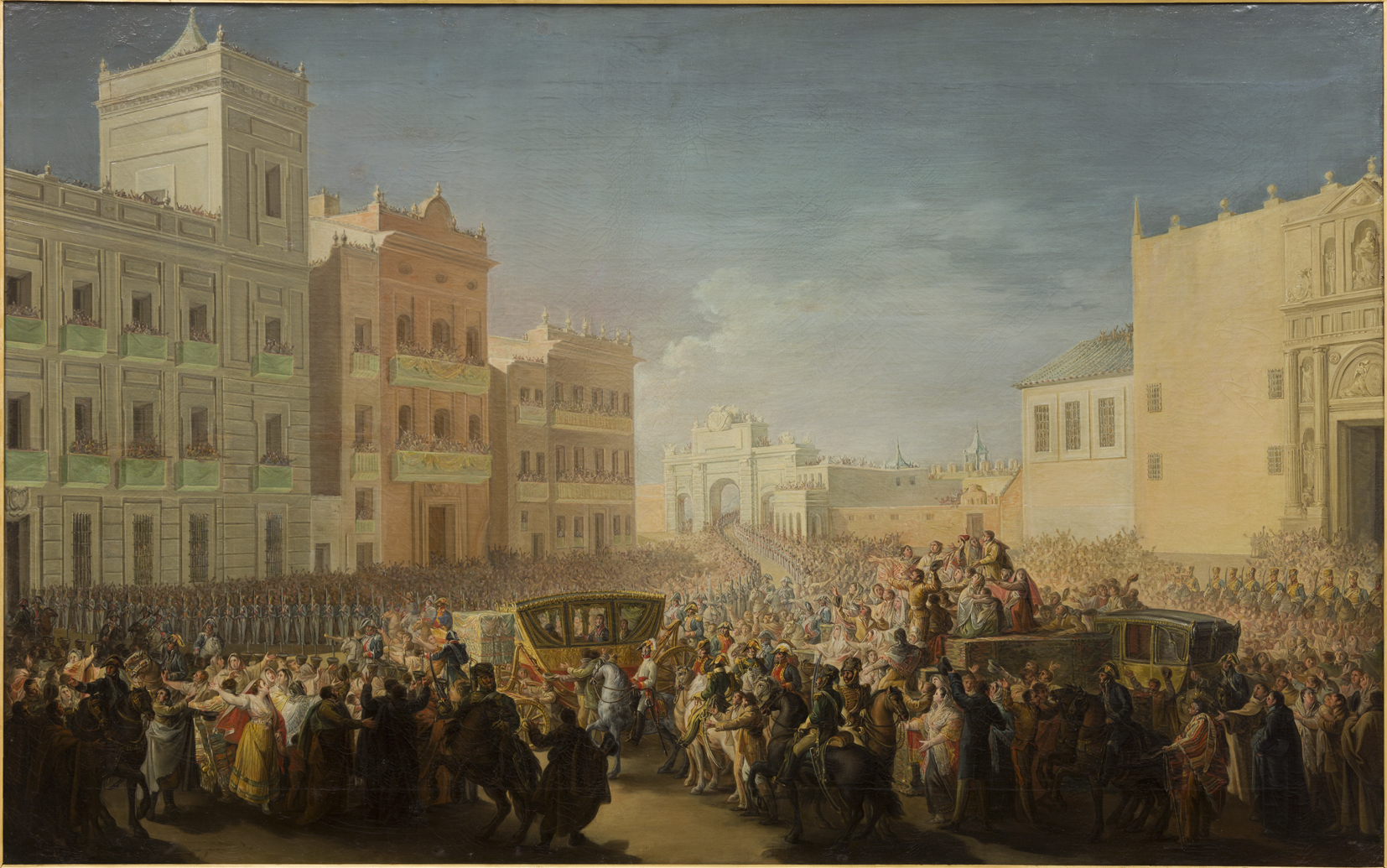
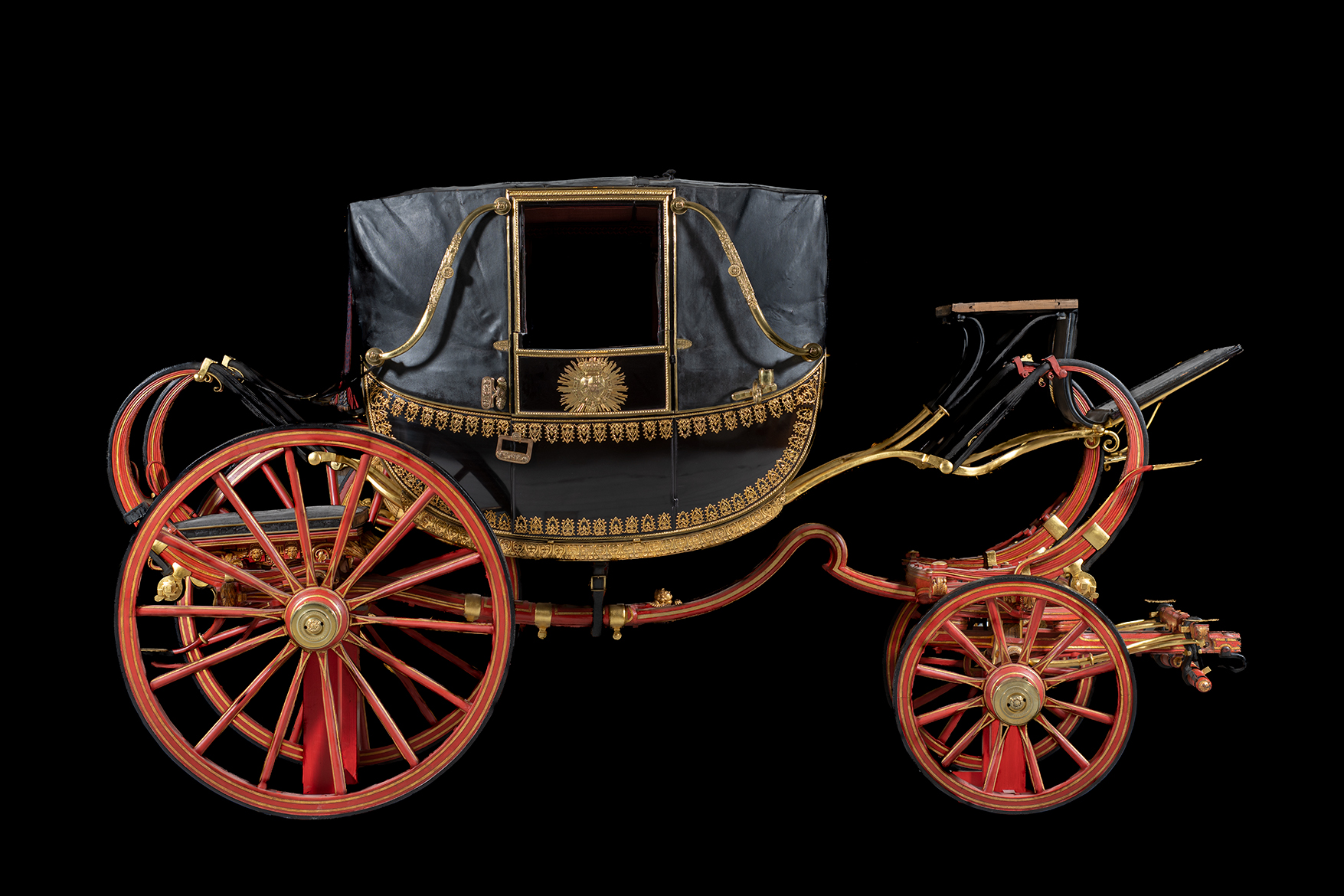
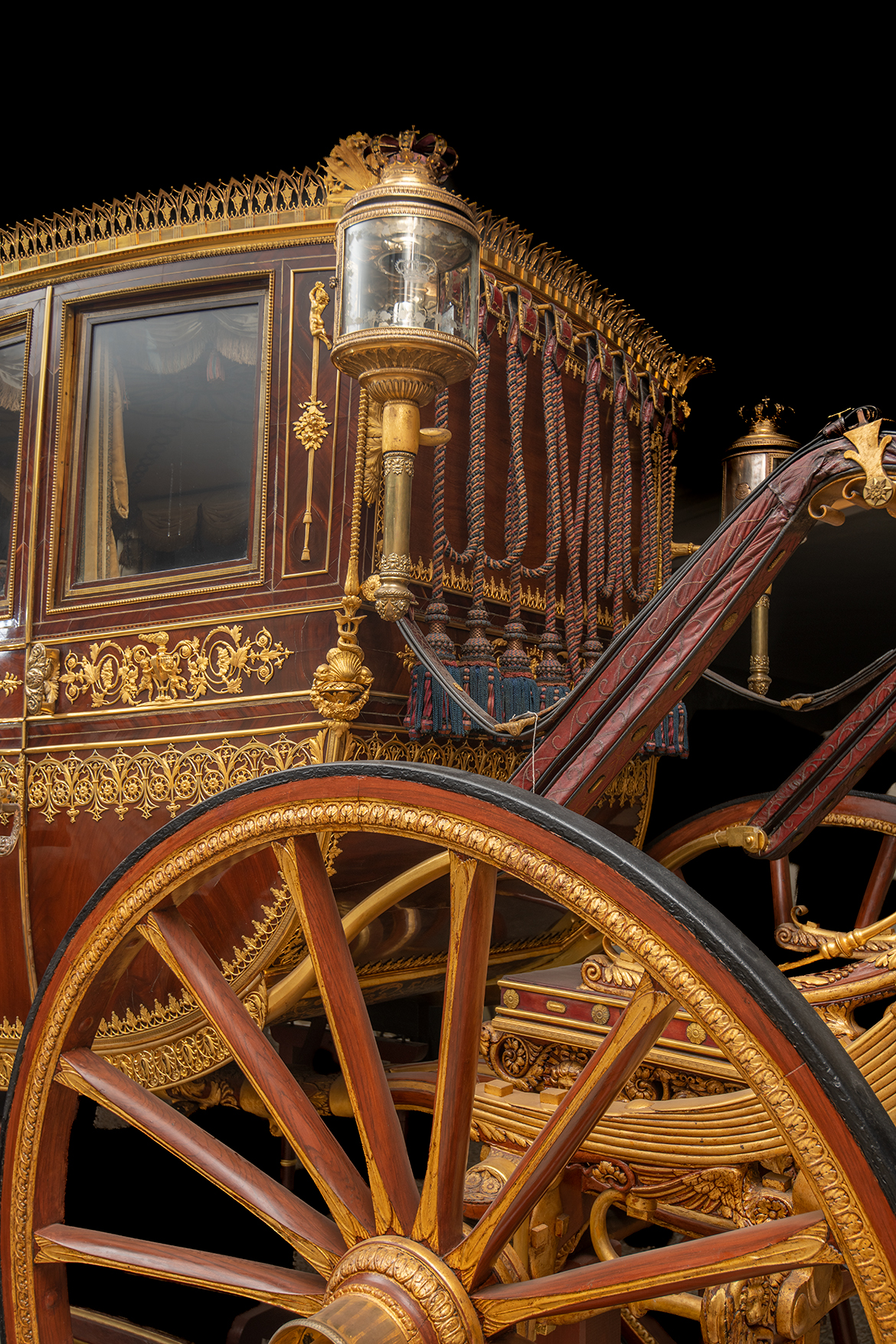
During this period, the older horse-drawn carriages of the Royal Stables were upgraded or replaced by more modern ones, but after the Peninsular War and the departure of Charles IV, there were few carriages that were fit for service. On the occasion of Ferdinand VII’s wedding with his fourth and last wife, Maria Christina of the Two Sicilies, three carriages were commissioned from the Madrid manufacturers Fernando Rodríguez, Julián González and F. Durán, attesting to their high levels of excellence and expertise: the Bronze Landau, the Mahogany Coach and the Royal Crown Carriage.
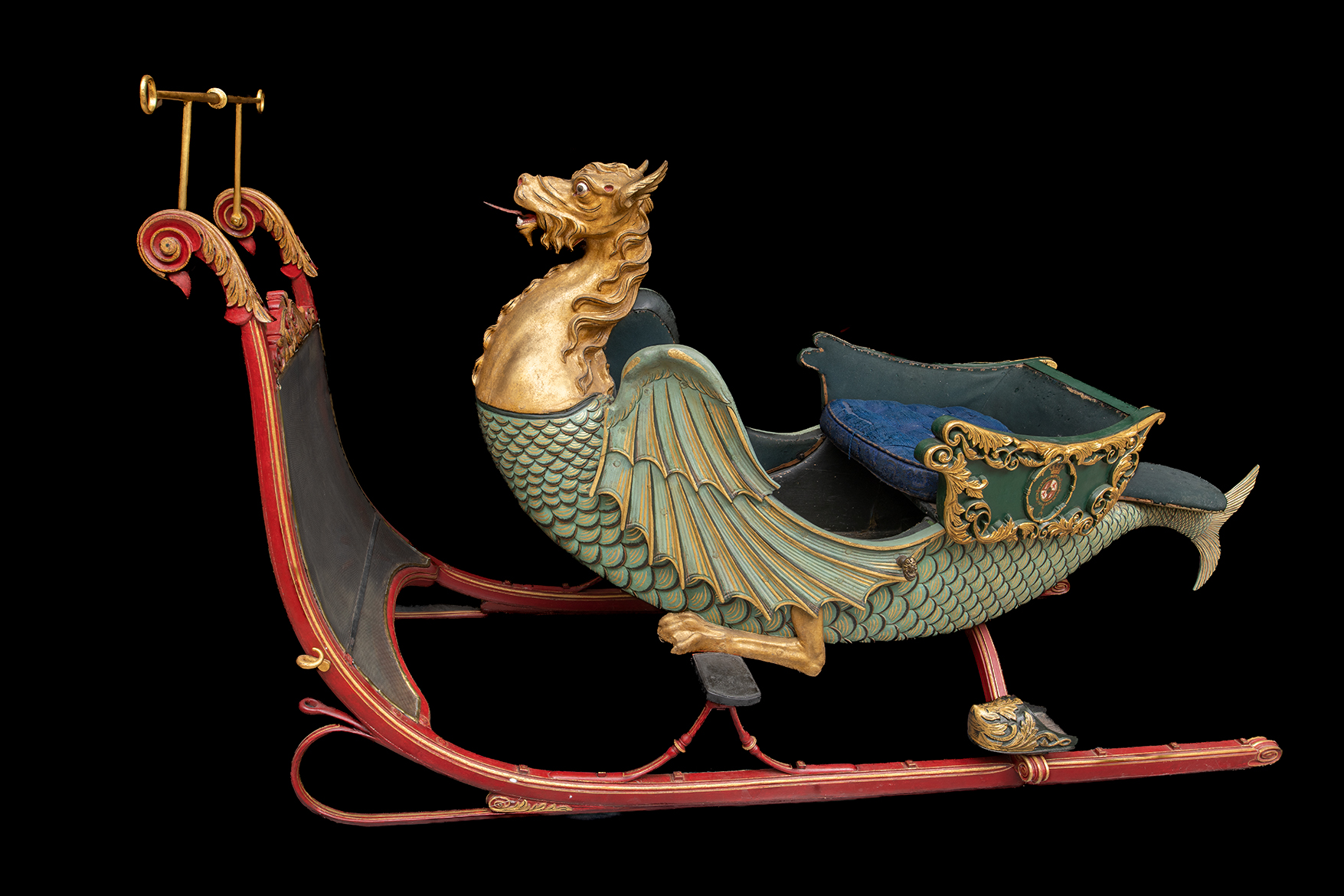
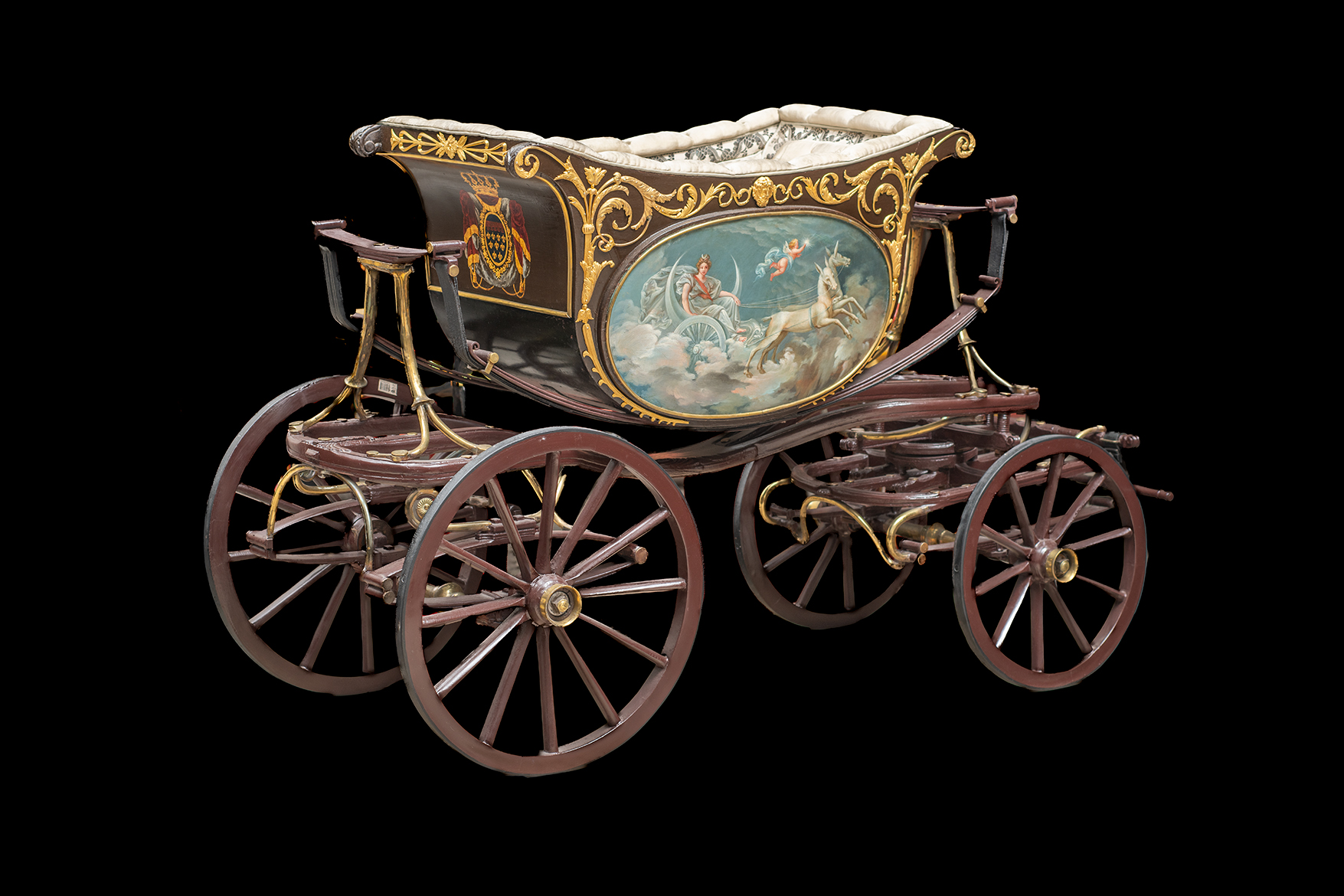
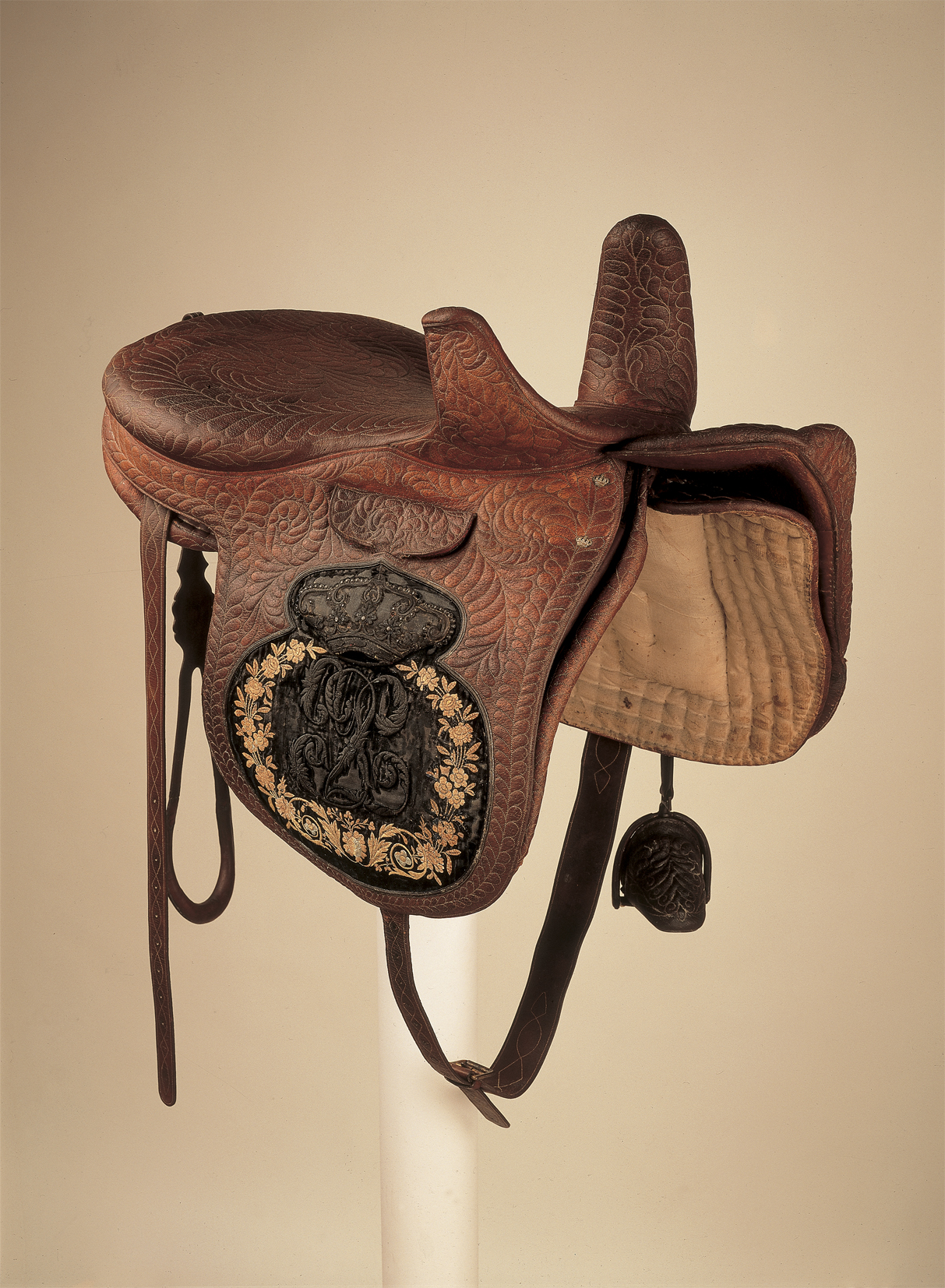
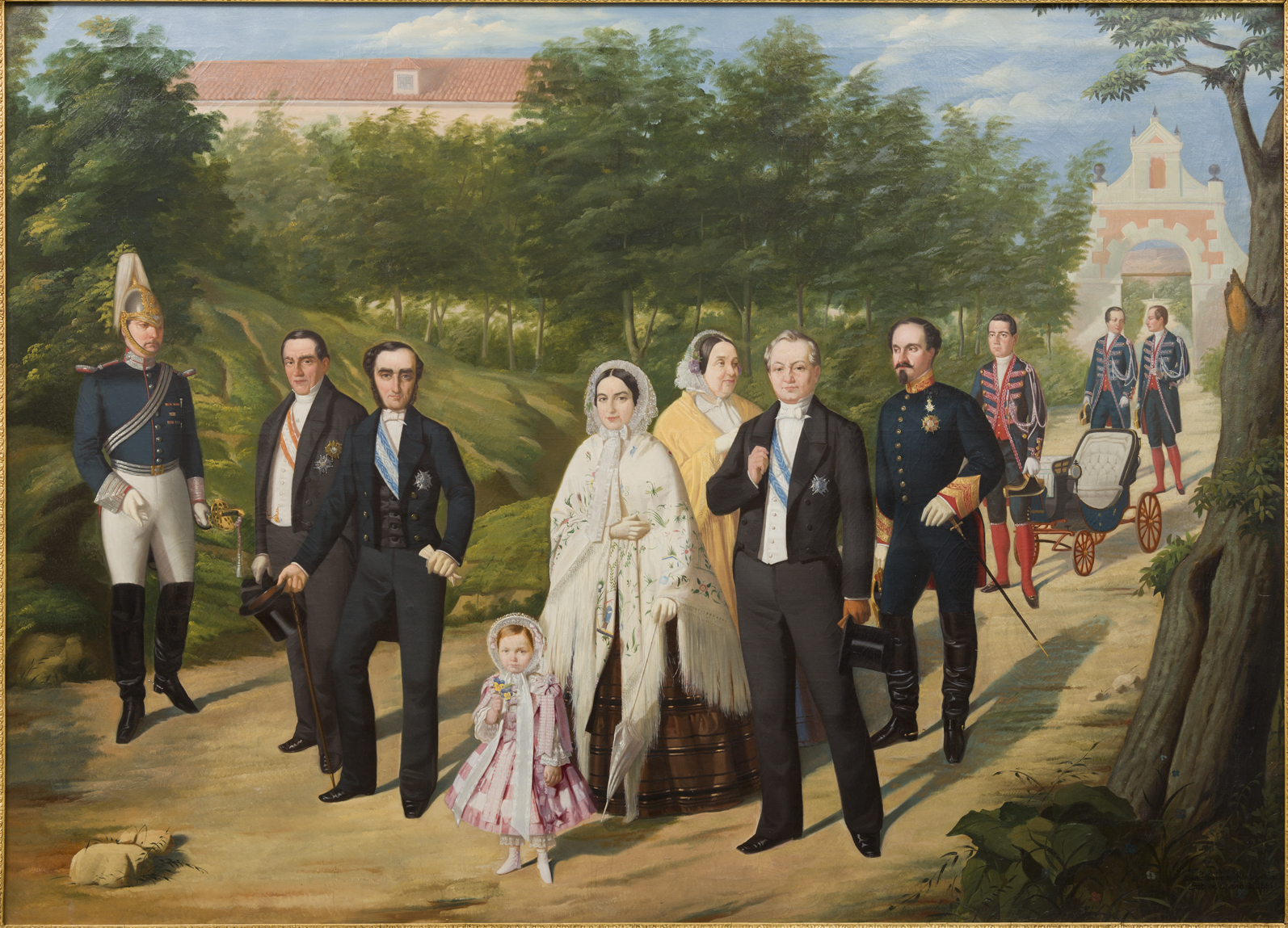
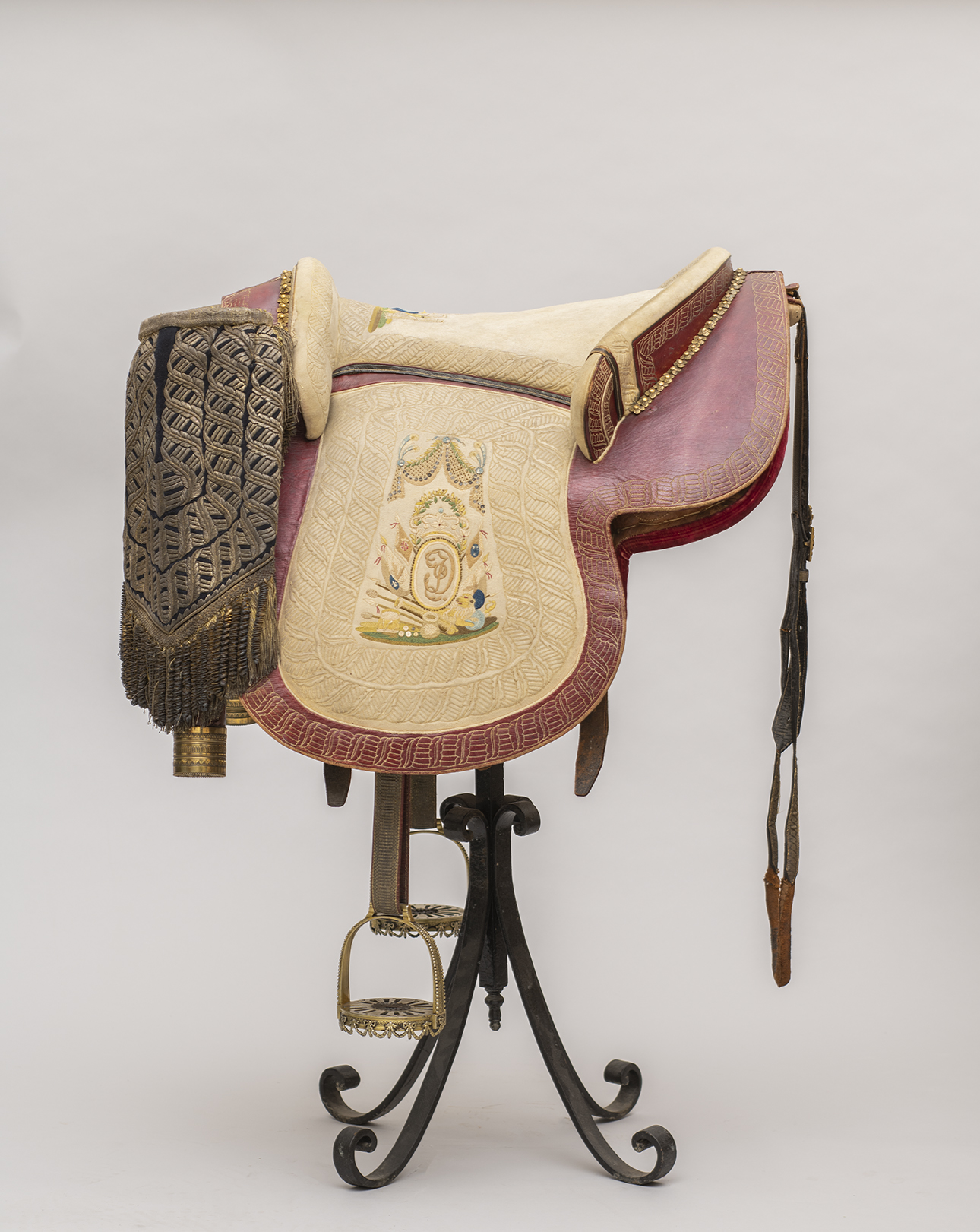
During the 19th century, the middle-class adopted many of the activities formerly reserved for nobles and royalty. Outdoor activities such as hunting, riding in horse-drawn carriage, and sports became increasingly popular amongst wider sections of society. Carriages diversified, and various types emerged in response to new uses: the break carriage and its numerous variants, the "char-à-bancs", victorias, barouches, etc. It was also during this period that children's traps, usually pulled by a dog, ram or pony, gained in importance and popularity. We should also mention the use of sledges in winter, vehicles that had already been in use for centuries.
The advent of the railways and later, the automobile in the 20th century, relegated animal-drawn vehicles to agricultural activities and in the case of carriages, to increasingly specific uses of symbolic importance.
Cutting-Edge Technology in the 20th Century
During the reign of Alfonso XIII (1902-1931), coaches continued to represent the monarchy and were used in ceremonies such as the king’s wedding. They also continued to be used for the presentation of the credentials of new ambassadors, a practice that has been maintained to this day, following the general rules of etiquette established in the 18th century.
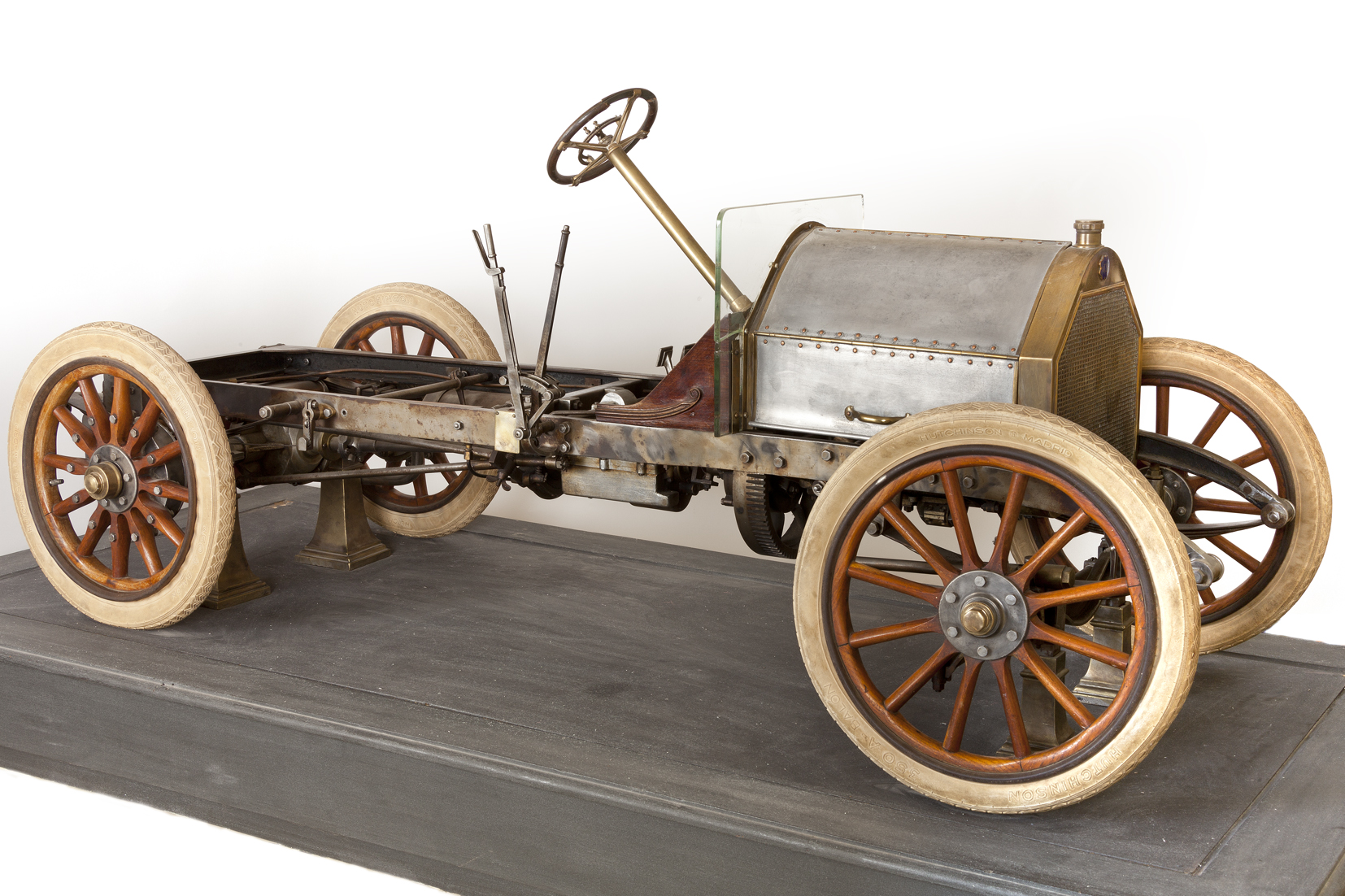
However, the automobile gradually established itself as the main means of transport. Alfonso XIII had been interested in motor racing as a sporting activity from a very young age. He played an active role in promoting the Spanish automobile industry, placing orders with the Elizalde workshops as well as being involved in the development of the Hispano-Suiza company, which built the "Alfonso XIII" model in his honour between 1911 and 1914.
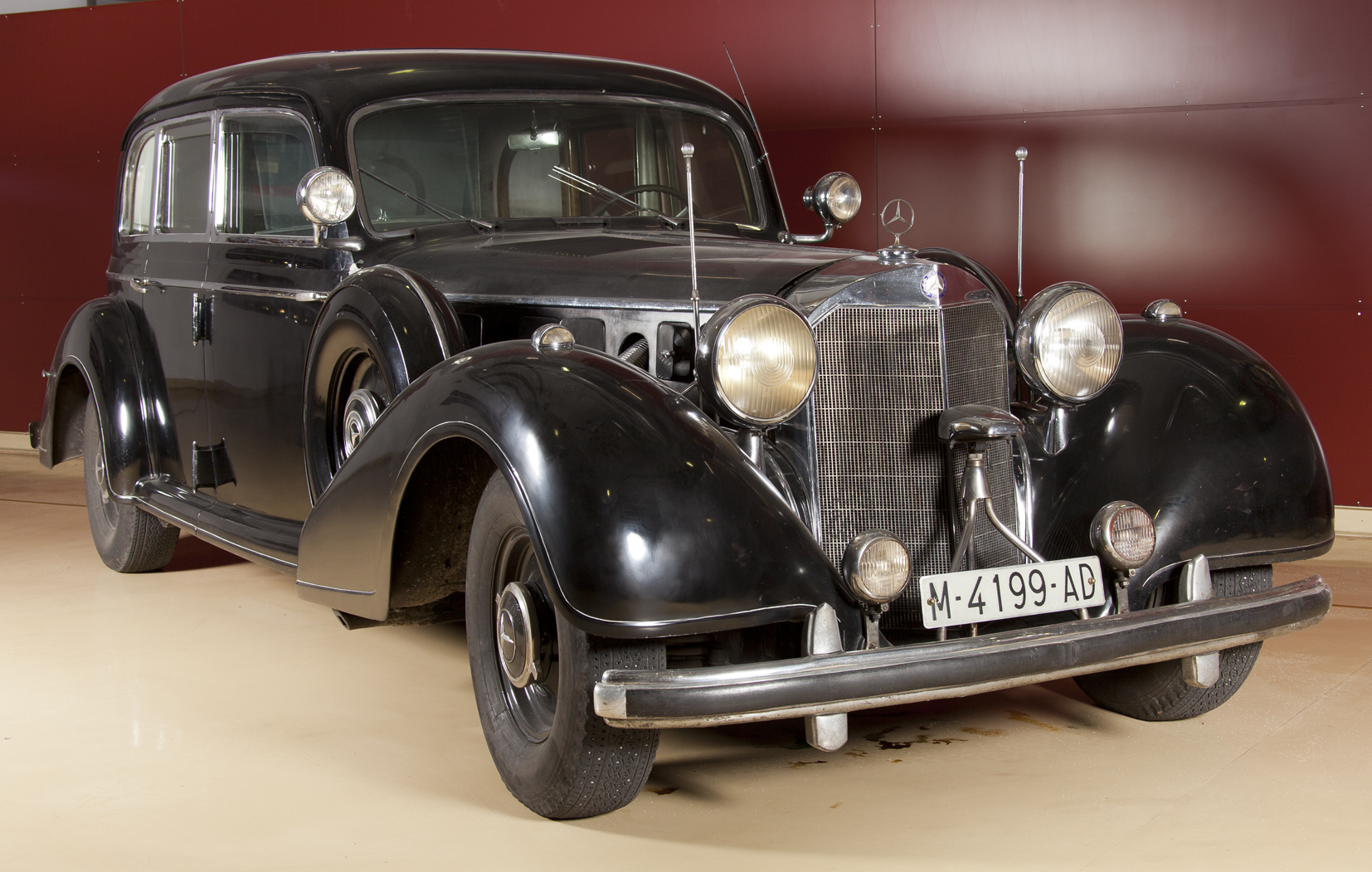
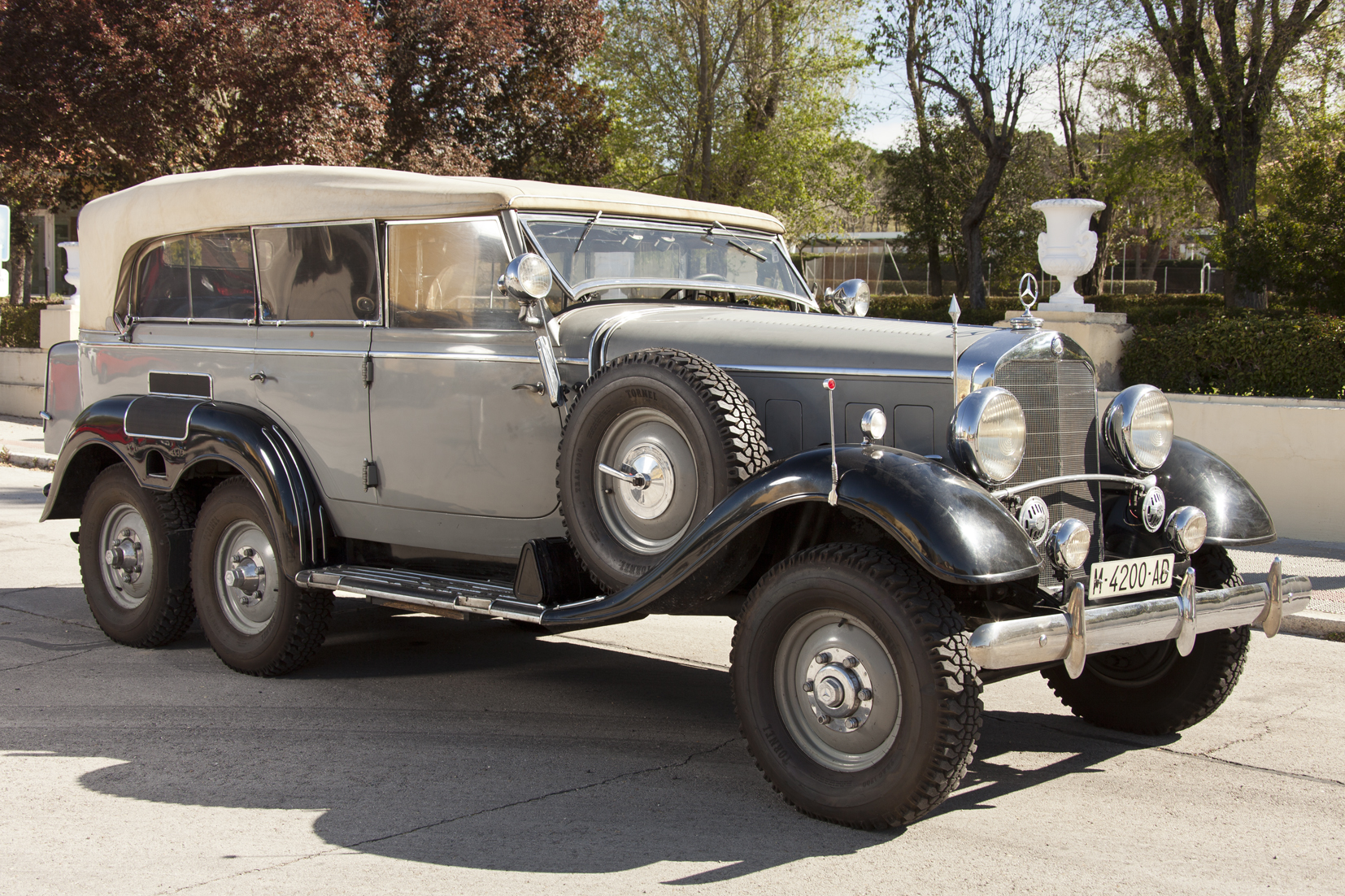
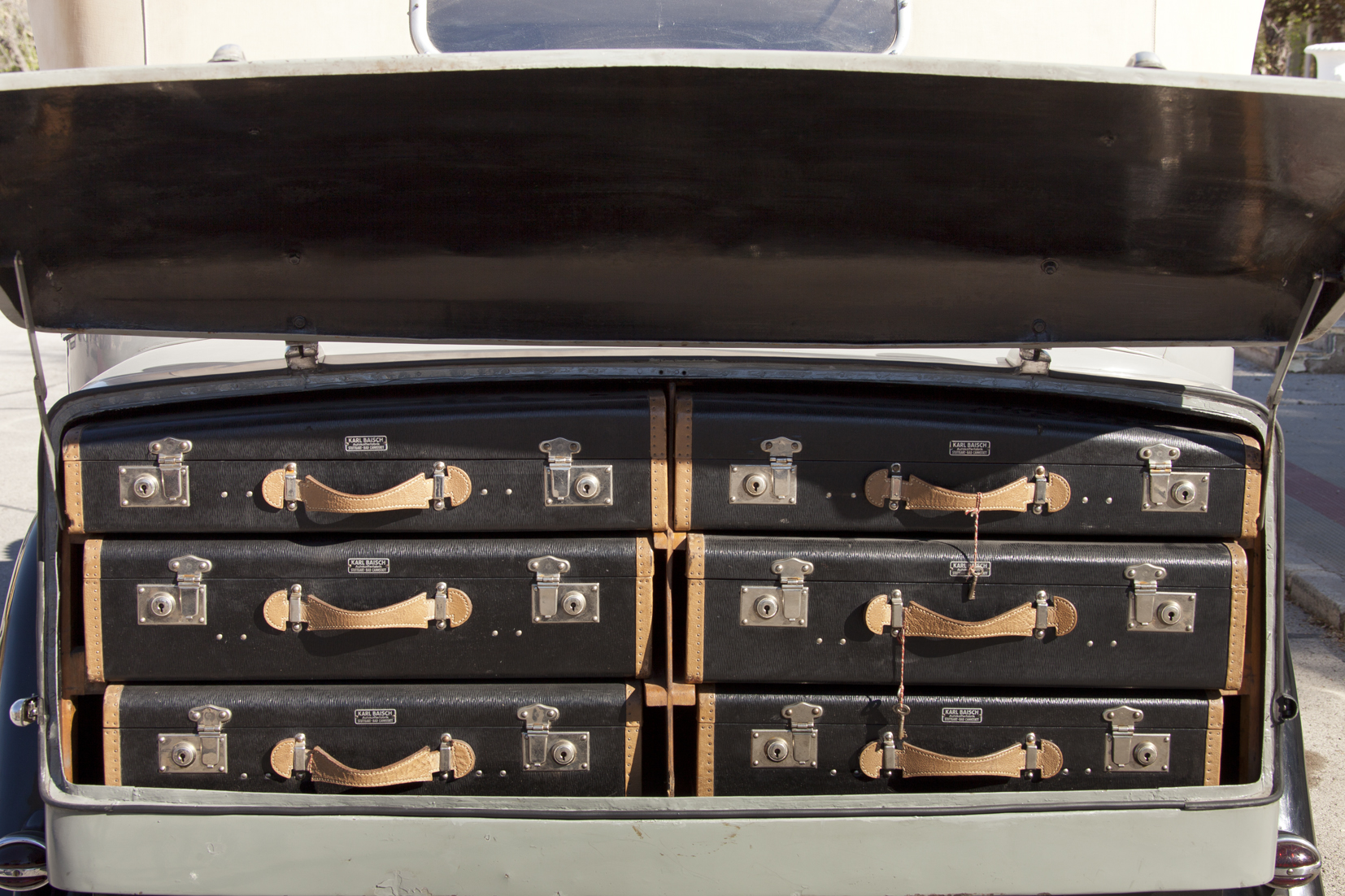
Unfortunately, no cars from that period are held by Patrimonio Nacional, but it does maintain some important vehicles from the history of the automobile, such as the two Mercedes-Benz built between 1939 and 1942, usually exhibited in the Historic Hall of the Royal Guard in El Pardo, and where visitors can also see historical models of Rolls Royce, Cadillac and Harley Davidson motorbikes used in cavalcades to receive Heads of State or for solemn events of great importance.
Works
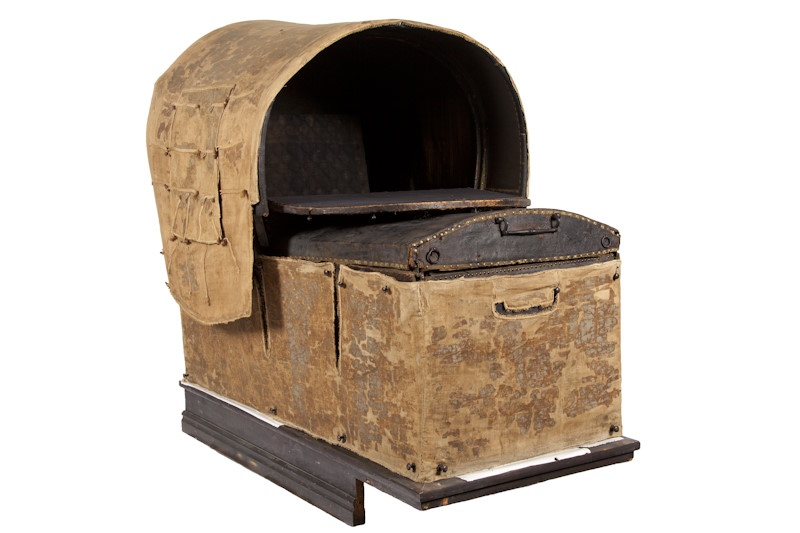
, who likely travelled constantly throughout his life, bringing together the crowns of Castile and Aragon, the Low Countries, Flanders, Burgundy and the Holy Roman Empire. He would have usually travelled on horseback. However, when illness prevented him from doing so, he travelled in a litter. This litter was probably brought with him from Germany in 1552, when he suffered an attack of gout prior to departing from the city of Innsbruck. From the Monastery of Yuste, it was sent to the stables of Philip II and then, due to its historical value, to the Royal Armoury.\\u0026nbsp;\\u003C/p\\u003E\u0022","location":"Patrimonio Nacional. Palacio Real de Madrid","year":"1500-1550","pos":"0"}))
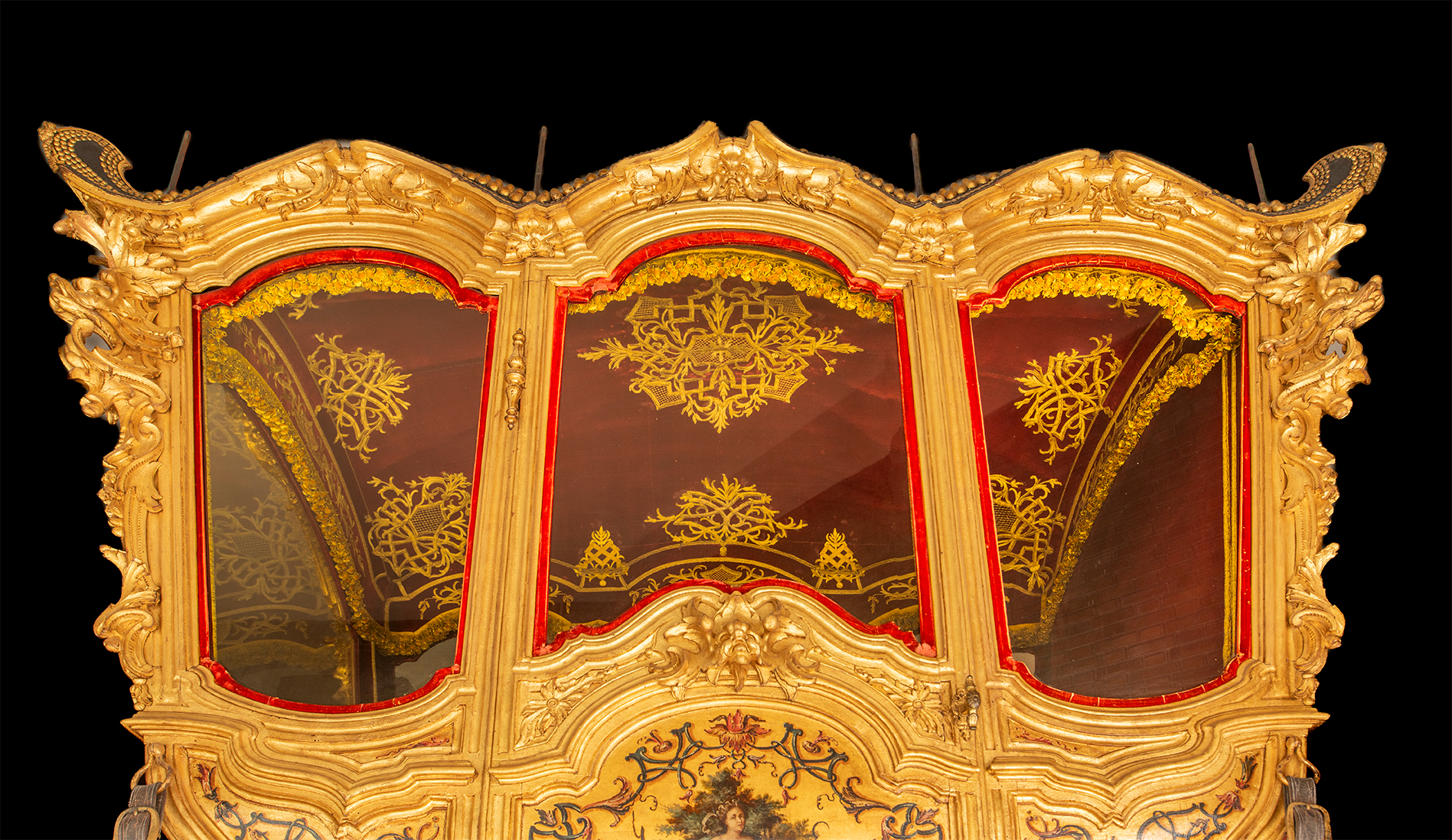
","descdata":"Wood, metal, leather, glass and fabric","image":"https://serviciosgcr.galeriadelascoleccionesreales.es/imagenes/Documentos/imgsem/cc/cca8/cca823ea-5099-fec2-d4dc-3781ed4364f9/863bbc6a-6edd-7982-9463-649f2f89f62a_780.jpg","author":"","desc":"\u0022\\u003Cp style=\\u0022text-align: justify\\u0022\\u003EThe 16th and 17th centuries witnessed the development of the carriage, not only as a more complex means of transport to make journeys more bearable, but also as a result of changes in the etiquette governing the relationship between monarchs and their subjects. \\u0026nbsp;\\u003Cbr\\u003EThe first coaches date back to the 15th century in Central Europe, when chariots evolved to become a representative vehicle of the monarchy. These early coaches have an open trapezoidal wooden body, with a leather or canvas roof - waterproof fabric - on the outside and are lined with cloth on the inside. The wheels are large and the axles are connected by a central rail of considerable thickness, making them very heavy and difficult to manoeuvre.\\u0026nbsp;\\u003Cbr\\u003EMentions of their existence in Castile appear from the mid-16th century onwards and from then on, carriages were notably more present in the stables of Philip II (1527-1598), who used carriages to go hunting or to ride through the countryside. During this period, the entrance of the sovereigns acquired greater ceremonial importance and the use of carriages and sedan chairs multiplied to such an extent that the Queens\\u0027 Stables also gained a highly important role in the Royal Household.\\u0026nbsp;\\u003Cbr\\u003EThis scale model is a faithful reproduction of a coach housed in the Museu Nacional dos Coches in Lisbon. It was probably built at the end of the 16th century and Philip III had likely travelled in it to Portugal in 1619, in order to present his heir Prince Philip to the Portuguese courts. Its age makes it an especially relevant item from a historical perspective.\\u0026nbsp;\\u003Cbr\\u003E\\u0026nbsp;\\u003Cbr\\u003EIt is a horse-drawn carriage, and probably drawn by a team of six to eight horses. It is made of expensive materials: leather-lined wood studded with nails, velvet interiors and rich carved and gilded decorations with floral motifs on the ceiling. Unusually for its time, it has glazed windows. \\u0026nbsp;\\u003C/p\\u003E\u0022","location":"Patrimonio Nacional Royal Palace of Madrid","year":"Circa 1967","pos":"1"}))
 lived. In the foreground, on the right, two ladies seated in a carriage greet a gentleman. It is a wooden coach lined with leather, and a domed roof studded with gilded nails. It has two doors, but without windows, since at the time it was rare for glass to be fitted in carriages, although they did have curtains. The carriage body is clearly visible, with a central axle and leather straps as a suspension system for the body. This is a painting documenting the use of coaches in a courtly context, mainly for noblewomen.\\u003C/p\\u003E\u0022","location":"Madrid. Museo Nacional del Prado","year":"Circa 1627","pos":"2"}))
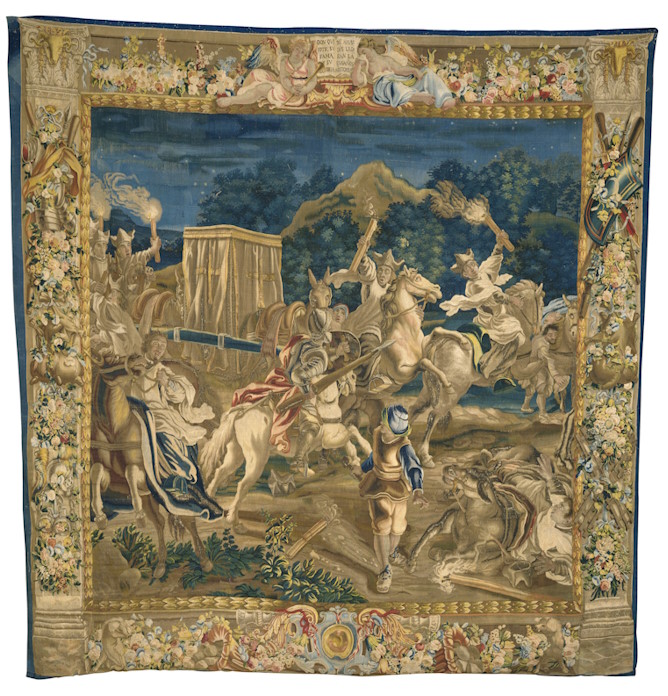
. The figure of Queen Mariana of Austria (1634-1696), the second wife of King Philip IV (1605-1665), can be glimpsed inside the second carriage. They were escorted by staff from the Royal Stables.\\u0026nbsp;\\u003C/p\\u003E\u0022","location":"Madrid. Prado National Museum","year":"Circa 1660","pos":"3"}))
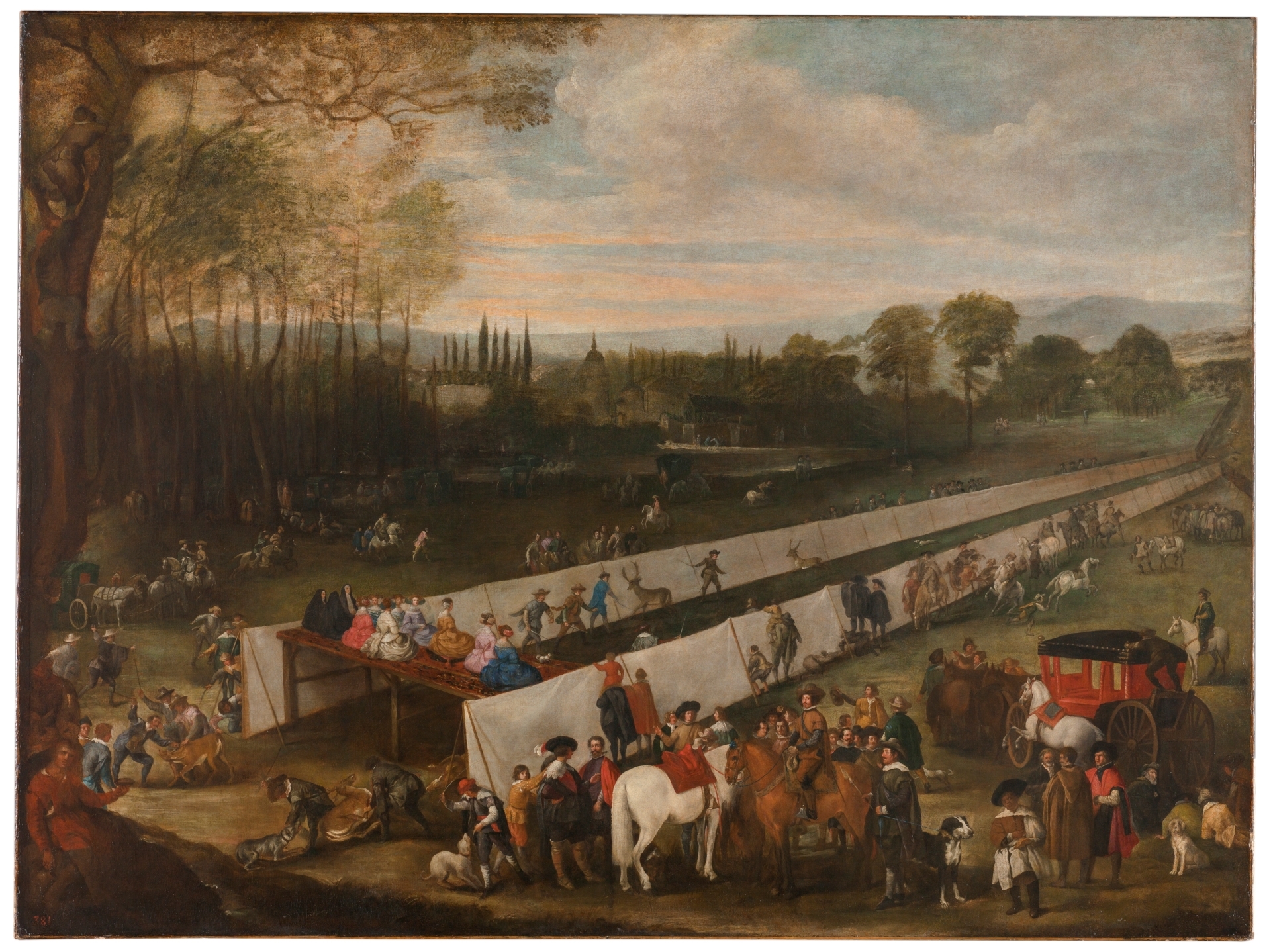
 in the carriage on the far right, could watch the hunt without having to come out.\\u0026nbsp;\\u003Cbr\\u003E\\u0026nbsp;\\u003Cbr\\u003EThese carriages have the green waterproof covers mentioned in certain 17th century travellers\\u0027 texts (Antoine de Brunel, Voyage d\\u0027Espagne, 1665), when referring to outdated carriage models.\\u0026nbsp;\\u003C/p\\u003E\u0022","location":"Madrid. Prado National Museum","year":"1650-1700","pos":"4"}))
)
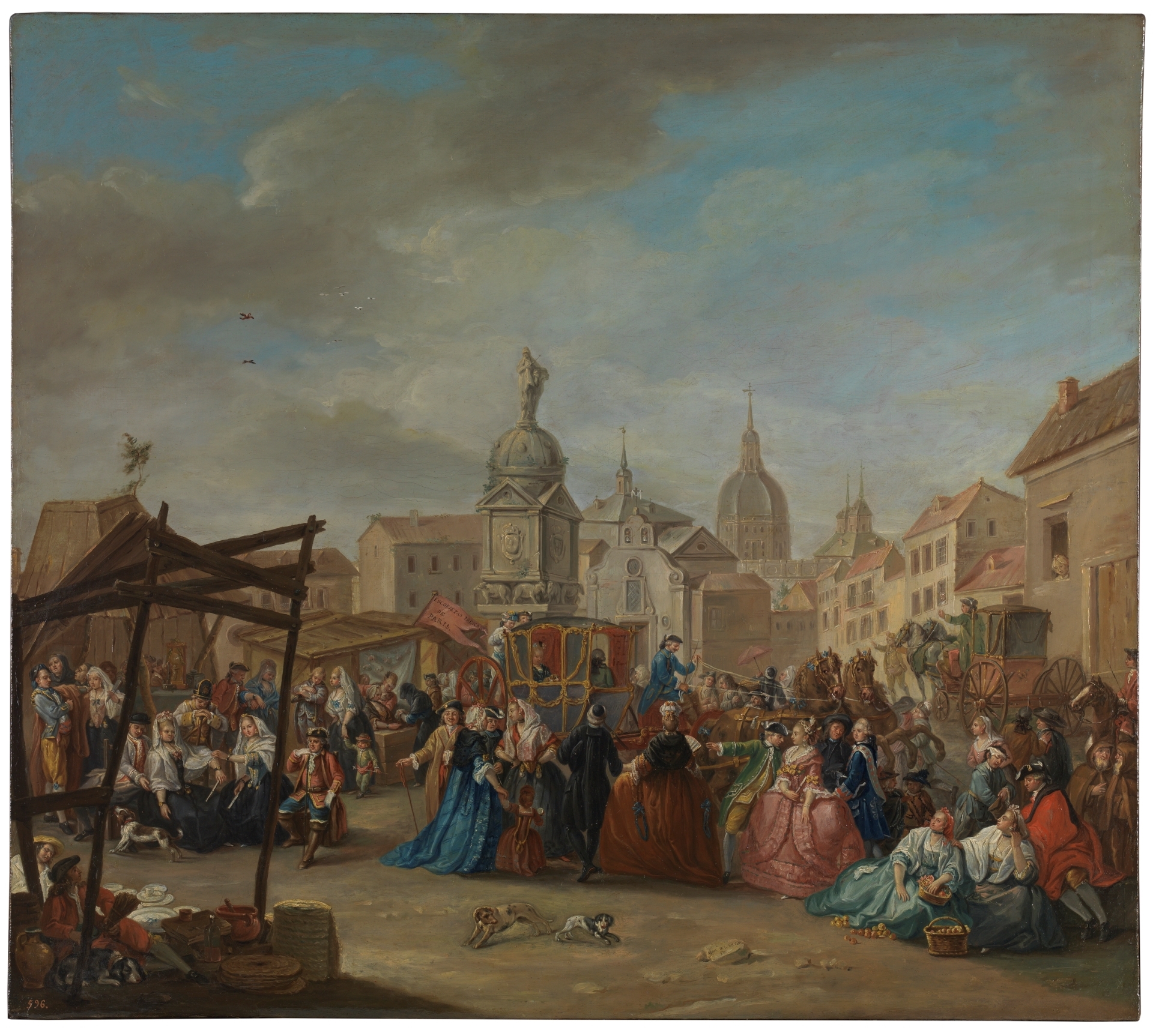
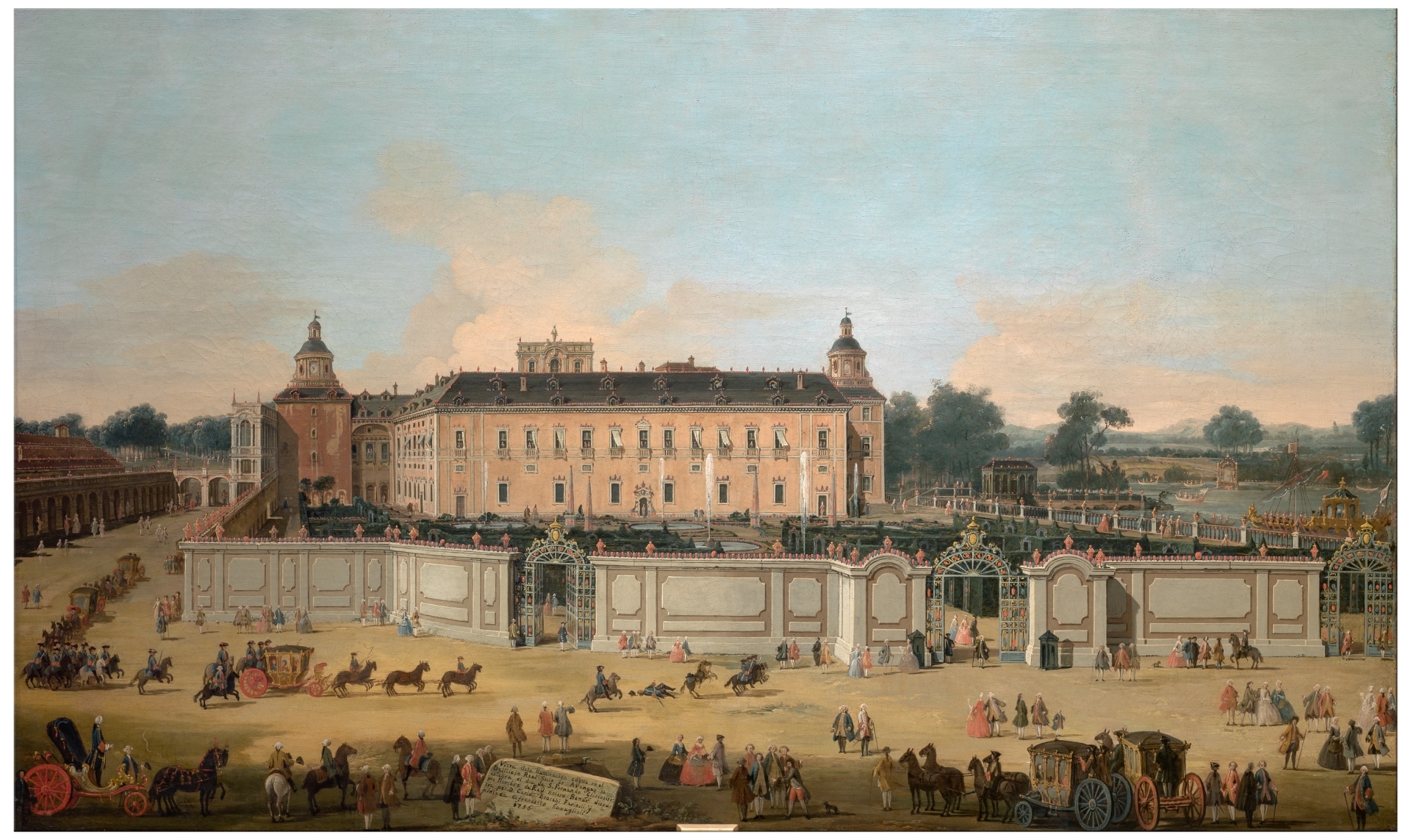
 and B\\u00E1rbara of Braganza (1711-1758), who had been recently married and who appear in the centre of the composition.\\u0026nbsp;\\u003Cbr\\u003E\\u0026nbsp;\\u003Cbr\\u003EThree carriages have been painted on the left side of the painting, corresponding to the type known as the \\u0022estufa\\u201D or cooker in Spain. These were the largest, most ornate and sumptuous albeit slow horse-drawn carriages. The carriage with the carved and gilded decorations and painted panels would have belonged to the princes.\\u0026nbsp;\\u003C/p\\u003E\u0022","location":"Patrimonio Nacional. Royal Palace of Riofrio","year":"Circa 1730","pos":"6"}))
, who married Ferdinand VII in 1816. Neoclassical in style, it is richly decorated with scrolls, garlands, masks and sphinxes. The carriage panels would have been covered with patent leather and the carved decorations gilded. The accompanying explanatory note places special emphasis on the quality of the fabrics, embroidery and trimming of the interior.\\u0026nbsp;\\u003Cbr\\u003EA matching design for a sedan chair, also by Fernando Rodr\\u00EDguez and intended for King Ferdinand VII, is preserved at the Royal Library of the Palace.\\u0026nbsp;\\u003C/p\\u003E\u0022","location":"Patrimonio Nacional. Royal Library of the Palace","year":"1816","pos":"7"}))
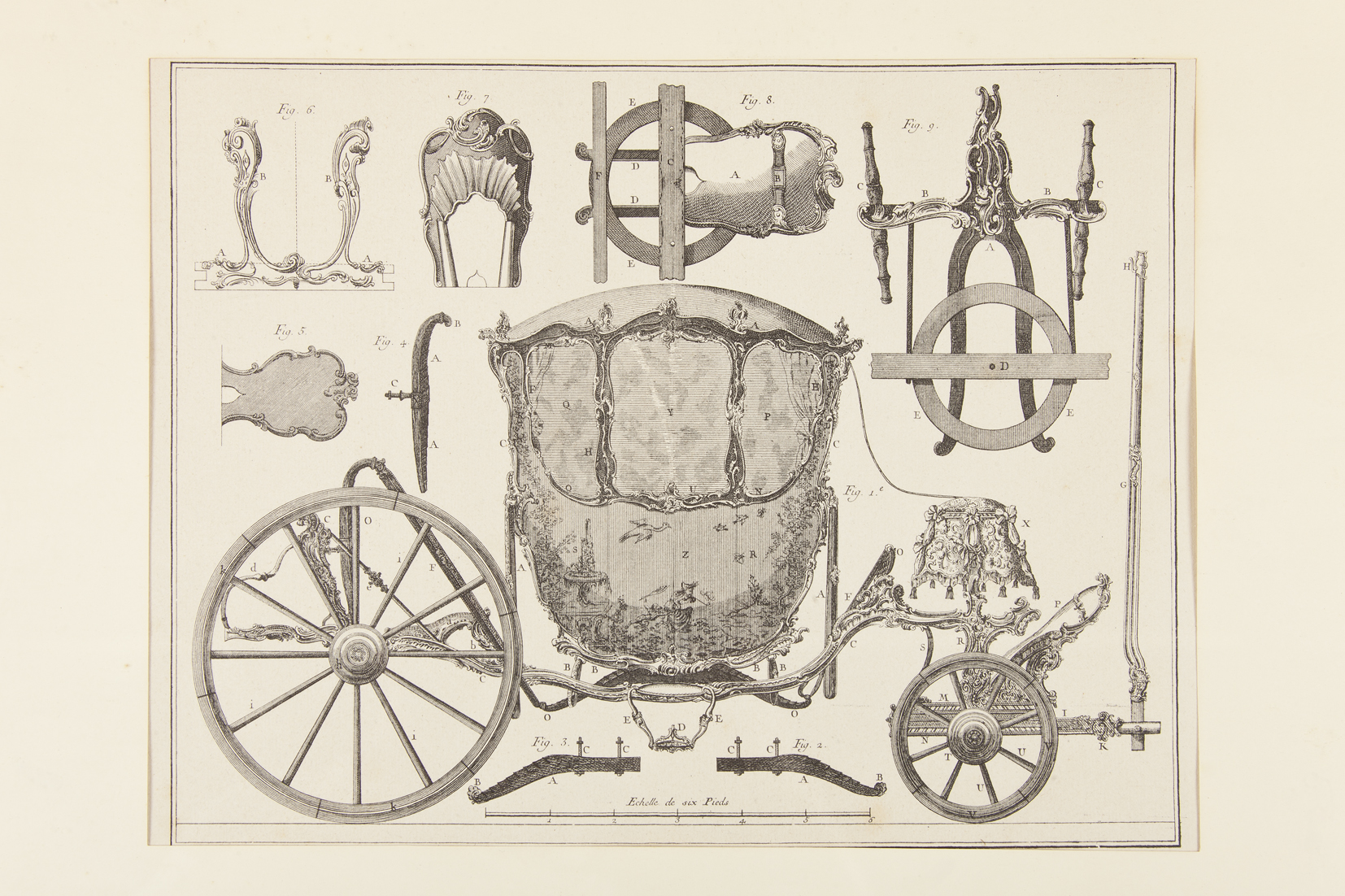
 from design by Jean-D\u00E9mosth\u00E8ne Dugourc (attributed)","desc":"\u0022\\u003Cp style=\\u0022text-align: justify\\u0022\\u003EThis opulent berline is noteworthy for its gold-backed glass decoration with mythological themes inscribed in circular medallions and hexagonal cartouches arranged along a frieze. This ornamentation is characteristic of Jean-D\\u00E9mosth\\u00E8ne Dugourc, who combined various sources of inspiration, such as classical Greco-Roman and Egyptian art. \\u0026nbsp;\\u003C/p\\u003E\\u003Cp style=\\u0022text-align: justify\\u0022\\u003EIt is called the Carriage of Cyphers because the initials of the Queen, Maria Luisa of Parma, appear on both doors, in gold-backed glass medallions. Above these is the signature of D. Calzada, the artist who would have restored this specific part of the decoration in 1875.\\u0026nbsp;\\u003Cbr\\u003EThe building and upkeep of these carriages and sedan chairs required the involvement of multiple specialised craftsmen. A number of important trades had already emerged in the 17th century: the master coachmaker, the painter and the master waxer of coaches and litters.\\u0026nbsp;\\u003Cbr\\u003EHowever, it was in the 18th century when trades related to carriages and sedan chairs became more numerous and even more specialised. The master coachmaker built the body and the undercarriage. The woodworkers were responsible for assembling the panels and the veneering. The saddler worked on all leather pieces, harnesses, reins and saddle straps. Sculptors, gilders, bronzeworkers, patent leather workers, painters, miniaturists and letterists were involved in the finishing of the carriage body and other decorative details.\\u003Cbr\\u003EThe fabrics were extremely important, as they made the interiors comfortable and contributed with their colour and shine to the overall aesthetics of the carriage, since they could be seen from the outside.\\u0026nbsp; The interiors were usually furnished with silks and decorated with gold and silver threads. They were also embroidered and embellished with trimming and ribbons.\\u003Cbr\\u003E\\u0026nbsp;\\u003C/p\\u003E\u0022","location":"Patrimonio Nacional. Royal Palace of Madrid","year":"Circa 1799","pos":"8"}))
)
)
)
","desc":"\u0022\\u003Cp style=\\u0022text-align: justify\\u0022\\u003ECarriages for children started to gain greater importance during this period. The first carriage of the future Queen Isabella II (1830-1904) was commissioned in 1831 by King Ferdinand VII (1784-1833) and Queen Maria Christina of the Two Sicilies (1806-1878) from Manuel D\\u00EDaz Cervantes, the Master of Carriages at the Royal Stables, when the little heiress was not yet one year old. It consists of an open-top carriage, with room for a single occupant. The body is decorated with paintings depicting Apollo and Diana in their chariots as allegories of day and night respectively, as well as the royal coats of arms on the sides.\\u0026nbsp;\\u003Cbr\\u003EIts small size meant that it was suitable for drawing by dogs or rams . For a vehicle of this size, it has a highly original and elaborate suspension system.\\u0026nbsp;\\u003C/p\\u003E\u0022","location":"Patrimonio Nacional. Royal Palace of Madrid","year":"1831","pos":"12"}))
)
)
)
)
Carlos I
1016-1065
description
Miami
Lorem ipsum dolor sit amet consectetur. Nunc cursus sit augue pellentesque. Adipiscing erat non ipsum commodo morbi vitae. Pellentesque nec enim quis vel vel hendrerit faucibus. Erat nisl commodo maecenas adipiscing.
Lenders and collaborators: Museo Nacional del Prado y Sala Histórica de la Guardia Real (El Pardo)
Curator: María Isabel Rodríguez Marco
Head of Exhibitions and Publications Department: Carmen Cabeza Gil-Casares
Temporary Exhibitions Coordinator: Isabel Morán Suárez
Technical Coordinator: Ana María Castañeda González
Museographic Design: El taller GC
Museographic Installation: Arteria Logística del Arte S.L.
Transport: Unidad de Traslados de Patrimonio Nacional, SIT
Insurance: Es Arte Deleitosa, S.L. Seguros Axa Art Versicherung AG Sucursal España
Audiovisual production: Arena Producción Audiovisual, S.L.
Edited by: Patrimonio Nacional
Publications Coordinator: María Dolores López Marín
Editorial Design and Desktop Publishing: This Side Up