Loading...

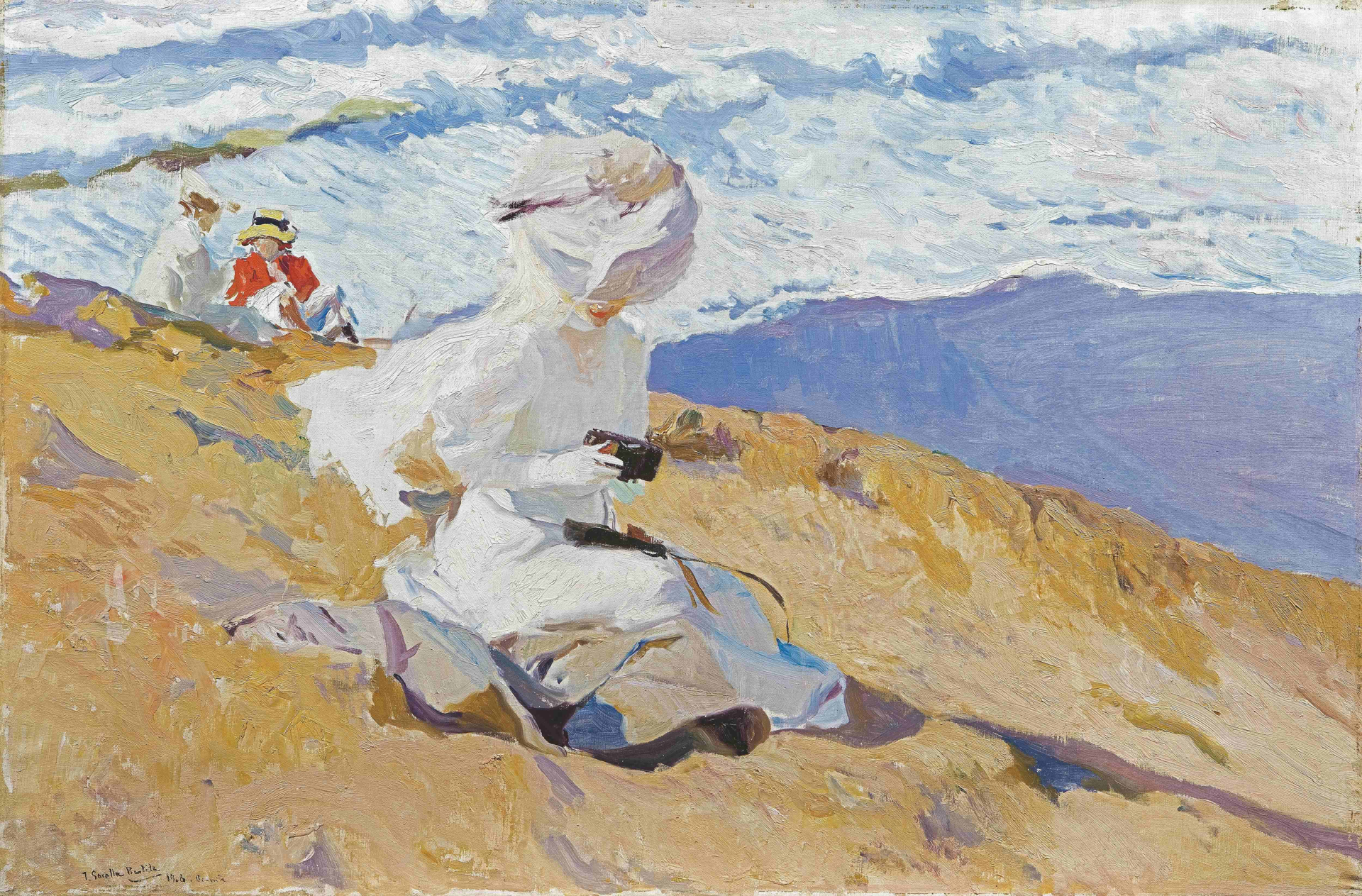
The Royal Collections Gallery will host the exhibition from October 17, 2024 to February 16, 2025. Organized by Patrimonio Nacional and Light Art Exhibitions, in collaboration with the Museo Sorolla and the Fundación Museo Sorolla, this exhibition celebrates the work of Joaquín Sorolla on the centenary of his passing.
“Sorolla, a hundred years of modernity” brings together 77 paintings representing all phases of the artist’s production and his main themes. Many of these are among his most important and highest quality works, with some rarely or never seen before in Spain. The Museo Sorolla, which will temporarily close for renovation in October, will move its most iconic works to this exhibition.
The works come from institutions holding the finest collections of the painter, including the Museo Sorolla and the Fundación Museo Sorolla, the Hispanic Society of America, the Museo del Prado, the Musée d’Orsay, as well as private national and international collections, including some from the United States and Mexico.
The exhibition, curated by Blanca Pons-Sorolla, Consuelo Luca de Tena, and Enrique Varela Agüí, highlights the relevance and modernity of Sorolla’s work, demonstrating its continued significance a hundred years after his death.
Buy Tickets
-
Opening Hours
Monday to Saturday from 10 am to 8 pm. Sundays and Bank Holidays from 10 am to 7 pm.
-
Admission
- Cuesta de la Vega: visits for pre-booked groups and temporary exhibitions. (From October to March, entry and exit via Cuesta de la Vega will only be possible between 10am and 6pm)
- Plaza de la Armería: visits the Royal Collection Gallery and temporary exhibitions
-
Organised by
Patrimonio Nacional and Light Art Exhibitions, in collaboration with the Museo Sorolla and the Fundación Museo Sorolla
Introduction
The figure of Sorolla has come down to us today in fine fettle. Shining brightly, he is now increasingly well-known and appreciated, and publications and exhibitions of his work have burgeoned. This show, which brings the celebrations of the Sorolla Centenary to a close, is intended as a tribute to his painting, its quality, its beauty and its continuing appeal.
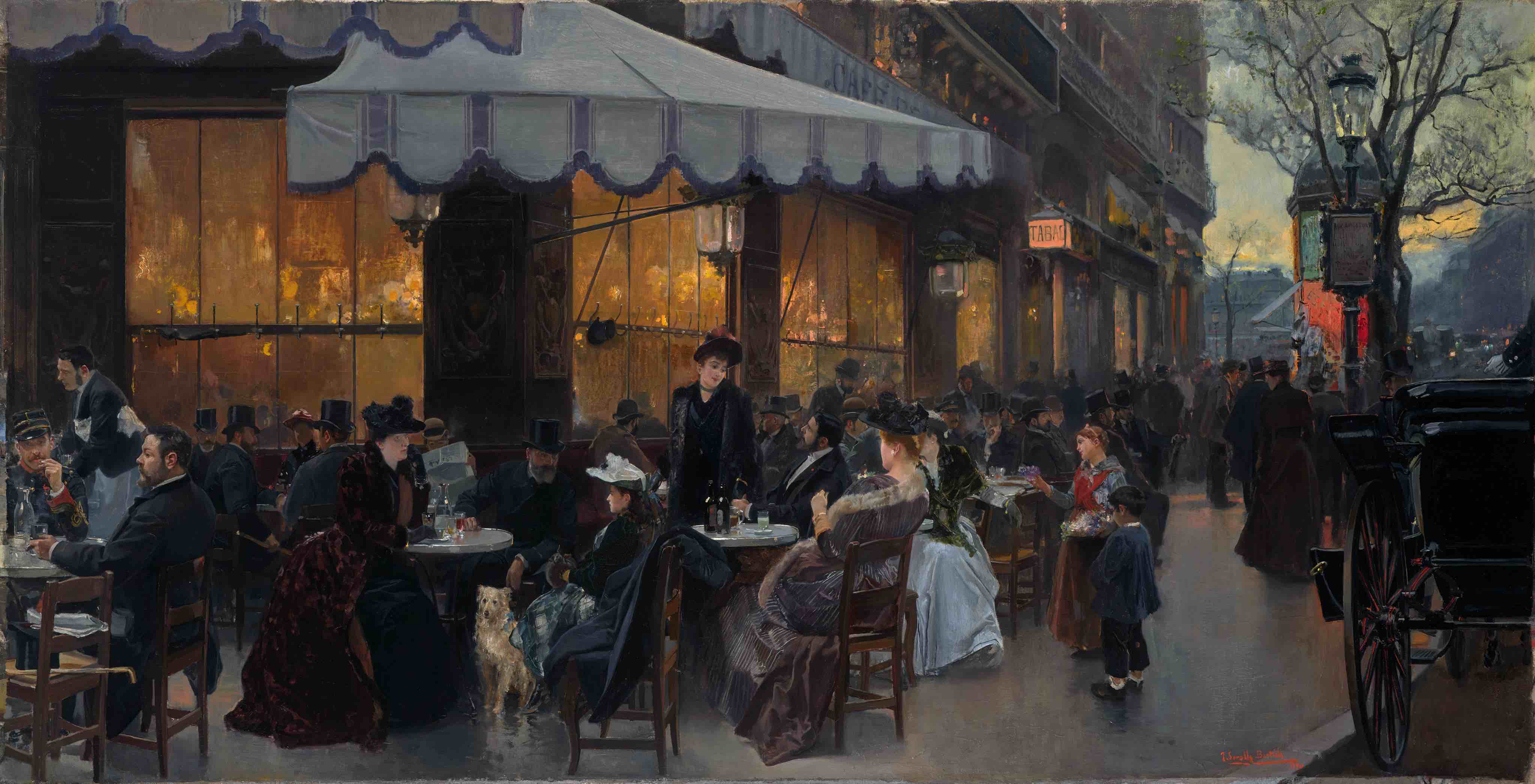
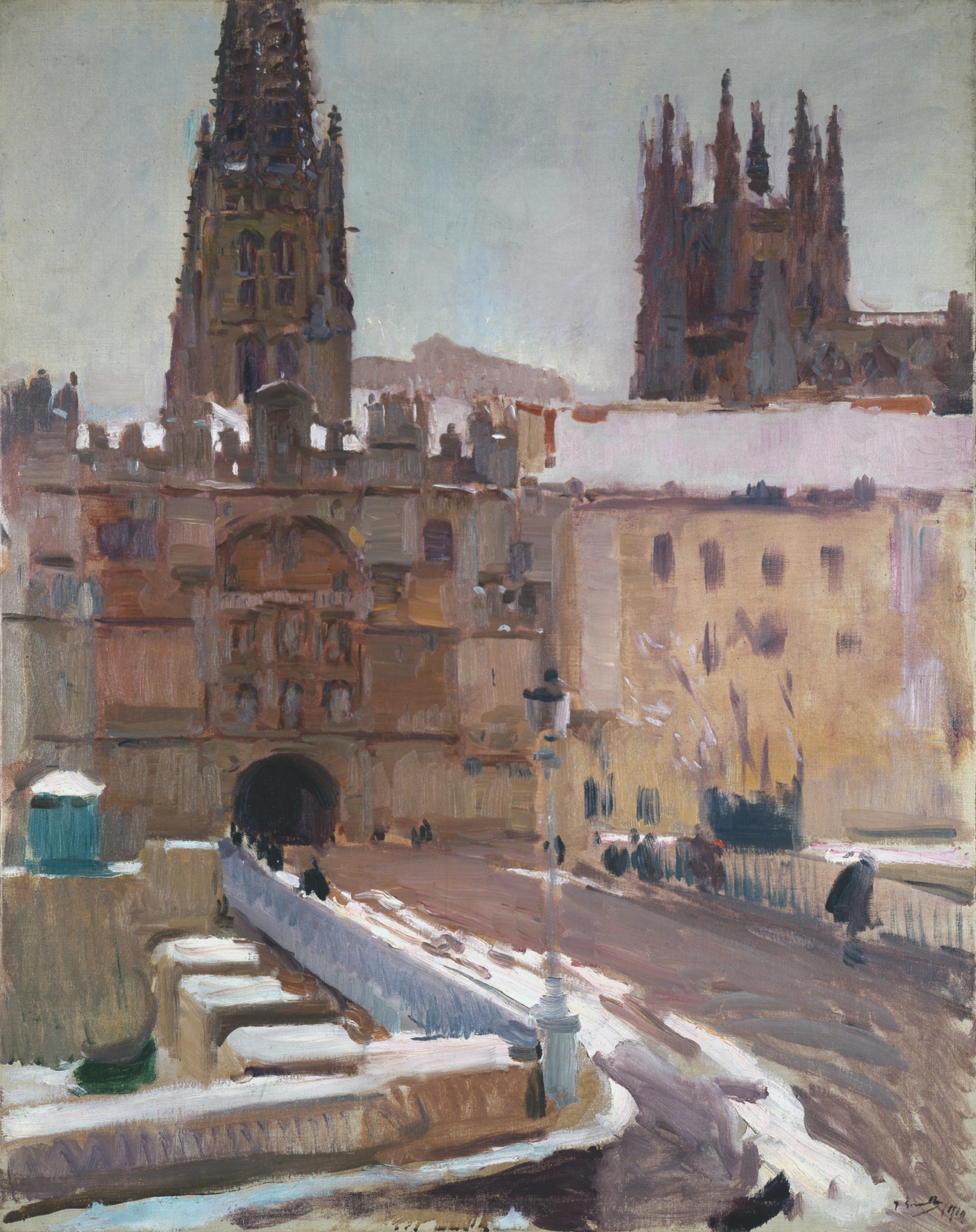
The exhibition brings together significant works from all his periods and all the main themes encompassed by his production, including some from foreign museums and collections and others from private collections. Among them are some absolute novelties like Paris Boulevard, a work that was believed lost and has never been shown publicly until now.
The exhibition is organised in five sections: "Path to Success", "The Ever-changing Sea", "Feeling the Portrait", "Vision of Spain", "From Landscape to Garden".
Path to Success
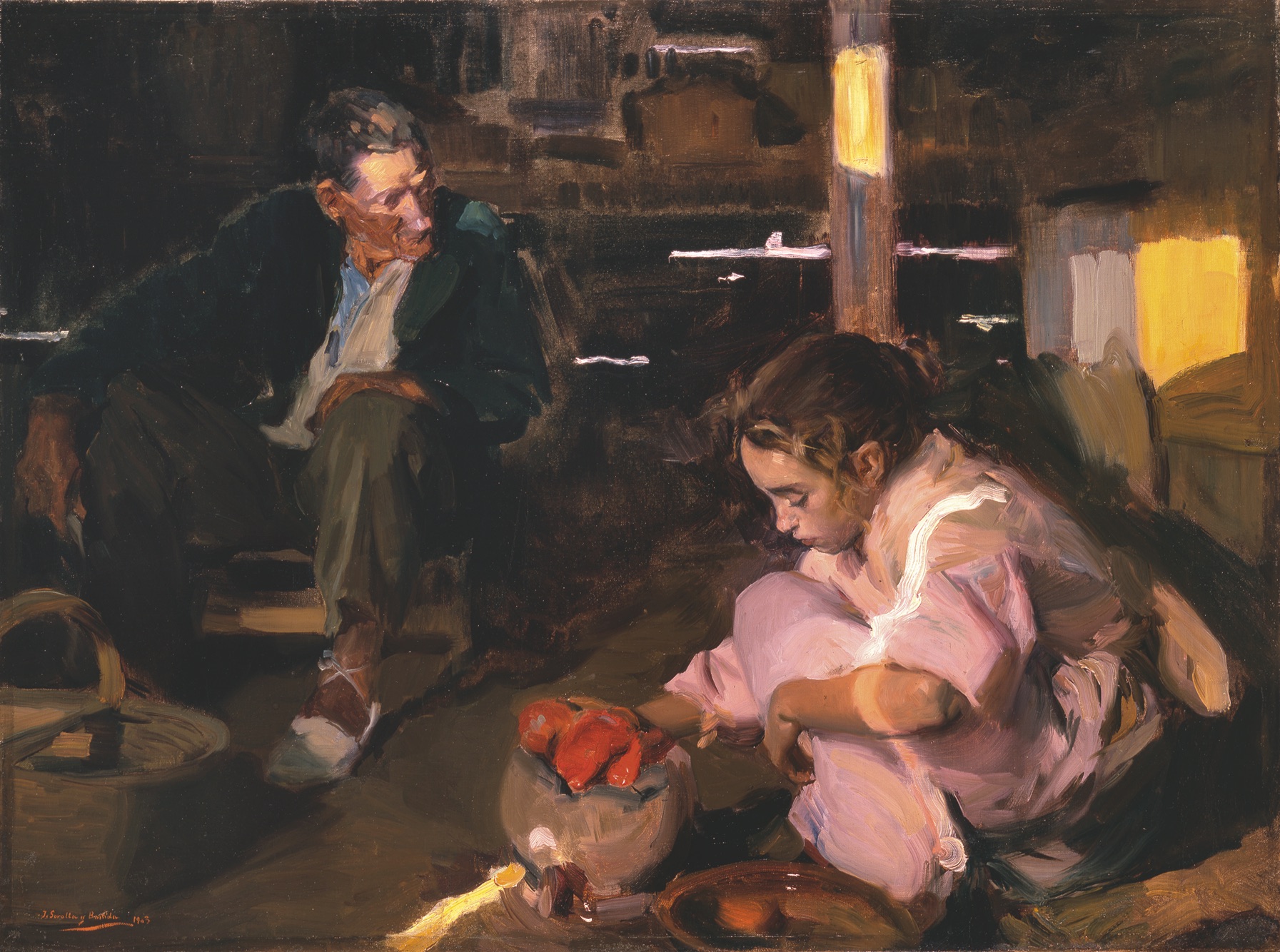
From the start, Joaquín Sorolla realised that success in exhibitions and salons was the key to living off his art. With a solid academic grounding and exceptional skill as a painter, he set out to win as many prizes as possible. Both his works portraying everyday life and those denouncing social injustices brought him a solid prestige in the art world that was corroborated by numerous medals. His unique approach to the painting of local custom also entranced the public and catapulted him to fame.
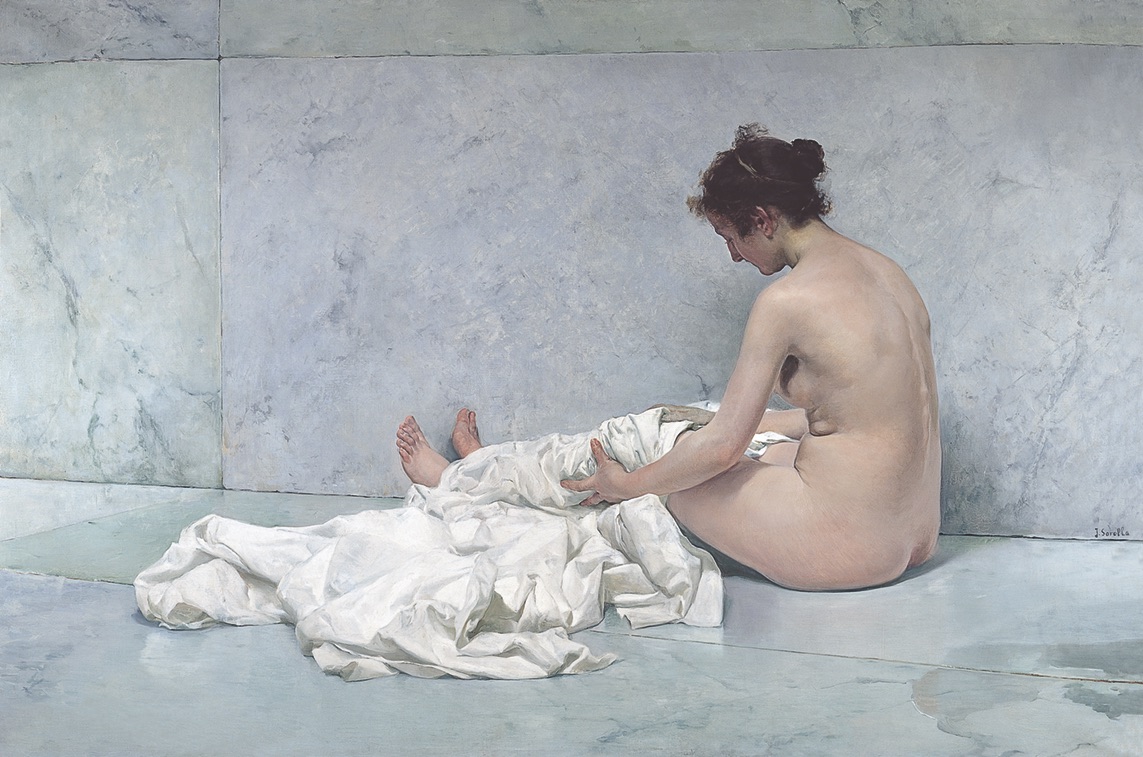
His path to success had begun in Madrid in 1884 and was subsequently consolidated by emblematic works like Paris Boulevard (1890), After Bathing (1892), And They Still Say Fish is Expensive! and Return from Fishing (1894). In 1900, he reached the pinnacle of his career when he won a Grand Prix at the Universal Exposition in Paris, followed in 1901 by the medal of honour in Madrid.
The Ever-changing Sea
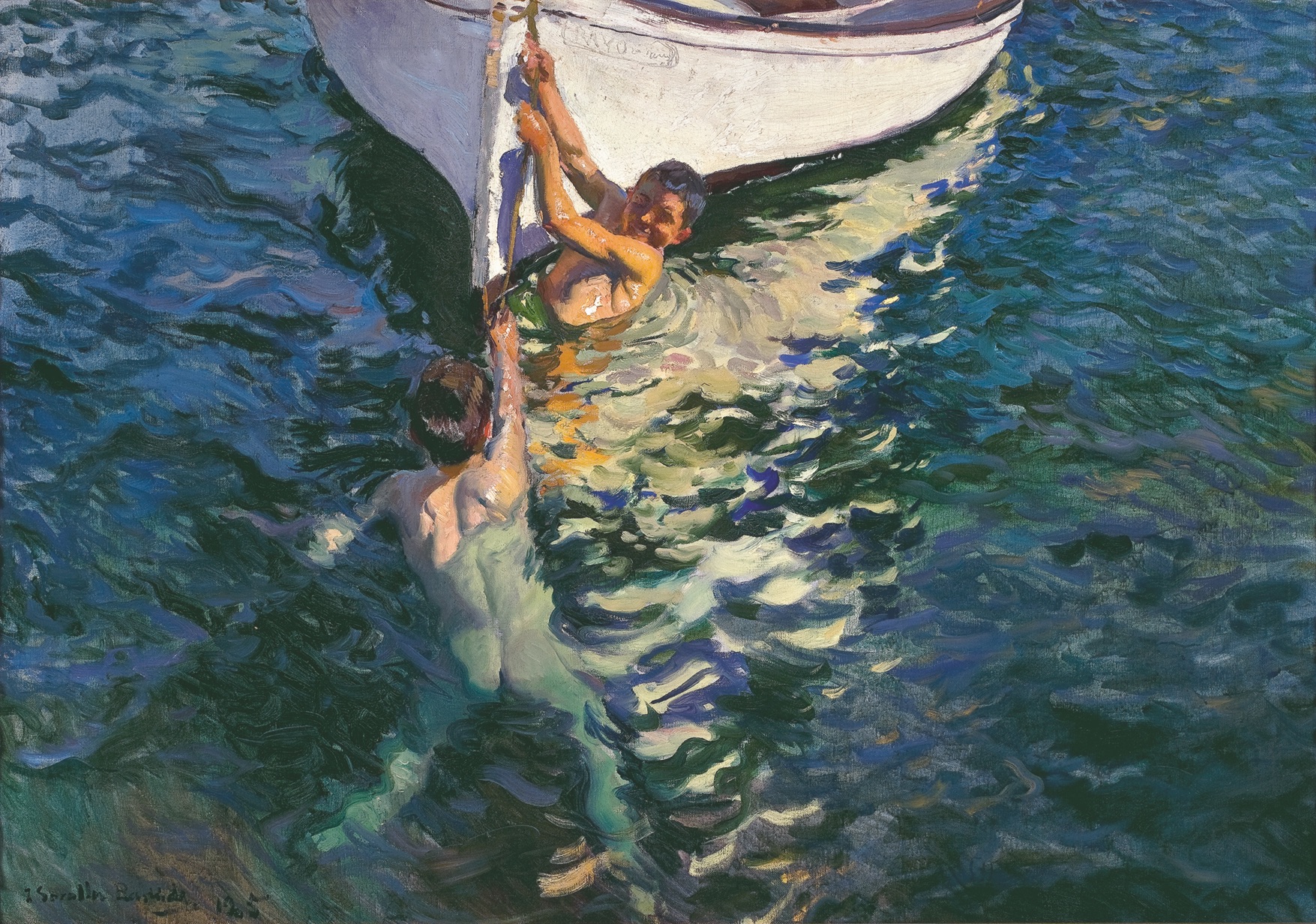
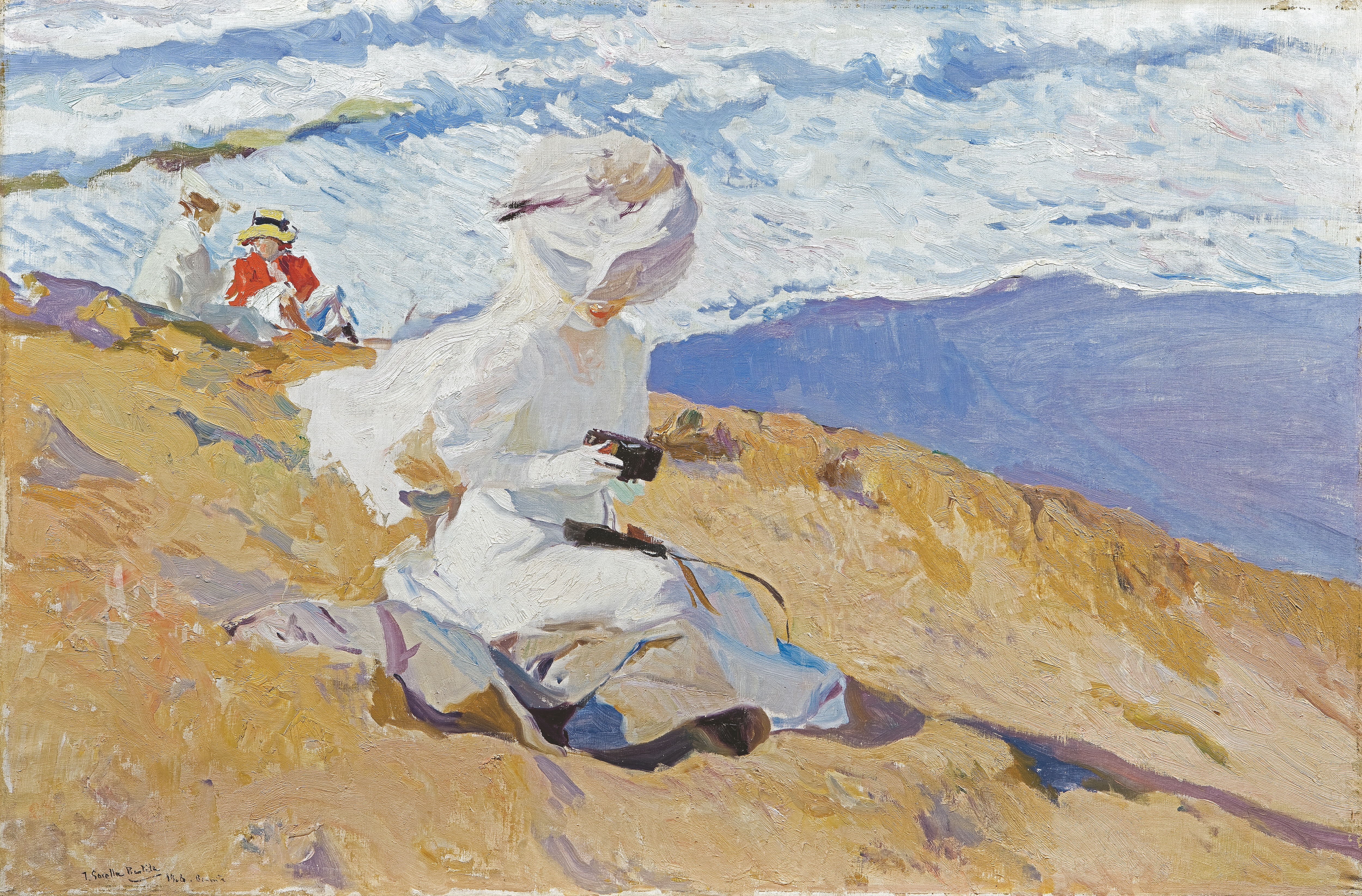
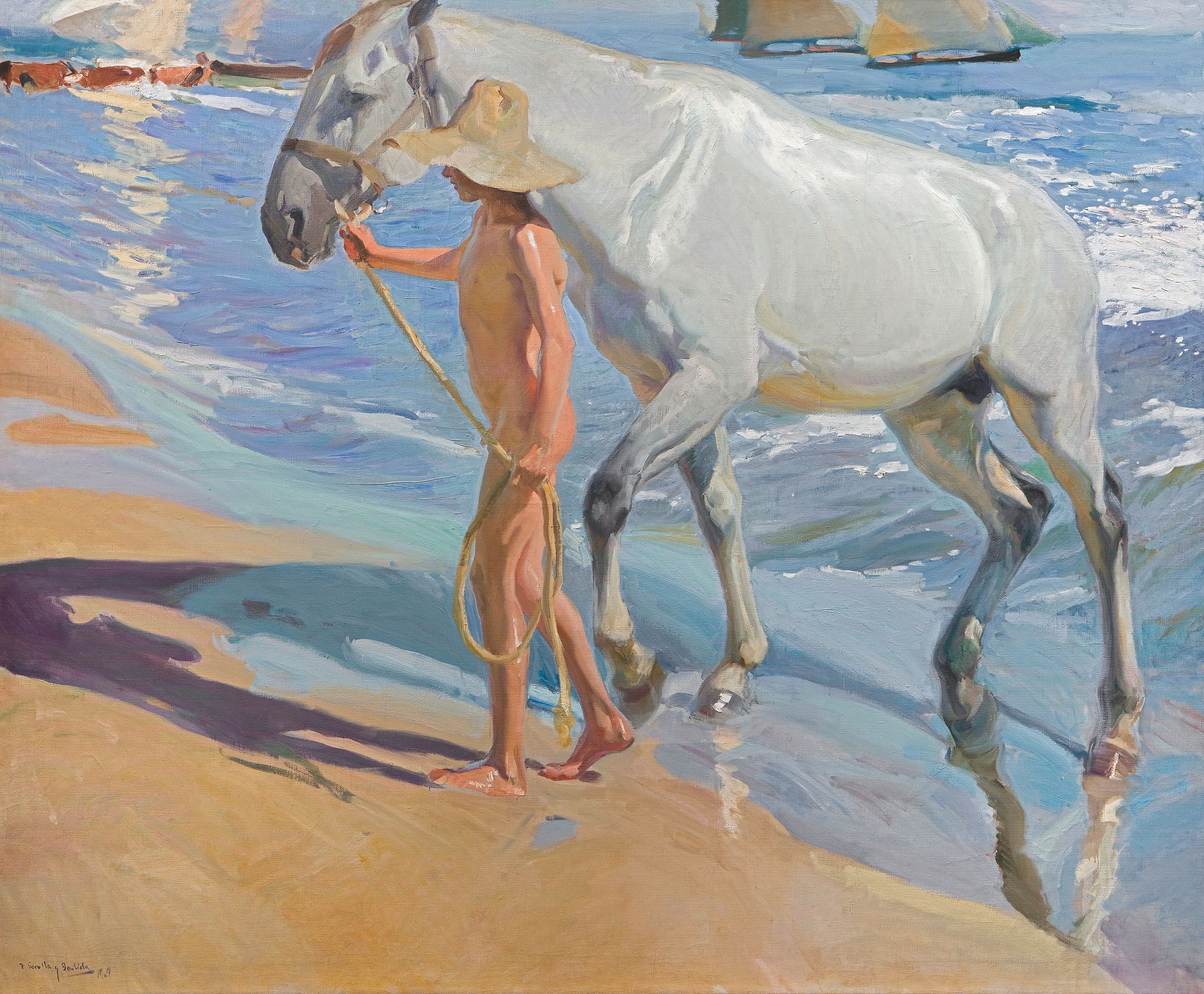
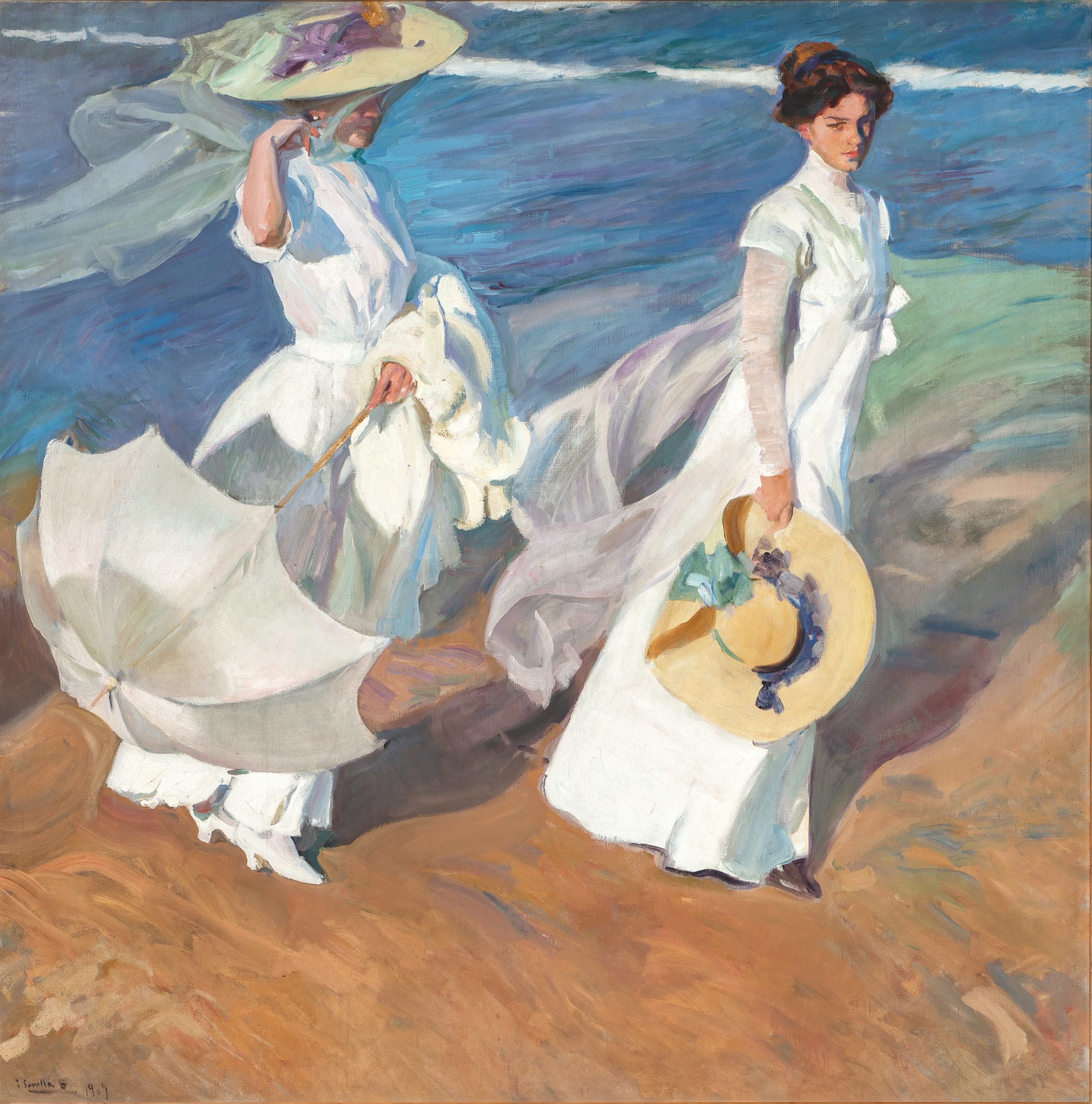
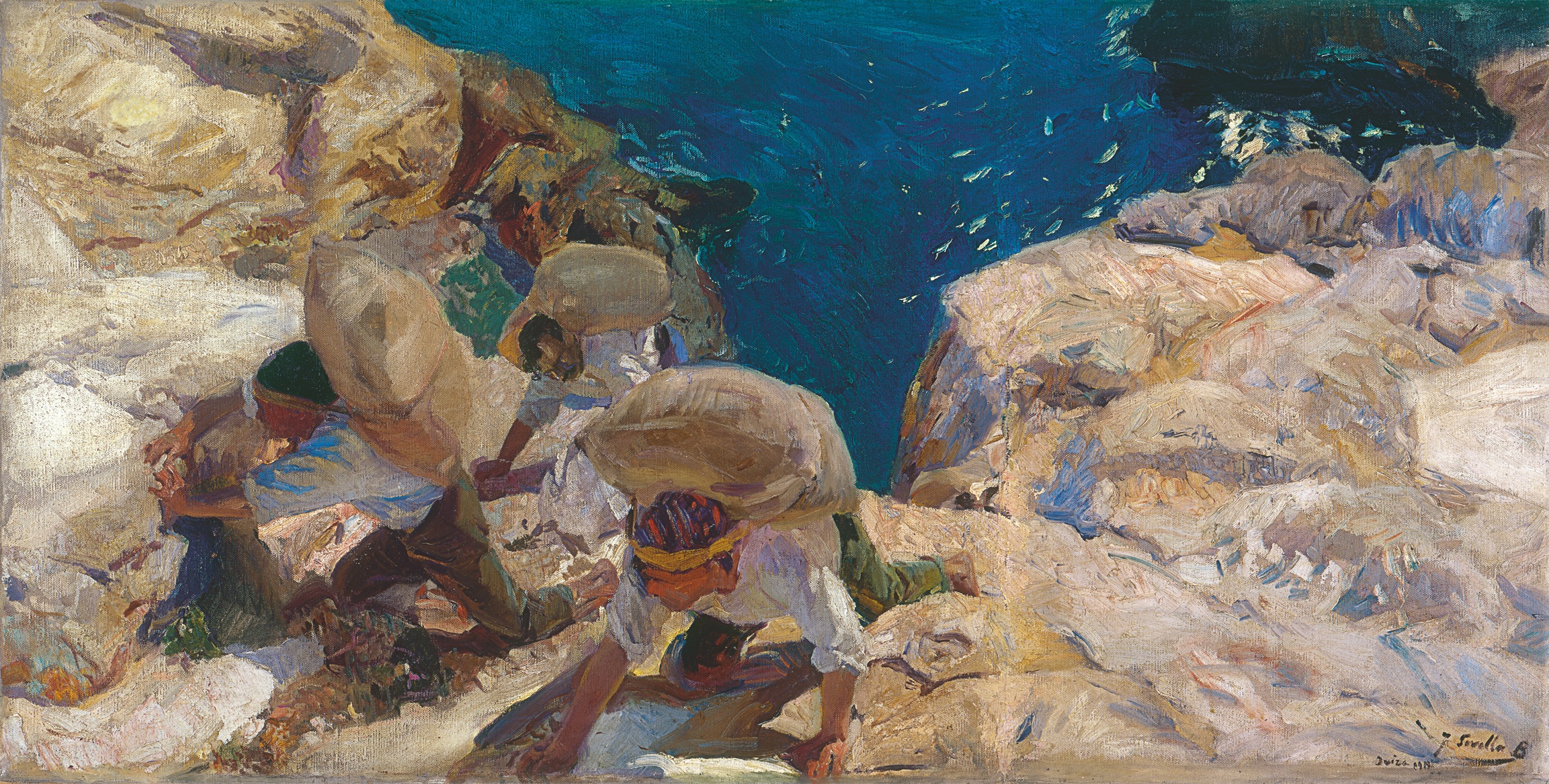
Joaquín Sorolla is unanimously recognised as the Spanish painter of the sea, which inspired him to create some of his most beautiful and iconic images.
In his marine scenes, he developed a personal poetics that placed all the resources of modernism at the service of his artistic ideas. The artist assigned a repertory of symbolic codes to every geographical area of the Spanish coast that he represented in his paintings. While the beaches of Valencia were the setting for naturalist depictions of an age-old classicism, the transparent waters of Jávea were a laboratory for experimentation with composition and colour. On the Bay of Biscay, his most socially-minded facet emerged with the display of a range of fashionably dressed figures exhibiting themselves to be seen and admired.
All these pictures of the Spanish coastline now form part of our collective imagination.
Feeling the Portrait
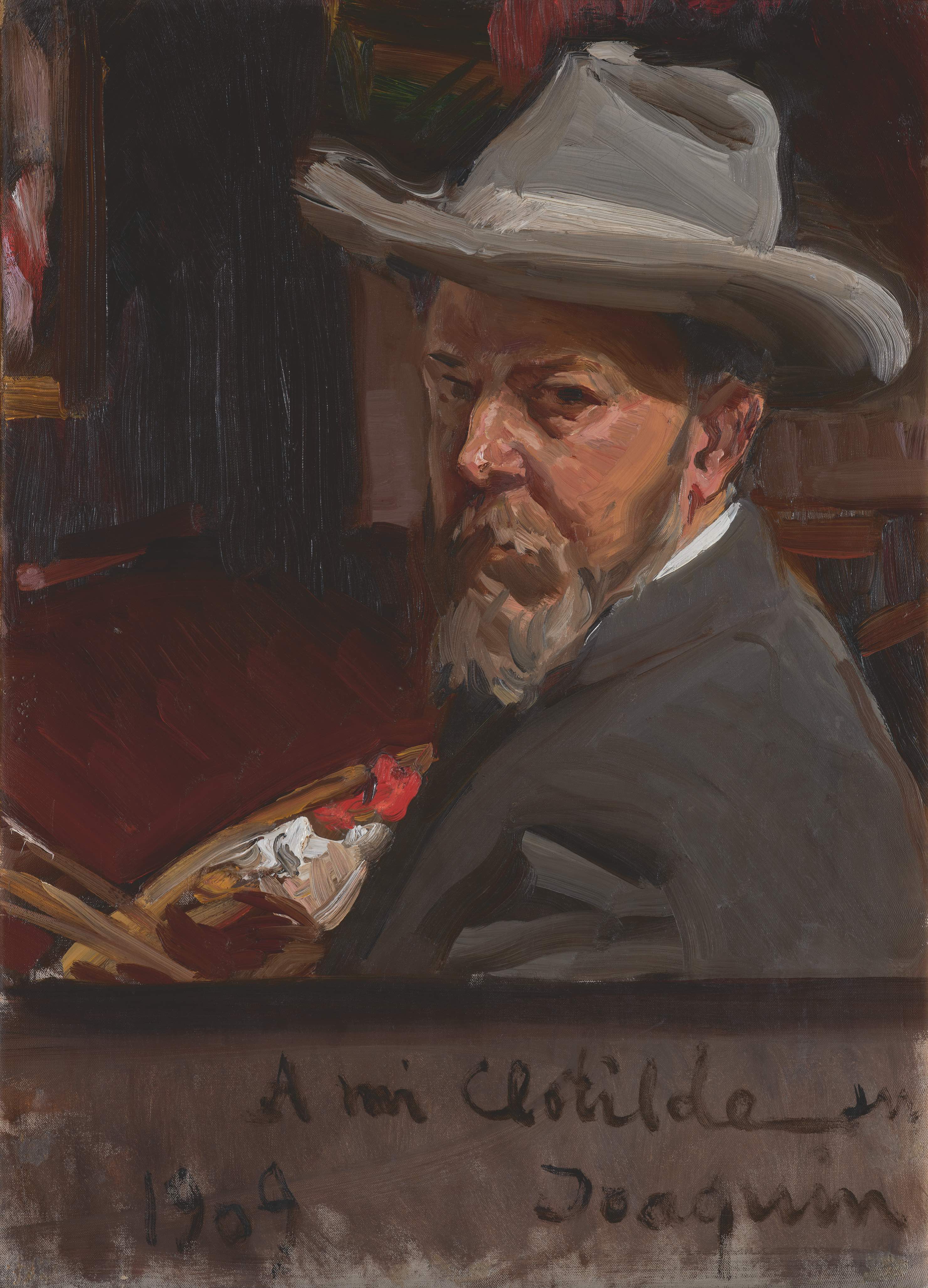
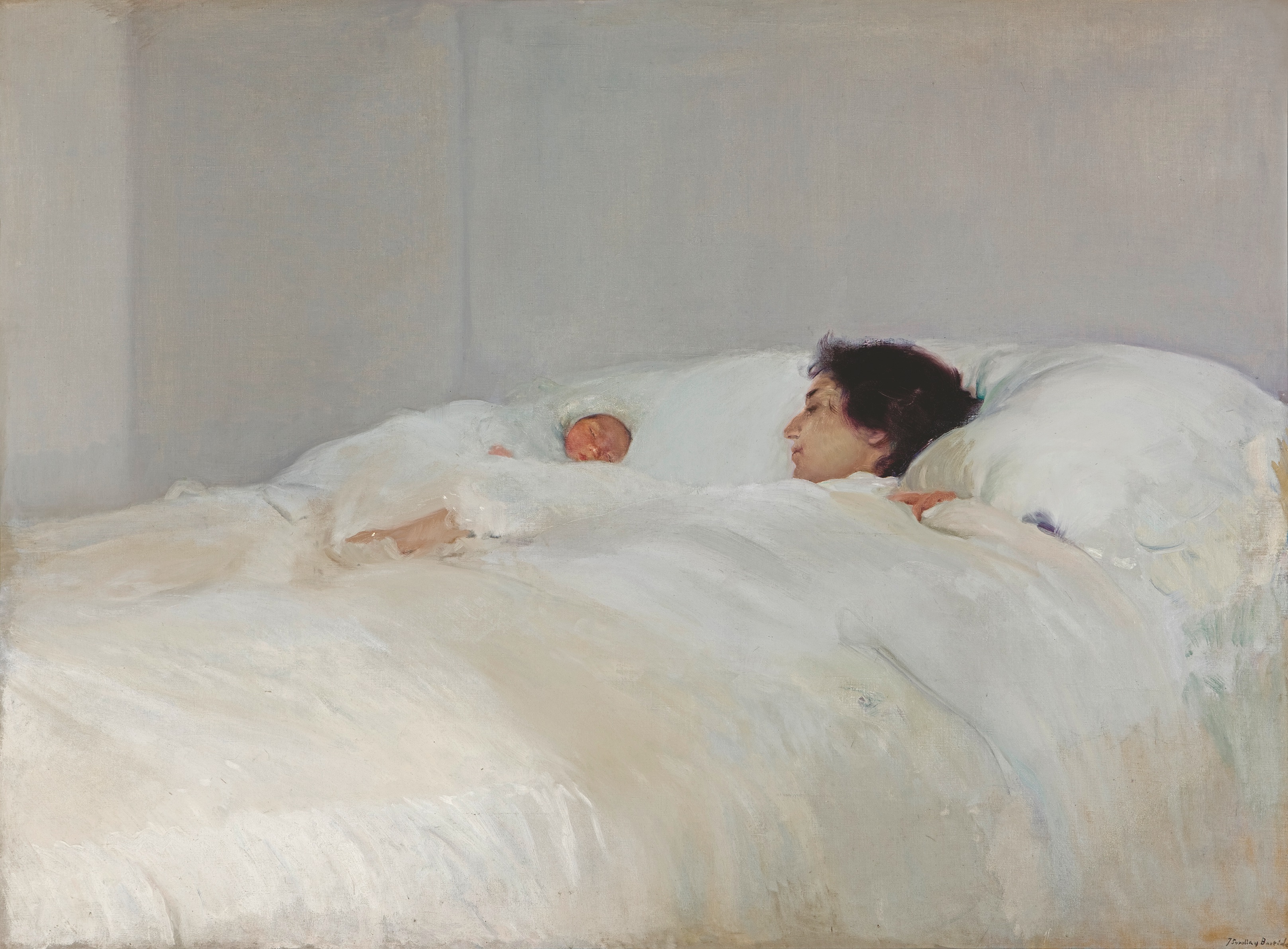
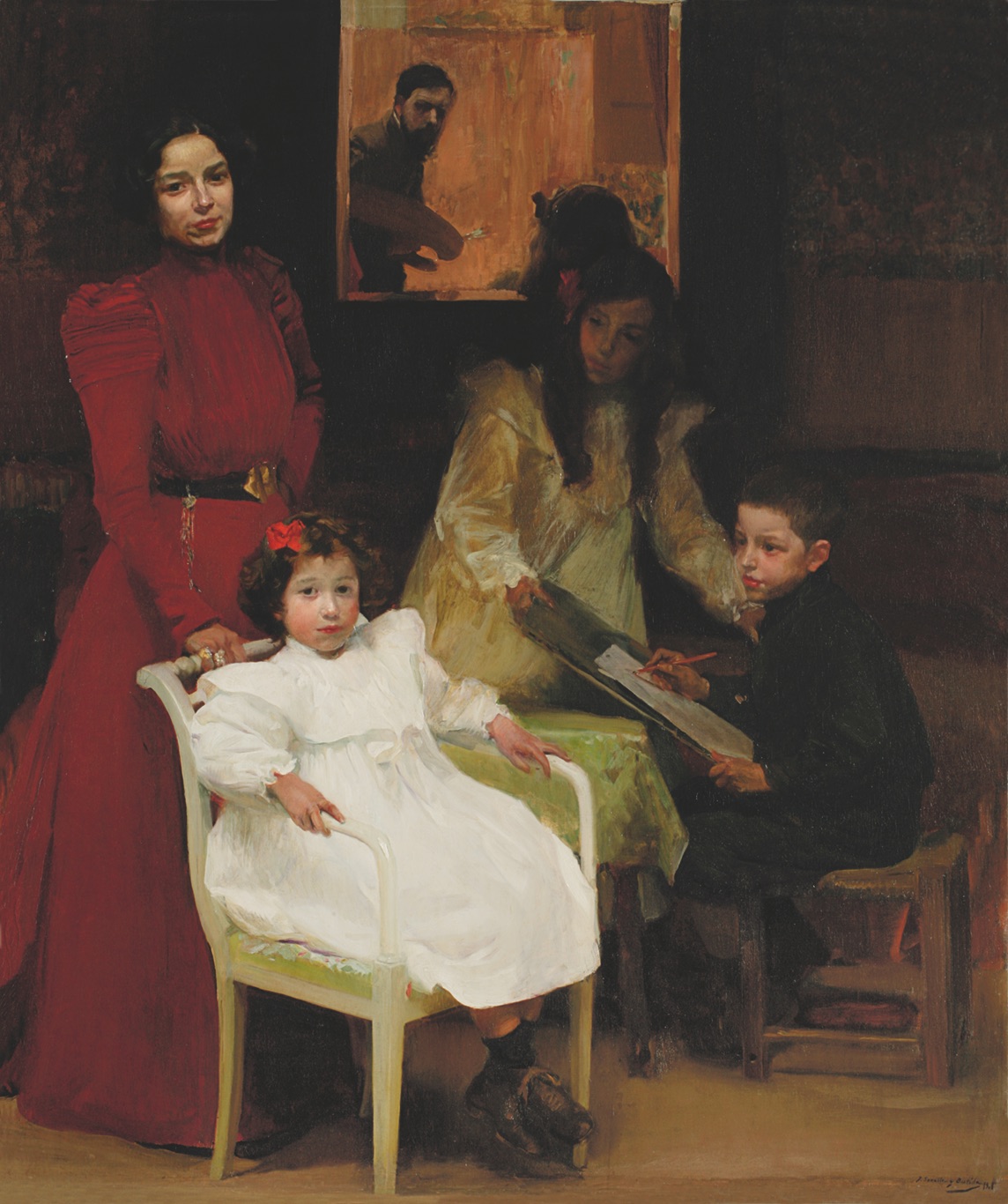
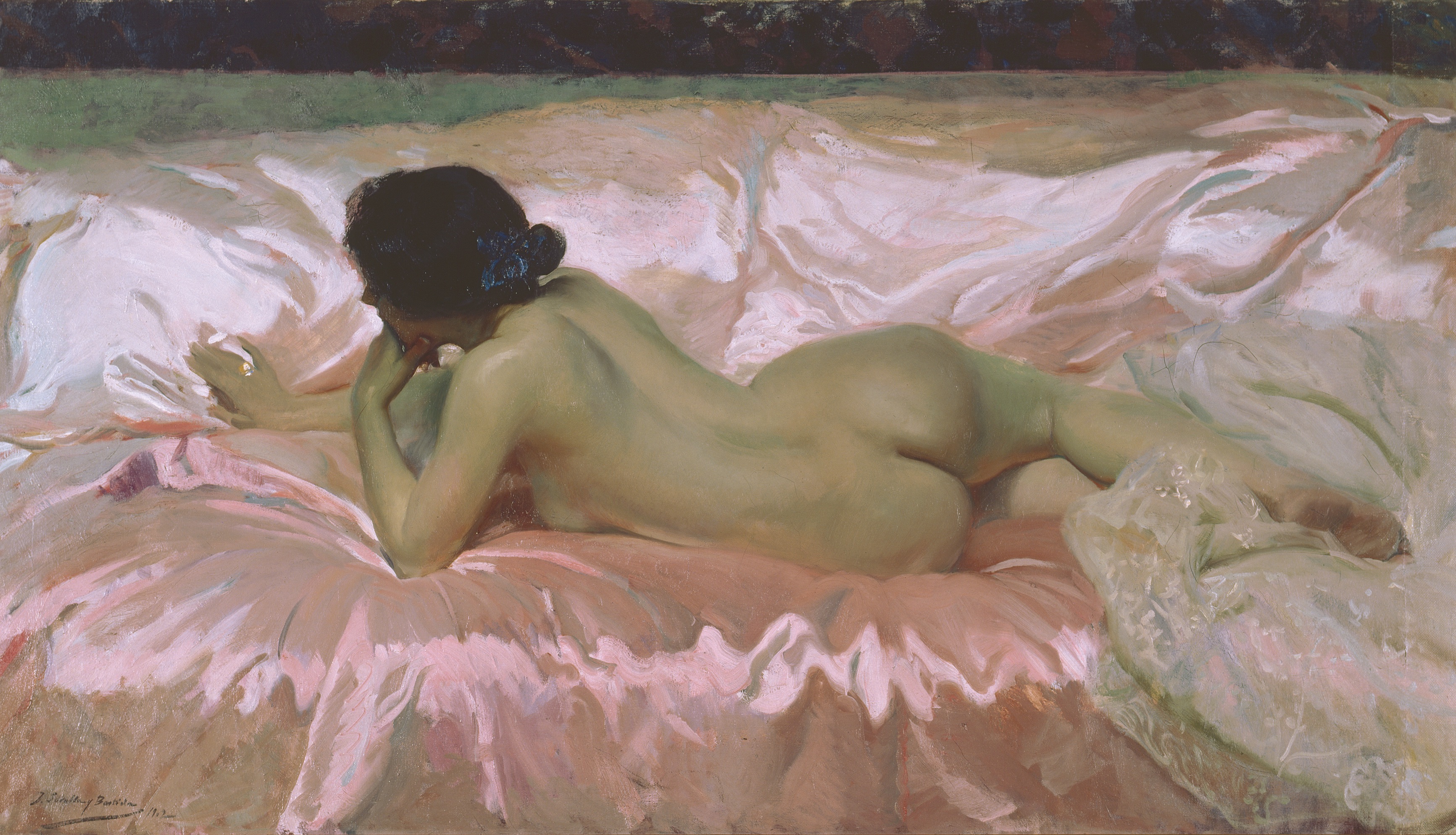
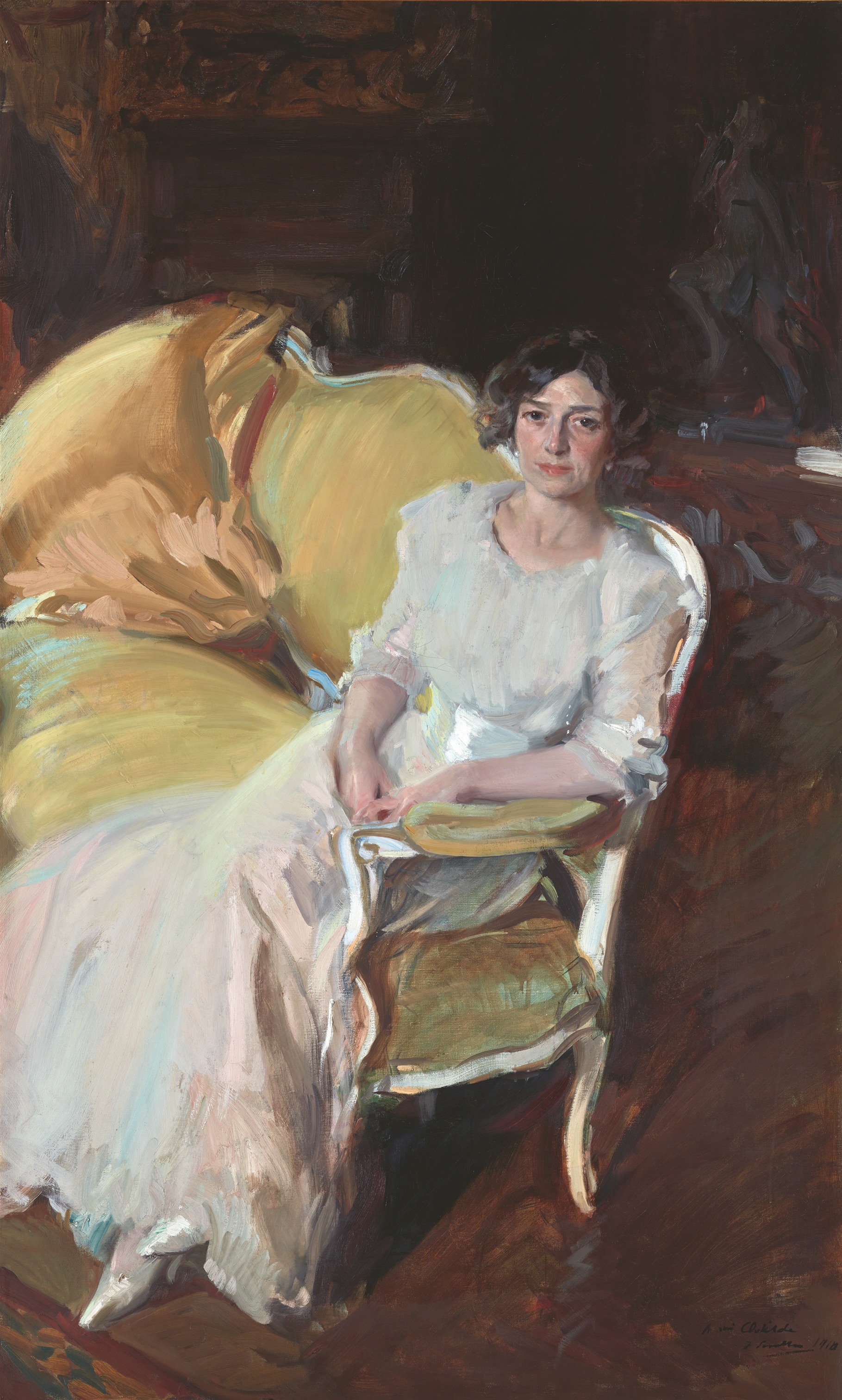
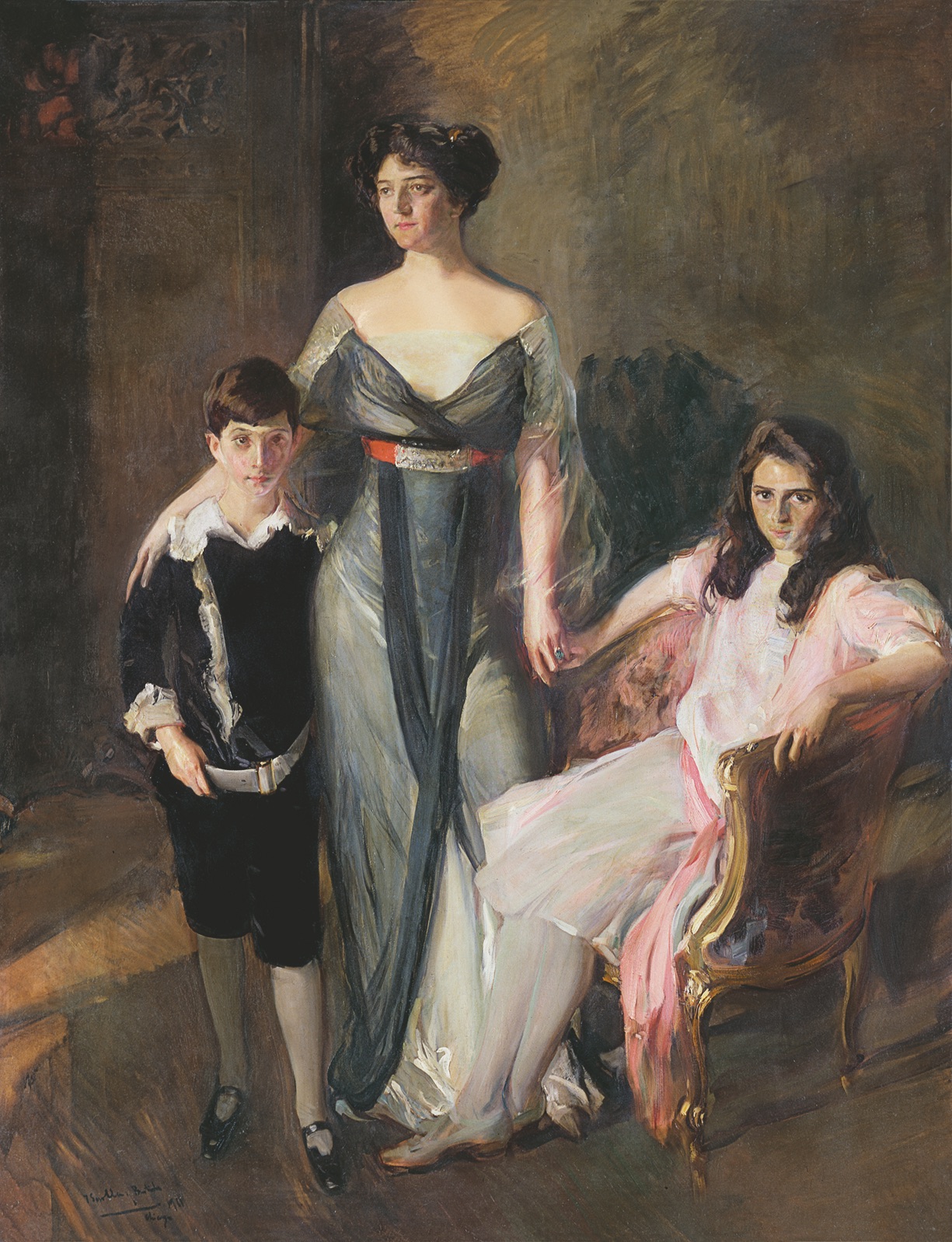
The portrait hides a mute dialogue between two human beings. The person painting is as important as the one being painted, and a need for individual recognition is revealed on both sides. It certainly involves vanity, whether disguised or exhibited. Contemplating a portrait invites us to feel two gazes suspended in an instant. Any emotion is circumstantial. Brought into the present is an ephemeral time and an uncertain space where the sitters pose, and where everything can therefore change at any moment. Sitting for a portrait is uncomfortable but also an act of self-surrender, a recognition of professional merit or of affection. A relaxed attitude reveals a pleasant encounter. Artist and sitter are there because that is what they are. Sorolla handles artifice with natural ease. We look upon the truth of an intimate meeting, and that intimacy suggests authenticity of feeling. There is no need to narrate anything, merely to feel. In the silence of the painting, all is said.
Vision of Spain
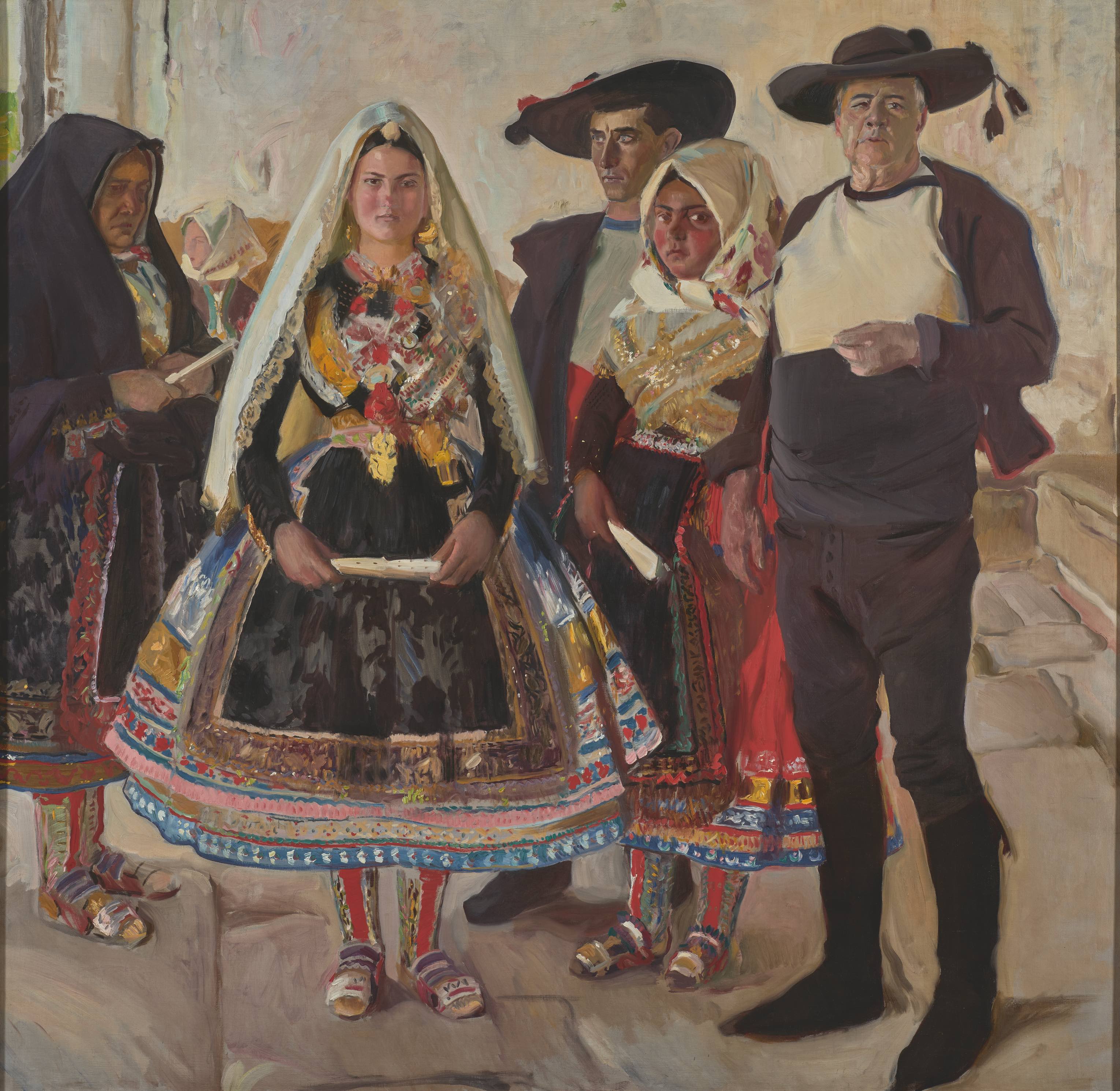
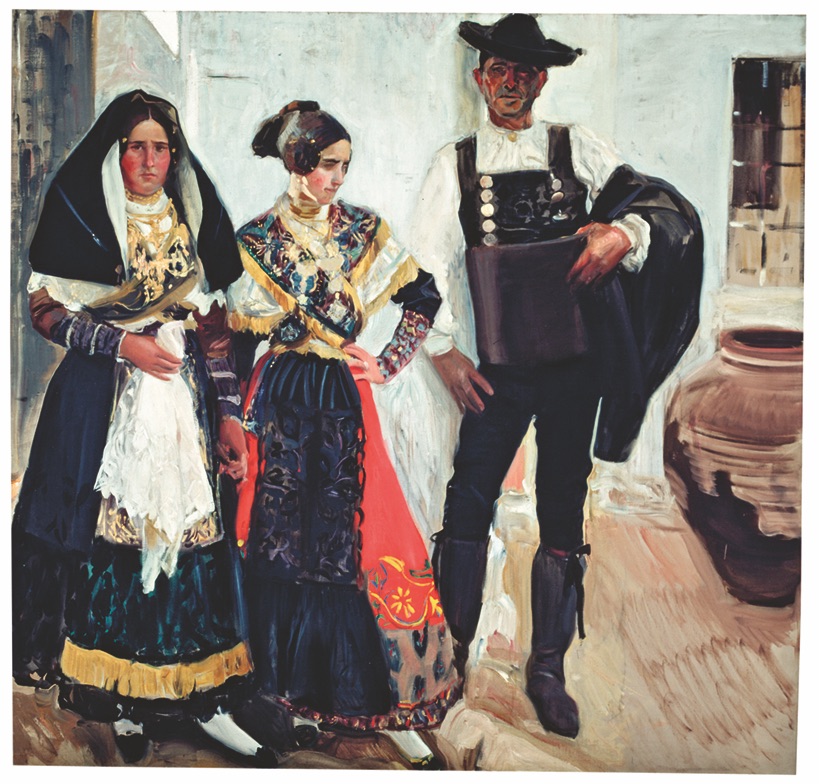
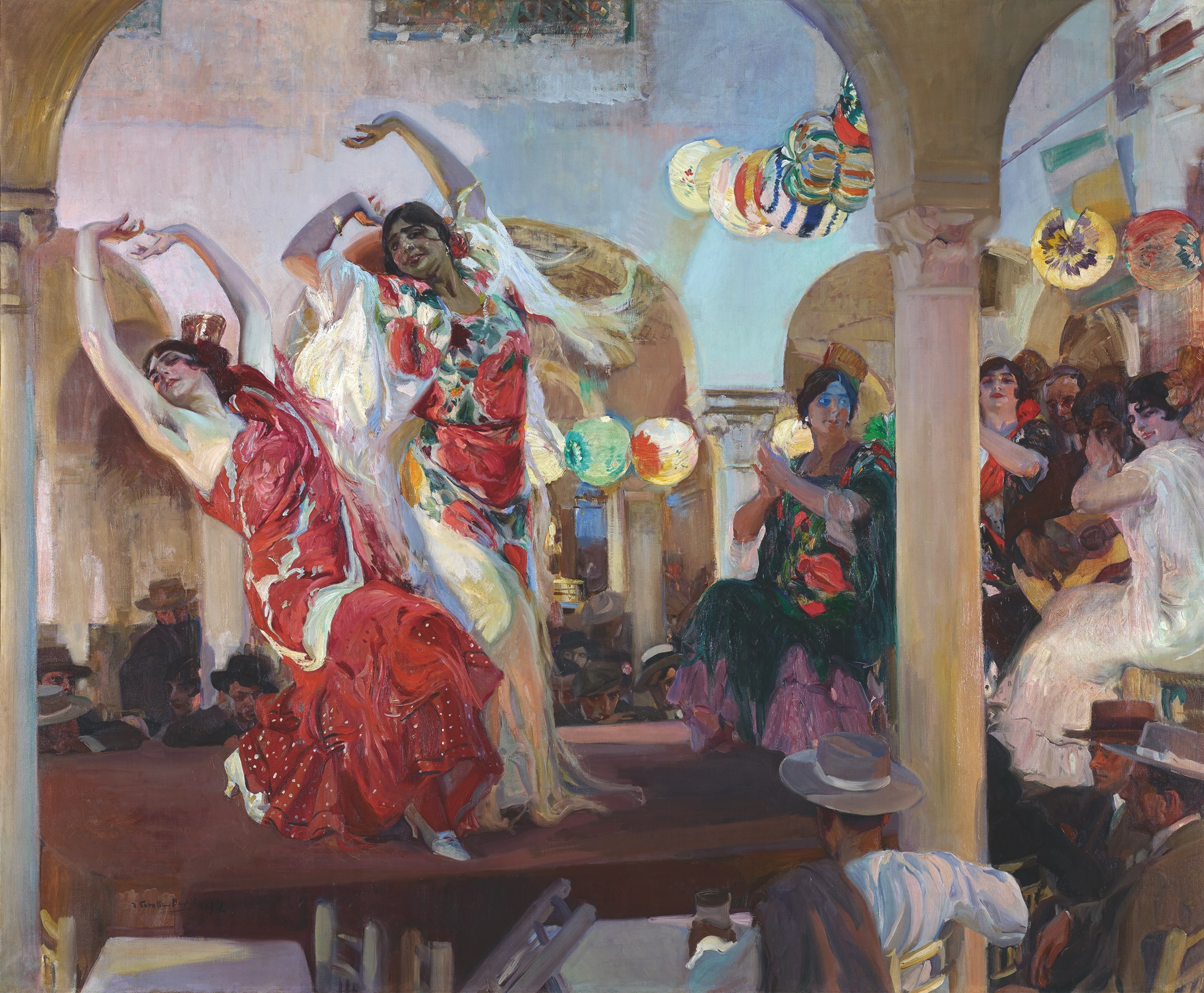
In 1910, when Sorolla was at the peak of his career, he received the most important commission of his life from Archer M. Huntington: a series of fourteen panels to decorate the library of the Hispanic Society of America that are known today as Vision of Spain.
In compliance with Huntington’s interests, and carried forward by a regenerationist impulse to dignify what was being lost, Sorolla filled the 210 square metres at his disposal to show the American public a representation of the life and culture of Spain at that time, with the essence of each of its regions. The two most amply represented were Castile and Andalusia.
From 1912 to 1919, he travelled all over the Iberian Peninsula painting large-format studies of ‘character types’ in their traditional costumes under the specific light of each place. In those regions whose costumes were less richly decorative, he included backgrounds that grant greater importance to the landscape, as we see in Character Types of La Mancha and Character Types of Roncal.
From Landscape to Garden
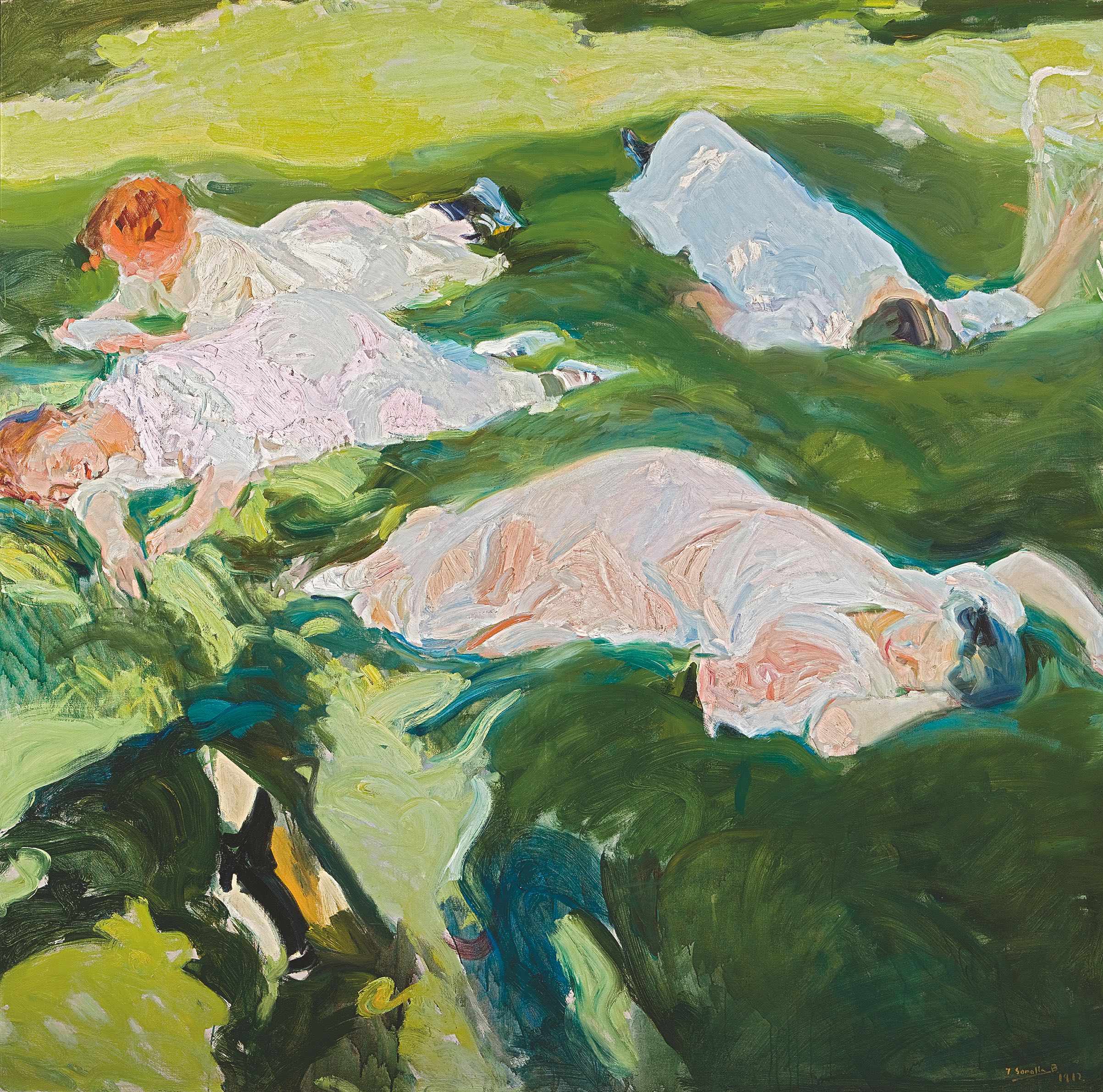
Besides his views of the sea, Sorolla also painted numerous landscapes, first for their own sake and later, after the commission for Vision of Spain, as backgrounds for his great human panoramas. He was attracted by grandiose scenery like the mountain ranges of Guadarrama and Granada’s Sierra Nevada, but more secluded spots also prompted him to seek movement in rivers, reflections in water, shifting shadows and bold framings. For him, the continual variation of the light with the movement of the sun was the key to the life of a landscape.
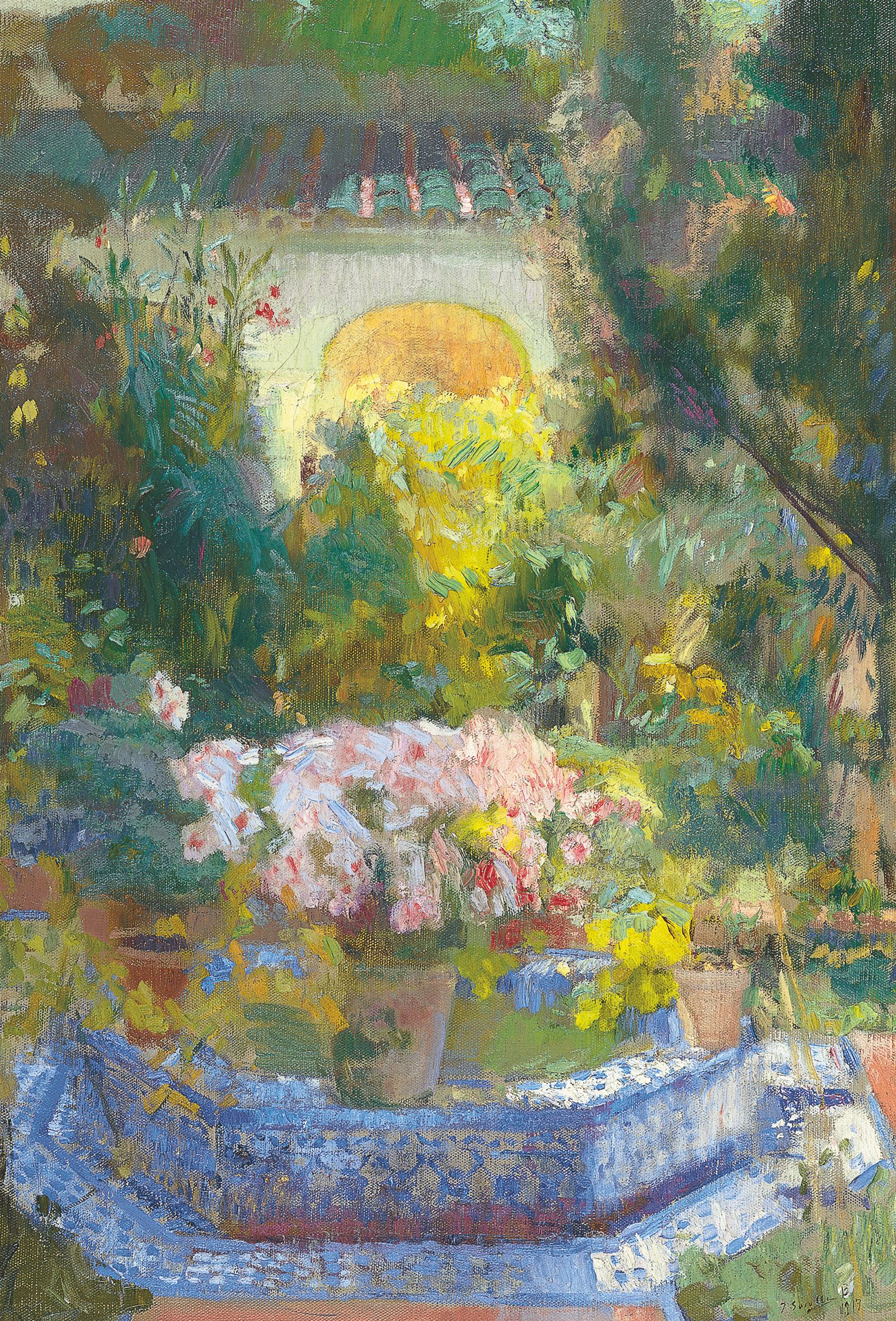
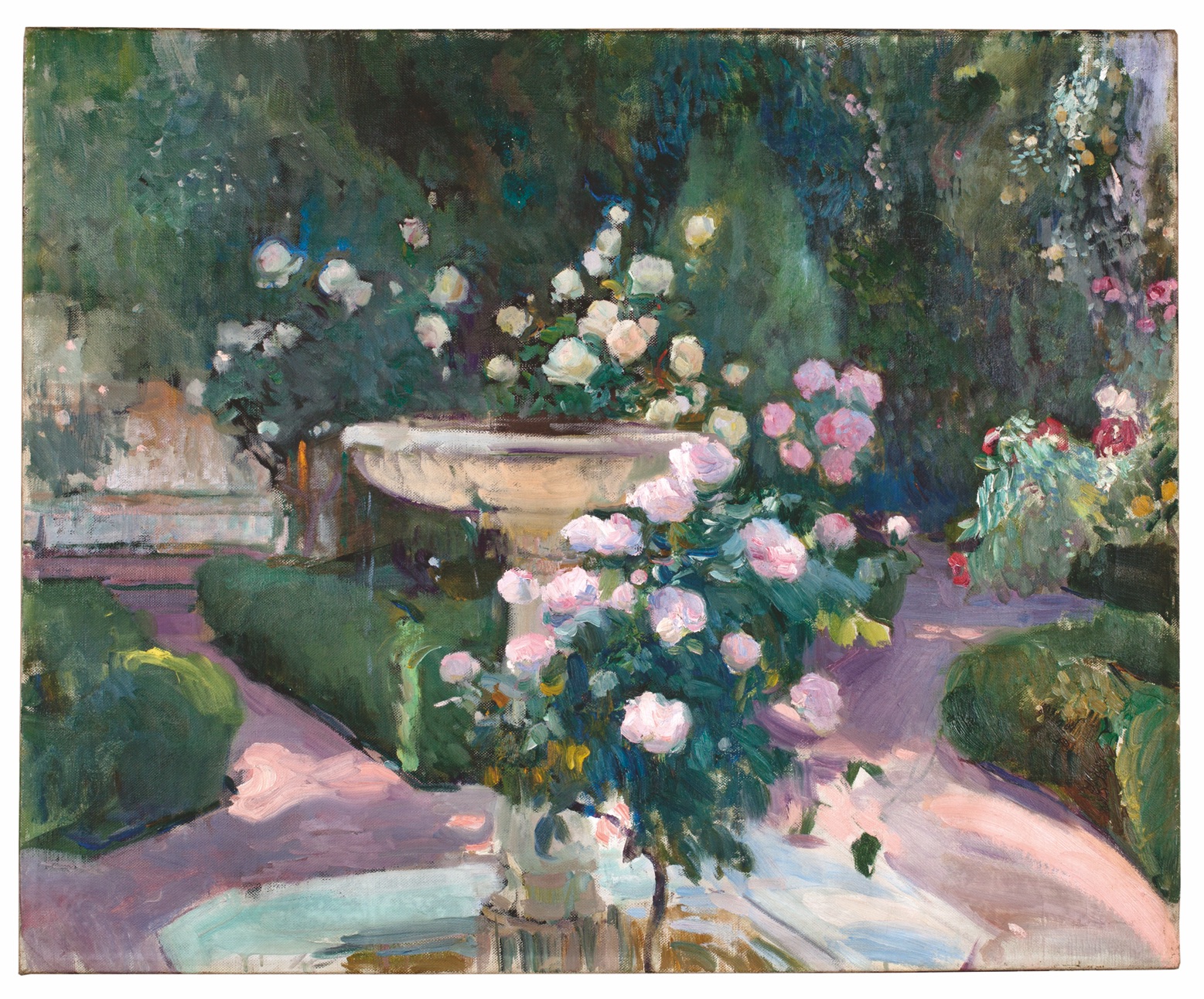
From 1906, Sorolla experimented with the light filtered through the foliage of gardens, in which he started to set some portraits. The Alhambra in Granada and the Alcázar of Seville greatly attracted him with their mixture of architecture, vegetation and water. After 1911, he started to design and plant his own garden, and he began painting it in 1916. That was his private piece of nature and his Eden during his final years.
Works
)
)
)
, this painting displays a novel audacity in its representation of moving bodies beneath a water that is also moving and traversed by light. Here, Sorolla has not evaded any difficulty. The image is one of striking force, with a firm centre in the dazzling white of the boat and the bodies of the children on a stretch of water that fills the canvas to the upper edge with deep, limpid blues. The astonishingly skilful brushwork maintains its exactitude and precision in the midst of the artist\\u2019s creative fervour.\\u003C/p\\u003E\u0022","location":"Private collection","year":"J\u00E1vea, summer of 1905","pos":"3"}))
)
)
)
)
)
)
)
, a wrist watch (invented in its turn by aircraft pilots) and gloves of evident quality. He is painted with great lightness of touch and soberly harmonious colouring.\\u003C/p\\u003E\u0022","location":"Madrid, Museo Sorolla","year":"Madrid, c. 1917","pos":"11"}))
)
)
)
)
Carlos I
1016-1065
description
Miami
Lorem ipsum dolor sit amet consectetur. Nunc cursus sit augue pellentesque. Adipiscing erat non ipsum commodo morbi vitae. Pellentesque nec enim quis vel vel hendrerit faucibus. Erat nisl commodo maecenas adipiscing.
Curators: Blanca Pons-Sorolla, Consuelo Luca de Tena, Enrique Varela Agüí
Lenders: Colección Banco de España; Colección Banco Santander; Colección Carmen Thyssen-Bornemisza; Colección Esther Koplowitz; Colección Museo Contemporáneo Palacio de Elsedo; Colección Museo Kaluz; Colección particular Alberto Cortina; Colección Plácido Arango; Fundación Museo Sorolla; Musée d’Orsay; Museo de Bellas Artes de Asturias. Colección Pedro Masaveu; Museo de Bellas Artes de Valencia; Museo de la Ciudad, Ayuntamiento de Valencia; Museo Nacional del Prado; Museo Sorolla; Museo de Zaragoza. Gobierno de Aragón; The Hispanic Society of America y otras colecciones particulares nacionales y extranjeras
Head of Exhibitions and Publications Department: Carmen Cabeza Gil-Casares
Temporary Exhibitons Coordinator: Isabel Morán Suárez
Museographic Design: Jesús Moreno y Asociados
Museographic Installation: Arteria Logística
Transport: Edict, TTI, SIT
Insurance: Howden Artai, Willis Towers Watson, Arte Deleitossa, Garantía del Estado
Audiovisual design: Light Art Exhibitions; Karmachina
Audiovisual installation: Creamos Technology
Edited by: Patrimonio Nacional; Ediciones El Viso
Publications Coordinator: María Dolores López Marín