
Use of Cookies

The Royal Collections Gallery uses its own and third-party cookies, mainly for technical purposes, which are necessary to provide our services and provide you with relevant content. More information in our cookies policy. Cookies Policy.

ACCEPT to confirm that you have read the information and accepted their installation. You can change your browser settings.

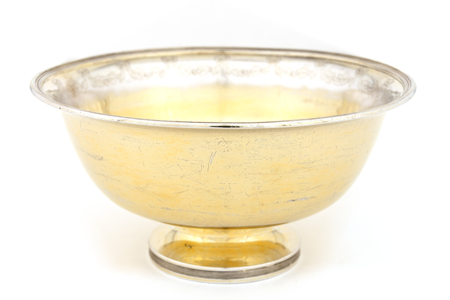
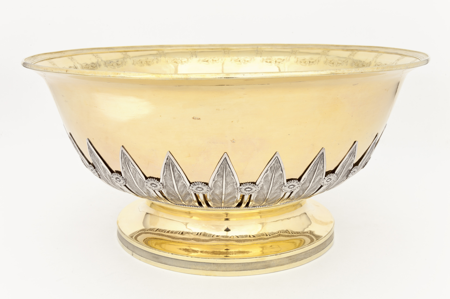
Palangana

Real Fábrica de Platería Martínez
1800-1830

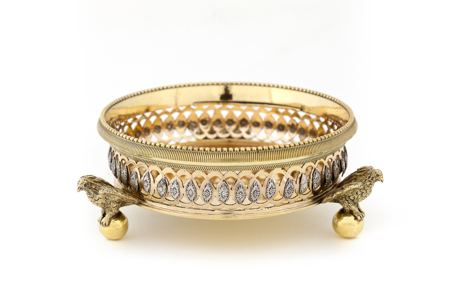
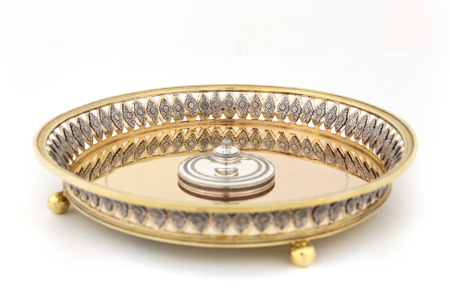
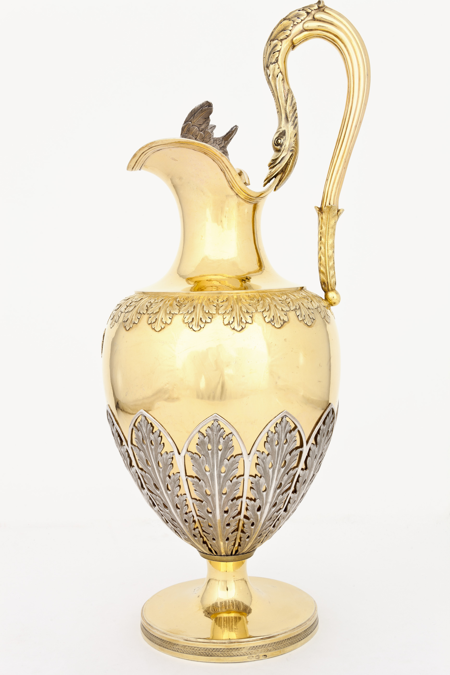
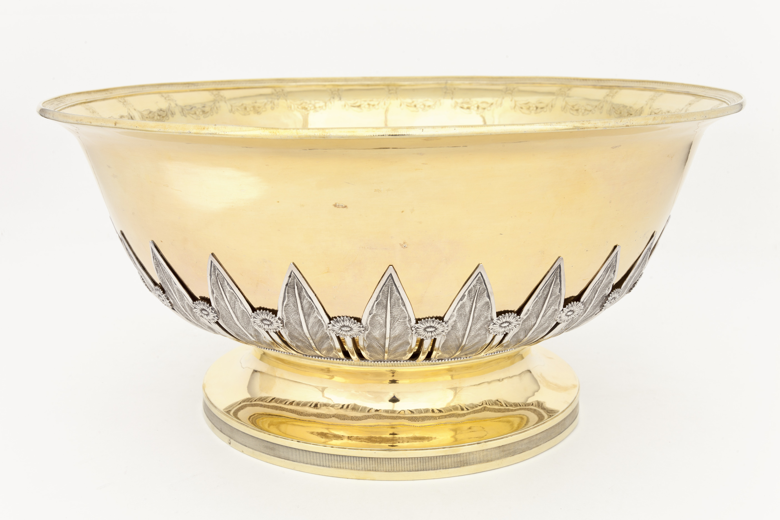
Esta palangana de plata dorada forma parte ―junto con su jarro (inv. 10012410)― de un juego de aguamanil fabricado en la Real Fábrica de Platería. Fue regalado por el Ayuntamiento de Madrid en 1816 a la reina María Isabel de Braganza con motivo de su boda con el rey Fernando VII. De planta circular, luce un borde liso y solo se embellece con grandes hojas lanceoladas en la base, elaboradas en plata blanca mate.

La apariencia actual de esta pieza no coincide con la descripción que se recoge en el manuscrito conservado en la Real Biblioteca, pues en el mismo se describe adornada con un entrelazo y sostenida por tres leones, lo que lleva a pensar que debió sufrir una transformación posterior.

General Classification

Platería; Aseo e higiene

Type of Object

Palangana

By

Real Fábrica de Platería Martínez

Collection or Series Title

Juego de tocador de Isabel de Braganza

Era / Cultural Context

Reinado de Fernando VII

Place of Production

Madrid

Date

1800-1830

Subject

Plata

Technical

Fundido; Troquelado; Cincelado; Dorado; Incisión

Dimensions

Fondo completo: (Altura: 17,5 centímetros; Diámetro: 36,3 centímetros)

Inventory

10012409

Credits

Texto: Amelia Aranda Huete; Foto: Mario Sedeño

Discover it at the Planta -2

Authors and Collectors

Real Fábrica de Platería Martínez
The Author

Real Fábrica de Platería Martínez

Read more
Ferdinand VII
Monarch

Ferdinand VII

(El Escorial (Madrid), 1784 - La Granja (Segovia), 1833)

The ninth of fourteen children born to Charles IV (1748-1819) and Maria Luisa of Parma (1751-1819), the future Ferdinand VII was sworn in as Prince of Asturias before the Cortes on 23rd September 1789, following the successive deaths of his older brothers. The Prince’s early years were spent under the tutelage of his caretaker, the Marquess of Santa Cruz, and his successive tutors, of whom the best known were Canon Escóiquiz and his teacher, Father Cristóbal Bencomo. As part of his education, Prince Ferdinand studied philosophy, grammar and Latin, as well as being introduced to music and drawing, the latter being taught by the painter Antonio Carnicero. 

Married four times, Ferdinand VII's wives were Princess María Antonia of Naples and...
Read more

The work in context

View in Timeline