Loading...

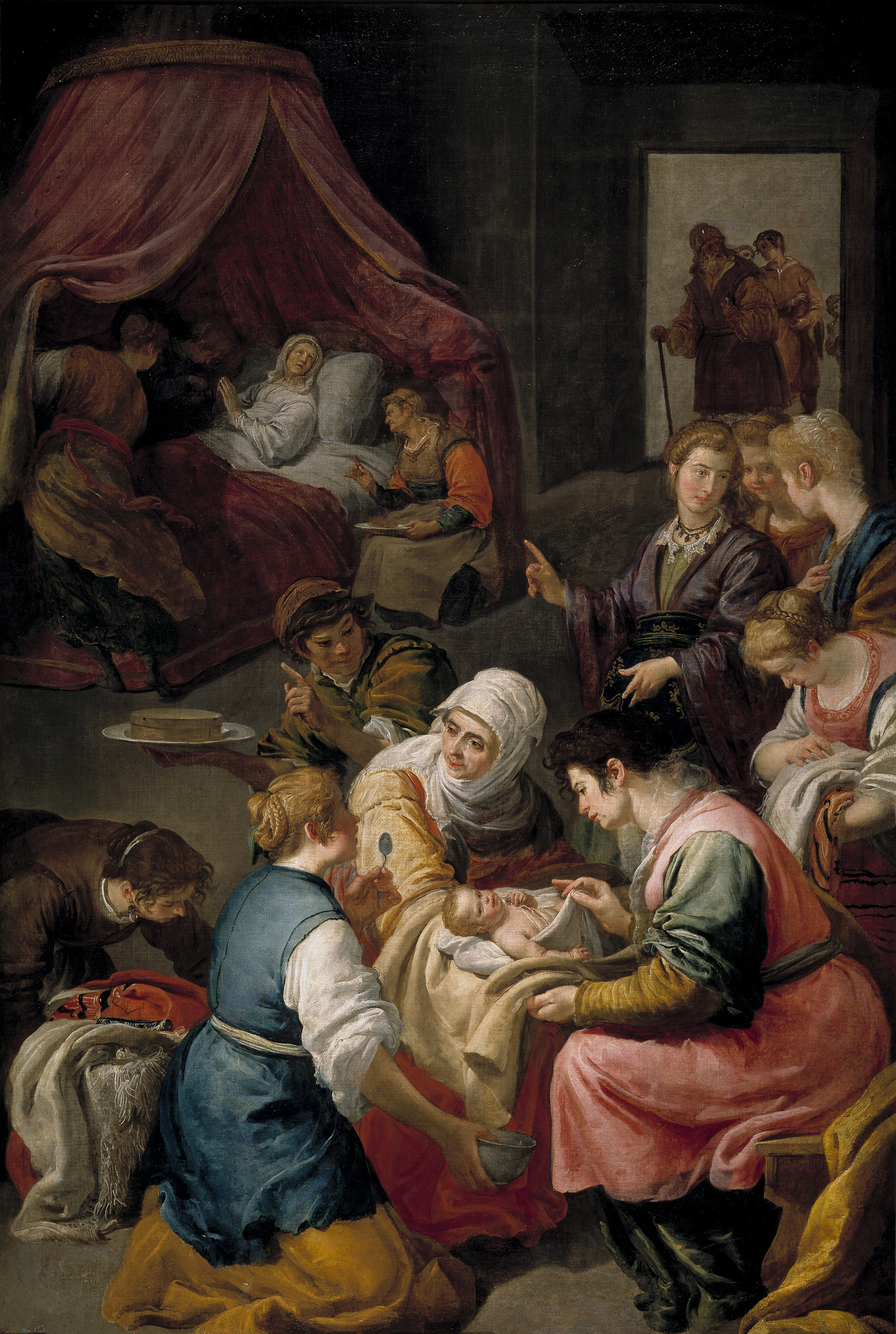
Leonardo, Jusepe
(Calatayud, 1601 - Zaragoza, 1653)
Chabacier Solimón, José. José or Jusepe Leonardo. Calatayud (Zaragoza), pre-21.03.1601 – Zaragoza, pre-09.1653. Painter.
Only son of the artisan arquebusier Domingo Chabacier and Juana Solimón, both of whom were of Jewish descent. He was baptised in the church of San Andrés in Calatayud on 21 March 1601 and always used the family pseudonym as his first surname, after his grandfather Leonardo Chavaciel, as did his uncle, the painter Francisco de Leonardo (who died in 1638), who also worked in Soria.
His training as an artist must have been entirely in Madrid, as he moved to the capital in 1612 when he was barely eleven, following his father's marriage to Jerónima de Soro. Four years later at the most, he joined the workshop of Pedro de las Cuevas, which is considered by Díaz del Valle (Epilogue and Nomenclature of Some Artists, 1656-1659) to be “the best (school) that Spain has ever had” and where Antonio Arias, Antonio de Pereda, Juan Montero de Rozas, Juan de Lizalde, Francisco Camilo, Simón León Leal, Juan Carreño de Miranda and Eugenio de las Cuevas, among others, would also be trained. He remained there for five years until 8th February 1621, when he married the Toledo-born María de Cuéllar, widow of the painter Francisco del Moral, who had died in 1615.
The Aragonese painter and treatise writer Jusepe Martínez, who passed through Madrid in 1634, indicates however that he was one of Eugenio Cajés' most promising pupils, together with Antonio Lanchares (Practical Discourse on the Most Noble Art of Painting; ca. 1673). Although there is no documentary evidence of this fact, it is supported by the former's dominant influence on his creations, in contrast to the almost complete lack of convergence with any other disciple of the yet unknown Pedro de las Cuevas. This debt, more notable in his earlier works, denotes the closeness of an official relationship that would be developed in the years following his apprenticeship. Another early influence, albeit not as marked, is that of Vicente Carducho, almost inevitable in one as close to Cajés. To these would soon be added Velázquez's sense of atmosphere and light, as well as certain narrative resources, aspects which he assimilated in his own unique way.
Source: Royal Academy of History (https://www.rah.es)
