Loading...

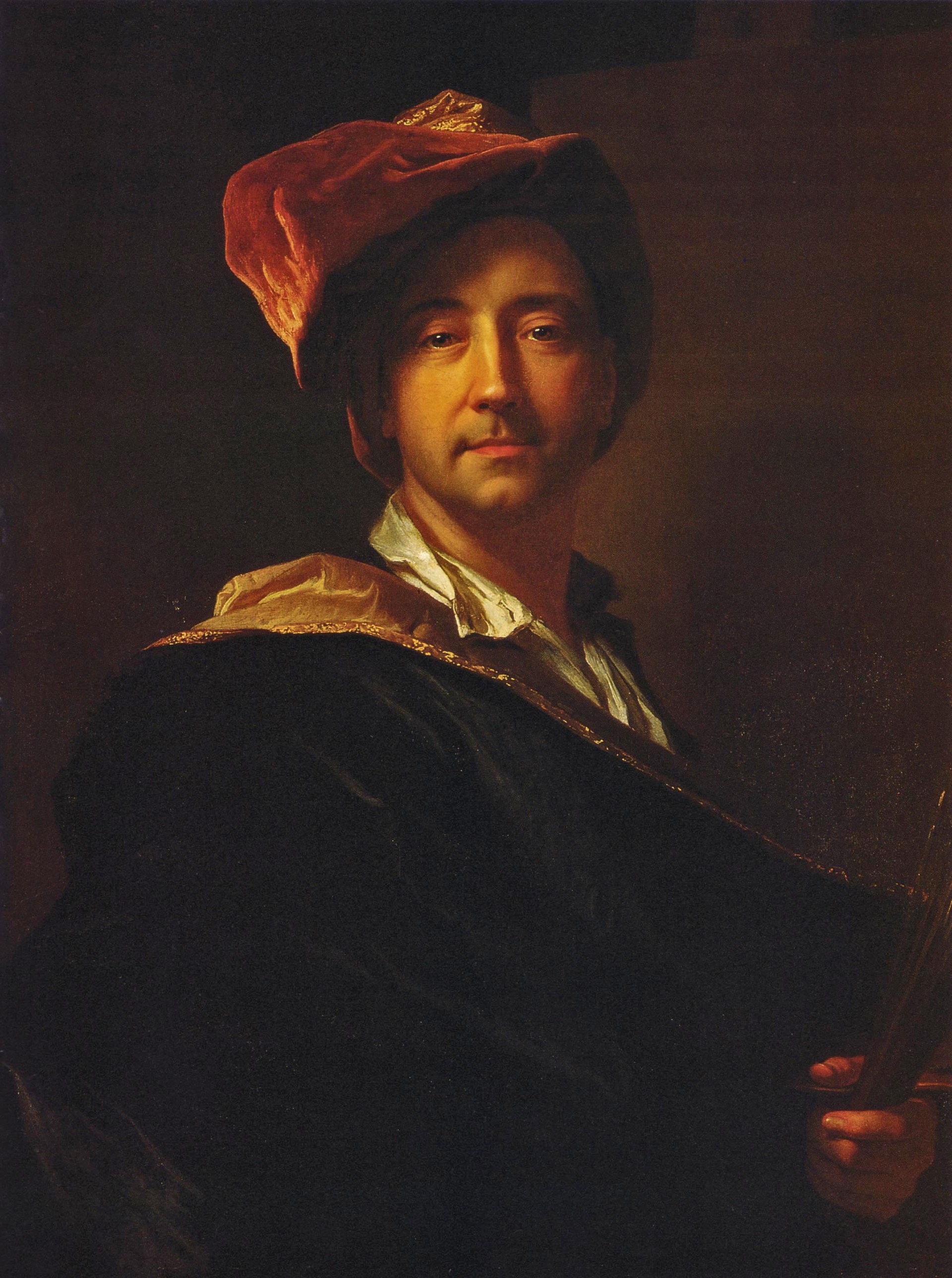
Rigaud, Hyacinthe
(Perpignan, 1659 - Paris, 1743)
François Hyacinthe Rigaud (Perpignan, 18th July 1659 – Paris; 29th December 1743) was a French portraitist.
He was the most important painter of portraits at the court of Louis XIV of France. His instinct for impressive poses and grandiose presentation precisely fitted the tastes of the royalty, ambassadors, clergy and courtiers who sat for him. In 1682 he was awarded the Prix de Rome.
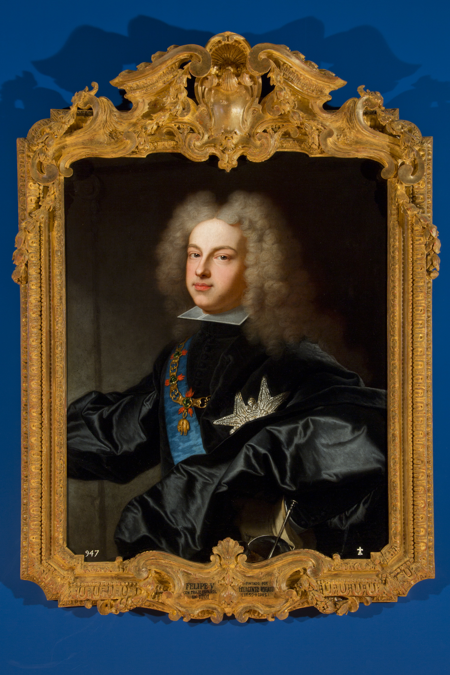
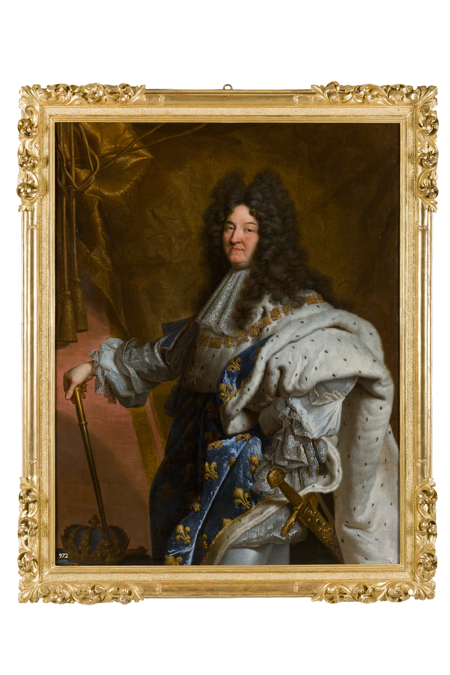
In his portraits, Rigaud captures with great accuracy the garments and details of the background, thus making them an accurate document of the fashions of the times. His most well-known work is the 1701 portrait of Louis XIV, on display at the Louvre in Paris.
According to Jacques Thuillier, professor at the Collège de France, “Hyacinthe Rigaud was one of those French painters who achieved the greatest fame as portrait artists under the Ancien Régime. He deserved this admiration both for the surprising abundance of his work and for its constant perfection.”
Rigaud owes his fame to the patronage of the Bourbon dynasty, four generations of its members having been painted by him. His clientele was mainly drawn from the wealthiest circles, including merchants, financiers, nobles, industrialists and ministers. His work offers an almost complete gallery of portraits of French monarchs between 1680 and 1740. However, a small part of his oeuvre consists of more discreet figures: family members, friends, artists or simple tradesmen.
Inseparable from his portrait of Louis XIV, Rigaud was courted by all the great ambassadors of his time as well as several European monarchs. The exact number of pictures painted by him is still a matter of much debate, given that he boasts a highly extensive catalogue, however, experts agree that he had more than a thousand different models. The artist’s diary also records a large number of copies, but fails to mention hundreds of other canvases that have been recovered since it was published in 1919.
The grandson of gilders and painters from Roussillon, Hyacinthe Rigaud received his early training at his father's tailoring workshop. He subsequently trained under Antoine Ranc in Montpellier from 1671, before arriving in Lyon four years later. It was in these two cities that he became acquainted with Flemish, Dutch and Italian painting, and the works of Rubens, Van Dyck, Rembrandt and Titian, which he would later collect.
While living in Paris in 1681, he won the Prix de Rome scholarship in 1682 but following the advice of Charles Le Brun, decided against travelling to Rome. After he was admitted to the Royal Academy of Painting and Sculpture in 1700, he ascended the ranks of this institution until resigning in 1735.
According to the French art historian Louis Hourticq, "on his death, Rigaud left behind a gallery of distinguished figures with whom our imagination now populates the Hall of Mirrors; Rigaud was necessary to the 'gloire' of Louis XIV and participated in the radiance of a reign whose majesty he documented.” True "photographs", faces that Diderot described as "letters of recommendation written in a language common to all men", Rigaud's works now populate the most important museums in the world.
In 1709, he was made a nobleman in his hometown of Perpignan. He was also made a knight of the Order of St Michael in 1727, and he died in Paris on 29th December 1743.
Source: Wikipedia
View on Wikipedia
View in timeline