Use of Cookies

The Royal Collections Gallery uses its own and third-party cookies, mainly for technical purposes, which are necessary to provide our services and provide you with relevant content. More information in our cookies policy. Cookies Policy.

ACCEPT to confirm that you have read the information and accepted their installation. You can change your browser settings.

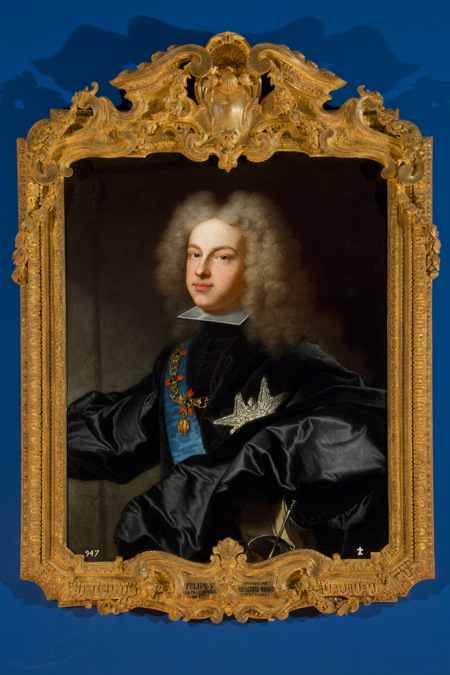
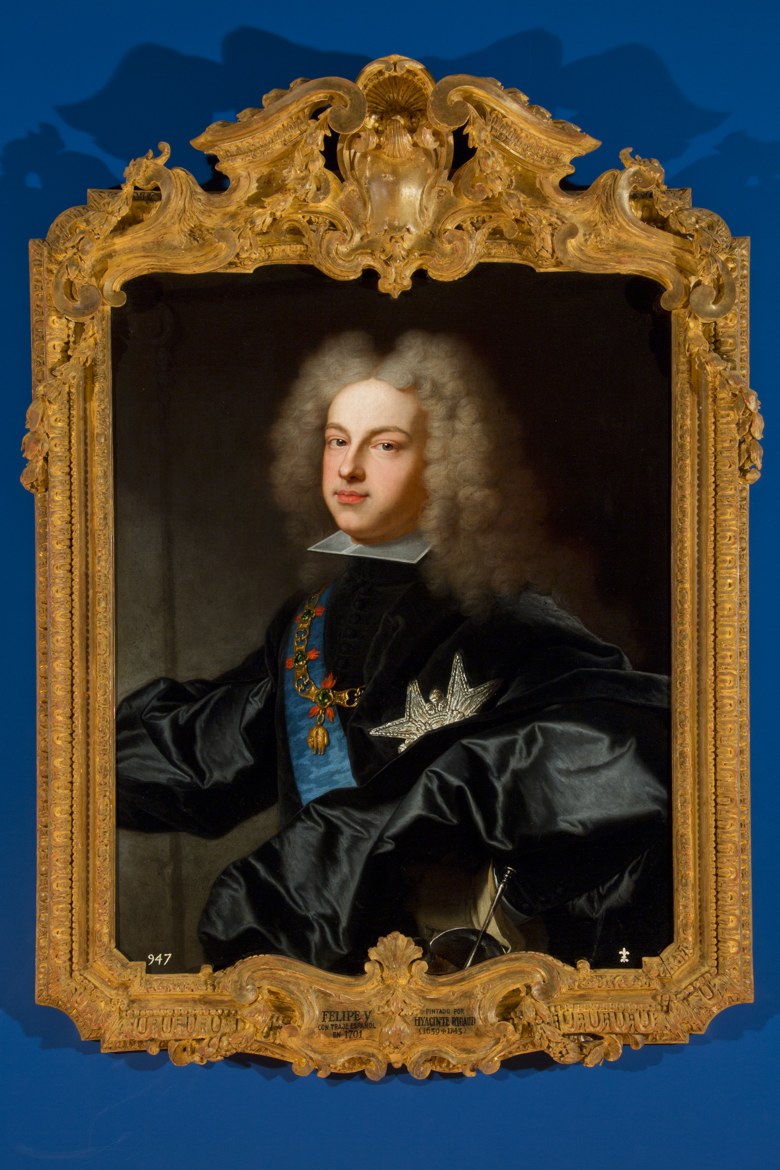
Retrato de Felipe V en traje español

Rigaud, Hyacinthe
Fechado en 1701

El miércoles 10 de noviembre de 1700, Luis XIV de Francia y de Navarra reconocía el testamento de Carlos II, en el que nombraba heredero de sus reinos a su nieto el duque de Anjou, Philippe de Bourbon (1683-1746), segundogénito del Gran Delfín. Este último, hijo del monarca francés y su heredero, renunció «con gusto» al derecho de sucesión del trono de España que legítimamente le correspondía, y –según decía la «Gazeta de Madrid»– «deseava poder dezir toda su vida: el Rey mi padre, y el Rey mi hijo», como en efecto sucedió al no sobrevivirlos.

En las semanas siguientes, se encargaron dos retratos a Hyacinthe Rigaud para ser intercambiados entre los efigiados, uno de Felipe V, de cuerpo entero y vestido de negro, óleo sobre lienzo de 225,5 por 154 cm, y otro de Luis XIV, también de cuerpo entero y en traje de gala, óleo sobre lienzo de 277 por 194 cm. Finalmente, ambos cuadros quedaron en Francia, el del soberano español en la actualidad en Versalles (Musée National des Châteaux de Versailles et de Trianon, inv. MV 8493) y el del monarca galo en París (Musée du Louvre, inv. 7492). Aunque se hizo una copia de este último, asimismo firmada por Rigaud, pues Luis XIV quiso tener una versión del cuadro, esa repetición también quedó en el país vecino.

Este lienzo de Patrimonio Nacional, firmado al dorso «Peint par hyacinthe Rigaud A Paris 1701», es versión en busto prolongado casi al medio cuerpo del citado retrato de cuerpo entero. En esa primera efigie del nieto de Luis XIV como rey de España y de las Indias, viste «a la española», de raso negro y golilla blanca. Felipe V, con peluca larga blanca, lleva cruzada en el torso la banda de muaré azul celeste de la Orden francesa del Saint-Esprit y, cosida en el pecho, su cruz en hilo de plata, junto al collar de la Insigne Orden del Toisón de Oro. Al cinto cuelga la espada, visible en su puño y cazoleta, bajo la mano enguantada que el joven monarca lleva a la cintura. Con aparatoso marco de madera tallada y dorada, abajo destacan pintados en blanco el número de inventario –«947»– y la flor de lis de la colección de la reina Isabel Farnesio, segunda esposa del primer monarca de la Casa de Borbón en España.

En las colecciones reales españolas se conserva una copia con variantes del retrato que quedó en Francia, reducida a medio cuerpo. Procede de la prestigiosa colección de Louis-Philippe d’Orléans, según muestra en la trasera del lienzo su monograma («LPO» entrelazadas) bajo la corona de príncipe de sangre y la marca a fuego del travesaño intermedio del bastidor (Patrimonio Nacional, inv. 10006934).

General Classification

Pintura retratística; Pintura de caballete

Type of Object

Cuadro

By

Rigaud, Hyacinthe

Title

Retrato de Felipe V en traje español

Era / Cultural Context

Reinado de Felipe V; Barroco

Place of Production

Francia

Date

Fechado en 1701

Subject

Madera

Display

Lienzo

Technical

Pintura al óleo

Dimensions

Fondo enmarcado: (Altura: 111,2 centímetros; Anchura: 80,4 centímetros)

Inventory

10003075

Credits

Texto: Javier Jordán de Urríes de la Colina

Discover it at the Planta -2

Authors and Collectors

Rigaud, Hyacinthe
The Author

Rigaud, Hyacinthe

(Perpignan, 1659 - Paris, 1743)

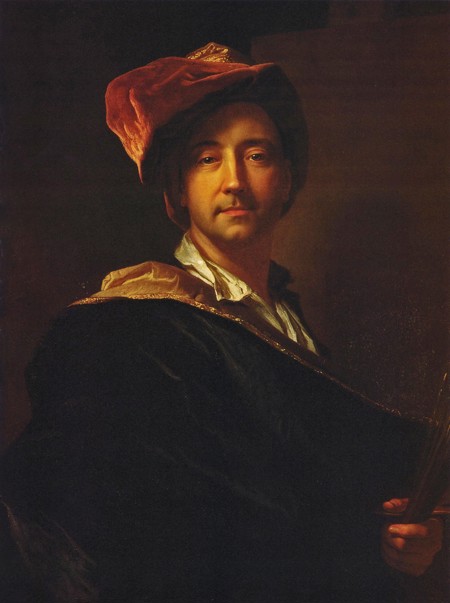
François Hyacinthe Rigaud (Perpignan, 18th July 1659 – Paris; 29th December 1743) was a French portraitist.

He was the most important painter of portraits at the court of Louis XIV of France. His instinct for impressive poses and grandiose presentation precisely fitted the tastes of the royalty, ambassadors, clergy and courtiers who sat for him. In 1682 he was awarded the Prix de Rome.

In his portraits, Rigaud captures with great accuracy the garments and details of the background, thus making them an accurate document of the fashions of the times. His most well-known work is the 1701 portrait of Louis XIV, on display at the Louvre in Paris.

According to Jacques Thuillier, professor at the Collège de...

Read more
Philip V
Monarch

Philip V

(Versalles (Francia), 1683 - Madrid, 1746)

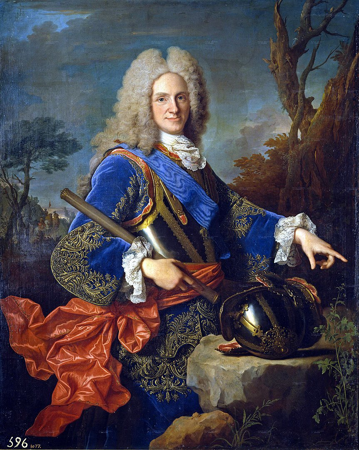
The second son of Louis of Bourbon (1661-1711), commonly known as the Grand Dauphin, heir to the French Crown, and Maria Anna Christine Victoria of Bavaria (1660-1690), the future Philip V grew up at the court of Versailles during the reign of his grandfather, Louis XIV of France. He was educated by François Fénelon, later Archbishop of Cambrai. Grandson of the Infanta Maria Theresa, eldest daughter of Philip IV, on his father’s side, he ascended the Spanish throne after the death of Charles II, who appointed him as his successor in his last will and testament dated 3rd October 1700. 

The first Spanish monarch of the House of Bourbon, Philip V's reign took place in two stages. The first lasted...

Read more
Elisabeth Farnese
Monarch

Elisabeth Farnese

(Parma (Italia), 1692 - Aranjuez (Madrid), 1766)

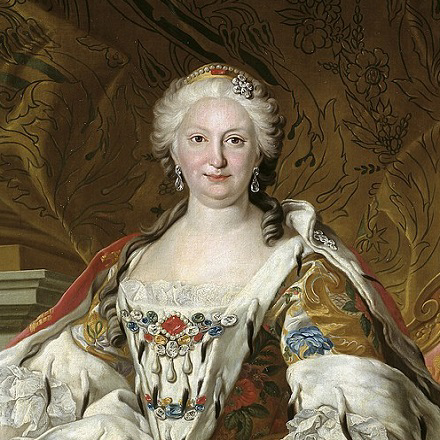
Daughter of Odoardo Farnese (1666-1693), Prince of Parma, and Dorothea Sophie of Neuburg (1670-1748), sister of Maria Anna of Neuburg (1667-1740), second wife of Charles II of Spain (1661-1700), Elisabeth Farnese’s upbringing was supervised by her mother, who saw to it that she received a solid artistic and cultural education. Betrothed to the King of Spain in 1714, at the urging of the diplomat Jules Alberoni, of Parma, and the Princesse des Ursins, the chief chambermaid and confidante of the King's first wife, Maria Luisa Gabriella of Savoy (1688-1714), her marriage to Philip V (1683-1746) was celebrated in Guadalajara on 24th December 1714. A woman with a strong personality, one of her first measures was to banish the influential Princesse des...

Read more

The work in context

View in Timeline