Loading...

Casa de los Borbones
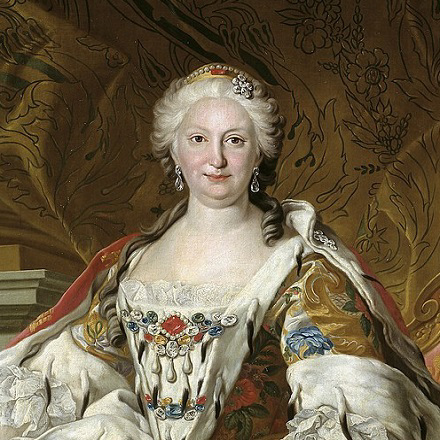
Elisabeth Farnese
Parma (Italia), 25 de October de 1692 - Aranjuez (Madrid), 11 de July de 1766
View in TimelineBiography
Daughter of Odoardo Farnese (1666-1693), Prince of Parma, and Dorothea Sophie of Neuburg (1670-1748), sister of Maria Anna of Neuburg (1667-1740), second wife of Charles II of Spain (1661-1700), Elisabeth Farnese’s upbringing was supervised by her mother, who saw to it that she received a solid artistic and cultural education. Betrothed to the King of Spain in 1714, at the urging of the diplomat Jules Alberoni, of Parma, and the Princesse des Ursins, the chief chambermaid and confidante of the King's first wife, Maria Luisa Gabriella of Savoy (1688-1714), her marriage to Philip V (1683-1746) was celebrated in Guadalajara on 24th December 1714. A woman with a strong personality, one of her first measures was to banish the influential Princesse des Ursins, the person responsible for her marriage.
The King and Queen formed a well-matched couple who had seven children: the future Charles III of Spain (1716-1788); the Infante Francisco (born and died in 1717); the Infanta Mariana Victoria (1718-1781), Queen of Portugal by marriage to Joseph I (1714-1777); the Infante Philip (1720-1765), Duke of Parma; the Infanta Marie Thérèse (1726-1746), Dauphine of France by marriage to Louis Ferdinand of Bourbon, Dauphin of France (1729-1765); the Infante Luis Antonio (1727-1785), who was to become Archbishop of Toledo and Cardinal of the Holy See; and the Infanta Maria Antonia Ferdinanda (1729-1785), Queen of Sardinia by her marriage to Victor Amadeus III of Savoy (1726-1796).
As Queen, Elisabeth Farnese exercised considerable political influence and protected the careers of ministers such as the Cardinal Alberoni, Juan Guillermo Ripperdá, José Patiño and the Marquess of Villadarias. Moreover, when Philip V was ill, the Queen personally, albeit unofficially, took over the management of state affairs.
After her husband's death on 9th July 1746, Elisabeth Farnese was forced by her stepson, Ferdinand VI, to retire to the Palace of La Granja de San Ildefonso (Segovia). During the thirteen years of her retirement, the Queen concentrated on her cultural interests, such as expanding her art collection, and the construction of the Palace of Riofrío (Segovia). After Ferdinand VI died without heirs on 10th August 1759, Elisabeth Farnese served as interim Governor while her eldest son, the new King Charles III, travelled to Spain.
The Queen died at Aranjuez Palace on 11th July 1766. Her remains lie alongside those of Philip V in the crypt of the Royal Collegiate Church of the Holy Trinity in the Palace of La Granja de San Ildefonso (Segovia).
Source: Royal Academy of History (https://www.rah.es)