Use of Cookies

The Royal Collections Gallery uses its own and third-party cookies, mainly for technical purposes, which are necessary to provide our services and provide you with relevant content. More information in our cookies policy. Cookies Policy.

ACCEPT to confirm that you have read the information and accepted their installation. You can change your browser settings.

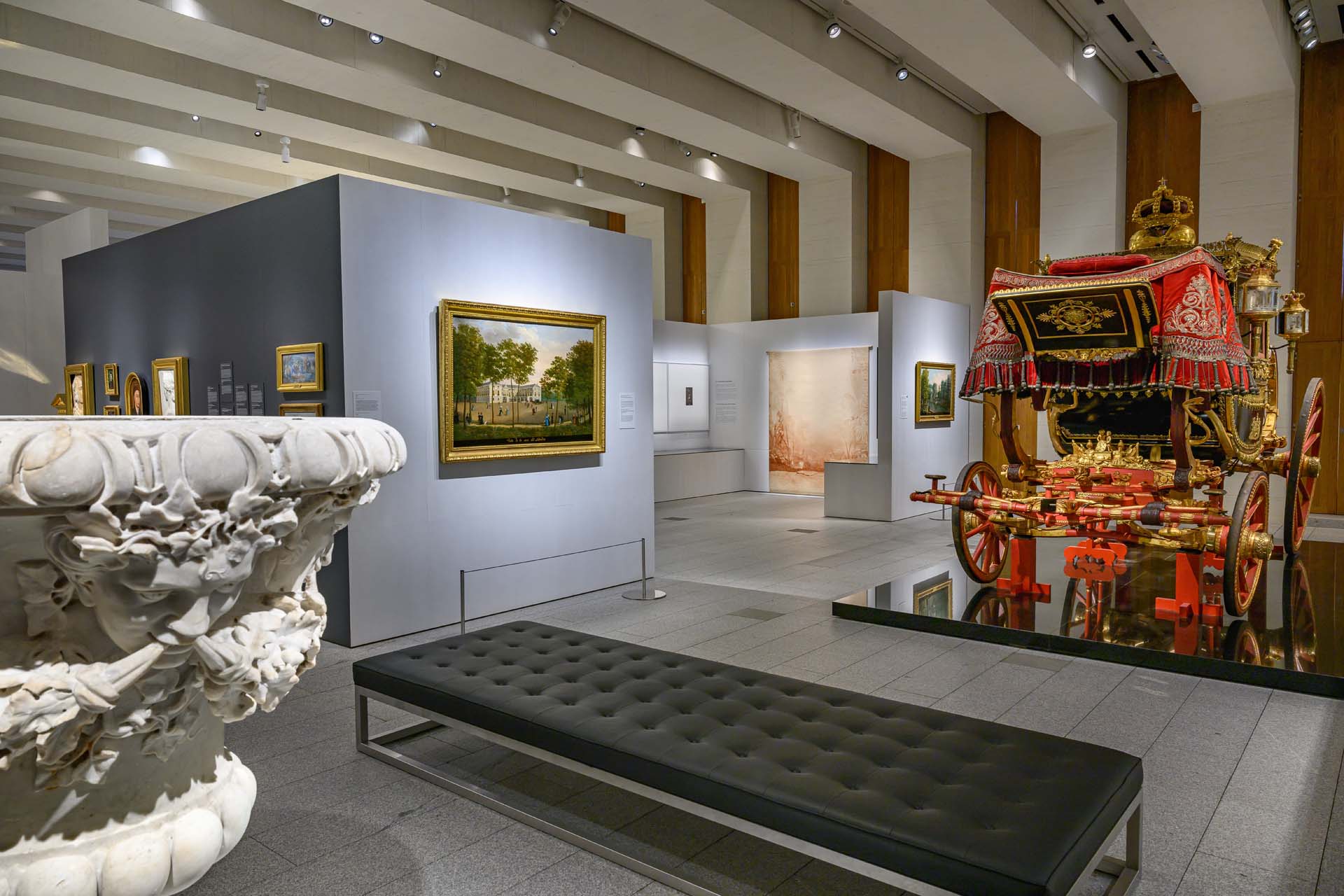
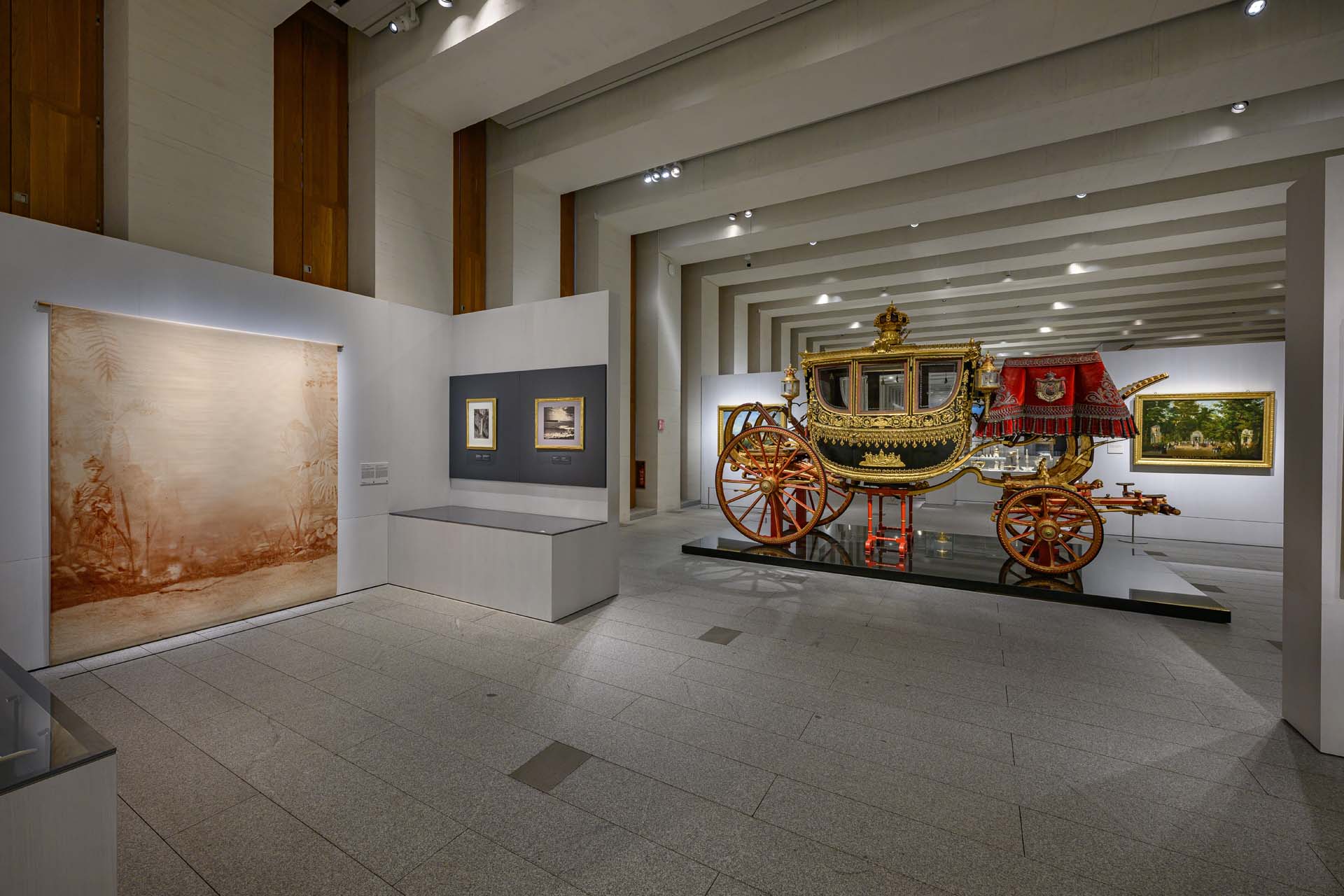
Alterations proposes a reinterpretation of the collections and spaces of the Galería de las Colecciones Reales from the standpoint of contemporary art, with the aim of encouraging dialogue and interaction between the historical collections and present-day creativity, promoting an approach to different artistic proposals that contribute to expanding modes of presentation and narratives.
Art leads us to ask questions, reflect and see other points of view. This project is an invitation to generate new stories and engage in a different way with the royal collections through four interventions by contemporary artists directly related to their history and presentation in the permanent display: Bleda y Rosa, José Manuel Ballester, Teo Barba and Andrés Pachón.
The result is four interventions—subtly integrated and in dialogue with the royal collections—that broaden our horizons, revisit historical events and places, and generate new narratives and stories around the performativity of photography, characterised by subjectivity, intervention and the re-contextualisation of images.

  • Opening Hours

    Monday to Saturday from 10 am to 8 pm. Sundays and Bank Holidays from 10 am to 7 pm.

  • Admission

    Floor-1, Habsburgs Hall, Charles V and Philip II Area.
    Floor-2, Bourons Hall, Philip V and Isabel II Area.
    Plaza de la Armería: visits the Royal Collection Gallery and temporary exhibitions. 

  • Prices

    Included with Gallery admission.

Bleda y Rosa

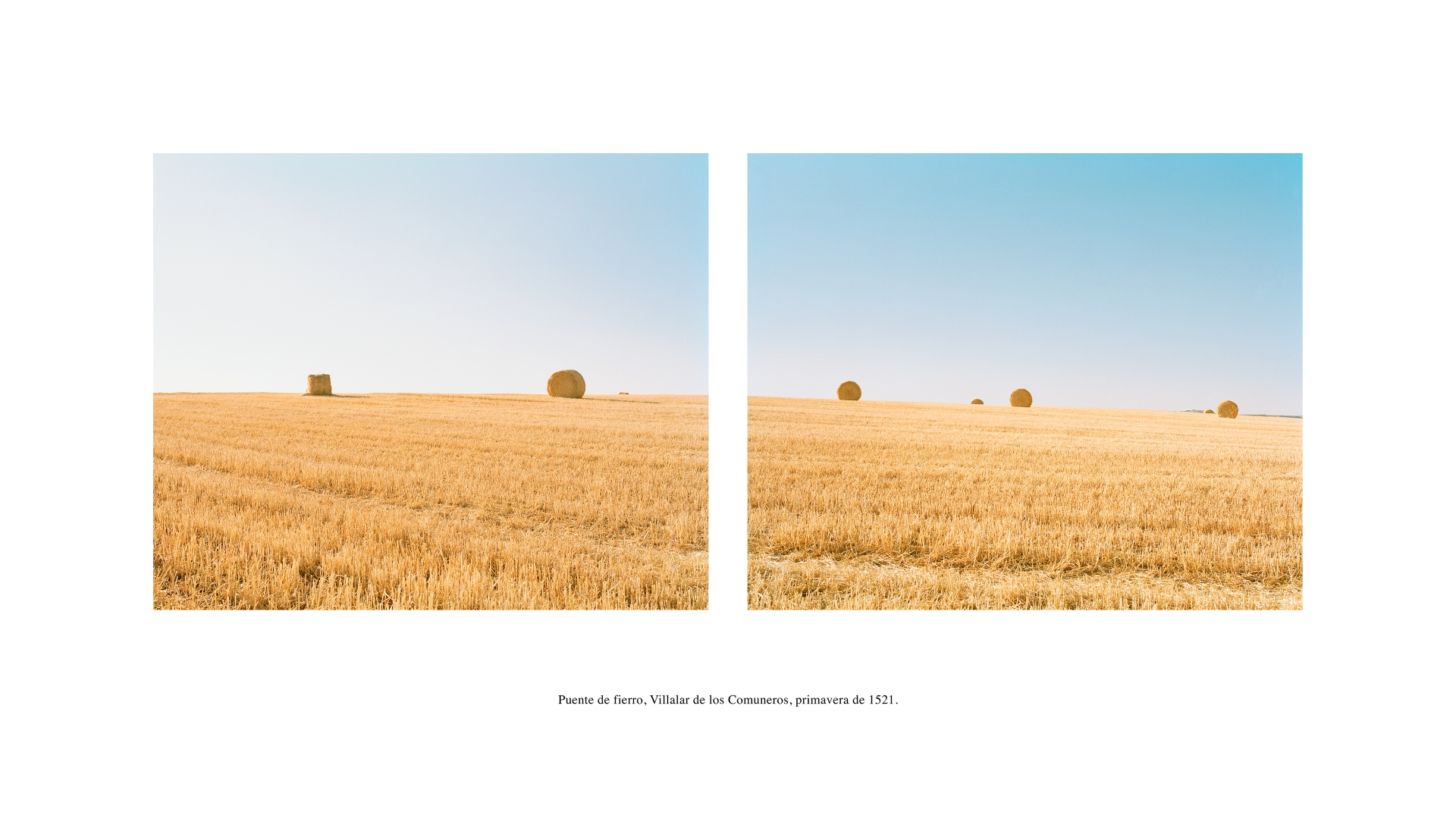
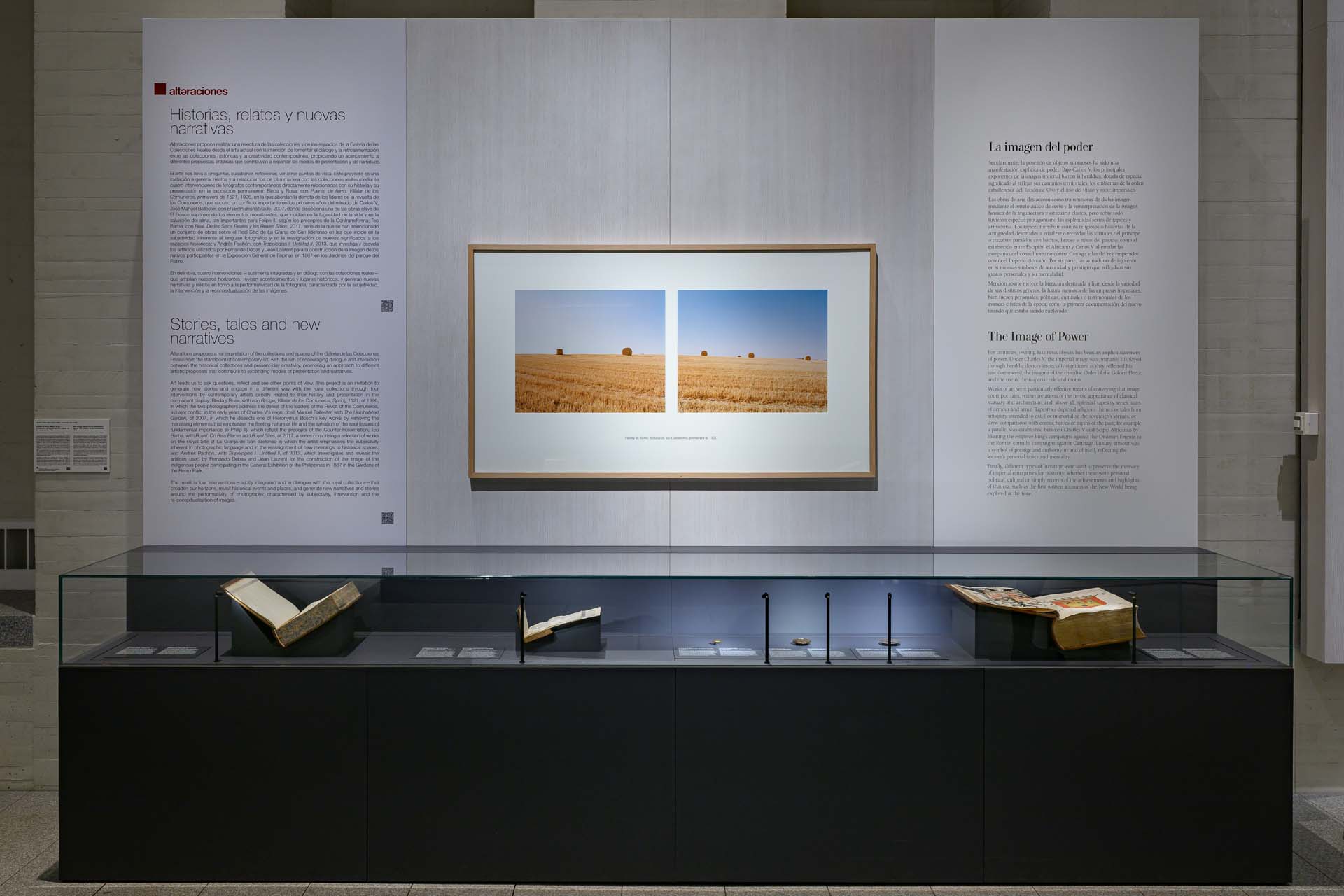
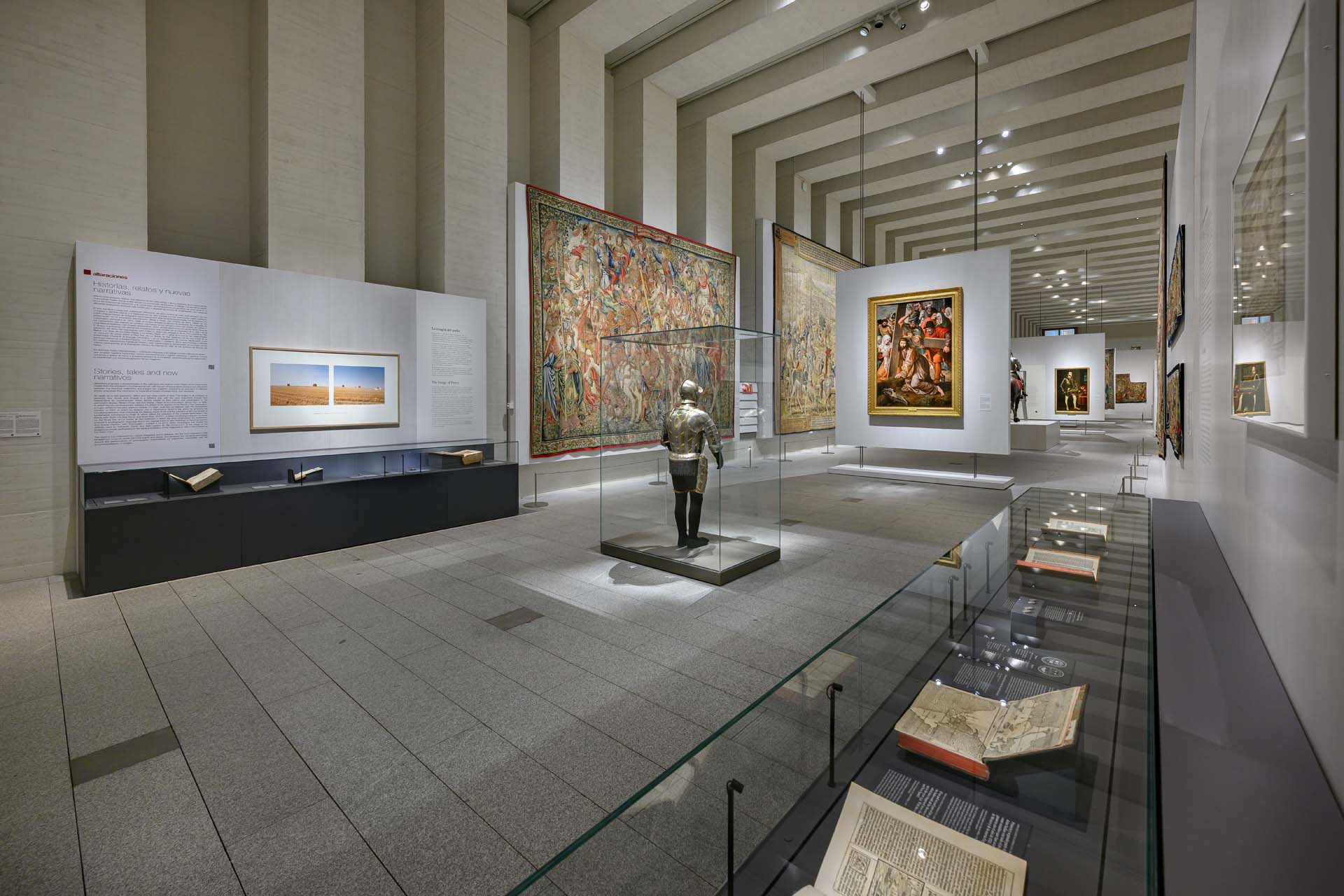
Iron Bridge, Villalar de los Comuneros, Spring 1521. Villalar de los Comuneros, 1996

This work belongs to the series “Battlefields” (1994-2016), a project that investigates historically significant battlegrounds, both national and international, underscoring the universality of armed conflict. The two photographers, winners of the 2008 National Photography Prize, have developed their own language which combines visuality and textuality, opening up new avenues for reflection around one of the central themes of their career: the history and representation of landscape and territory through the lens of time, memory and absence. At first glance their work appears to be a canonical depiction of the Castilian countryside. However, a closer reading that takes into account the panoramic fragmentation of the landscape into two windows, together with the textual reference, locates the viewer in the context of one of the most crucial episodes of the sixteenth century, the Revolt of the Comuneros of Castile (1520-1521) as a consequence of the loss of influence of Castile, the increase in taxes and the expansion of the power of the Crown to the detriment of the liberties of its subjects.
The landscape thus becomes a metaphor for both memory and its absence, due to the oblivion in which the victims have fallen. It also illuminates and makes visible the wound of a defeat, that of the revolt’s leaders, a decisive episode which marked the start of the reign of Charles V. The territory is not only seen in this image but also heard: it is mist, echo and resonance; a landscape that still breathes the tension of a revolt that aspired to be a new dawn.

Bleda y Rosa

José Manuel Ballester

The Uninhabited Garden, 2007

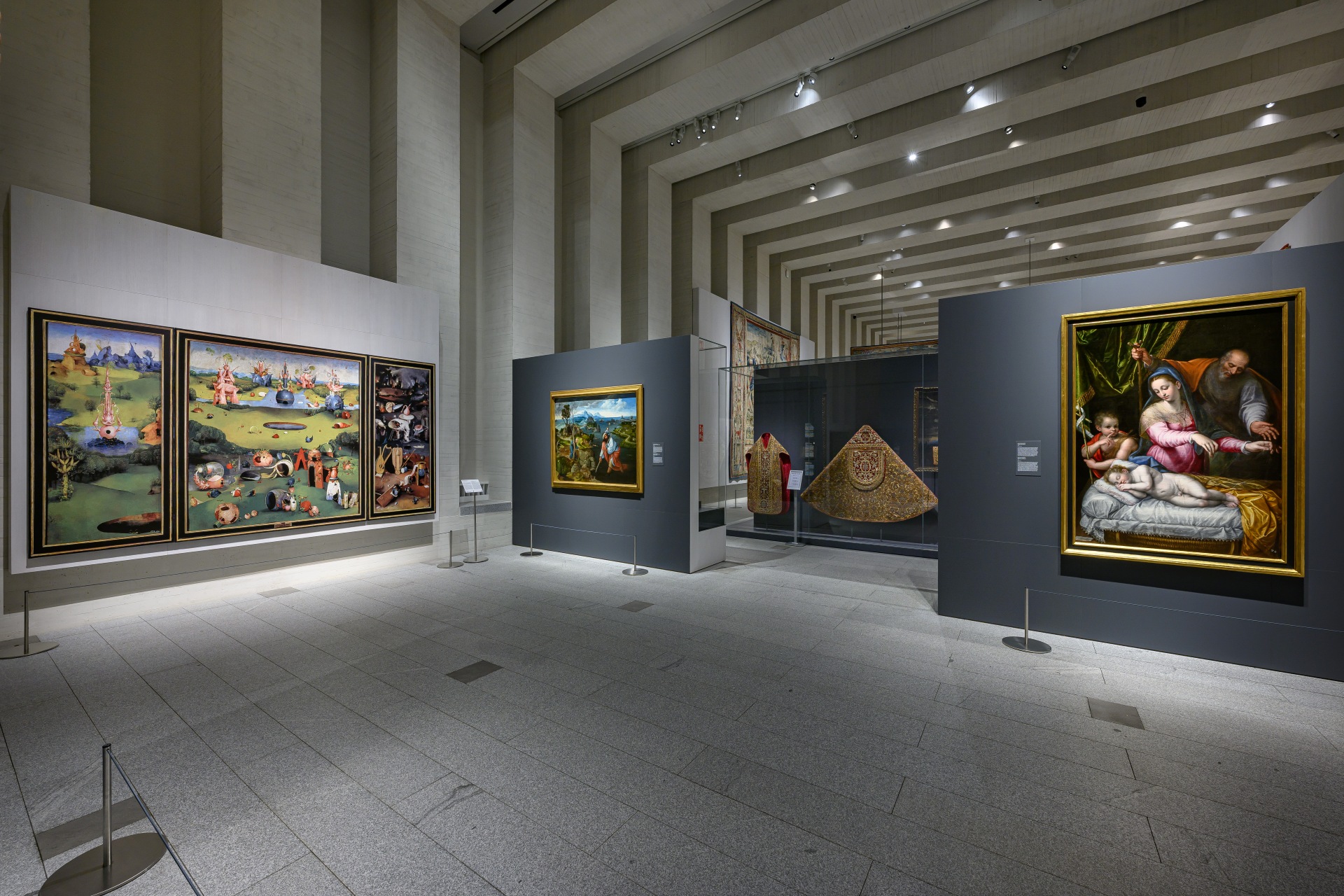
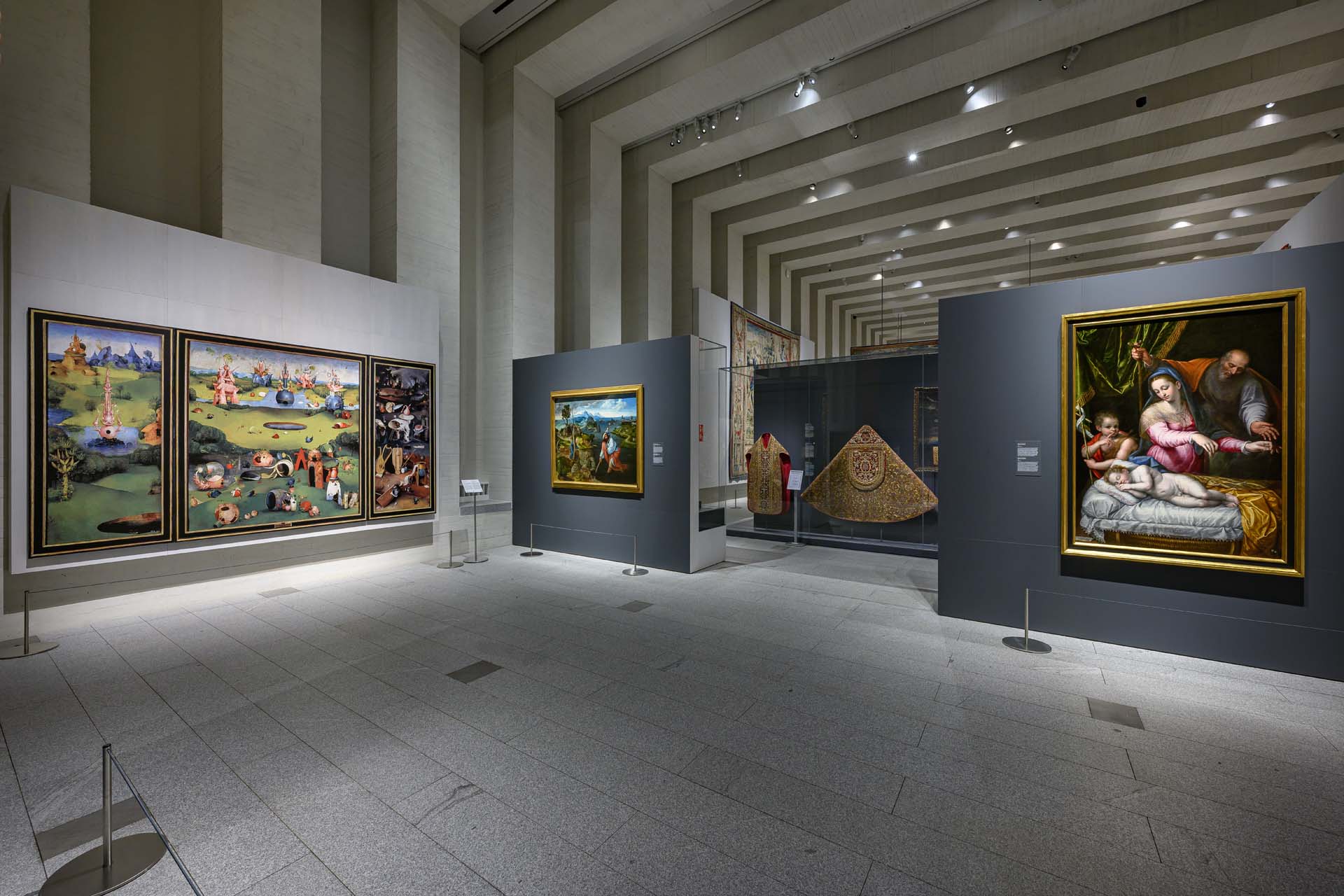
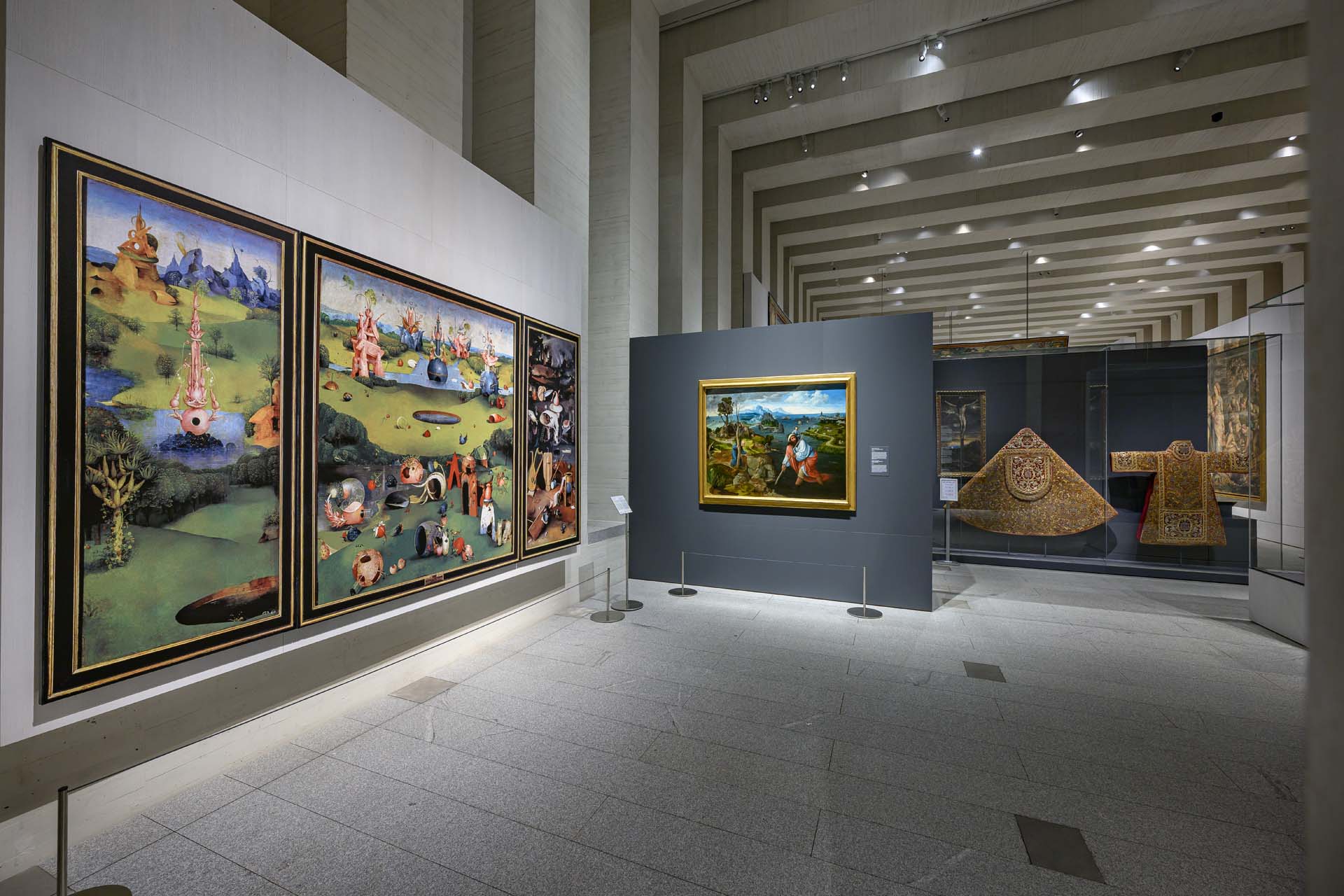
The Uninhabited Garden is part of the “Hidden Spaces” series in which José Manuel Ballester, recipient of the 2010 National Photography Prize, modified canonical works from the history of art by artists such as Leonardo, Velázquez, Goya and Fra Angelico by suppressing the human presence and the narrative aspect in order to invite the viewer to reflect on space and time and generate new perspectives on works with which we were apparently very familiar.
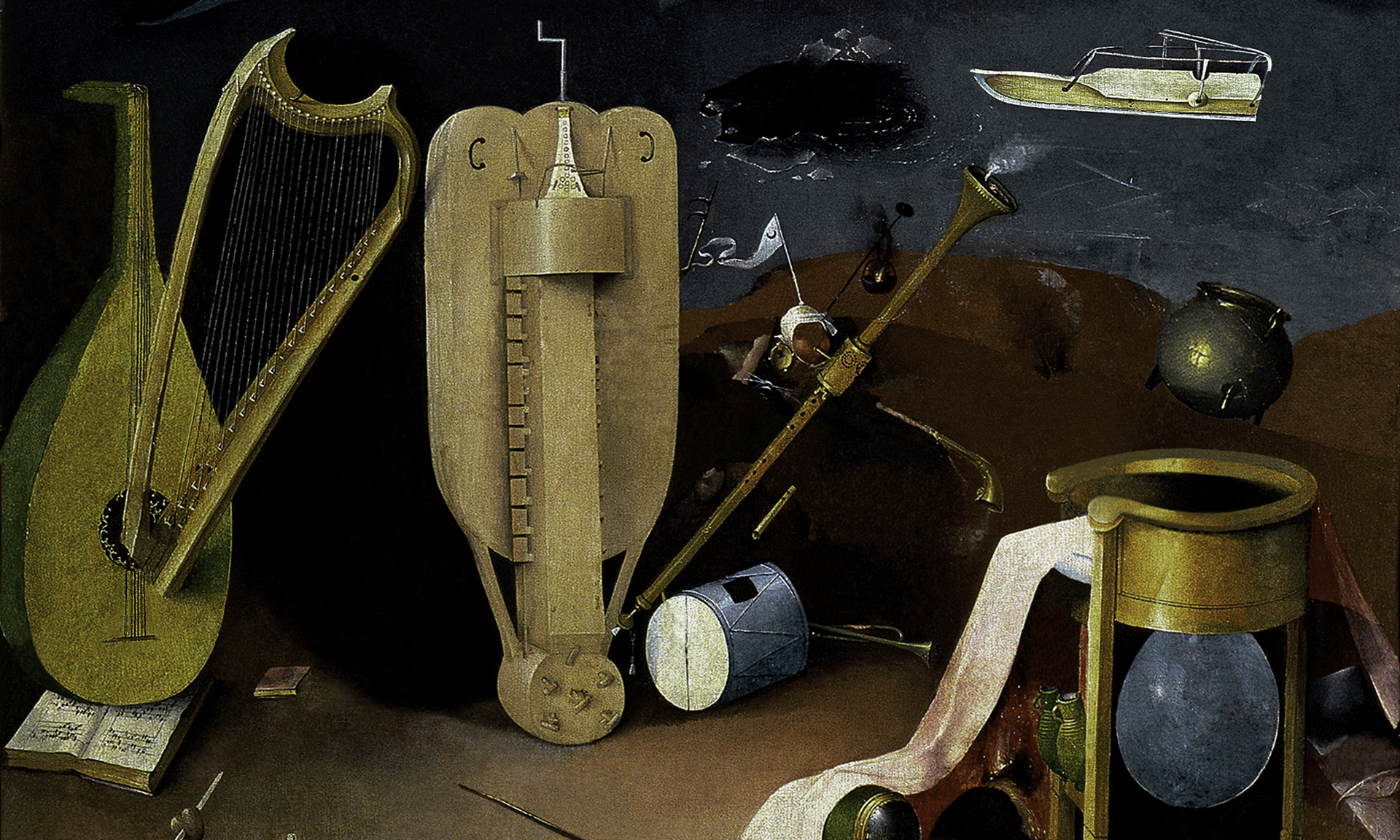
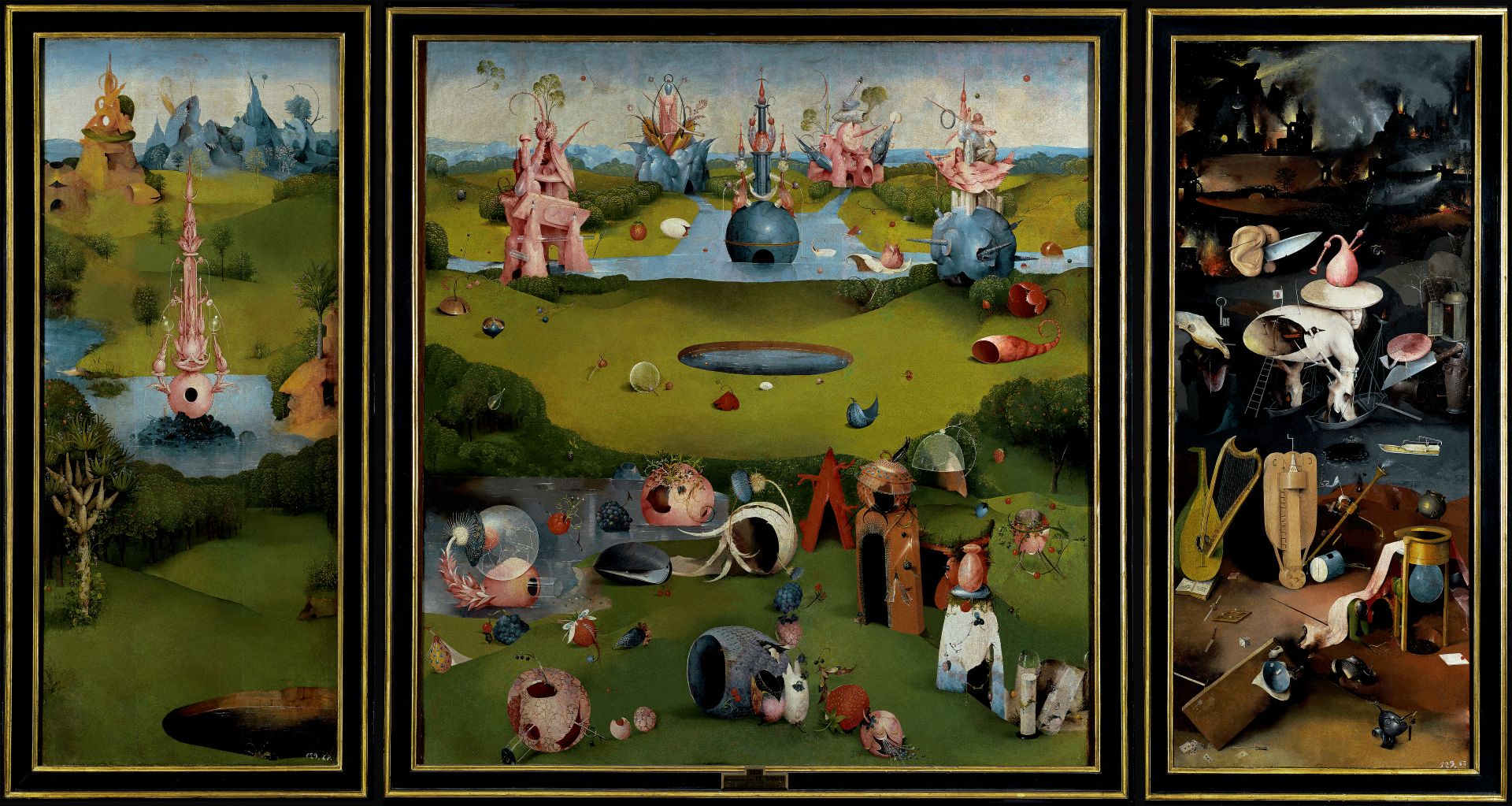
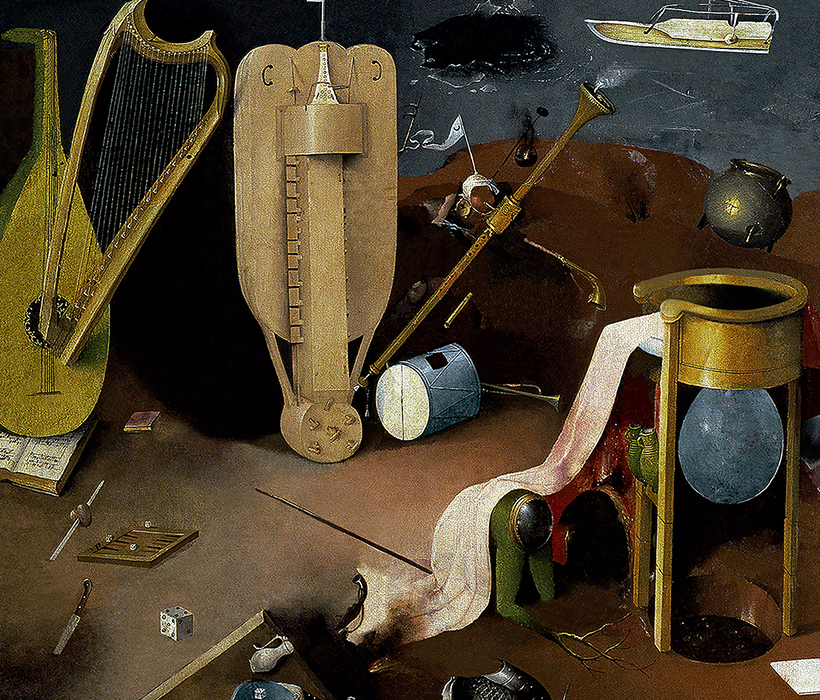
In The Uninhabited Garden Ballester digitally intervenes on Hieronymus Bosch's The Garden of Earthly Delights (1490-1500), currently on deposit with the Museo del Prado. The work has belonged to the Spanish royal collections since its acquisition in 1591 by Philip II, the painter's most important collector, who profoundly admired Bosch and felt a strong connection with his satirical and moralising scenes. In his reinterpretation, Ballester opens up the inner workings of one of Bosch's imaginary worlds. By de-contextualising it and stripping it of its moralising figures—those shadows that warned of the fleeting nature of life and the salvation of the soul, so aligned with Philip II's austere spirituality which reflected the precepts of the Counter-Reformation—the photographer reveals a suspended, silent garden in which the invisible acquires an almost tactile weight; the underlying geometry and visual paths of the composition emerge, presenting us with a latent dimension in which the painting ceases to be a scene and becomes a territory.

José Manuel Ballester

Teo Barba

Royal. On Real Places and Royal Sites, 2017

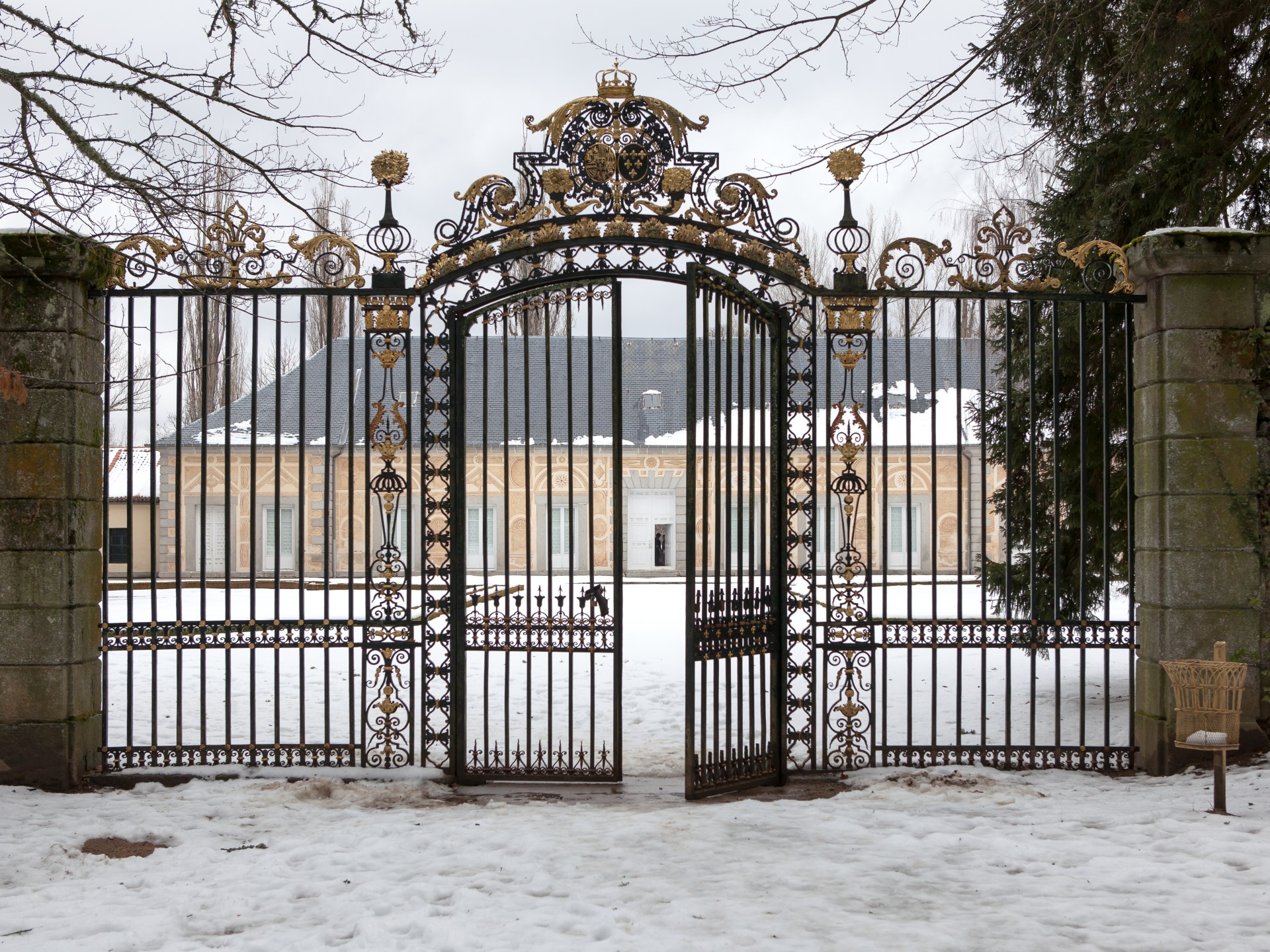
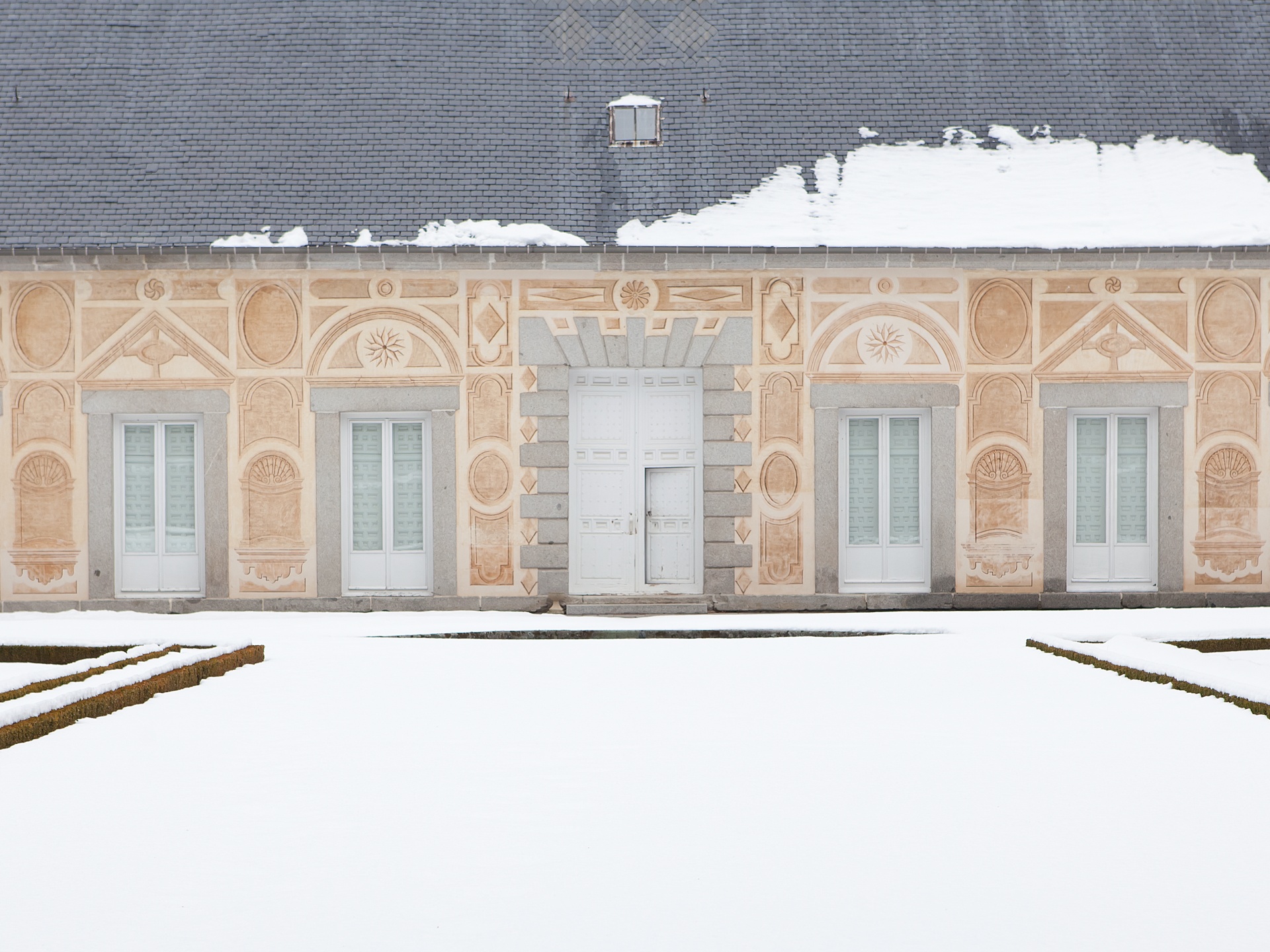
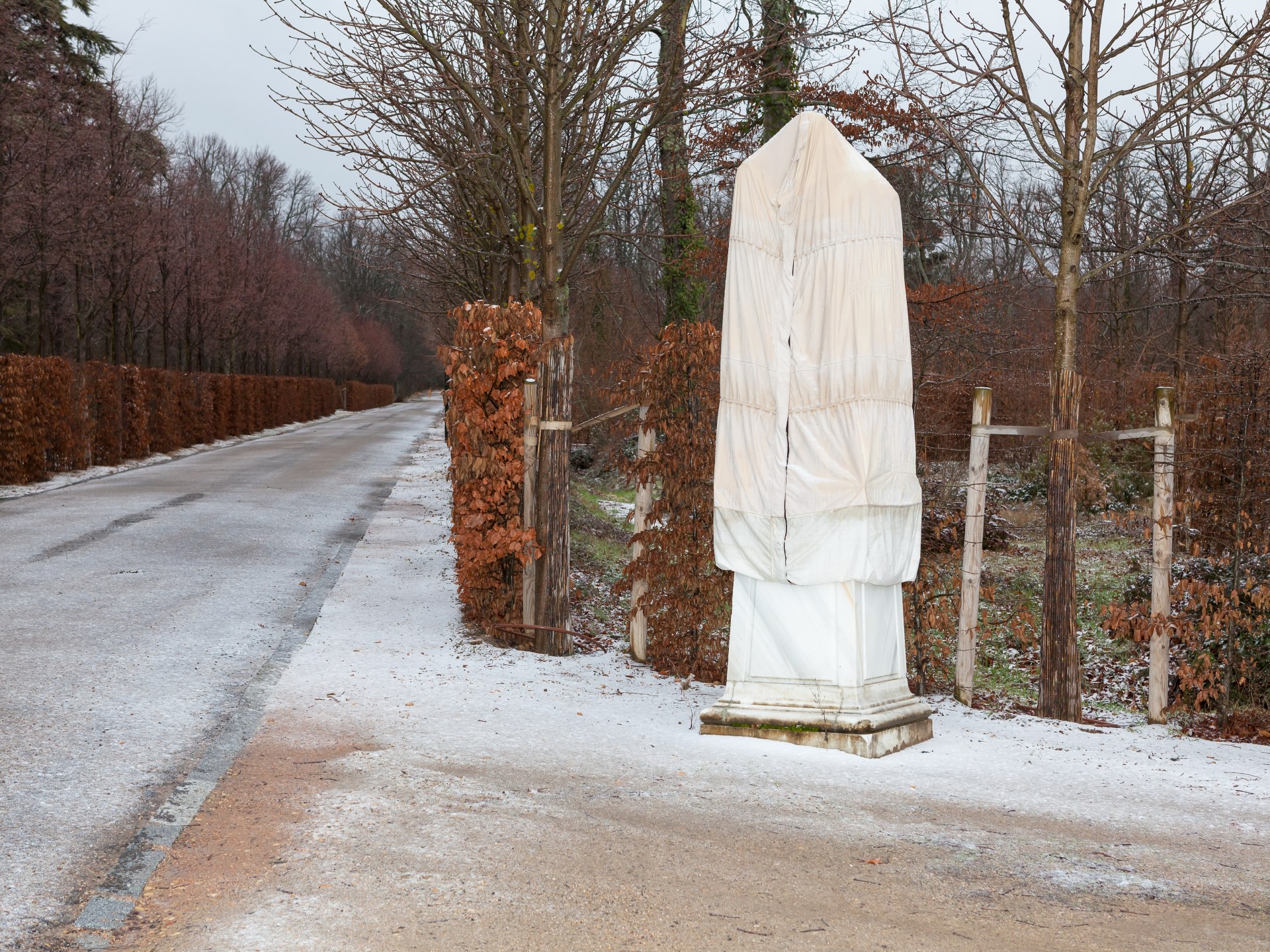
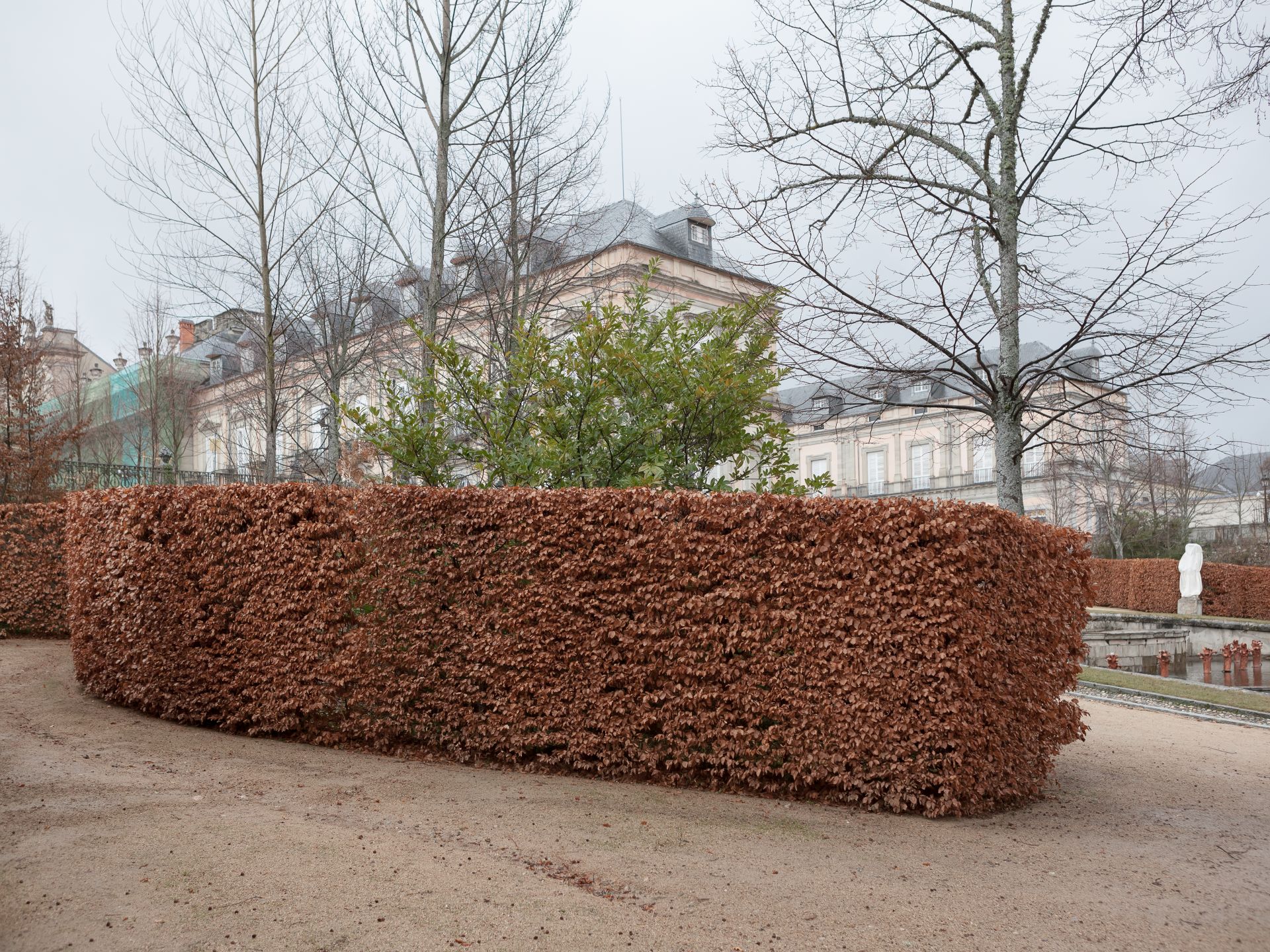
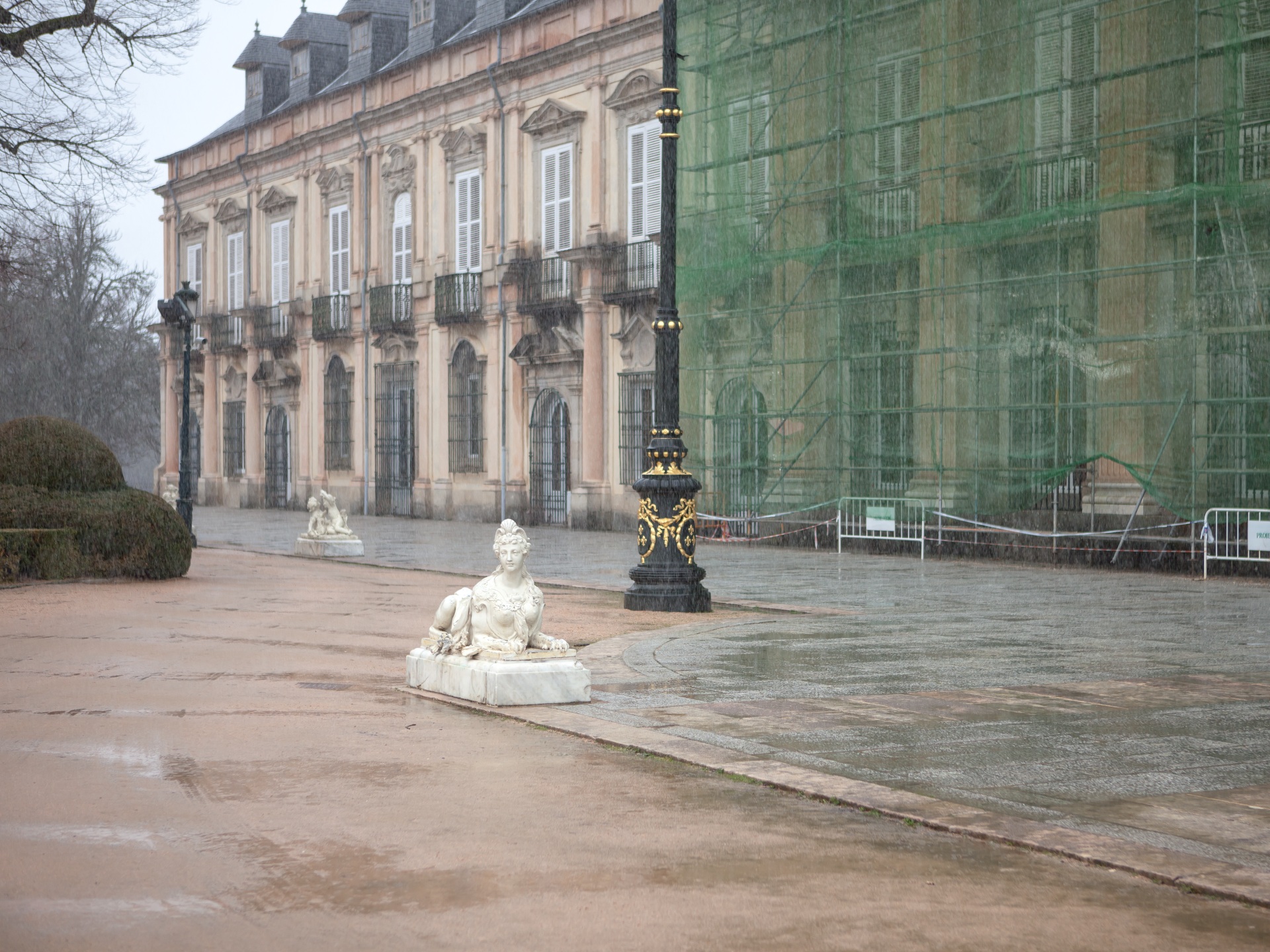
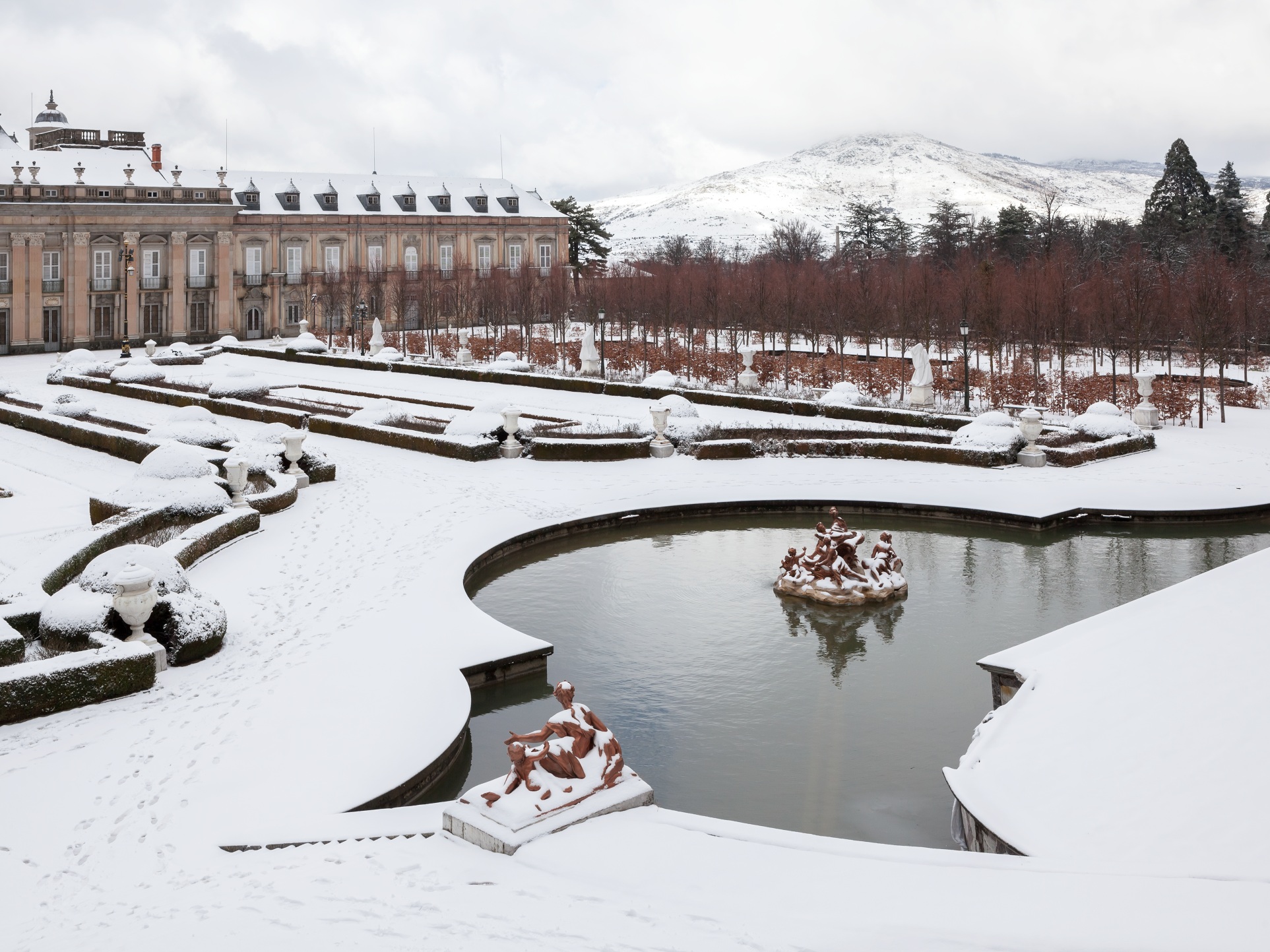
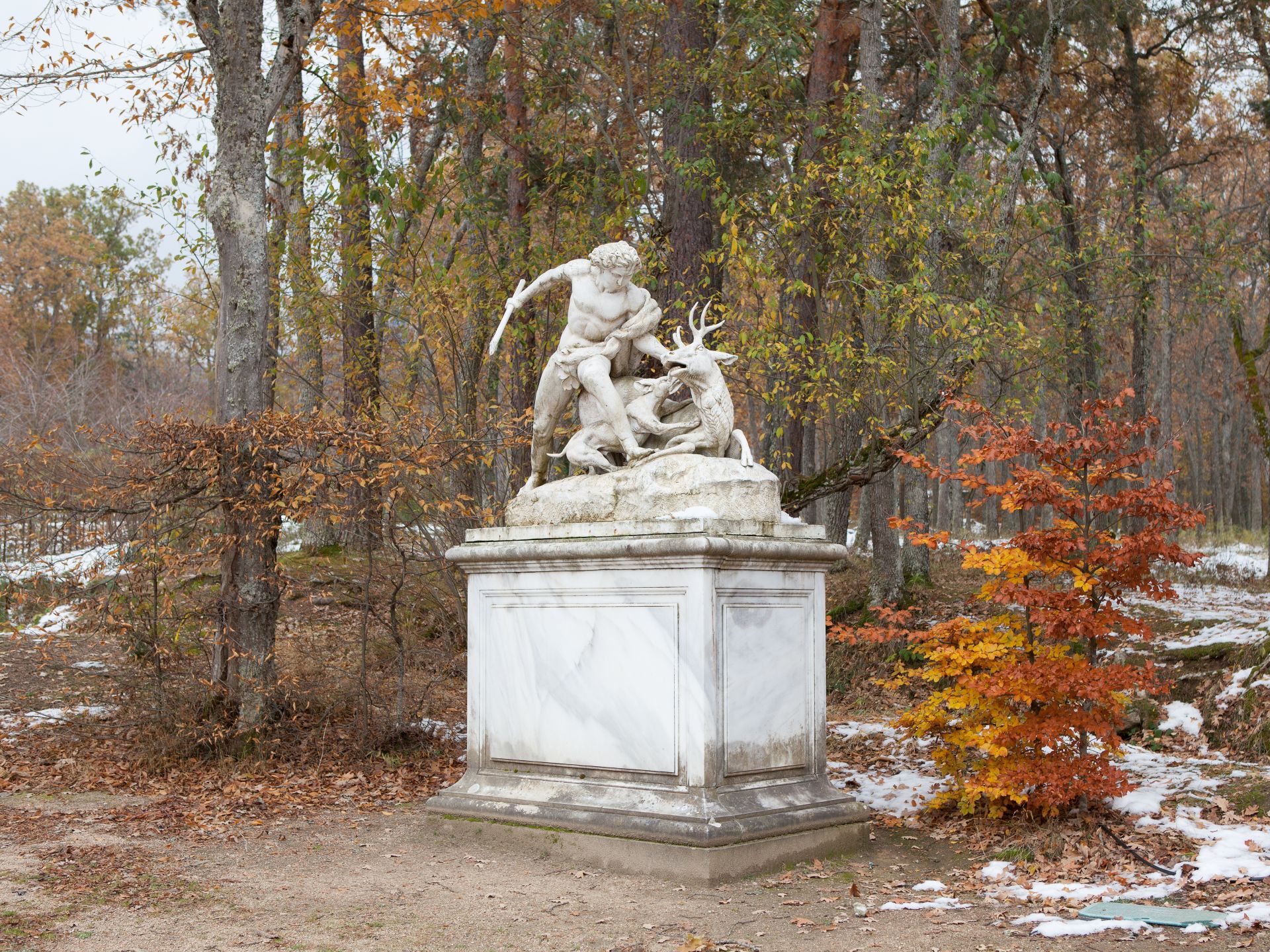
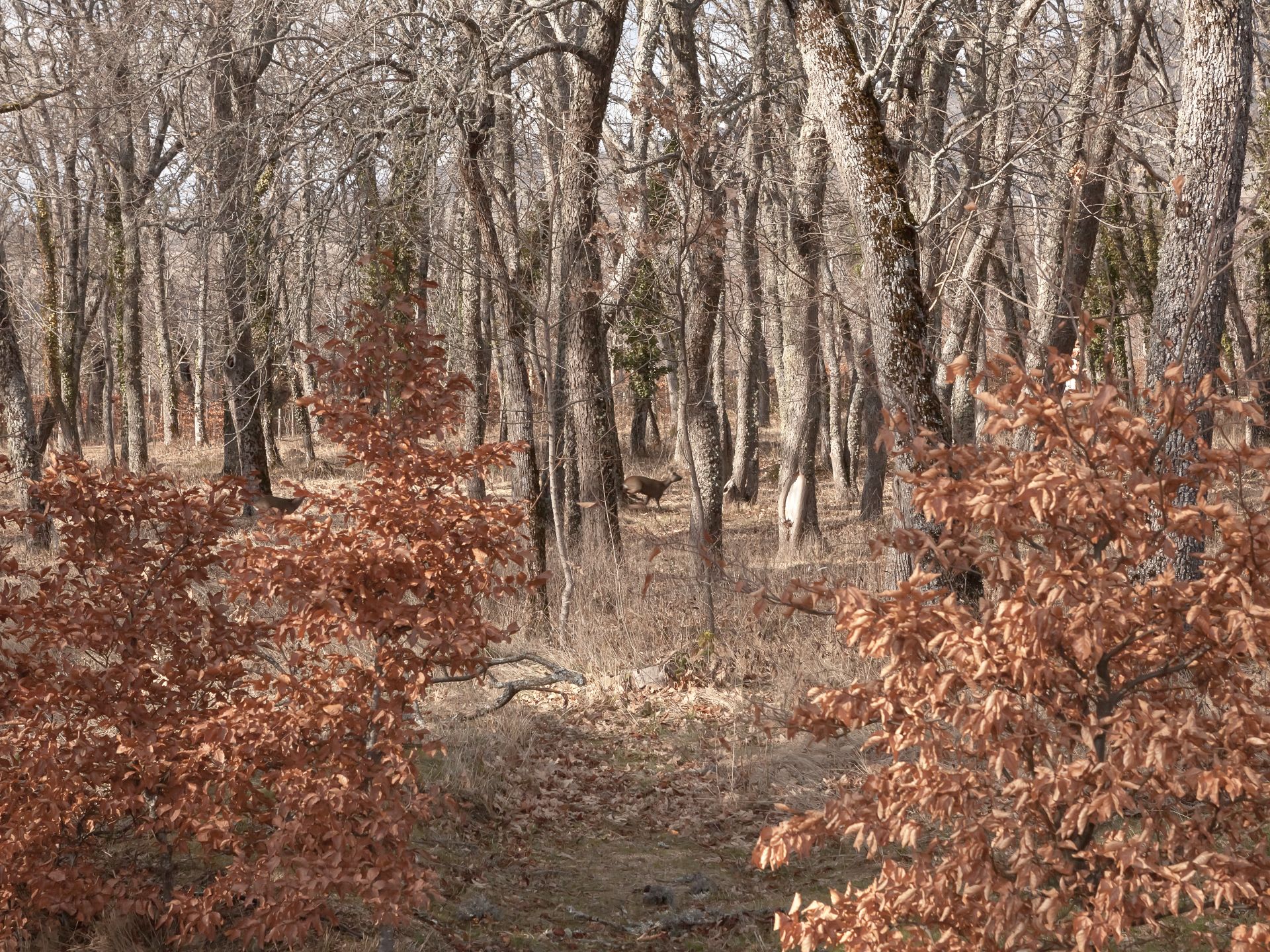
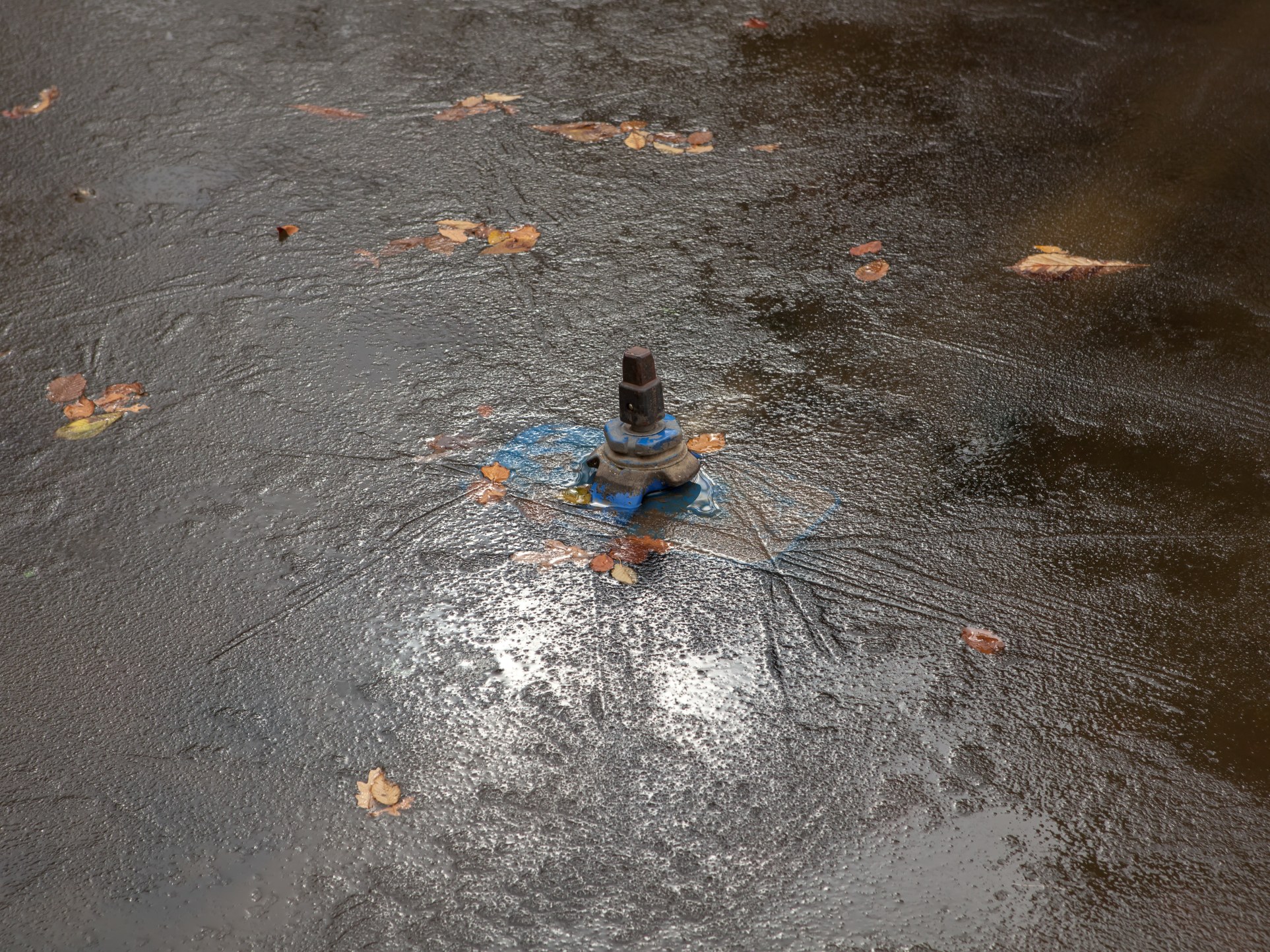
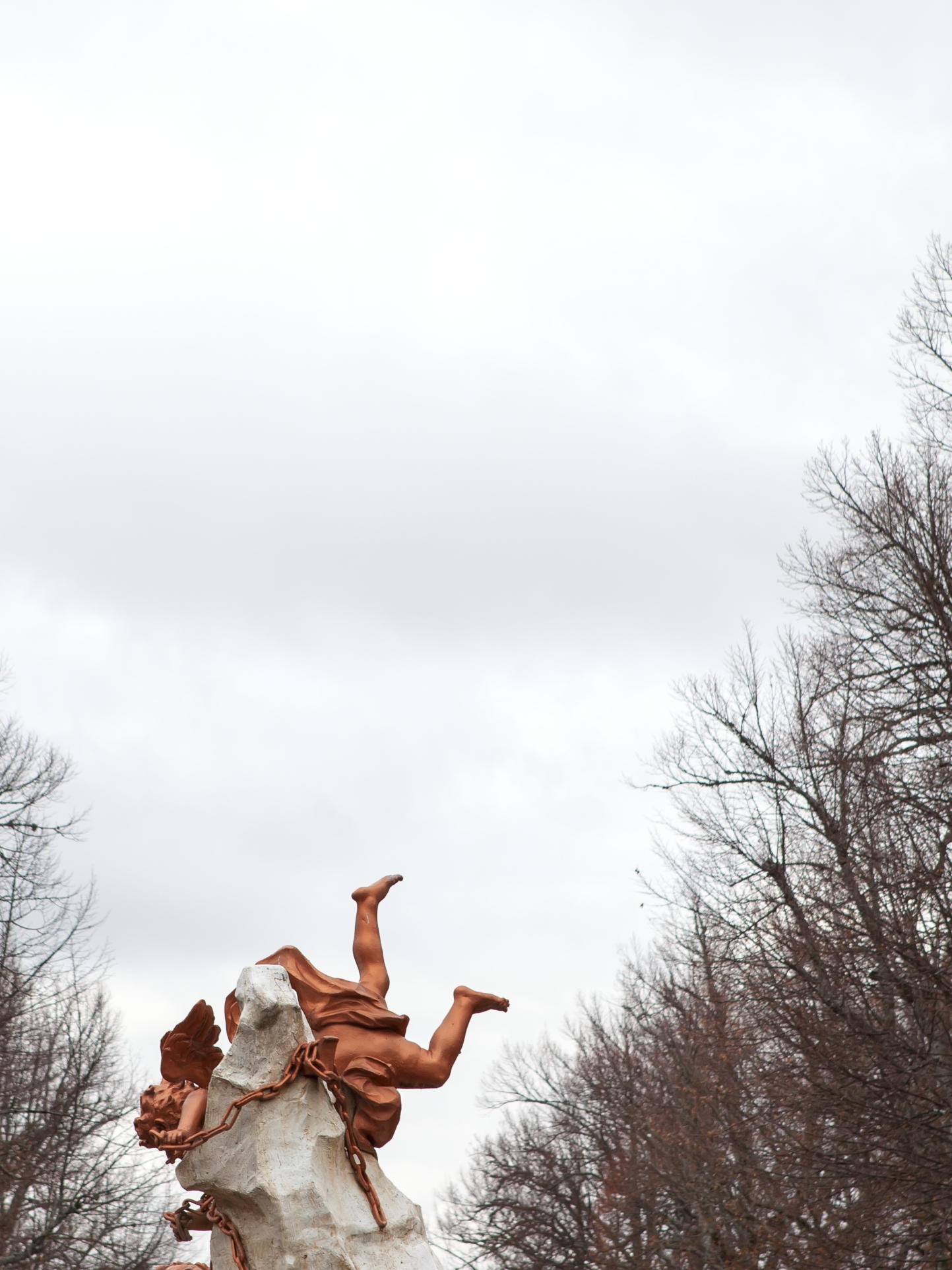
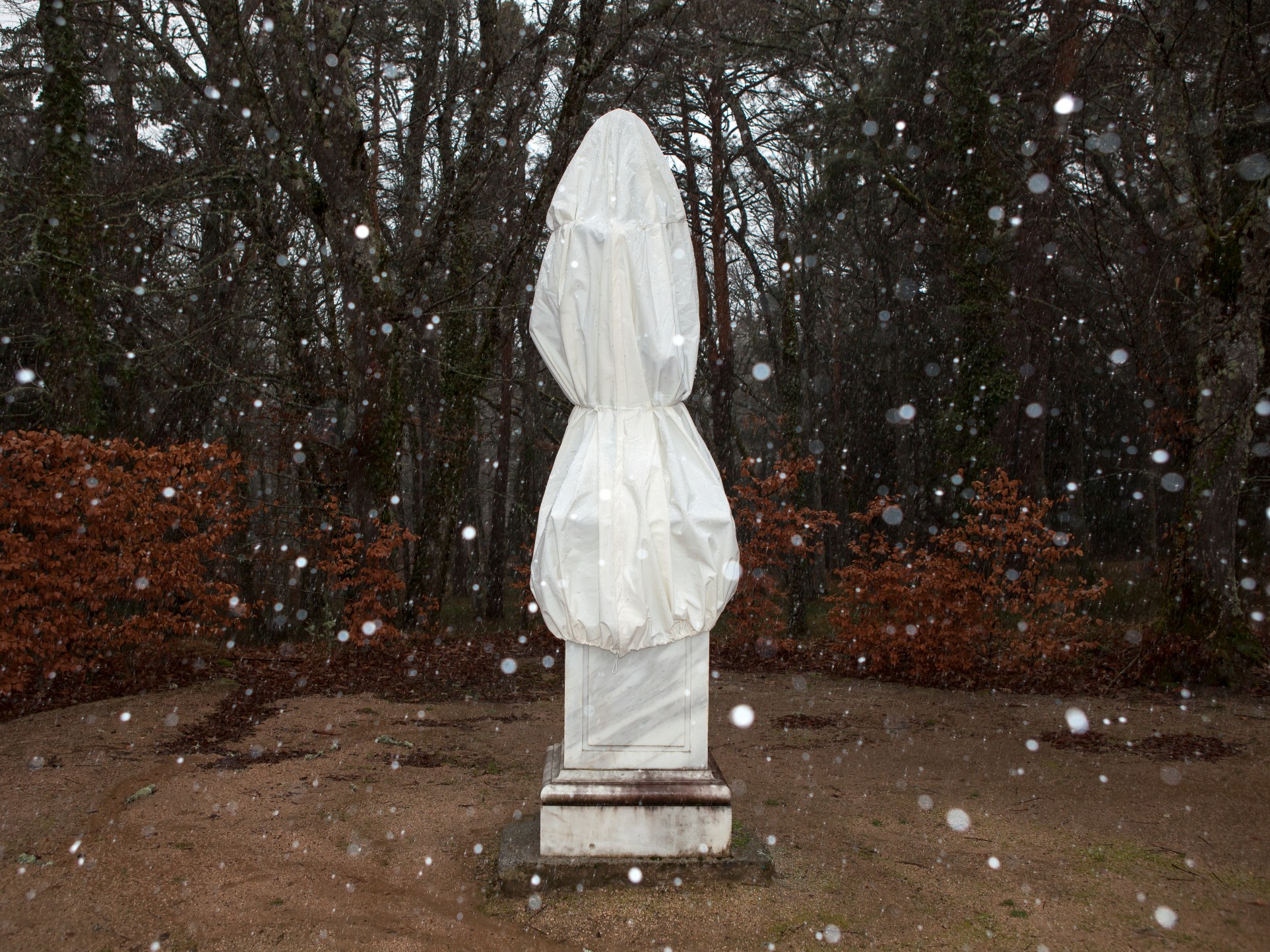
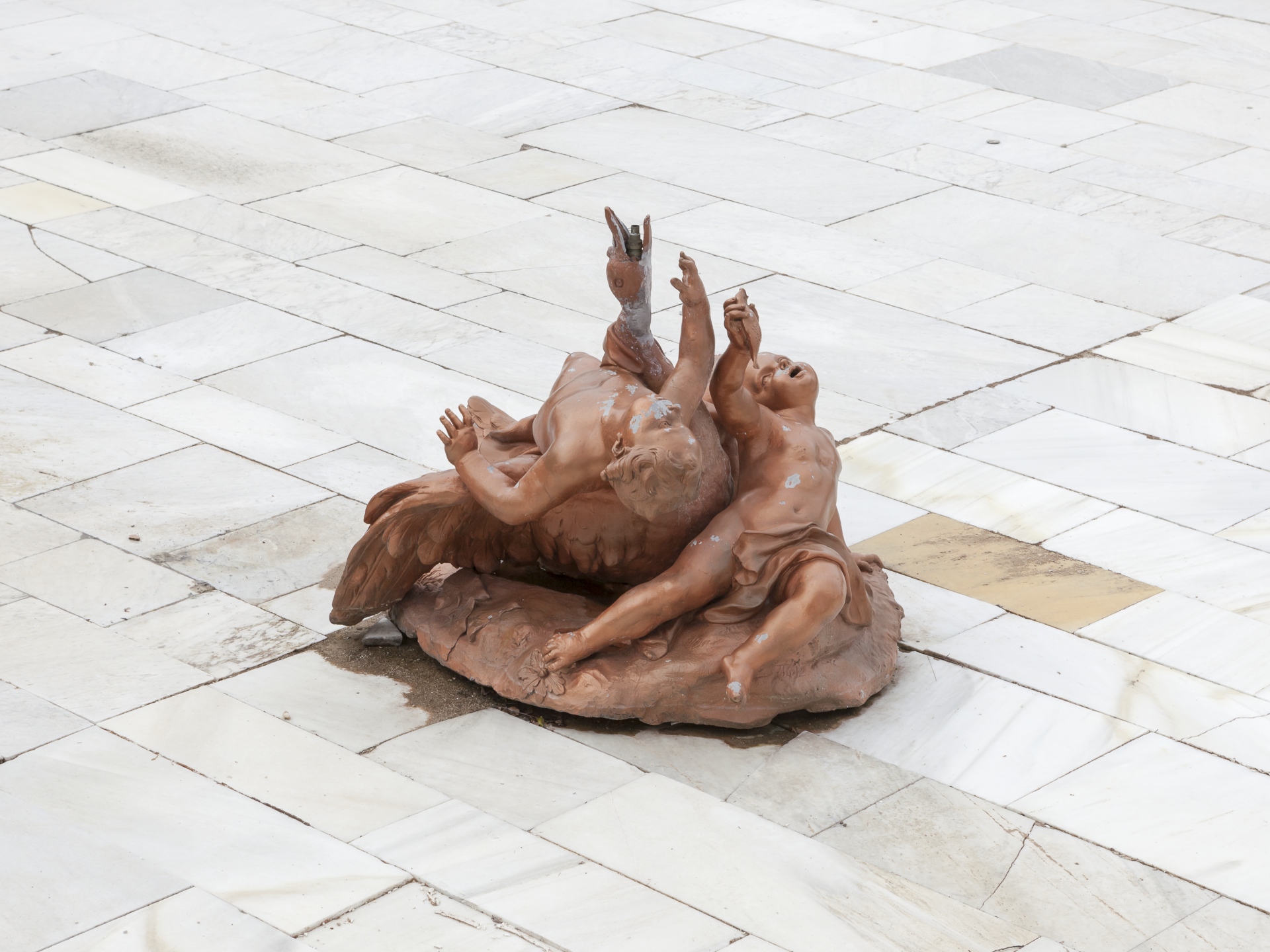
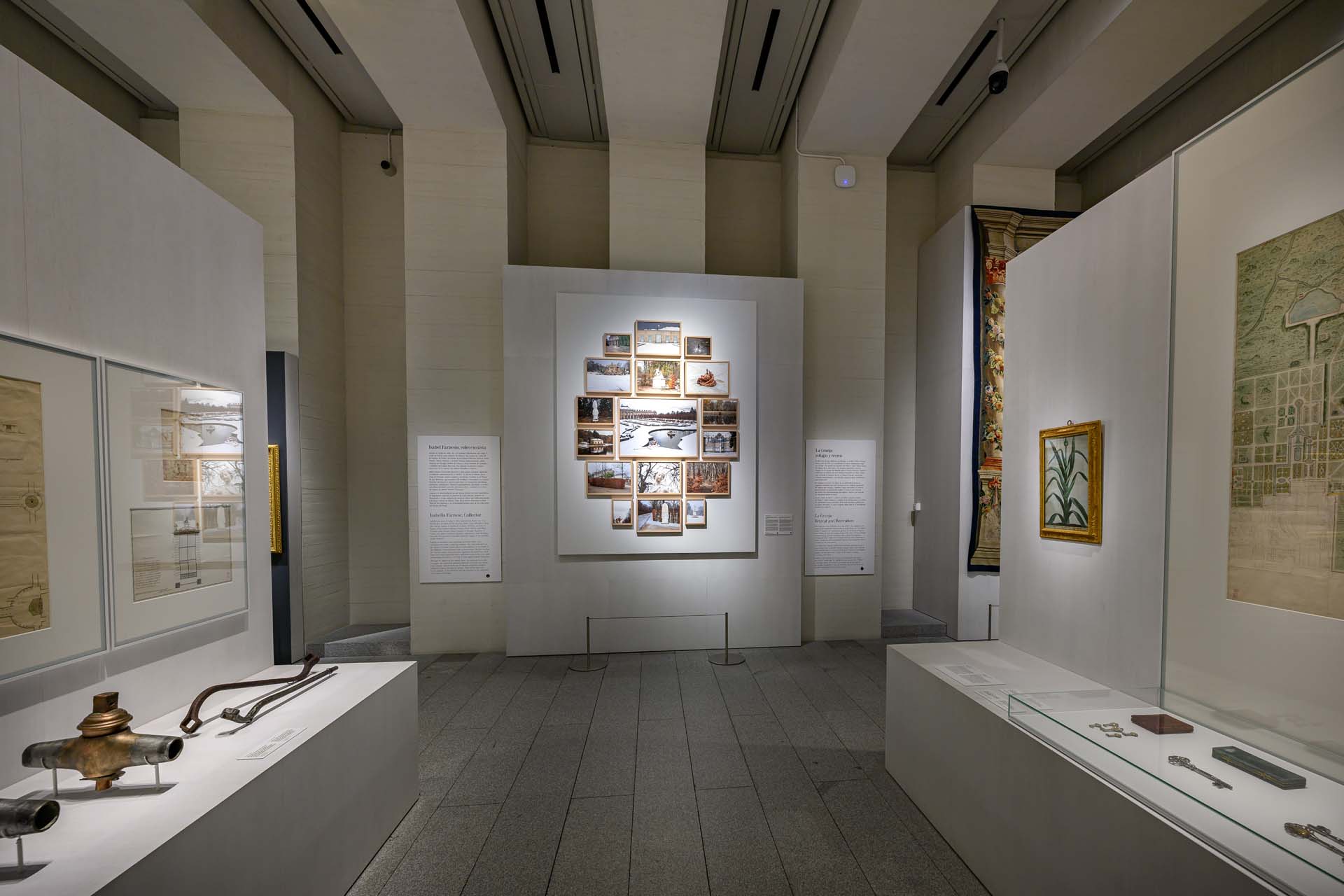
Teo Barba's work reflects on territory, history and human intervention on the landscape. Among his most outstanding series is Royal. On Real Places and Royal Sites  (2017), in which he explores places such as Aranjuez, El Pardo, the Royal Palace in Madrid, El Escorial and La Granja, proposing a subtle play on the polysemy of the term “real”, meaning both “real” and “royal” in Spanish: associations with the monarchy and the supposed objectivity of photography.
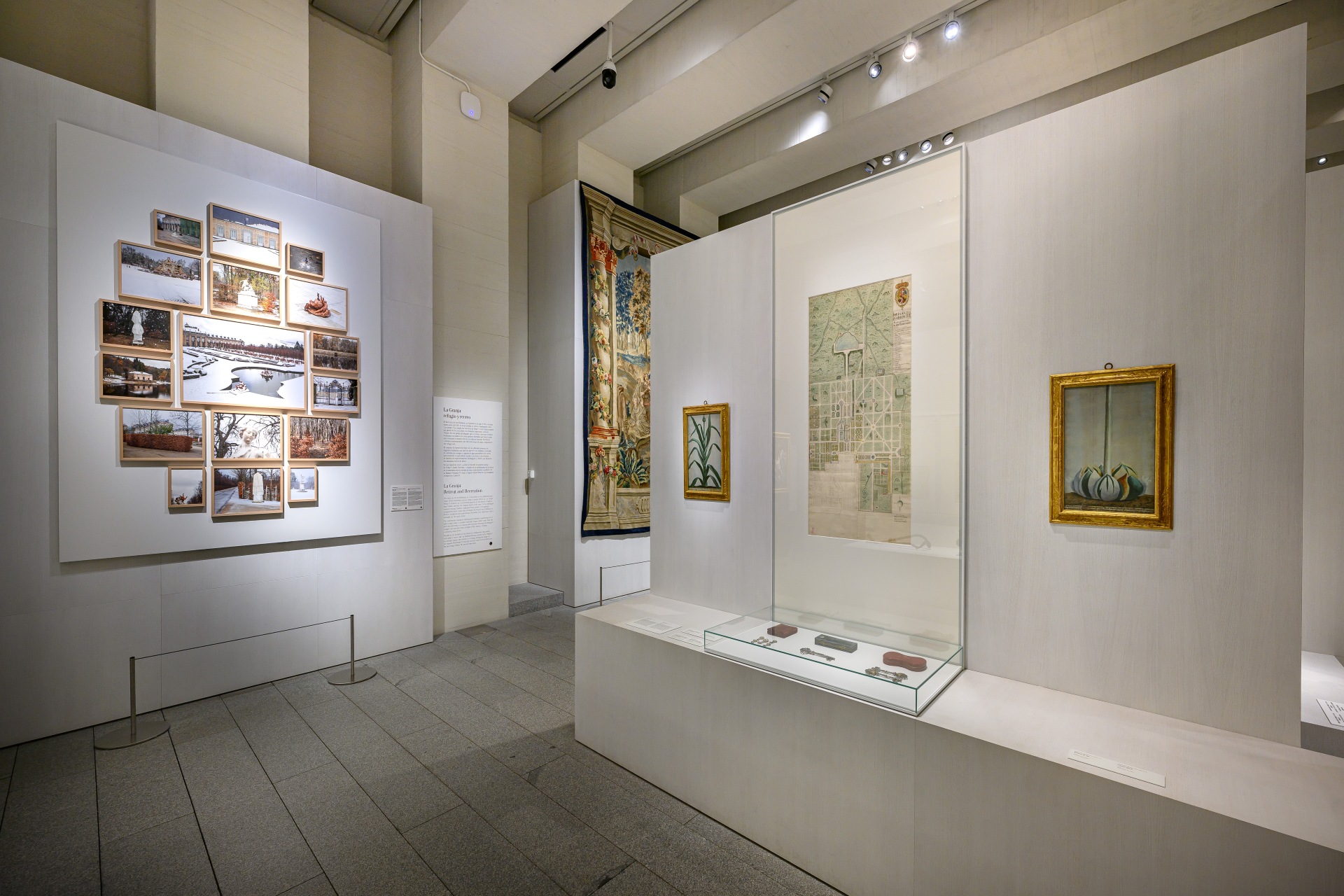
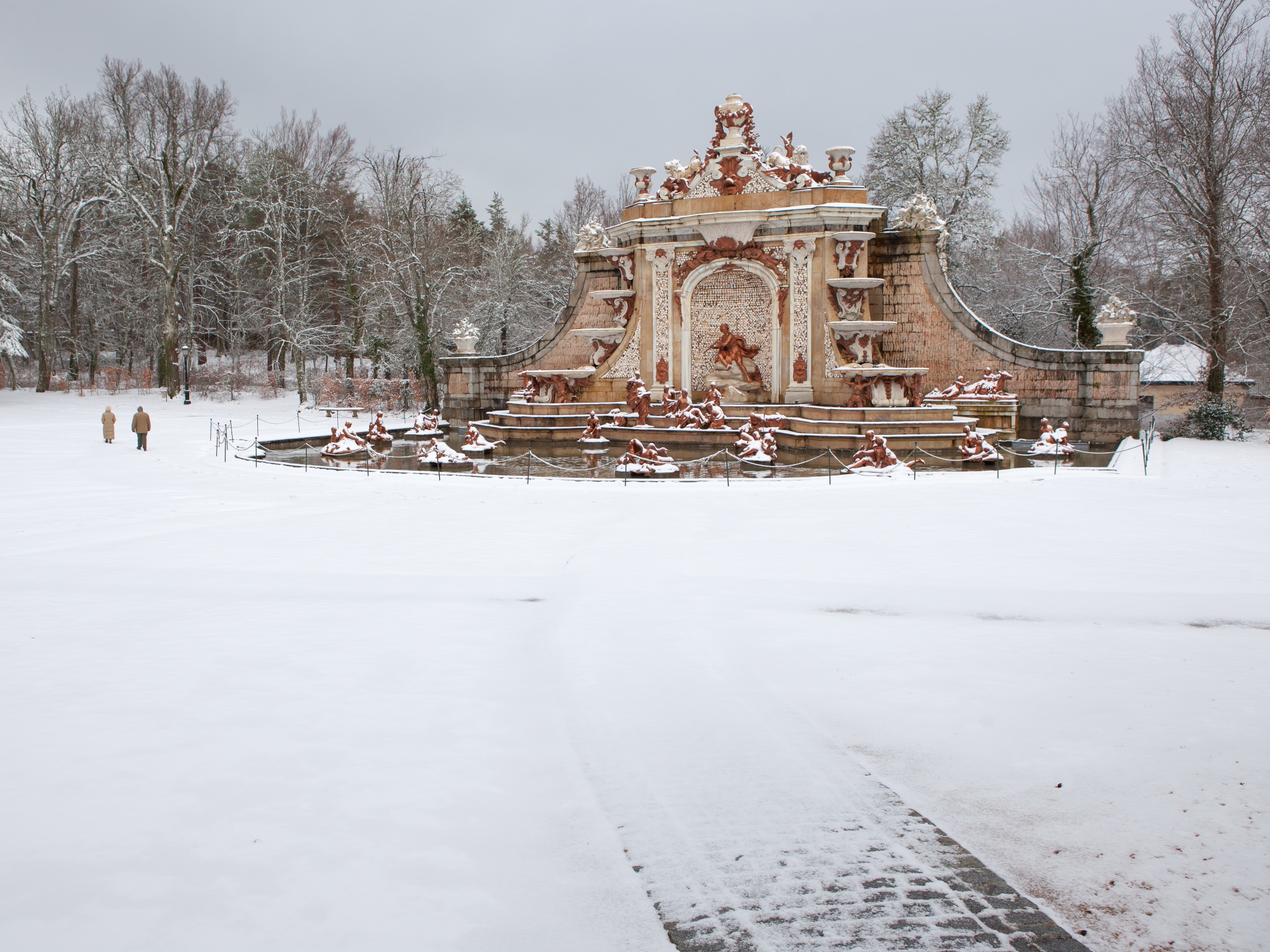
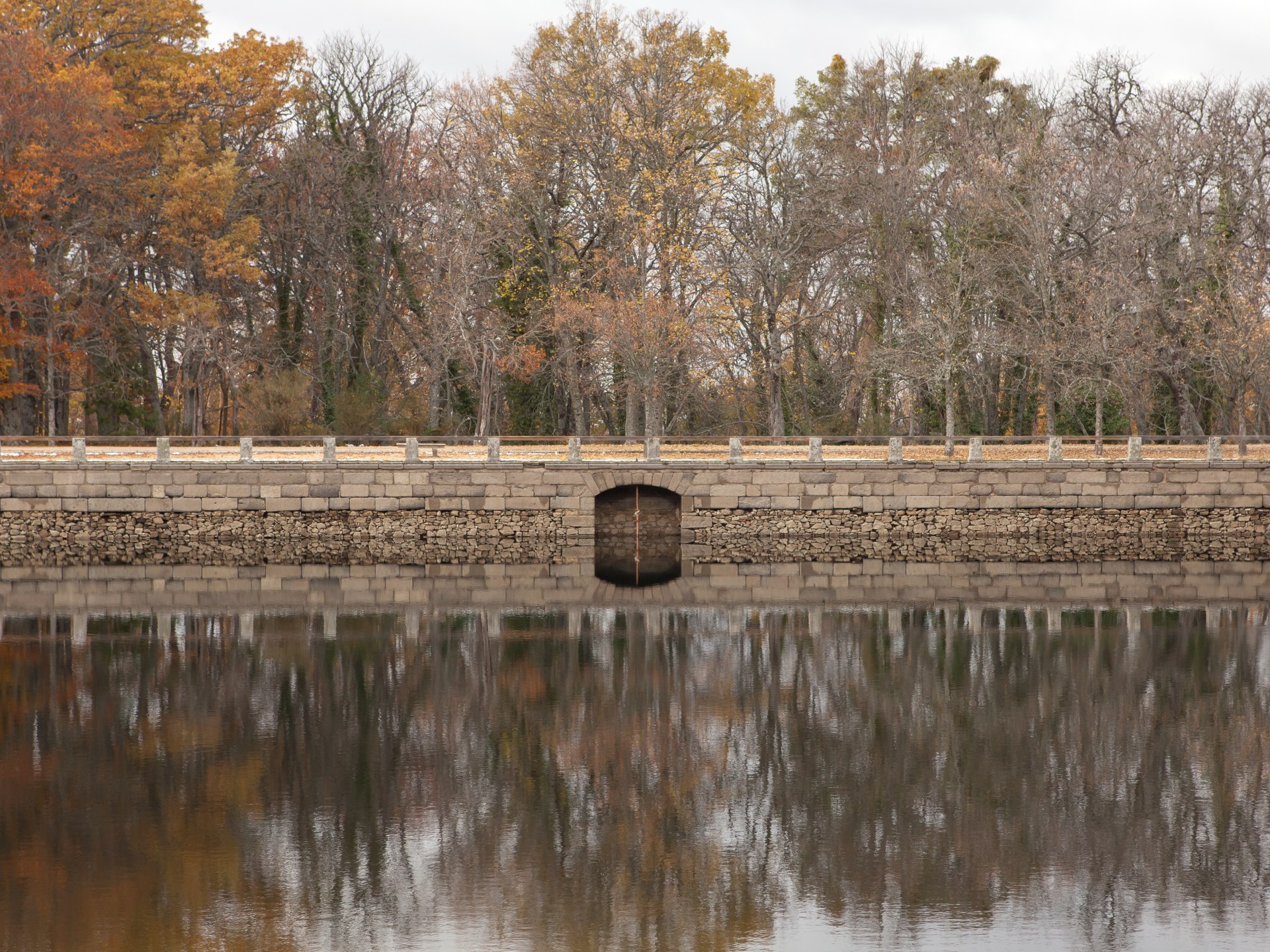
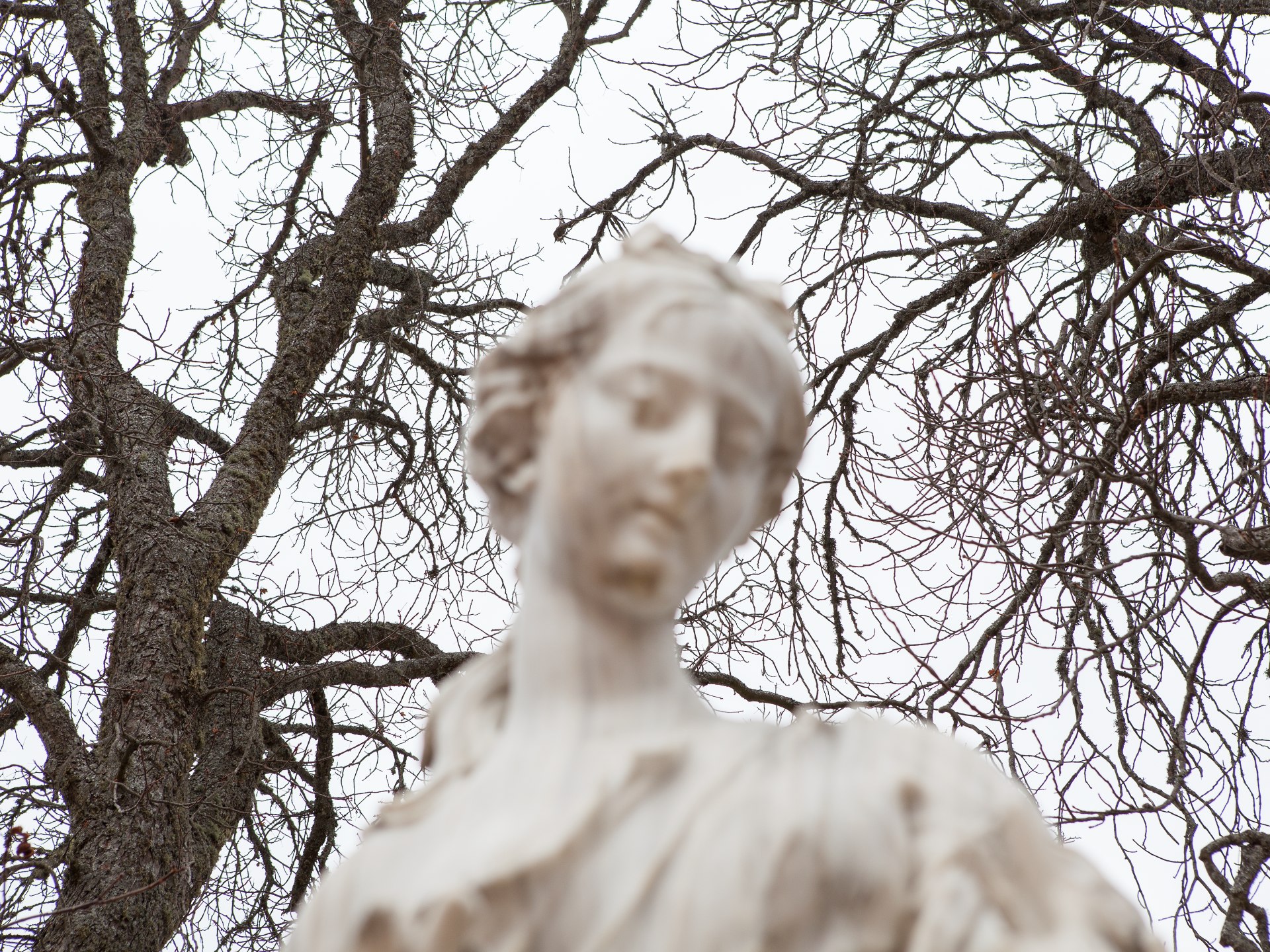
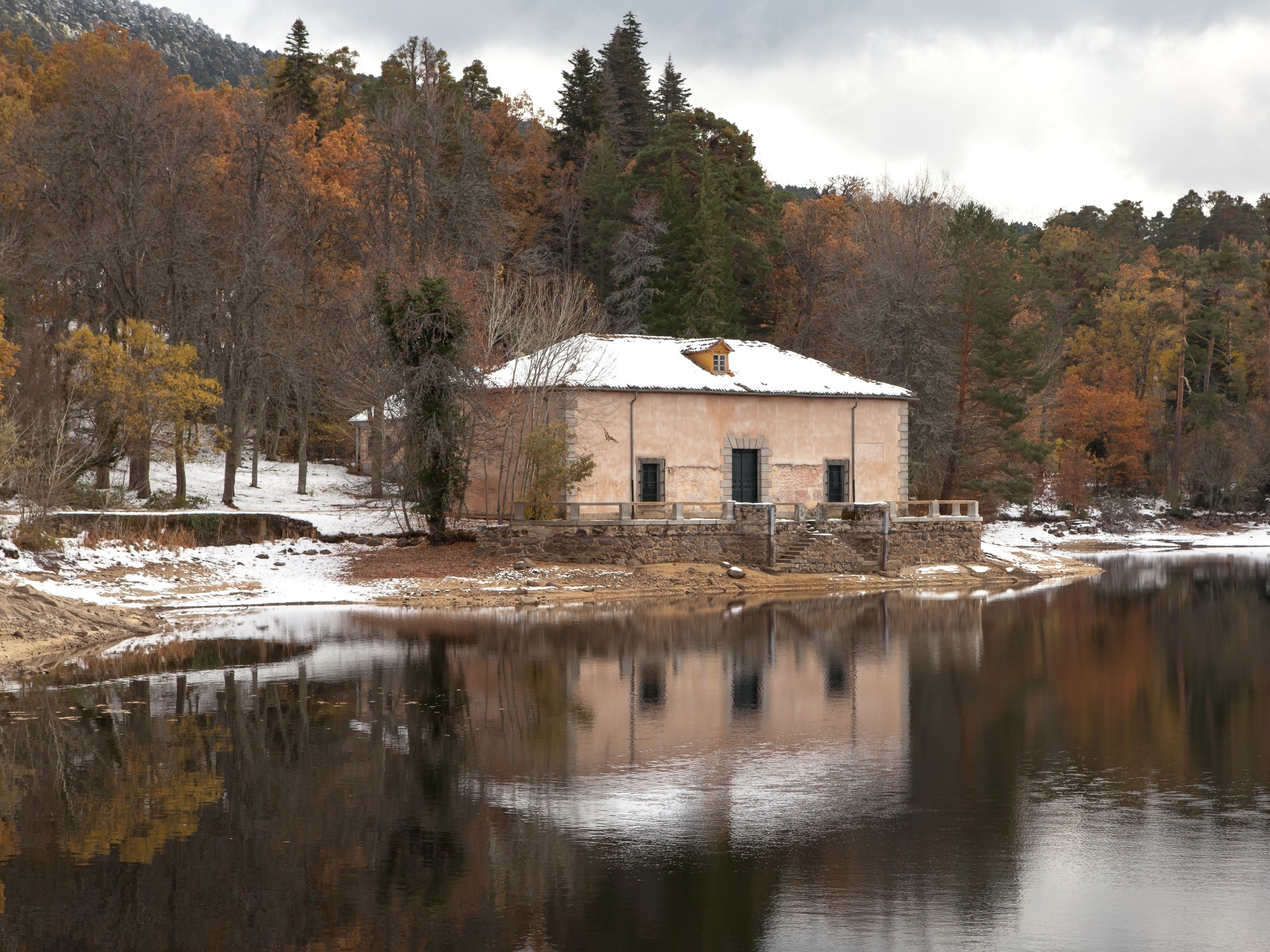
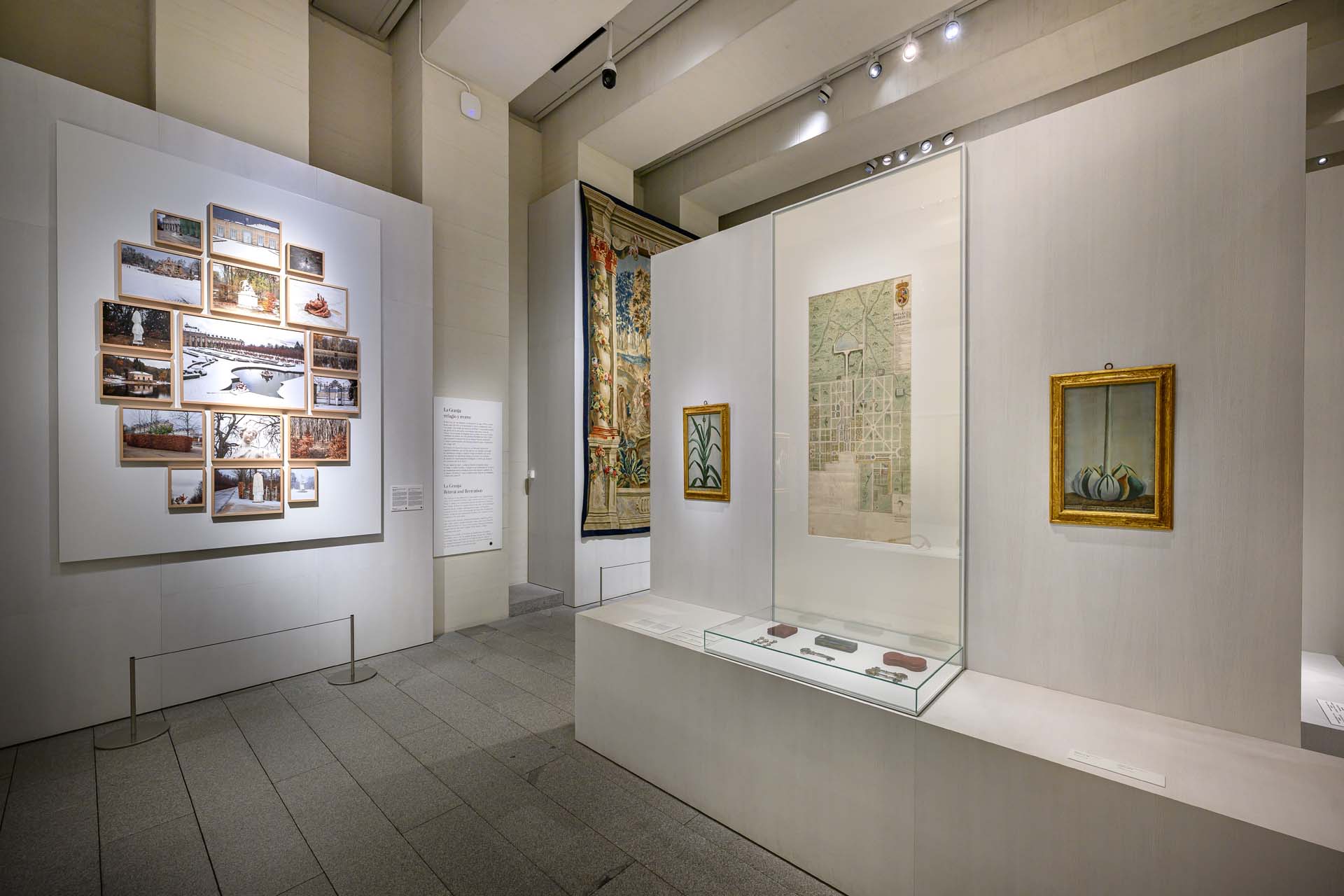
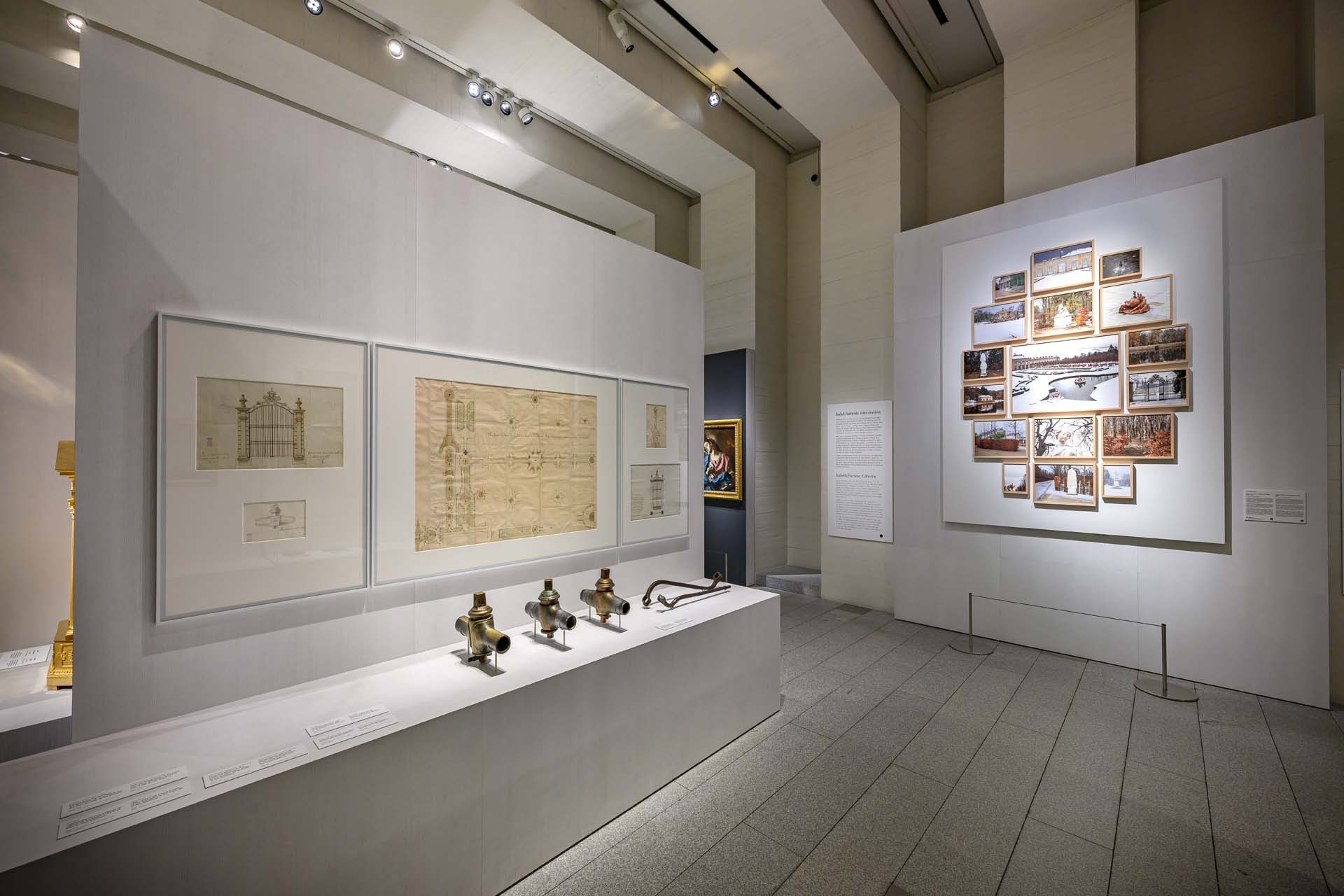
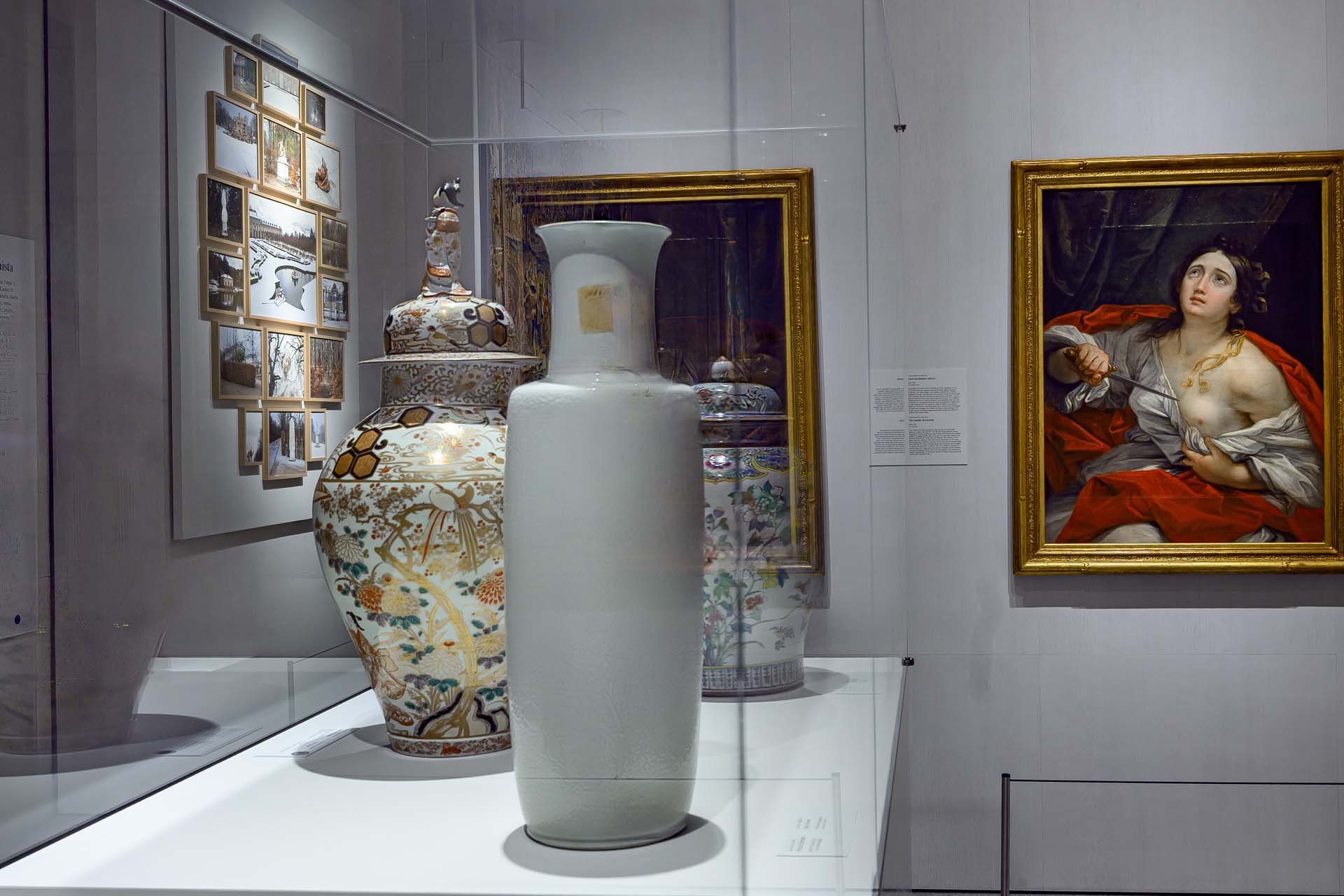
The seventeen photographs by Barba selected for Alterations take the viewer to the Royal Site of La Granja de San Ildefonso, founded in 1721 and inspired by the gardens of the Palace of Marly, the private residence of Louis XIV which has associations with the childhood of Philip V of Spain. This palace, conceived as a summer residence for the court within the cycle of the so-called Royal Sojourns, is revealed here through a different gaze.
Aware of the lens's subjectivity as a form of rewriting, Barba transcends the codified image of the place and immerses us in the winter severity of the Sierra de Guadarrama. Through snowy landscapes, ochre hornbeam hedges, sculptures covered over to protect them from the harsh climate, and frozen fountains, the artist reveals an aesthetic of transformation. Ultimately, these images do more than describe: they reinvent. They reassign meanings, displace certainties and open up new readings of spaces we believed to be fixed by history and memory.

Teo Barba

Andrés Pachón

Tropologies I. Untitled II, 2013

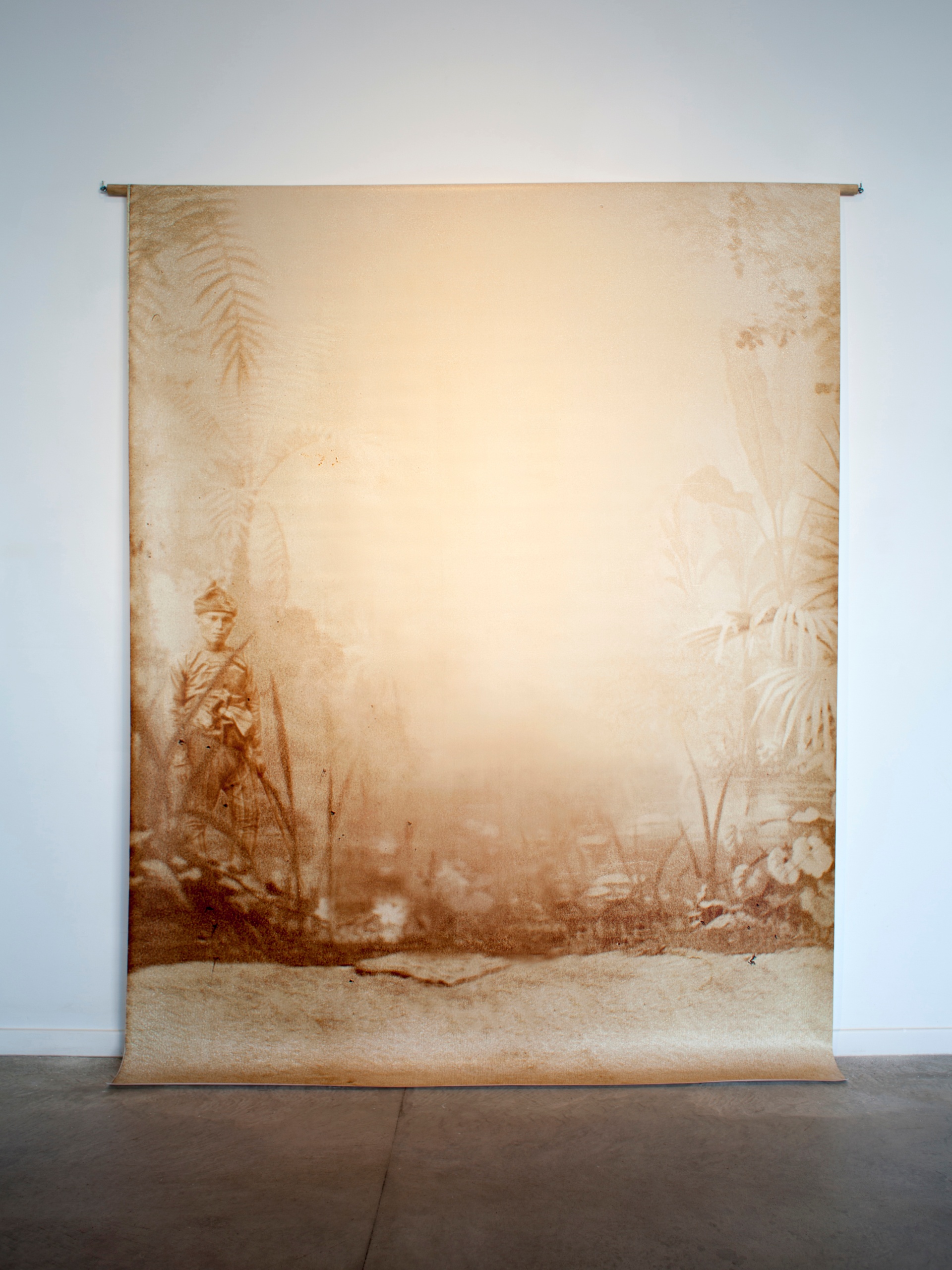
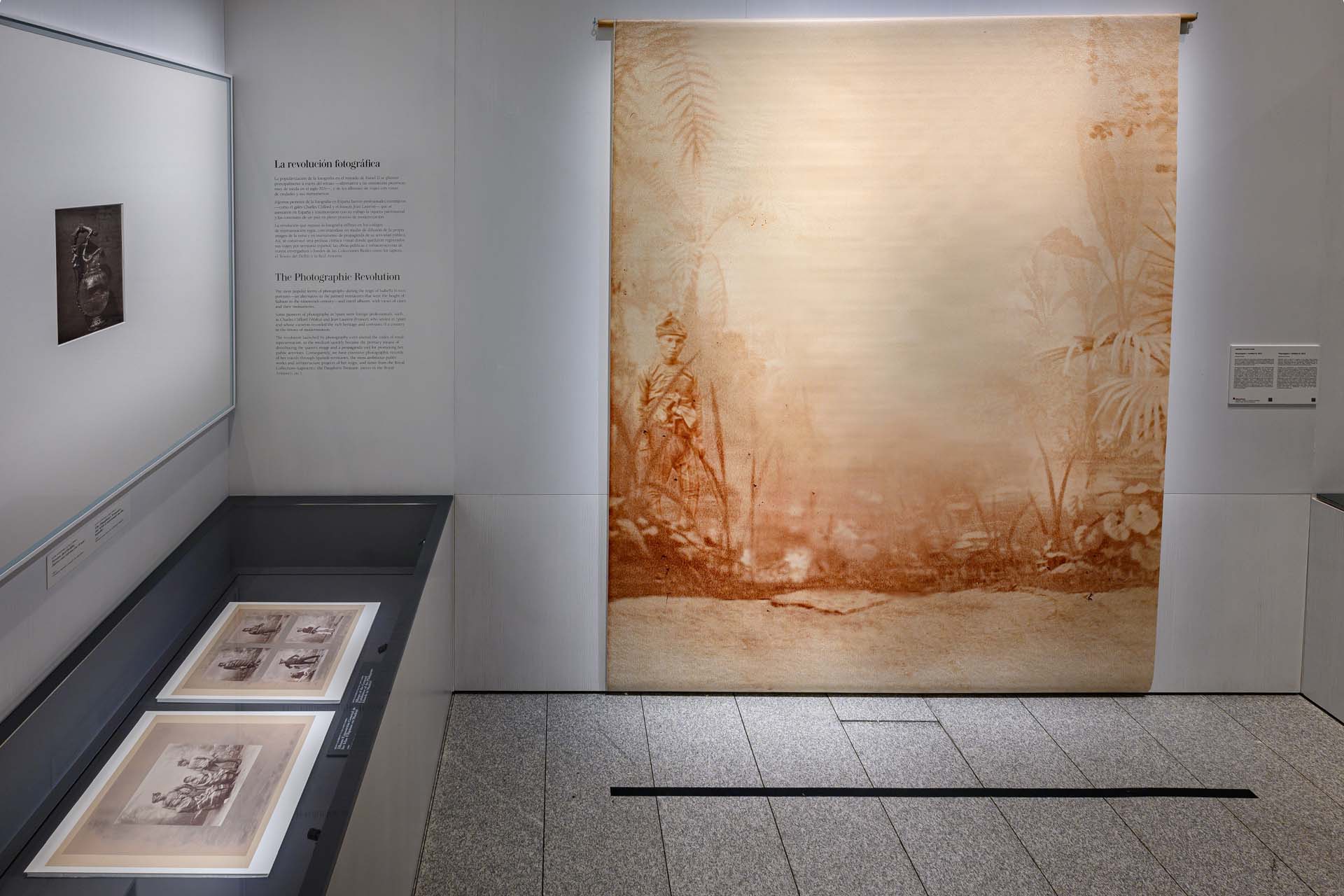
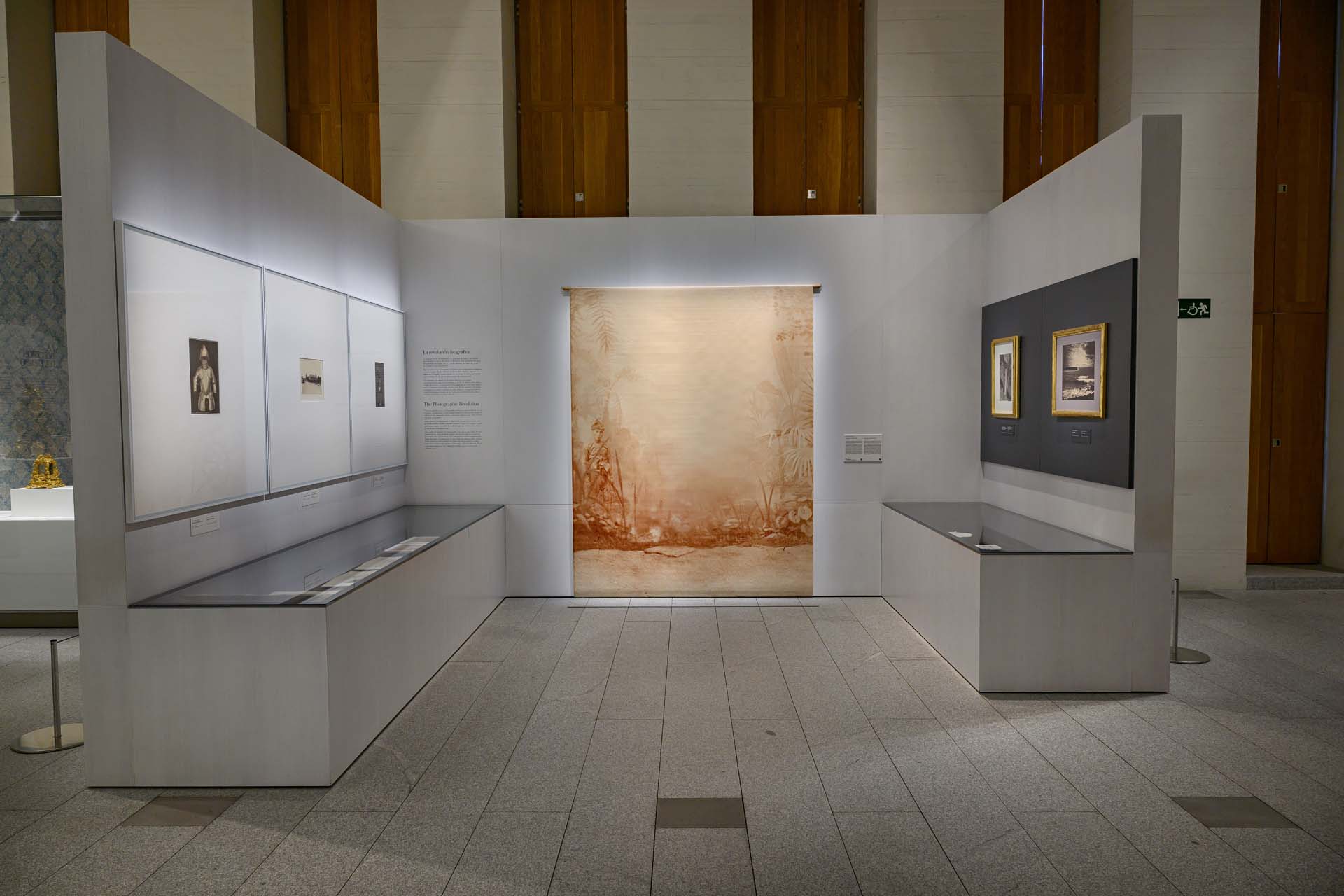
Pachón’s work is part of a project of the same name created between 2013 and 2015, in which the photographer explores the complex relationships between photography, anthropology and the historical construction of the gaze on other cultures, based on research and rereading of archives and visual documents.
Through the manipulation of nineteenth-century photographs, Andrés Pachón reveals the artifices used in the representation of the indigenous people who participated in the 1887 Philippine General Exhibition, thus questioning their supposed objectivity. The Royal Library houses an album of the exhibition produced by Jean Laurent & Co., although many images taken after his death were the work of other photographers, such as Fernando Debas. In his compositions, Debas locates the Filipino subjects against backdrops of jungle landscapes, constructing a stage set that simulates the appearance of the archipelago and creates an illusion of authenticity through artifice. Starting from that premise, Pachón modifies these images, integrating figures and backgrounds to show how the anthropological photographs were created, the tropes that shape reality, and the invisible mechanisms of representation; veils which simultaneously conceal and reveal the architecture of power and the social construction of otherness.

Andrés Pachón

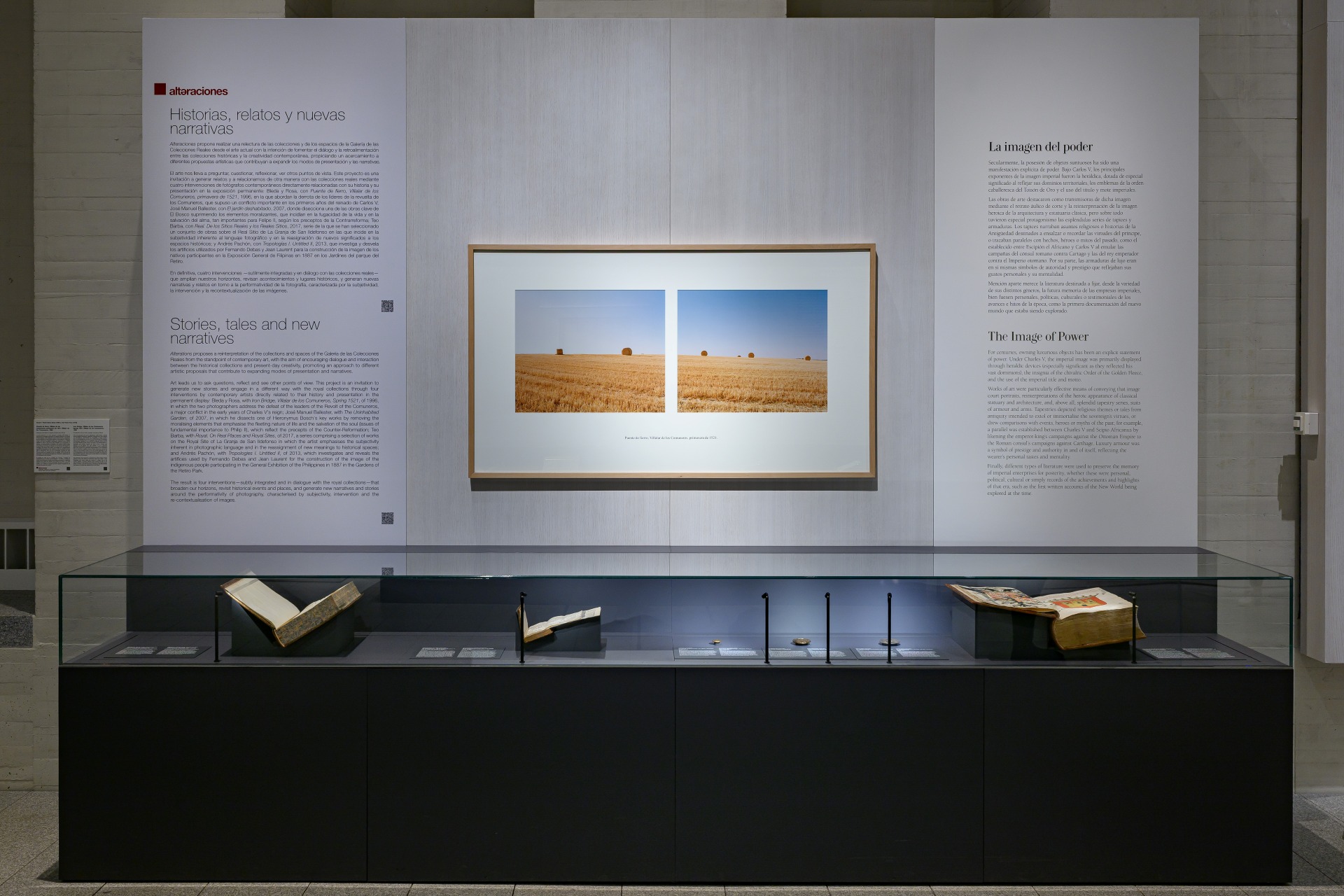
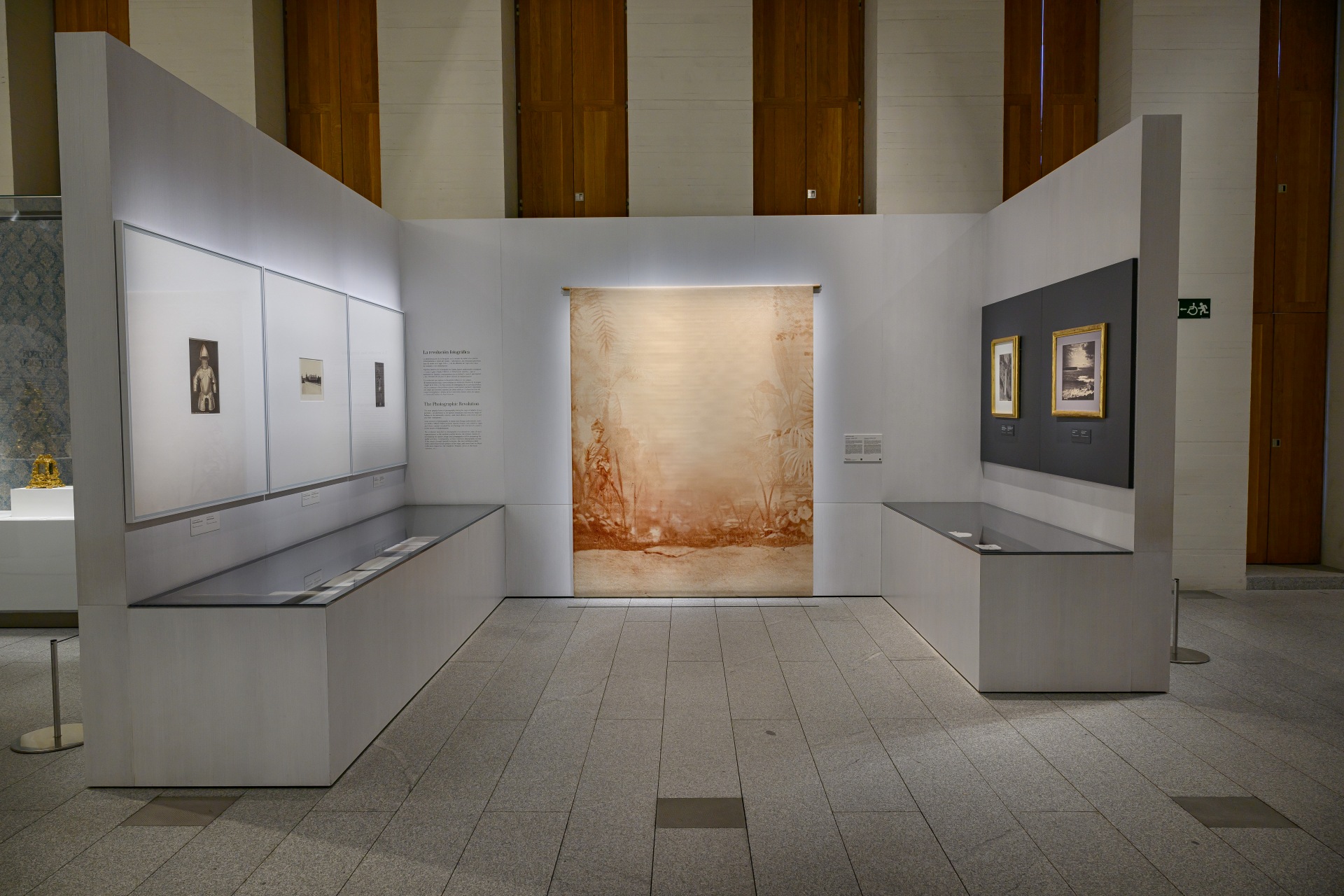
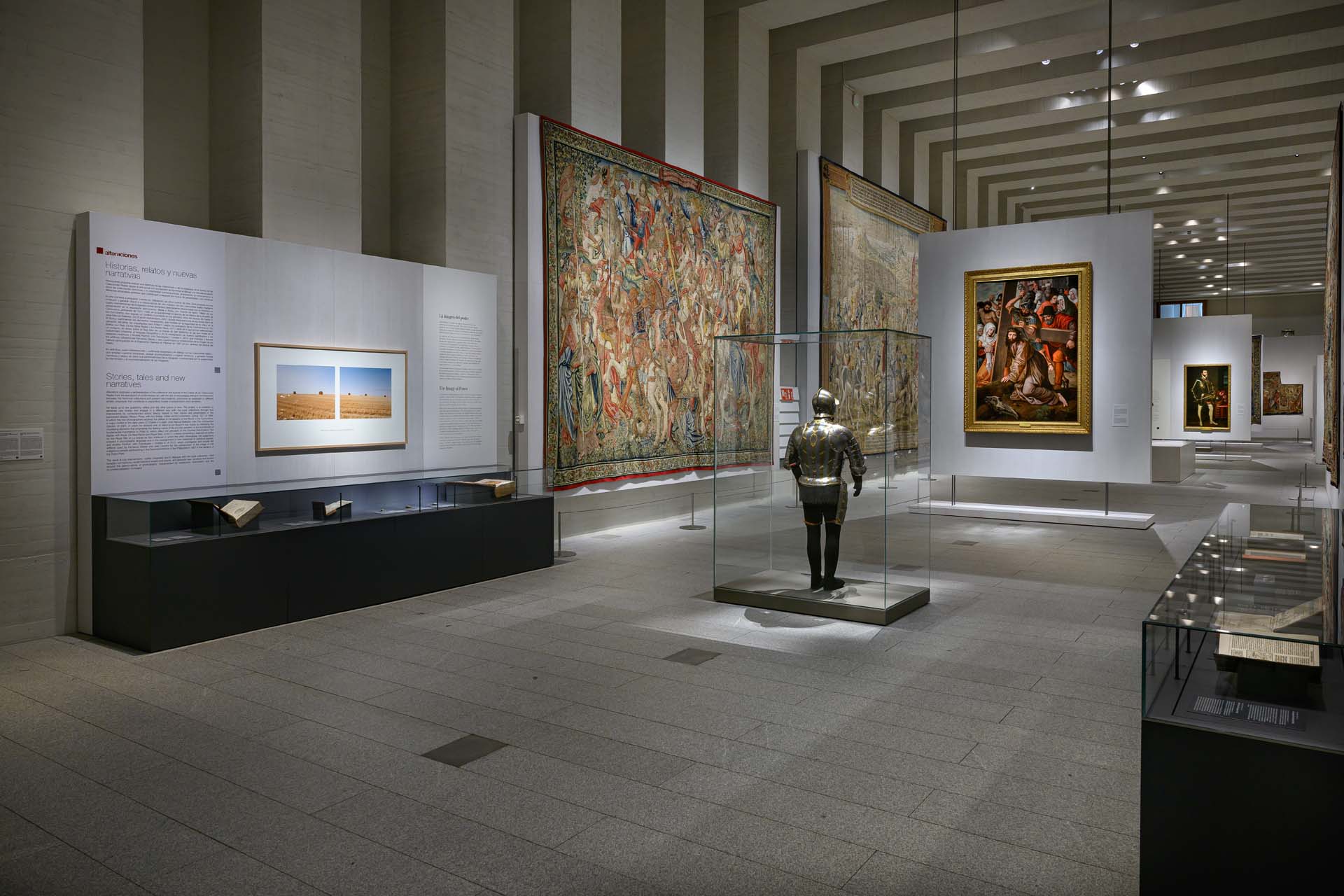
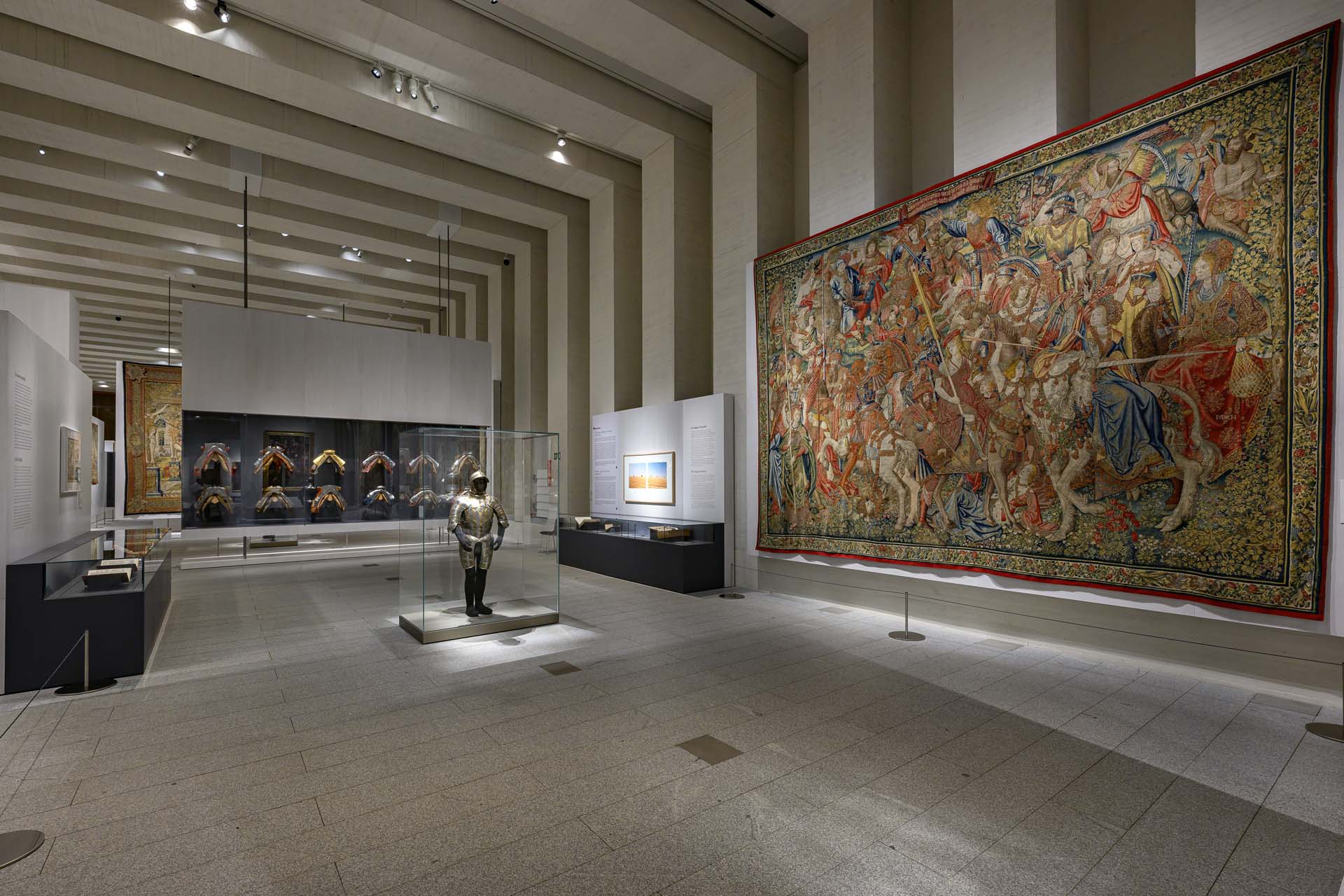
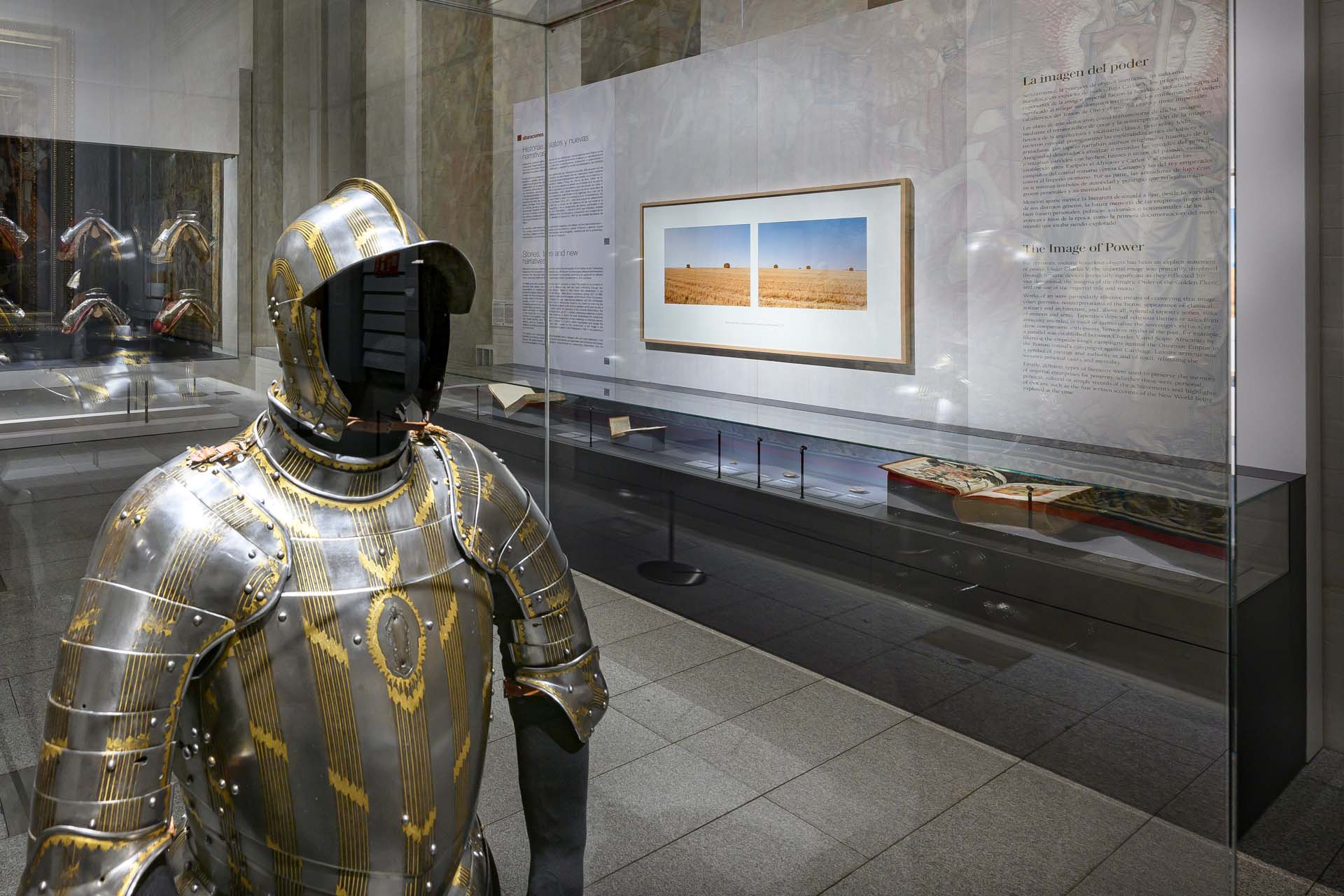
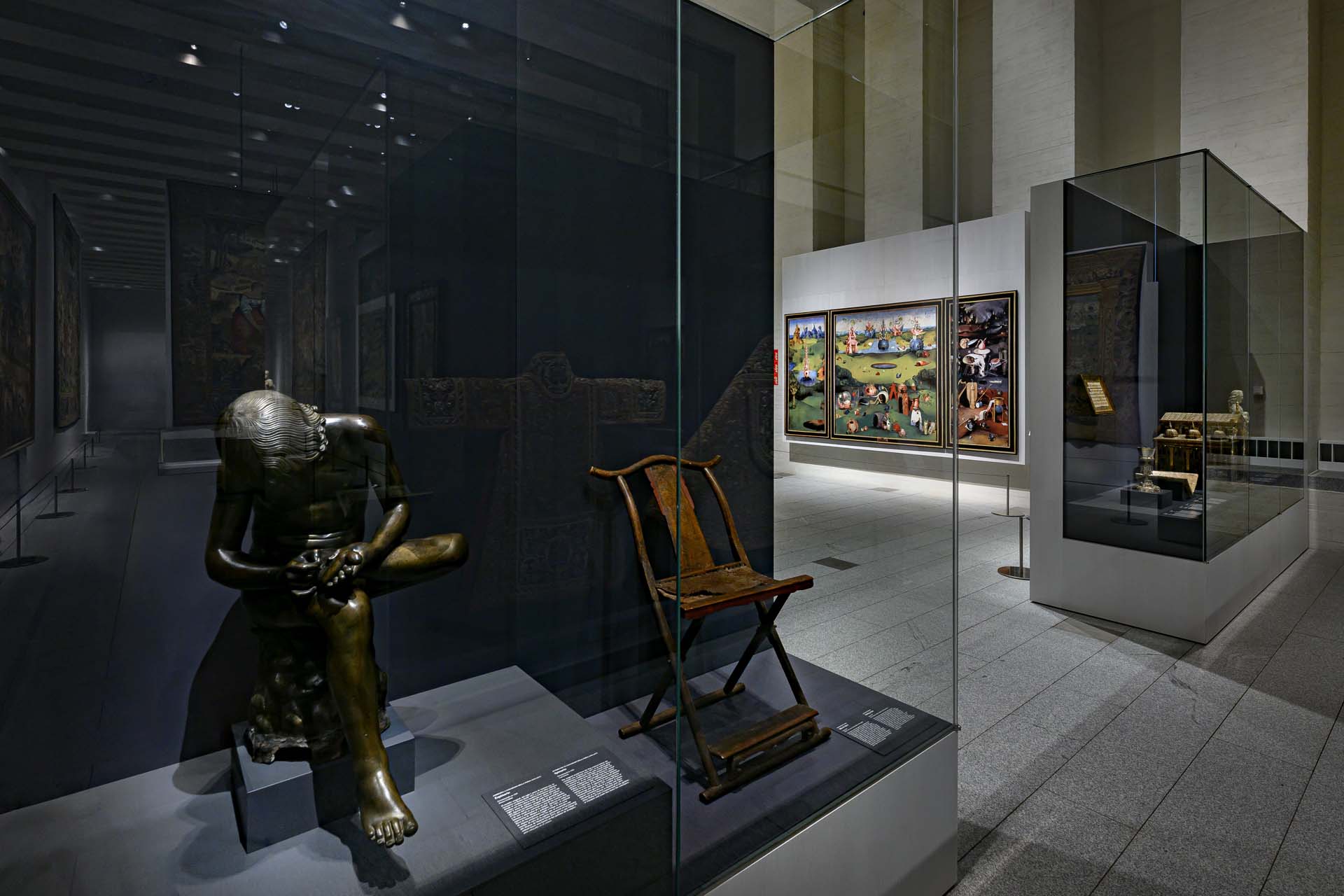
Installation view of the exhibition

Royal Sites

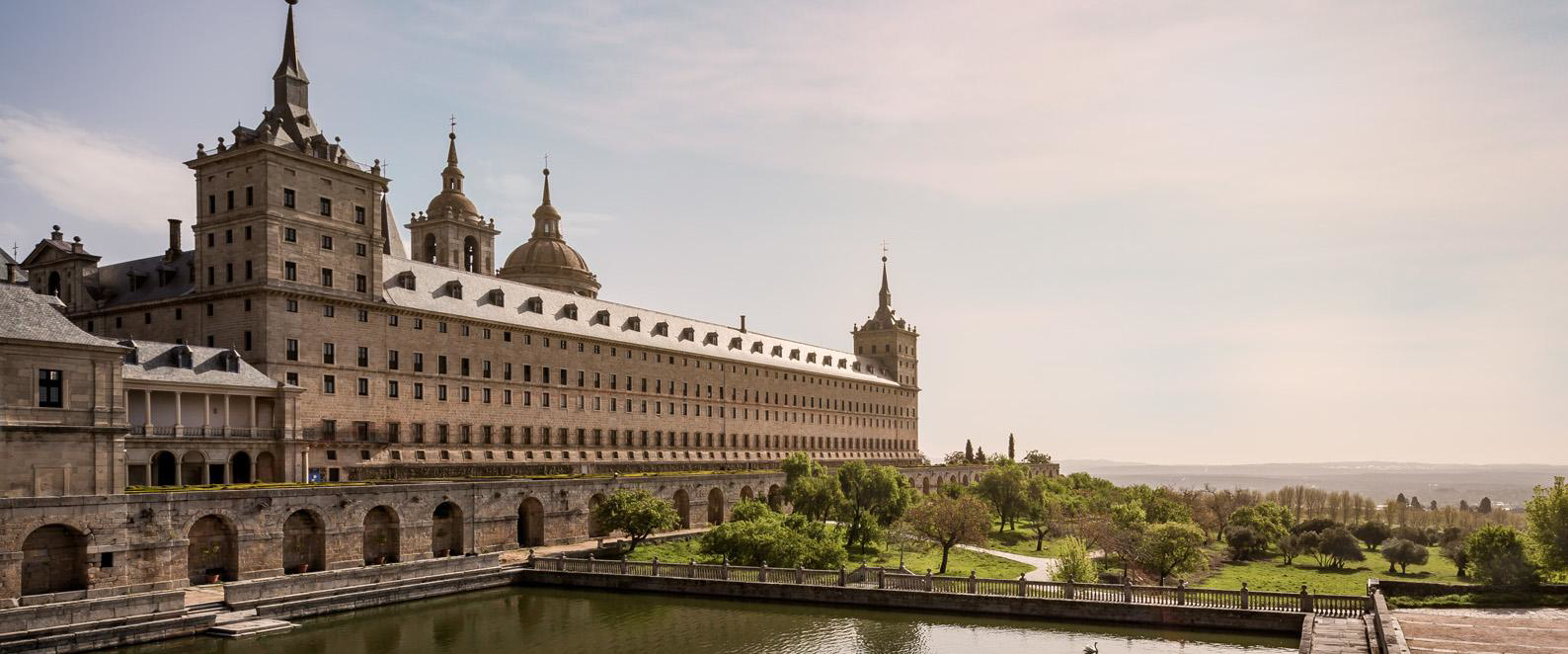
El Escorial

1595

Combining several functions in a single building, San Lorenzo el Real was initially a monastery of the Order of Saint Jerome, whose church would serve as the mausoleum of the Holy Roman Emperor Charles V and his wife, Isabella of Portugal, as well as his son Philip II, his relatives and successors, and where the monks would pray uninterruptedly for the souls of the royals. A palace was also built there to house the king, as patron of the foundation, and his entourage. The college and the seminary completed the Monastery's religious function, and a Library was established to serve these three centres. This plan is still in place today, to some extent. The figure of Charles V was crucial to...
Read more

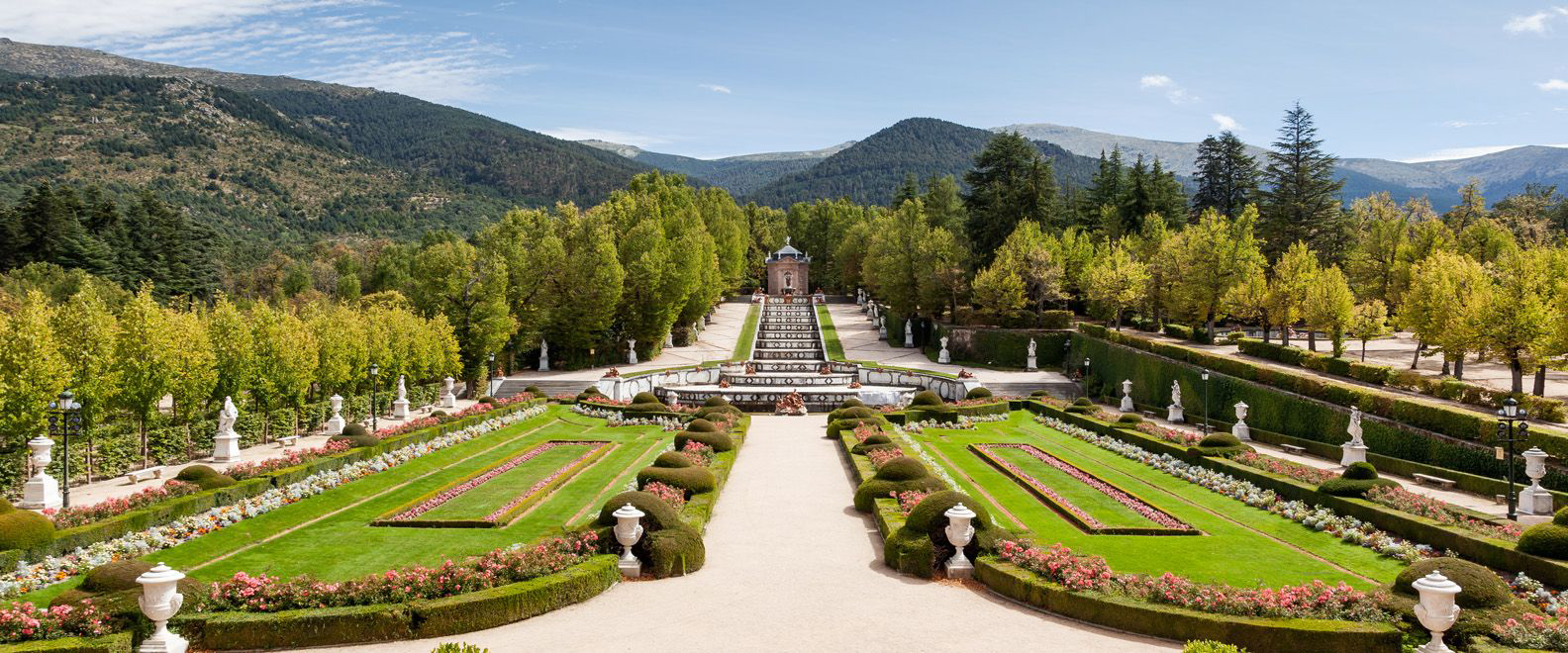
Royal Palace of La Granja de San Ildefonso

1717

The Royal Site of La Granja de San Ildefonso has been awarded the status of a Historical Monument and it is of the best examples of 18th-century regal splendour. Philip V, the first Bourbon king to rule over Spain, fell in love with this beautiful location in 1717. Such was his "adoration" that he decided to build a palace and gardens there, decorated with sculptures and fountains to remind him of his childhood at the French court of his grandfather Louis XIV. The commissioning of this Royal Site was his great personal project, having found an ideal location in which to retire from the world…
Read more

Organized by: Patrimonio Nacional

Curator: Antonio J. Sánchez Luengo

Coordinator: Melania Mora Luna

Artists: Bleda y Rosa, José Manuel Ballester, Teo Barba and Andrés Pachón.

Museographic Design: LEONA

Museographic Installation: INTERVENTO 2, S.L

Transport: EDICT S.L

Insurance: SABSEG POOLSEGUR, S.L.U