Loading...

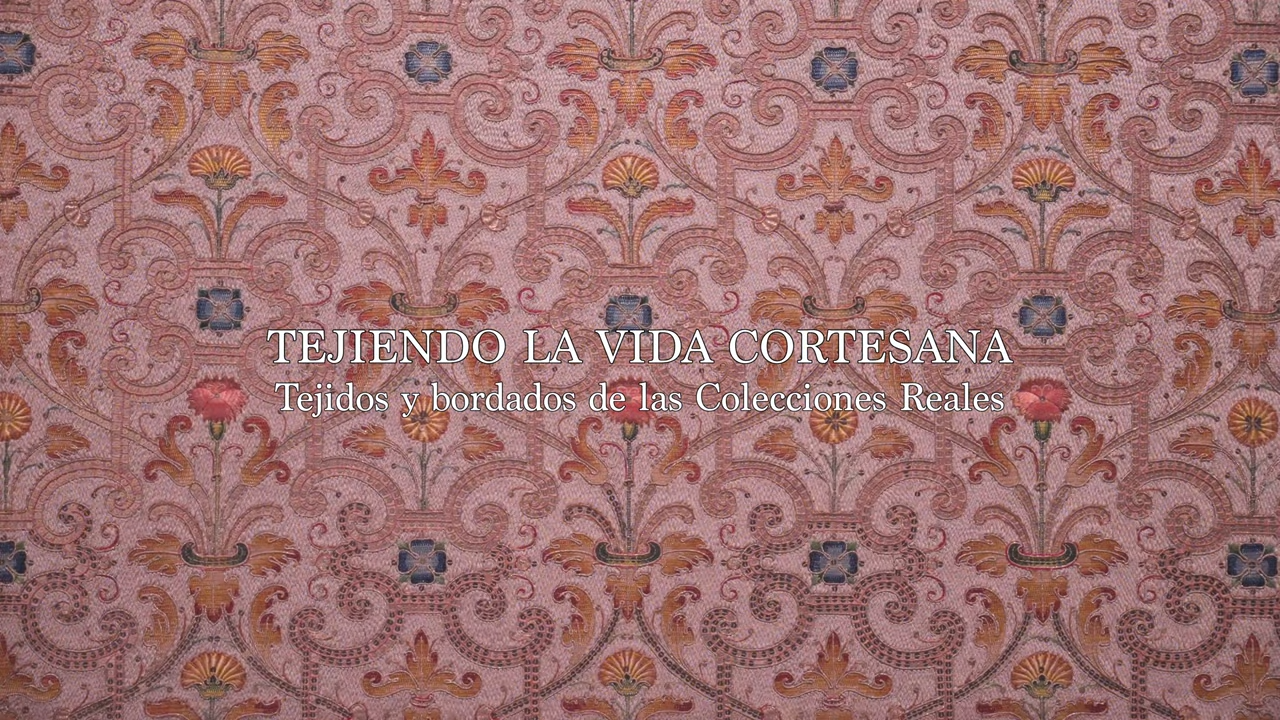
Patrimonio Nacional houses one of the most important textile collections in the world, comprising exceptional examples of which the majority belonged to or were commissioned by monarchs.
This exhibition presents a group of works, many of them never previously displayed to the public, of extraordinary craftsmanship and beauty, which will allow visitors to discover some of the oldest textile items preserved in the Royal Collections and to learn not only about the most outstanding sets of woven fabrics that adorned State rooms and royal bedrooms, but also about the workings of the different areas or “Offices” within the palace responsible for their creation and management.
Buy Tickets
-
Opening Hours
Monday to Saturday from 10 am to 8 pm. Sundays and Bank Holidays from 10 am to 7 pm.
-
Admission
Plaza de la Armería: visits the Royal Collection Gallery and temporary exhibitions. Groups will enter through the Cuesta de la Vega / Campo del Moro Gardens entrance
-
Prices
• Standard Admission (Gallery + Temporary Ehibition) 14€
• Reduced (only Temporary Ehibition) 8€
Extraordinary Wonders
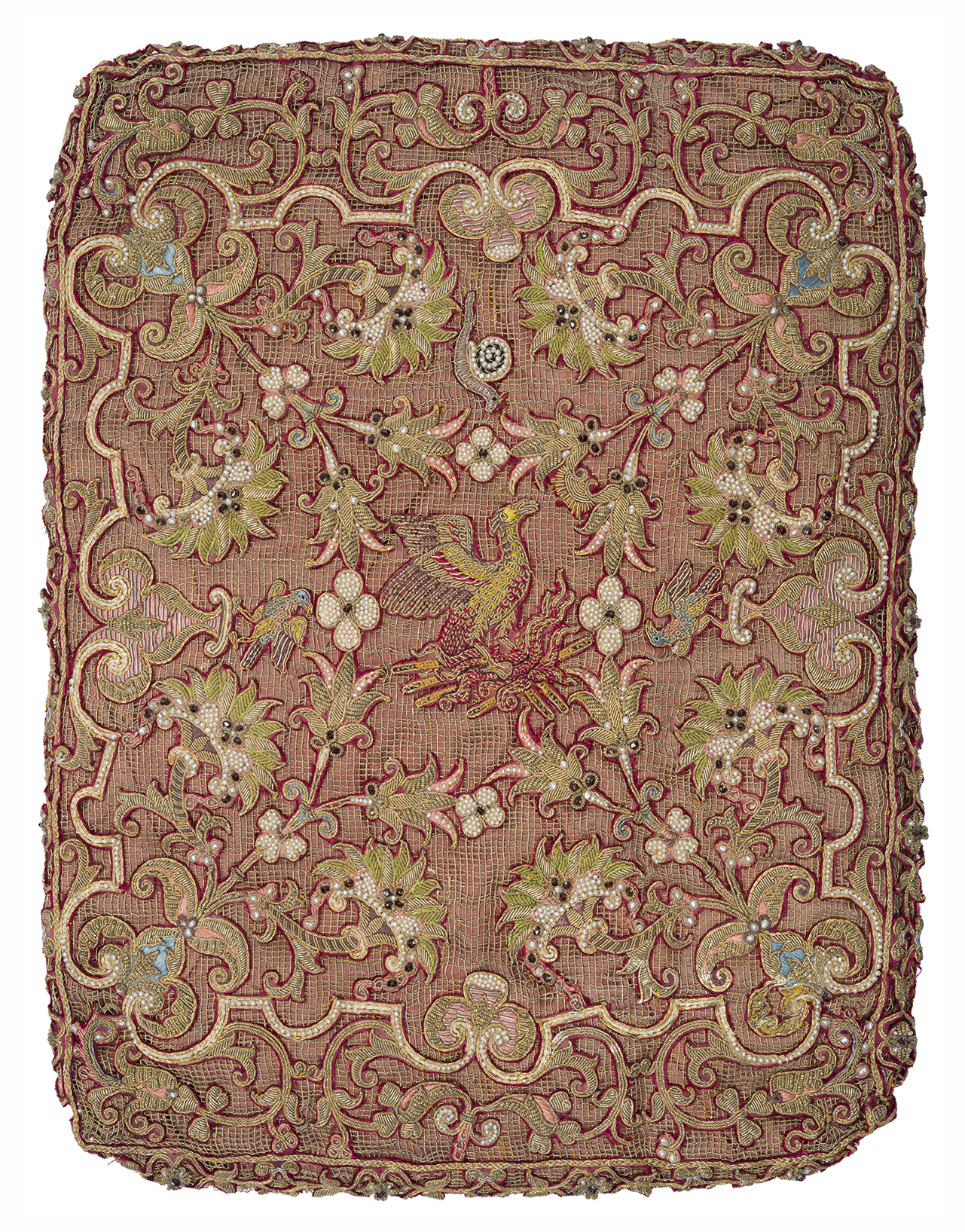
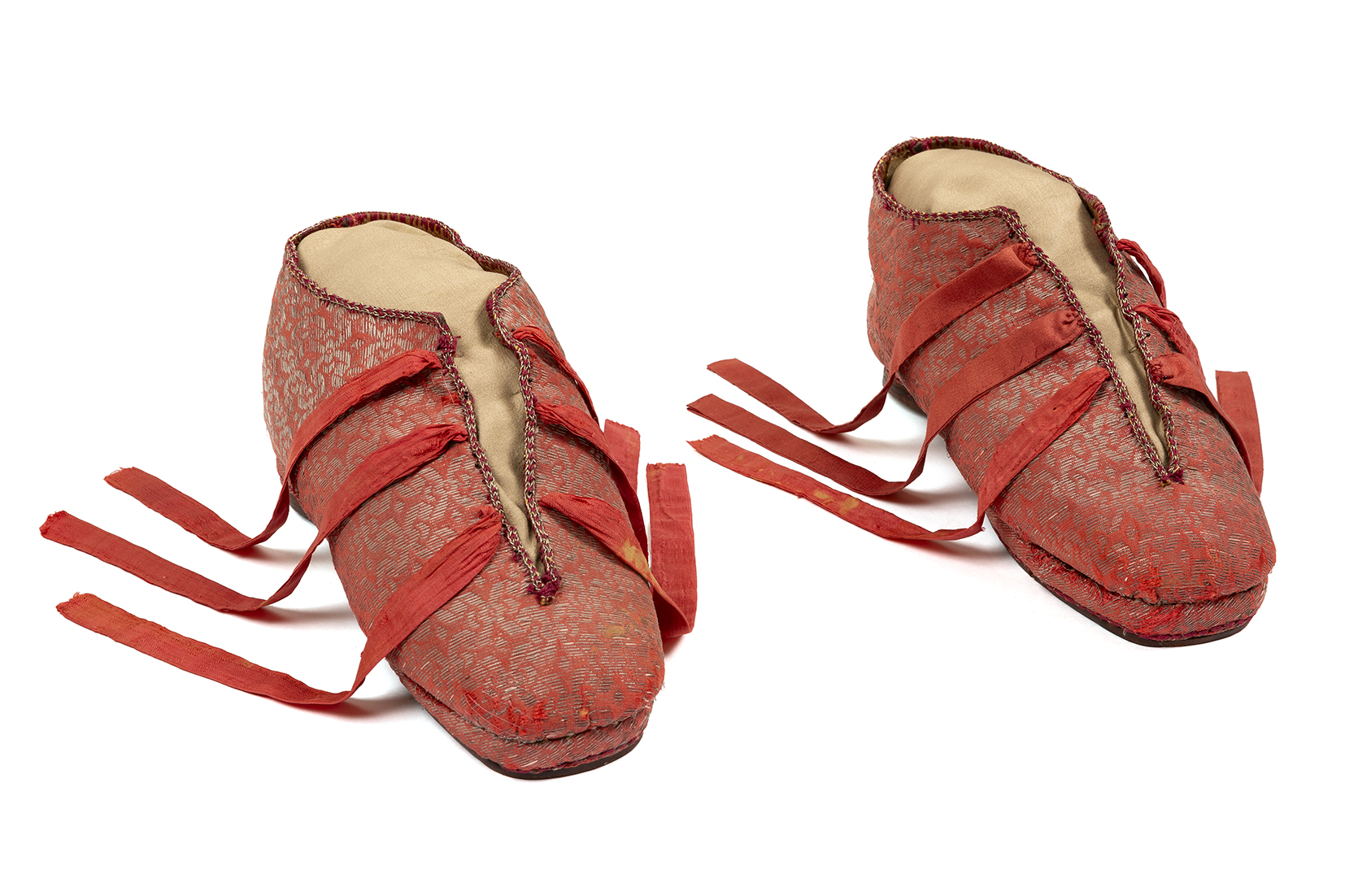
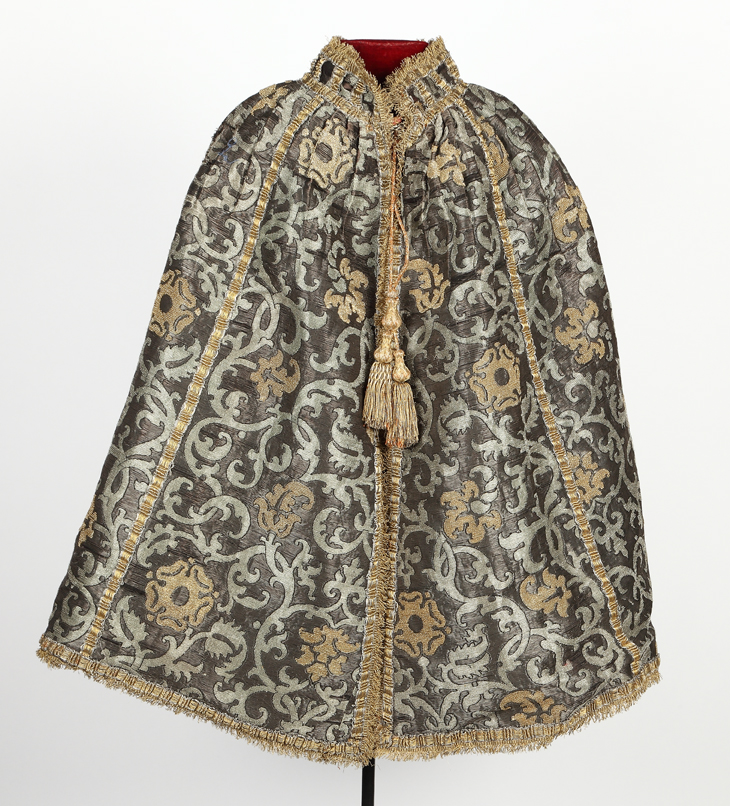
This first section displays some of the oldest textile items housed in the Spanish Royal Collections, emphasising the variety of their origins, the diversity of their manufacture and the beauty of their designs.
The result is to offer a representative sample of the different and exquisite techniques and forms that textile art has assumed throughout history, testifying to the rapid and widespread dissemination of different fashions thanks to trade.
Embroidery, fabrics and trimmings of great sumptuousness and technical complexity have been used for centuries to create pillows and cushions, paintings, garments, canopies, book covers, reliquaries and even lifebelts, demonstrating that textile art has been a field of primary importance used to adorn and enrich any object, space or ceremony since Antiquity, as these unique items preserved by Patrimonio Nacional reveal.
It is important to highlight the exceptional nature of these objects, as due to their very nature and fragility very few textiles from prior to the eighteenth century have survived to the present day, giving an enormous additional value to the works present in this part of the exhibition.
Spaces of Majesty
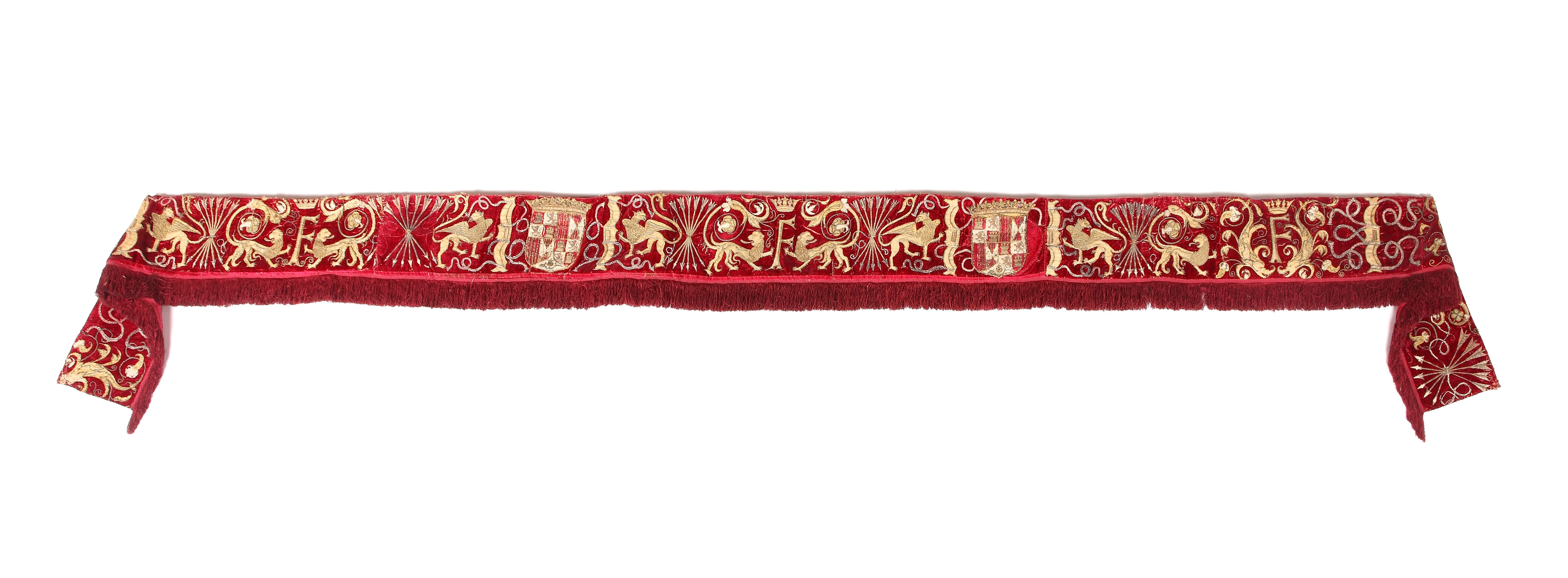
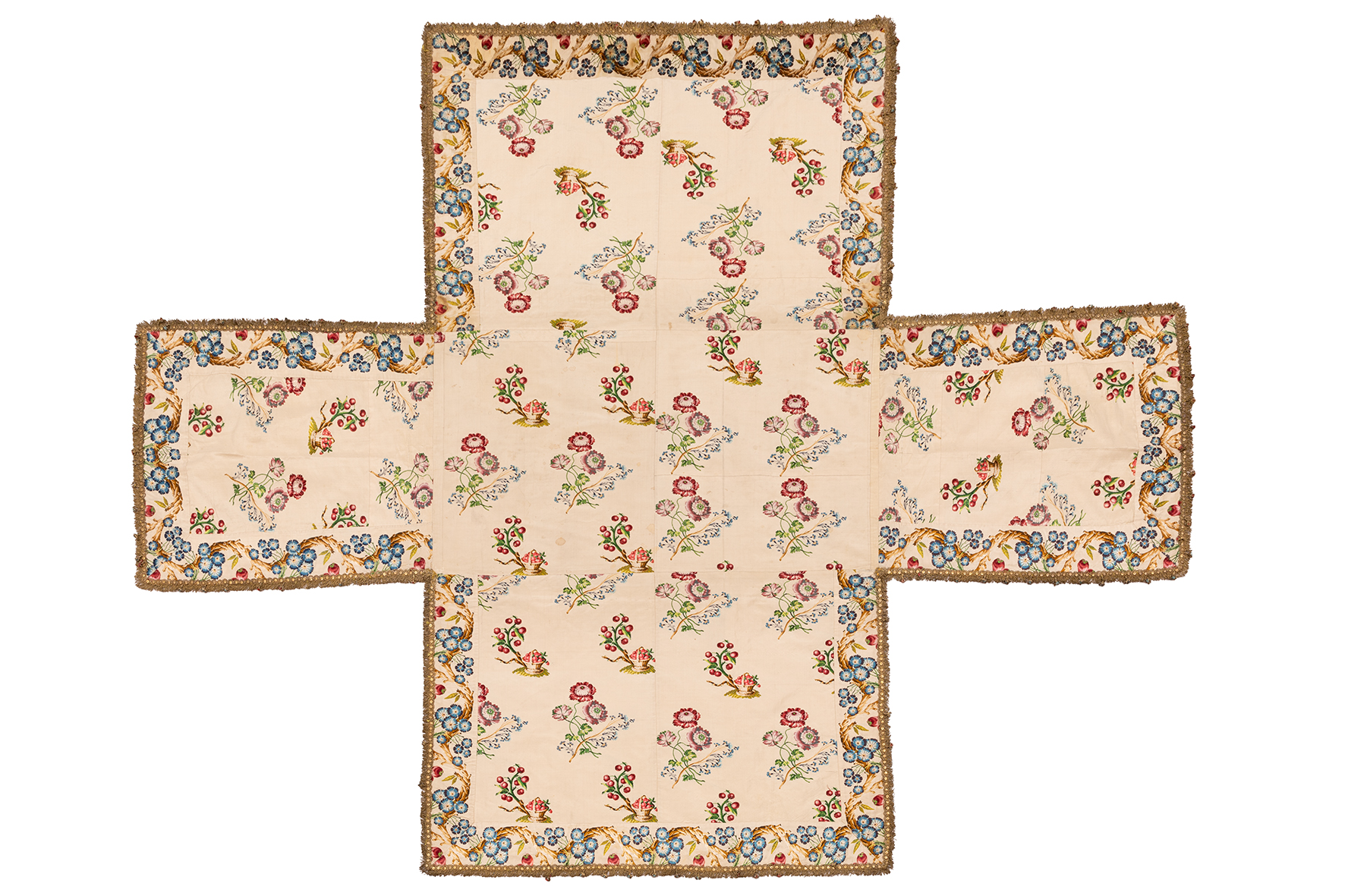
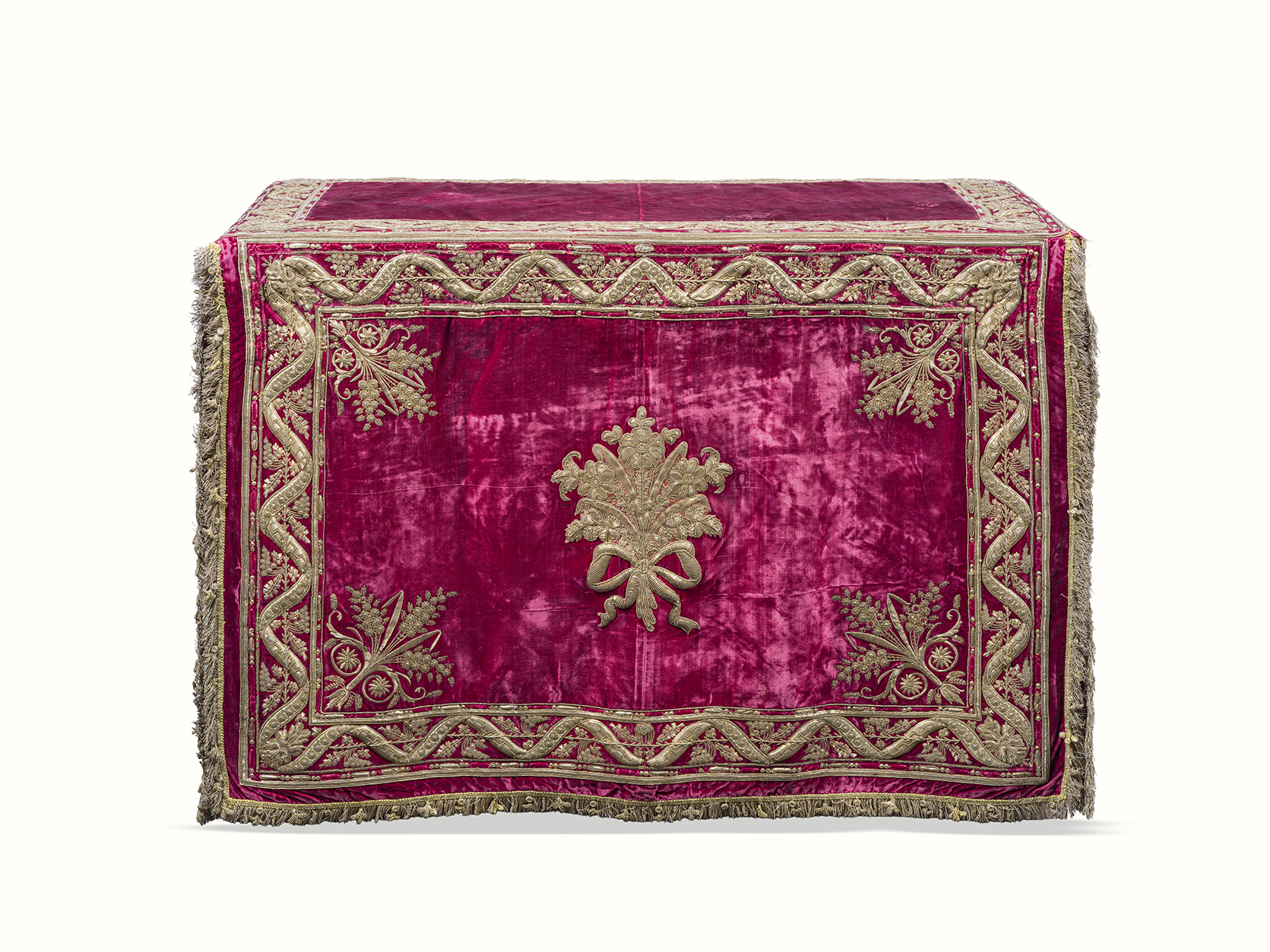
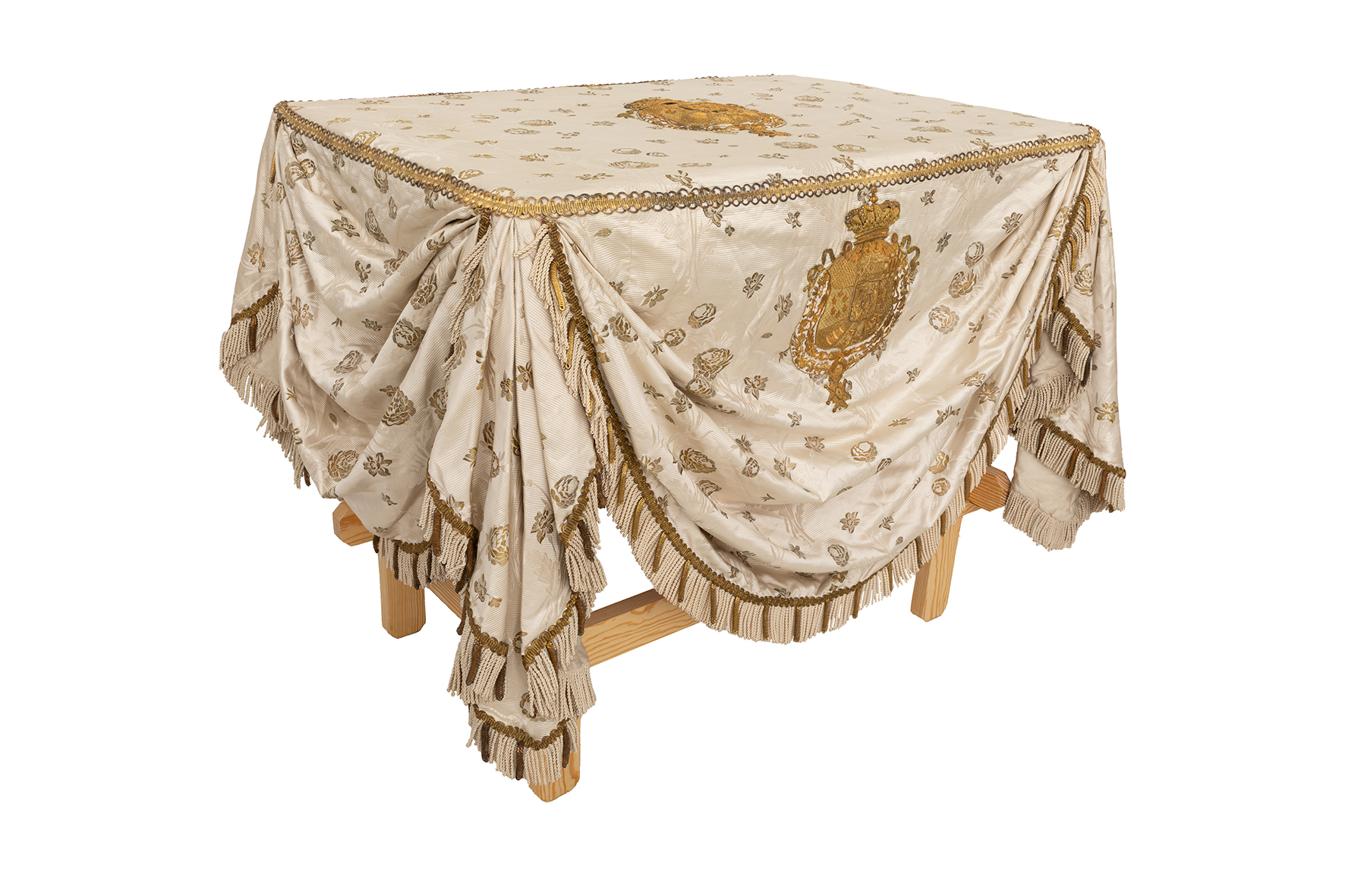
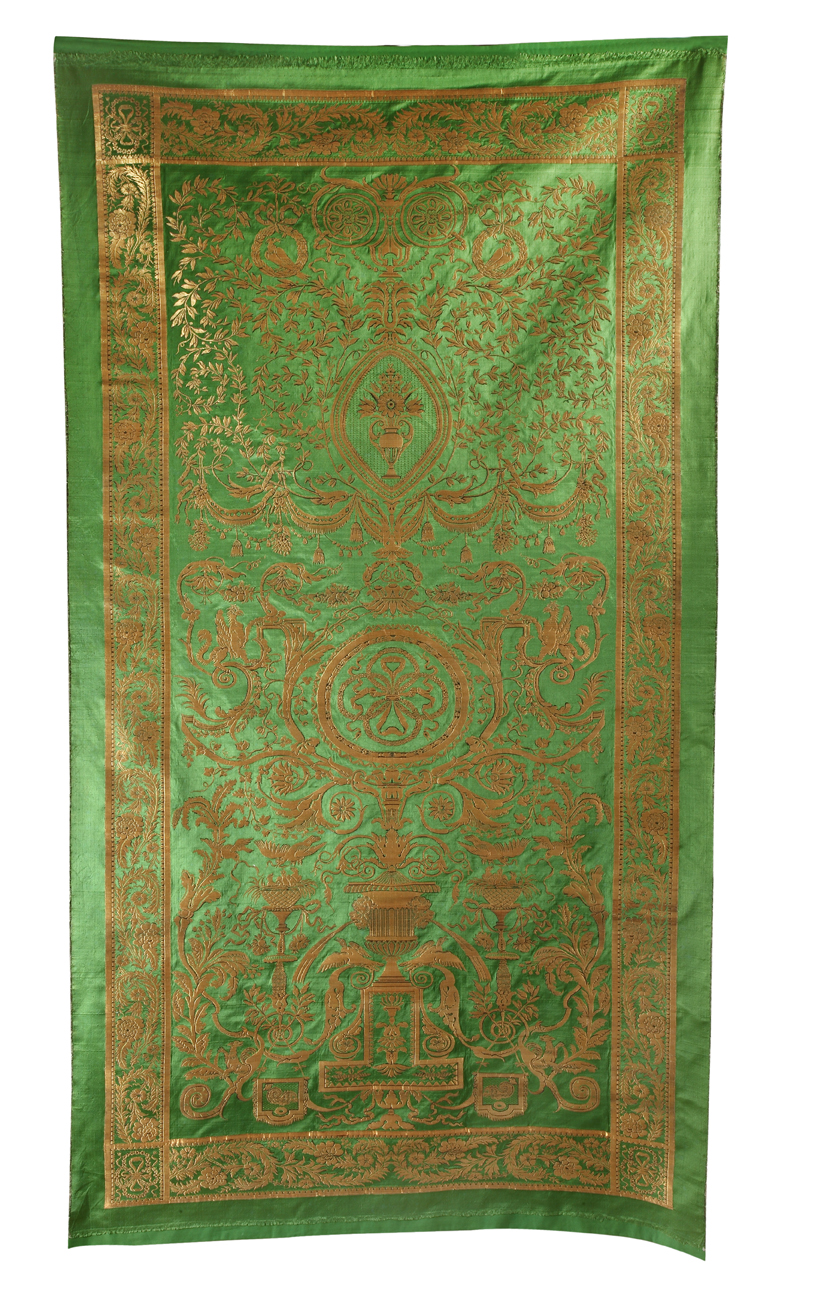
Textiles played an important role, both as an element of decoration and display in palace rooms, and as an object of elevated symbolic significance for the representation of power.
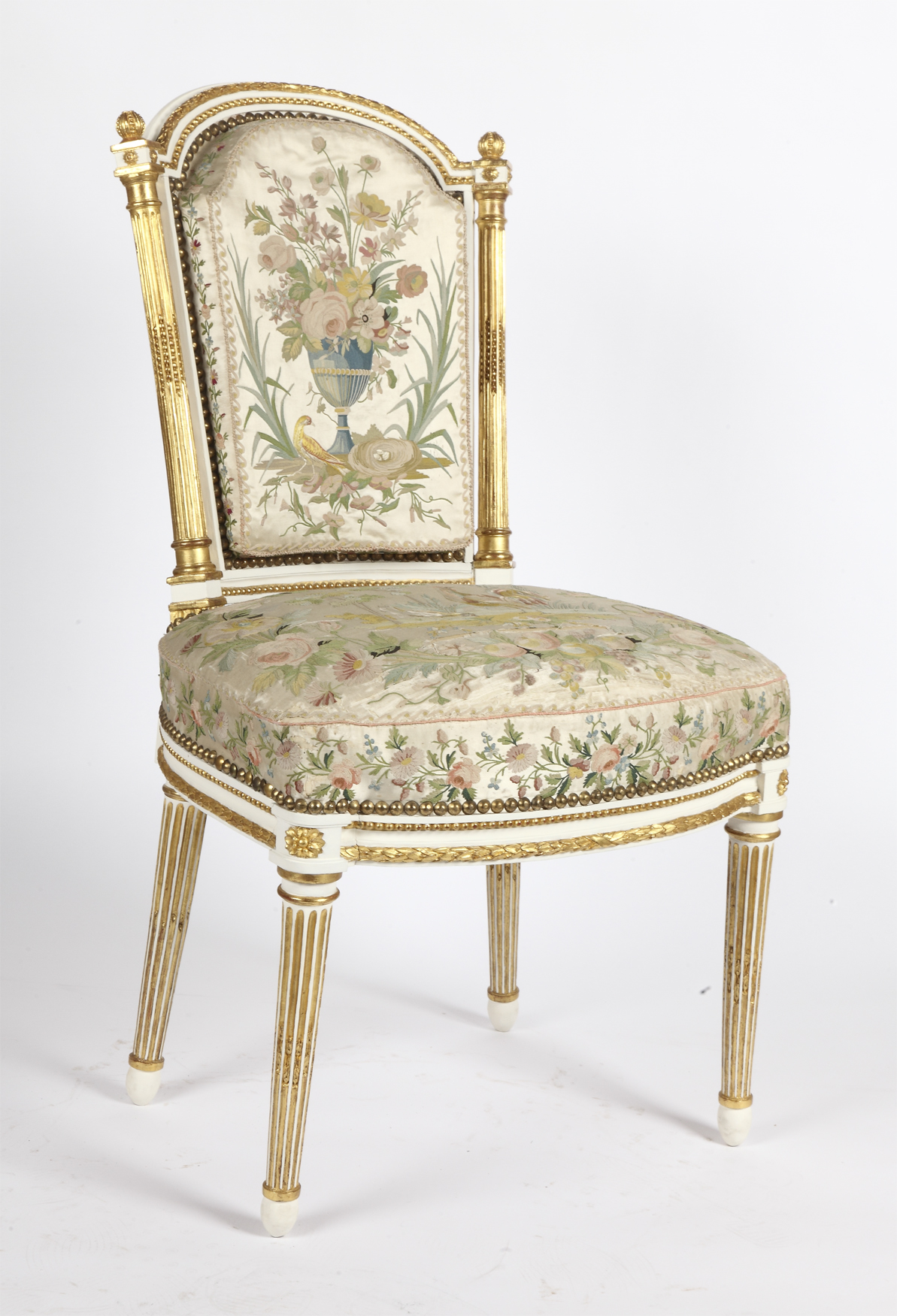
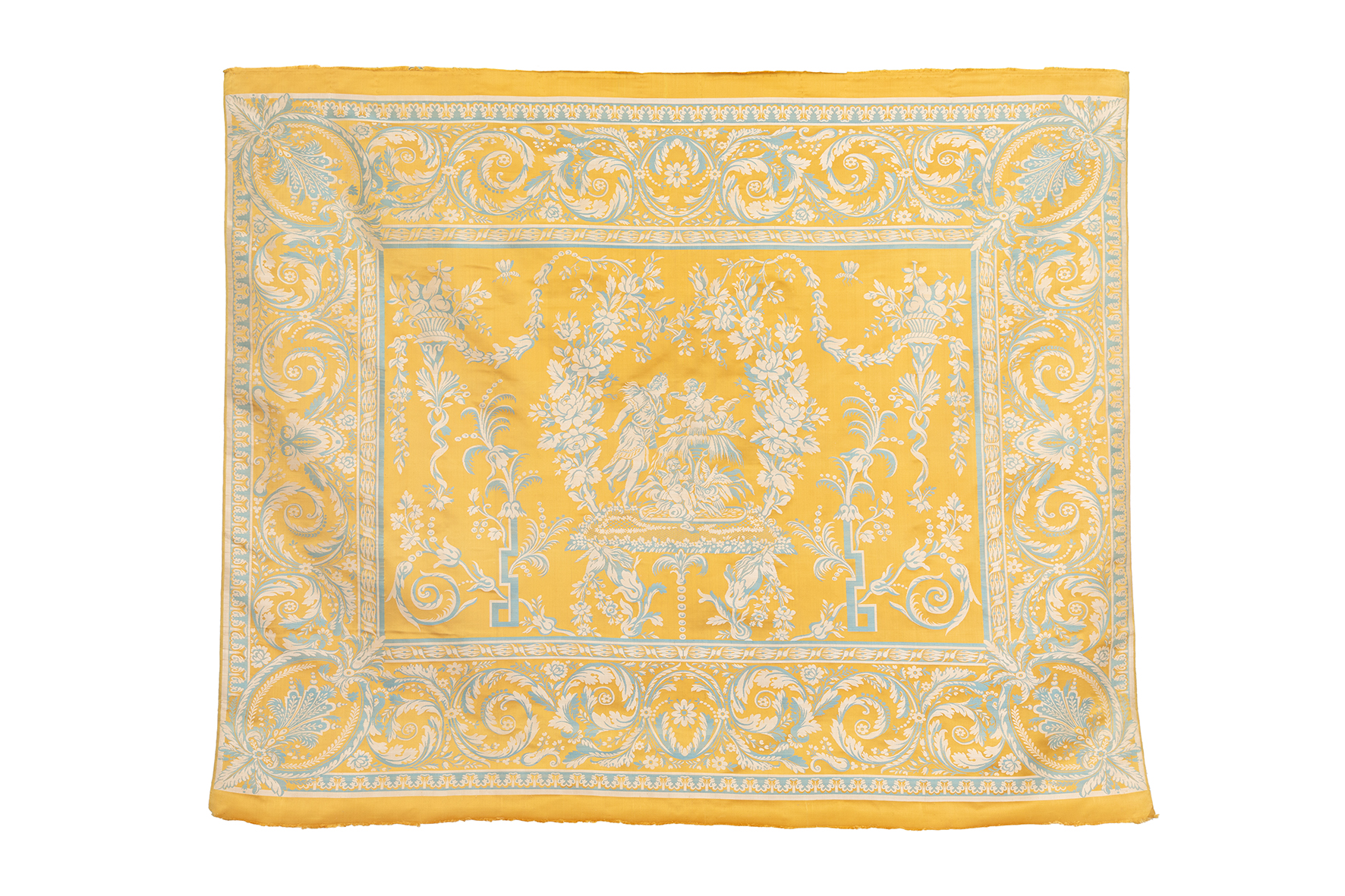
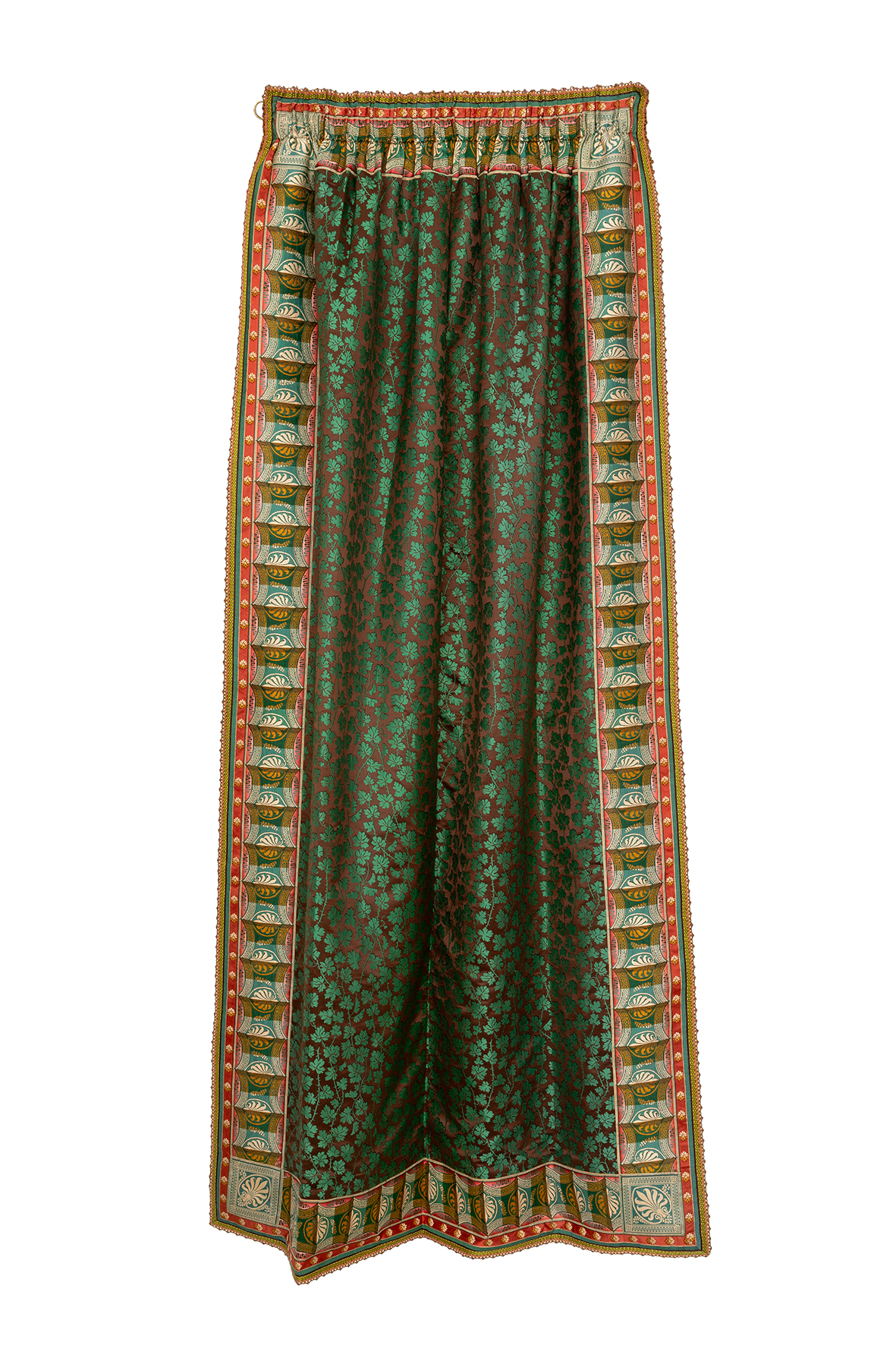
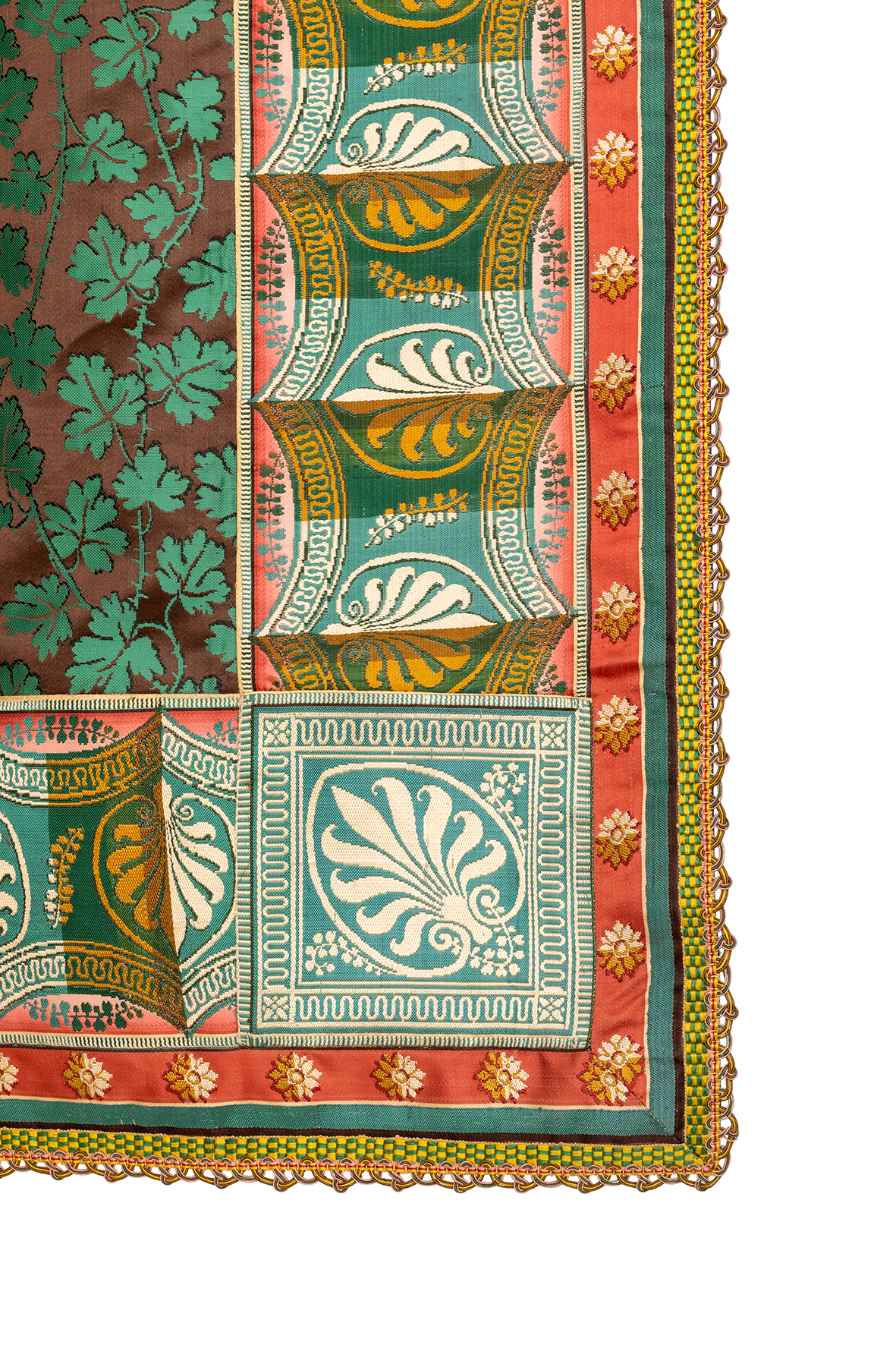
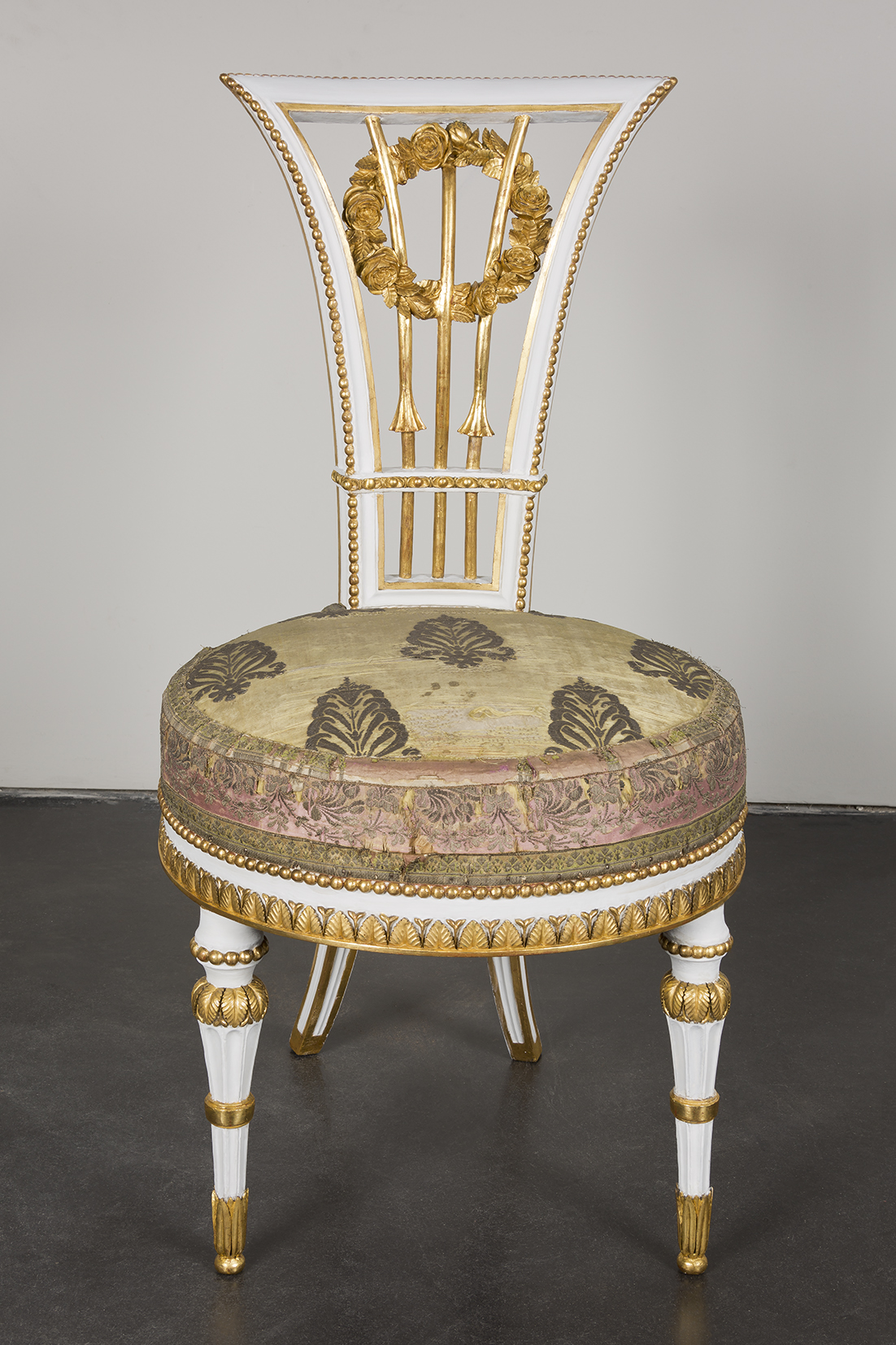
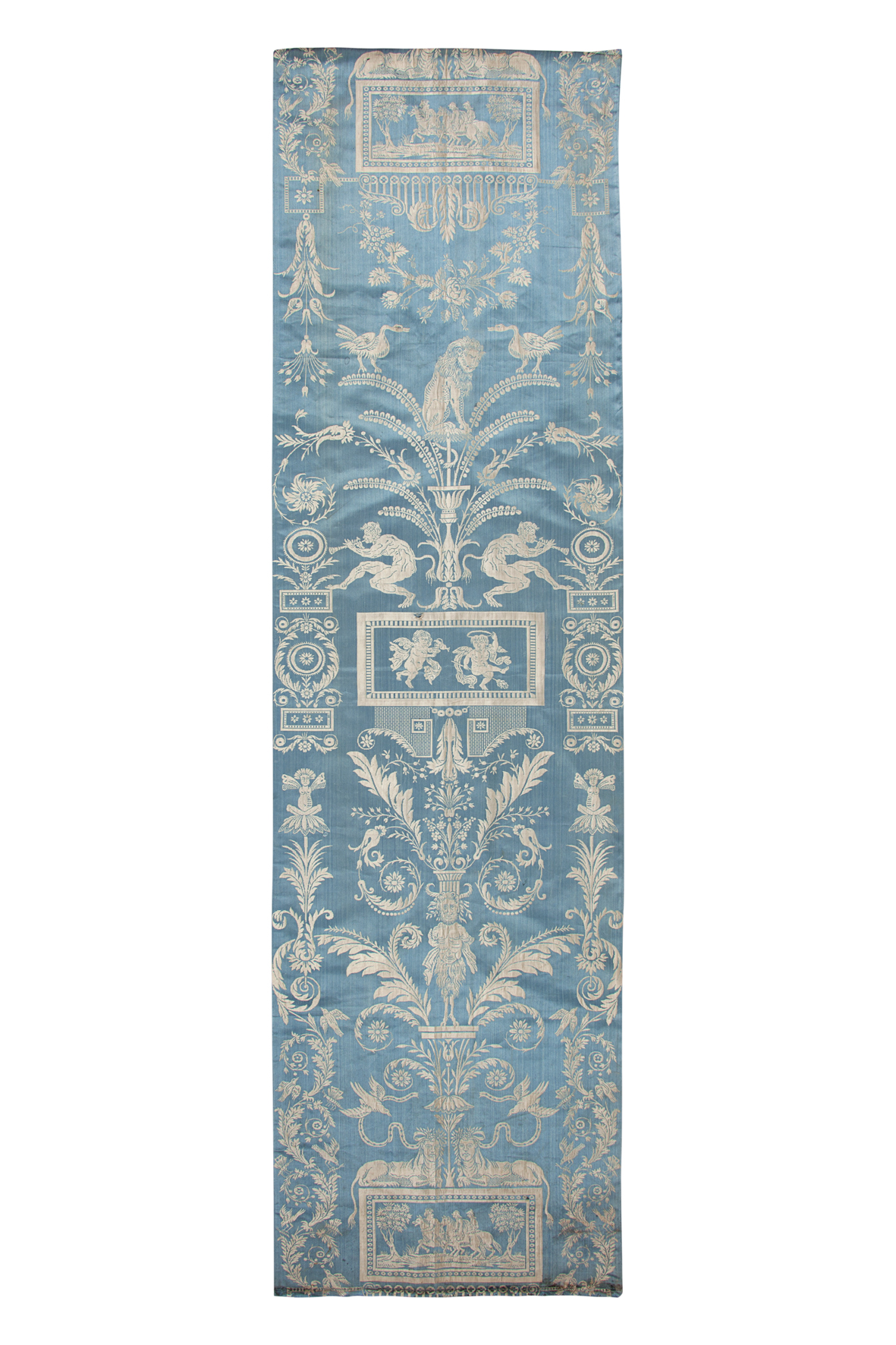
This section addresses the ornamentation and creation of exquisite sets of textiles for decorating a single room intended for private, leisure or intimate functions through the use of wall coverings, curtains and window valances, and furniture upholstery, elements collectively known as "hangings." Carpets, seen as paths of silk and wool, also played a prominent role in the ornamentation of the most important rooms in Spanish royal palaces, in addition to increasing the comfort of these spaces.
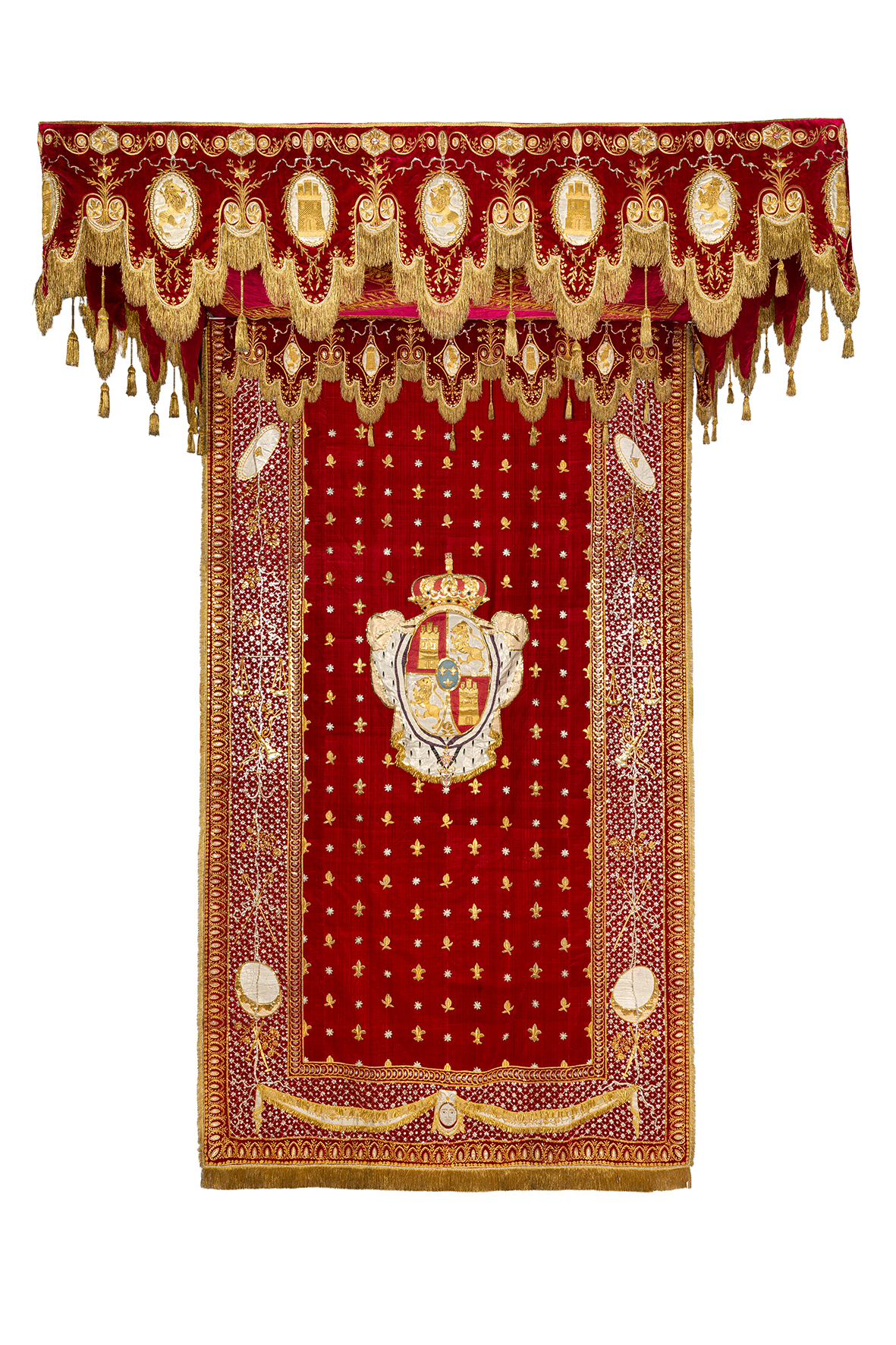
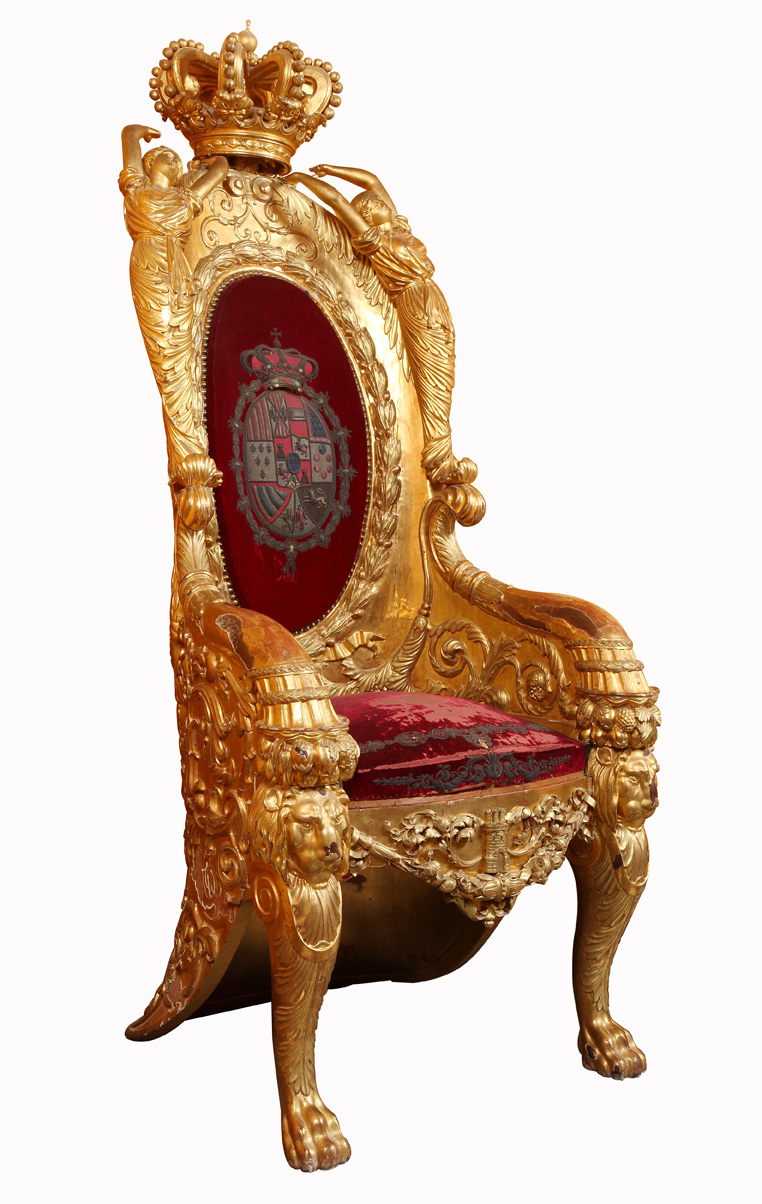
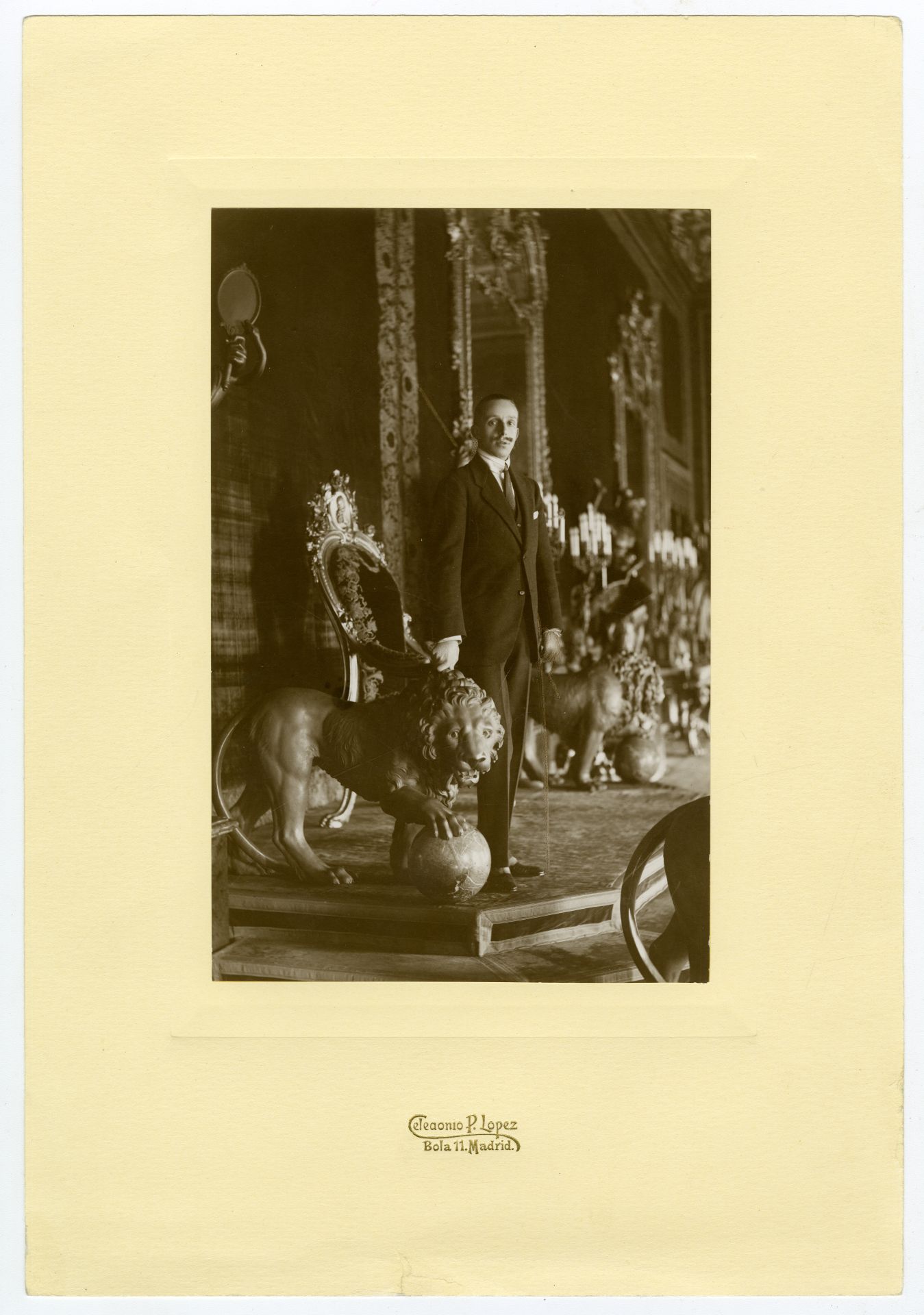
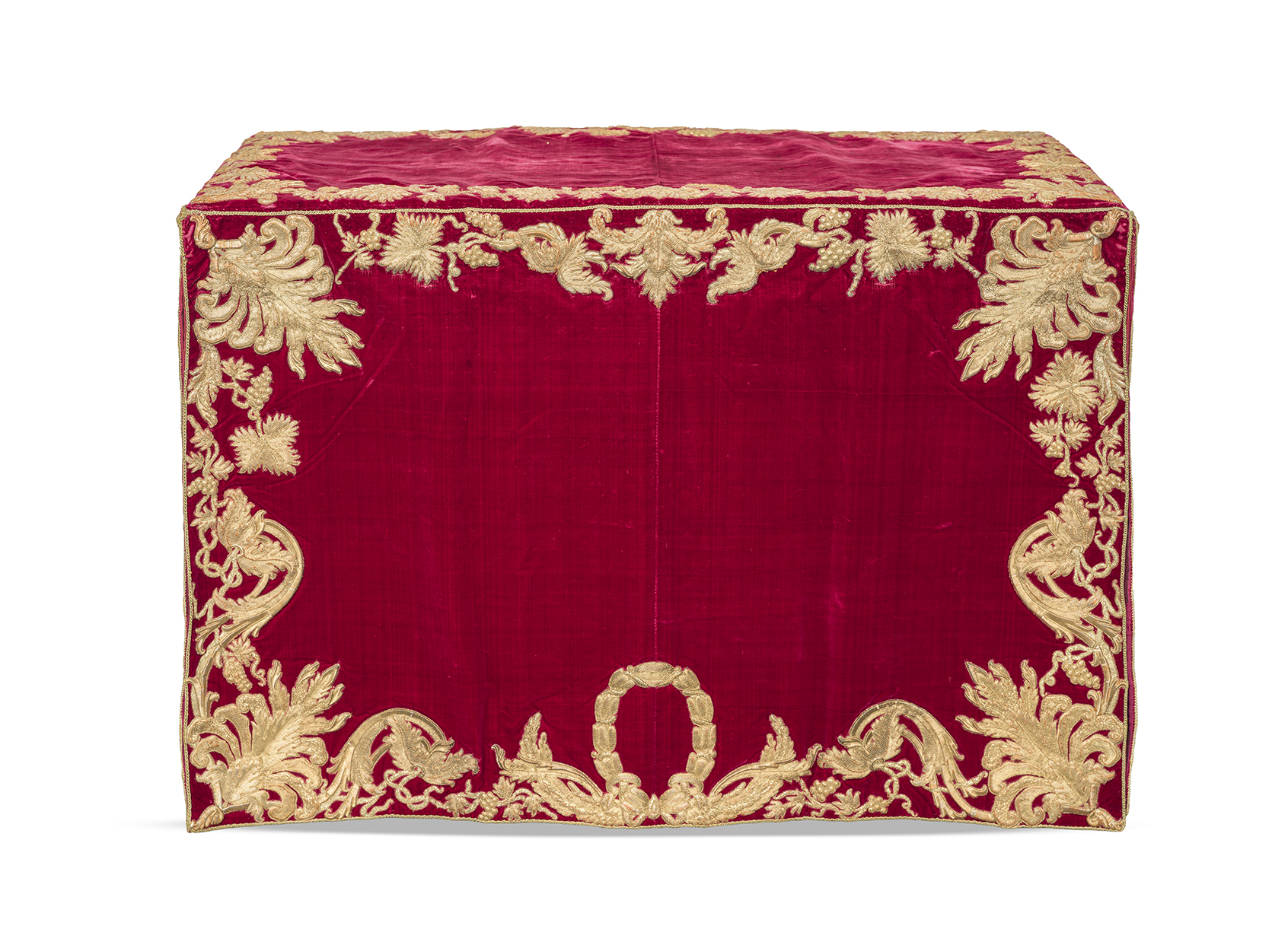
Textiles also functioned as an element that denoted power. Canopy borders, heraldic panels, chairs and thrones, table covers, cushions, pillows, and in particular canopies immediately indicated the place of the sovereign, functioning as objects that were used from an early date for the construction of political semiotics, in the service of propaganda and the expression of the ideology of power.
Dreams of Silk
As a fundamental part of furnishings, fabric was not only a display of power in the public sphere but also adorned the monarchs’ most private rooms with the same pomp and splendour to be found in official spaces.
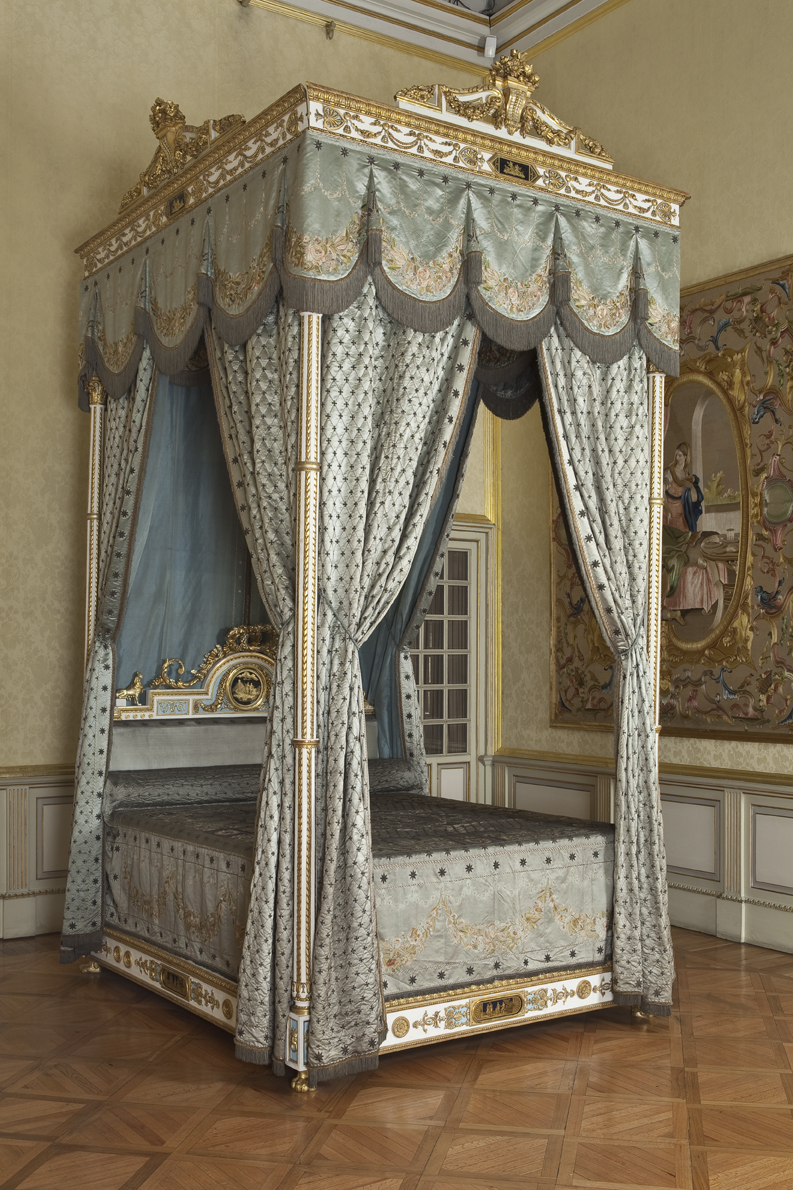
Bed hangings, bedspreads and quilts were created for Spanish royal palaces to match the wall coverings, thus contributing to daily comfort and rest while also adding an element of sumptuousness. The bed canopy, which functioned not only to retain heat but also to emphasise the royal status of the individual sleeping beneath it, became the most prominent element of this type of decoration.
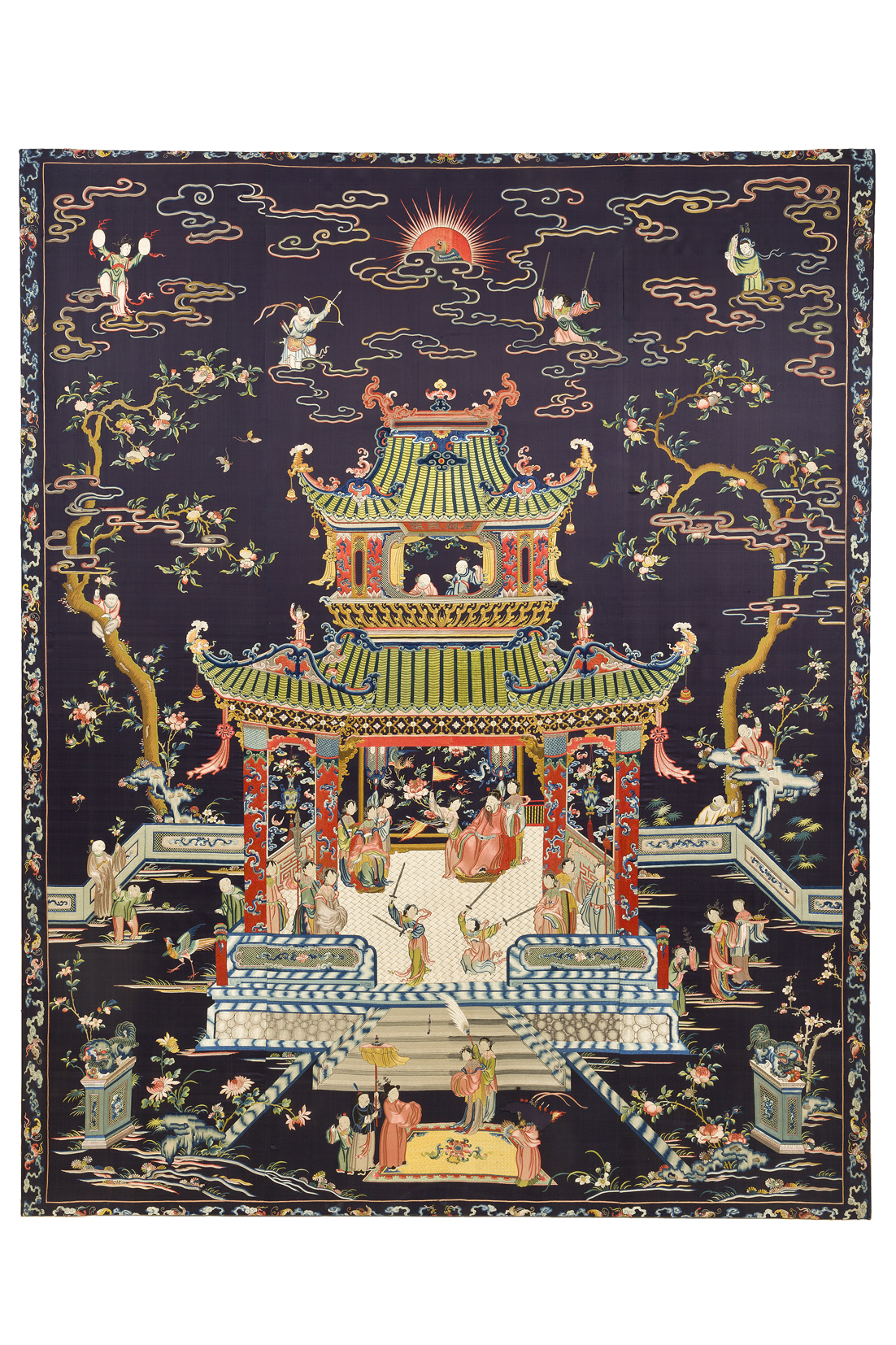
The two beds in this exhibition, made by the most skilled craftsmen in the royal workshops for the visit of Charles IV and Maria Luisa of Parma to Barcelona in 1802, exemplify two of the most common types of this furniture: the "column bed" and the "Polonaise bed," the latter designed to be aligned parallel to the wall. These two magnificent objects are displayed here alongside embroideries sent from China for the King Consort Francis of Assisi, which were never used, and a military camp bed, an example of daily life in the army during the nineteenth century.
The Royal Tapestry and Upholstery Office
A traditional saying declares that "before the King an upholsterer always arrives", an expression that can be considered valid from the sixteenth century if not earlier to the present day.
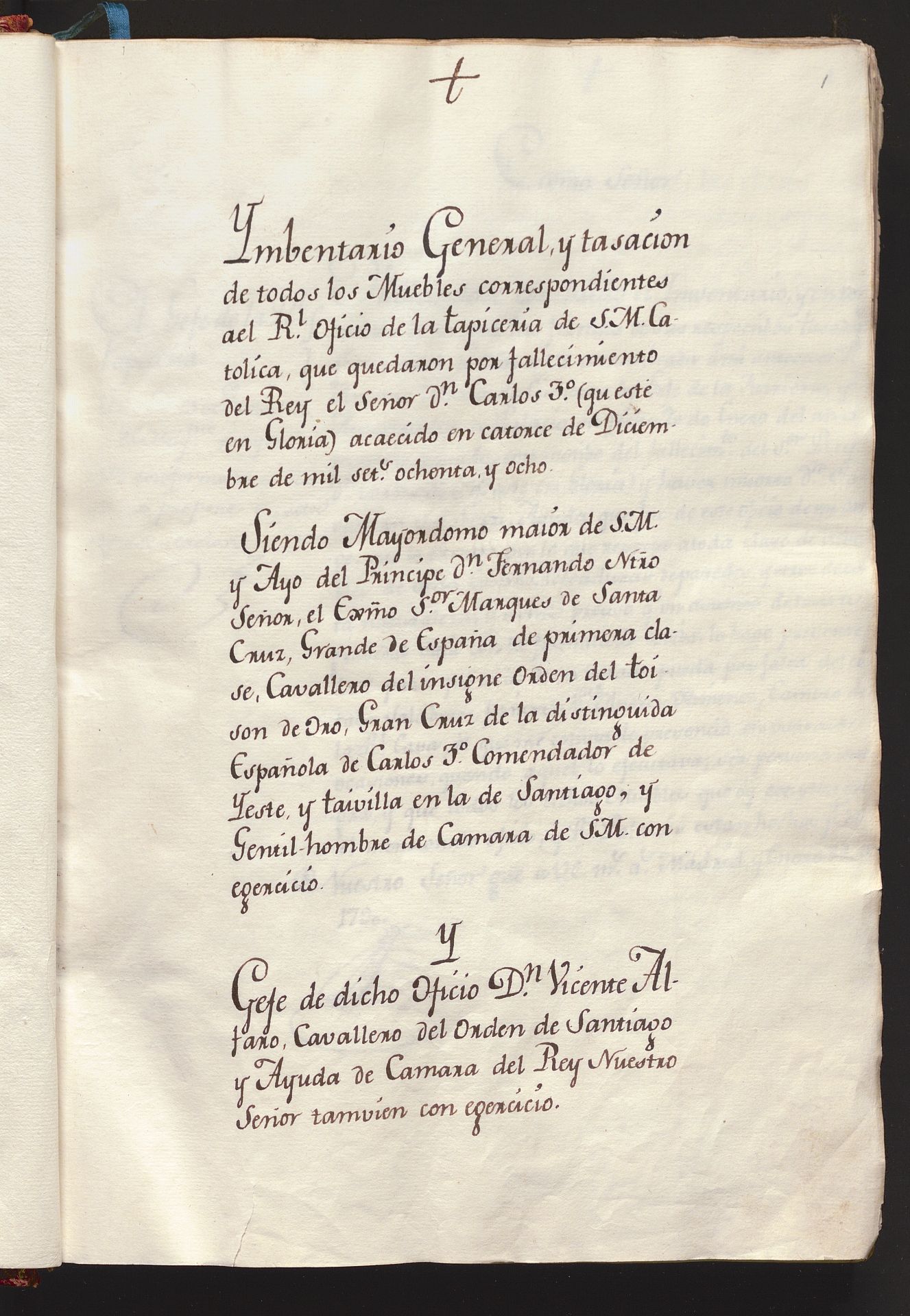
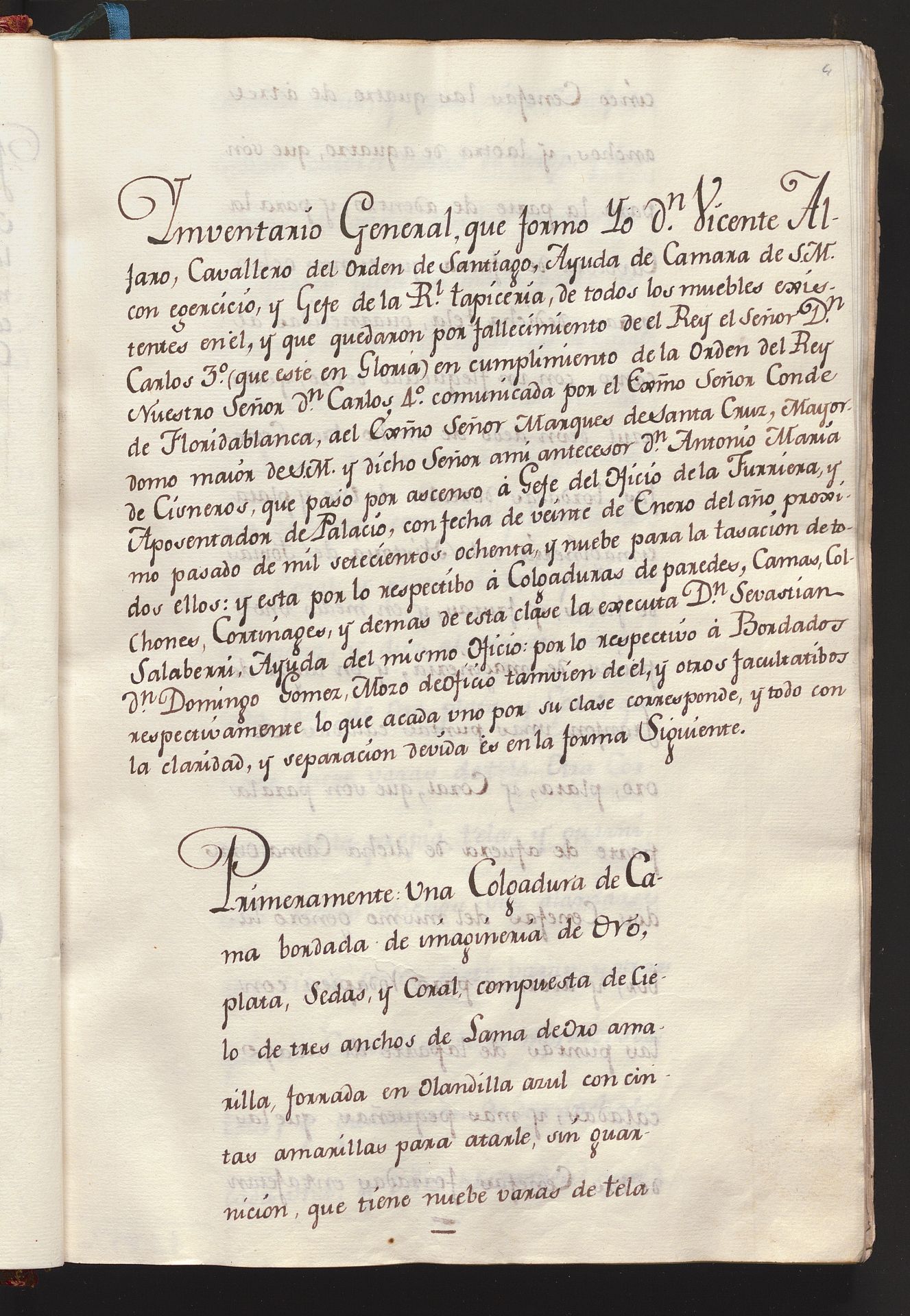
The Tapestry and Upholstery Office, the activities, components, organisation and expenses of which have been documented since 1502, has been responsible since that date for the creation of all the upholstery, canopies, prayer stools, carpets, beds, pillows and cushions, hangings and furnishing fabrics of all types with which the royal palaces were to be equipped, ensuring their proper care and conservation and installing everything that the king ordered, according to the seasonal movements of the court or “Royal Sojourns", the trips and the ceremonies to be organised.
Working under the orders of the head of the Tapestry and Upholstery Office were a large number of assistants, deputy assistants, tapestry repairers, workshop boys, junior staff and installers, reflecting a strict hierarchy that was successively regulated throughout the Early Modern Age.
In the present day, Patrimonio Nacional still undertakes these historical tasks, in addition to the new responsibilities of research, restoration and preventive conservation of all the historical items that constituted the old Royal Tapestry and Upholstery Office and which are now part of the Spanish Royal Collections.
Wardrobe and Dressing Room
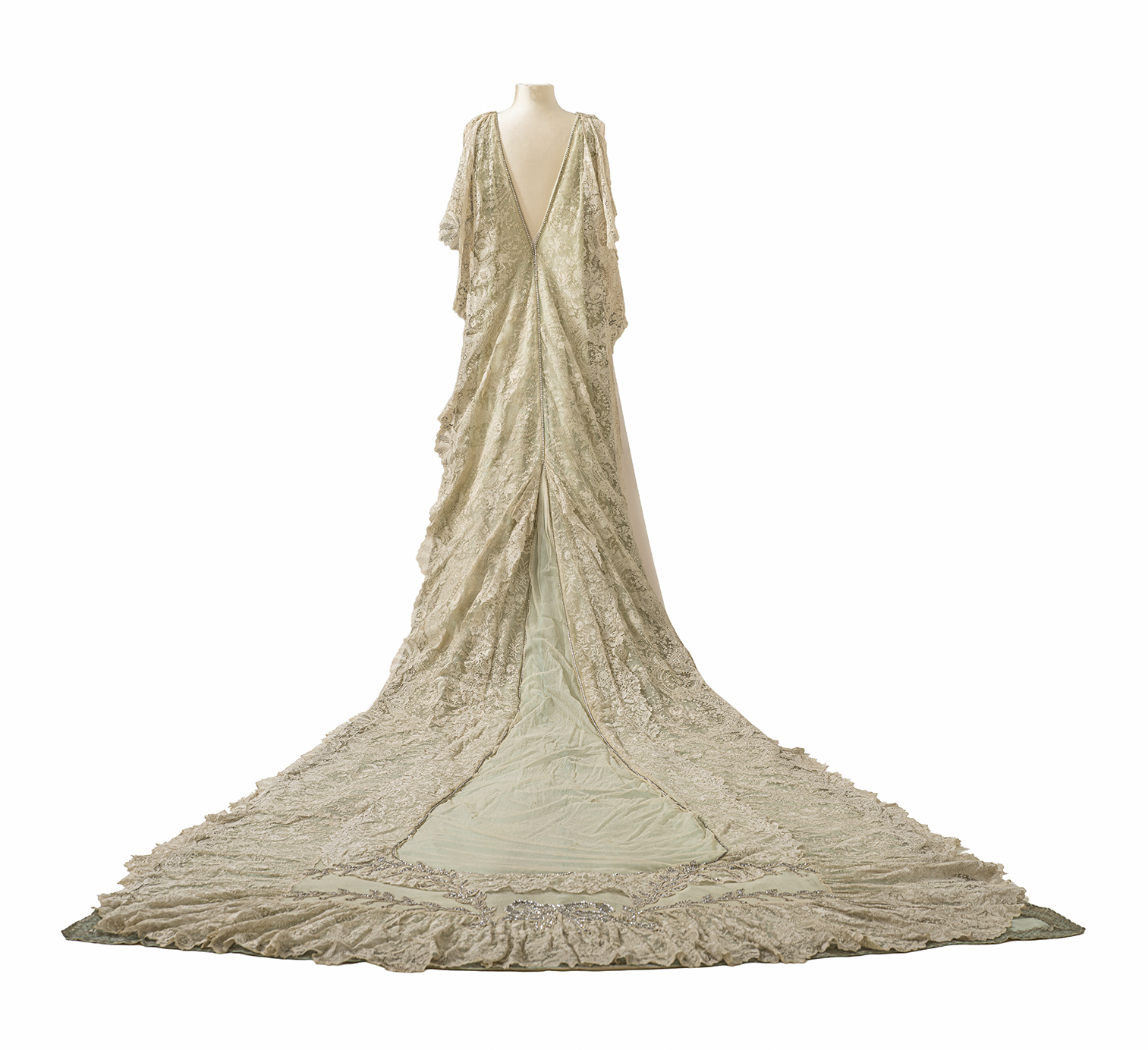
In a more intimate sphere but also relevant to the configuration of the royal image, the Office of the Palace Wardrobe was a dynamic service, hierarchically structured and staffed by individuals with a range of skills who were responsible for the care of the clothes and accessories worn by the Royal Family, in the creation of which a myriad of artists and artisans were involved, from tailors to seamstresses, embroiderers, lacemakers, furriers, shoemakers and hatters and milliners.
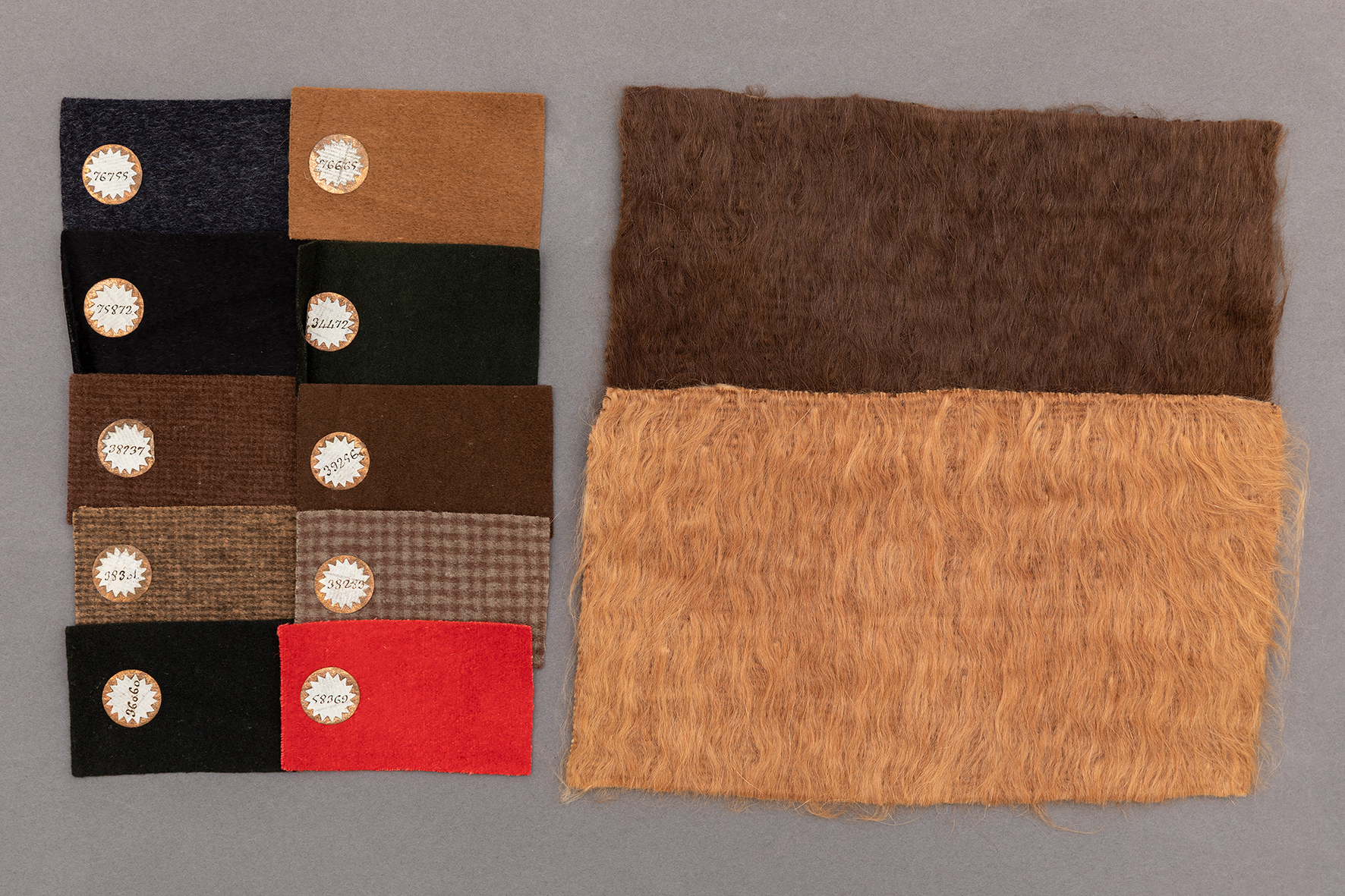
It is easy to imagine the enormous amounts of money invested in ceremonial and everyday clothing during the different reigns. This can be confirmed, particularly in the case of some monarchs, through the documentation and samples housed in the General Palace Archive.
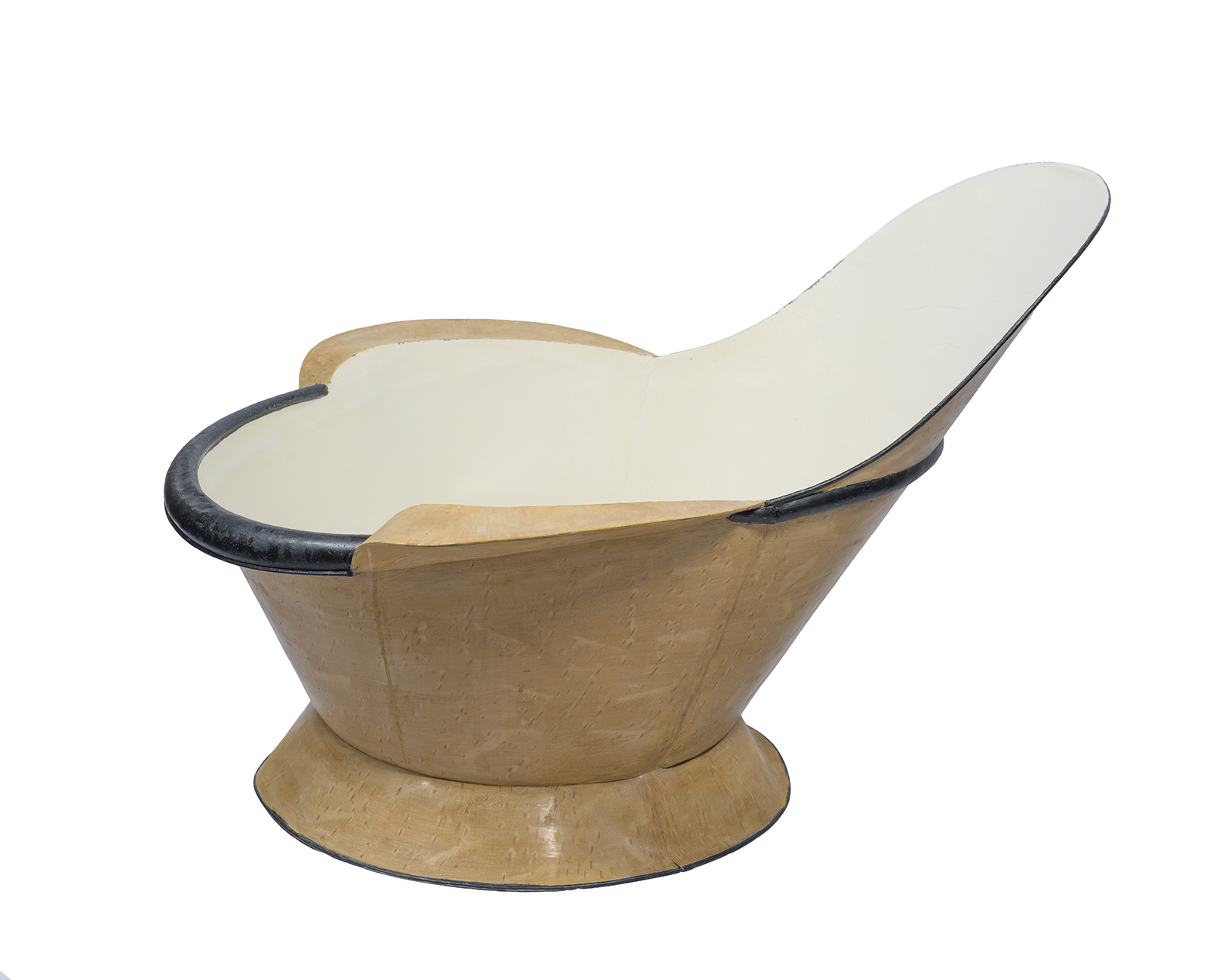
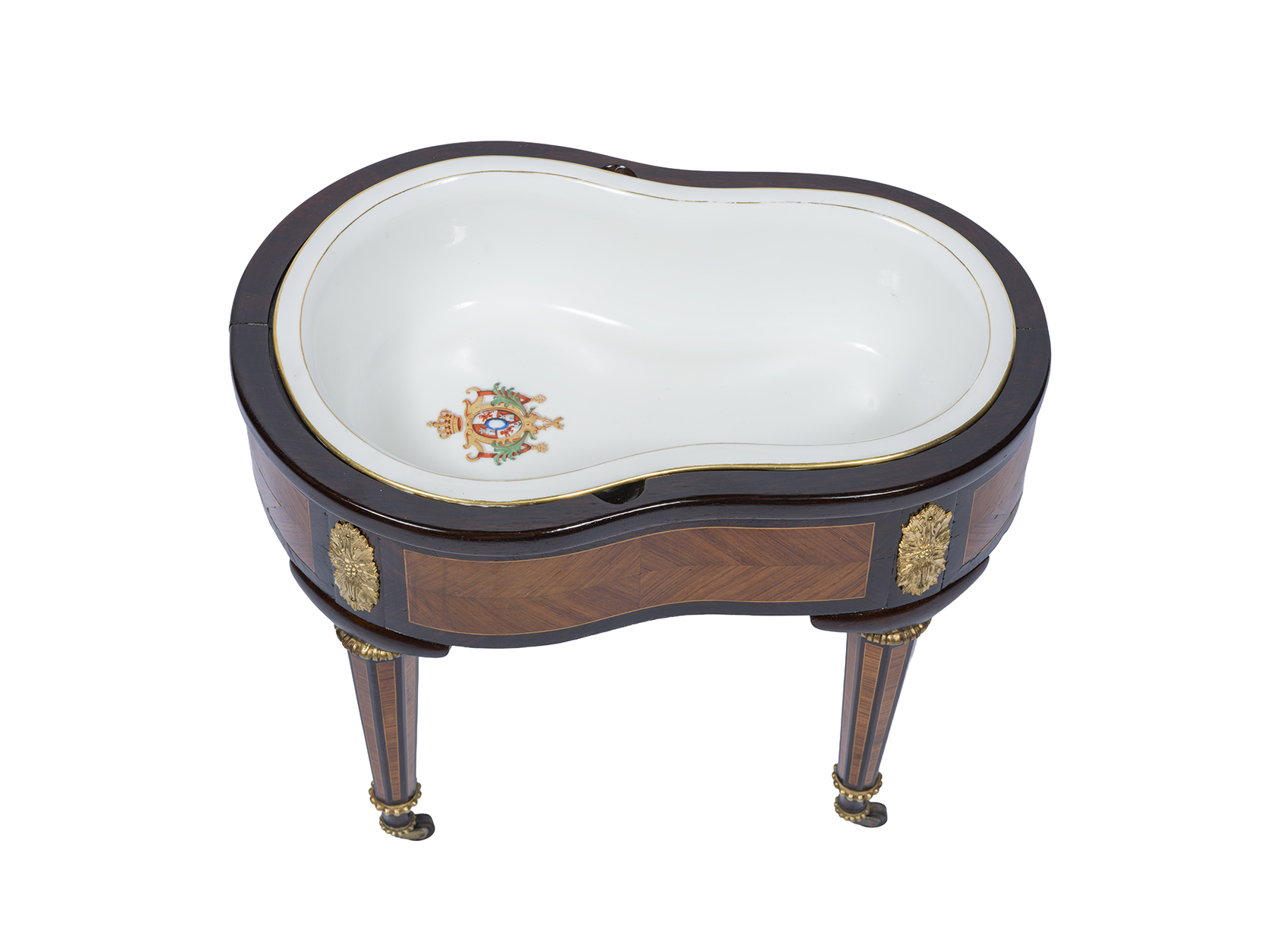
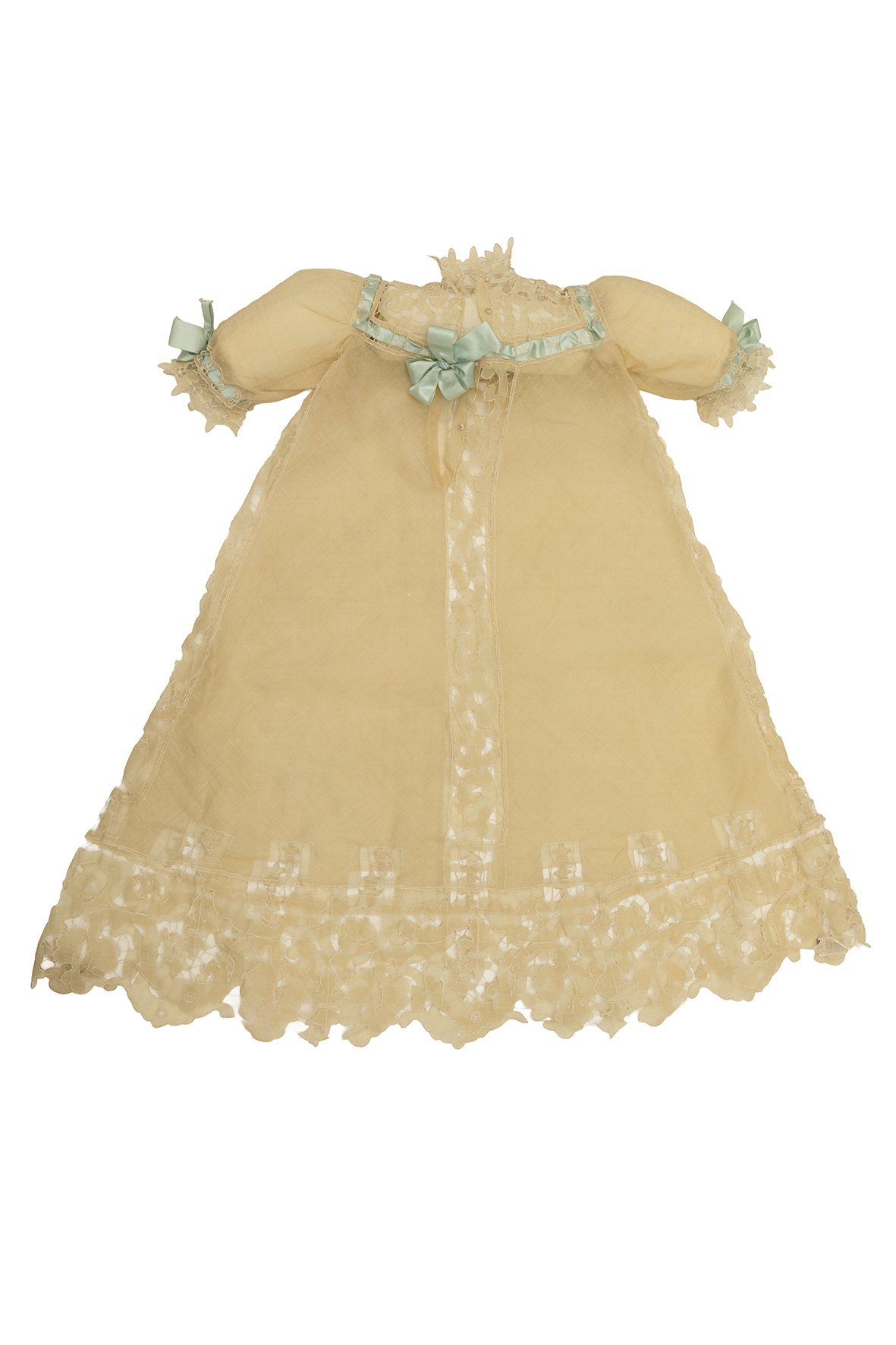
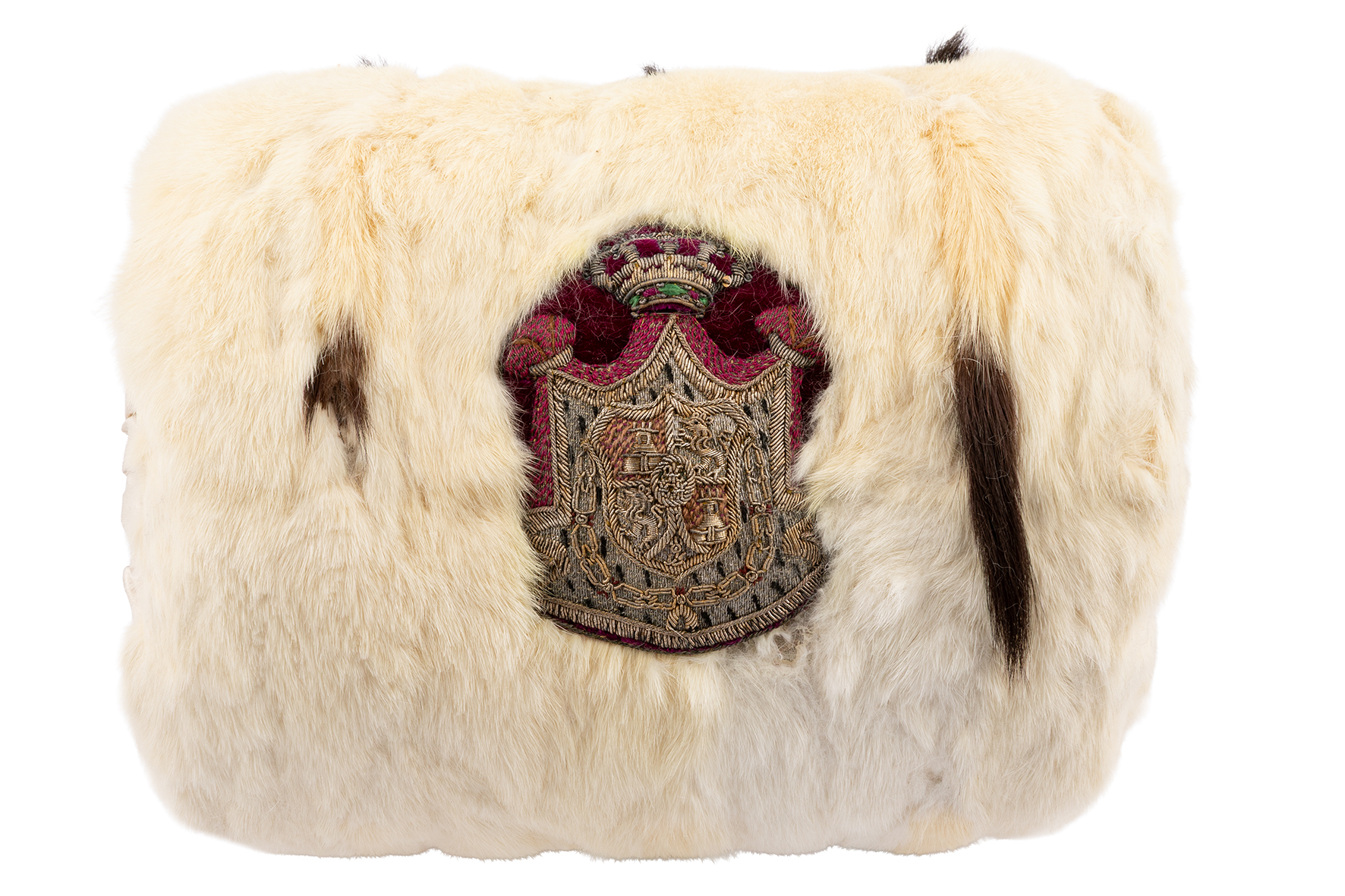
While this section presents a diverse collection of ceremonial robes and clothing accessories that belonged to Spanish monarchs, it also aims to highlight the more private aspect of their personal care, comprising the toilette and elements associated with it. These little-known items for everyday use include bath tubs and the textiles that embellished the dressing room of Queen Maria Luisa of Parma.
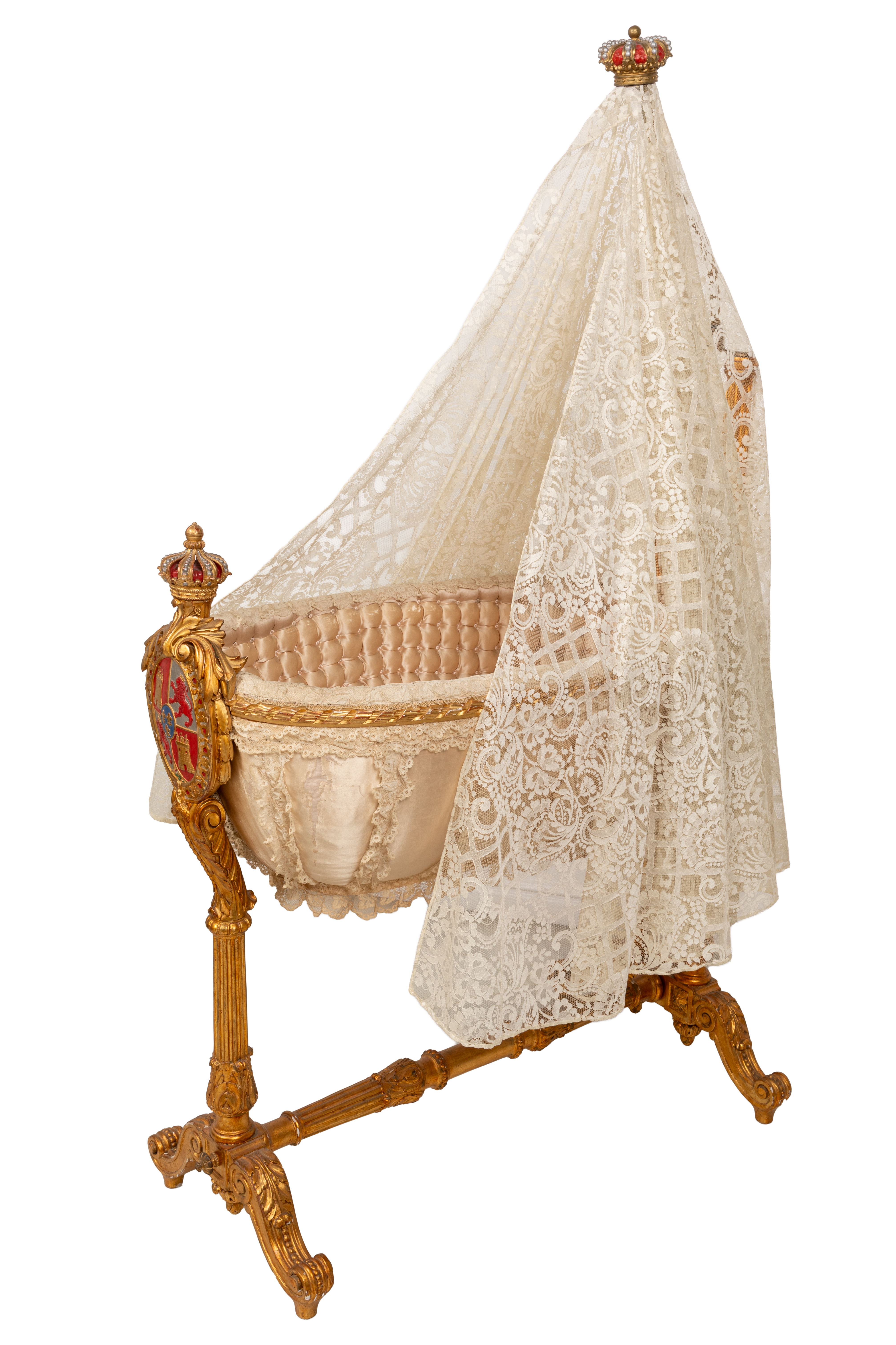
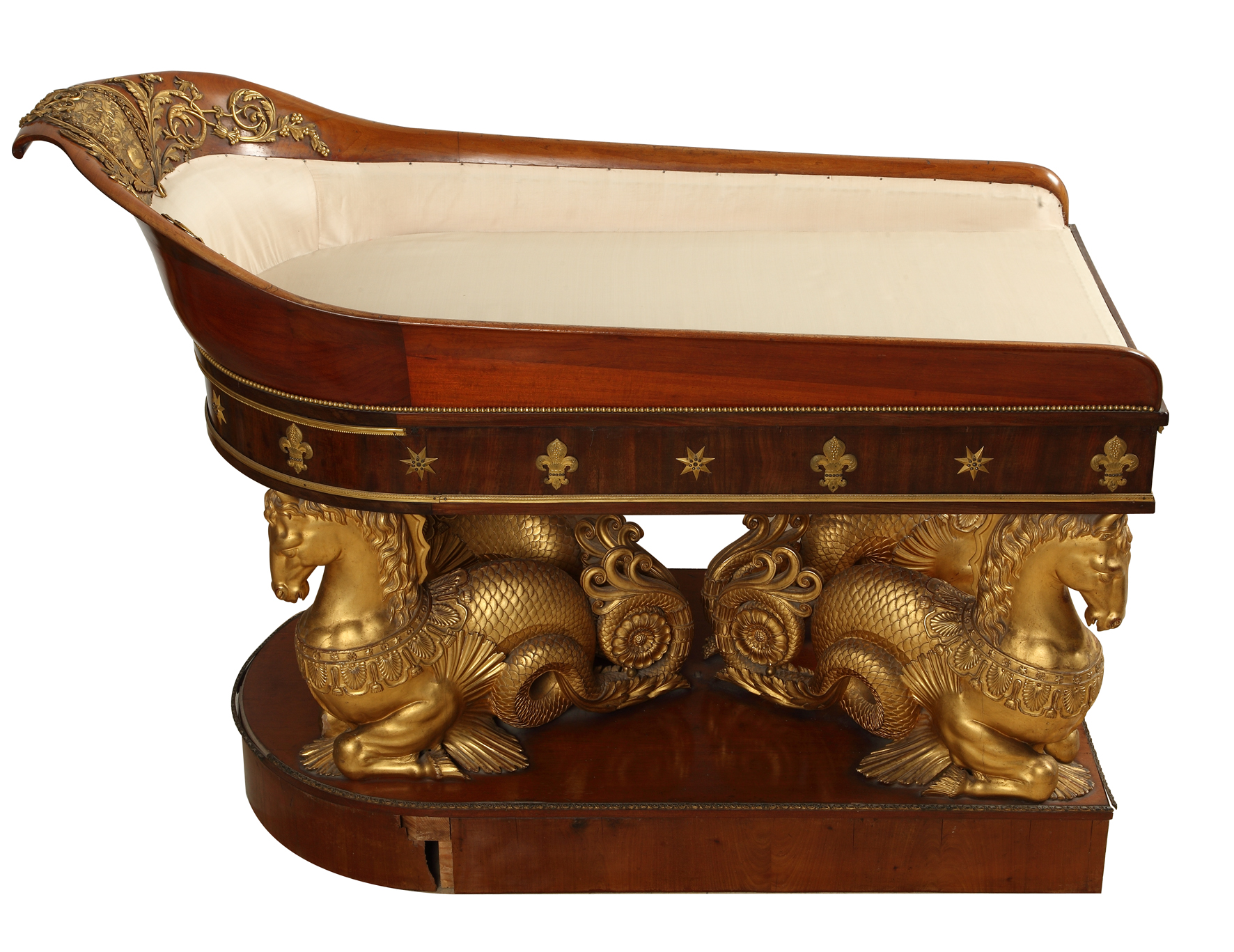
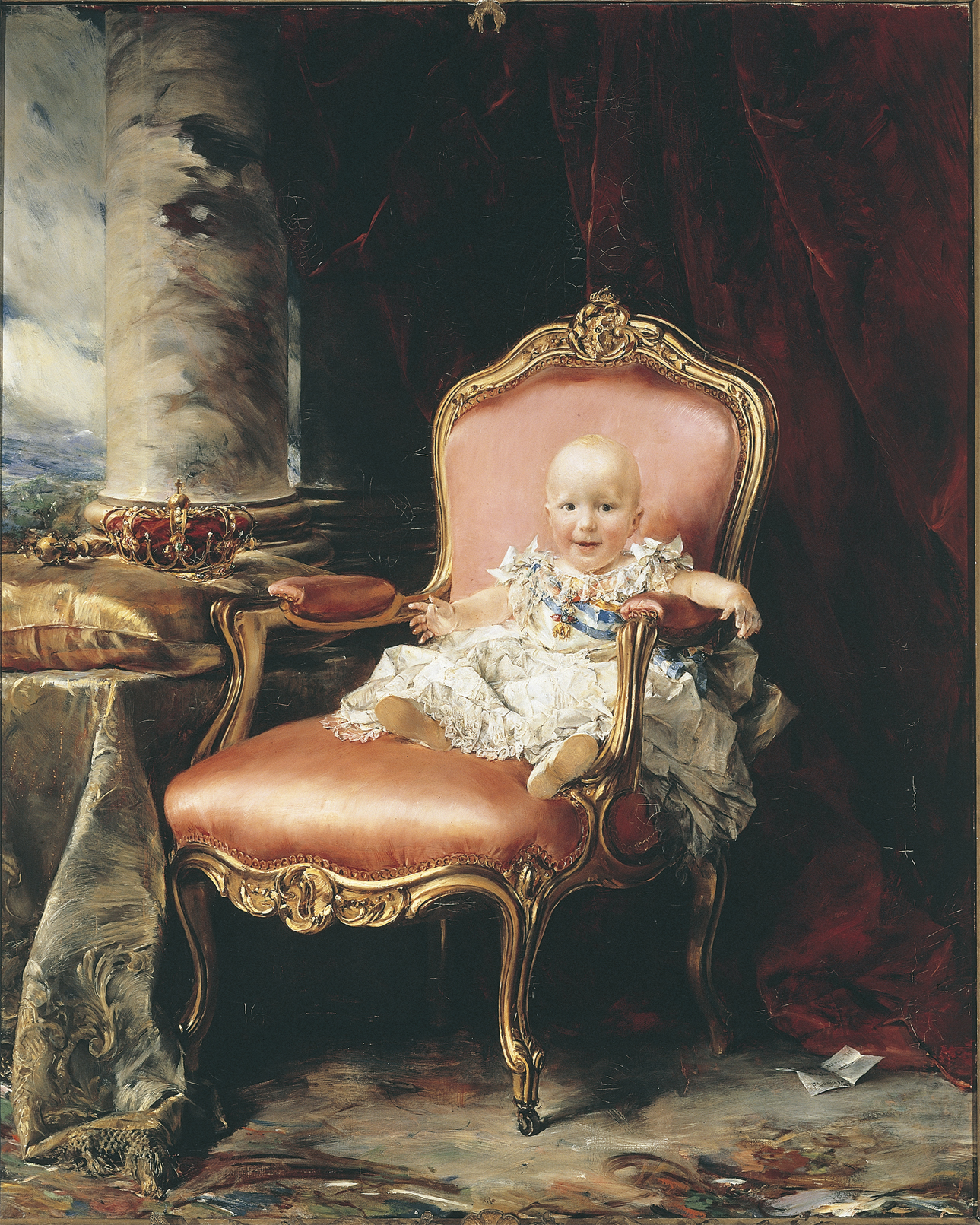
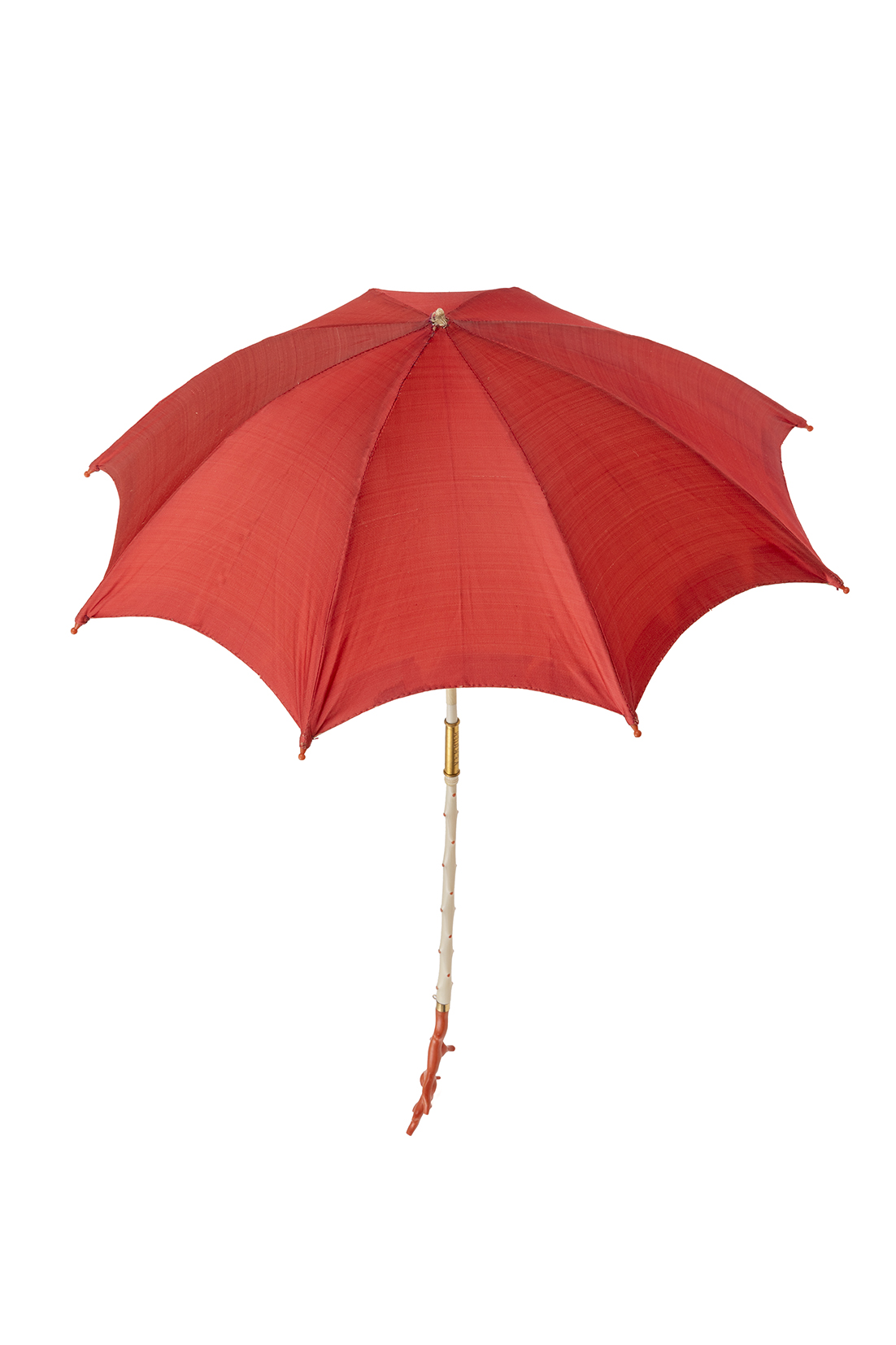
Works
, mother of Saint Ferdinand (1201-1252), who was buried in the royal pantheon of Las Huelgas in Burgos in 1246. As was customary at the time, members of the royal family were buried with sumptuous clothing and adornments, notably pillows placed at both the head and feet of the deceased and made from luxurious fabrics. The queen was buried with two more costly pillows in a coffin lined with textiles and braid, with part of her dress also surviving.\\u003Cbr\\u003E\\u003Cbr\\u003E\\u003C/p\\u003E\u0022","location":"Inv. 00651988, Patrimonio Nacional","year":"Prior to 1246","pos":"0"}))
 - to the supervision of the materials to be used, even going to Toledo to ensure the silks were properly dyed. The other costly materials were provided by the Keeper of the King\\u2019s Jewels.\\u003C/p\\u003E\u0022","location":"Inv. 10045991, Patrimonio Nacional","year":"Prior to 1566","pos":"1"}))
, used to perfume the white liturgical vestments kept in the Sacristy. The cushions are made with costly materials and decorated with ornate embroidery, some with religious symbolism. The four most interesting are displayed here: one made with gold thread embroidery on gauze, a luxurious, typically Florentine textile; another embroidered with flowers in a grid pattern; a pink one with Marian symbols; and a blue one with gold embroidery and wings of the Sternocera aequisignata beetle.\\u003C/p\\u003E\u0022","location":"Inv. 10082568, Patrimonio Nacional","year":"Second half of the sixteenth century","pos":"2"}))
, who used it in all his palaces. The decoration, in the Neoclassical style, centres on the monarch\\u0027s coat of arms, featuring the arms of Spain and the House of Bourbon surmounted by the grand crosses of the Orders held by the king: the Spanish Order of the Golden Fleece and the Order of Charles III, the Neapolitan Order of Saint Januarius, and the French Order of the Holy Spirit. The embroiderer\\u0027s signature and the date of completion are located in the lower right corner. It originally had a matching chair, which must have lost its original upholstery, also embroidered by Robredo, at an early date.\\u003C/p\\u003E\u0022","location":"Inv. 10025752, Patrimonio Nacional","year":"1795","pos":"3"}))
)
 and Francis of Assisi (1822-1902) during their 1860 visit to the Balearic Islands, Aragon and Catalonia. This printed cotton fabric, made as a gift for the queen on that special occasion, features an image of the factory itself in Sants, the king and queen accompanied by the prince of Asturias and surrounded by heroes of the Rif War, which had ended months earlier and for which several of the factory\\u0027s workers had volunteered.\\u003C/p\\u003E\u0022","location":"Inv. 10005193, Patrimonio Nacional","year":"1860","pos":"5"}))
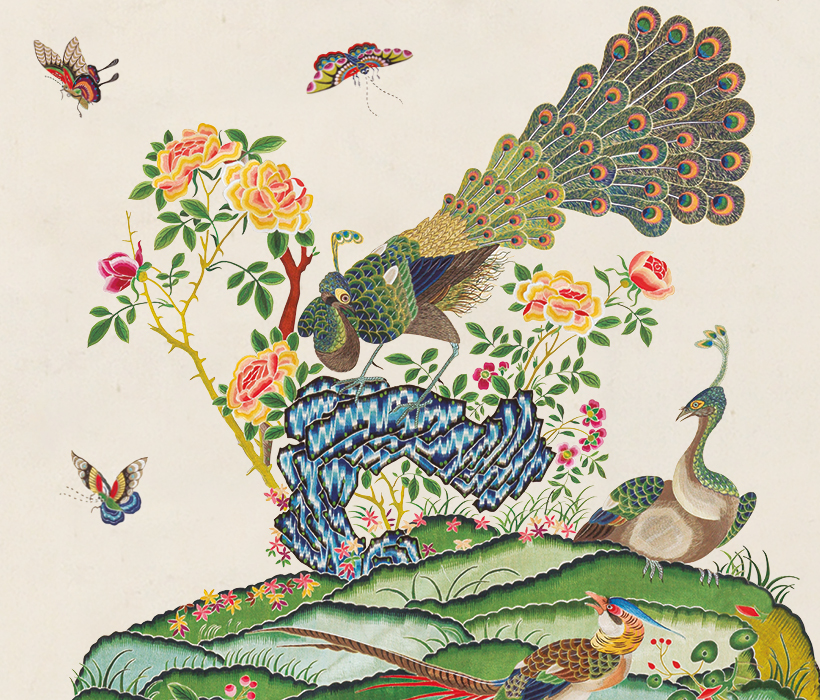
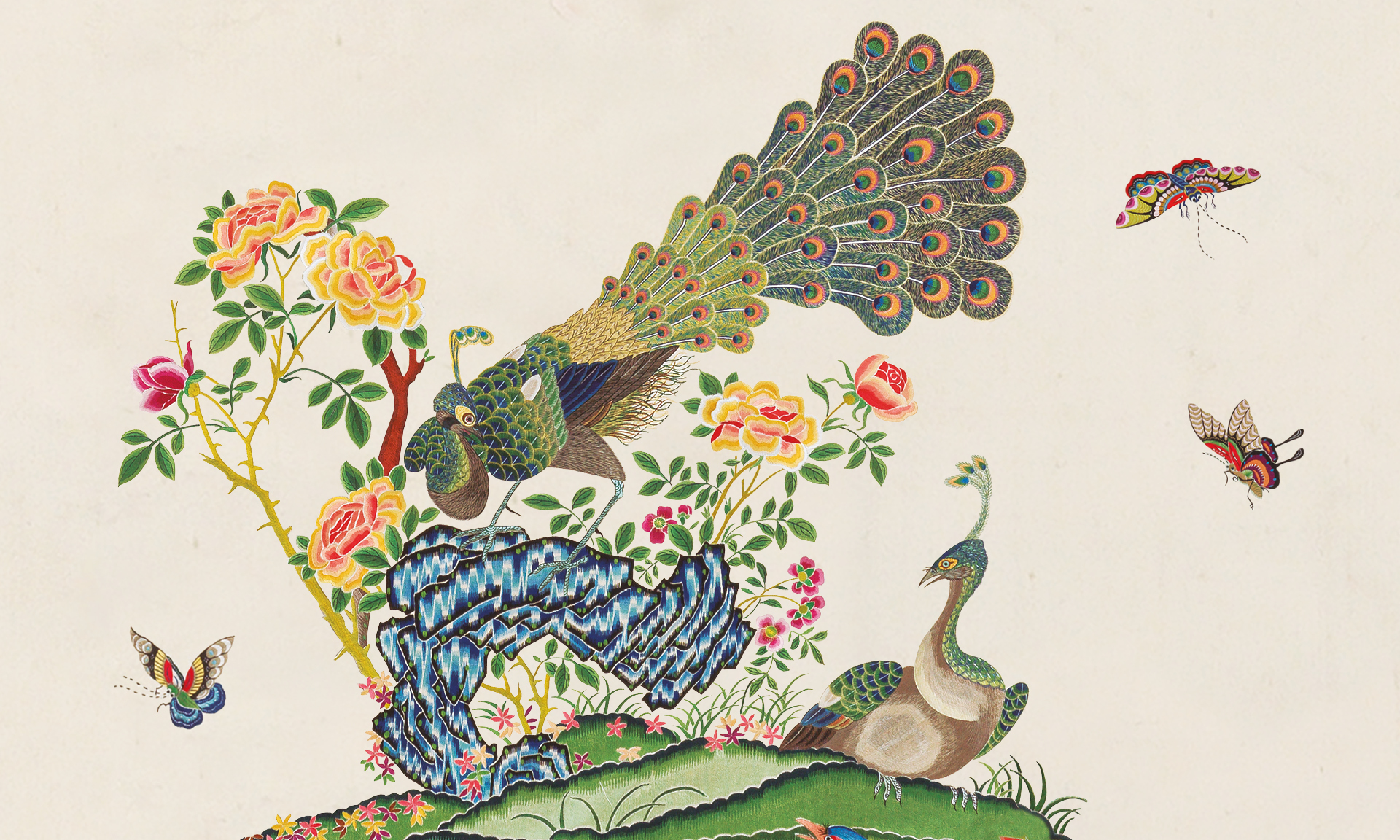
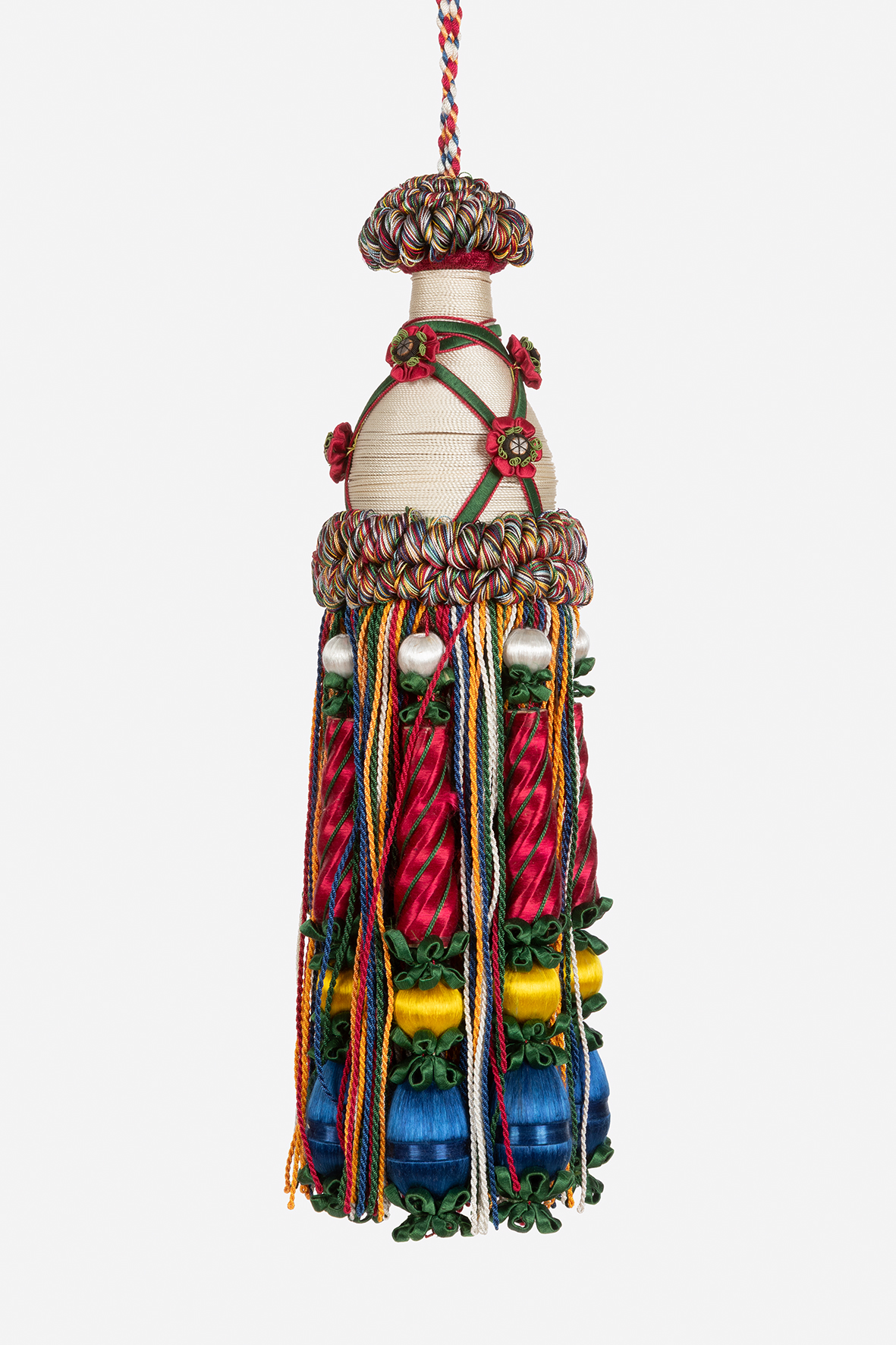
 to embroider a set of bed hangings and associated trimmings. The order came via an individual named Jos\\u00E9 Vicente Jorge, who was instructed to commission the work specifically from the merchant Linhing and to have it embroidered on white, Nanking silk satin, known as Jaissam. It was to depict the most beautiful birds and flowers with regard to both form and colour, with perfect accuracy and lifelikeness, and to include no fictional elements or any depictions of human figures, quadrupeds, houses or boats. The set was completed with a large quantity of trimmings, of which one example is displayed here.\\u003C/p\\u003E\u0022","location":"Inv. 10080615, Patrimonio Nacional","year":"1850","pos":"6"}))
)
. The actual bathtub was the zinc tub concealed by the caning in the lower part. This model is highly characteristic of French furniture of the 1770s: wooden baths with zinc tubs resembling seating were among the designs by artists such as Jean Charles Delafosse (1734-1789).\\u003C/p\\u003E\u0022","location":"Inv. 10051900, Patrimonio Nacional","year":"ca. 1770","pos":"8"}))
)
 to Queen Victoria Eugenia (1887-1969) on the occasion of their betrothal. Together with other garments made by Dionisia Ruiz and Julia Herce, it was one of the items of clothing made by Spanish fashion houses that comprised Victoria Eugenia\\u2019s trousseau.\\u003Cbr\\u003EThe invoice for the dress, for the amount of 12,000 pesetas, is in the General Palace Archive. Always attentive to fashion trends, the queen continued to patronise this establishment over the following years and was also a devotee of leading fashion houses such as Ch\\u00E9ruit, Worth, Paul Poiret, Babani, Jeanne Lanvin and Loewe.\\u003C/p\\u003E\u0022","location":"Inv. 30234086, Patrimonio Nacional","year":"1906","pos":"10"}))
)
Carlos I
1016-1065
description
Miami
Lorem ipsum dolor sit amet consectetur. Nunc cursus sit augue pellentesque. Adipiscing erat non ipsum commodo morbi vitae. Pellentesque nec enim quis vel vel hendrerit faucibus. Erat nisl commodo maecenas adipiscing.
Organized by: Patrimonio Nacional
With the collaboration of: Ayuntamiento de Madrid
Curators: Pilar Benito García, Lourdes de Luis Sierra, María Barrigón Montañés
Coordinator: Miriam Estrada Maestre
Museographic design: Francisco Bocanegra
Museographic installation: Taller de tapicería de Patrimonio Nacional; SIT, Proyectos, diseño y conservación S. L.
Transport: Unidad de traslados de obras de arte de la Dirección de las Colecciones Reales; Ordax Arte & Exposiciones
Insurance: AON. One Underwriting