Use of Cookies

The Royal Collections Gallery uses its own and third-party cookies, mainly for technical purposes, which are necessary to provide our services and provide you with relevant content. More information in our cookies policy. Cookies Policy.

ACCEPT to confirm that you have read the information and accepted their installation. You can change your browser settings.

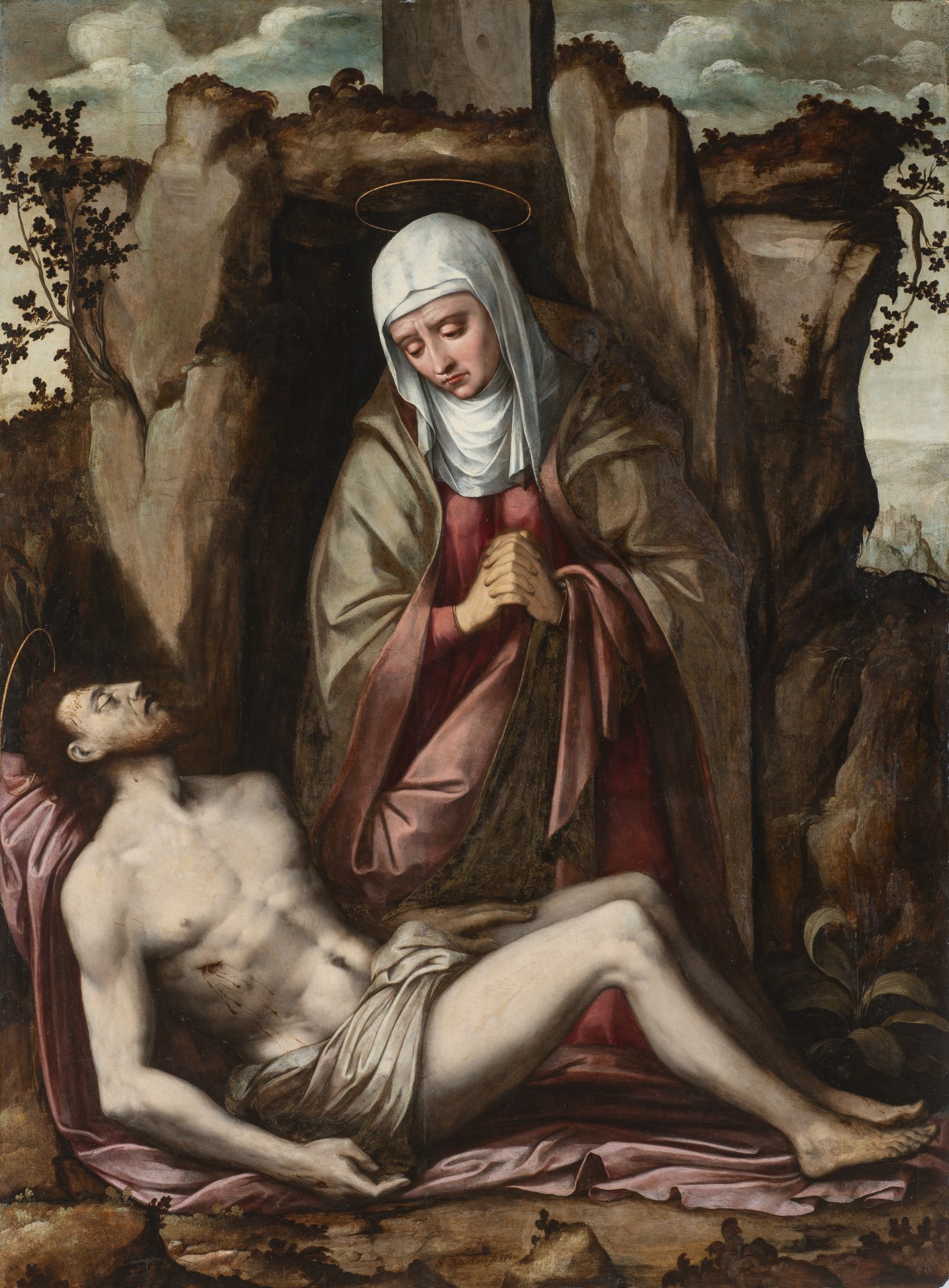
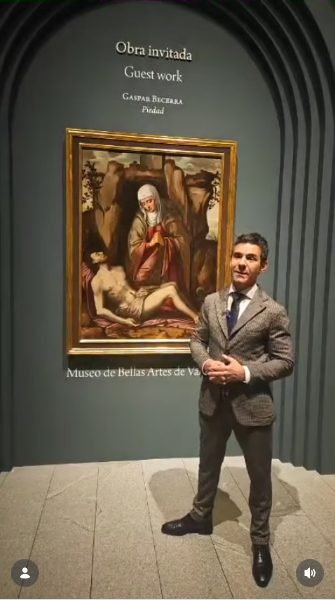
Gaspar Becerra’s Pietà is one of the key works in the sixteenth-century painting collection at the Museum of Fine Arts in València. It entered the museum’s collection in 2001 as a donation from Mercedes de la Cuadra Oliag. Signed and dated 1560, Becerra’s panel is a landmark work in the artist’s oeuvre, executed following his extended stay in Rome (1540 – 1556). Born in Baeza around 1520, Becerra was trained in an artistic environment already receptive to the Italian Renaissance. He moved to Rome early in his career, where he joined the circle of Giorgio Vasari (1511–1574) and collaborated with Daniele da Volterra (1509 – 1566), taking part in major decorative commissions, including work at the Palazzo della Cancelleria and in one of the chapels of the church of Trinità dei Monti. Becerra, unlike other Rome-based Spanish artists, such as Pedro Rubiales (c. 1518– h. 1560) or Luis de Vargas (c. 1505 – 1567), embraced a more literal form of Michelangelesque Romanism.

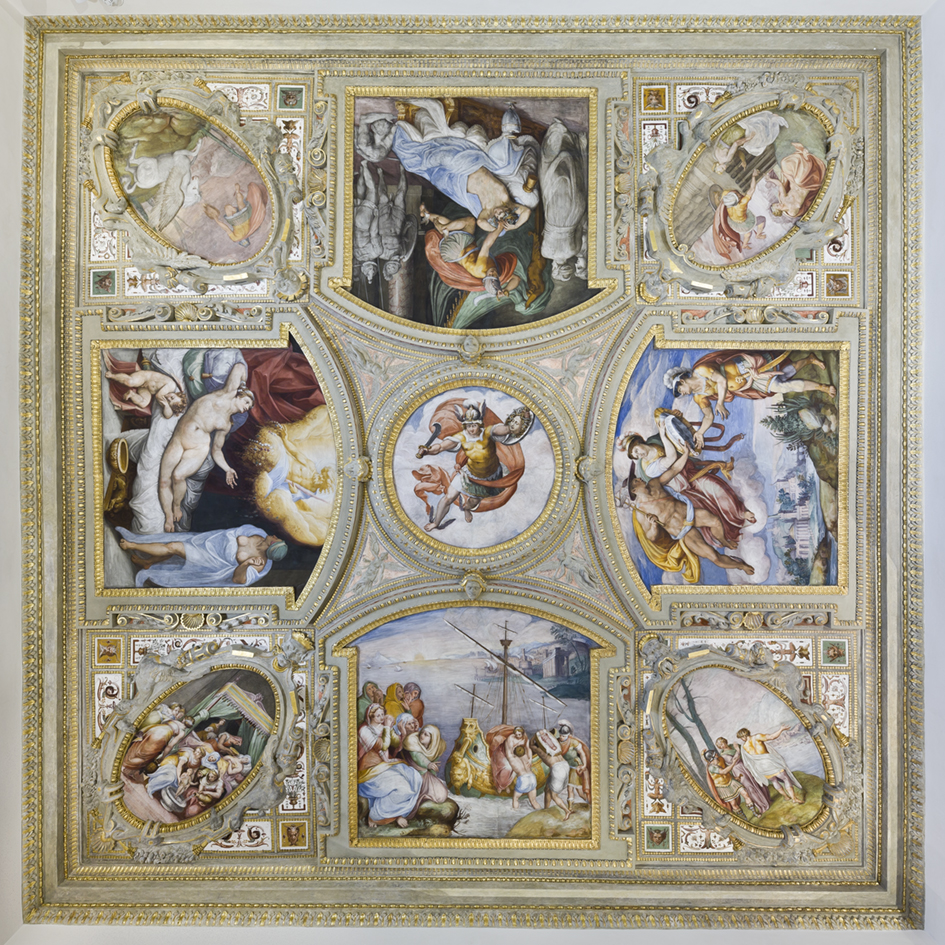
On his return to Spain, around 1557, Becerra devoted himself mainly to sculpture and ephemeral architecture. His most significant work is the high altarpiece of Astorga Cathedral, commissioned in 1558, as well as the now-lost high altarpiece for the Convent of Las Descalzas Reales in Madrid. He also designed the catafalque for the funeral rites of Charles V (1500 – 1558), held in Madrid in 1559, and undertook decorative commissions for Philip II (1527 – 1598) at the Alcázar and the Palace of El Pardo. Today, only the paintings from one of the towers of the Palace of El Pardo survive, depicting episodes from the myth of Danaë and Perseus.

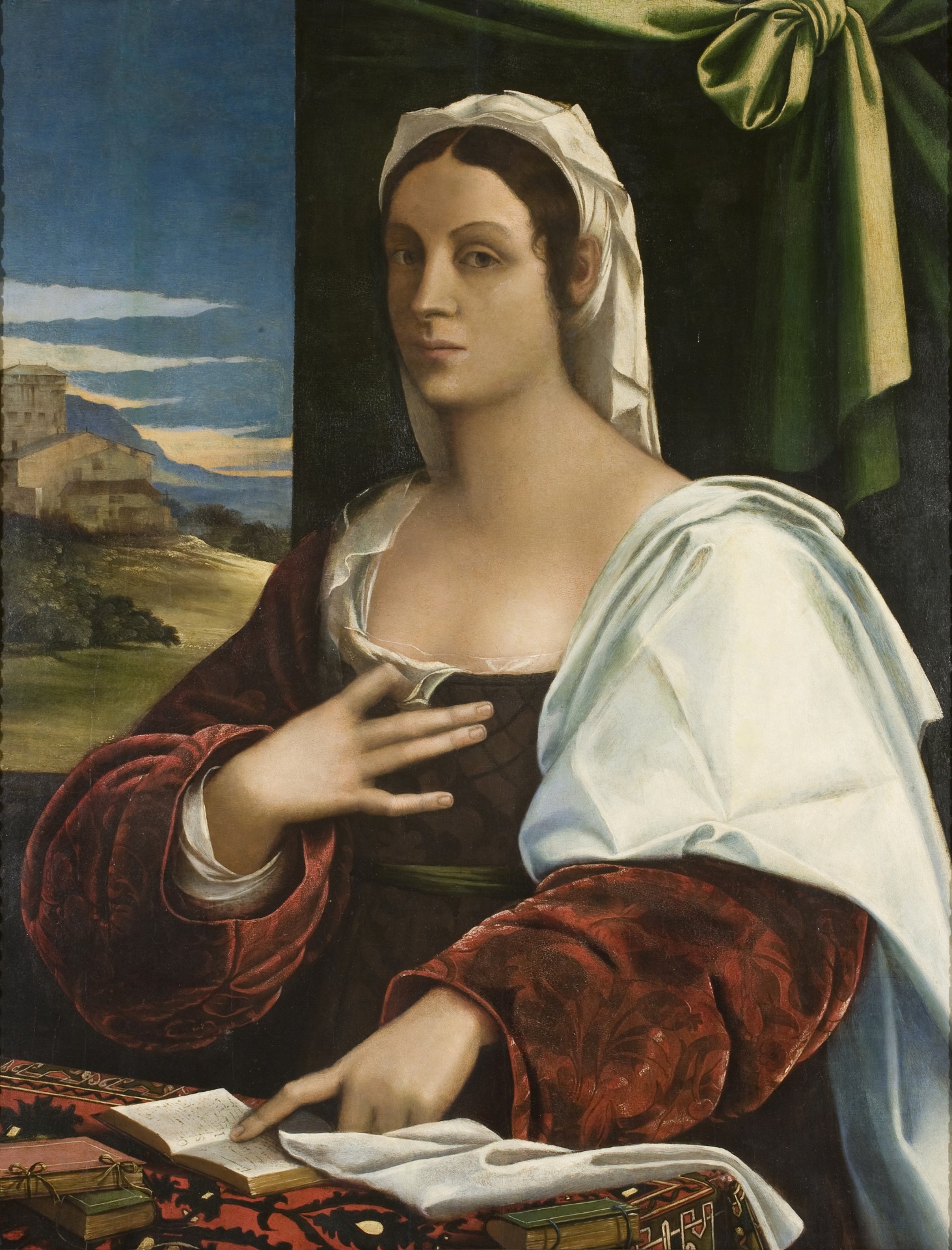
Becerra’s Pietà is directly inspired by the Pietà painted by Sebastiano del Piombo (c. 1485 – 1547) for the church of San Francesco alla Rocca in Viterbo, a work dating from 1513 –1516. Executed shortly after Sebastiano’s arrival in Rome, it stands as one of the earliest expressions of the emerging Roman artistic language, shaped by the dialogue between Venetian colourism and the anatomical rigour of Michelangelo (1475 – 1564). Vasari refers to the existence of a preparatory cartoon by Buonarroti, and several surviving drawings by the Tuscan artist for the figure of the Virgin confirm his active role in the creation of the work.

The Pietà of Viterbo possesses a strong contemplative character, reinforced by its silent, nocturnal setting, in which the Virgin prays to heaven as she meditates on the dead body of Christ. Both the Viterbo Pietà and Becerra’s interpretation, created half a century later, embody a spirituality characterised by an emphasis on inner experience and the centrality of Christ’s sacrifice. These ideas resonate with those of figures such as Reginald Pole (1500 – 1558), Gasparo Contarini (1483 – 1542) and Jacopo Sadoleto (1477 – 1547), who upheld the early Counter-Reformation at the beginning of the sixteenth century, a period increasingly defined by scepticism about external mediation. This atmosphere of spiritual exaltation aligned with Michelangelo’s sensibility, particularly from the outset of his relationship with Vittoria Colonna (1490 – 1547) in 1536 and through his clear assimilation of Pauline theology—especially the doctrine of justification by faith—mediated by his reading of Juan de Valdés (c. 1505 – 1541) and Bernardino Ochino (1487 –1564).

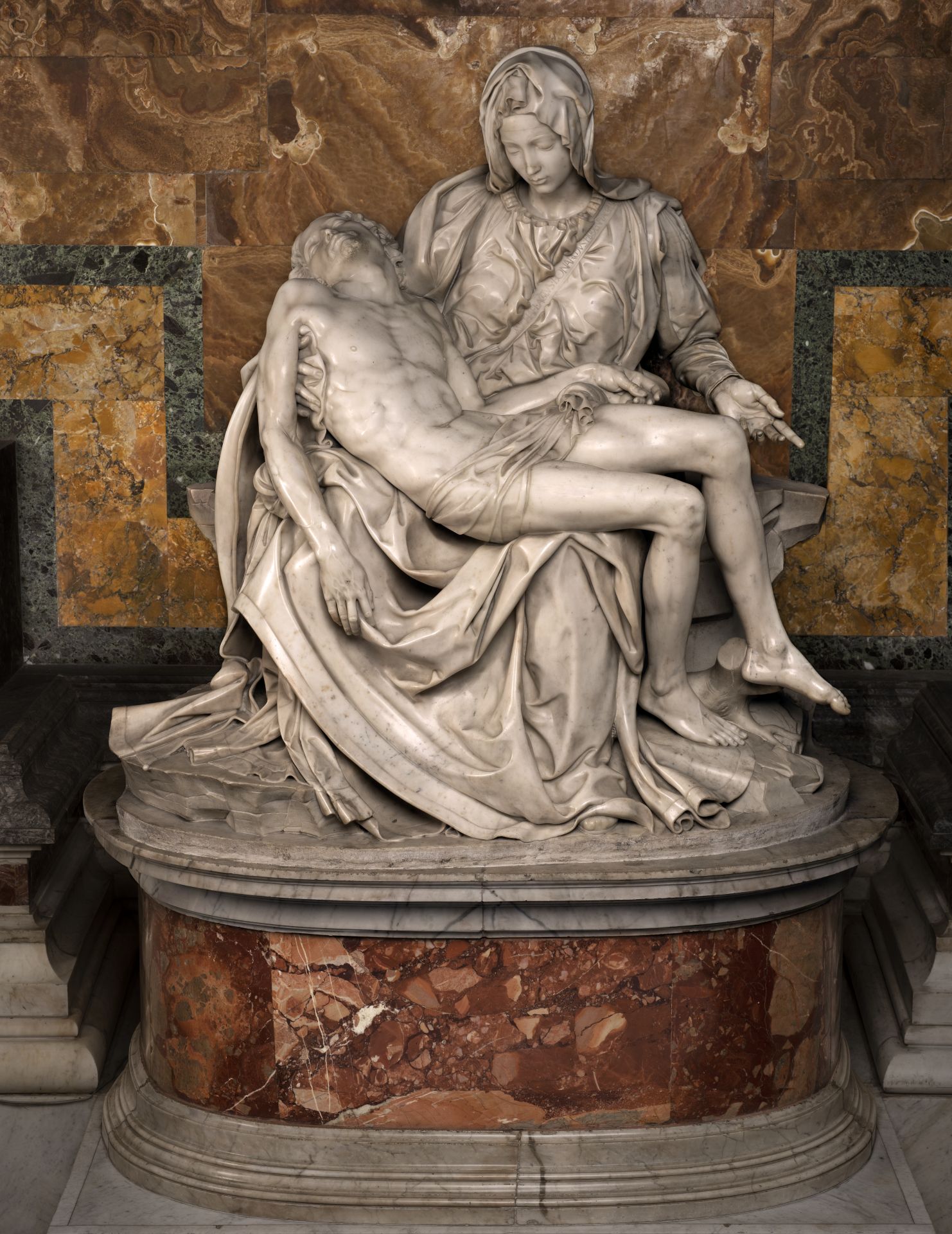
Becerra lived through the religious tensions within the Church and witnessed the course of the Council of Trent (1545 – 1563). He developed his own interpretation of spiritualist doctrines in his monumental Pietà at the Museum of Fine Arts in València. However, he did not simply replicate the Pietà of Viterbo: instead of directing Mary’s gaze towards heaven, he turned her eyes towards the lifeless body of her Son, as Michelangelo had done in his sculptural Vatican Pietà. In the years that followed, these religious movements were condemned as heretical in certain circles, and the standardising efforts of theologians such as Gabriele Paleotti (1522 – 1597) led to the marginalisation of images that did not conform strictly to the official Catholic doctrine.

Galería de imágenes


Title

Pietà

Author

Gaspar Becerra (Baeza, 1520 – Madrid, 1570)

Date

1560

Characteristics

Oil on panel

Dimensions

143,5 × 105,5 cm.

Origin

Museo de Bellas Artes de València, inv. 2/2001

Credits

Texts: Pablo González Tornel, Director of the Museusm of Fine Arts, València. Photo: Museusm of Fine Arts, València

Sponsors

Fundación Ramón Areces

Other related works

The Tale of Perseus
Gaspar Becerra
1563-1568
Palacio Real de El Pardo
10081956


Having recently returned from Rome in 1562, Gaspar Becerra was appointed by Philip II to execute the mural decoration of the royal palaces. His reputation as an accomplished fresco painter, together with his grand, Michelangelesque idiom, proved decisive for his selection. His first commission for the king was the decoration of the Queen’s Tower at the Royal Palace of El Pardo, whose artistic significance is all the more remarkable today as the only surviving section of that ambitious classical mural programme.   
Becerra ingeniously created the illusion of a vaulted ceiling on the square chamber’s flat ceiling, dividing the space into a classical quadratura articulated by stucco mouldings, which provide the structural framework for the nine compartments of the cycle. The chosen motif was the myth of Perseus, whose role as a valiant warrior and restorer of peace could readily be associated with the king. At the centre, a circular tondo depicts The Apotheosis of Perseus, shown in triumphant ascent with his identifying attributes. Surrounding it are four rectangular scenes depicting Danaë Receiving the Shower of Gold, Danaë and Perseus Cast Out to Sea, Mercury and Minerva Arming Perseus and The Beheading of Medusa. At the corners, four further oval scenes depict The Birth of Perseus, Perseus’ Farewell to Danaë and Polydectes, Perseus Stealing the Eye of the Graeae, and The Birth of Pegasus. The programme concludes with decoration of the spaces between the chamber’s four balconies, forming an unusual animal-themed scheme devoted almost exclusively to birds. Their presence in the Tower may be regarded as one of the earliest attempts to display and study native and exotic bird species, including European, African, and American examples—among them the American turkey, represented here for the first time in Spain.

Text: Carmen García-Frías Checa, Curator of Old Paintings, Patrimonio Nacional

Authors and Collectors

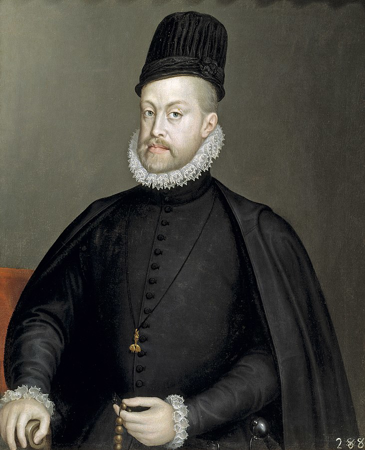
Philip II
Monarch

Philip II

(Valladolid, 1527 - El Escorial (Madrid), 1598)

The eldest son of Charles I of Spain and V, Holy Roman Emperor (1500-1558) and Isabella of Portugal (1503-1539), the future Philip II was educated by his tutor, Juan de Zúñiga, by Cardinal Silíceo, his teacher of elementary education and confessor, and by Juan Ginés de Sepúlveda, who provided his pupil with a humanist education. Prince Philip’s political apprenticeship commenced in 1543, when he first replaced his father, Charles I, as Governor of Spain. In 1548, the heir to the Crown set out on a long tour of northern Italy, Austria, Germany and the Netherlands, thus visiting some of the territories that he would rule over in the future.

Married four times, Philip II's wives were María Manuela de Portugal (1527-1545), whom he married on 14th November 1543, and who was the mother of Prince Carlos (1545-1568), heir to the Spanish Crown until his death; Mary Tudor (1516-1558), Queen of England whom he married on 25th July 1554; the French princess, Elisabeth of Valois (1546-1568), who was wedded to Philip II on 2nd February 1560, mother of Infanta Isabella Clara Eugenia (1566-1633), Archduchess of Austria y Sovereign of the Spanish Netherlands married to the Archduke Albert (1559-1621), and the Infanta Catherine Michaela (1567-1597), Duchess of Savoy, wife of Carlo Emanuele I of Savoy (1562-1630); and the Archduchess Anna of Austria (1549-1580), who married the King on 14th November 1570. With her, Philip II had five children: Prince Ferdinand (1571-1578), the Infante Carlos Lorenzo (1573-1575), Prince Diego (1575-1582), the future Philip III (1578-1621) who succeeded his father to the throne, and the Infanta Maria (1580-1583). After the death of Anna of Austria on 26th October 1580, the King remained a widower until his death.

Philip II became King of Spain on 16th January 1556, following the abdication of Charles I in Brussels (1555-1556). His reign coincided with the period of greatest hegemony of the Hispanic Monarchy in Europe after the French were defeated at the Battle of Saint Quentin on 10th August 1557 and the signing of the Peace of Câteau-Cambresis with France two years later. Spanish foreign policy during the reign of Philip II developed in two stages. During his first years in power, the King prioritised the defence of the Mediterranean and the conflicts with the Ottoman Empire, which was settled in favour of the Christian forces after the victory of Lepanto on 7th October 1571. From the mid-1570s, however, the international focus gradually shifted towards the Atlantic. The resurgence of the 1566 rebellion in the Habsburg Netherlands, and Philip II's difficulty in finding a political solution to it; the inclusion of Portugal and its overseas territories under the sovereignty of the Hispanic Monarchy in 1580-1581; worsening tensions with England under Elizabeth I (1533-1603), which culminated in the failed expedition known as the "Invincible Armada" in 1588, and Spanish intervention in the French Wars of Religion from 1590, were some of the events arising from the King's Atlantic policy. In May 1598, Philip II signed the Peace of Vervins with France. However, the confrontation with the British Kingdom and the rebellion of the Netherlands, whose northern regions became an independent state named the United Provinces in 1581, were still ongoing at the time of the King’s death.

With regard to Spain, Philip II's reign was characterised by institutional continuity, the defence of religious orthodoxy against heresy, political and social instability in areas such as Granada and Aragón, and increased taxation due to the monarchy's military commitments in Europe. In this regard, it is worth highlighting the King’s energetic response to the discovery of Lutheran centres in Valladolid and Seville; the implementation of the dictates of the Council of Trent (1545-1563); subduing the Moorish revolt of Granada, which lasted from 1568 until the end of 1570; and the King's response to the riots in Aragón in 1591. In terms of state administration, Philip II established Madrid as the capital of the Hispanic Monarchy (February 1561); he brought the Councils of Italy (1558), Portugal (1582), Flanders and the Chamber of Castile (1588) into the so-called polisynodial system; he promoted the creation of Collegiate Boards to rationalise and streamline the handling of government affairs; and encouraged the political projection of the Royal Secretaries (of whom the most famous was Antonio Pérez) as channels of communication between the Monarch and the different institutions. The King also ordered improvements to be made in both the Spanish Navy and in the organisation and armaments of the Tercio mixed infantry units.

Finally, Philip II's rule overseas was marked by the consolidation of Spanish rule in the Americas; expansion into the Atlantic and the Pacific; the conquest of the Philippines; and the creation of the "Fleet of the Indies" to protect commercial traffic and neutralise privateer attacks encouraged by enemies of the Hispanic Monarchy such as England, France and the United Provinces.

Certain events that took place during his reign (such as the rebellion in the Netherlands), his methods of ruling, aspects of his personality, and events in his private life (for example, the imprisonment and death of his son, Prince Carlos, or the death of his third wife, Elisabeth of Valois, in 1568) were seized upon by anti-Spanish propaganda in the so-called "Black Legend".

Philip II died in the Monastery of El Escorial on 13th September 1598, at the age of seventy-one. His remains are buried in the Monastery's Pantheon of Kings and Queens, erected at the behest of the Monarch to mark the victory of Saint Quentin.

Source: Royal Academy of History (https://www.rah.es)

Read more

Royal Sites

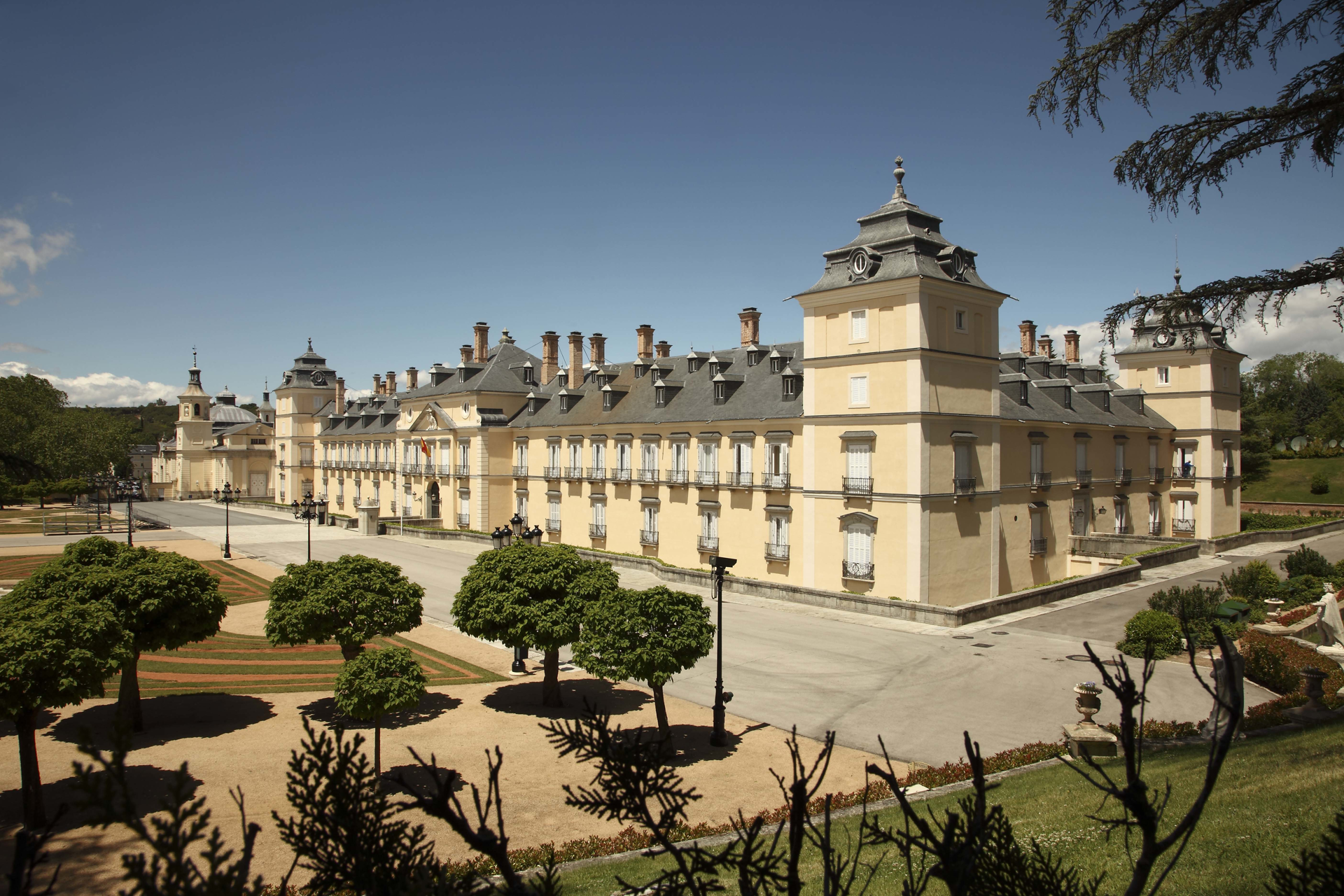
Royal Palace of El Pardo

1547

The Royal Palace of El Pardo has been the Official Residence of Foreign Heads of State since 1983, and its origins as a royal hunting lodge are linked to the El Pardo woodlands. It is a building with close links to Spanish history. It was commissioned by Charles V, Holy Roman Emperor, in the 16th century and expanded in the 18th century by order of Charles III. Of especial note are the surrounding woodlands of El Pardo, a natural space of extraordinary value, considered the most important Mediterranean forest in the Community of Madrid.

Read more

Media