Loading...

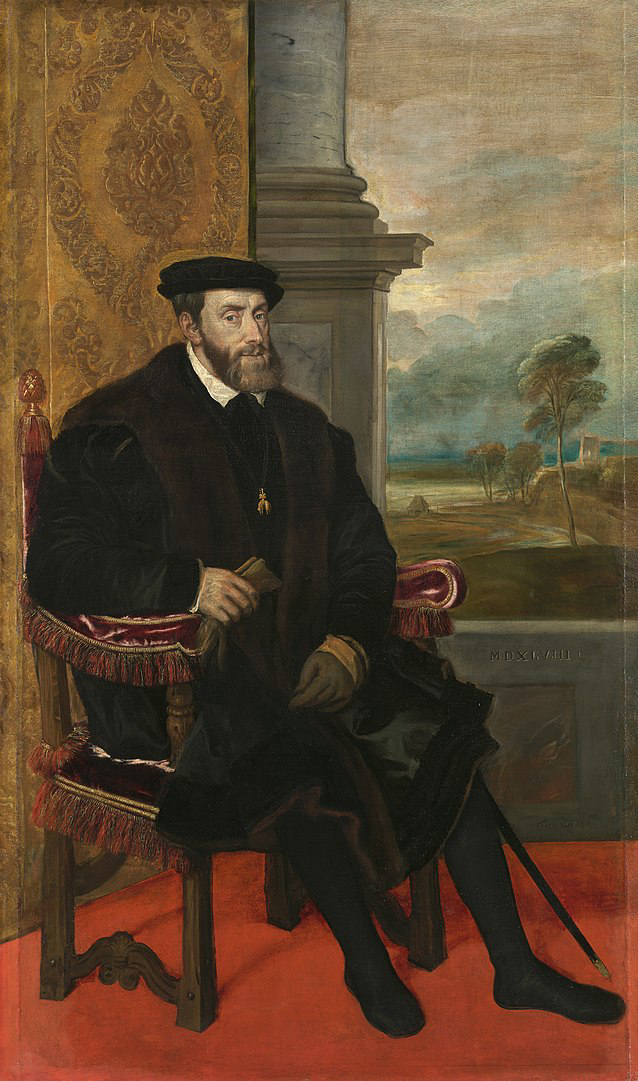
Casa de los Austrias
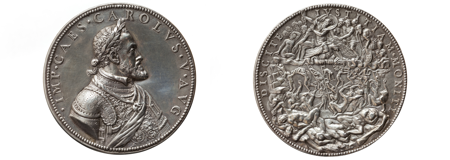
Charles I of Spain and V, Holy Roman Emperor
Gante (Bélgica), 24 de February de 1500 - Yuste (Cáceres), 21 de September de 1558
View in TimelineBiography
The second of six children born to Joanna I (1479-1555) and Philip the Handsome (1478-1506), the future Charles I of Spain and V, Holy Roman Emperor spent his childhood in Mechelen (Belgium). Count of Flanders and Lord of the Netherlands since the death of his father in September 1506, his aunt, Archduchess Margaret of Austria (1480-1530) –the widow of Prince John (1478-1497), second son of the Catholic Monarchs, and younger sister of Philip the Handsome– ruled as Regent until he attained his majority in 1515. He was educated by Adriaan Florensz Boeyens, the future Pope Adrian VI. Although Prince Charles had a Spanish tutor, Luis Cabeza de Vaca, his childhood and early youth were spent in a predominantly French-speaking cultural environment.
On 11th March 1526, he married Isabella of Portugal (1503-1539) in Seville. The royal couple had five children: the future Philip II (1527-1598); the Infanta Maria of Austria (1528-1603), who was Holy Roman Empress by marriage to Maximilian II of Austria; the Infante Fernando (1529-1530); the Infanta Joanna (1535-1573), Crown Princess of Portugal by marriage to Prince John - eldest son of the Portuguese monarch John III and Catherine, sister of Charles V; and the Infante Juan (1537-1538). After the death of Isabella of Portugal on 1st May 1539, Charles I remained a widower for the rest of his life. The King also sired two children out of wedlock: Margaret of Austria (1521-1586), Duchess of Parma by marriage first to Alessandro de' Medici, Duke of Florence, and later to Ottavio Farnese, Duke of Parma, and future Governor of the Netherlands; and John of Austria (1547-1578), one of the architects of the victory of Lepanto against the Ottomans on 7th October 1571.
Charles I became King of Spain after the death of his maternal grandfather, Ferdinand the Catholic, on 25th January 1516. Due to the mental instability of his mother, Queen Joanna, it was decided that the new King should reign jointly with her, even though she was placed in seclusion in Tordesillas until her death on 12th April 1555. On 28th June 1519, Charles was elected Holy Roman Emperor as Charles V, following the death of his paternal grandfather, Emperor Maximilian I, in January that same year.
The start of the new reign was characterised by instability. Failure to comprehend the monarch's European interests, in addition to the prevailing unrest in major cities, and Charles I's initial mistakes, such as the bequests and public offices awarded to some of his Flemish advisers, led to the 1952 Revolt of the “Comuneros” in Castile and the Revolt of the Brotherhoods in Valencia and Mallorca. Both insurrections, which challenged royal authority, lasted until 1522, when they were finally put down by forces loyal to the King, and the latter approved the granting of a "general pardon". Other factors that contributed to the restoration of normality were the greater integration of local elites in the administration of the Monarchy, the continuity of some of the institutional reforms initiated by the Catholic Monarchs, such as increasing the number of government councils, and the presence in Spain of Isabella of Portugal, the King's wife who governed in his absences, as well as the presence of his children.
As King, Charles I aspired to consolidate the position of the Hispanic Monarchy as a hegemonic power within European international relations. Throughout his reign, Charles’ foreign policy was conditioned by the rivalry with France and the Ottoman Empire, the consequences of the religious rift in Germany, and numerous military fronts on which the monarch was waging war. Spain’s involvement in European conflicts in the first half of the 16th century resulted in notable victories such as those of Pavia (1525) and Mühlberg (1547), the capture of Tunis (1525) and the inclusion of the Duchy of Milan in the territories under the Hispanic Monarchy (1540); but also major defeats such as the Algiers Expedition (1541), the hasty flight of Charles I from Innsbruck (1552), or the signing of the Peace of Augsburg (1555), which made the legal division of Christianity permanent within the Holy Roman Empire. In parallel with its results in Europe, the conquest of the Aztec and Incan empires by armies under Hernán Cortes and Francisco Pizarro in 1521 and 1533 respectively; the creation of the viceroyalties of New Spain (1535) and Peru (1542) in the American continent; and the completion of the first round-the-world voyage by Ferdinand Magellan and Juan Sebastián Elcano between 1519 and 1522 are worth highlighting.
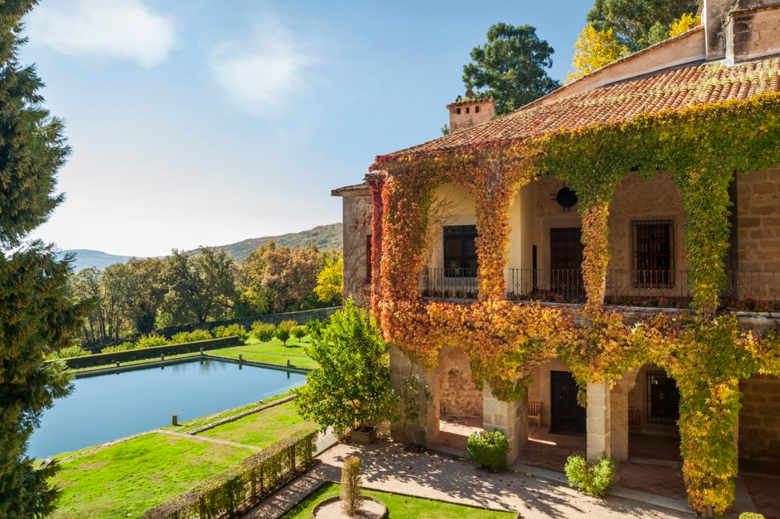
Disappointed with the results of his foreign policy, between October 1555 and January 1556, Charles I renounced the territories under the sovereignty of the Hispanic Monarchy in favour of his son, Philip II, while the Crown of Holy Roman Emperor passed to his brother Ferdinand (1503-1563). After his abdication, the King returned to Spain. In February 1557, he moved into a Palace annexed to the Monastery of Yuste (Cáceres), where he died on 21st September 1558. The remains of Charles I are buried in the Pantheon of Kings and Queens in the Monastery of El Escorial.
Source: Royal Academy of History (https://www.rah.es)