Loading...

Casa de los Austrias
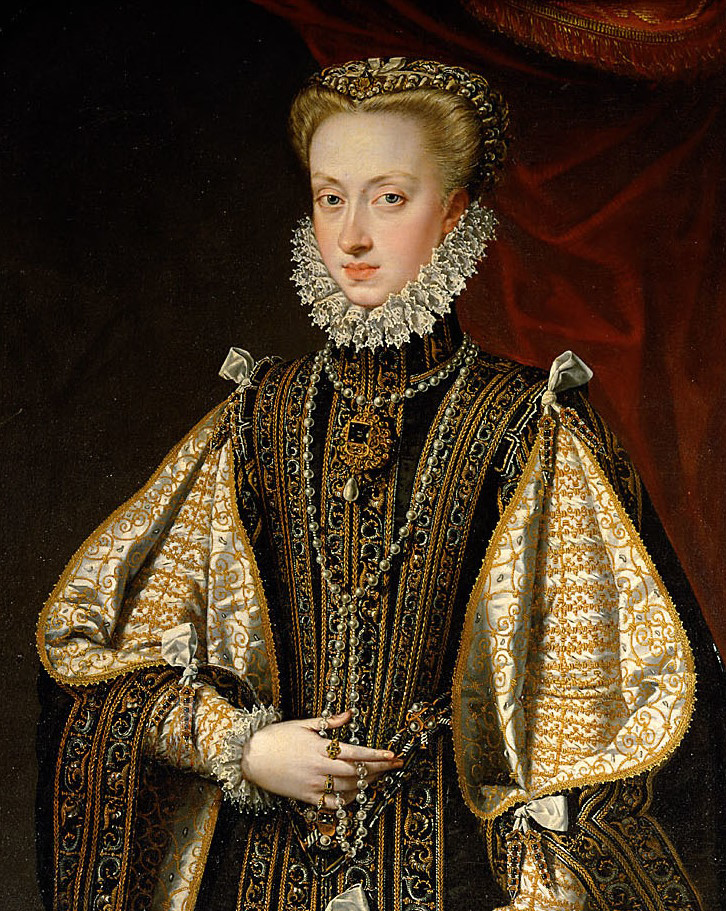
Anna of Austria
Cigales (Valladolid), 01 de November de 1549 - Badajoz, 26 de October de 1580
View in TimelineBiography
The eldest daughter of Maximilian II, Holy Roman Emperor (1527-1576) and Maria (1528-1603), sister of Philip II, Anna of Austria was born in Cigales (Valladolid) while her parents were acting as governors during one of Charles I's absences. She studied Geography, History, hunting and composing letters, as well as languages such as Latin, Italian, German and Spanish at the imperial court. Engaged in 1564 to Prince Charles (1545-1568), heir to the Hispanic Monarchy, the marriage suffered several delays.
After the death of the Prince and that of Philip II's third wife in 1568, Anna of Austria was chosen to be Philip’s next wife, as he had no male descendants. The King and Queen were married at the Alcázar of Segovia on 14th November 1570. After spending her honeymoon at the Palaces of Valsaín (Segovia), El Escorial and El Pardo, the new Queen made her official entry into Madrid on 23rd November of the same year.
After the wedding celebrations were over, Anna of Austria soon began to fulfil her dynastic duties. She was the mother of five children: Prince Ferdinand (1571-1578), the Infante Carlos Lorenzo (1573-1575), Prince Diego (1575-1582), the future Philip III (1578-1621) who succeeded his father to the throne, and the Infanta Maria (1580-1583). The married life of Anna of Austria and Philip II was a harmonious one. Although affairs of state often forced the King and Queen to lead separate lives, they frequently wrote to each other. When they were together, the Sovereigns shared moments of togetherness, hunting and attending theatrical performances, musical evenings and knightly tournaments. They also made a point of spending each summer at the Monastery of El Escorial.
In the company of her children and stepdaughters, the Infantas Isabella Clara Eugenia and Catherine Michaela, and her younger siblings, who were educated at the Spanish court, Anna of Austria managed to recreate a family environment around Philip II. She was also the only one of his wives with whom he could converse in Spanish, a language the Queen had spoken since her childhood.
She died on 26th October 1580 in Badajoz, when she was six months pregnant, the victim of a flu epidemic that also affected the King but who nevertheless managed to recover. Anna of Austria is buried in the Pantheon of Kings and Queens in the Monastery of El Escorial.
Source: Royal Academy of History (https://www.rah.es)