Loading...

Otras casas dinásticas
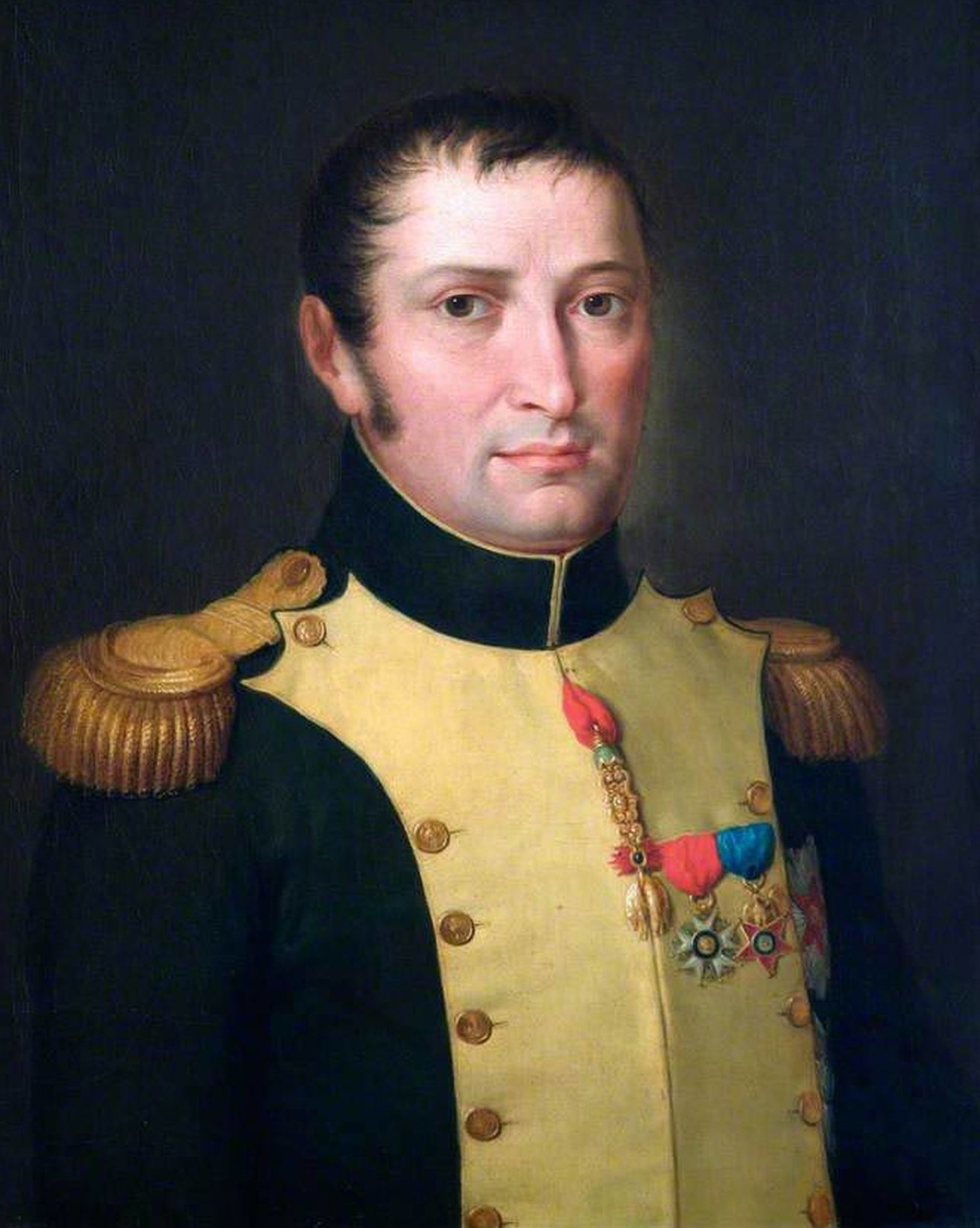
Joseph Bonaparte
Córcega (Francia), 07 de January de 1768 - Florencia (Francia), 28 de July de 1844
View in TimelineBiography
The third of twelve sons born to Carlo Buonaparte and Maria Letizia Ramolino, Joseph Bonaparte was the elder brother of Napoleon. A lawyer by profession, he entered politics after his appointment as councillor for Ajaccio (Corsica) in 1792. Joseph Bonaparte's career advancement, as well as his gradual social ascent, were due to the military successes of his brother Napoleon after the end of the Reign of Terror in France (1793-1794). During the period of the French Directory and Consulate (1795-1804), Joseph Bonaparte carried out diplomatic missions in Parma and Rome and negotiated various treaties with the United States, Austria, Great Britain and the Holy See. By then, he had married Julie Clary (1771-1845) near Marseilles on 1st August 1794. The couple had three children: Julie (born and died in 1796), Zénaïde (1801-1854) and Charlotte (1802-1839), who would marry their cousins Charles Lucien and Napoléon Louis Bonaparte in 1821 and 1826, respectively.
In May 1804, after his brother Napoleon was crowned Emperor of the French, Joseph Bonaparte was named the Imperial Prince. Two years later, on 30th March 1806, he ascended the throne of Naples. In the Kingdom of Naples, Joseph Bonaparte and his ministers developed a reformist policy that introduced the French Civil Code and implemented certain changes in state administration, society and the army.
In May 1808, after the abdications of Charles IV and Ferdinand VII in Bayonne, Napoleon Bonaparte ceded the Spanish Crown to his brother Joseph. Proclaimed King of Spain on 7th July 1808 before an Assembly of Notables gathered in Bayonne, Joseph Bonaparte immediately moved to his new kingdom. The King was to embody a reformist Monarchy governed by a text of a constitutional nature: the Bayonne Statute. Drawn up at Napoleon's behest, although the Bayonne Statute cannot strictly be considered a constitution, as a charter it was the first attempt to establish a representative regime in Spain. The articles of the Statute continued to grant the King important powers; however, the exercise of these powers was overseen by certain new institutions such as the Senate, the Council of State and a reformed Cortes which, despite lacking legislative initiative, met in a single chamber divided into three estates: nobility, clergy and commons. The Bayonne Statute also abolished torture and certain aristocratic and ecclesiastical privileges, guaranteed certain individual rights and liberties such as freedom of the press, and recognised Catholicism as the official state religion.
Joseph Bonaparte was never accepted as King by the Spaniards, who nicknamed him Pepe Botella or Joe Bottle, although he never showed a marked fondness for drinking. Another popular nickname was Rey Plazuelas or King Squares, due to his interest in reorganising the urban layout of Madrid, ordering the creation of the current Plaza de Santa Ana and Plaza de Oriente. Only a group of politicians, bureaucrats and intellectuals who were heirs to the enlightened reformism of Charles III were in favour of the new King: the "afrancesados” or the Frenchified.
Joseph Bonaparte's reformist plans, which sought to modernise Spain, were materialised in a wide variety of projects including dividing the country into 38 prefectures (the seed of Javier de Burgos' provincial organisation of 1833); the dismantling of the system of government councils characteristic of the previous regime; the abolition of the Inquisition; the dissolution of the religious orders and confiscation of their property; the suppression of military orders; and the establishment of a new educational model inspired by the French. Most of the reformist plans of Joseph Bonaparte and his ministers however were not implemented due to the outbreak of the War of Independence (1808-1814) in May 1808. Forced to flee Madrid after the victory of the Spanish patriotic forces at the Battle of Bailén on 22nd July 1808, Joseph Bonaparte returned to Madrid accompanied by Napoleonic invasion troops in December that same year. His hold on the throne maintained by the French armies throughout his reign, Joseph Bonaparte defended Spain’s territorial integrity against Napoleon's ambitions of annexation in the territories north of the Ebro. Finally, the unfavourable outcome of the Peninsular War for the French armies led Joseph Bonaparte to abandon Spain for good in the summer of 1813. Months later, in December, he renounced the Spanish Crown at Napoleon's behest.
Back in France, Joseph Bonaparte remained there until the final fall of the Napoleonic Empire in June 1815. Settled in the United States, the former King of Spain resided in North America until 1839, when he settled in Florence with his wife. Joseph Bonaparte died in Florence on 28th July 1844. Since 1864, his remains rest, alongside those of his brother Napoleon, at Les Invalides in Paris.
Source: Royal Academy of History (https://www.rah.es)