Loading...

Casa de los Borbones
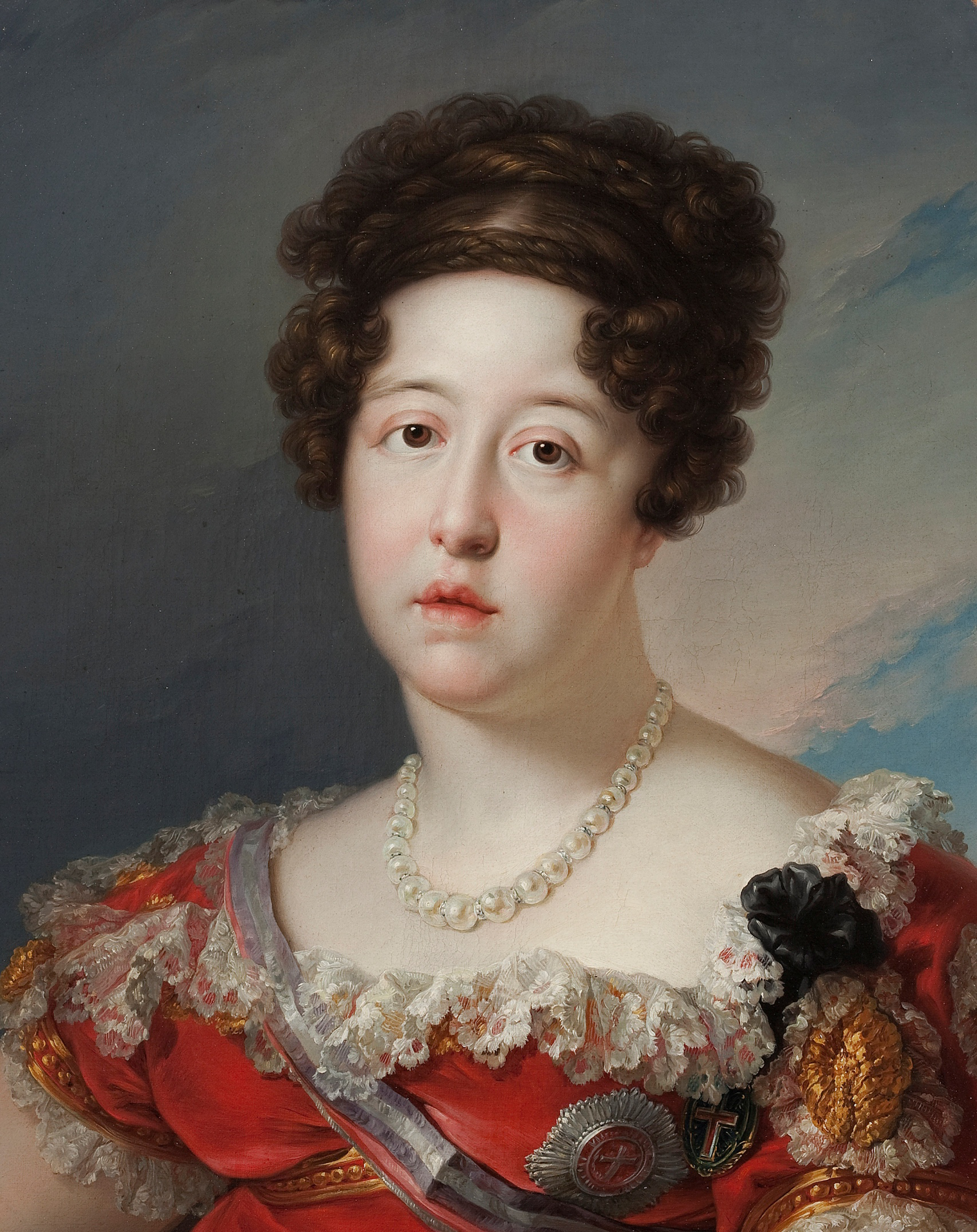
Maria Isabel of Braganza
Palacio de Queluz, Lisboa (Portugal), 19 de May de 1797 - Palacio de Aranjuez (Madrid), 26 de December de 1818
View in TimelineBiography
The third of nine children born to John VI of Portugal (1767-1826) and the Spanish Infanta Carlota Joaquina (1775-1830), the elder sister of Ferdinand VII (1784-1833), Maria Isabel of Braganza's childhood was spent at the court in Lisbon until the invasion of Portugal by Napoleonic troops in 1807 forced her and her family to flee to Brazil. In 1816, in order to strengthen diplomatic and dynastic relations between Spain and Portugal, the double marriages of Maria Isabel of Braganza and her sister Maria Francisca (1800-1834) were arranged with their uncles, King Ferdinand VII (1784-1833) and the Infante Carlos Maria Isidro (1788-1855). The new Queen made her official entry into Madrid on 29th September 1816. That same night, the nuptials of the King and Queen were celebrated at the Royal Palace.
A discreet woman with an affable character, Maria Isabel of Braganza's inclination for the arts led her to sponsor the creation of a large public museum, the Royal Museum of Painting and Sculpture, which was to house the works of art belonging to the Royal Collections. Although the Museum was inaugurated in November 1819, almost one year after the Queen's death, the sculptor José Álvarez Cubero and the painter Bernardo López both produced works in homage to her involvement in the project, which was the seed of today's Prado Museum.
The Queen became pregnant shortly after her arrival in Madrid. In August 1817, she gave birth to the first of her daughters, the Infanta María Luisa Isabel, who barely survived a few months. Once again pregnant, Maria Isabel of Braganza died in the Palace of Aranjuez on 26th December 1818, while giving birth to a second daughter who was stillborn.
The Queen’s remains are buried in the Pantheon of Infantes and Infantas at the Monastery of El Escorial.
Source: Royal Academy of History (https://www.rah.es)