Loading...

Casa de los Borbones
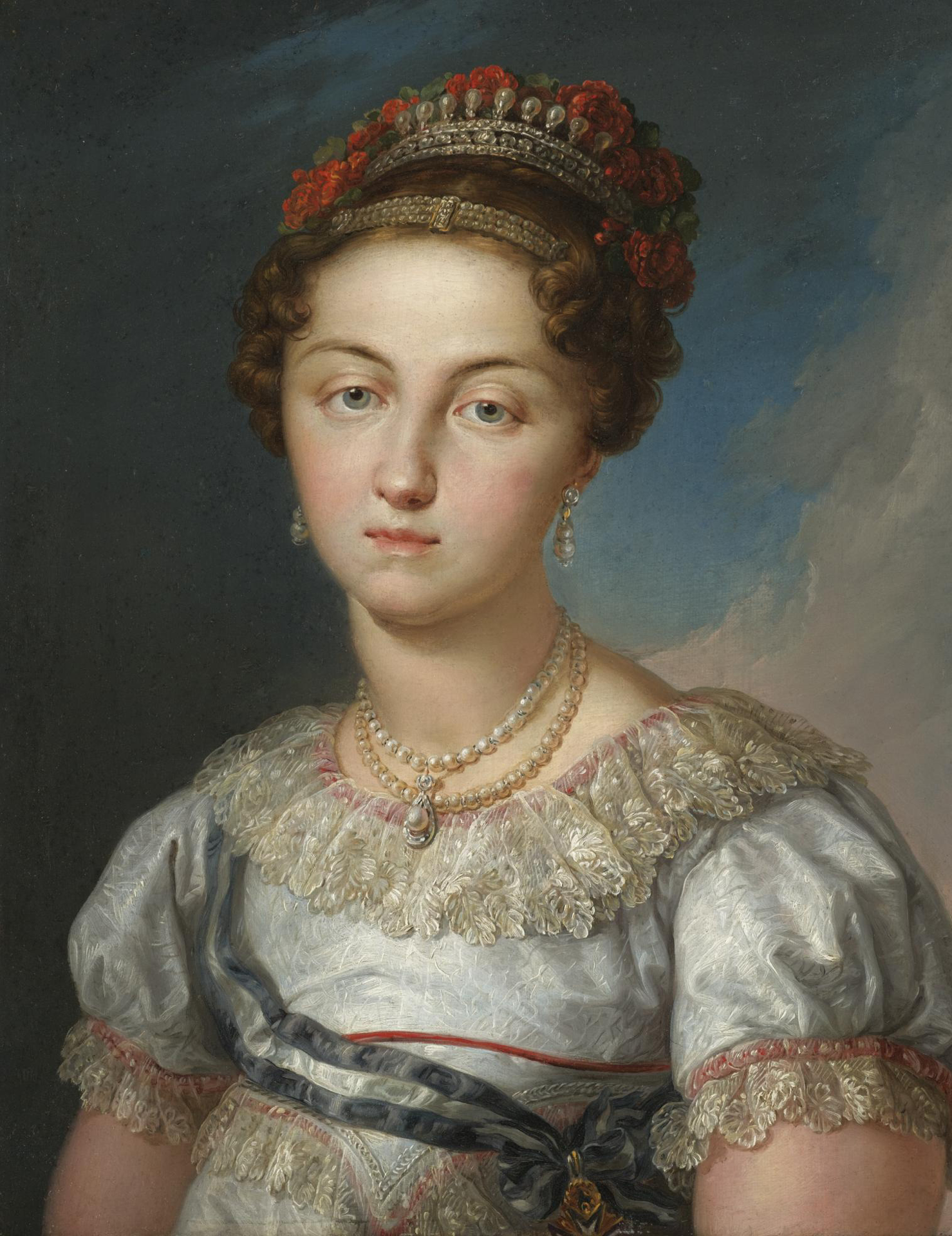
Maria Josepha Amalia of Saxony
Dresde (Alemania), 07 de December de 1803 - Aranjuez, 11 de May de 1829
View in TimelineBiography
The youngest of seven children born to Prince Maximilian of Saxony (1759-1838) and Princess Carolina of Parma (1770-1804), Maria Josepha Amalia of Saxony was orphaned at the age of three months. Educated in a convent in her home town from the age of five, she left it against her will to become the third wife of Ferdinand VII (1784-1833). Their marriage was ratified in Madrid on 20th October 1819.
Initially, the royal couple had a difficult relationship. Maria Josepha Amalia of Saxony refused to consummate the marriage and was only convinced otherwise by the express intervention of Pope Pius VII himself, who managed to overcome the Queen's religious scruples and convince her to fulfil her conjugal duties. In spite of this complicated start, the King and Queen had a harmonious marriage, albeit without progeny. In order to alleviate her supposed sterility, Maria Josepha Amalia of Saxony was examined by various doctors, as well as a few healers. Attempts to conceive included visits by the Queen to Sacedón (Guadalajara) and Solán de Cabras (Cuenca) to drink the waters, at the time reputed to stimulate fertility.
She always remained far removed from politics, although she did share with Ferdinand VII important moments of his reign, such as the "Liberal Triennium" (1820-1823) and the beginnings of the so-called "Ominous Decade" (1823-1833). Maria Josepha Amalia of Saxony devoted her days to fulfilling her official duties, carrying out various charitable works and writing poetry under the supervision of the poet Juan Bautista Arriaza.
The Queen died at the Palace of Aranjuez on 11th May 1829 as a result of a sudden fever. Her remains are buried in the Pantheon of Infantes and Infantas in the Monastery of El Escorial.
Source: Royal Academy of History (https://www.rah.es)