
Use of Cookies

The Royal Collections Gallery uses its own and third-party cookies, mainly for technical purposes, which are necessary to provide our services and provide you with relevant content. More information in our cookies policy. Cookies Policy.

ACCEPT to confirm that you have read the information and accepted their installation. You can change your browser settings.

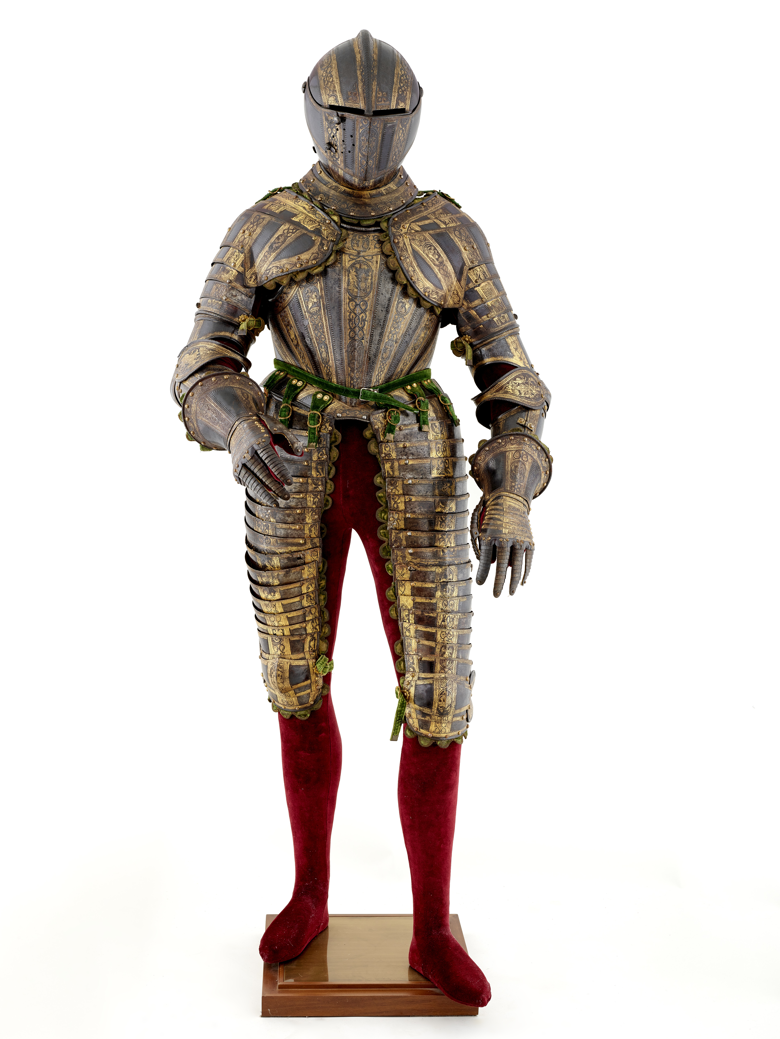
Armadura

Atribuido a Cesa, Pompeo della
Estilísticamente hacia 1590

Durante la primera mitad del siglo XVI, los principales centros productores europeos de armaduras de lujo, situados en Alemania e Italia, habían estado bajo el control de la monarquía española como dominios imperiales de Carlos V. Tras el fallido intento de que la corona imperial recayera en el futuro Felipe II se perdió el poder de influencia sobre los centros alemanes, lo que obligó a la corte española a dirigir sus encargos de armas de lujo a los centros del norte de Italia, que todavía estaban bajo su control. Entre ellos, destacaba la Lombardía y, muy concretamente, la ciudad ducal de Milán, que seguía siendo el centro de referencia bajo gobierno español.

En el último tercio del siglo XVI, el taller milanés más importante estaba regentado por el armero Pompeo della Cesa (c.1537-1610), dedicado no sólo a la fabricación de armaduras de lujo para la aristocracia española e italiana, sino también a la producción de armaduras y piezas de munición para sus ejércitos.

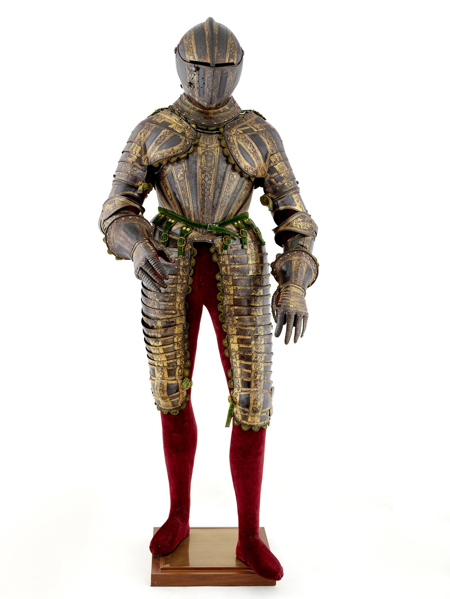
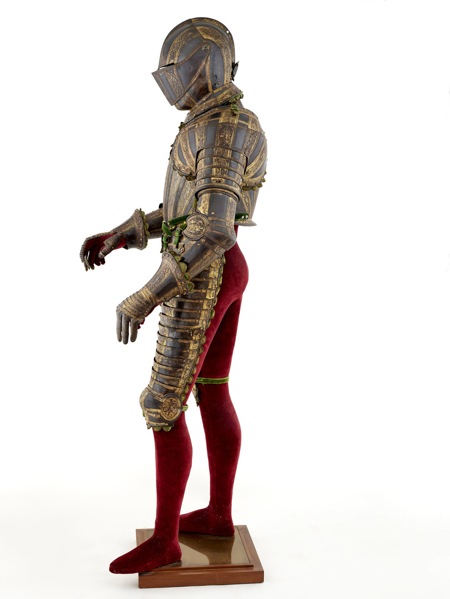
Las producciones de lujo del taller de Pompeo se caracterizan, sobre todo, por la distribución de la decoración grabada y dorada en bandas verticales, en las que se disponen medallones ovalados con diversos personajes alegóricos o de la historia romana que alternan con lacerías rematadas en palmetas, dotando al conjunto de una gran efectividad visual. Estos rasgos están presentes en esta armadura de a caballo, cuya propiedad se atribuye tradicionalmente a Felipe III.

General Classification

Armas y armaduras

Type of Object

Armadura

By

Atribuido a Cesa, Pompeo della

Era / Cultural Context

Reinado de Felipe II

Place of Production

Milán

Date

Estilísticamente hacia 1590

Subject

Acero; Oro

Technical

Cincelado; Aguafuerte; Dorado; Repujado

Dimensions

Fondo completo: (Altura: 179 centímetros; Anchura: 75 centímetros; Profundidad: 62 centímetros)

Inventory

19000087

Credits

Texto: Álvaro Soler del Campo; Foto: David Blázquez

Discover it at the Planta -1

Authors and Collectors

Cesa, Pompeo della
The Author

Cesa, Pompeo della

(Milan, 1537 - 1610)

One of the most skilled armourers of Milan in the second half of the 16th century, he created numerous armours and "fornitures", i.e. a homogeneous set of interchangeable parts which could, by replacing or adding supplementary parts, become a "standing", "mounted" or "jousting armour".

He ran a profitable business, creating veritable masterpieces of armour for the numerous Italian and European courts of the time, including the House of Farnese of the Duchy of Parma and Piacenza and Savoy, thereby achieving considerable fame and fortune.

His decorative style is divided into two stages: the first is characterised by engraved bands, generally burnished and gilded, and fully decorated with floral or grotesque elements and allegorical symbols; the second stage, which belongs...
Read more
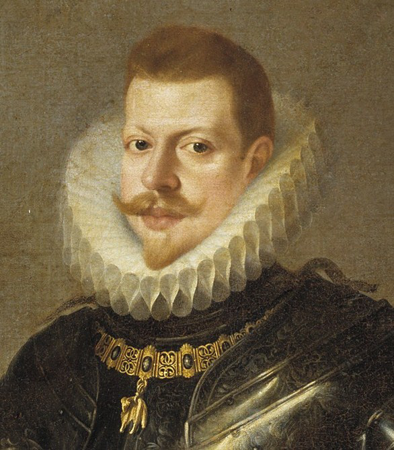
Philip III
Monarch

Philip III

(Madrid, 1578 - Madrid, 1621)

The fourth of five children born to Philip II (1527-1598) and his last wife, Anna of Austria (1549-1580), the future Philip III became heir to the Crown after the death of his older brothers, Princes Ferdinand and Diego, in 1578 and 1582 respectively. Prince Philip’s education was supervised by his tutor, García de Loaysa y Girón, who designed an educational programme that included subjects such as History and Geometry, languages (Latin, French and Portuguese) and classical and modern works of literature. In the early 1590s, Philip II ordered the Prince to participate in the sessions of the Government Council. Thereafter, the latter not only began to gain experience in how to conduct affairs of state, but he also had the opportunity...

Read more

The work in context

View in Timeline