Use of Cookies

The Royal Collections Gallery uses its own and third-party cookies, mainly for technical purposes, which are necessary to provide our services and provide you with relevant content. More information in our cookies policy. Cookies Policy.

ACCEPT to confirm that you have read the information and accepted their installation. You can change your browser settings.

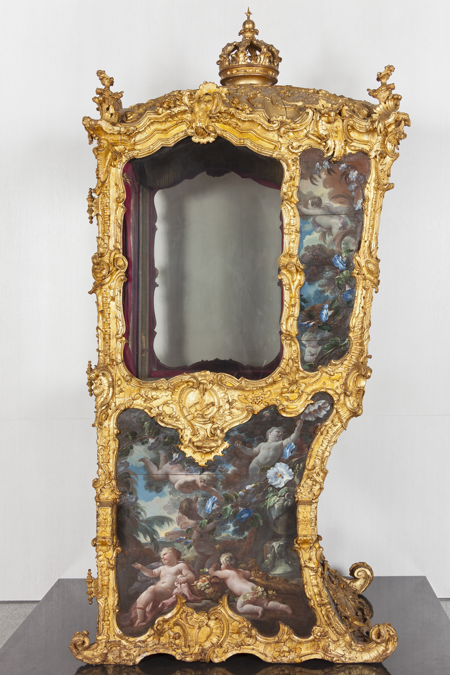
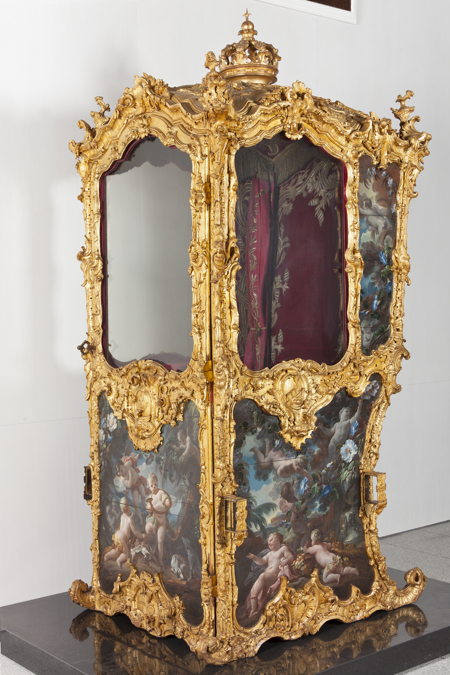
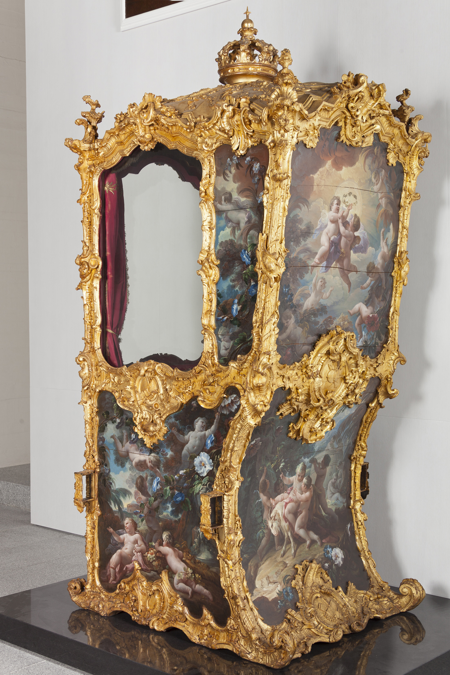
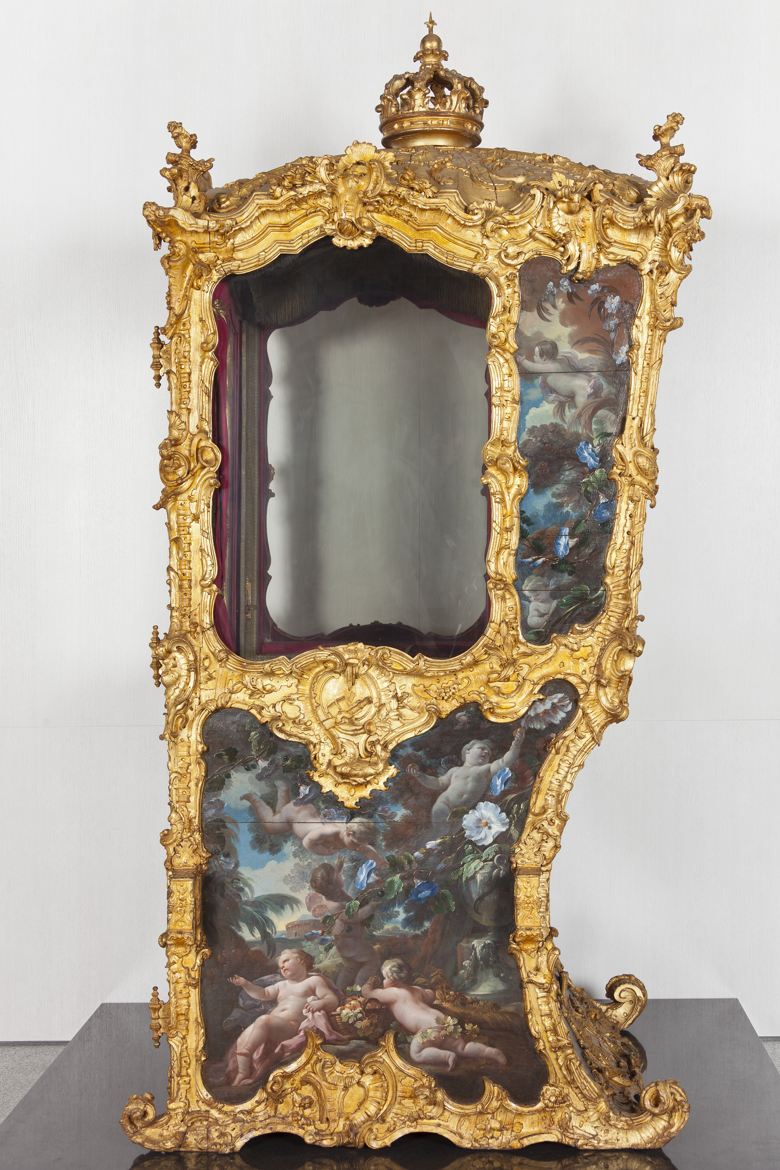
Silla de manos de Bárbara de Braganza, reina de España

Pintura de los paneles: Atribuido a Giaquinto, Corrado
1753-1758

La evolución de la silla de manos desde la segunda mitad del siglo XVI va en paralelo a su importancia creciente en el ritual cortesano, pasando de ser un sillón con varales a adquirir forma de cabina, con ventanas y puerta frontal, decorada con textiles lujosos o cuero. A finales del siglo XVII, las sillas de mano alcanzarán su forma definitiva, con decoración en madera tallada y paneles pintados. Esta silla de manos perteneció a la reina Bárbara de Braganza, que la utilizó para desplazarse dentro de los límites de los Reales Sitios. La decoración pictórica y el diseño de la silla son obra de Corrado Giaquinto, artista que llegó a la corte de Fernando VI en junio de 1753 y fue nombrado primer pintor de cámara, permaneciendo en España hasta 1762. La caja está tallada con motivos de rocalla con gran movimiento, decoración típicamente rococó. La pintura que decora los diferentes paneles es un himno a la paz y la armonía, con amorcillos recolectando frutos, cazando o entretenidos en juegos dionisíacos. En la parte posterior, una escena de glorificación exalta a la soberana: dos geniecillos alados y en vuelo portan una corona de laurel, mientras otros revolotean a su alrededor en un círculo subrayado por palmas y flores. Los instrumentos musicales que decoran la talla aluden a los gustos musicales de la reina, melómana convencida, alumna del maestro Domenico Scarlatti desde su infancia en Portugal y patrona del cantante de ópera Farinelli. El interior está tapizado en un rico terciopelo carmesí, bordado en oro, tendido, con canutillos y diminutas lentejuelas. Todo formando una decoración en ancha cinta ondulante con motivos vegetales. El techo tiene la misma decoración, rematándose con flecos dorados a modo de gotera. Las cortinas a juego son de tafetán carmesí, bordadas con el mismo motivo.

General Classification

Vehículos terrestres

Type of Object

Silla de manos

By

Pintura de los paneles: Atribuido a Giaquinto, Corrado

Title

Silla de manos de Bárbara de Braganza, reina de España

Era / Cultural Context

Reinado de Fernando VI

Place of Production

Madrid

Date

1753-1758

Subject

Pino; Madera; Bronce; Vidrio; Seda

Technical

Tallado; Dorado; Pintura al óleo; Fundido; Terciopelo; Tafetán; Bordado con hilo tendido

Dimensions

Fondo completo: (Altura: 160,5 centímetros; Longitud: 179,5 centímetros; Anchura: 95 centímetros)

Inventory

10008048

Credits

Texto: Isabel María Rodríguez Marco

Discover it at the Planta -2

Authors and Collectors

Giaquinto, Corrado
The Author

Giaquinto, Corrado

(Molfetta, 1703 - Naples, 1766)

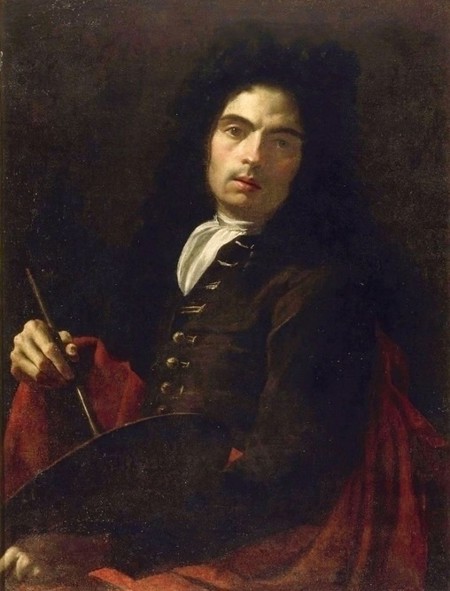
Giaquinto, Corrado. Molfetta (Italy), 18.II.1703 – Naples (Italy), 1766. Painter.

He was born in a small town near Bari, in the region of Apulia in southern Italy, in a territory which, at the time was culturally subject to the artistic interests of Naples, the nearest city. Although he had been born into a family without any involvement in the arts, his father being a tailor from Manfredonia, his parents tried to persuade him to enter the church, although they had discovered his artistic vocation at an early age. In this regard, his encounter with the Lombard architect and notable mathematician, Ludovico Vittorio Iacchini, who was, at the time, Master of the Order of Saint Dominic, was to...

Read more
Bárbara of Braganza
Monarch

Bárbara of Braganza

(Lisboa (Portugal), 1711 - Aranjuez (Madrid), 1758)

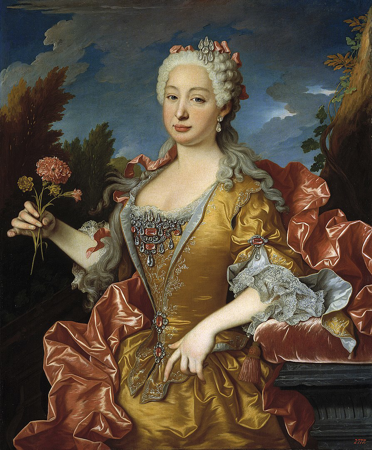
The first-born daughter of King John V of Portugal (1689-1750) and his wife, the Archduchess Maria Anna of Austria (1683-1754), Bárbara of Braganza was educated at the court of Lisbon. During her childhood, she learned to speak six languages (Latin, French, Italian, German and Spanish, in addition to her native Portuguese) and received lessons from the renowned Neapolitan composer Domenico Scarlatti. 

In 1728, in order to bring about a new diplomatic and dynastic rapprochement between the Kingdoms of Spain and Portugal, the double marriages of Bárbara of Braganza and Ferdinand, Prince of Asturias (1713-1759), and the Spanish Infanta Mariana Victoria (1718-1781) and the heir to the Portuguese throne, the future Joseph I (1714-1777), were arranged. The marriage of the Prince...

Read more

The work in context

View in Timeline