Use of Cookies

The Royal Collections Gallery uses its own and third-party cookies, mainly for technical purposes, which are necessary to provide our services and provide you with relevant content. More information in our cookies policy. Cookies Policy.

ACCEPT to confirm that you have read the information and accepted their installation. You can change your browser settings.

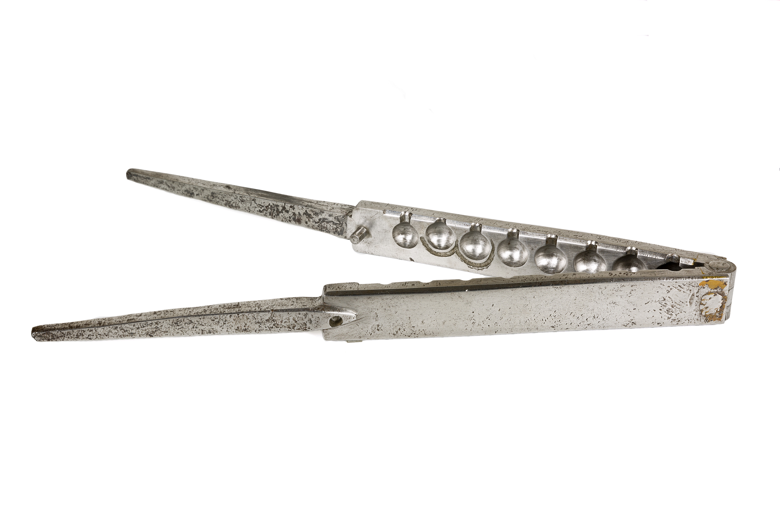
Turquesa

Hacia 1750

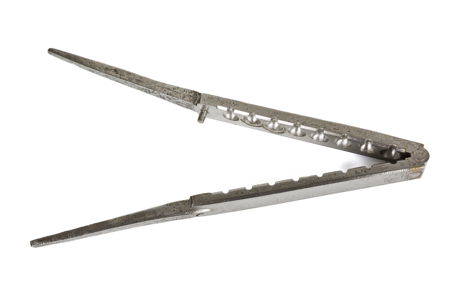
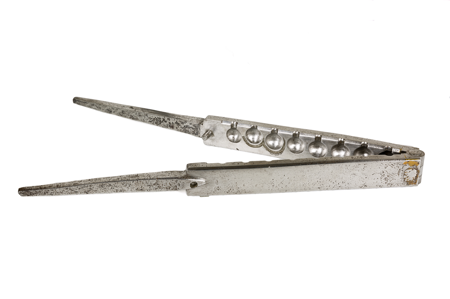
La turquesa es un molde para la fabricación de balas de diferente calibre, compuesto por dos piezas articuladas por un pasador cilíndrico, adoptando una forma similar a unas tijeras. Cada una de estas piezas tiene diversos rebajes de forma hemisférica, por lo que, al ser cerradas, cada cavidad adopta una forma esférica y deja un orificio o chimenea para poder aplicar un metal derretido, generalmente plomo, que formaría una bala al enfriarse.

General Classification

Proyectiles; Utensilios y herramientas

Title

Turquesa

Era / Cultural Context

Reinado de Fernando VI

Date

Hacia 1750

Subject

Acero

Technical

Forjado

Dimensions

Fondo completo: (Anchura: 2,9 centímetros; Profundidad: 35,6 centímetros)

Inventory

10000493

Credits

Texto: Álvaro Soler del Campo; Foto: Mario Sedeño

Discover it at the Planta -2

Authors and Collectors

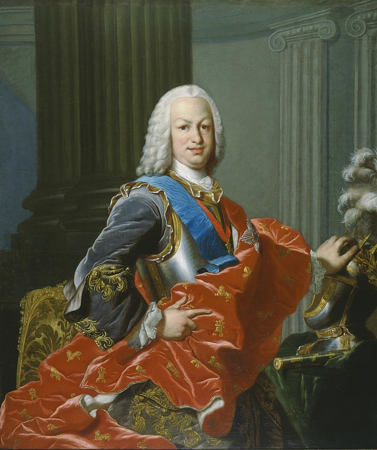
Ferdinand VI
Monarch

Ferdinand VI

(Madrid, 1713 - Villaviciosa de Odón (Madrid), 1759)

The fourth and last son of Philip V (1683-1746) and his first wife, Queen Maria Luisa Gabriella of Savoy (1688-1714), the future Ferdinand VI lost his mother when he was less than five months old. As was customary at the time, he spent his early years being cared for by a group of palace maidservants until Philip V ordered that he be placed "in a separate room to be served and attended by men only”, in 1721. That same year, the Count of Salazar and Carlos Arizaga were respectively appointed caretaker and assistant caretaker to the Infante, while the Jesuit priest Ignace de Laubrussel was appointed his tutor. From then on, the Infante Ferdinand’s training would be stricter and more planned,...

Read more

The work in context

View in Timeline