Loading...

Casa de los Borbones
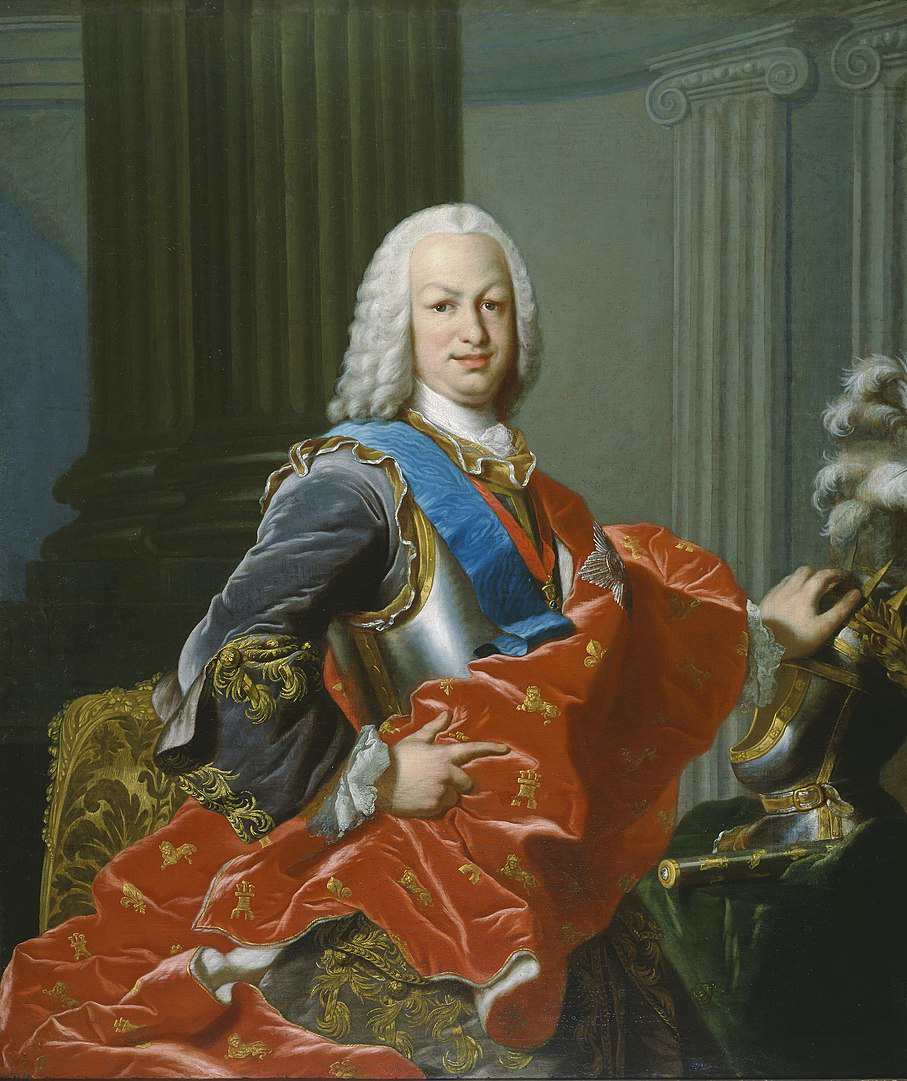
Ferdinand VI
Madrid, 23 de September de 1713 - Villaviciosa de Odón (Madrid), 10 de August de 1759
View in TimelineBiography
The fourth and last son of Philip V (1683-1746) and his first wife, Queen Maria Luisa Gabriella of Savoy (1688-1714), the future Ferdinand VI lost his mother when he was less than five months old. As was customary at the time, he spent his early years being cared for by a group of palace maidservants until Philip V ordered that he be placed "in a separate room to be served and attended by men only”, in 1721. That same year, the Count of Salazar and Carlos Arizaga were respectively appointed caretaker and assistant caretaker to the Infante, while the Jesuit priest Ignace de Laubrussel was appointed his tutor. From then on, the Infante Ferdinand’s training would be stricter and more planned, and would include music, dance, fencing and the art of hunting, as well as religion and basic intellectual knowledge.
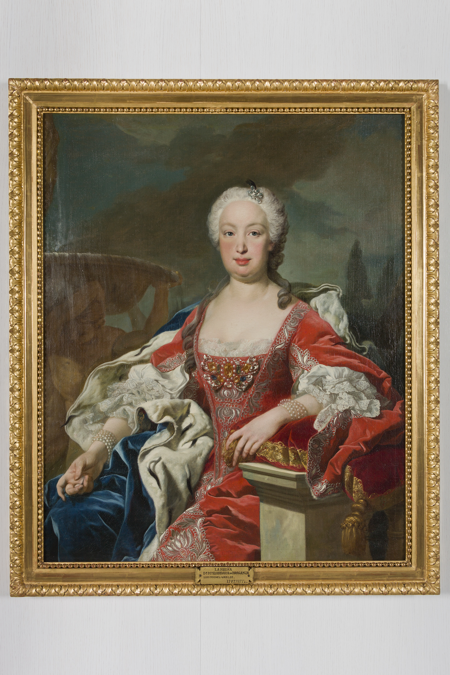
On 25th November 1724, the Infante Ferdinand was sworn in as Prince of Asturias before the Cortes, following the death of Louis I and the return of Philip V to the throne. On the occasion of his recognition as heir to the Crown, the King ordered the formation of his first Household, of which the Duke of Béjar was to be chief steward and which also included his former tutor and assistant tutor, the Count of Salazar and Carlos Arizaga. Shortly afterwards, the marriage of Prince Ferdinand to the Portuguese Infanta Bárbara of Braganza (1711-1758) began to be negotiated. The marriage of the Princes of Asturias, which was arranged in order to bring about diplomatic and dynastic rapprochement between the courts of Madrid and Lisbon, was finally ratified in Badajoz on 19th January 1729. The Prince Ferdinand and Bárbara of Braganza were a well-matched couple, but they had no children.
The future Ferdinand VI's life as heir to the Crown was marked by his tense relationship with Philip V and especially with Queen Elisabeth Farnese. Often manipulated by members of what was known as the "Prince's party", a court faction critical of Philip V's domestic and foreign policies, the Prince of Asturias and his wife became involved in court intrigues, even serious ones that questioned the legitimacy of Philip V's return to the throne in 1724, following the death of Louis I.
Ferdinand VI became King of Spain on 9th July 1746. Lacking experience in dealing with affairs of state when he ascended the throne, the King was greatly influenced by his wife, Bárbara of Braganza, throughout his reign. Some early measures adopted by the new King were to remove the widowed Dowager Queen Elisabeth Farnese from Madrid, who was forced to return to the Palace of La Granja de San Ildefonso (Segovia), as well as some of her most loyal ministers such as the Marquess of Villadarias. The dismissal of the latter was accompanied by the appointments of José de Carvajal and the Marquess of La Ensenada as heads of Spanish foreign and domestic policy, where both introduced changes with respect to the previous reign.
In the field of diplomacy, Ferdinand VI advocated "armed neutrality", which led Spain to abandon its traditional alliance with France and to build bridges with Portugal, Austria, England and the Holy See. Specifically, with the former, José de Carvajal negotiated an unpopular Treaty of Limits of Conquests, signed on 13th January 1750, which affected territory in the Americas, and which would later be annulled by Charles III. As for the Holy See, during the reign of Ferdinand VI, the Concordat of 1753 was signed, restoring normal relations between Madrid and Rome.
The King and his ministers were equally active in matters of domestic policy: the promulgation of the Naval Ordinances (1748), the creation of the "Ensenada Cadastre" from 1749 onwards, the boost to the Royal Workshops, the development of certain financial and tax reforms, and the reform of the Royal Households in 1748 were some of the measures adopted during his years of government. Patrons of music, arts and literature, Ferdinand VI and Bárbara of Braganza sponsored the careers of the composer Domenico Scarlatti, the singer Carlo Broschi, also known as Farinelli, and illustrious Spanish writers such as the Benedictine priest Benito Feijoo. The King also encouraged the creation of the Royal Academy of Fine Arts of San Fernando in 1752.
The last years of Ferdinand VI’s reign were marked by the death of José de Carvajal, his replacement by Ricardo Wall, and the dismissal of the Marquess of La Ensenada. At the same time, the outbreak of the Seven Years' War (1756-1763) in Europe threatened the policy of neutrality that the King had been committed to since the beginning of his reign. In this context, the death of Queen Bárbara of Braganza on 27th August 1758 caused the king to go into seclusion in the castle of Villaviciosa de Odón (Madrid), where he died nearly a year later, on 10th August 1759. Ferdinand VI is buried in the Church of the Royal Salesians in Madrid.
Source: Royal Academy of History (https://www.rah.es)