Use of Cookies

The Royal Collections Gallery uses its own and third-party cookies, mainly for technical purposes, which are necessary to provide our services and provide you with relevant content. More information in our cookies policy. Cookies Policy.

ACCEPT to confirm that you have read the information and accepted their installation. You can change your browser settings.

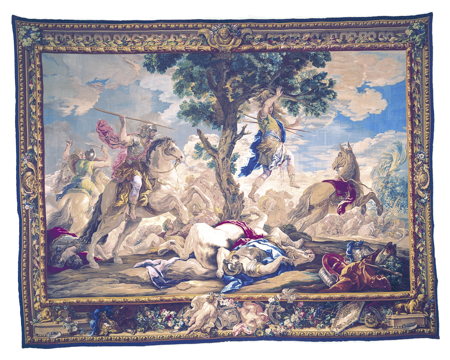
Muerte de Absalón

Diseño de la cenefa: Giaquinto, Corrado; Diseño de la cenefa: Atribuido a Castillo, José del; Tapiz: Vandergoten, Jacobo; Tapiz: Castillo, Tomás; Tapiz: Real Fábrica de Tapices; Diseño del campo: Atribuido a Mela, Francisco
Hacia 1761

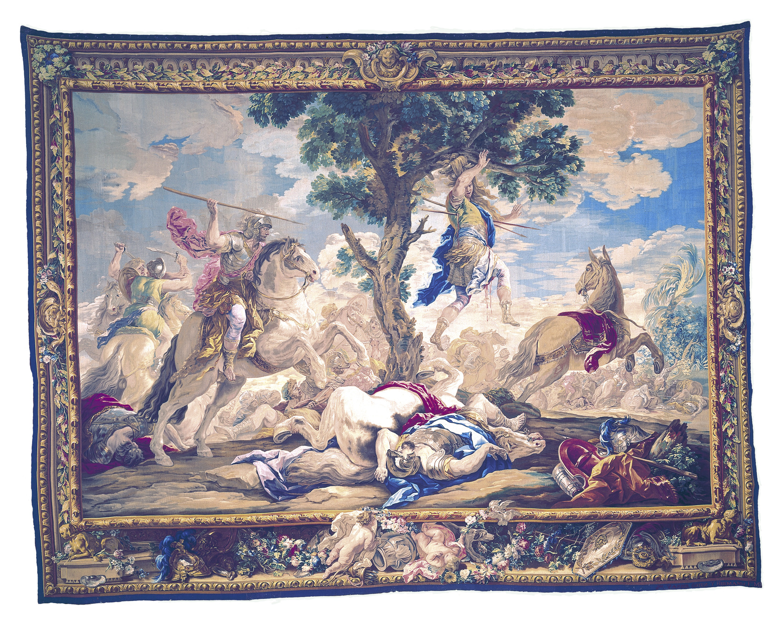
Este magnífico tapiz es una copia de una obra de Luca Giordano (1634-1705), realizada hacia 1695 para una de las ermitas del complejo palaciego del Buen Retiro de Madrid. En dicha pintura, se representa una escena del Antiguo Testamento: la muerte de Absalón. Tercero de los hijos del rey David, se autoproclama rey ante la muerte de su hermano Amnón y la ausencia de su padre. Esto generó una serie de conflictos, que culminarán en una batalla, en la que el joven morirá tras enredar sus cabellos en un árbol, momento que recoge la pintura.

Este lienzo será copiado hacia mediados de 1761, bajo el reinado de Carlos III (1716-1788), pero como cartón de tapiz para realizar un paño, junto con otros de la mano del pintor napolitano de dicha ermita, y decorar con ellos diversas estancias del Palacio Real de Madrid, programa decorativo que arrancó en 1756, bajo el reinado de Fernando VI. La dirección de estas obras fue encargada a Corrado Giaquinto (1703-1766), que tuvo una serie de asistentes que realizaron estas copias, como José del Castillo (1737-1793), reservándose el pintor italiano las cenefas que enmarcaban las escenas. Los cartones de tapices, una vez finalizado el proyecto, quedaron en la Real Fábrica de Tapices de Santa Bárbara, hasta que el cardenal Lorenzana, arzobispo de Toledo por aquel entonces, pidió algunos de ellos para decorar diversos espacios de la catedral primada de Toledo.

El tapiz es un fiel reflejo de la pintura, llena de movimiento y color. Formulada compositivamente en forma de aspa, la escena está cargada de fuerza narrativa y crueldad, al mostrar no solo a Absalón siendo abatido mientras está colgado de un árbol, sino también por la presencia a su alrededor de guerreros muertos y caballos, mostrando con ello la crudeza de la guerra y sus consecuencias.

General Classification

Textiles

Type of Object

Tapiz

By

Diseño de la cenefa: Giaquinto, Corrado; Diseño de la cenefa: Atribuido a Castillo, José del; Tapiz: Vandergoten, Jacobo; Tapiz: Castillo, Tomás; Tapiz: Real Fábrica de Tapices; Diseño del campo: Atribuido a Mela, Francisco

Title

Muerte de Absalón

Collection or Series Title

Historia de José, David y Salomón

Era / Cultural Context

Reinado de Carlos III; Rococó

Place of Production

Madrid

Date

Hacia 1761

Subject

Lana; Seda

Technical

Tapiz

Dimensions

Fondo completo: (Altura: 534,5 centímetros; Anchura: 685 centímetros)

Inventory

10005883

Credits

Texto: Roberto Muñoz Martín

Discover it at the Planta -2

Authors and Collectors

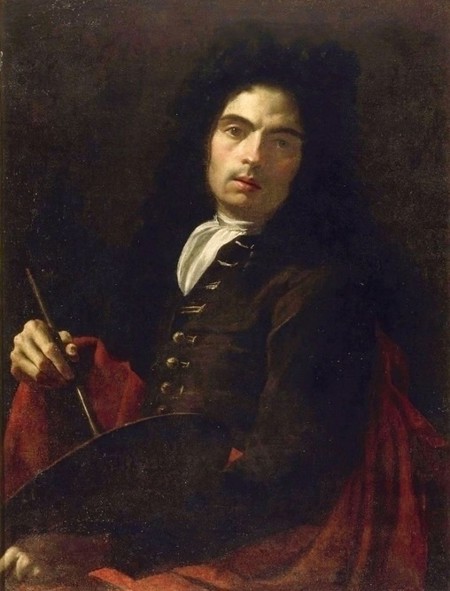
Giaquinto, Corrado
The Author

Giaquinto, Corrado

(Molfetta, 1703 - Naples, 1766)

Giaquinto, Corrado. Molfetta (Italy), 18.II.1703 – Naples (Italy), 1766. Painter.

He was born in a small town near Bari, in the region of Apulia in southern Italy, in a territory which, at the time was culturally subject to the artistic interests of Naples, the nearest city. Although he had been born into a family without any involvement in the arts, his father being a tailor from Manfredonia, his parents tried to persuade him to enter the church, although they had discovered his artistic vocation at an early age. In this regard, his encounter with the Lombard architect and notable mathematician, Ludovico Vittorio Iacchini, who was, at the time, Master of the Order of Saint Dominic, was to...

Read more
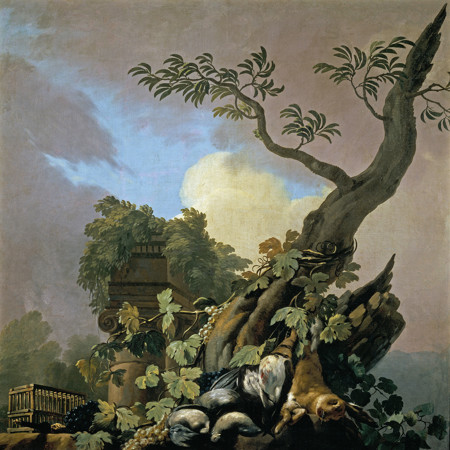
Castillo, José del
The Author

Castillo, José del

(Madrid, 1737 - Madrid, 1793)

Castillo Aragonés, José del. Madrid, 14.10.1737 – 05.10.1793. Painter.

José del Castillo was born in Madrid in 1737.

The son of Juan Tomás Castillo and Melchora Aragonés, he began his studies when he was barely ten years old, joining the drawing classes at the Preparatory Council of the Academy of San Fernando under José Romeo.

His excellent qualities brought him to everybody’s notice, and in 1751 he received a grant from José de Carvajal y Lancáster to study in Rome under Corrado Giaquinto (1703-1766), with whom he would also return to Spain in 1753. The Italian had been summoned by Ferdinand VI to continue the decorations of the Royal Sites following...

Read more
Van der Goten, Jacob
The Author

Van der Goten, Jacob

(Brussels, 1659 - Madrid, 1724)

Van der Goten Peeters, Jacob. The Elder. Brussels (Belgium), 1659 – Madrid, 1724. First master tapestry weaver of the Royal Tapestry Workshop of Santa Bárbara.

He was the son of Peter van der Goten and Wilhelmina Peeters, and was married to Anna Maria Canyuwel, with whom he had six children: Franciscus Ignatius, Jacob, Peter, Maria Theresa, Cornelius and Adriaan.

When the first Bourbon king ascended the throne, there were no industries in Spain that could fulfil the demand for luxury goods such as tapestries, carpets, porcelain, fine fabrics and clothing. Even everyday items such as cutlery, stockings and paper had to be imported.

Following the Treaty of Utrecht (1713-1714), which ended the War of Succession, the former Habsburg...

Read more
Royal Tapestry Workshop
The Author

Royal Tapestry Workshop

(1720 - )

The Royal Tapestry Workshop of Santa Barbara is one of the royal workshops for the manufacture of luxury items created by Spanish mercantilist policy during the Age of Enlightenment. It was founded in 1720 by Philip V, in the likeness of the French royal workshops under the Colbertist model, following the interruption of the imports of Flemish tapestries after the Peace of Utrecht, and it supplied the pieces intended for the royal chambers. Since 1889 it has been located in the district of Pacífico in Madrid, in a building constructed between 1889 and 1891. It continues to carry out the activity for which it was created.

Read more
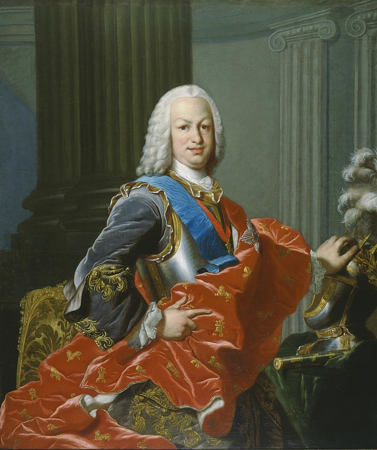
Ferdinand VI
Monarch

Ferdinand VI

(Madrid, 1713 - Villaviciosa de Odón (Madrid), 1759)

The fourth and last son of Philip V (1683-1746) and his first wife, Queen Maria Luisa Gabriella of Savoy (1688-1714), the future Ferdinand VI lost his mother when he was less than five months old. As was customary at the time, he spent his early years being cared for by a group of palace maidservants until Philip V ordered that he be placed "in a separate room to be served and attended by men only”, in 1721. That same year, the Count of Salazar and Carlos Arizaga were respectively appointed caretaker and assistant caretaker to the Infante, while the Jesuit priest Ignace de Laubrussel was appointed his tutor. From then on, the Infante Ferdinand’s training would be stricter and more planned,...

Read more

The work in context

View in Timeline