Use of Cookies

The Royal Collections Gallery uses its own and third-party cookies, mainly for technical purposes, which are necessary to provide our services and provide you with relevant content. More information in our cookies policy. Cookies Policy.

ACCEPT to confirm that you have read the information and accepted their installation. You can change your browser settings.

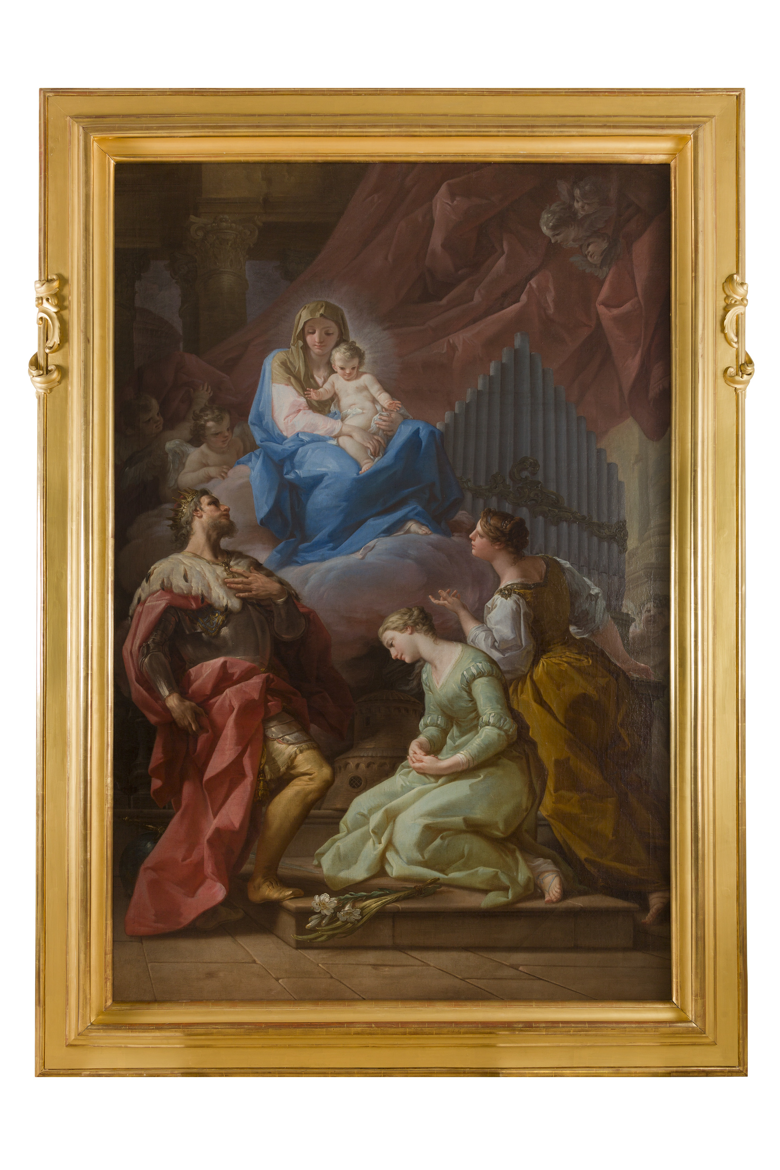
La Virgen y el Niño con san Fernando, santa Bárbara y santa Cecilia

Giaquinto, Corrado
Hacia 1755

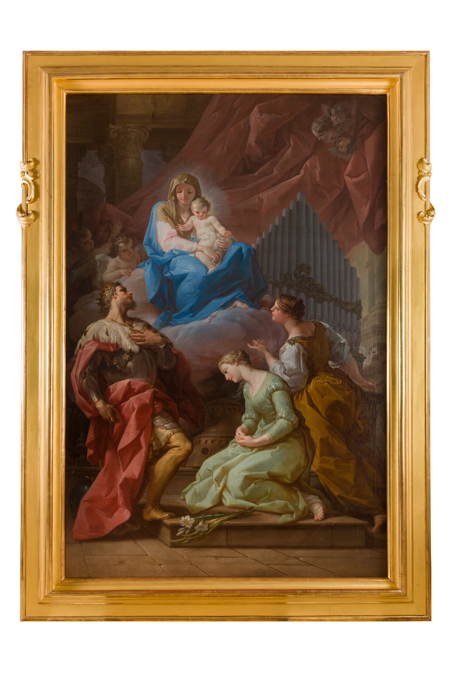
Sobre trono de nubes, la Virgen con el Niño acompañados de querubes son adorados por san Fernando, santa Bárbara y santa Cecilia, los primeros como patronos de los reyes Fernando VI y Bárbara de Braganza, y la última, situada junto al órgano, como patrona y protectora de la principal afición de estos monarcas, la música. El santo rey viste coraza, manto real de color rojo y estola de armiños, mientras santa Bárbara, arrodillada, con la palma del martirio y las azucenas de la virginidad, viste de verde y tiene las manos enlazadas en actitud de recogimiento, con un torreón a su lado como atributo. Santa Cecilia parece abandonar el teclado del órgano para dirigirse hacia la Madre de Dios y su Hijo. Al fondo, arquitectura con columnas y cortinaje color salmón.

Este soberbio lienzo de grandes dimensiones, pintado por Corrado Giaquinto (1703-1766) para la capilla de santa Cecilia de las Reales Atarazanas de Aranjuez, pasó después a la sacristía de la antigua capilla de Felipe II en la residencia regia de aquel Real Sitio, y más tarde a la Secretaría de Estado en el mismo palacio, una espaciosa sala del piso principal, al inicio del ala norte de la ampliación de Francesco Sabatini.

La pintura, monumental en su planteamiento, se caracteriza por el agradable colorido del pintor napolitano y sus reconocibles modelos humanos, en niños y adultos. La composición se equilibra con la disposición de las figuras en forma de pirámide, cuyo vértice superior sería la cabeza de la Virgen María.

General Classification

Pintura religiosa

Type of Object

Cuadro

By

Giaquinto, Corrado

Title

La Virgen y el Niño con san Fernando, santa Bárbara y santa Cecilia

Era / Cultural Context

Reinado de Fernando VI

Place of Production

España

Date

Hacia 1755

Display

Lienzo

Technical

Pintura al óleo

Dimensions

Fondo enmarcado: (Altura: 294 centímetros; Anchura: 211,2 centímetros)

Inventory

10012903

Credits

Texto: Javier Jordán de Urríes y de la Colina

Discover it at the Planta -2

Authors and Collectors

Giaquinto, Corrado
The Author

Giaquinto, Corrado

(Molfetta, 1703 - Naples, 1766)

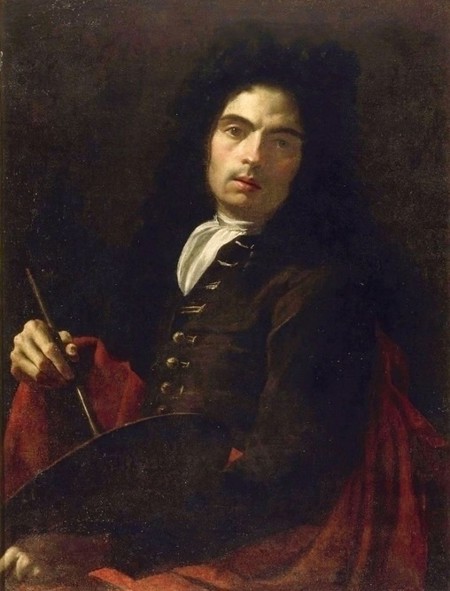
Giaquinto, Corrado. Molfetta (Italy), 18.II.1703 – Naples (Italy), 1766. Painter.

He was born in a small town near Bari, in the region of Apulia in southern Italy, in a territory which, at the time was culturally subject to the artistic interests of Naples, the nearest city. Although he had been born into a family without any involvement in the arts, his father being a tailor from Manfredonia, his parents tried to persuade him to enter the church, although they had discovered his artistic vocation at an early age. In this regard, his encounter with the Lombard architect and notable mathematician, Ludovico Vittorio Iacchini, who was, at the time, Master of the Order of Saint Dominic, was to...
Read more
Ferdinand VI
Monarch

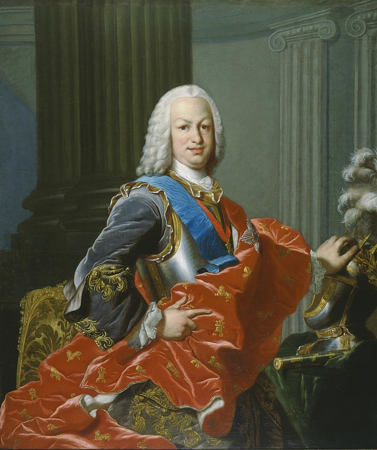
Ferdinand VI

(Madrid, 1713 - Villaviciosa de Odón (Madrid), 1759)

The fourth and last son of Philip V (1683-1746) and his first wife, Queen Maria Luisa Gabriella of Savoy (1688-1714), the future Ferdinand VI lost his mother when he was less than five months old. As was customary at the time, he spent his early years being cared for by a group of palace maidservants until Philip V ordered that he be placed "in a separate room to be served and attended by men only”, in 1721. That same year, the Count of Salazar and Carlos Arizaga were respectively appointed caretaker and assistant caretaker to the Infante, while the Jesuit priest Ignace de Laubrussel was appointed his tutor. From then on, the Infante Ferdinand’s training would be stricter and more planned,...

Read more

The work in context

View in Timeline