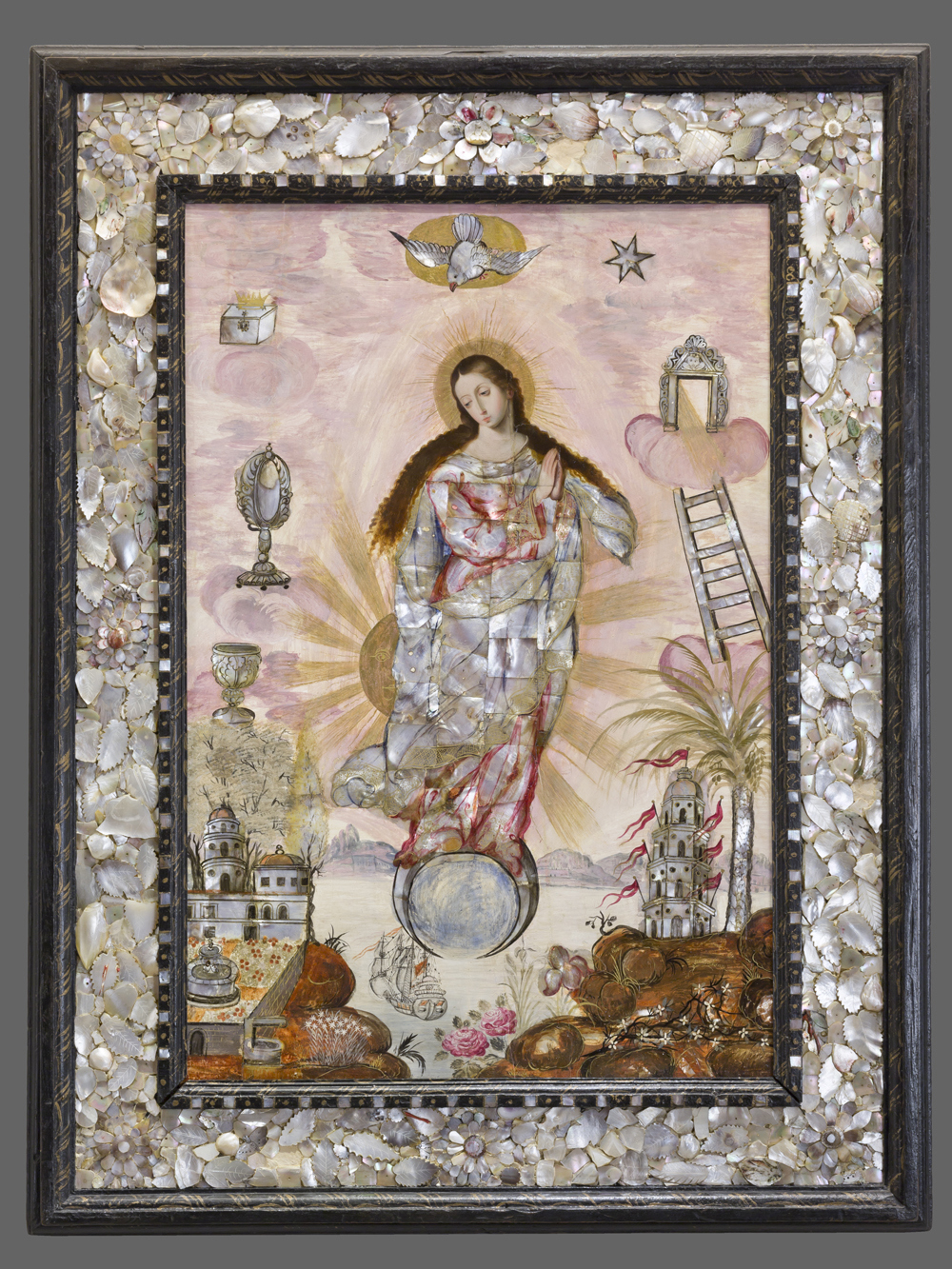
The Inmaculate Conception of the Virgin Mary
Viceroyalty of New Spain
1600-1700
Royal Collections Gallery
00612503
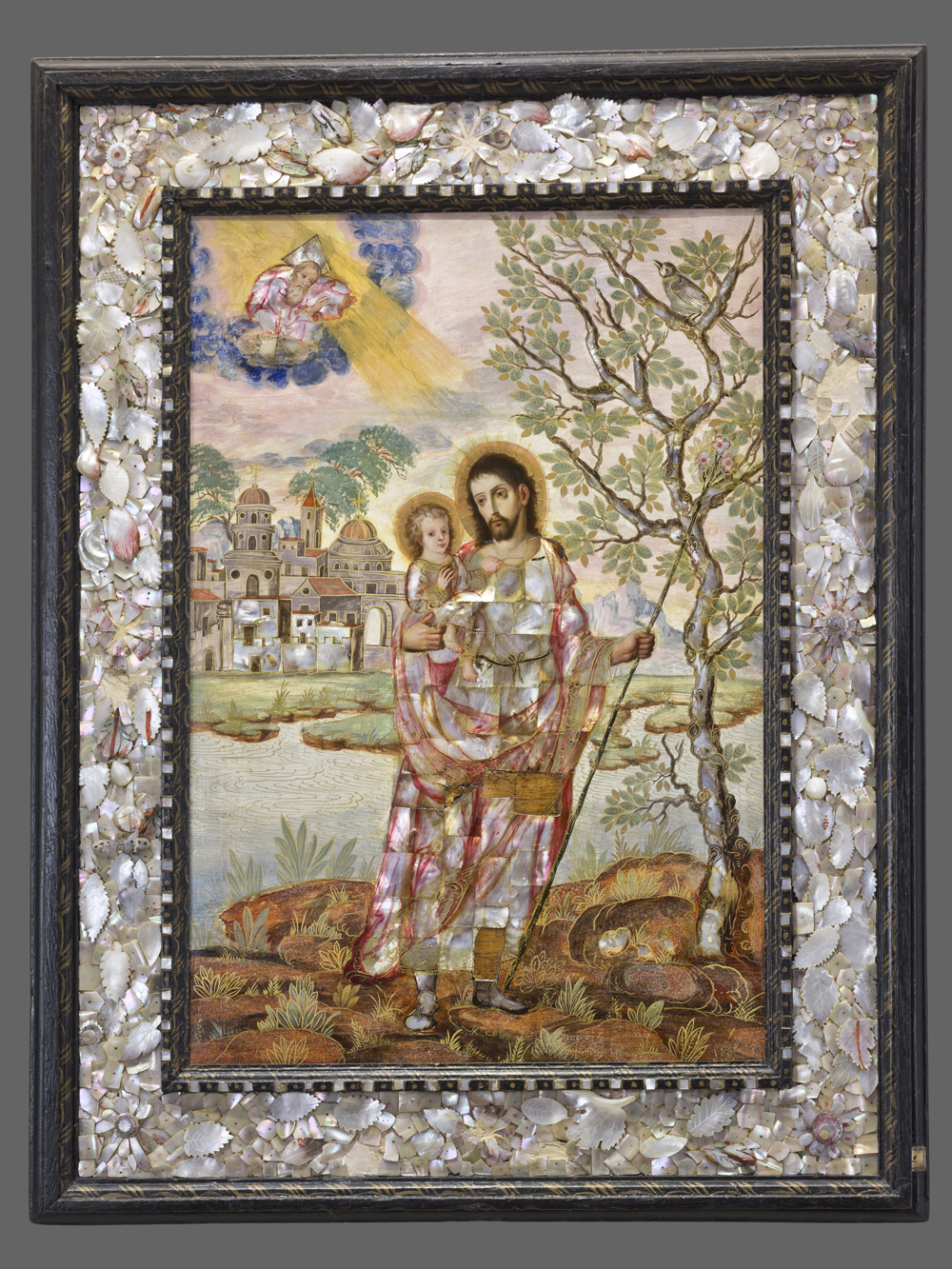
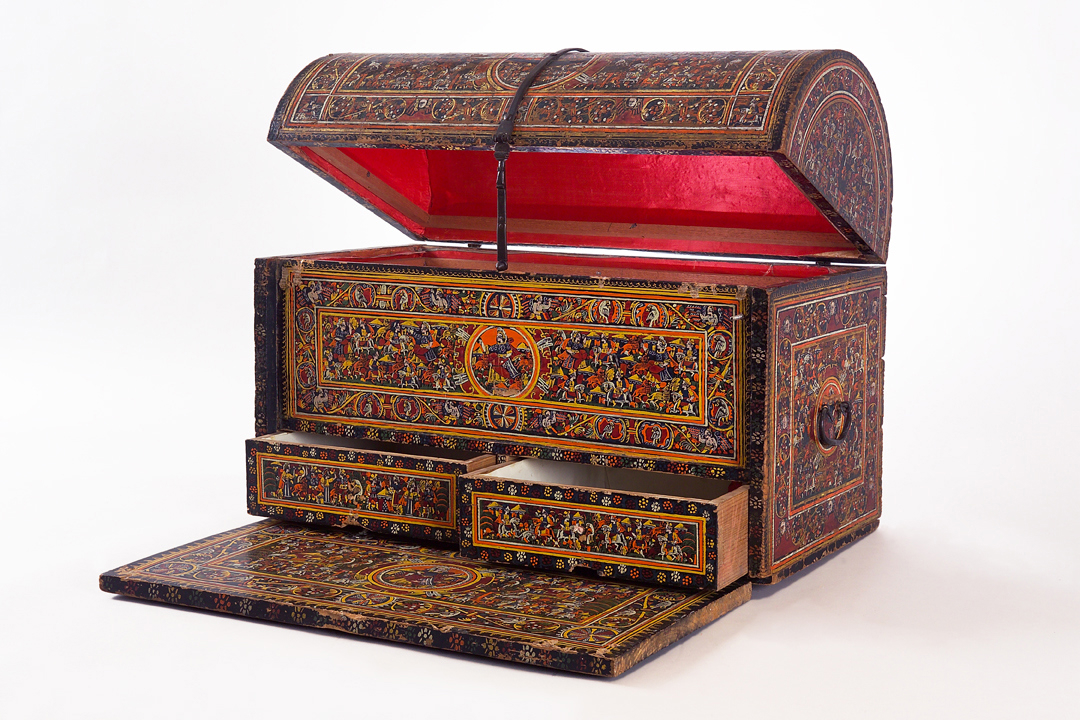
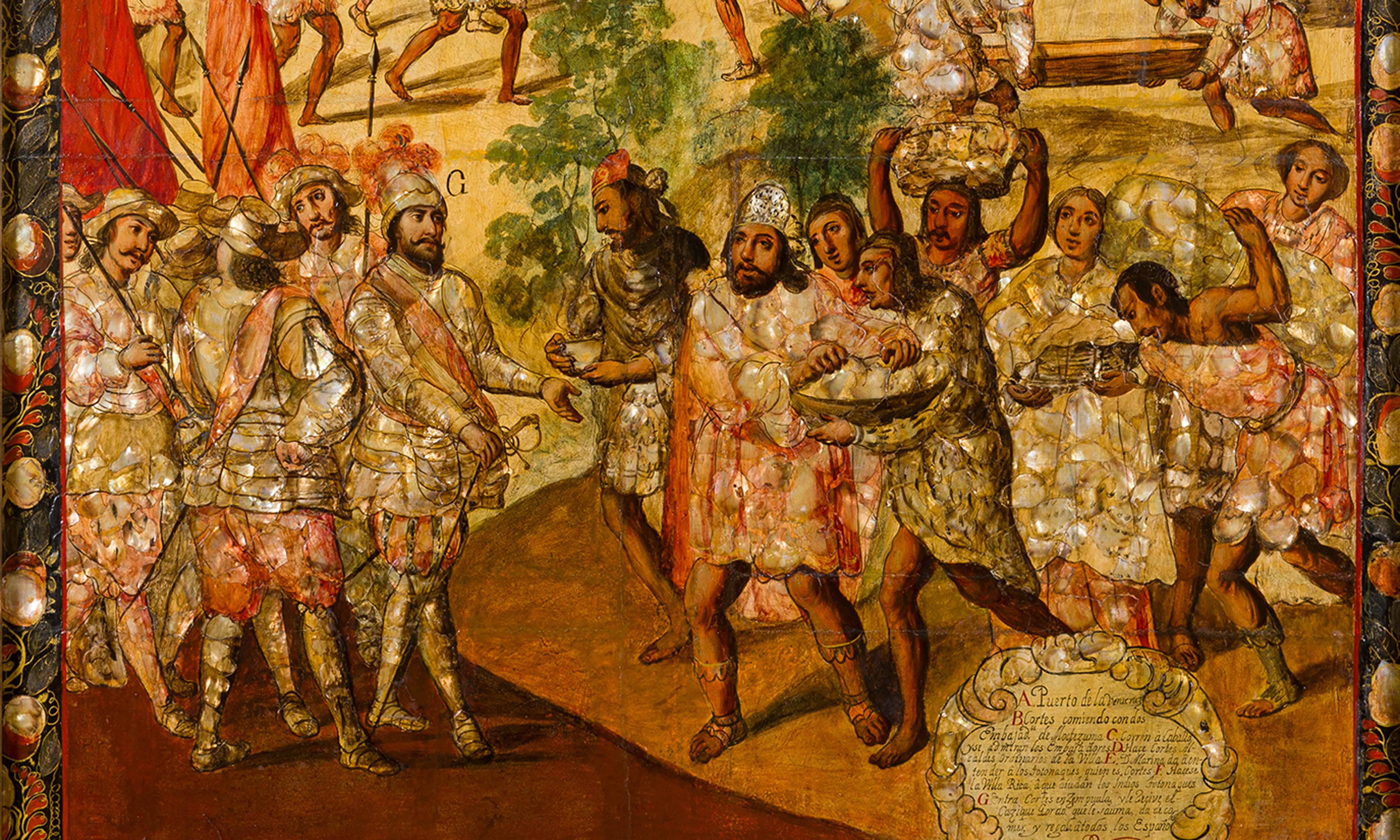
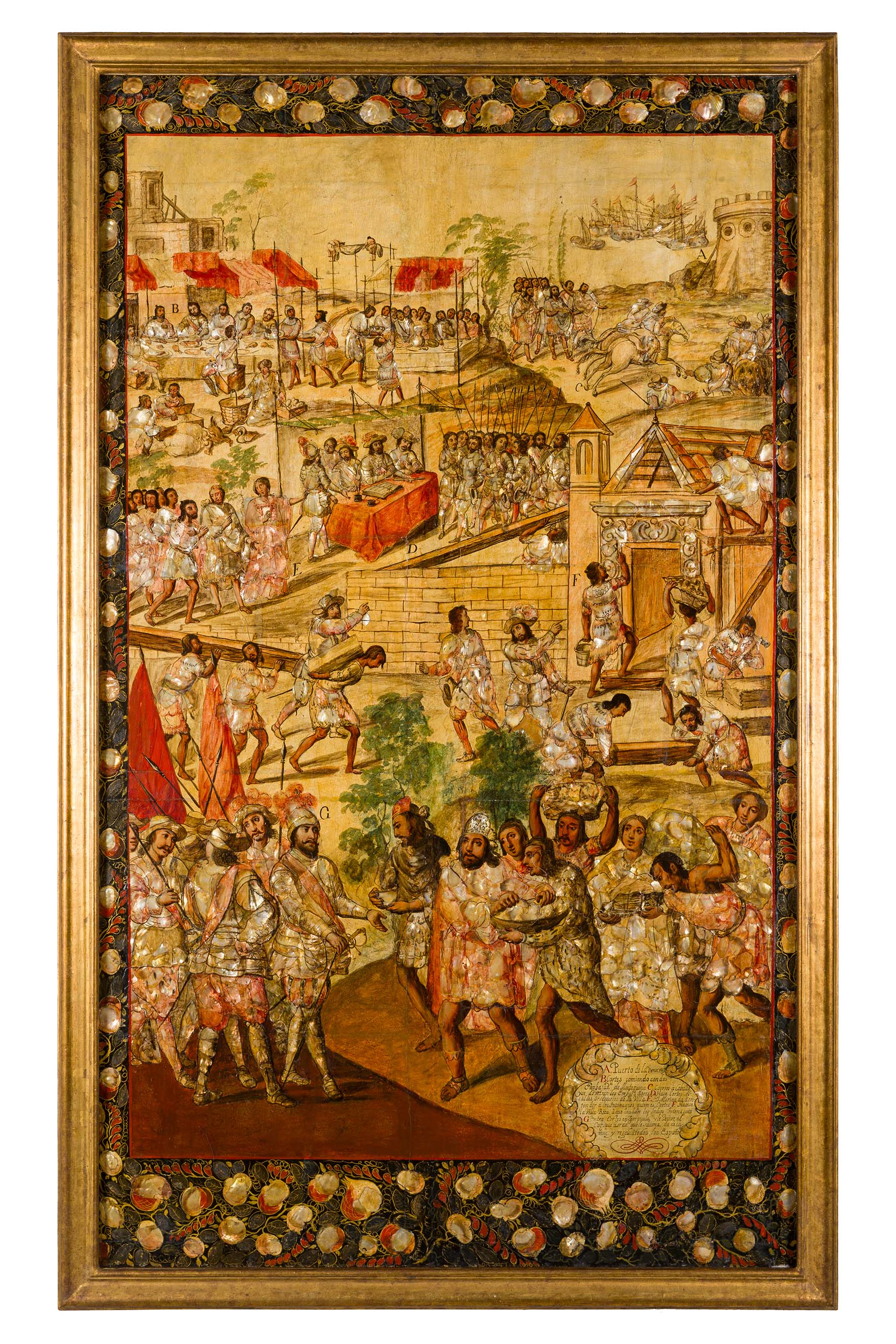
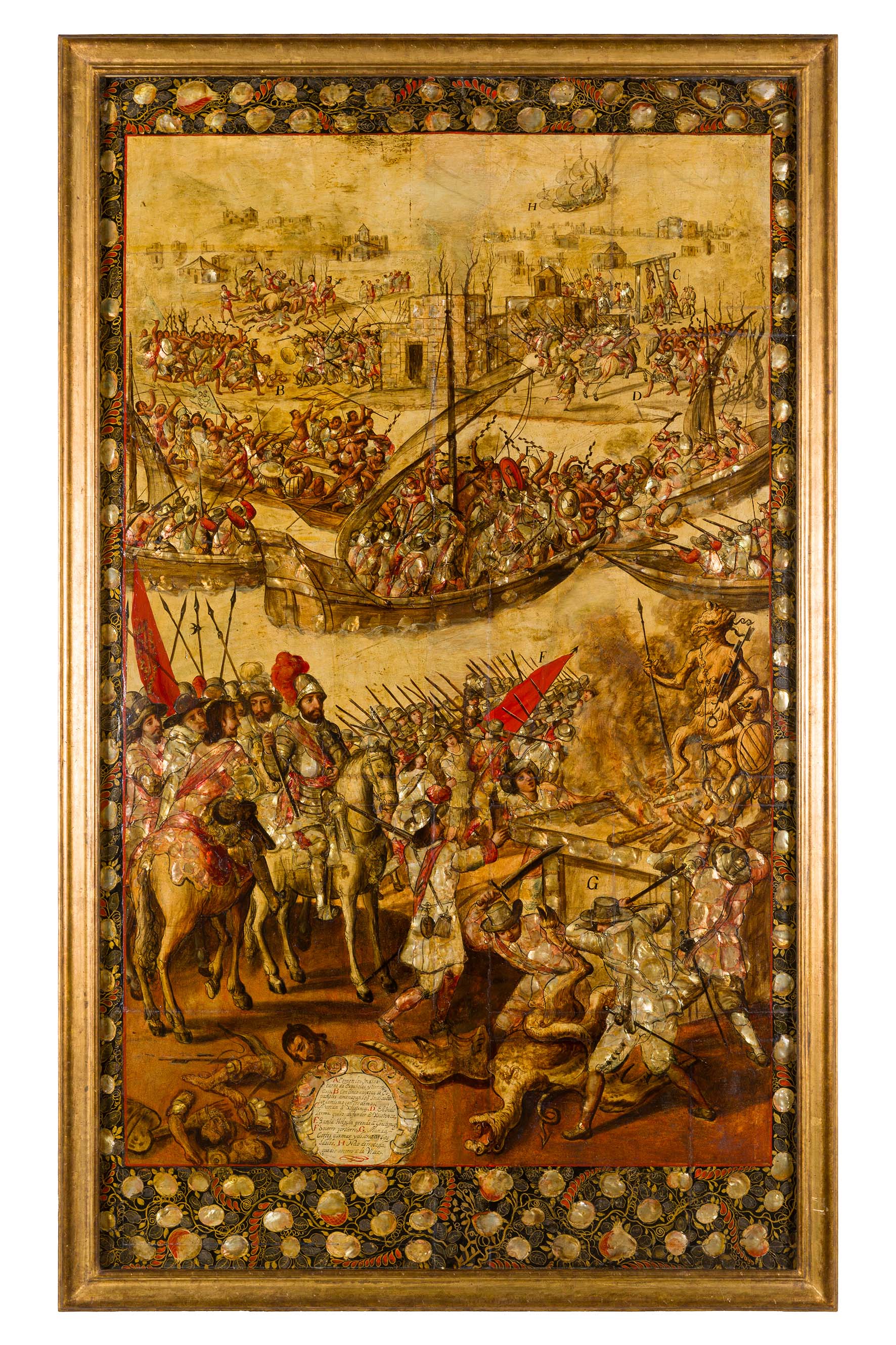
From the second half of the sixteenth century onwards numerous ships plied the Pacific Ocean several times a year, travelling from the port of Manila to the viceroyalty of New Spain. This was one of the most important trade routes in history and brought about an artistic and cultural exchange between Asia and the Americas that significantly influenced aesthetic tastes. These galleons were laden with Eastern goods, among them the famous Namban-style Japanese lacquerware. This technique, in which pieces of inlaid shell from various molluscs were used, fascinated the artists of New Spain, who drew inspiration from it to create works with a style of their own, known as enconchados or shell-incrusted paintings.
This mixed media technique, developed chiefly in the workshops of Mexico City, consisted of covering a wooden panel with cloth and then applying a gesso ground onto which fragments of shells were inlaid and held in place with animal glue. Its distribution was designed to embellish and add luminosity to certain parts of the scene, especially the main figures. The iridescence of the material and its soft tones lent the picture a rich and original appearance.
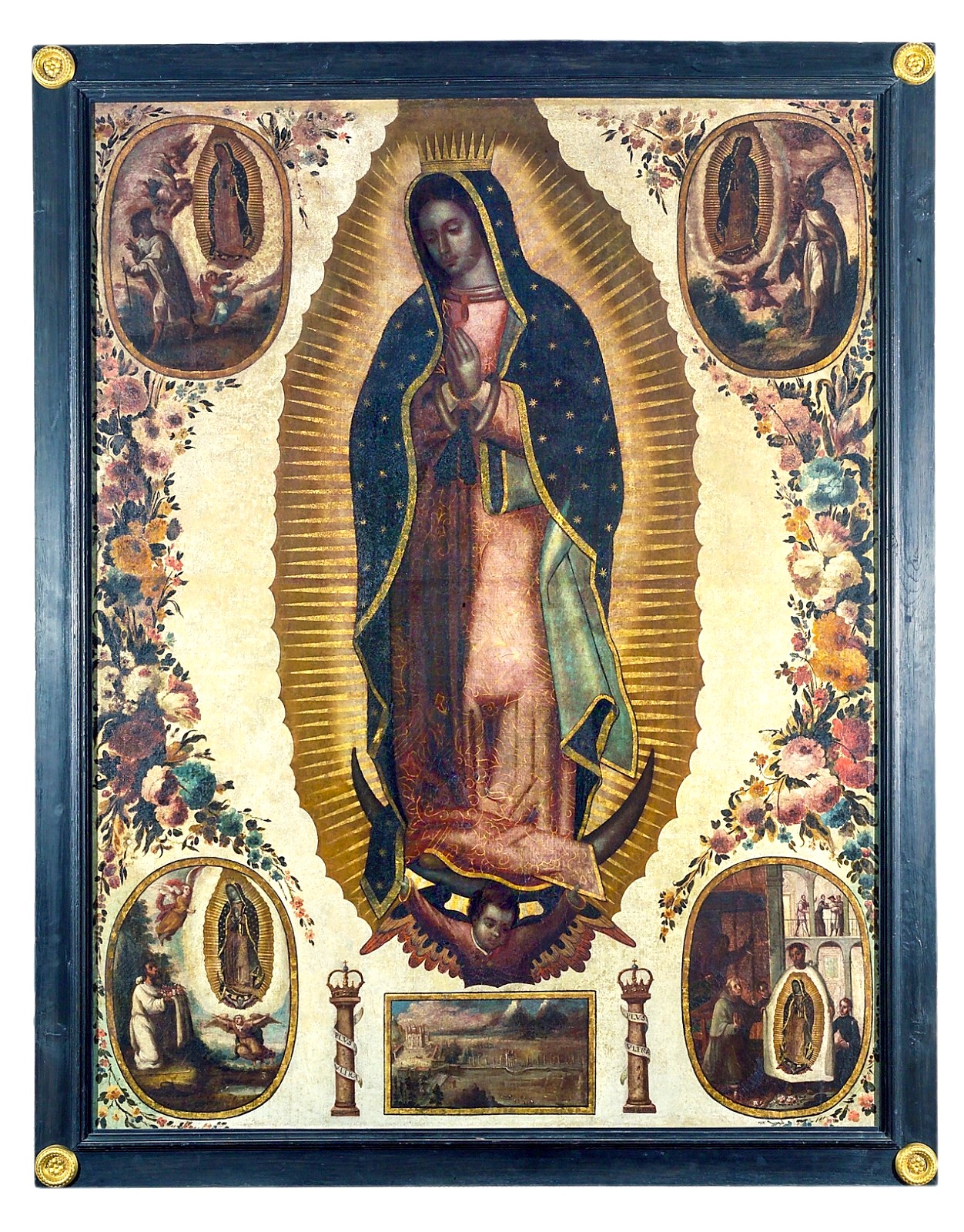
This enconchado shows the Immaculate Conception represented according to traditional iconography: a praying woman with a youthful appearance standing on a crescent moon; above her head is the dove of the Holy Spirit and around her are various symbols from the Litany of Loreto, such as the Gate of Heaven, the Mirror of Justice and the Morning Star.
It was produced in the seventeenth century during the height of development of this art. The craftsmanship combines mother-of-pearl pieces, emphasising Mary's clothing, and paint, which is notable for the careful application of glazes.
In works of this kind the frame was an essential element and received special treatment, being made from the same materials; in this case, its surface is completely covered with pieces of mother-of-pearl carved in the shape of flowers, leaves and butterflies.
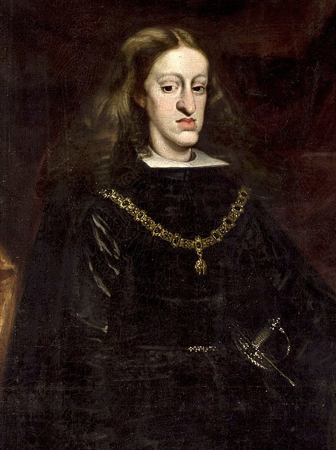
It probably found its way into Europe via another of the major trade routes: the one used by the Spanish West Indies fleet across the Atlantic from Veracruz or Cartagena to the ports of Seville or Cádiz. Works of this kind were destined for noble residences and religious foundations, but they were also used as diplomatic gifts, such as the twenty-four enconchados sent by the viceroy of Mexico, the Count of Moctezuma, to Charles II in 1698, now housed in the Museo de América and the Museo del Prado.
These anonymous pieces can be attributed to the main Mexican workshops such as those of the Gonzálezs, Juan Correa, Nicolás del Pino or Pedro López Calderón.