Use of Cookies

The Royal Collections Gallery uses its own and third-party cookies, mainly for technical purposes, which are necessary to provide our services and provide you with relevant content. More information in our cookies policy. Cookies Policy.

ACCEPT to confirm that you have read the information and accepted their installation. You can change your browser settings.

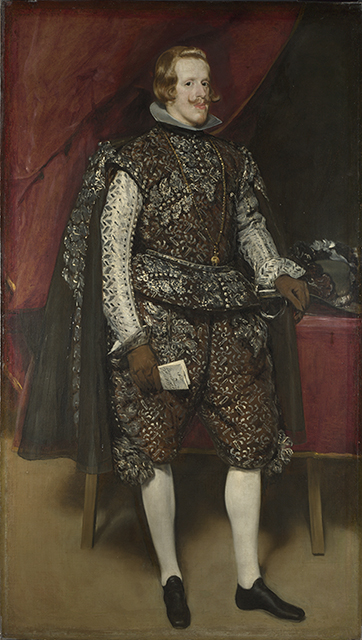
La National Gallery de Londres se incorpora al programa «Obra invitada», una línea expositiva que presenta en la Galería obras procedentes de instituciones nacionales e internacionales en diálogo con las Colecciones Reales. El préstamo temporal del excepcional retrato Felipe IV de castaño y plata, de Diego Velázquez, permite profundizar en la representación de la monarquía hispánica y el retrato cortesano del siglo XVII, al tiempo que pone de relieve la maestría del pintor sevillano para reflejar la imagen y el poder de la Corona.

Philip IV in Brown and Silver

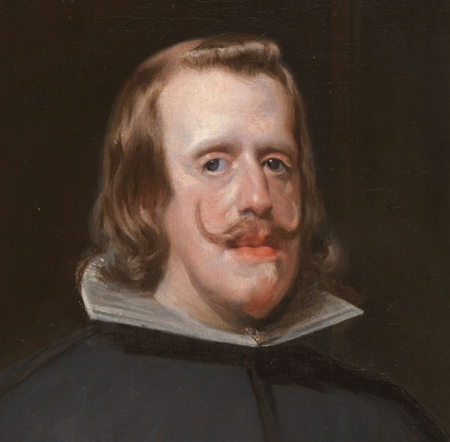
Philip IV in Brown and Silver, one of the masterpieces of the National Gallery’s collection of Spanish paintings, is among Diego Velázquez’s most accomplished portraits of the monarch that he served for almost four decades. Completed in the early 1630s, when Philip IV (1605-1665) was probably 26 or 27 years old, the canvas is exceptional both for the opulence of Philip’s dress, which may have been worn at a particular court ceremony, and for being one of the rare paintings that bear Velázquez’s signature. The artist, who seems to have only signed the works he considered most successful or significant, inscribed his name on the petition that the king holds in his gloved right hand.

In contrast to the sombre black clothing that Philip wears in most of Velázquez’s portraits from the 1620s, in this painting he sports a sumptuous purplish-brown suit consisting of a ropilla (short cassock) and calzones (breeches). The suit, perhaps made of silk, is adorned with glinting metallic thread; a repeating pattern enlivens the sleeves and turn-back cuffs of his shirt. The cape hanging from his shoulders is embellished with sketchily painted alamares, the same button-and-loop decorations that appear on Philip’s suit. With an impressive understanding of how viewers would perceive his free, varied and loose brushstrokes, which this unlined canvas preserves exceptionally well, Velázquez suggests the brilliant shimmering effect that the king’s splendid attire must have achieved.

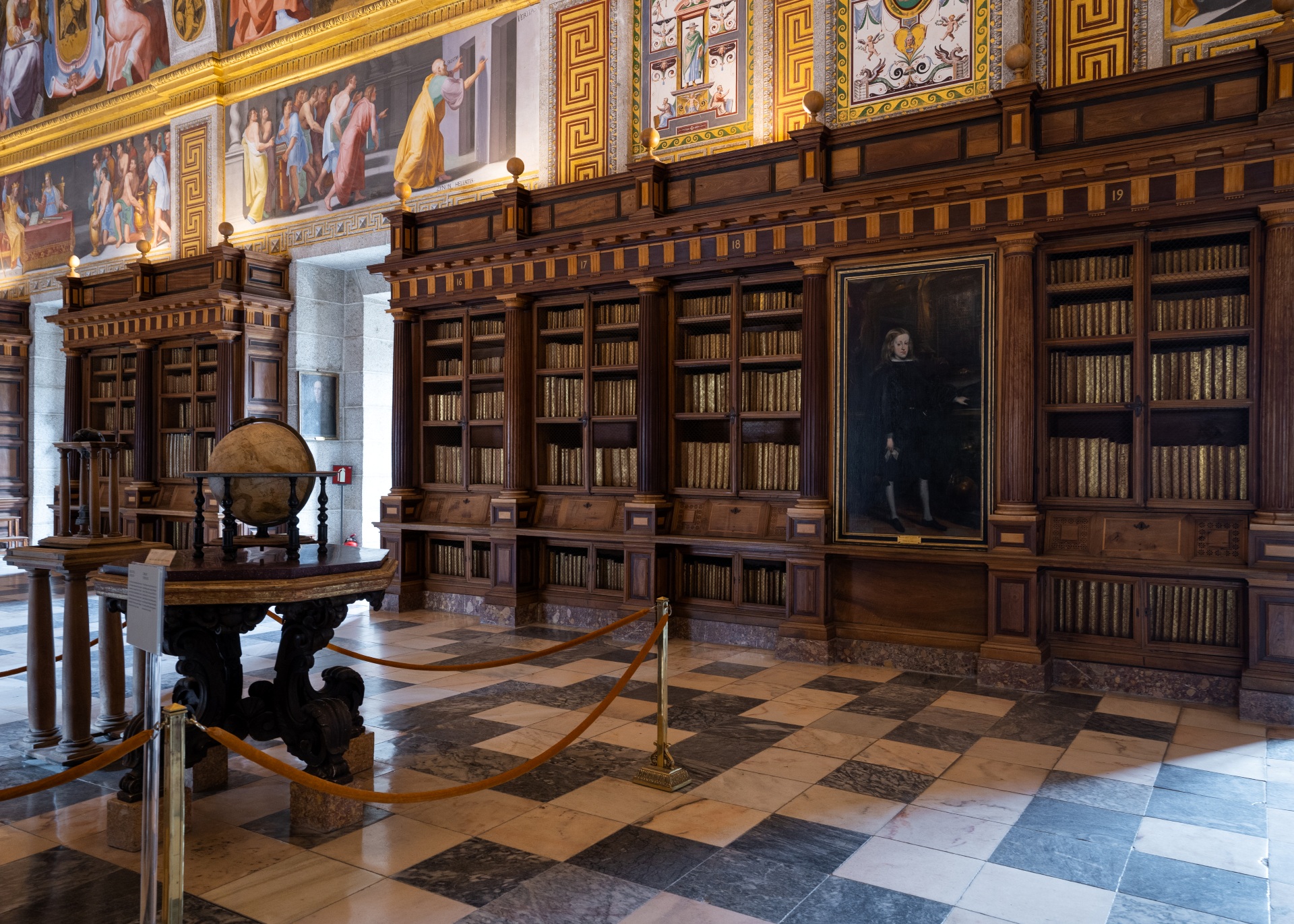
The passing resemblance of Philip’s dress in this portrait to the clothing that he wore at a state event on 7 March 1632, which was described in detail by a contemporary observer, suggests that this painting could have been commissioned to commemorate the Cortes of Castile’s swearing of allegiance to Philip’s young son and heir apparent, Baltasar Carlos (1629–1646). From at least 1650 and perhaps from when it was completed, the portrait hung in the Royal Library of the Monastery of El Escorial with Juan Pantoja de la Cruz’s (1553–1608) likenesses of Philip’s predecessors: Charles V (1500–1558), Philip II (1527–1598) and Philip III (1578–1621), all of which are in the collection of Patrimonio Nacional. If Velázquez did indeed paint the portrait to memorialise the ceremony of 1632, it could perhaps have even been conceived in relation to these dynastic images, joining them in a celebration of the continuation of the Habsburg line.

For the iconography of the painting, Velázquez drew on the conventions for portraying Spanish Habsburg sovereigns that had been established by the earlier court painter Alonso Sánchez Coello (1531-1588), who had himself looked back to the models of Titian (c. 1488/1490-1576) and Anthonis Mor (1516-1576). Wearing the insignia of the Order of the Golden Fleece on a chain around his neck, Philip stands at full-length before a curtain and a plain wooden table covered in red fabric, which were both common in portraits of this type. If the format of the portrait suggests that it is a typical essay in the representation of a Habsburg monarch, Velázquez’s superb artistic gifts, which had been further sharpened during a year in Italy between 1630 and 1631, set Philip IV in Brown and Silver apart.

The portrait was again recorded in the Royal Library of the Monastery of El Escorial in the eighteenth century, where it remained until 1809, when it was removed on the orders of Joseph Bonaparte (1768-1844) during the French occupation of Spain. Bonaparte gave the painting to one of his generals, Jean-Joseph Dessolles (1767-1828), whose daughter eventually sold it to a British collector, with whose descendants it remained until it was acquired by the National Gallery in 1882. Philip IV in Brown and Silver has returned to Spain only once previously, in 1999, when it featured in an exhibition at the Museo Nacional del Prado.

Text: Daniel Sobrino Ralston, Daniel Sobrino Ralston, CEEH Associate Curator of Spanish Paintings, National Gallery, London

La serie retratística de la Biblioteca de El Escorial

El retrato de Felipe IV de castaño y plata formó parte de la serie retratística instalada en los huecos de las estanterías originales de la Biblioteca Principal del Real Monasterio de San Lorenzo de El Escorial. En época de fundación, Felipe II, posiblemente por consejo de sus asesores intelectuales, opta por adornar la Biblioteca con imágenes pictóricas de los reyes de la Casa de Austria. Los monarcas debían estar presentes como los grandes defensores de la sabiduría y como los que más habían contribuido al enriquecimiento y esplendor de la biblioteca.  

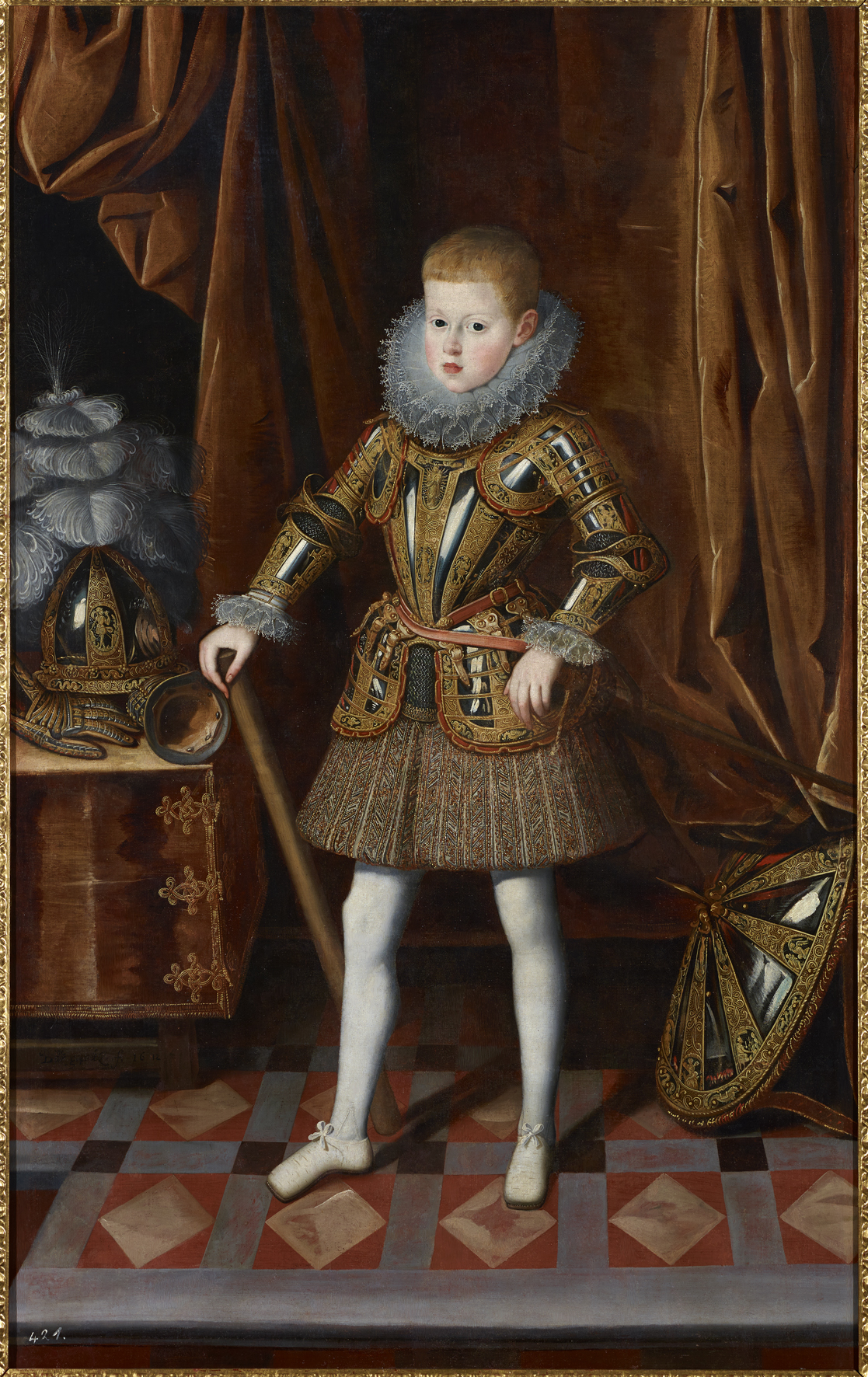
El primer retrato en ser enviado a la Biblioteca fue el de Felipe II anciano, obra de Juan Pantoja de la Cruz de hacia 1594, todavía en vida del rey. Los de Carlos V y Felipe III fueron comisionados por este último rey al mismo Pantoja y están firmados en 1608. El último hueco estaba destinado a la representación del futuro Felipe IV. En 1614 se documenta la entrega a la Biblioteca de la imagen del príncipe Felipe (IV) pintada por Bartolomé González, a la edad de siete años, de acuerdo con la imagen oficial del príncipe niño heredero. Posa y viste como un rey adulto, ataviado con media armadura y con todos los atributos de la simbología del poder real, en la misma línea representativa adoptada por Pantoja de la Cruz para los retratos de Carlos V y Felipe III de la Biblioteca. Pero Felipe IV quiso verse allí representado con su nueva imagen adulta como rey, y por ello, antes de 1650, este retrato fue sustituido por el de Felipe IV de castaño y plata de Diego Velázquez.
La serie dinástica no sufrió cambios hasta la invasión napoleónica. El retrato velazqueño de Felipe IV fue el único en salir de las colecciones reales españolas, al ser regalado por José Bonaparte en 1810 a uno de sus generales más allegados, Jean-Joseph Dessolles. 

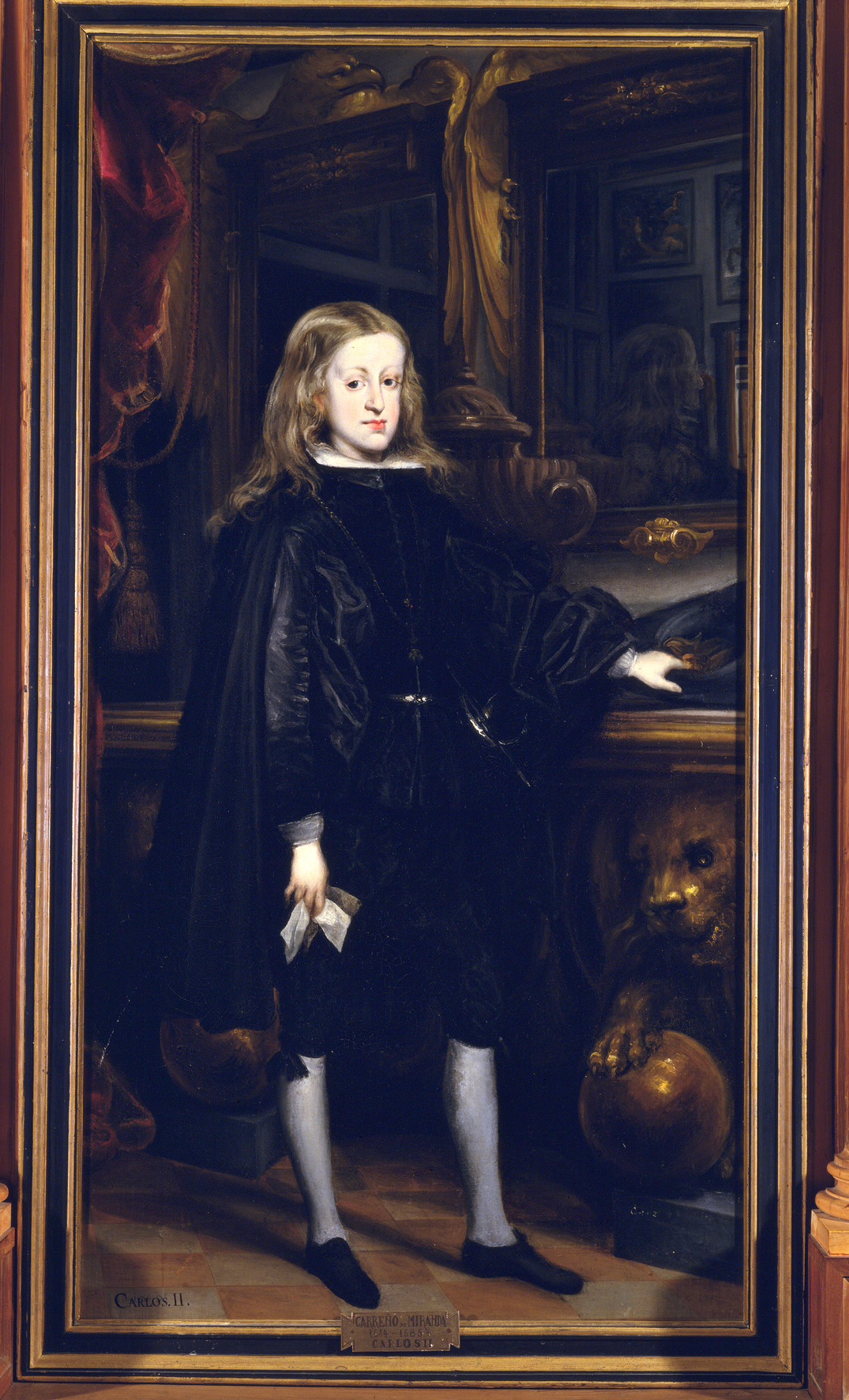
Tras la invasión napoleónica, el hueco del retrato velazqueño fue ocupado por una de las versiones del retrato oficial de Carlos II en edad adolescente, creada por su pintor de cámara Juan Carreño de Miranda, que existían en El Escorial.  El modelo es la repetición de todos sus retratos de diez a dieciséis años, en los que siempre figura de cuerpo entero, en pie, con vestido negro de corte y acompañado por el collar de la Orden del Toisón de Oro y la espada, como signos de su poder real. Y como fondo escenográfico, el habitual Salón de los Espejos del Alcázar de Madrid, uno de los espacios simbólicos más significativos para la monarquía española, lo que conllevaba unas claras connotaciones de legitimidad dinástica para con el nuevo rey.

Texto: Carmen García-Frías Checa

Title

Philip IV of Spain in Brown and Silver

Author

Diego Velázquez (Seville, 1599 - Madrid, 1660)

Date

h. 1631-1632

Characteristics

Oil on canvas

Dimensions

195 x 110 cm.

Origin

The National Gallery, London, NG1129. Bought, 1882

Authors and Collectors

Philip IV
Monarch

Philip IV

(Valladolid, 1605 - Madrid, 1665)

The third son of Philip III (1578-1621) and Margaret of Austria (1584-1611), the future Philip IV was born in Valladolid, the capital of the Hispanic Monarchy between 1601 and 1606. Sworn heir to the Crown on 30th January 1608, in the Church of San Jerónimo El Real in Madrid, he was educated by Galcerán Albanell, a Catalan nobleman of renowned erudition. Prince Philip, as he was then, received classes in History, Geography, Mathematics and military tactics. After ascending the throne in 1621, he furthered his education by expanding his reading and learned languages such as Italian and French. 


Philip IV was married twice. His first wife was Elisabeth of France (1602-1644) whom he married on 18th October 1615 and with whom he had eight children: Infanta María Margarita (born and died in 1621); the Infanta Margarita María (born and died in 1623); the Infanta María Eugenia (1625-1627); the Infanta Isabel (born and died in 1627); Prince Balthasar Charles (1627-1646), heir to the Spanish Crown until his death a few days before his seventeenth birthday; the Infanta María Antonia (1635-1636); and the Infanta Maria Theresa (1638-1683), Queen of France by her marriage to Louis XIV (1638-1715). After the death of Elisabeth of France in October 1644, Philip IV married his niece, the Archduchess Maria Anna of Austria (1634-1696), on 7th October 1649. The royal couple had five children: the Infanta Margaret Theresa (1651-1673), Holy Roman Empress by marriage to Leopold I (1640-1705); the Infanta Maria Ambrosia (born and died in 1655); Prince Felipe Prospero (1657-1661); the Infante Fernando Tomás (1658-1659) and the future King Charles II (1661-1700), who succeeded his father on the throne. The King also had several natural children. The best known of them all, born of his extramarital affair with the theatre actress María Calderón, also called La Calderona, was John Joseph of Austria (1629-1679). 


Philip IV became King of Spain after the death of Philip III on 31st March 1621. When he ascended the throne, he had little knowledge of governance. For this reason, from 1622 onwards, the Count-Duke of Olivares enjoyed an ever-increasing influence over the affairs of state. As the favourite of Philip IV, the Count-Duke sought to develop a reformist policy capable of boosting the economic development of Castile and alleviating the Royal Treasury’s debt. However, his most ambitious plan was the “Union of Arms” project of 1624, whereby the Count-Duke sought to encourage military collaboration between the different territories of the Hispanic Monarchy, the first step towards greater administrative, institutional and legal integration between them. The plan of the Count-Duke of Olivares was not well received in Portugal, Aragón, Catalonia and Valencia, and obtained mixed results. 

In the sphere of international relations, with Philip IV’s approval, he abandoned the policy of armed neutrality that had characterised the reign of Philip III and pushed for the implementation of a prestigious foreign policy. The goals of the Count-Duke entailed increased involvement of the Hispanic Monarchy in the Thirty Years' War, the resumption of hostilities with the United Provinces in 1621, year in which the Twelve Years' Truce ended, and the confrontation with France from 1635 onwards. None of these conflicts would end well for the Hispanic Monarchy. The Peace of Westphalia (1648) forced the government in Madrid to recognise the independence of the United Provinces and ended what was left of Spanish hegemony in Europe, while the Treaty of the Pyrenees (1660) resulted in Spain ceding territory to France: the county of Artois, Roussillon and part of Cerdagne. 


The economic, human and financial cost of Spain's active foreign policy in this period in turn influenced the outbreak of the Crisis of 1640, which led to the secession of Portugal in the same year, the Catalan rebellion between 1640 and 1652, and instability in other parts of the Monarchy such as Andalusia and Spanish Italy. As a result of these events, at the end of January 1643, the Count-Duke of Olivares was dismissed from all court offices and posts by the King. His successors Luis de Haro, the Count of Castrillo and the Duke of Medina de las Torres, though trusted by the King, lacked the influence and political projection that the Count-Duke had enjoyed in his day. 


Finally, it should be noted that Philip IV’s reign coincided with the period of the greatest Baroque splendour in Spain. Fond of the theatre and arts, the King sponsored the careers of some of the most outstanding playwrights, writers and artists of the "Golden Age". Lope de Vega, Quevedo, Calderón de la Barca or the painters Fray Juan Bautista Maíno, Vicente Carducho and Diego Velázquez, amongst others, benefited from the monarch’s patronage. Additionally, during the 1630s, at the behest of the Count-Duke of Olivares, the Buen Retiro Palace was built as a second residence for the King and Queen in Madrid. 


Philip IV, also called the Planet King, died in Madrid on 17th September 1665. His remains are buried in the Pantheon of Kings and Queens in the Monastery of El Escorial, whose decoration was also at the King’s initiative. 

Source: Royal Academy of History (https://www.rah.es)
Read more
Velázquez, Diego
Author

Velázquez, Diego

(Seville, 1599 - Madrid, 1660)

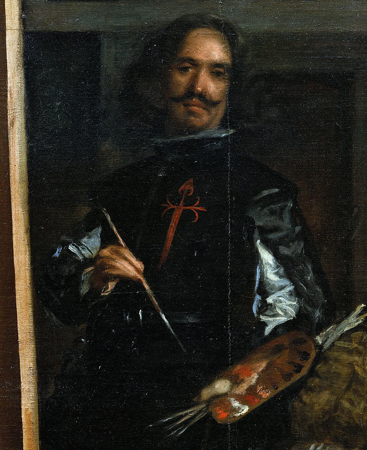
Rodríguez de Silva y Velázquez, Diego. Velázquez. Seville, 06.06.1599 baptised. – Madrid, 06.08.1660. Painter.

Born in Seville to a Portuguese father (Rodríguez de Silva) and a mother from Seville (Velázquez), he was baptised on 6th June 1599. His father was an ecclesiastical notary in the Seville Chapter, and this brought him in touch with books and people of culture at an early age.

In 1609, and not quite ten years old, he spent a few months at the workshop of Francisco de Herrera the Elder.

The master's bad temper soon drove Velázquez away from his workshop, and on 17th September 1611, he signed an apprenticeship contract with Francisco Pacheco, undertaking to...

Read more