Loading...

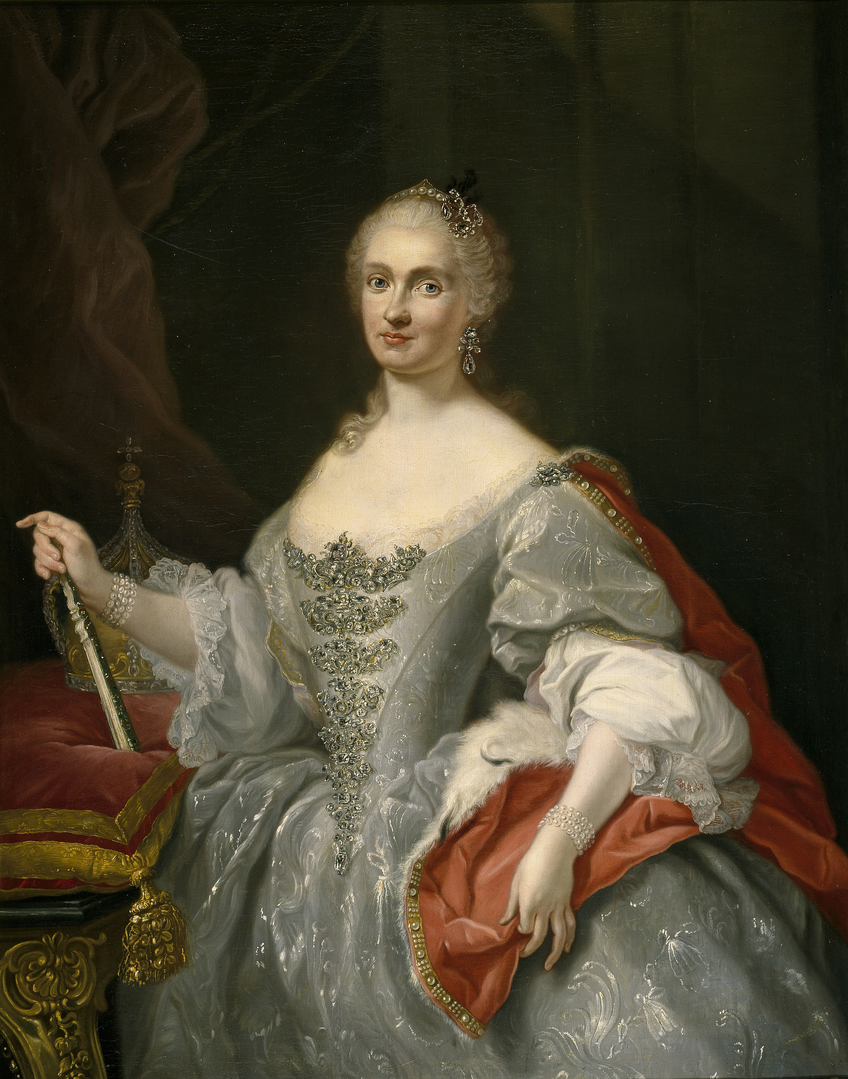
Casa de los Borbones
Maria Amalia of Saxony
Dresde (Alemania), 24 de November de 1724 - Madrid, 27 de September de 1760
View in TimelineBiography
The fourth of fourteen children born to Augustus III (1696-1763), King of Poland and Elector of Saxony, and Maria Josepha of Austria (1699-1757), Maria Amalia of Saxony spent her childhood between Dresden, Pilnitz and Warsaw, where she moved after her father's accession to the Polish throne. Described by a contemporary witness as a "tall and robust" young woman, she had a strong personality, was noted for her religious piety and fondness for animals, especially exotic ones such as monkeys and parrots.
Her marriage to the future Charles III (1716-1788), then King of Naples and Sicily, was ratified in Portella (Naples) on 19th June 1738, when Maria Amalia of Saxony had not yet reached the age of fourteen. The King and Queen had thirteen children: the Infanta María Isabel Antonia (1740-1741); the Infanta María Josefa (born and died in 1742); the Infanta María Isabel (1743-1749); the Infanta Maria Josepha Carmela (1744-1801), who remained unmarried all her life; the Infanta Maria Luisa (1745-1792), Grand Duchess of Tuscany and Holy Roman Empress by marriage to Leopold II (1747-1792); the Infante Philip of Naples (1747-1777), whose health problems excluded him from the line of succession to the throne; the future Charles IV (1748-1819), who succeeded his father to the Spanish throne; the Infanta María Teresa (1749-1750); the future Ferdinand IV of Naples and III of Sicily (1751-1825), succeeding Charles III in both kingdoms from 1759; the Infante Gabriel (1752-1788); the Infanta María Ana (1754-1755); the Infante Antonio Pascual (1755-1817) and the Infante Francisco Javier (1757-1771). Maria Amalia of Saxony was a strict mother and took a personal interest in her children’s education.
Charles III and Maria Amalia of Saxony were a well-matched couple who shared common interests such as hunting, fishing and archaeology. Although she was an influential Queen, Maria Amalia of Saxony does not appear to have been actively involved in political decision-making. After the death of Ferdinand VI without succession on 10th August 1759, Maria Amalia of Saxony accompanied her husband to Spain where he would be crowned King. Shortly after they arrived in Madrid, the Queen’s health began to fail. Maria Amalia of Saxony died in Madrid on 27th September 1760. Although her reign as Queen was short, she introduced the tradition of the Nativity Scene in Spain. Her remains are buried in the Pantheon of Kings and Queens in the Monastery of El Escorial.
Charles III remained a widower until his death.
Source: Royal Academy of History (https://www.rah.es)