Loading...

Casa de los Borbones
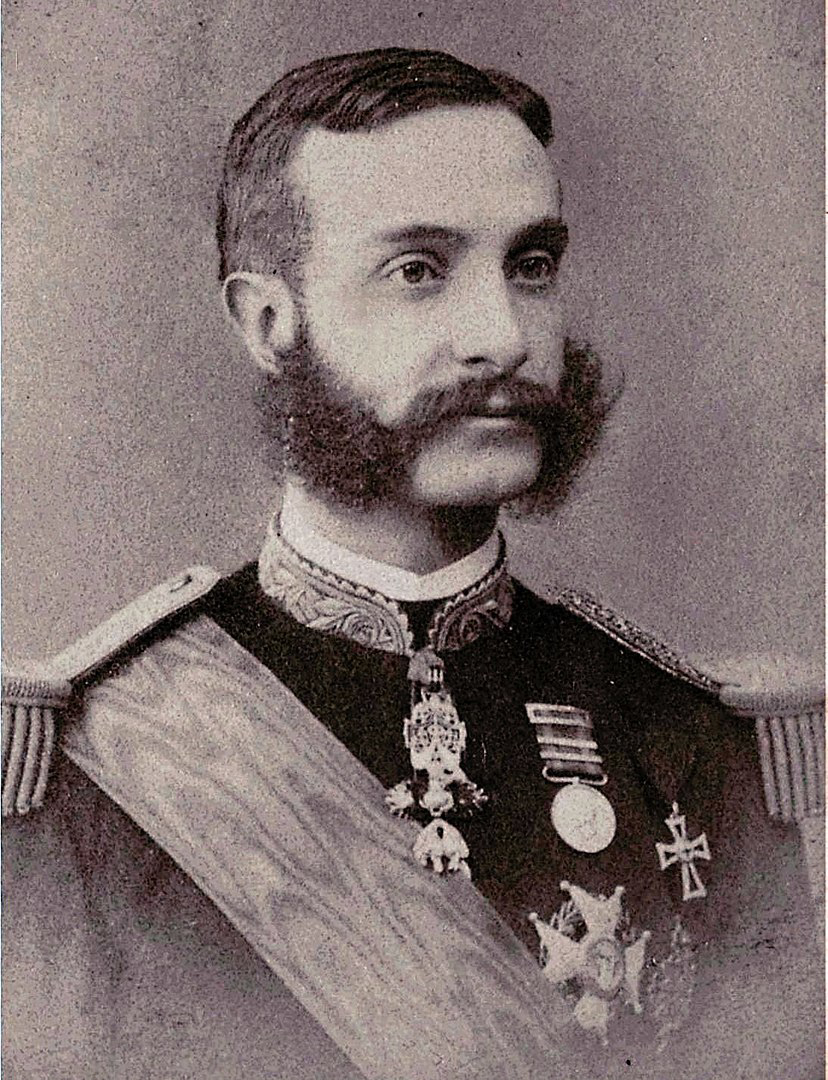
Alfonso XII
Madrid, 08 de November de 1857 - Madrid, 25 de November de 1885
View in TimelineBiography
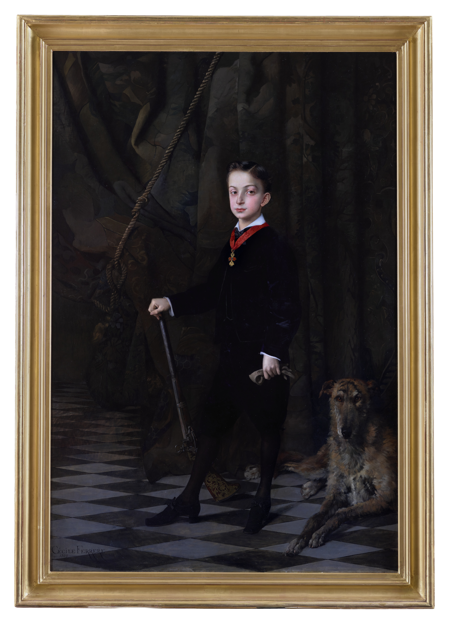
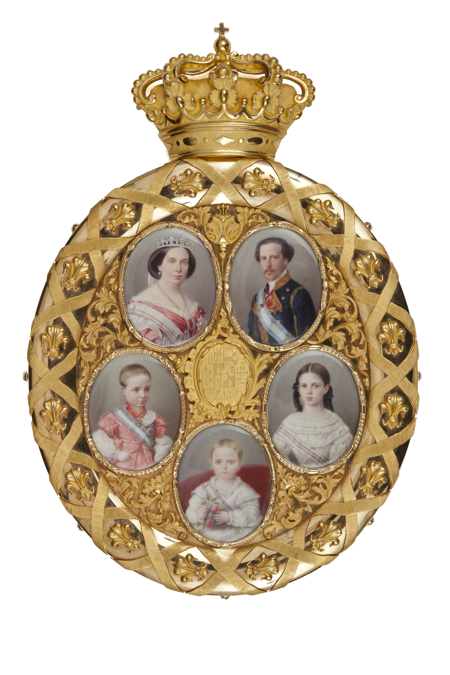
The sixth of ten children born to Queen Isabella II (1830-1904) and her husband and King consort Francisco de Asís (1822-1902), the future Alfonso XII was first educated by the Marquess of Alcañices, then head of the Prince's Chamber. In 1865, the responsibility of his education was given to the Count of Ezpeleta. That same year, General Álvarez Osorio was appointed his head of studies; Canon Cayetano Fernández, his professor of religion, later succeeded by the Archbishop of Burgos; and Bernardo Uribarri, Isidro Losa and Guillermo Morphy were appointed his Gentlemen of the Bedchamber.
After the Revolution of September 1868, and the royal family’s exile in France, Prince Alfonso studied for a year at the Collège Stanislas in Paris. On 25th June 1870, upon the advice of Juan Bravo Murillo and other politicians who supported the Bourbons, Isabella II abdicated her rights to the Crown in favour of her son. In the following years, Prince Alfonso’s education was completed with various stays at the Theresianum in Vienna, one of the most exclusive private schools in the Austro-Hungarian Empire, and the Sandhurst Military Academy in Great Britain, which he joined at the behest of Antonio Cánovas del Castillo, leader of the restorationist movement since 1873. In addition to contributing to his intellectual development, Alfonso XII’s education enabled him to learn different languages (English, French and German, as well as Spanish) and brought him into contact with different forms of government, from French republicanism to the British parliamentary system, as well as the monarchical authoritarianism of Austria and Hungary.
Scarcely had the Prince completed his education when the military uprising of General Martínez Campos in Sagunto on 20th December 1874 led to his proclamation as King of Spain. Alfonso XII was to embody a Monarchy more in keeping with the spirit of the late 19th century. Not for nothing did the as-yet Prince, a few days before his proclamation, state himself to be a “man of the century, truly liberal” in his so-called "Sandhurst Manifesto".
The reign of Alfonso XII ushered in a long period of political stability in Spain, which the military uprising of 1883 failed to disrupt. Its beginnings were encouraging. The third Carlist War ended in 1876, the King taking part in the final offensive, and two years later, the “Ten Years’ War” in Cuba also came to an end. Moreover, the period between 1876 and 1886 was marked by an economic boom and expansion which resulted in greater social peace, compared to earlier periods. At the government level, the Restoration was governed by the Constitution of 1876, which would remain in force for a considerable amount of time. Inspired by Antonio Cánovas del Castillo and drafted and drafted by Manuel Alonso Martínez, the Constitution of 1876 was halfway between the moderate Constitution of 1845 and the democratic Constitution of 1869. As regards the figure of the Monarch, he was not only recognised as the supreme leader of the Armed Forces, but also as the main intermediary between the political parties supporting the regime. In this sense, Alfonso XII ensured the definitive establishment of the "turn of parties" in Spain, between the conservatives led by Antonio Cánovas del Castillo, and the liberals led by Práxedes Mateo Sagasta.
Described by the Spanish diplomat Augusto Conte as a man who stood out for "his handsome presence, the distinction of his manners, his great kindness and the intelligence he displayed in all he said", Alfonso XII was highly popular among the people. Concerned with solving some of Spain’s most acute social problems of the time, the King took an especial interest in the needs of the victims of the floods in Murcia (1879) and the earthquakes in eastern Andalusia (1884). He personally visited those affected by the cholera epidemic in the summer of 1885, setting aside various rooms in the Palace of Aranjuez for convalescents.
He was married to María de las Mercedes of Orléans (1860-1878), Infanta of Spain, but the Queen died barely six months after the wedding on 23rd January 1878. A year later, Alfonso XII married the Archduchess Maria Christina of Austria (1858-1929) on 29th November 1879. The King and Queen had three children: María de las Mercedes (1880-1904), Princess of Asturias and also Princess of the Two Sicilies, by marriage to her cousin Carlos of Bourbon-Two Sicilies (1870-1949); the Infanta María Teresa (1882-1912), Princess of Bavaria by marriage to Prince Ferdinand of Bavaria (1884-1958); and Alfonso XIII (1886-1941), proclaimed King at birth due to the untimely death of his father in Madrid on 25th November 1885, from tuberculosis.
The remains of Alfonso XII are buried in the Pantheon of Kings and Queens in the Monastery of El Escorial.
Source: Royal Academy of History (https://www.rah.es)