Use of Cookies

The Royal Collections Gallery uses its own and third-party cookies, mainly for technical purposes, which are necessary to provide our services and provide you with relevant content. More information in our cookies policy. Cookies Policy.

ACCEPT to confirm that you have read the information and accepted their installation. You can change your browser settings.

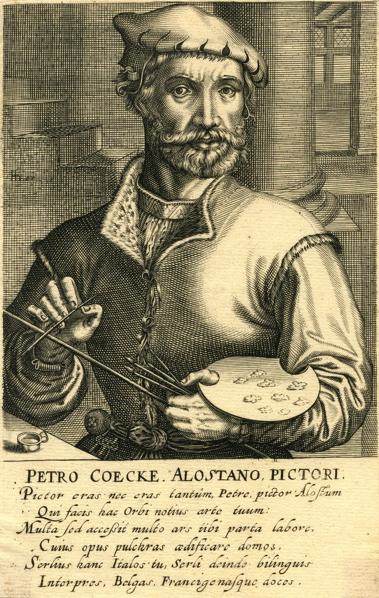
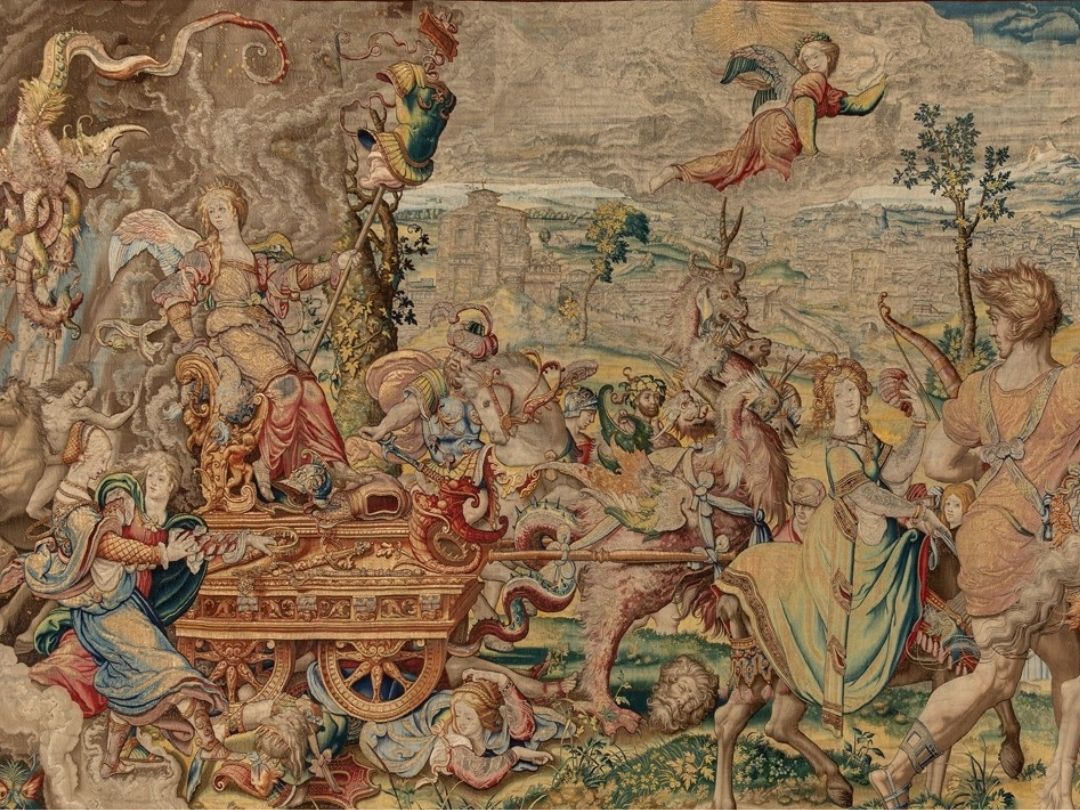
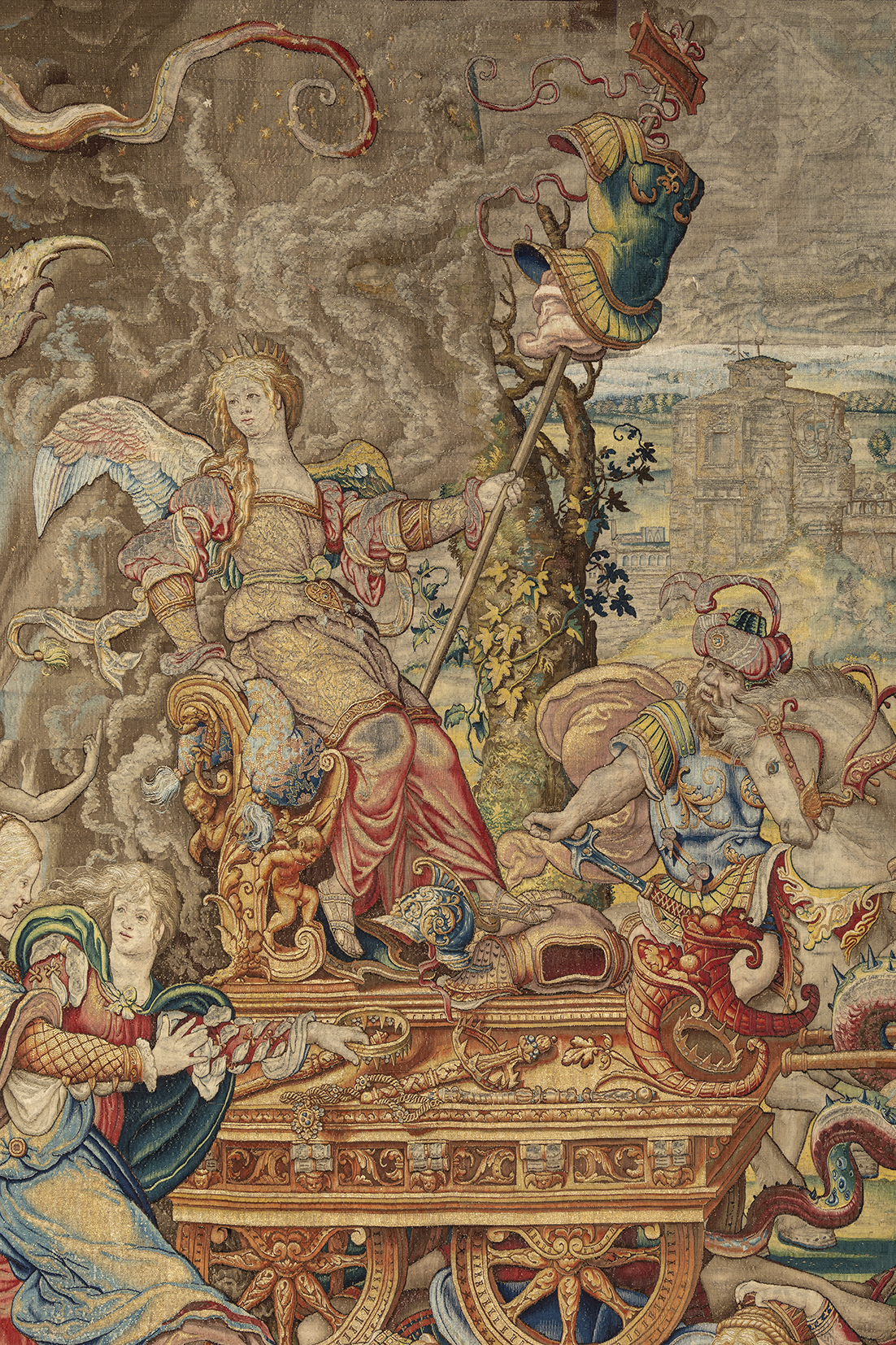
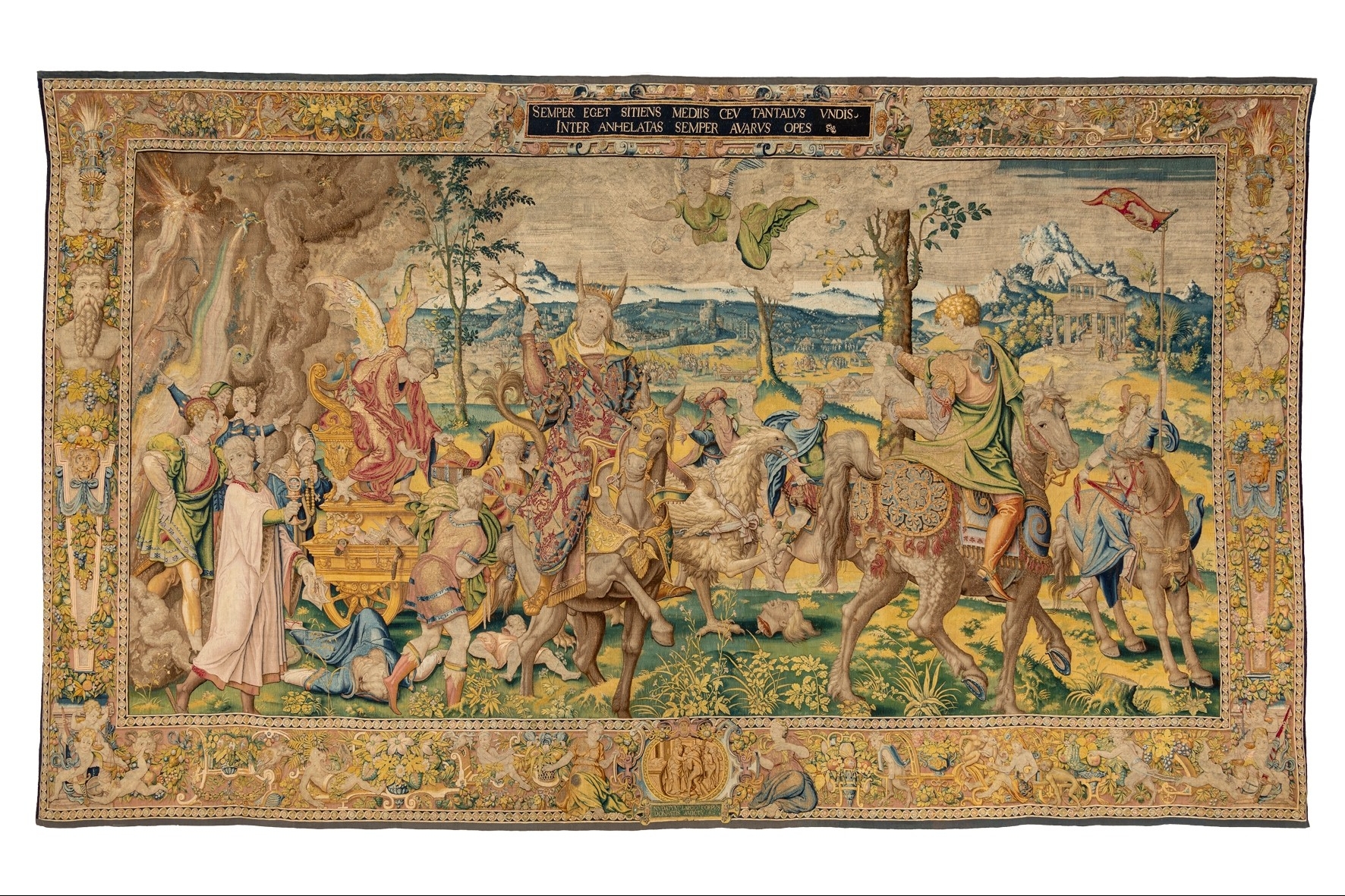
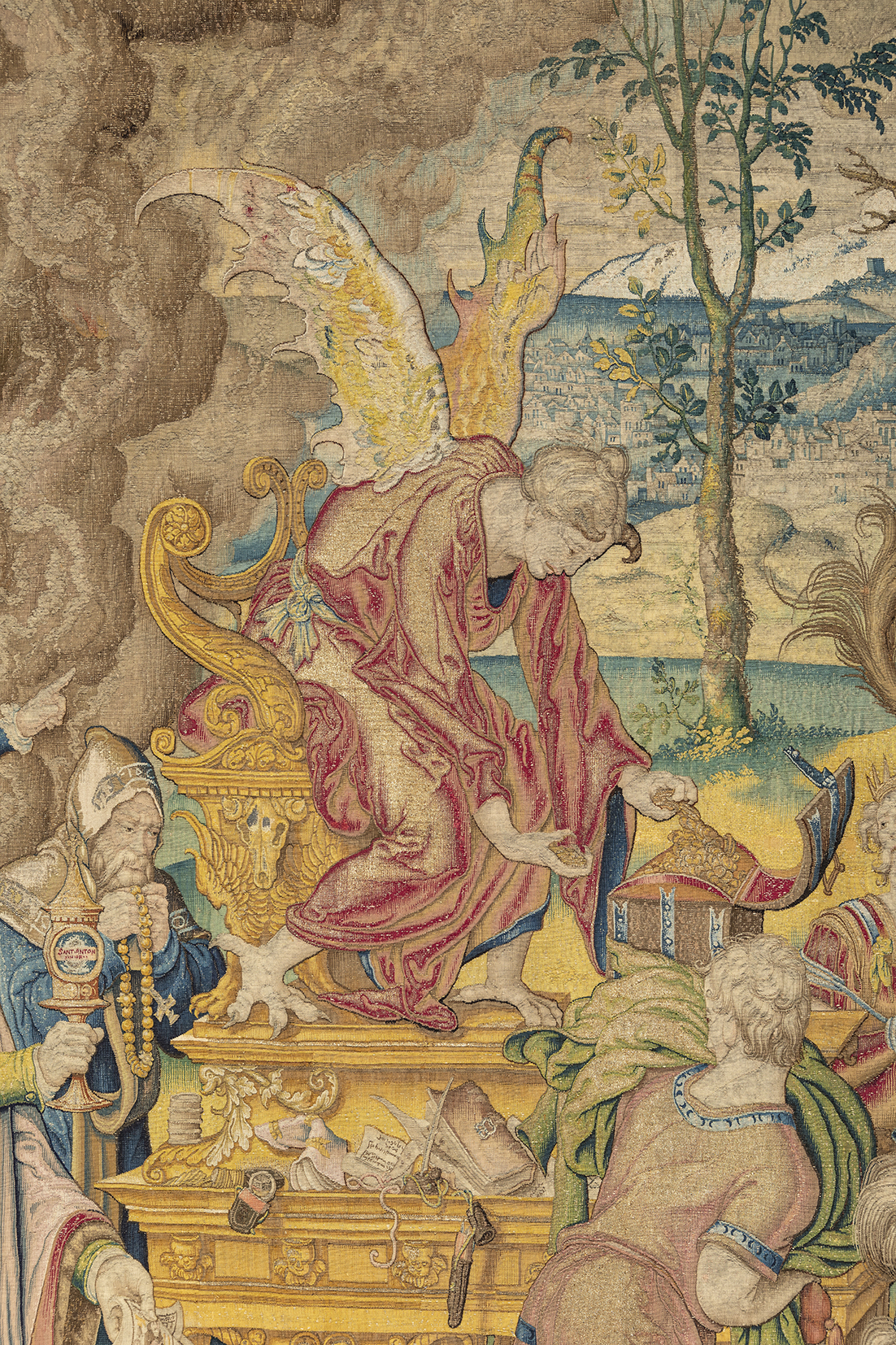
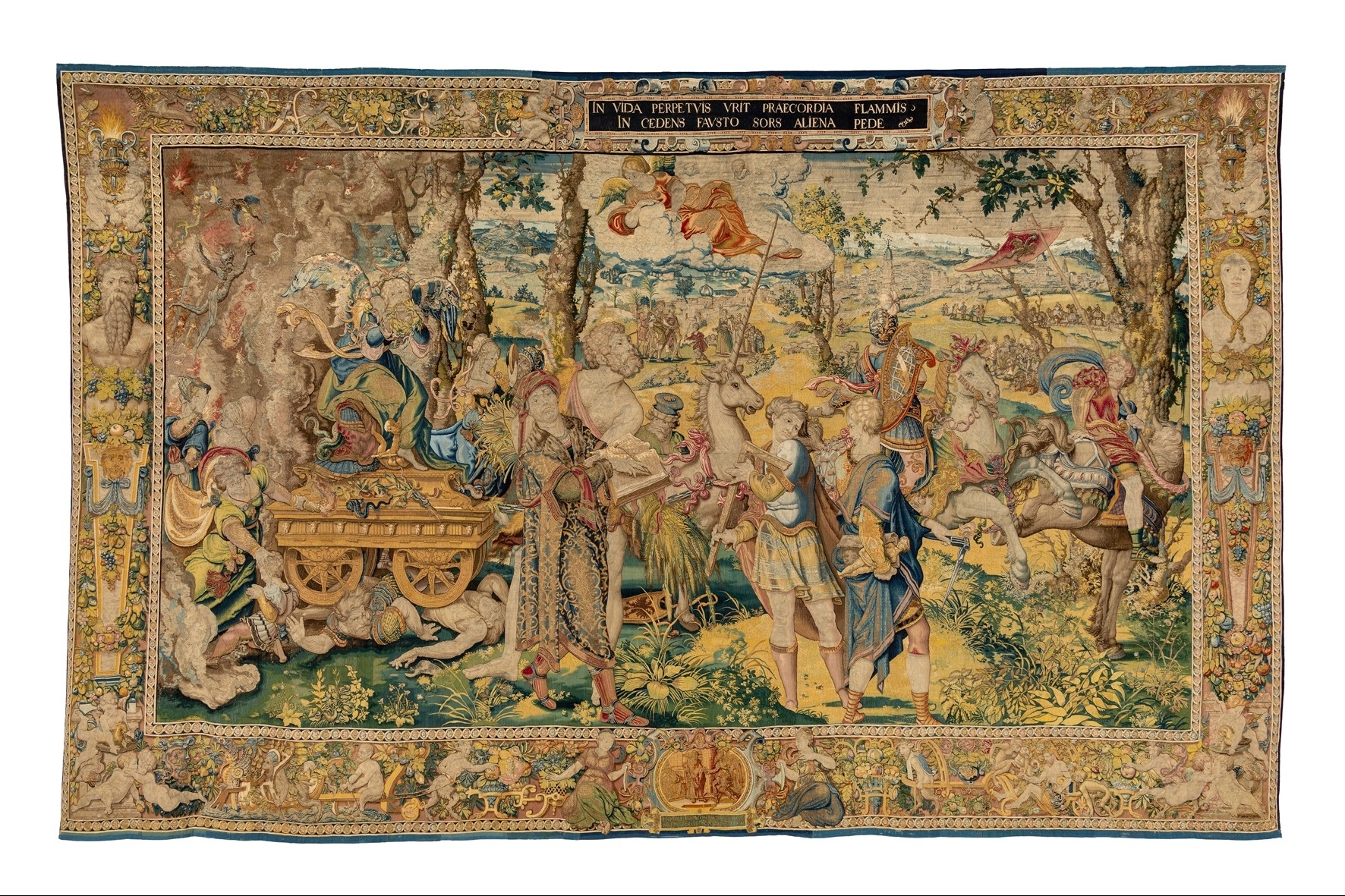
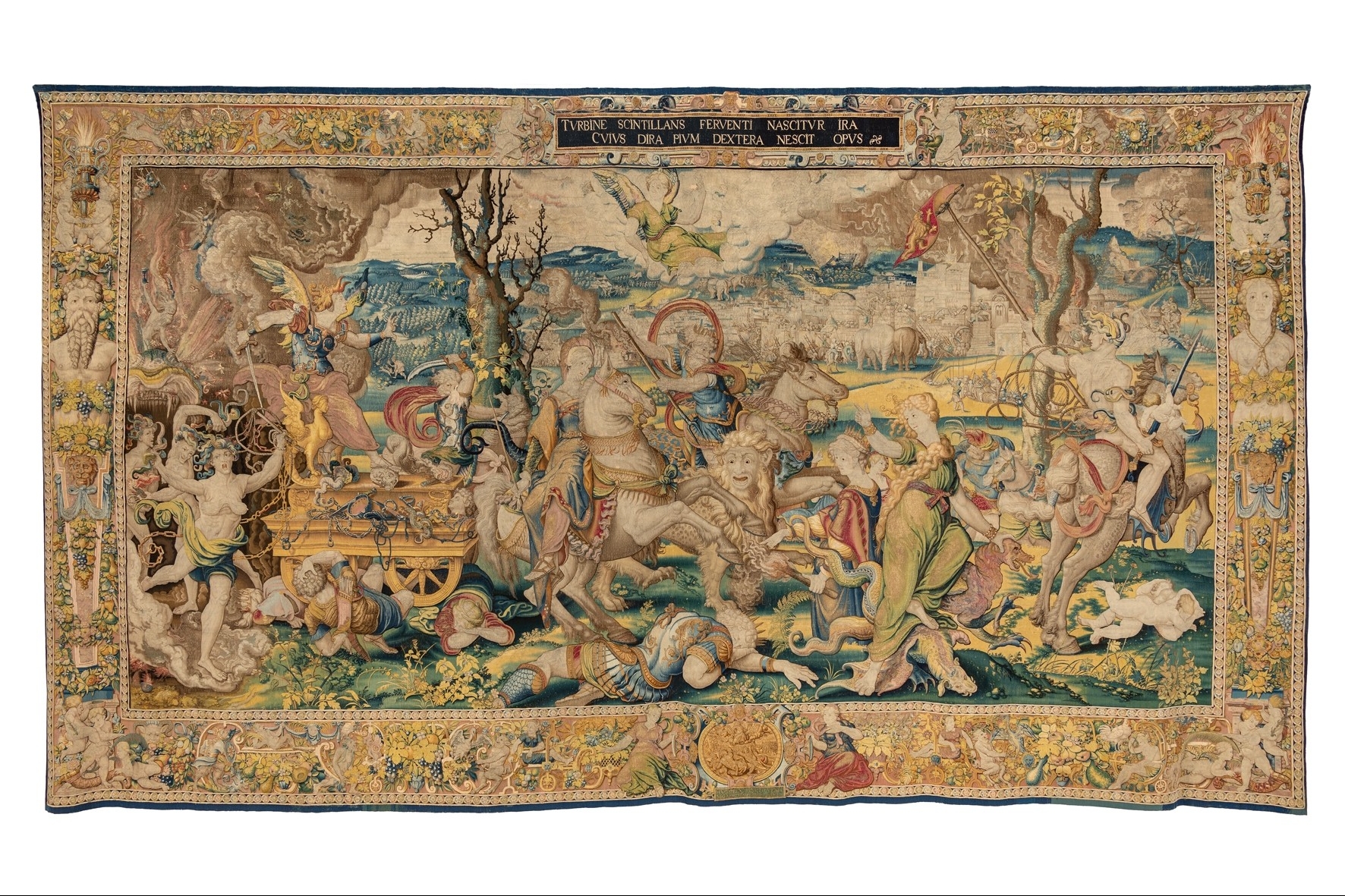
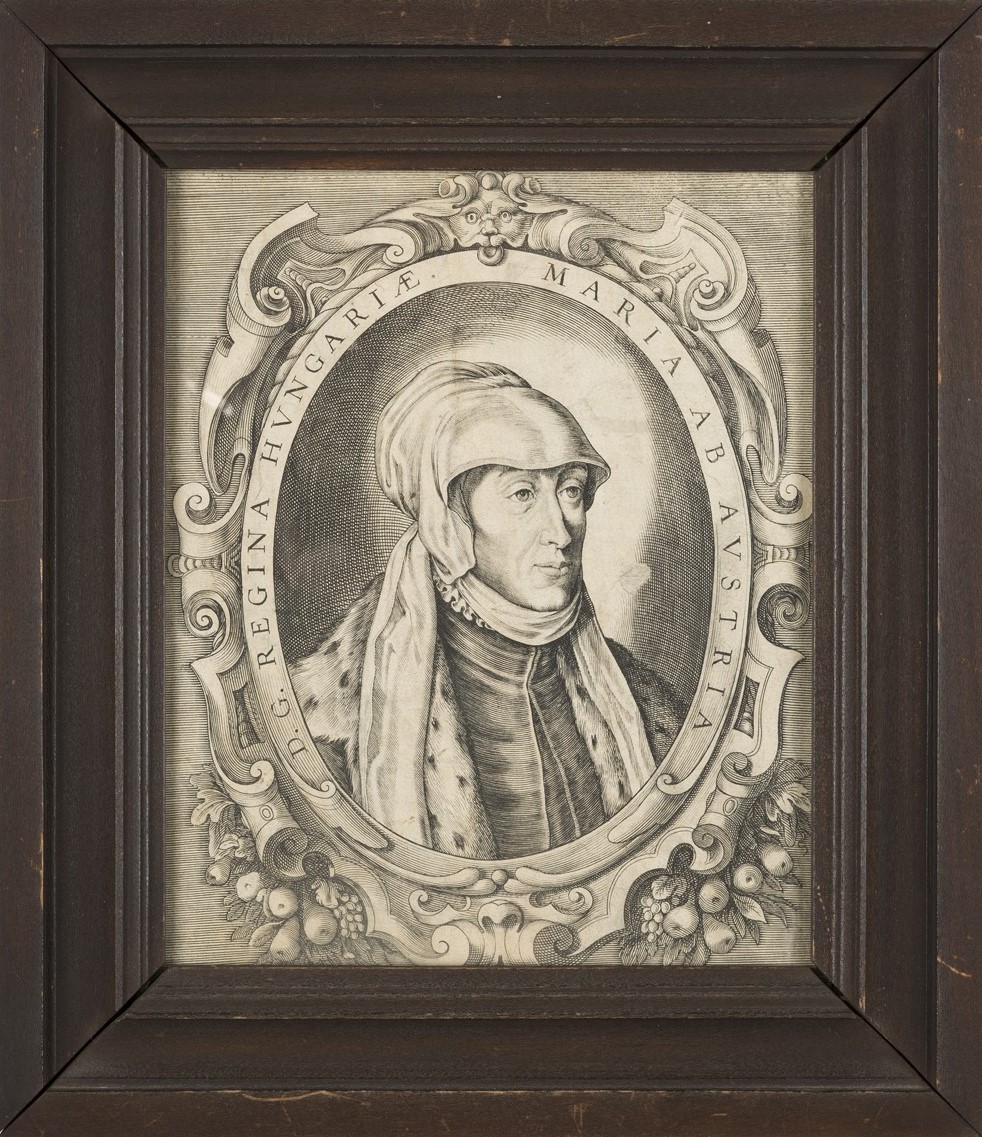
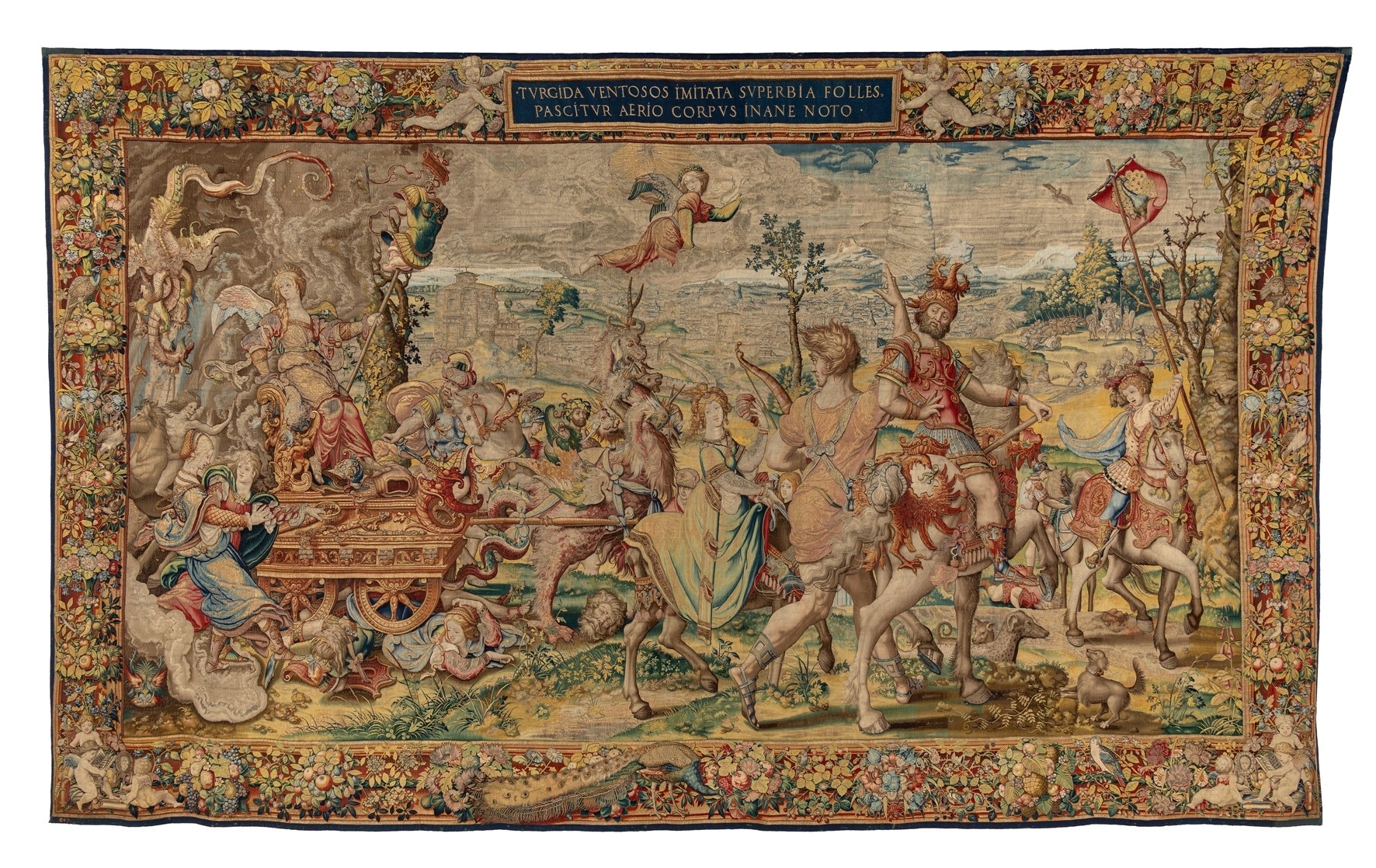
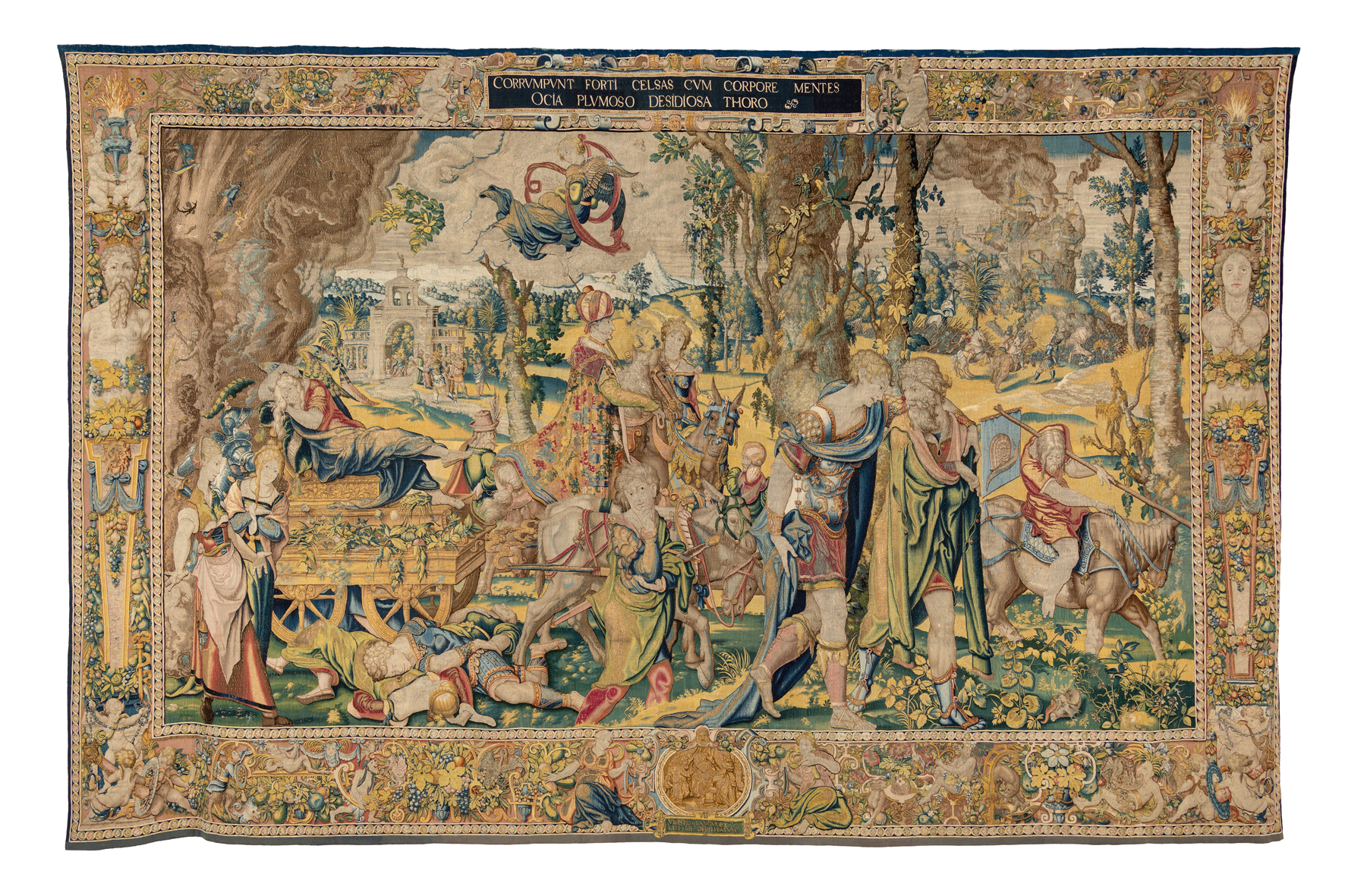
For the first time, the exhibition Iconography of Evil. Tapestries of “The Seven Deadly Sins” brings together two exceptional tapestry series from the collection of Patrimonio Nacional. Commissioned in the 16th century, they reflect both the mastery of Pieter Coecke van Aelst (1502-1550) and the importance of textile art for the Spanish monarchy. Coecke van Aelst was a Flemish painter, draughtsman and printmaker, known for his work as a designer of tapestry cartoons and for his role in the dissemination of the Renaissance style in northern Europe. These two sets of tapestries, formerly in the collections of Mary of Hungary (1505-1558) and the Count of Egmont (1522-1568), were acquired by Philip II (1527-1598) and have been witnesses to centuries of history and to different uses and interpretations.
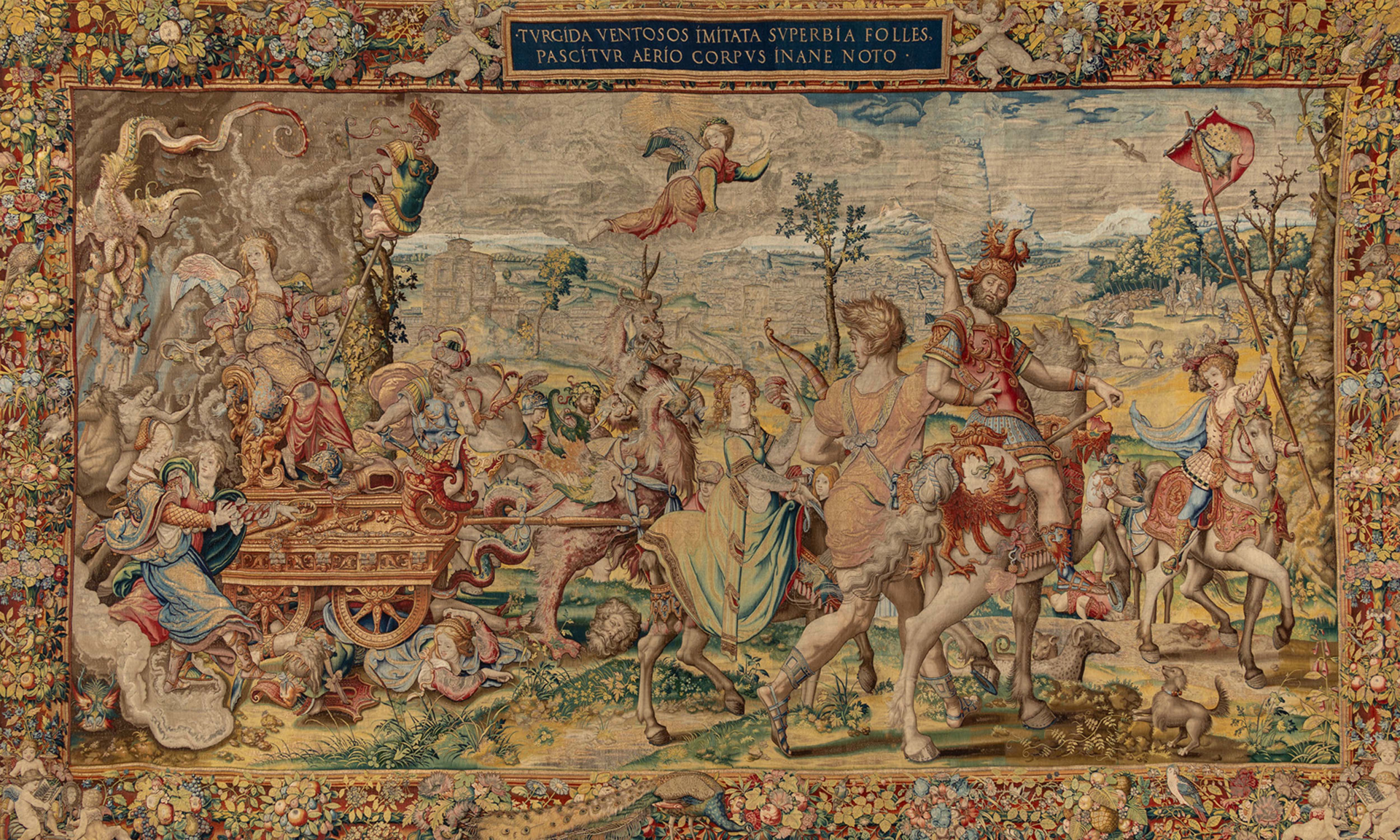
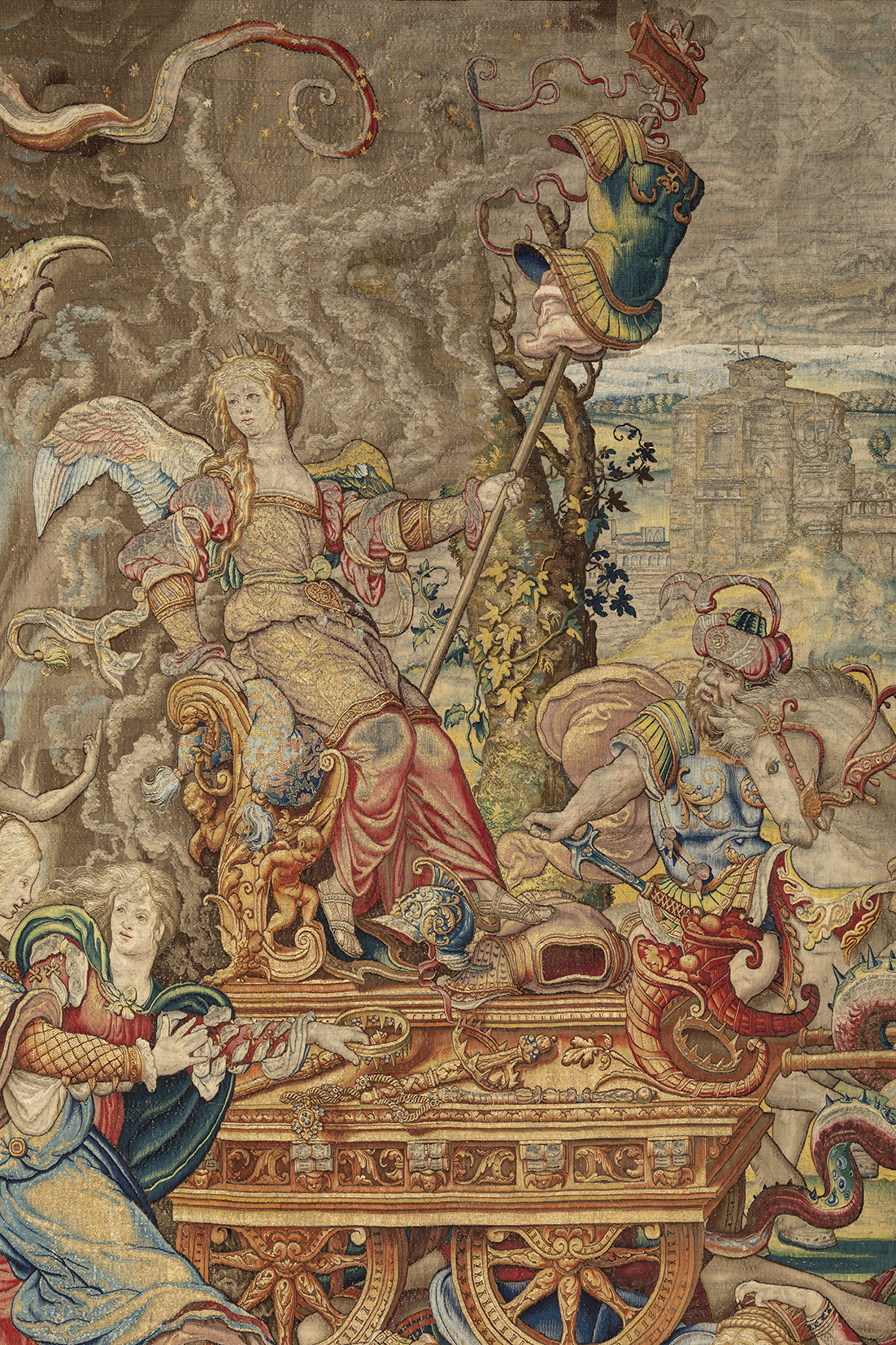
The exhibition has two principal sections. The six surviving tapestries from the series that belonged to the Count of Egmont are presented in the traditional order of the Sins: Avarice, Sloth, Anger, Lust, Gluttony and Envy. In contrast, the four that remain from the set of Mary of Hungary, governor of the Low Countries, follow the sequence which she used for their display in the great hall of her palace of Binche, Belgium, during the visit of the Emperor Charles V and his son Philip II in 1549: Pride, Gluttony, Lust and Sloth. Through this paired arrangement visitors can compare the different visual narratives and also understand the evolution of moral thought in the Renaissance.
Complementing the presentation of the tapestries, five displays focus on the symbology of these sins, the production of the tapestries in Flanders, their arrival in Spain, their function at court and their status in the modern age. The exhibition encourages a reflection on art as a vehicle for moral teaching and an expression of power while also highlighting the exceptional survival and the study of these tapestries, which are fundamental for an understanding of the history of Spain’s textile heritage.

  • Opening Hours

    Monday to Saturday from 10 am to 8 pm. Sundays and Bank Holidays from 10 am to 7 pm.

  • Recurso educativo

  • Admission

    Plaza de la Armería: visits the Royal Collection Gallery and temporary exhibitions. Cuesta de la Vega: visits for pre-booked groups and temporary exhibitions.

  • Prices

    • General rate 14€

    • Exclusive rate 6€

The Seven Deadly Sins: origins and meaning

With all temporal possessions, man’s aim is to possess a certain perfection or glory

Sin and its impact on morality have been the subject of reflection since Antiquity. The Christian tradition adopted these concepts through texts such as the Psychomachia by Prudentius (4th century), an allegorical poem in which the virtues and vices fight over the human soul, influencing medieval iconography.
In the 6th century, Gregory the Great systematised the Seven Deadly Sins in his Moralia in Job, establishing a moral classification that survived into the Middle Ages through scholasticism and religious writings. During the Renaissance this system was enhanced by the use of a more complex visual language to illustrate the sins.
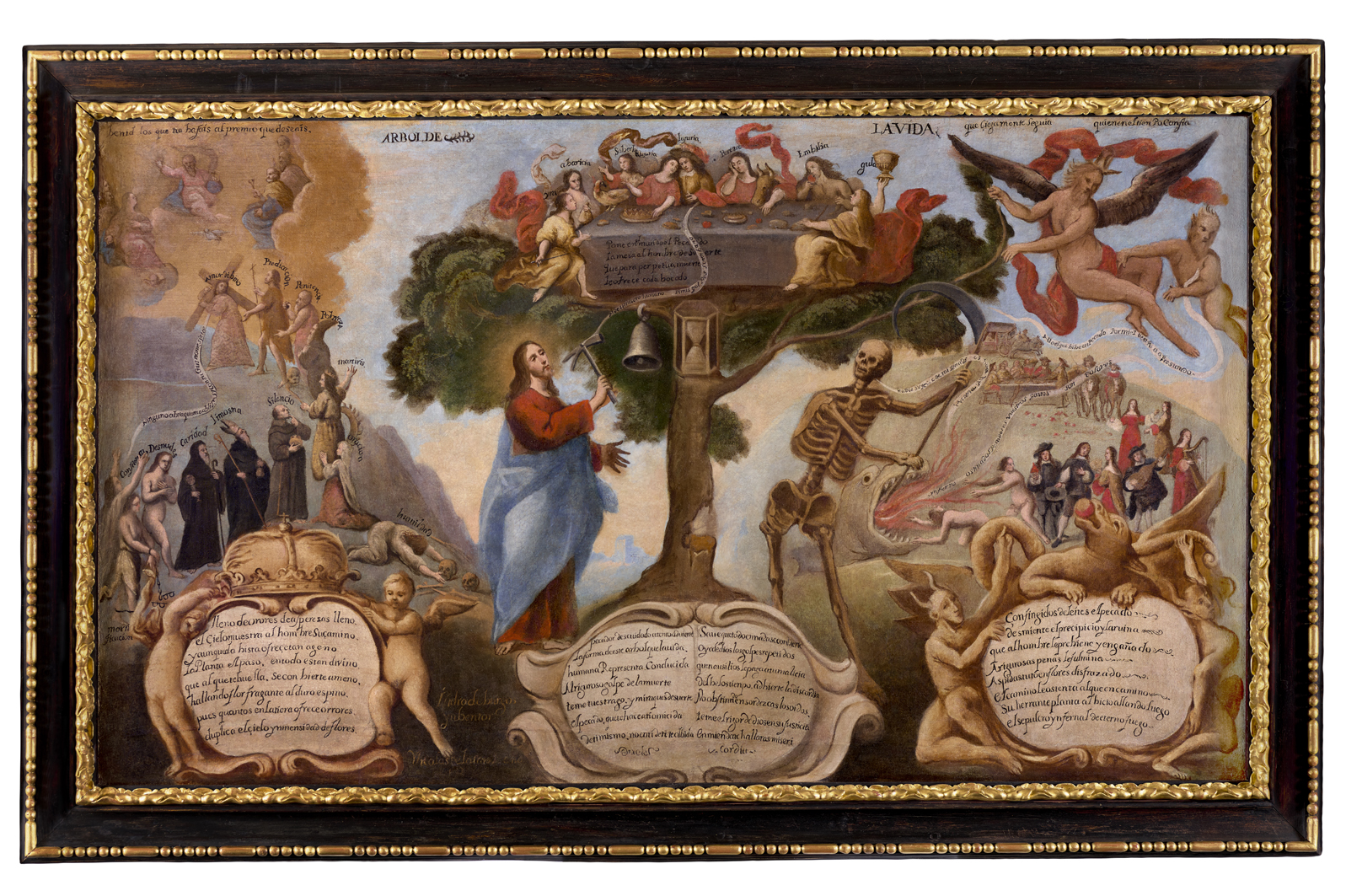
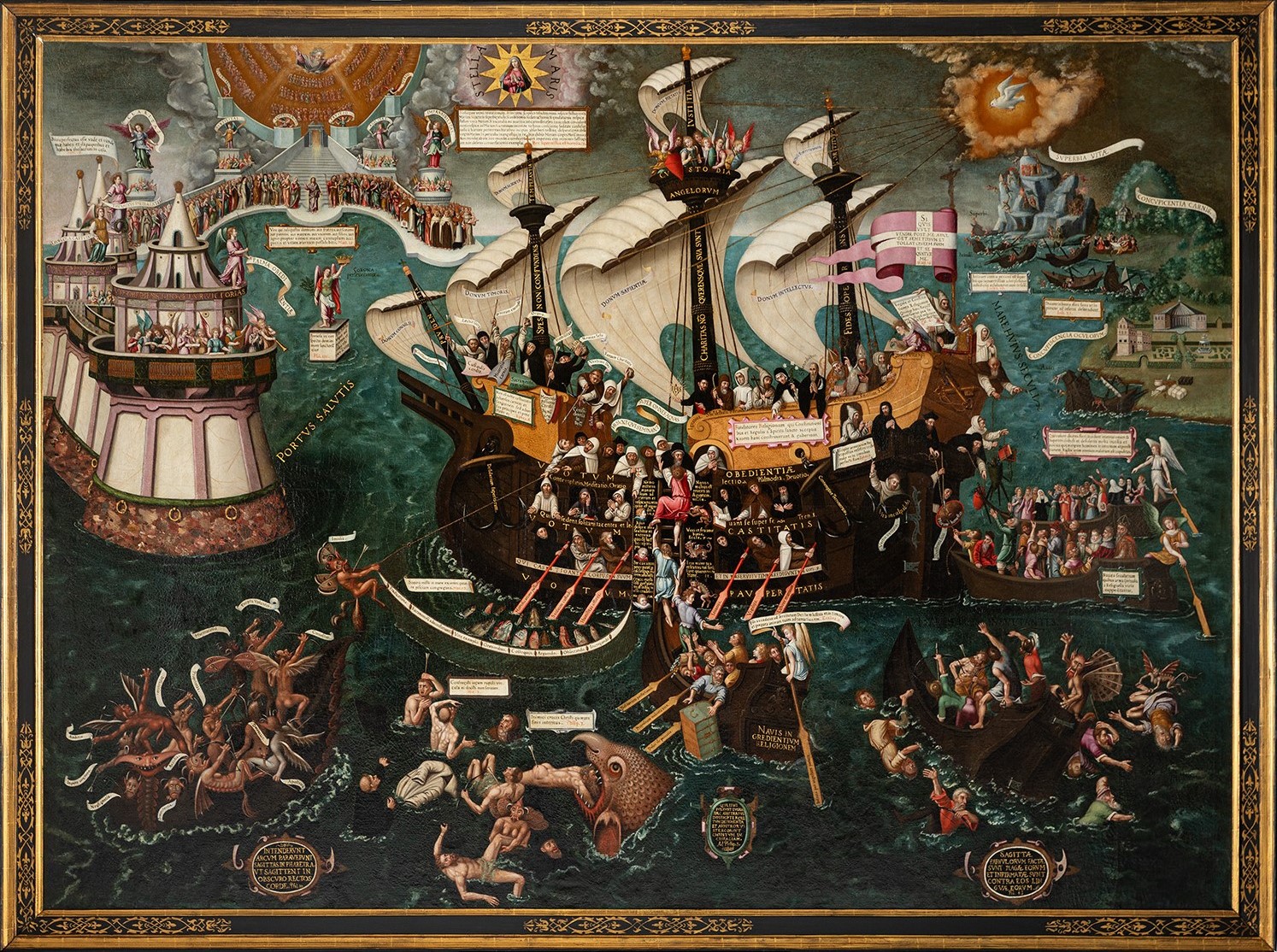
Pieter Coecke van Aelst reinterpreted these models in his tapestries, giving each sin its own identity. Influences from earlier representations resonate in his work, including The Ship of Fools by Jheronimus Bosch in which sinners sail aimlessly towards damnation, and The Ship of the Church, which offers salvation to those who follow the path of virtue. There are also recollections of The Allegory of the Tree of Life and the Last Judgment by Isidro Burgos, in which the vices are represented with a moralising starkness. In his tapestries Coecke transformed these references into theatrical scenes, intensifying the visual impact and the narrative on the fate of the soul.

La creación de los tapices: arte y técnica en Flandes

The master Pieter van Aelst, painter of Antwerp, made the designs and instructions

Designed in the 1530s by Pieter Coecke van Aelst and in some cases woven in the prestigious workshops of Willem de Pannemaker in Brussels, these tapestries reflect the splendour of this art form in 16th-century Flanders. The meticulous technique of the Flemish master weavers, based on the combination of wool, silk and metallic threads, was enhanced by Italian Renaissance innovations, particularly the monumentality and narrative drive of the tapestry cartoons on The Acts of the Apostles by Raphael (1483-1520).
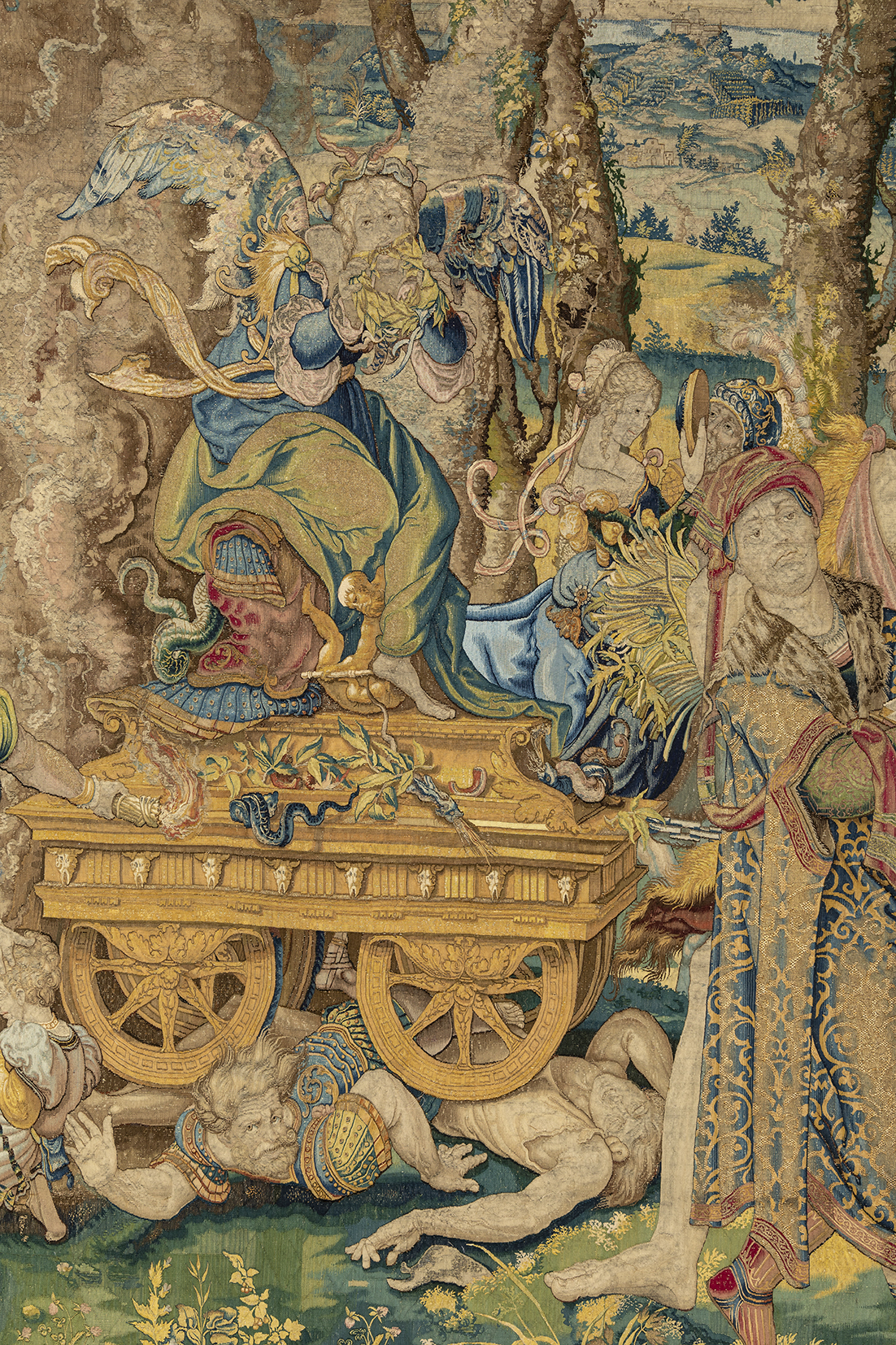
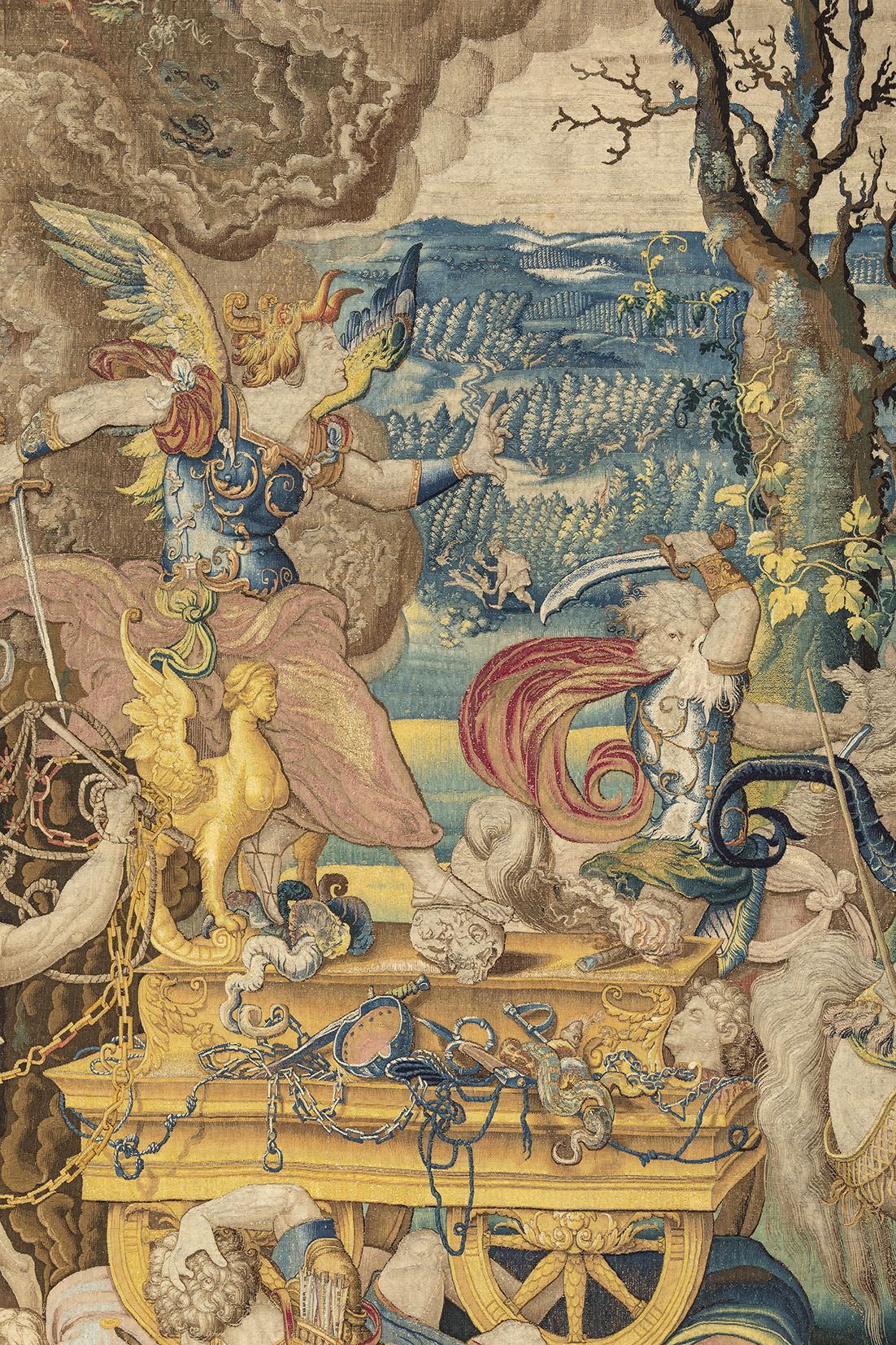
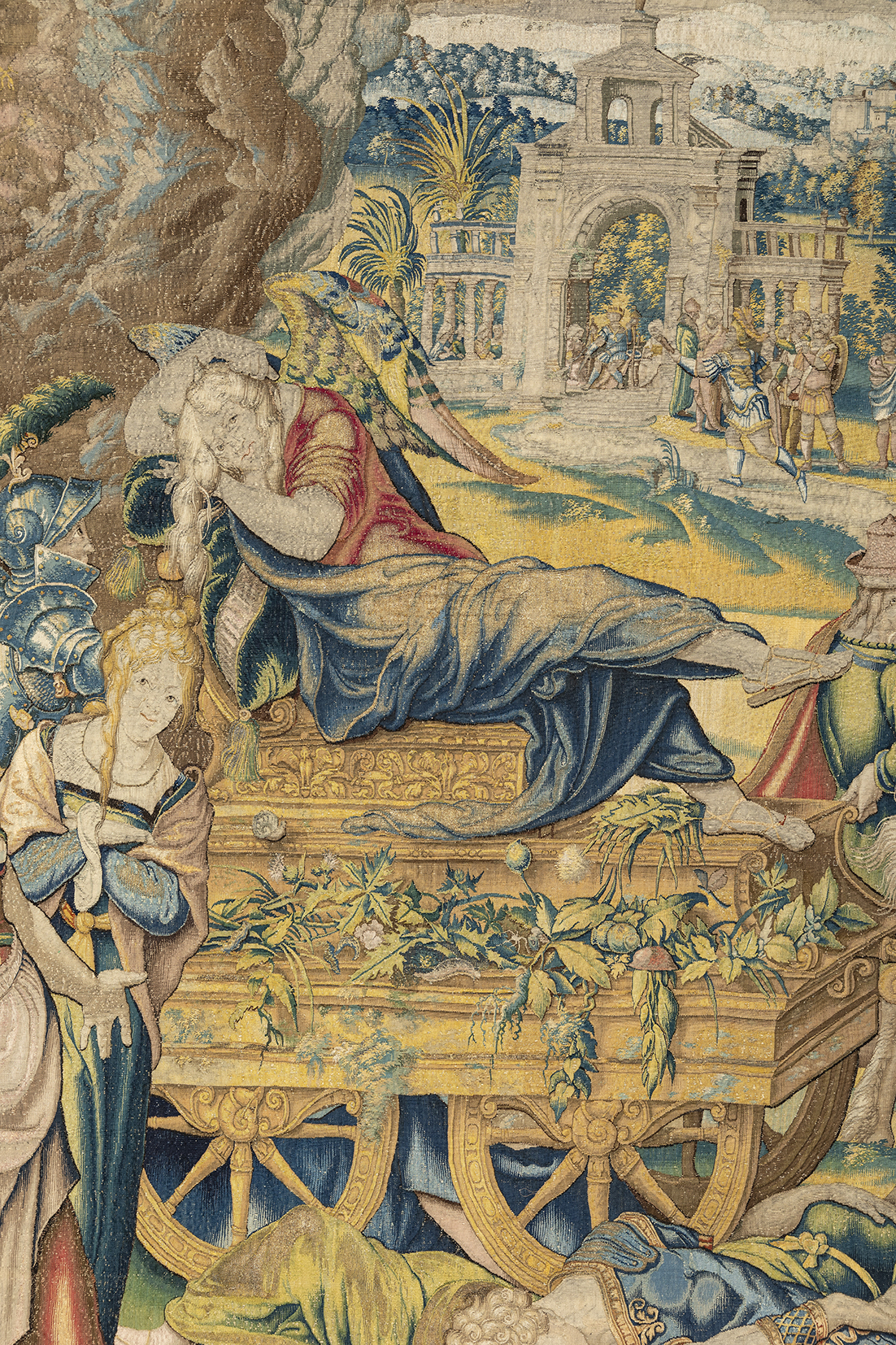
These tapestries not only decorated palaces but also transmitted moral teachings through dynamic compositions that combine allegorical figures, triumphal chariots and fantastical landscapes. The chromatic richness and detailed design of their borders, featuring Latin inscriptions and medallions with virtues, reinforce their moralising message. Their elaborate iconography, inspired by the medieval and humanist tradition, warns of the dangers of the Seven Deadly Sins and exalts virtue, reflecting the fusion of Renaissance art and the refined Flemish tradition.

Philip II and the arrival of the tapestries in Spain

Six pieces of a rich tapestry set of exceptional quality and fineness of silk and gold and silver, with such wonderful figures that, seeing them, they clearly represented what they were

The two series of The Seven Deadly Sins arrived in Spain in the time of Philip II and became part of the great textile holdings of the Spanish monarchy. The first set belonged to Mary of Hungary, Philip’s paternal aunt, who made use of it in her castle of Binche before bequeathing it to her nephew. The second resulted from the confiscation of the assets of Lamoral de Egmont, Count of Egmont, following his execution in 1568.
Both sets entered the royal collections, playing a prominent role in courtly decoration for important events, including the entry at court of kings and queens and important religious festivals such as Corpus Christi.
Aside from their artistic value, these tapestries had a didactic function: through their elaborate allegorical scenes they instilled moral values and served to reaffirm the sovereign’s authority. Their display in palaces and ceremonies emphasised the power of the monarchy and its connection with Christian tradition, consolidating art as a vehicle for dynastic propaganda.

The Tapestry Office: care and use at court

In the 17th century the Spanish Habsburg Monarchs had a system appropriate to maintaining it in good condition 

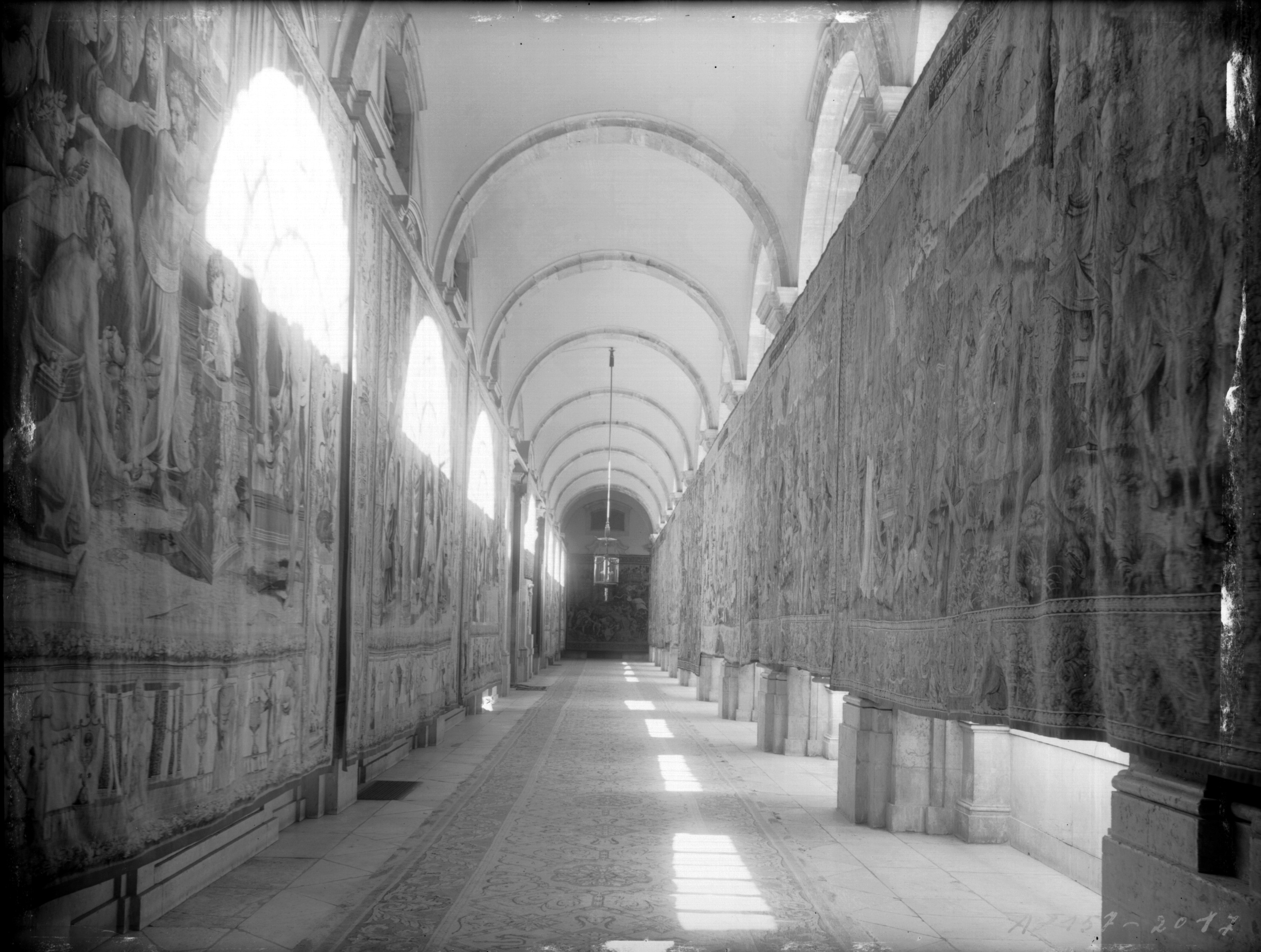
The Tapestry Office first became responsible for the care and maintenance of the royal tapestries in the 17th century, ensuring their correct display in ceremonies and royal residences. The Queen's Tapestry Office was established in 1622, dividing the different series between the monarch and his consort. During the period of the Habsburgs and early Bourbons this department was responsible for the arrangement of the tapestries in the royal residences, establishing the criteria for their care and presentation.
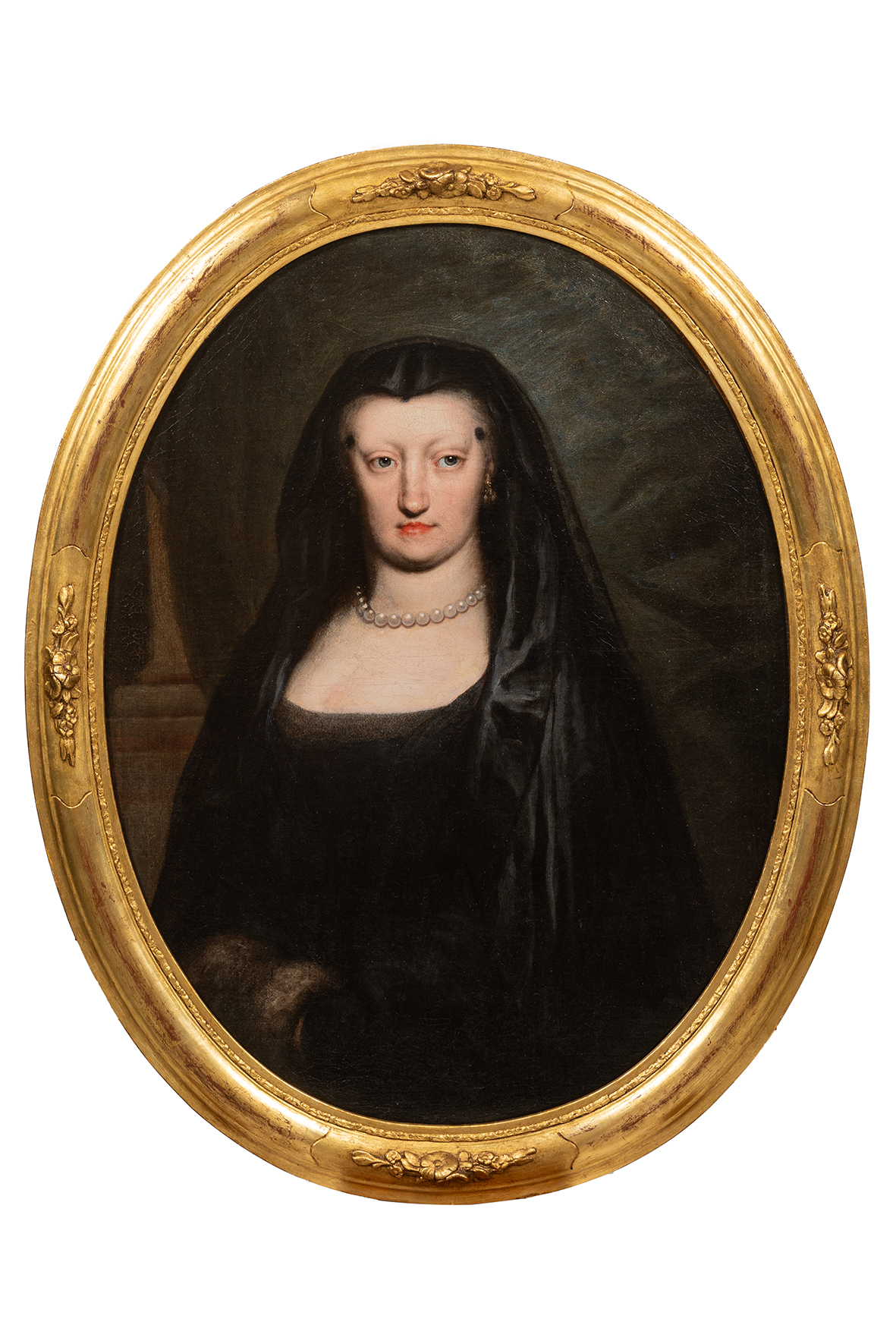
 Mariana of Neuburg (1667-1740), the last Spanish Habsburg Queen, established the Dowager Queen's Tapestry Office, thus ensuring the maintenance of the tapestries in her apartments. The Queen Mother’s Tapestry Office was subsequently set up under Isabella Farnese (1692-1766), consolidating the independent management of these collections. However, with the arrival of Charles III (1716-1788) a centralised administration of the royal collections was favoured, once again unifying the Tapestry Office. Although their role in court ceremony declined in the 19th century, the artistic and historical value of the tapestries persisted, ensuring their preservation for future generations.

Study and cataloguing: from Alfonso XII to the present

The royal predilection for this beautiful tapestry series [of “The Seven Deadly Sins”], meant that the two palace sets are now incomplete

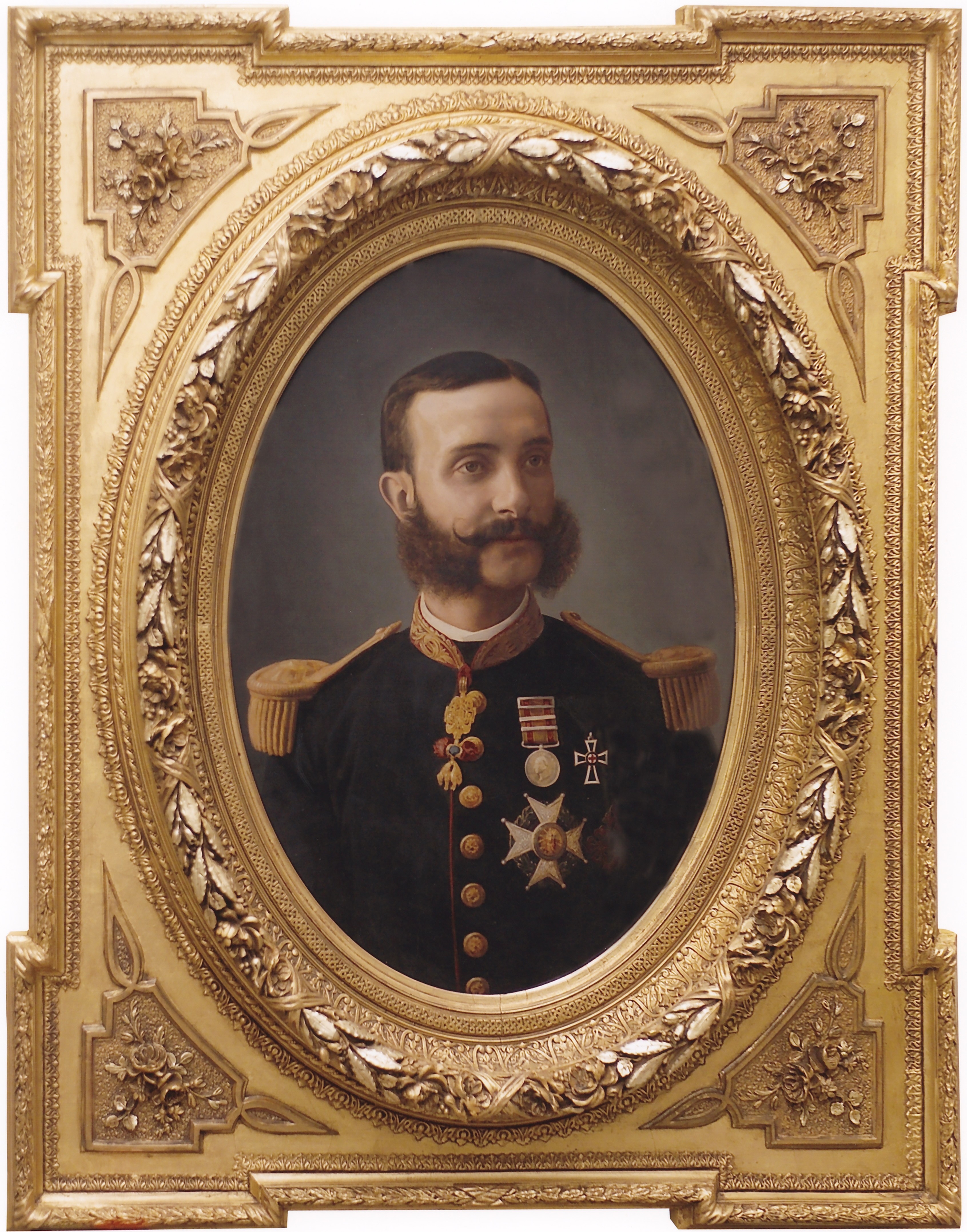
The reassessment of the royal tapestry collection began in the 19th century when Alfonso XII (1857-1885) encouraged their study and classification, aware of their artistic and historical importance. A key figure in this process was Juan Bautista Crooke (1829-1904), Count of Valencia de Don Juan, who promoted the publication of catalogues and the inclusion of tapestries in national and international exhibitions, giving visibility to these works outside the setting of the court.
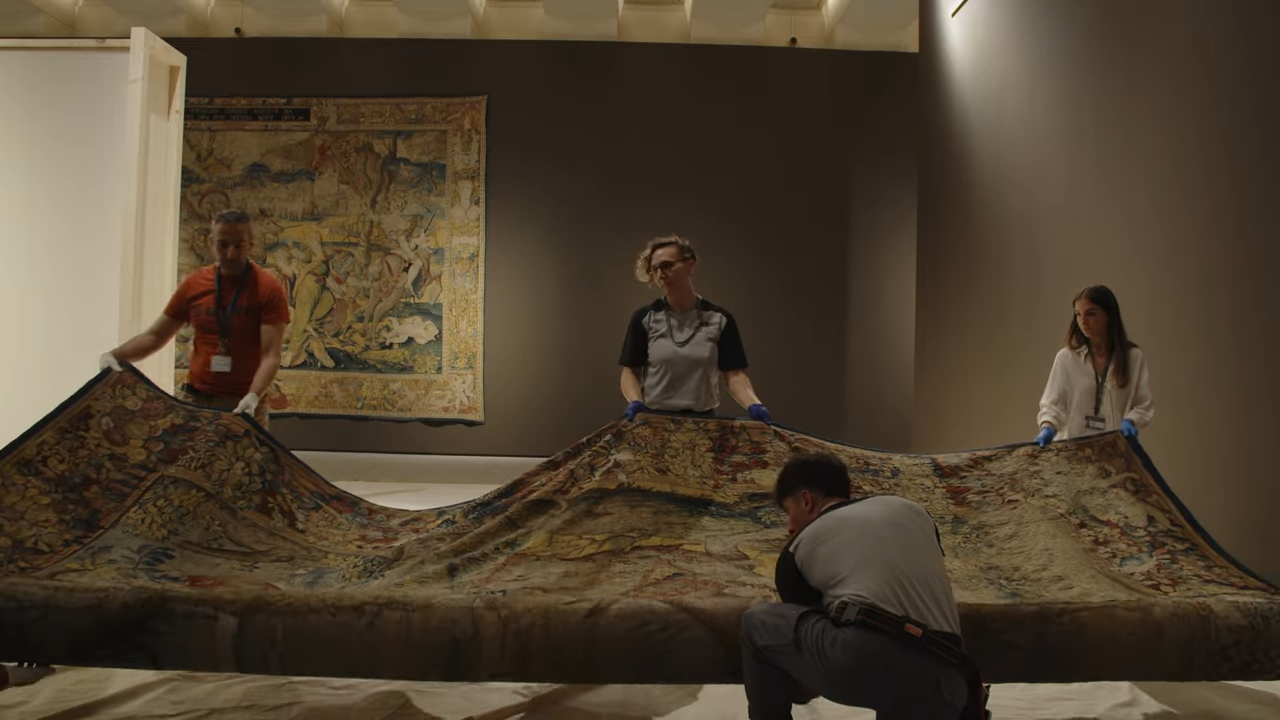
In the 20th century, interest in historical tapestry was consolidated with restoration projects and their integration into museum collections. During the Second Republic the Azaña government proposed the creation of a museum of tapestries and carriages, a project which, although ultimately not undertaken, laid the foundations for the current Galería de las Colecciones Reales. Over time, research into these tapestries and their conservation have evolved, ensuring their preservation and dissemination through specialist studies, restoration projects and exhibitions. In the present day these works continue to be the subject of research, highlighting their value as items of Spanish cultural heritage and their role in the history of European art.

Authors and Collectors

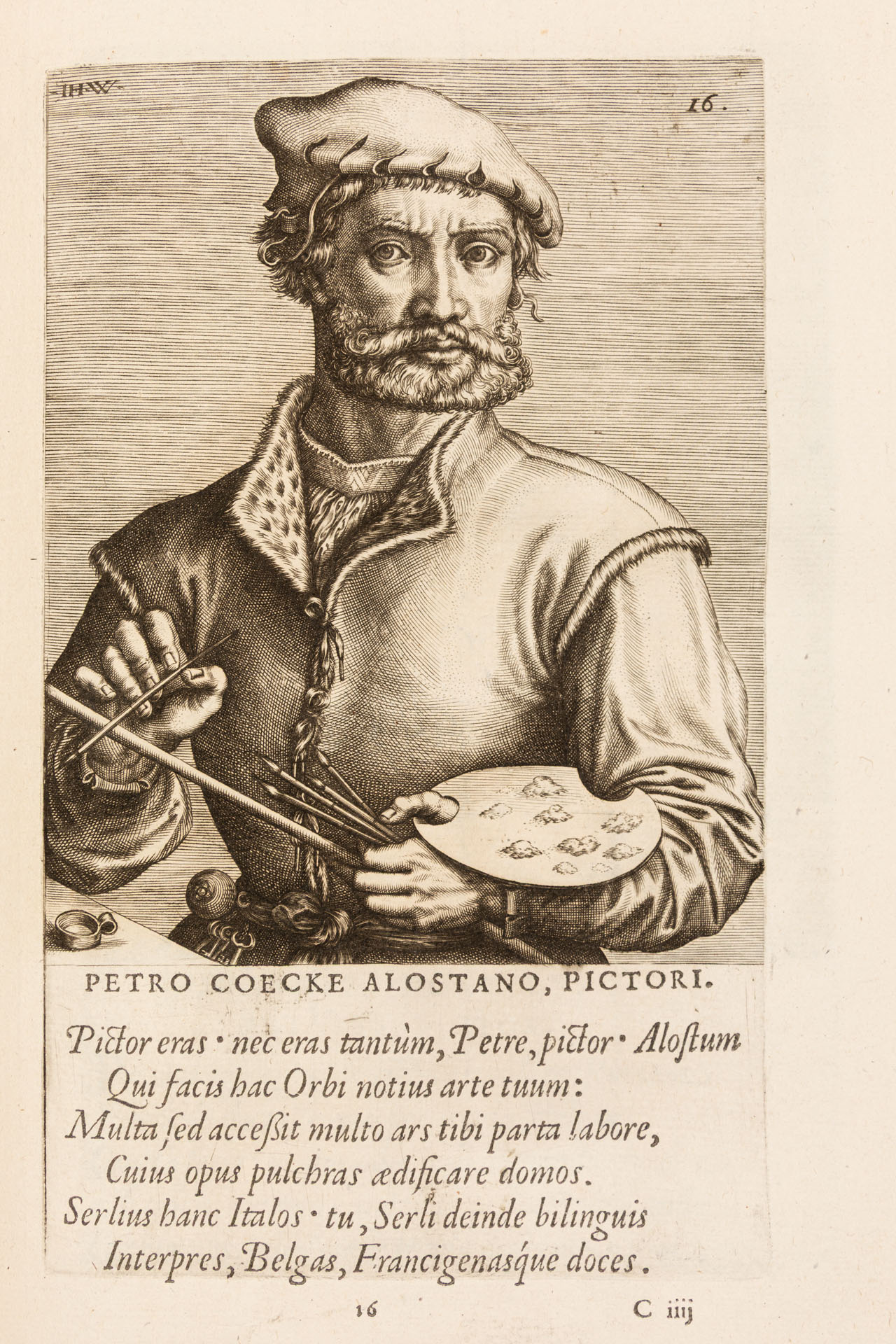
Coecke van Aelst, Pieter
The Author

Coecke van Aelst, Pieter

(Aalst, 1502 - Bruselas, 1550)

Pieter Coecke van Aelst o Pieter van Aelst (Aalst -Alost en español-, 14 de agosto de 1502-Bruselas, 6 de diciembre de 1550) fue un pintor, grabador, dibujante y editor flamenco. Es también recordado como productor de tapices y porque fue suegro de Pieter Brueghel el Viejo. Fue asimismo tío del también pintor Joachim Beuckelaer. No hay que confundirlo con Pieter van Aelst, un famoso productor de tapices.

Read more
Pannemaker, Wilhelm
The Author

Pannemaker, Wilhelm

Willem de Pannemaker fue un tejedor que permaneció activo entre los años 1535 y 1578 en Bruselas. Realizó a lo largo de su vida famosos tapices destinados a papas, reyes y aristócratas. Se desconocen el lugar y la fecha exactos de su nacimiento y de su muerte.

Read more
Philip II
Monarch

Philip II

(Valladolid, 1527 - El Escorial (Madrid), 1598)

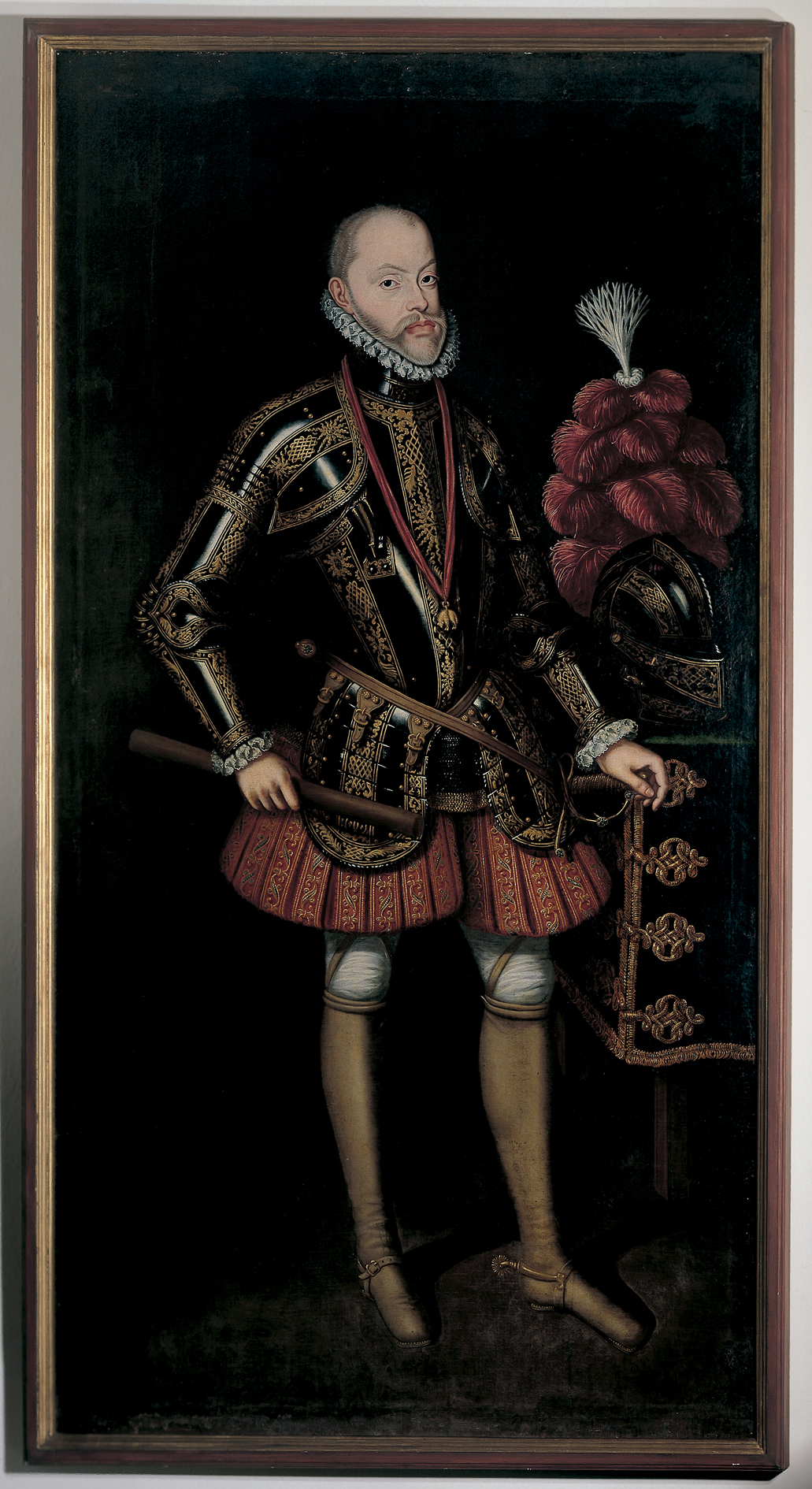
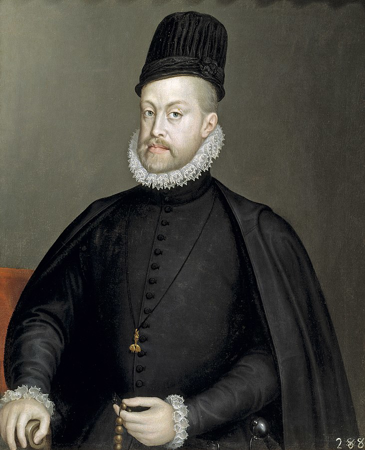
The eldest son of Charles I of Spain and V, Holy Roman Emperor (1500-1558) and Isabella of Portugal (1503-1539), the future Philip II was educated by his tutor, Juan de Zúñiga, by Cardinal Silíceo, his teacher of elementary education and confessor, and by Juan Ginés de Sepúlveda, who provided his pupil with a humanist education. Prince Philip’s political apprenticeship commenced in 1543, when he first replaced his father, Charles I, as Governor of Spain. In 1548, the heir to the Crown set out on a long tour of northern Italy, Austria, Germany and the Netherlands, thus visiting some of the territories that he would rule over in the future.Married four times, Philip II's wives were María Manuela de Portugal...

Read more
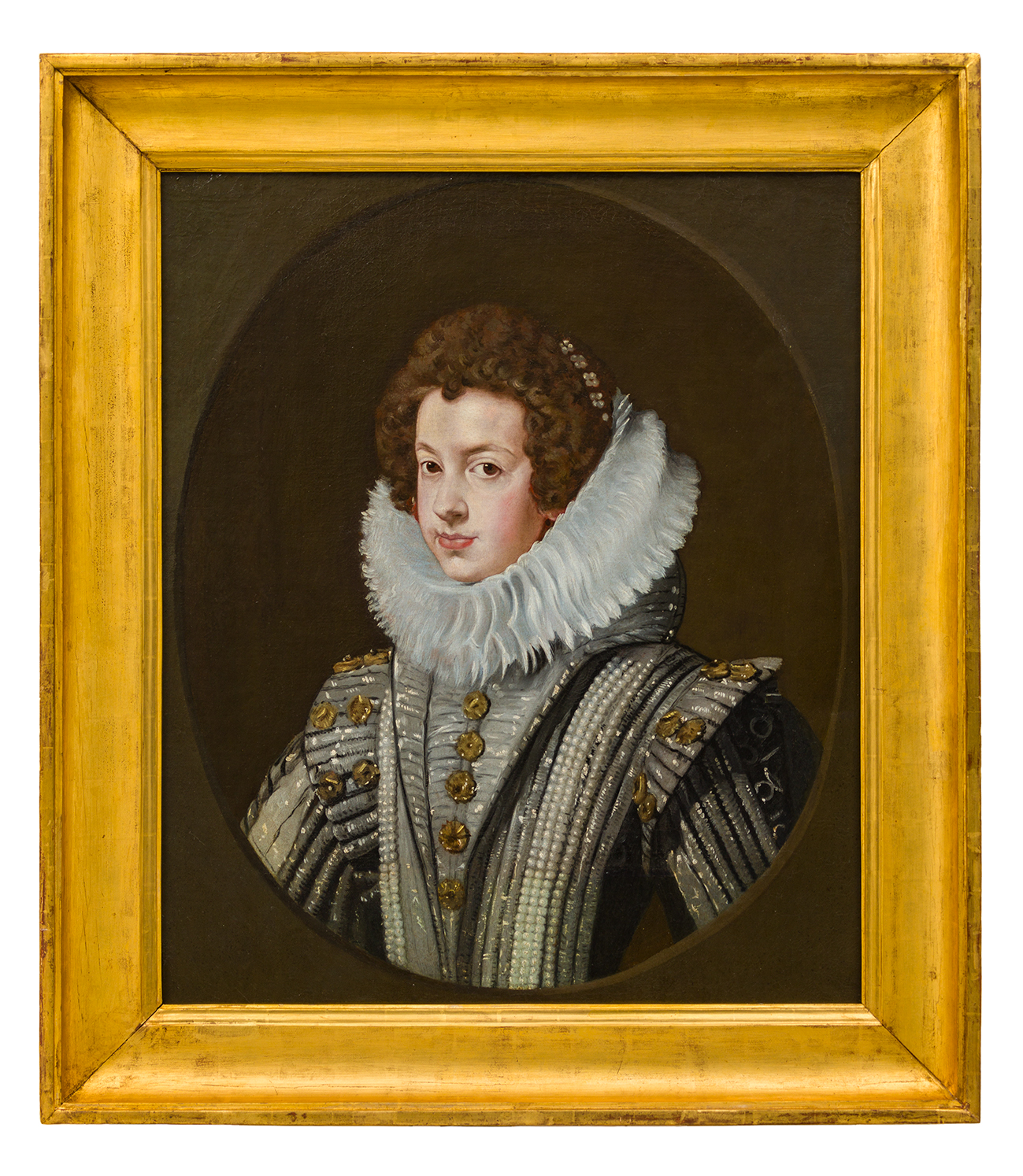
Elisabeth of France
Monarch

Elisabeth of France

(Fontainebleau (Francia), 1602 - Madrid, 1644)

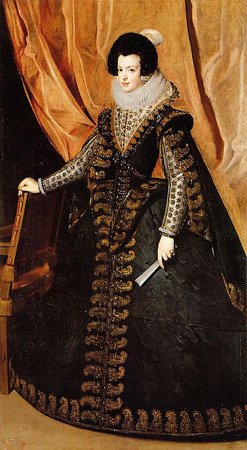
The second of six children born to King Henry IV of France and III of Navarre (1553-1610) and Marie de' Medici (1575-1642), Elisabeth of France was reared at the refined court of her mother, who inculcated in her a deep artistic and cultural sensitivity. Her marriage to Prince Philip, the future Philip IV (1605-1665), was part of a new diplomatic rapprochement between France and the Hispanic Monarchy that also included the marriage between the Infanta Anne of Austria (1601-1666), daughter of Philip III (1578-1621), and the French King Louis XIII (1601-1643), Isabella's brother. The double wedding was celebrated on 18th October 1615, and the exchange of the two Princesses on the...

Read more
Maria Anna of Neuburg
Monarch

Maria Anna of Neuburg

(Düsseldorf (Alemania), 1667 - Guadalajara, 1740)

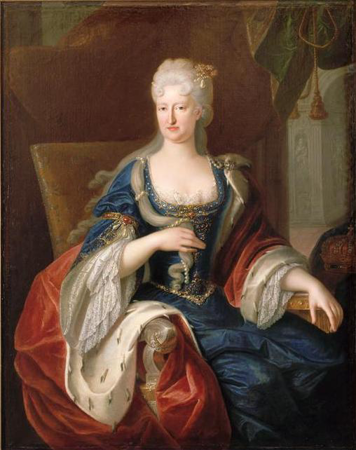
The twelfth of seventeen children born to Philip William (1615-1690), Elector Palatine and Duke of Neuburg, and Elisabeth Amalie of Hesse-Darmstadt (1635-1709), Maria Anna of Neuburg was chosen as the wife of Charles II, both because of her mother's remarkable fertility and her status as sister-in-law of Leopold I, Holy Roman Emperor (1640-1705). Their marriage was ratified in Valladolid on 4th May 1690. The new Queen had a smooth beginning at the court in Madrid. Her relationship with Charles II (1661-1700) was cordial and it was hoped that she would soon provide an heir to the Crown. However, these expectations would not be fulfilled. The long-awaited pregnancy never happened and Maria Anna of Neuburg's political activities led to her enmity...

Read more
Charles III
Monarch

Charles III

(Madrid, 1716 - Madrid, 1788)

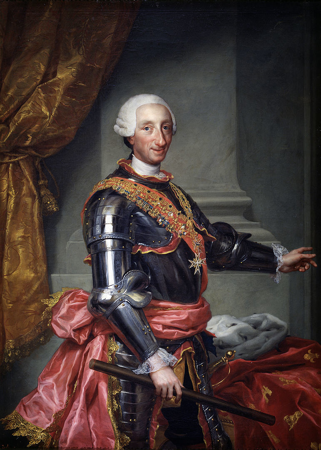
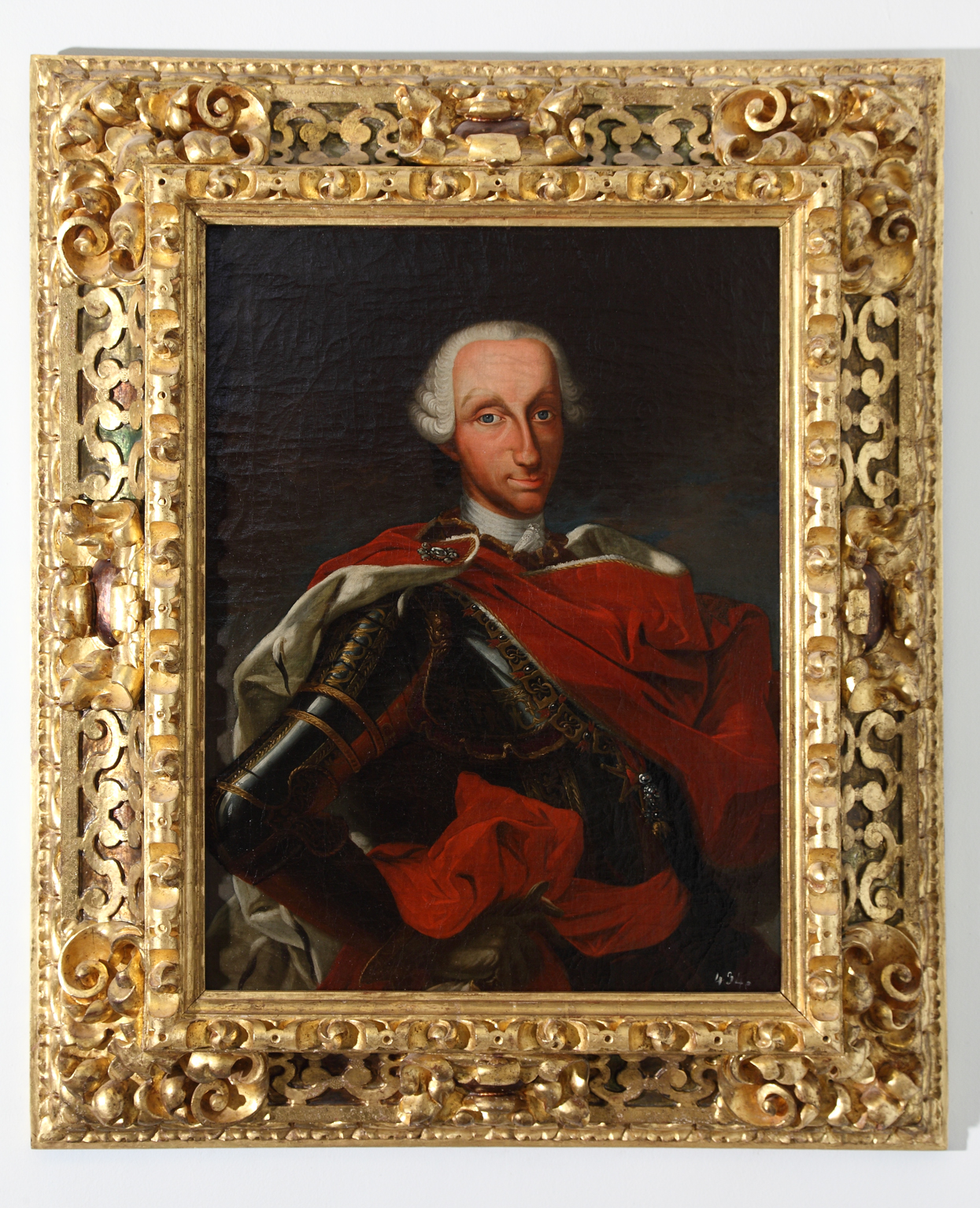
The first-born son of Philip V (1683-1746) and his second wife, Elisabeth Farnese (1692-1766), the future Charles III was educated by Joseph Arnaud, the Jesuit priest Ignace de Laubrussel, and Father Saverio de la Conca. Together with learning to read and write, his training included knowledge of geography, history, religion, military tactics, Latin and modern languages, as well as other disciplines of a more social nature such as horse riding, hunting, dancing and music. Charles III was not originally destined to reign, as his older brothers, the future Louis I and Ferdinand VI, preceded him in the line of succession to the Spanish throne. However, in early 1731, he was recognised as Duke of Parma and Piacenza, following the death...

Read more

Presidenta de Patrimonio Nacional: Ana de la Cueva Fernández

Consejera Gerente de Patrimonio Nacional: María Dolores Menéndez Company

Director de las Colecciones Reales: Víctor Cageao Santacruz

Vocal asesora de las Colecciones Reales: Ana Azor Lacasta

Subdirectora General Adjunta de la Galería de las Colecciones Reales: Irene Domènech Coullaut

Subdirector General Adjunto de la Galería de las Colecciones Reales: Antonio J. Sánchez Luengo

Jefa de Área de Exposiciones Temporales: Covadonga Pitarch Angulo

Comisariado: Roberto Muñoz Martín

Coordinación: Melania Mora Luna

Diseño musegráfico: Jesús Moreno y Asociados. Espacio y Comunicación, S. L.

Diseño gráfico: PeiPe, S.L.

Traducción: Laura Suffield

Producción y montaje: SIT Proyectos, diseño y conservación S.L

Transporte: TTI

Aseguradora: Sabseg Poolsegur

Producción audiovisual: Arena Comunicación

Logo Comunidad de Madrid