Loading...

Casa de los Borbones
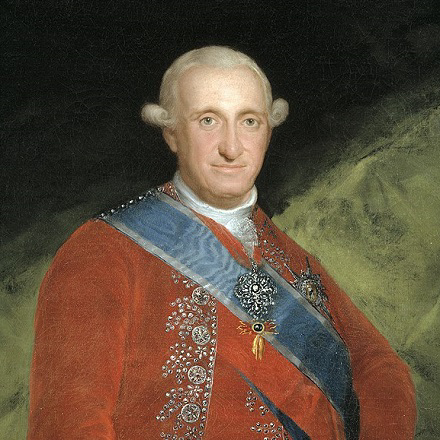
Charles IV
Nápoles (Italia), 11 de November de 1748 - Nápoles (Italia), 19 de January de 1819
View in TimelineBiography
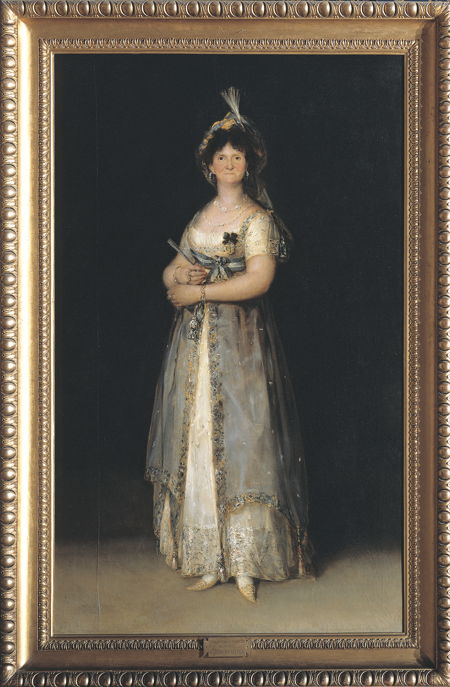
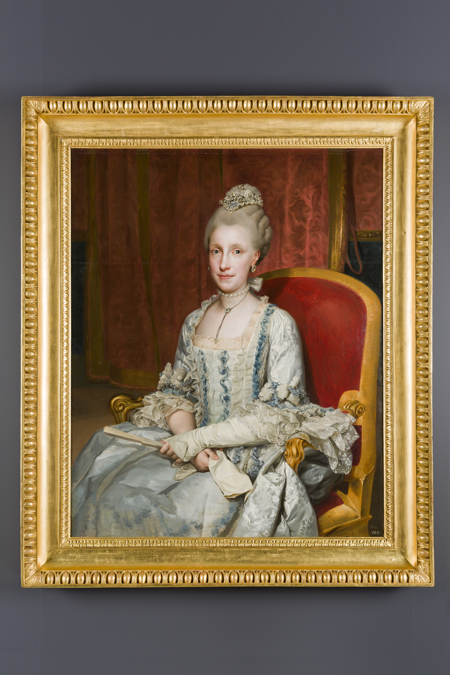
The seventh of thirteen children born to Charles III (1716-1819) and Maria Amalia of Saxony (1724-1819), the future Charles IV was sworn in as Prince of Asturias before the Cortes on 9th June 1760, after his older brother Philip was excluded from the line of succession due to his poor health. On 14th September 1765, he married his cousin, Princess Maria Luisa of Parma (1751-1819), at the Palace of La Granja de San Ildefonso (Segovia). The royal couple had fourteen children: the Infante Carlos Clemente (1771-1774); the Infanta Carlota Joaquina (1775-1830), Queen of Portugal by marriage to John VI (1767-1826); the Infanta Maria Luisa (1777-1782); the Infanta Maria Amalia (1779-1798), married to her uncle, the Infante Antonio Pascual; the Infante Carlos Domingo (1780-1783); the Infanta Maria Luisa (1782-1824), Queen of Etruria by marriage to Louis of Bourbon, (1773-1803); the twin Infantes Carlos Francisco (1783-1784) and Felipe Francisco (1783-1784); the future Ferdinand VII (1784-1833), who would succeed his father on the throne; the Infante Carlos María Isidro (1788-1855), future Carlist Pretender to the Spanish Crown; the Infanta Maria Isabella (1789-1848), Queen of the Two Sicilies by marriage to Francis I (1777-1830); the Infanta Maria Teresa (1791-1794); the Infante Felipe (1792-1794) and the Infante Francisco de Paula (1794-1865), who married Princess Luisa Carlotta of the Two Sicilies (1804-1844).
During his time as heir to the throne, Prince Charles led a routine and relatively simple life. When he turned sixteen, Charles III permitted him to attend the meetings of the Council of Castile in order to commence his training in the art of governance. Although their political influence was limited, over time the Prince and Princess of Asturias became embroiled in certain court intrigues stemming from the rivalry between two of Charles III's main ministers: the Counts of Floridablanca and Aranda.
Charles IV ascended the throne of Spain on 14th December 1788. The outbreak of the French Revolution on 14th July 1789 forced the new King to make changes to the line of governance followed by his predecessor. These materialised in the appointment of the Count of Aranda as Secretary of State, replacing the Count of Floridablanca, as well as Spain's participation in the first European coalitions against revolutionary France. The Count of Aranda was in power only for a few months. On 15th November 1792 he was replaced by Manuel Godoy, a former royal guard who began to curry favour with Charles IV and Maria Luisa of Parma when they were still the Prince and Princess of Asturias. The new minister encouraged a considerable shift in Spanish foreign policy. Aware of Spain's military inferiority over the French armies on the Pyrenean borders despite some successes won by General Ricardos, Manuel Godoy agreed to sign the Peace of Basel on 22nd July 1795. A year later, on 18th August 1796, he agreed to sign the second Treaty of San Ildefonso with the French Republic.
Spain’s alliance with France angered Portugal and England. With the former, Charles IV’s Spain fought what is known as the "War of the Oranges", a brief conflict that ended with the merging of Olivenza into Spanish territory. With England, they would not be as lucky. In spite of the presence of noteworthy Spanish sailors such as Cosme Churruca, Federico Gravina and Dionisio Alcalá Galiano, the incompetence of the French Admiral Villeneuve allowed Lord Nelson to inflict a crushing defeat on the Franco-Spanish fleet at the Battle of Trafalgar on 21st October 1805.
The results of this battle did not affect Spain's alliance with France, which was reinforced with the signing of the Treaty of Fontainebleau on 27th October 1807, by which the French would occupy large parts of Spanish territory. By then, opposition to Manuel Godoy was growing at court, led by the heir to the Crown, Prince Ferdinand. In November 1807, the so-called "Conspiracy of El Escorial" ended in failure. However, months later, the social unrest generated by the economic crisis would be exploited by the minister's opponents during the Mutiny of Aranjuez (17-18th March 1808). The revolt led not only to the fall of Manuel Godoy, but also the abdication of Charles IV in favour of Ferdinand VII on 19th March 1808. Setting himself up as the arbiter of internal Spanish disputes, Napoleon summoned the royal family to Bayonne, where on 5th May of the same year, he forced both Charles IV and Ferdinand VII to abdicate the Crown. The news of the abdications at Bayonne sparked the patriotic reaction that led to the Peninsular War (1808-1814).
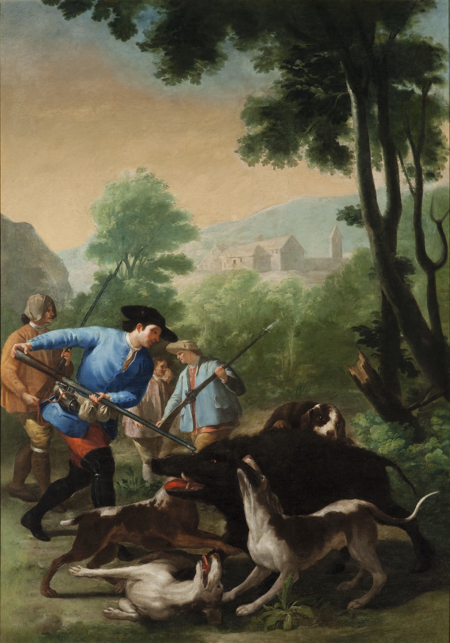
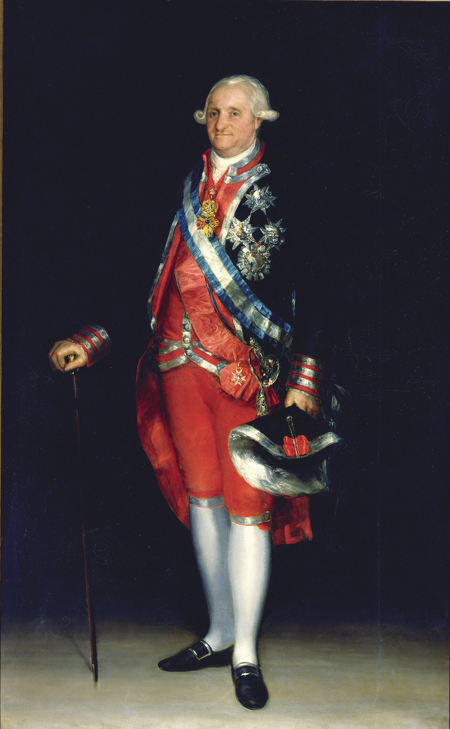
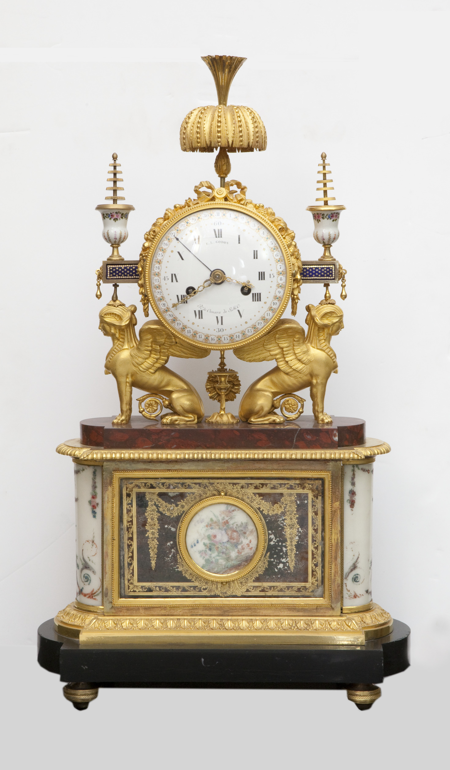
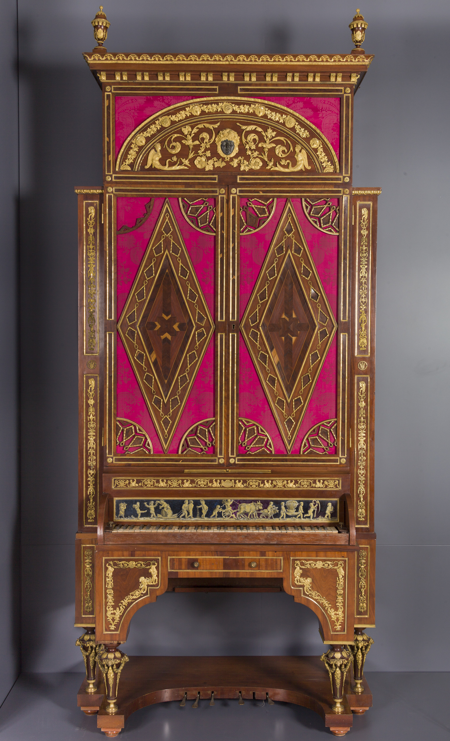
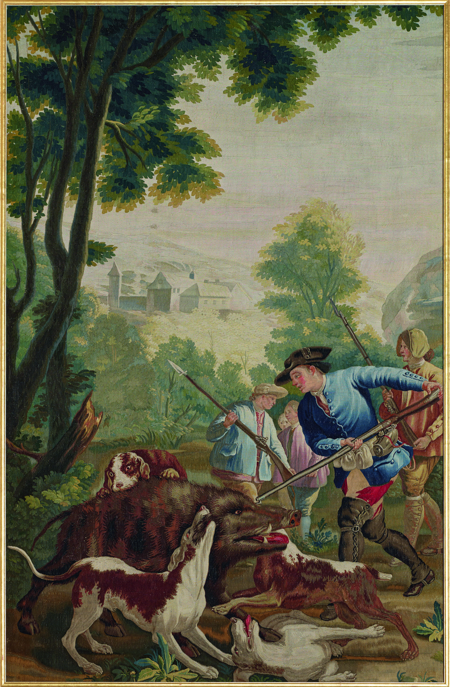
Charles IV remained in France during the early years of the conflict. In 1812, the former King settled in Rome with Queen Maria Luisa and Manuel Godoy. Hailed in his day by Napoleon as a "frank and good patriarch", fond of hunting and mechanical trades, and a lover of music and painting, as demonstrated by his patronage of the composer and violinist Gaetano Brunetti and the painter Francisco de Goya y Lucientes, Charles IV died in Naples on 19th January 1819, while visiting his brother Ferdinand, King of the Two Sicilies. His remains are buried in the Pantheon of Kings and Queens in the Monastery of El Escorial.
Source: Royal Academy of History (https://www.rah.es)