Use of Cookies

The Royal Collections Gallery uses its own and third-party cookies, mainly for technical purposes, which are necessary to provide our services and provide you with relevant content. More information in our cookies policy. Cookies Policy.

ACCEPT to confirm that you have read the information and accepted their installation. You can change your browser settings.

The Royal Museum of Paintings, forerunner of the Museo Nacional del Prado, opened in 1819 to offer the public a selection of the artworks collected by Spanish monarchs over the years, which has continued to grow up to the present day with new additions, purchases and donations. 
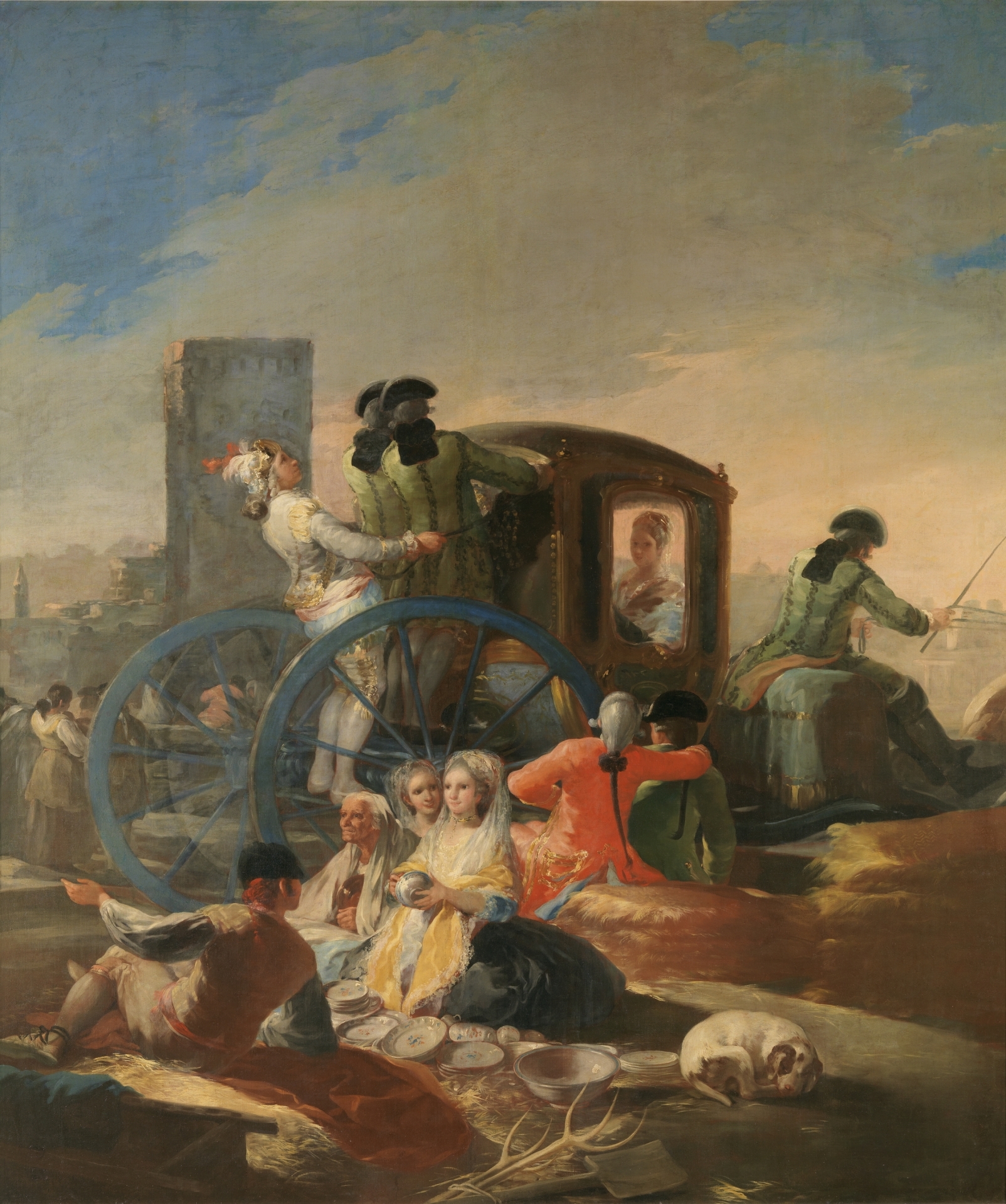
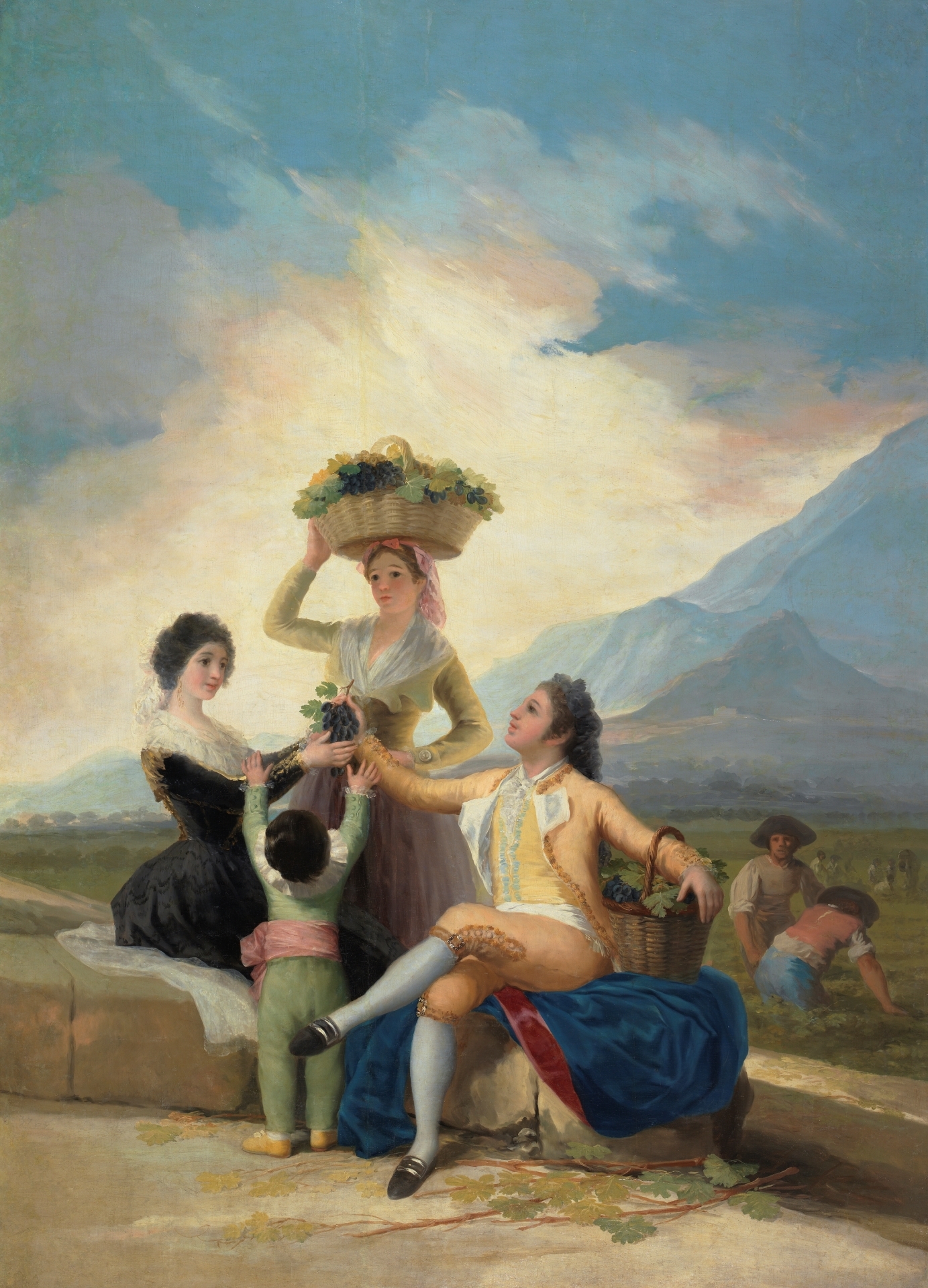
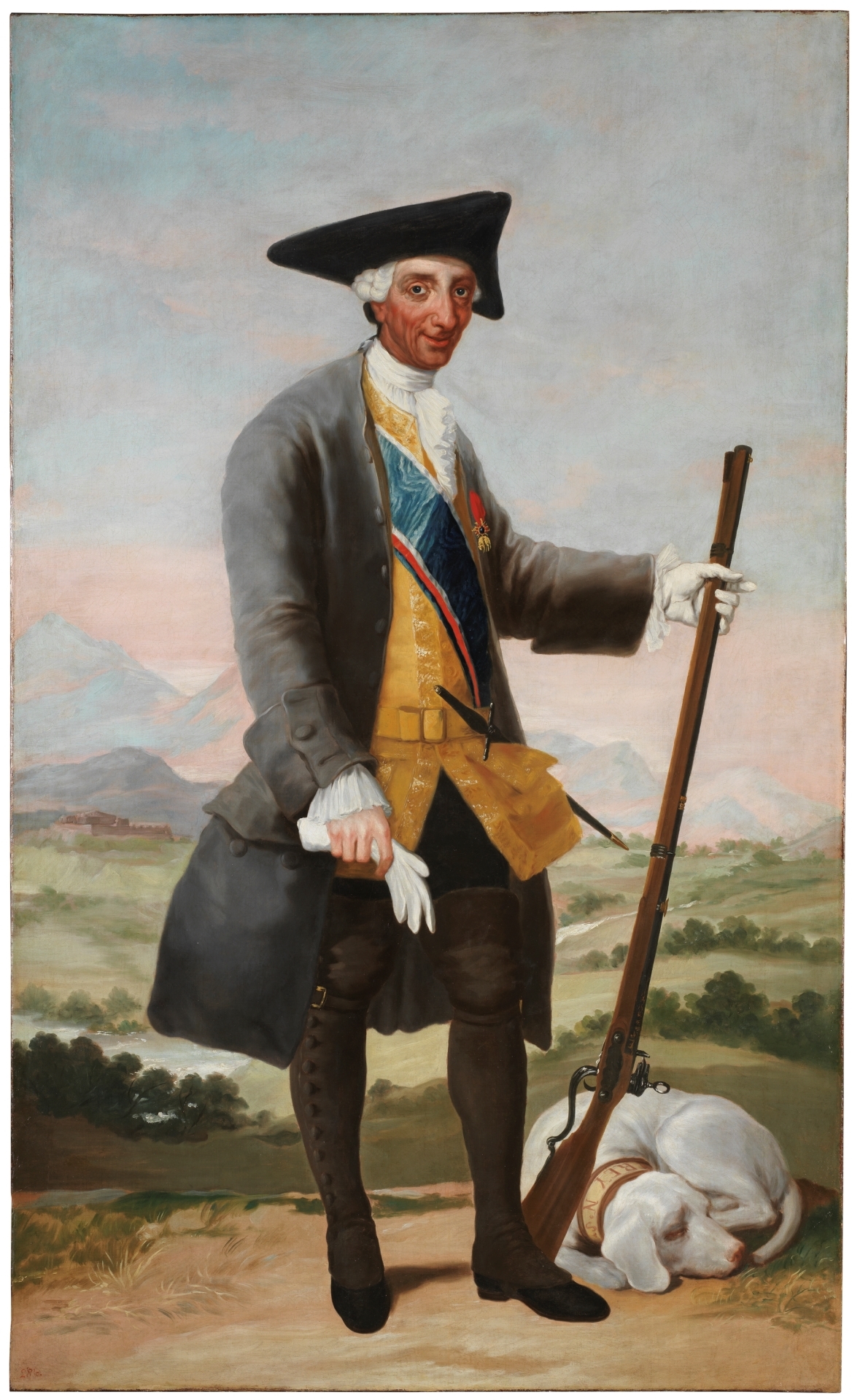
On display here are three of these works from the royal collections made by Francisco de Goya (1746–1828), royal painter to four consecutive kings. He portrayed the first of them, Charles III, in hunting dress, which showed him as a good strategist and protector of his people. This monarch, who embraced the ideas of the Enlightenment, was the first to commission designs for decorative tapestries featuring novel scenes of contemporary life. For example, The Pottery Vendor is set in a marketplace and depicts members of different social classes, from a humble seller of lovely earthenware vessels to an aristocratic lady speeding by in her carriage. And a modern grape harvest illustrates Autumn, traditionally represented by Bacchus, the mythological god of wine.

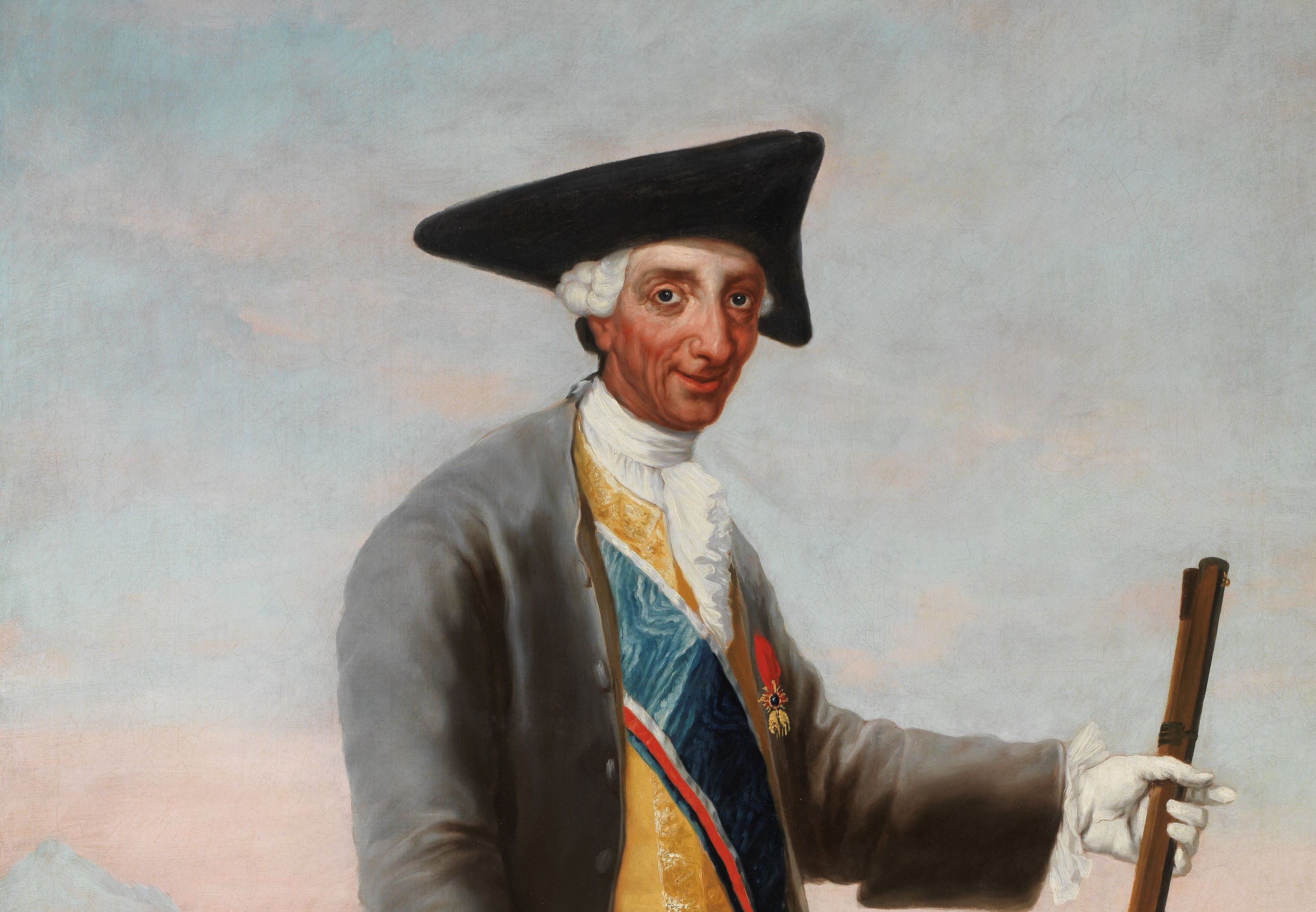
Charles III in Hunting Dress

Francisco de Goya y Lucientes
Ca. 1786, oil on canvas
P-737
Museo Nacional del Prado

A portrait of King Charles III (1716-1788), son of Philip V and Elizabeth of Farnesio, shortly before he died in Madrid on December 14, 1788. The king appears in a royal hunting preserve, either around El Escorial, or between the El Pardo Palace and the mountains of Madrid. He is dressed as a hunter, with the sashes of the Orders of Carlos III, Saint Januarius and the Holy Ghost, as well as the Golden Fleece. A dog sleeps placidly at his feet, and the inscription REY N.o. S.r (Our Lord the King) appears on its collar, following the typology of Velázquez’s hunting portraits of King Philip IV, his brother the infante Don Fernando, and his son, Prince Baltasar Carlos, all of which are now at the Museo del Prado (P01184, P01186 and P01189).

Read more

The Pottery Vendor

Francisco de Goya y Lucientes
Ca. 1778-1779, oil on canvas
P-780
Museo Nacional del Prado

This canvas belongs to the series of 20 cartoons for tapestries commissioned from Goya by Anton Raphael Mengs in October 1777. They depict scenes from contemporary life and were designed for the bedchamber (and its anteroom) of the Prince and Princess of Asturias in the palace of El Pardo. The cartoon for The pottery vendor entered the Museo del Prado in 1870 from the repository of cartoons in the Royal Palace in Madrid.

Read more

The Grape Harvest or Autumn

Francisco de Goya y Lucientes 
1786, oil on canvas
P-795
Museo Nacional del Prado

Dressed in yellow clothes that symbolize autumn, a young man sitting on a stone offers a cluster of black grapes to a lady. A boy is eager to reach the offered fruit, which is reserved for the adults. A woman stands next to them, holding a grape basket on her head, much like the classical allegory of the goddess Ceres with fruit on her head. Some grape harvesters are behind them, next to the grapevine that leads to a valley crowned with the suggestion of mountains in the background. Here, following Western painting´s traditional iconography, the grape harvest is an allegory of autumn.

Read more

Other related works

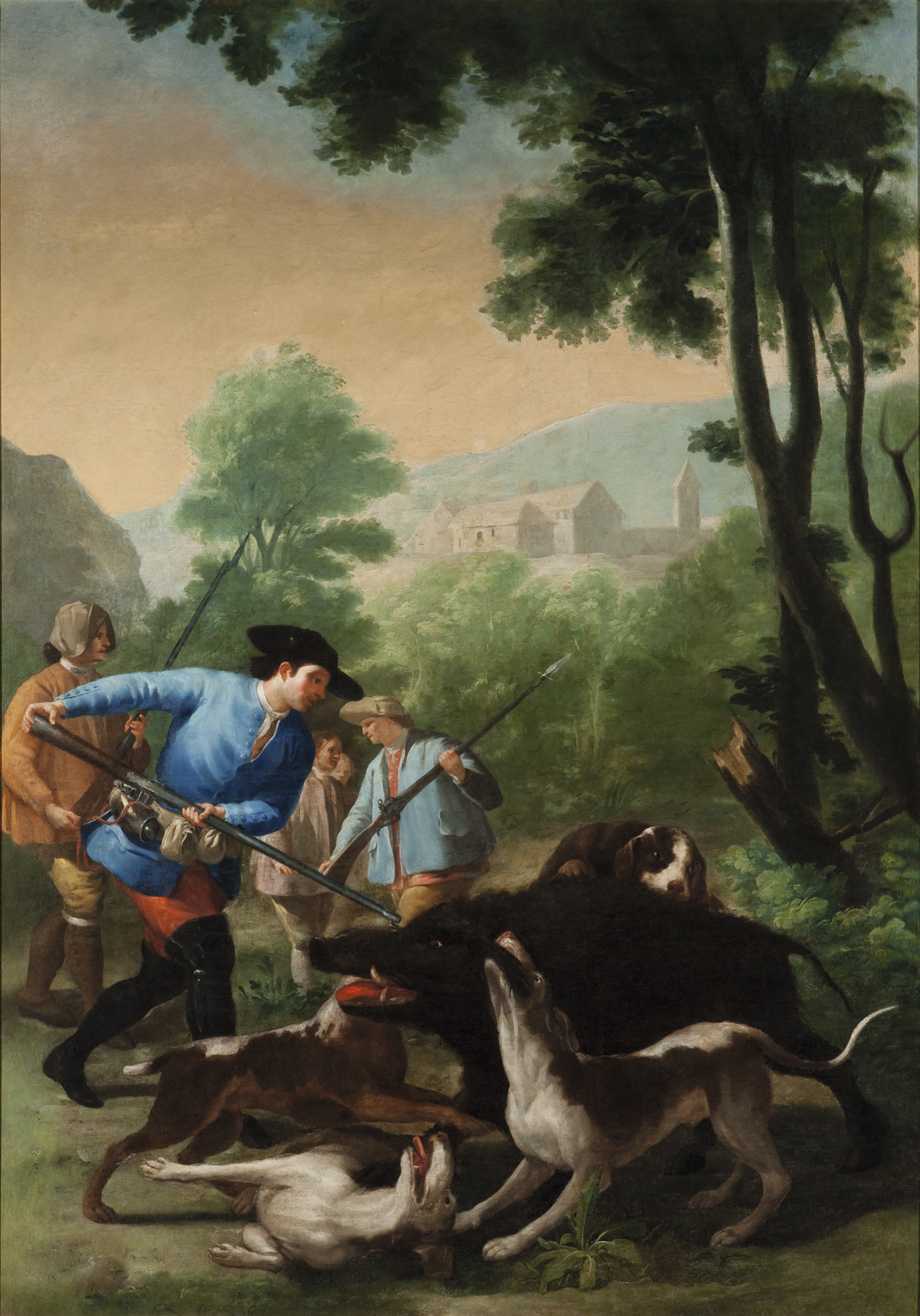
La caza del jabalí
Francisco de Goya y Lucientes
Doc. 1775
Galería de las Colecciones Reales
10010069

Con este «cartón» o «exemplar» para tapiz, iniciaba Francisco de Goya (1746-1828) su larga relación con la madrileña Real Fábrica de Tapices de Santa Bárbara, mantenida, no sin desavenencias, durante casi veinte años. En efecto, el aragonés regresaba a Madrid el 10 de enero de 1775, reclamado por Antonio Rafael Mengs, gracias a la recomendación de su cuñado Francisco Bayeu. Este llamamiento se debía a la necesidad de cubrir la ausencia de Ramón Bayeu, pues su principal cometido en la corte sería suplir a su cuñado en la pintura de cartones. El 24 de mayo firmó la entrega de los cinco primeros, realizados en esos cuatro meses y medio, y el 30 de octubre hacía lo propio con otros cuatro cartones que, junto a los anteriores y a los ya pintados por Ramón Bayeu, completaban los modelos para la realización de los tapices destinados a la pieza donde comían los príncipes de Asturias en el Real Palacio de San Lorenzo de El Escorial.

Read more

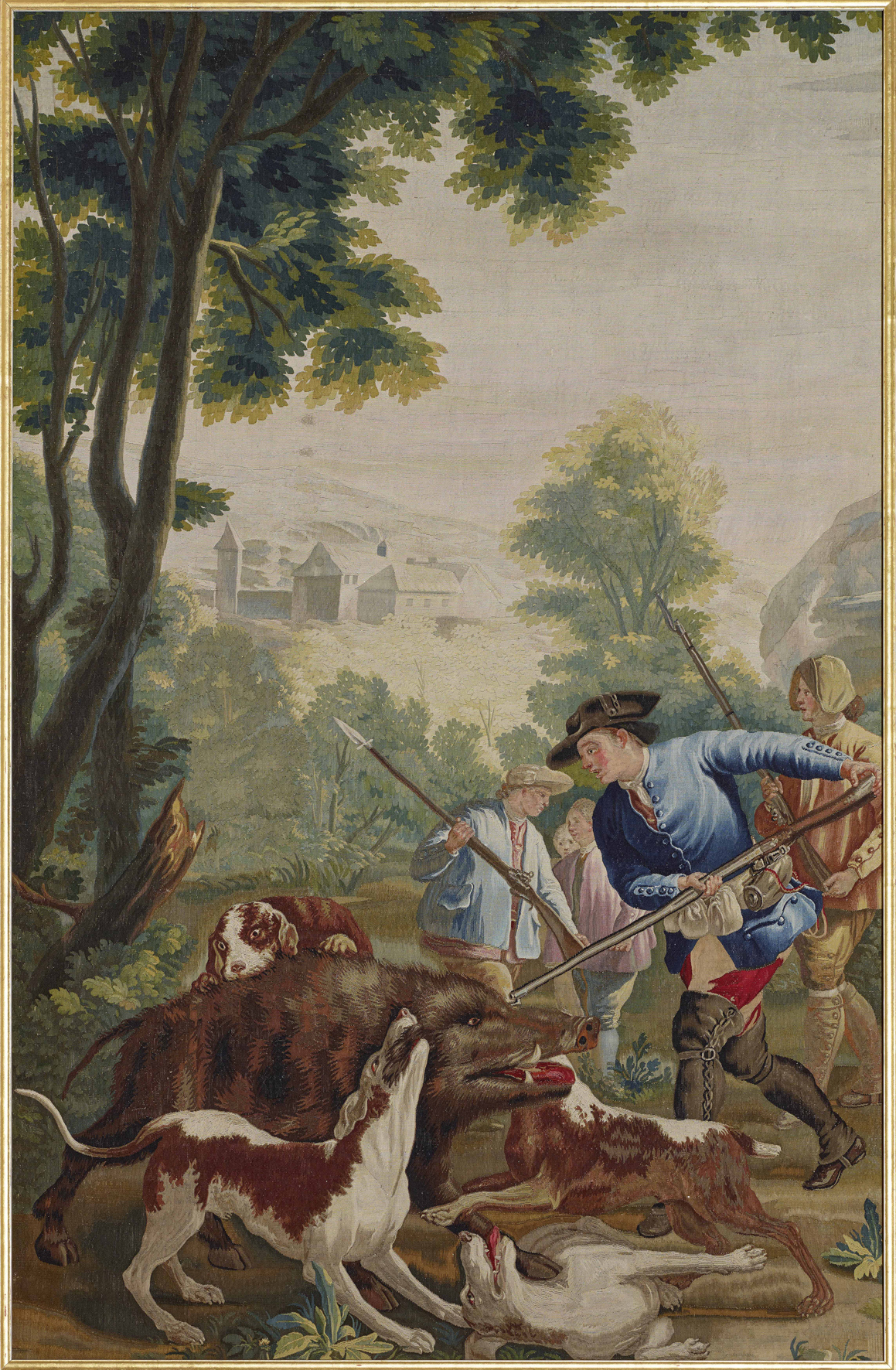
Caza del jabalí
Tapiz: Cornelio Vandergoten; Real Fábrica de Tapices. Diseño: Francisco de Goya y Lucientes
H. 1775
Galería de las Colecciones Reales
10090073

La culminación y envío por parte de Francisco de Goya de la serie de nueve cartones de tapices, destinados al comedor de los príncipes de Asturias en el Palacio de San Lorenzo de El Escorial, fue rápida. Se realizó en dos tandas de cinco y cuatro cartones o bocetos entre mayo y octubre de 1775. Esta premura tuvo como consecuencia la materialización del conjunto en un corto espacio de tiempo. Con seguridad, los paños debieron adornar las estancias reales pocos años después, siempre antes de 1783, tal y como se desprende de la documentación de los pagos a la Real Fábrica de Tapices. Aunque estamos ante el primer conjunto terminado del pintor aragonés, y no se puede decir que pertenezca a una idea totalmente suya, hay aspectos de gran complejidad técnica que anuncian el artista en el que se convertirá con el paso del tiempo.

Read more

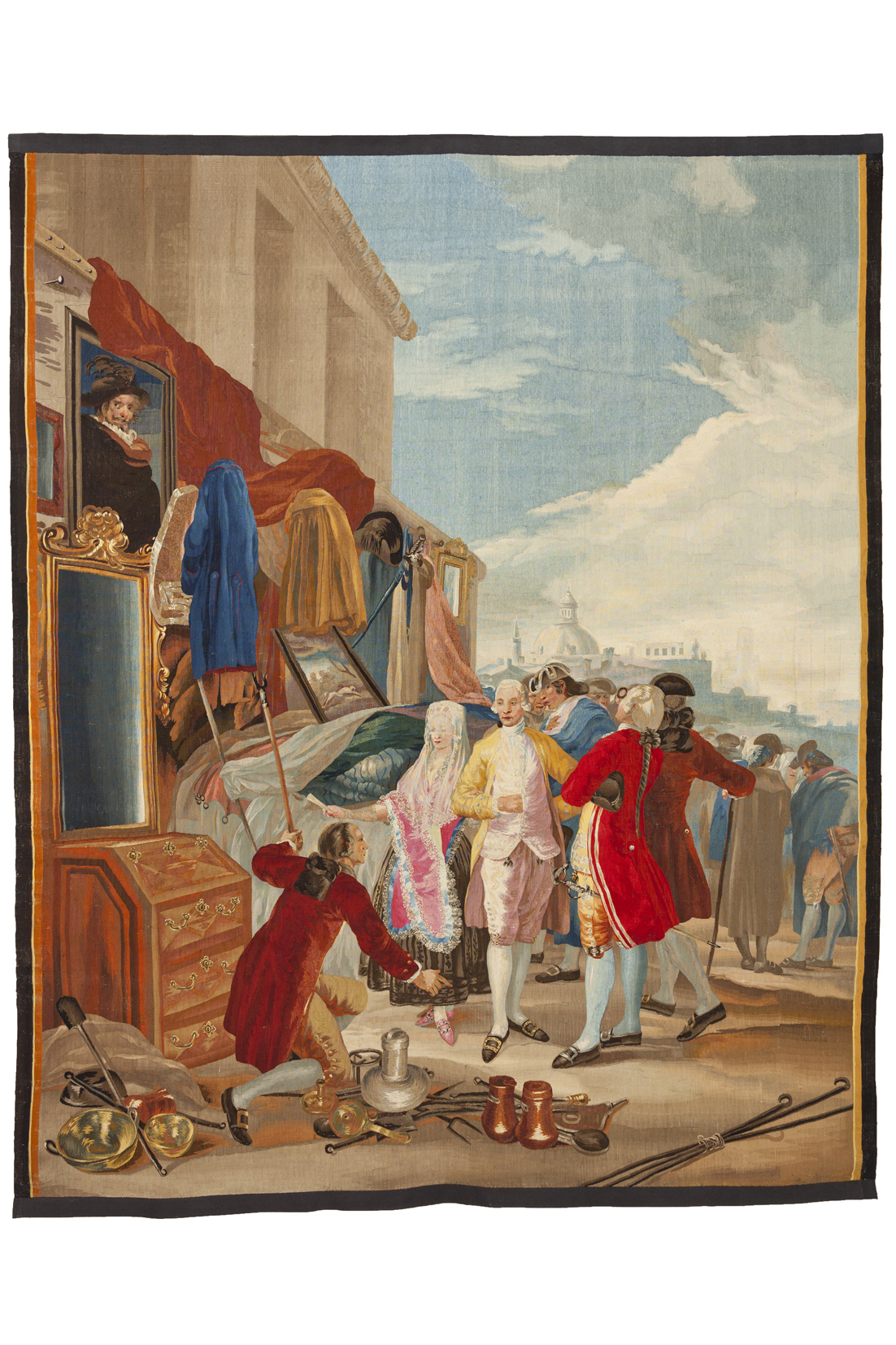
La feria de Madrid
Tapiz: Real Fábrica de Tapices; Diseño: Francisco de Goya y Lucientes
1779-1801
Galería de las Colecciones Reales
10005868

Tras finalizar su primera serie de cartones para tapiz sobre escenas de caza, iniciada por Ramón Bayeu (1744-1793) en 1775 y supervisada por su cuñado Francisco Bayeu (1734-1795), Goya (1746-1828) llevó a cabo otros ciclos de diseños para paños de forma completamente independiente. En estas composiciones, realizadas para el príncipe Carlos (1748-1819) —futuro Carlos IV— y su esposa María Luisa de Parma (1751-1819), estaban destinadas al madrileño palacio de El Pardo y contaban con los temas populares que los herederos le solicitaron. Estos encargos se establecieron en el comedor de los príncipes (1776-1778) y en su dormitorio y antedormitorio. Los tres proyectos, que el pintor aragonés acogió de muy buen grado, poseen una línea continuista y positiva de la sociedad popular madrileña, destacando en todas la conocida figura del majo, protagonista de escenas taurinas, de danza o juegos.

Read more

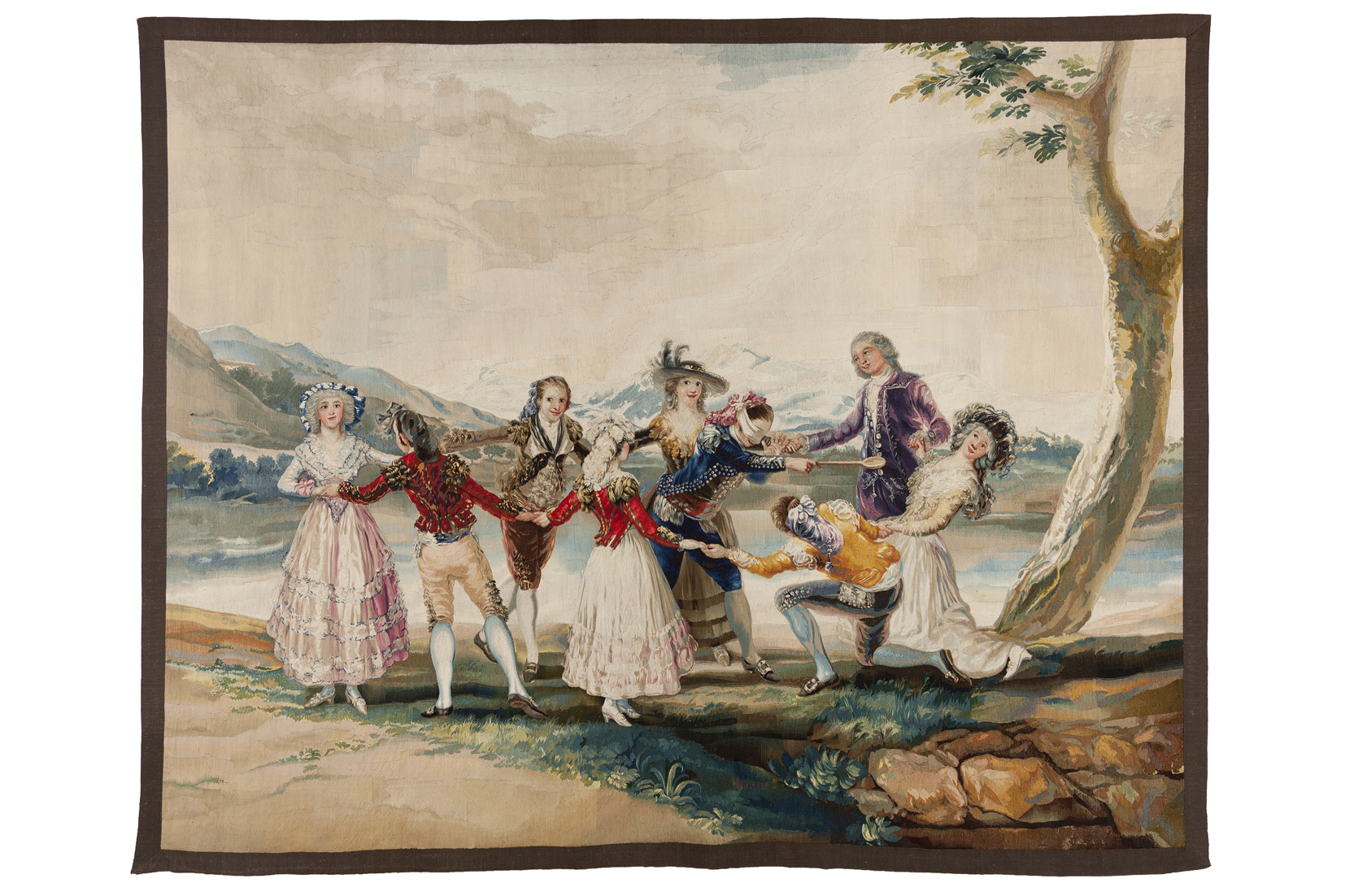
La gallina ciega
Tapiz: Real Fábrica de Tapices; Diseño: Francisco de Goya y Lucientes
1789-1903
Galería de las Colecciones Reales
10002903

En 1780 hubo un parón drástico en la actividad de la Real Fábrica de Tapices, por decisión del rey Carlos III (1716-1788), debido a la guerra con Inglaterra y a las necesidades que suscitaban este tipo de situaciones. A causa a esta falta de encargos, Francisco de Goya (1746-1828) tuvo que buscar otro tipo de ingresos, así como clientes a los que poder satisfacer con sus obras. La vuelta a la actividad de la fábrica encontró a un Goya que tenía que hacer frente no solo a las obligaciones derivadas de su condición de pintor del rey, sino también a las de académico (ingresó en ese año), y a la numerosa clientela particular madrileña, teniendo que adaptarse a una vida llena de actividad con un ritmo totalmente frenético.

Read more

Authors and Collectors

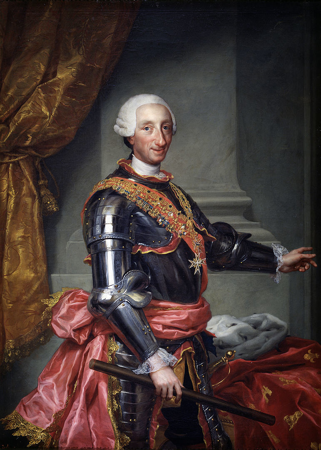
Charles III
Monarch

Charles III

(Madrid, 1716 - Madrid, 1788)

The first-born son of Philip V (1683-1746) and his second wife, Elisabeth Farnese (1692-1766), the future Charles III was educated by Joseph Arnaud, the Jesuit priest Ignace de Laubrussel, and Father Saverio de la Conca. Together with learning to read and write, his training included knowledge of geography, history, religion, military tactics, Latin and modern languages, as well as other disciplines of a more social nature such as horse riding, hunting, dancing and music. 

Charles III was not originally destined to reign, as his older brothers, the future Louis I and Ferdinand VI, preceded him in the line of succession to the Spanish throne. However, in early 1731, he was recognised as Duke of Parma and Piacenza, following the death of Antonio Farnese, and heir to the Grand Duchy of Tuscany. Just three years later, in the course of the War of the Polish Succession (1733-1735), Charles was crowned King of Naples and Sicily. His years of government in both kingdoms were marked by a reformist policy that focused on boosting trade and industry, defending of law and order, and sponsoring science, arts and archaeology. With regard to the latter, it is worth noting the King’s patronage of the excavations at Pompeii and Herculaneum, as well as the creation of the Royal Academy and the Royal Museum of Herculaneum during his reign. 

Shortly after ascending to the thrones of Naples and Sicily, Charles married Princess Maria Amalia of Saxony (1724-1760) on 19th June 1738 in Portella (Naples). The royal couple had thirteen children: the Infanta María Isabel Antonia (1740-1741); the Infanta María Josefa (born and died in 1742); the Infanta María Isabel (1743-1749); the Infanta Maria Josepha Carmela (1744-1801), who remained unmarried all her life; the Infanta Maria Luisa (1745-1792), Grand Duchess of Tuscany and Holy Roman Empress by marriage to Leopold II (1747-1792); the Infante Philip of Naples (1747-1777), whose health problems excluded him from the line of succession to the throne; the future Charles IV (1748-1819), who succeeded his father to the Spanish throne; the Infanta María Teresa (1749-1750); the future Ferdinand IV of Naples and III of Sicily (1751-1825), succeeding Charles III in both kingdoms from 1759; the Infante Gabriel (1752-1788); the Infanta María Ana (1754-1755); the Infante Antonio Pascual (1755-1817) and the Infante Francisco Javier (1757-1771). Maria Amalia of Saxony died on 27th September 1760.  

After reigning in Southern Italy for almost twenty-five years, Charles III ascended the Spanish throne following the death of his half-brother, Ferdinand VI, without succession on 10th August 1759. His reign coincided with the pinnacle of the Enlightenment in Spain. The new King surrounded himself with a group of reformists and enlightened collaborators and ministers, including the Marquess of Grimaldi, Pedro Rodríguez Campomanes, the Counts of Floridablanca and Aranda, and Pablo de Olavide, among others, who played a leading role in Spanish politics after the Mutinies of 1766 forced the monarch to dispense with the Sicilian Marquess of Esquilache, who had accompanied him to Spain in 1759. 

The domestic policy pursued by the King and his ministers was marked by reforms in areas such as the army and navy, central and municipal administration, the judiciary, the economy and state finances. The reformist zeal of Charles III’s governments led to the promulgation of the Royal Military Ordinances of 1768; the creation of new Royal Workshops; the elevation of certain mechanical trades and the limitation of guild privileges that hindered developments in manufacturing; the Intendancies of Sierra Morena and Andalusia, the foundation of the Economic Societies of Friends of the Nation in 1772 and of the Bank of San Carlos in 1782, and the creation of the Supreme Council of State in 1787, among other measures. This Carolinian reformism also extended to overseas territories with the introduction of the Intendencies in 1762, the creation of the Viceroyalty of the Río de la Plata (1776-1777), the development of certain reforms to improve the defence of the American territories, the implementation of measures to combat smuggling more effectively, and the enactment of the Decrees on free trade in 1765 and 1778. With regard to religion, in 1767, the King decreed the expulsion of the Jesuits from Spain and the American viceroyalties, as well as being a staunch defender of boosting royal authority over ecclesiastical jurisdiction. 

Just as in Naples and Sicily, Charles III also promoted the arts and sciences in Spain. During the King’s reign, the plans to improve public hygiene and the urban remodelling of Madrid, embellished since the 1770s with some emblematic monuments such as the Cybele foundation and the Gate of Alcalá, for example, are worth highlighting. The creation of the Royal Cabinet of Natural History (1771) and the San Carlos School of Surgery (1780), the inauguration of the Royal Botanical Garden (1781), or the boost to the construction of the General Hospital of Madrid and the Royal Astronomical Observatory, are other noteworthy initiatives from this period.. Charles III’s interest in science, technology, botany and medicine also extended overseas, by way of scientific expeditions to Spanish America, which were funded by the Crown, such as the one led by José Celestino Mutis from 1782 onwards.  

Finally, as far as foreign policy was concerned, Charles III abandoned the neutrality that had characterised the reign of Ferdinand VI, and signed the third "Family Pact" with France on 15th August 1761. This diplomatic shift led to Spain's unsuccessful participation in the Seven Years' War (1756-1763). Under the Peace of Paris of February 1763, Spain had to cede East and West Florida to England, as well as certain trading privileges in the Caribbean. However this initial failure prompted a reorganisation and modernisation of the Spanish army, an effective measure which became apparent during the next conflict with the British between 1779 and 1783, this time in support of American independence. After the cessation of hostilities, England was obliged to return the island of Minorca and the two Floridas to Spain, as stipulated in the Peace of Paris of September 1783. 


Charles III died in Madrid on 14th December 1788. His remains are buried in the Pantheon of Kings and Queens in the Monastery of El Escorial.

Source: Royal Academy of History (https://www.rah.es)

Read more
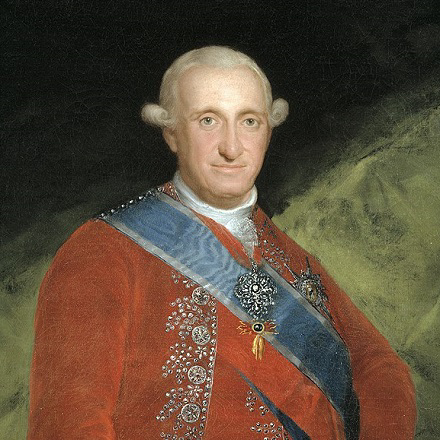
Charles IV
Monarch

Charles IV

(Nápoles (Italia), 1748 - Nápoles (Italia), 1819)

The seventh of thirteen children born to Charles III (1716-1819) and Maria Amalia of Saxony (1724-1819), the future Charles IV was sworn in as Prince of Asturias before the Cortes on 9th June 1760, after his older brother Philip was excluded from the line of succession due to his poor health. On 14th September 1765, he married his cousin, Princess Maria Luisa of Parma (1751-1819), at the Palace of La Granja de San Ildefonso (Segovia). The royal couple had fourteen children: the Infante Carlos Clemente (1771-1774); the Infanta Carlota Joaquina (1775-1830), Queen of Portugal by marriage to John VI (1767-1826); the Infanta Maria Luisa (1777-1782); the Infanta Maria Amalia (1779-1798), married to her uncle, the Infante Antonio Pascual; the Infante Carlos Domingo (1780-1783); the Infanta Maria Luisa (1782-1824), Queen of Etruria by marriage to Louis of Bourbon, (1773-1803); the twin Infantes Carlos Francisco (1783-1784) and Felipe Francisco (1783-1784); the future Ferdinand VII (1784-1833), who would succeed his father on the throne; the Infante Carlos María Isidro (1788-1855), future Carlist Pretender to the Spanish Crown; the Infanta Maria Isabella (1789-1848), Queen of the Two Sicilies by marriage to Francis I (1777-1830); the Infanta Maria Teresa (1791-1794); the Infante Felipe (1792-1794) and the Infante Francisco de Paula (1794-1865), who married Princess Luisa Carlotta of the Two Sicilies (1804-1844). 

During his time as heir to the throne, Prince Charles led a routine and relatively simple life. When he turned sixteen, Charles III permitted him to attend the meetings of the Council of Castile in order to commence his training in the art of governance. Although their political influence was limited, over time the Prince and Princess of Asturias became embroiled in certain court intrigues stemming from the rivalry between two of Charles III's main ministers: the Counts of Floridablanca and Aranda. 


Charles IV ascended the throne of Spain on 14th December 1788. The outbreak of the French Revolution on 14th July 1789 forced the new King to make changes to the line of governance followed by his predecessor. These materialised in the appointment of the Count of Aranda as Secretary of State, replacing the Count of Floridablanca, as well as Spain's participation in the first European coalitions against revolutionary France. The Count of Aranda was in power only for a few months. On 15th November 1792 he was replaced by Manuel Godoy, a former royal guard who began to curry favour with Charles IV and Maria Luisa of Parma when they were still the Prince and Princess of Asturias. The new minister encouraged a considerable shift in Spanish foreign policy. Aware of Spain's military inferiority over the French armies on the Pyrenean borders despite some successes won by General Ricardos, Manuel Godoy agreed to sign the Peace of Basel on 22nd July 1795. A year later, on 18th August 1796, he agreed to sign the second Treaty of San Ildefonso with the French Republic. 

Spain’s alliance with France angered Portugal and England. With the former, Charles IV’s Spain fought what is known as the "War of the Oranges", a brief conflict that ended with the merging of Olivenza into Spanish territory. With England, they would not be as lucky. In spite of the presence of noteworthy Spanish sailors such as Cosme Churruca, Federico Gravina and Dionisio Alcalá Galiano, the incompetence of the French Admiral Villeneuve allowed Lord Nelson to inflict a crushing defeat on the Franco-Spanish fleet at the Battle of Trafalgar on 21st October 1805. 

The results of this battle did not affect Spain's alliance with France, which was reinforced with the signing of the Treaty of Fontainebleau on 27th October 1807, by which the French would occupy large parts of Spanish territory. By then, opposition to Manuel Godoy was growing at court, led by the heir to the Crown, Prince Ferdinand. In November 1807, the so-called "Conspiracy of El Escorial" ended in failure. However, months later, the social unrest generated by the economic crisis would be exploited by the minister's opponents during the Mutiny of Aranjuez (17-18th March 1808). The revolt led not only to the fall of Manuel Godoy, but also the abdication of Charles IV in favour of Ferdinand VII on 19th March 1808. Setting himself up as the arbiter of internal Spanish disputes, Napoleon summoned the royal family to Bayonne, where on 5th May of the same year, he forced both Charles IV and Ferdinand VII to abdicate the Crown. The news of the abdications at Bayonne sparked the patriotic reaction that led to the Peninsular War (1808-1814). 

Charles IV remained in France during the early years of the conflict. In 1812, the former King settled in Rome with Queen Maria Luisa and Manuel Godoy. Hailed in his day by Napoleon as a "frank and good patriarch", fond of hunting and mechanical trades, and a lover of music and painting, as demonstrated by his patronage of the composer and violinist Gaetano Brunetti and the painter Francisco de Goya y Lucientes, Charles IV died in Naples on 19th January 1819, while visiting his brother Ferdinand, King of the Two Sicilies. His remains are buried in the Pantheon of Kings and Queens in the Monastery of El Escorial.

Source: Royal Academy of History (https://www.rah.es)
Read more
Maria Luisa of Parma
Monarch

Maria Luisa of Parma

(Parma (Italia), 1751 - Roma (Italia), 1819)

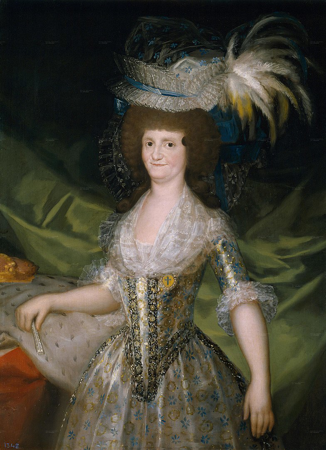
Daughter of the Infante Philip (1720-1765), Duke of Parma, and of Louise-Élisabeth of France (1727-1759), Maria Luisa of Parma was the granddaughter of Philip V of Spain (1683-1746) and Louis XV of France (1710-1774). Her marriage to Charles, then Prince of Asturias and future Charles IV, was held at the Palace of La Granja de San Ildefonso (Segovia) on 4th September 1765. During her first years in Spain, she found it difficult to adapt to the austere court of her father-in-law, Charles III (1716-1788). The royal couple had fourteen children: the Infante Carlos Clemente (1771-1774); the Infanta Carlota Joaquina (1775-1830), Queen of Portugal by marriage to John VI (1767-1826); the Infanta Maria Luisa (1777-1782); the Infanta Maria Amalia (1779-1798), married to her uncle, the Infante Antonio Pascual; the Infante Carlos Domingo (1780-1783); the Infanta Maria Luisa (1782-1824), Queen of Etruria by marriage to Louis of Bourbon, (1773-1803); the twin Infantes Carlos Francisco (1783-1784) and Felipe Francisco (1783-1784); the future Ferdinand VII (1784-1833), who would succeed his father on the throne; the Infante Carlos María Isidro (1788-1855), future Carlist Pretender to the Spanish Crown; the Infanta Maria Isabella (1789-1848), Queen of the Two Sicilies by marriage to Francis I (1777-1830); the Infanta Maria Teresa (1791-1794); the Infante Felipe (1792-1794) and the Infante Francisco de Paula (1794-1865), who married Princess Luisa Carlotta of the Two Sicilies (1804-1844).

After Charles IV ascended the Spanish throne on 14th December 1788, Maria Luisa of Parma became a highly influential figure in government affairs. The new Queen famously protected the political career of Manuel Godoy, following the dismissal of the Counts of Floridablanca and Aranda as ministers. Equally well-known was her interest in certain charitable works carried out by the Board of Ladies of Honour and Merit, such as the management of the Patriotic Schools, for example. In order to encourage noblewomen to perform charitable activities, the Queen also founded the Royal Order of Noble Ladies of Maria Luisa, personally signing its Statutes on 15th March 1794.

After Charles IV's abdication on 19th March 1808, Maria Luisa of Parma settled in France together with her husband and Manuel Godoy. The former King and Queen lived in France until 1812 when Napoleon allowed them to settle in Rome, where the Queen died on 2nd January 1819. The remains of Maria Luisa of Parma are buried in the Pantheon of Kings and Queens in the Monastery of El Escorial. 

Source: Royal Academy of History (https://www.rah.es)
Read more
Goya y Lucientes, Francisco de
Author

Goya y Lucientes, Francisco de

(Fuendetodos, 1746 - Bourdeaux, 1828)

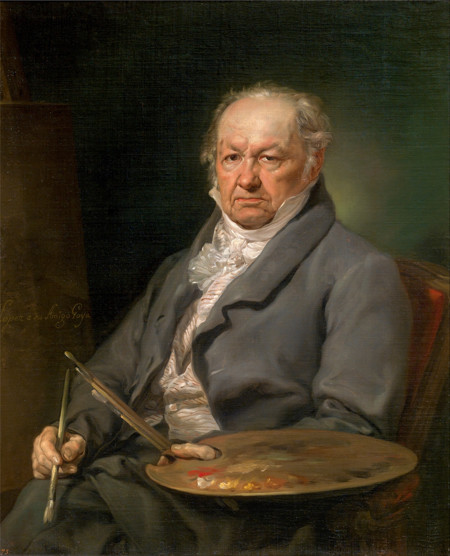
Goya y Lucientes, Francisco de. Fuendetodos (Zaragoza), 30.III.1746 - Bordeaux (France), 16.IV.1828. Painter.

Goya was accidentally born in Fuendetodos, the village of his maternal family. Braulio José Goya, a gilder of Biscayan descent, and Gracia Lucientes, from a well-off peasant family, lived in Saragossa, where they married in 1736. Francisco was the fourth of six siblings: Rita (1737); Tomás (1739), also a gilder and sometimes mentioned as a painter; Jacinta (1743); Mariano (1750), who died in infancy; and Camilo (1753), an ecclesiastic and chaplain in the collegiate church of Chinchón from 1784.

After the school, which tradition accepts with reservations as that of the Piarist fathers of Saragossa, he entered the workshop of José Luzán (1710-1785), also the son...

Read more