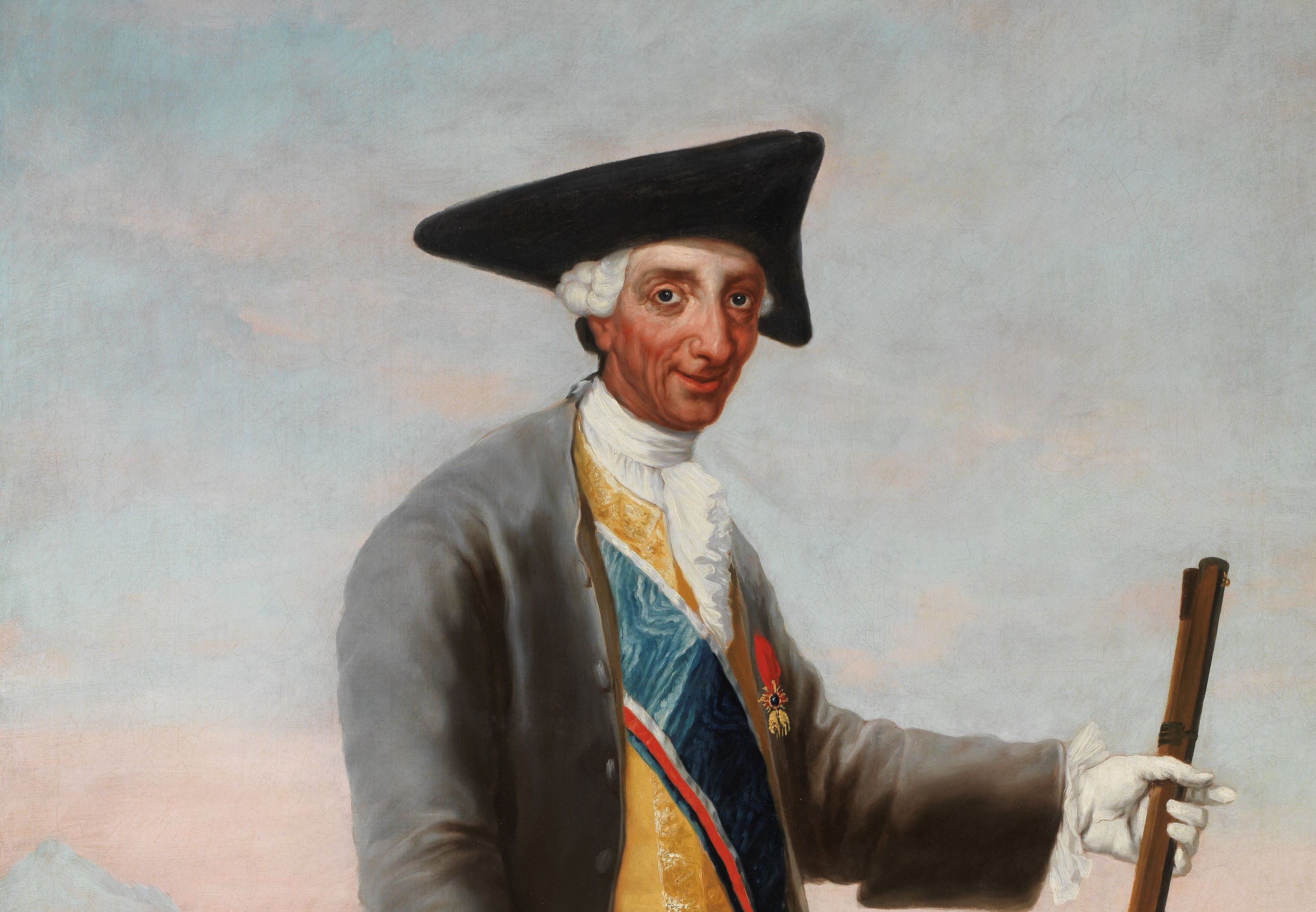
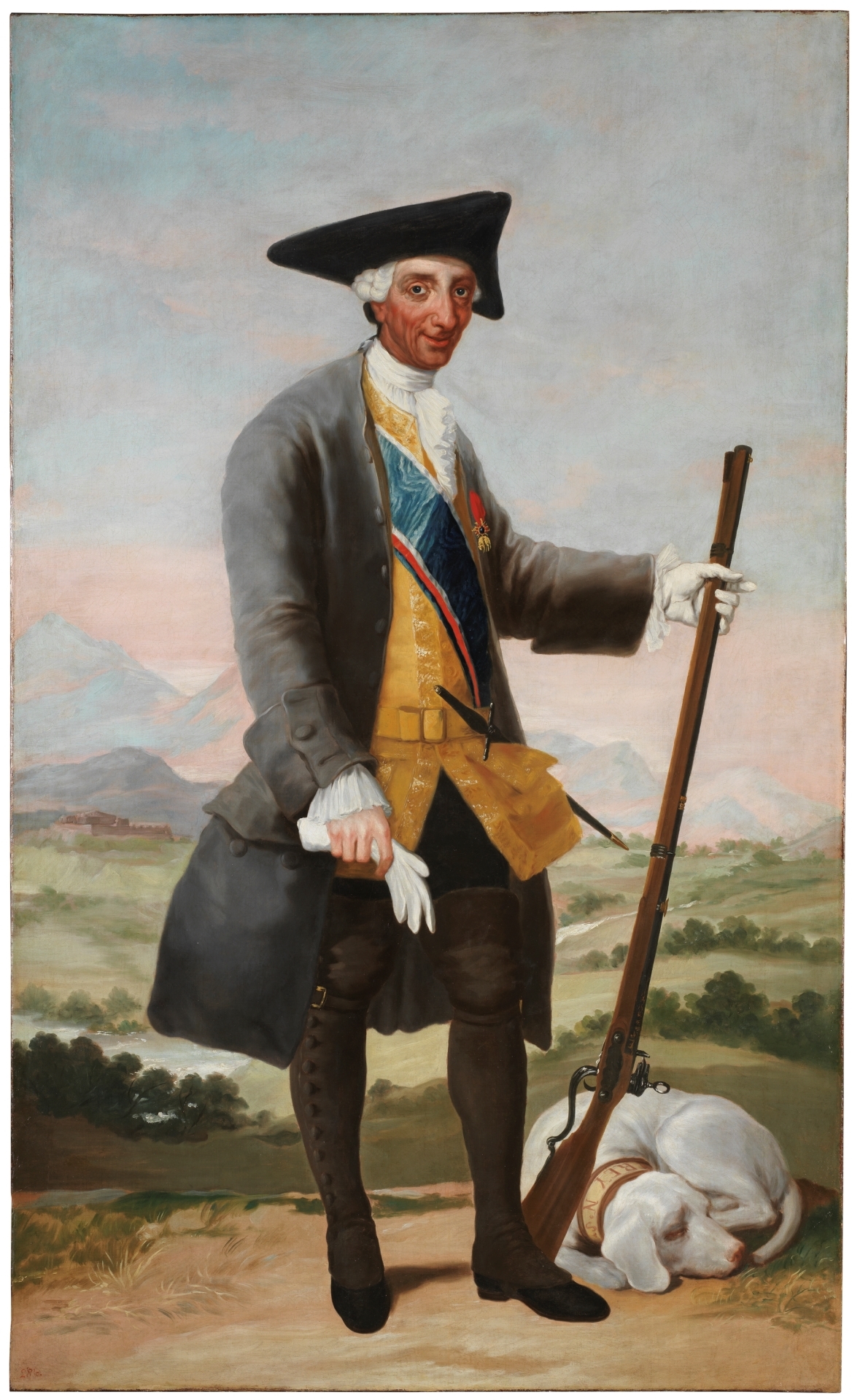
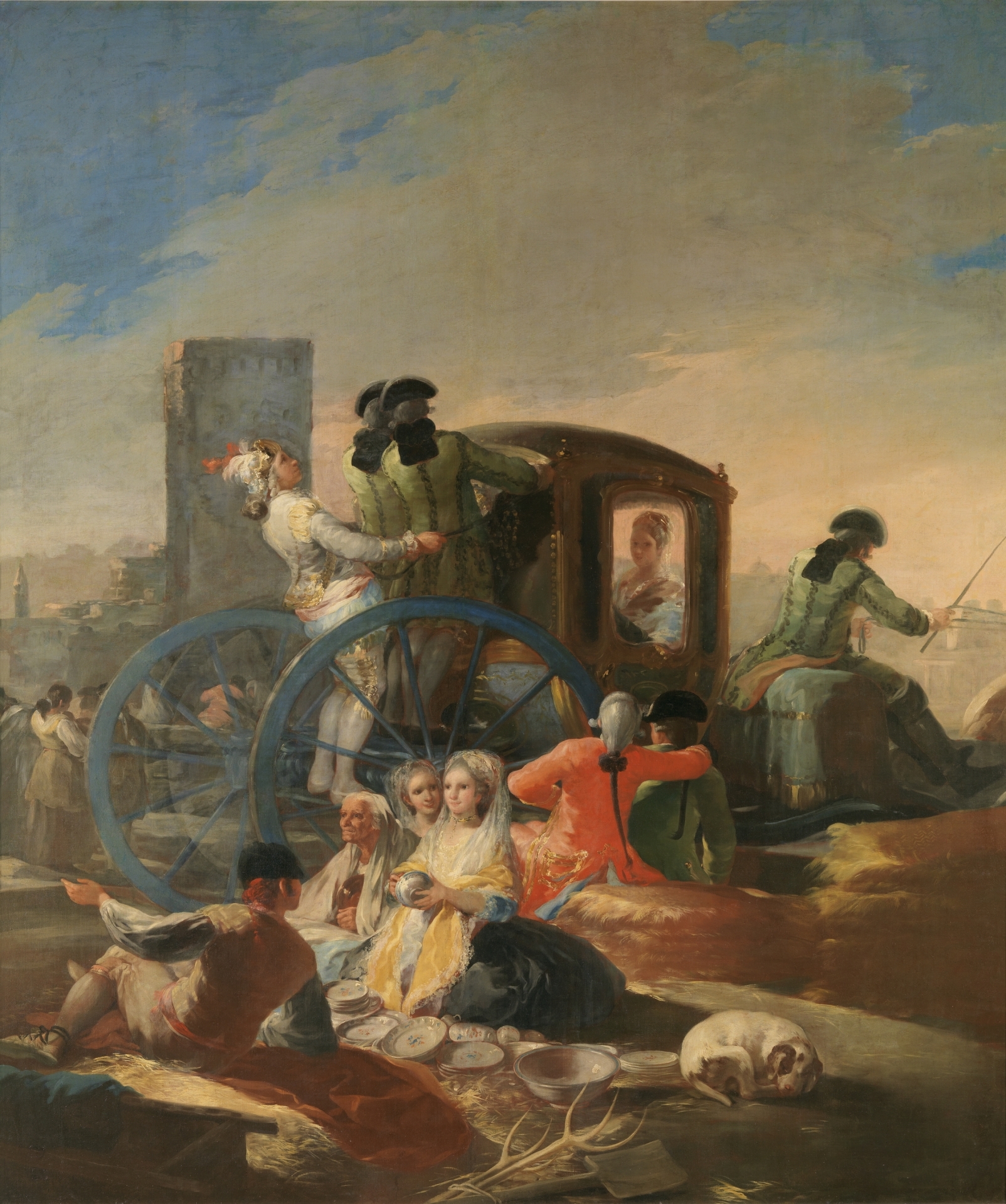
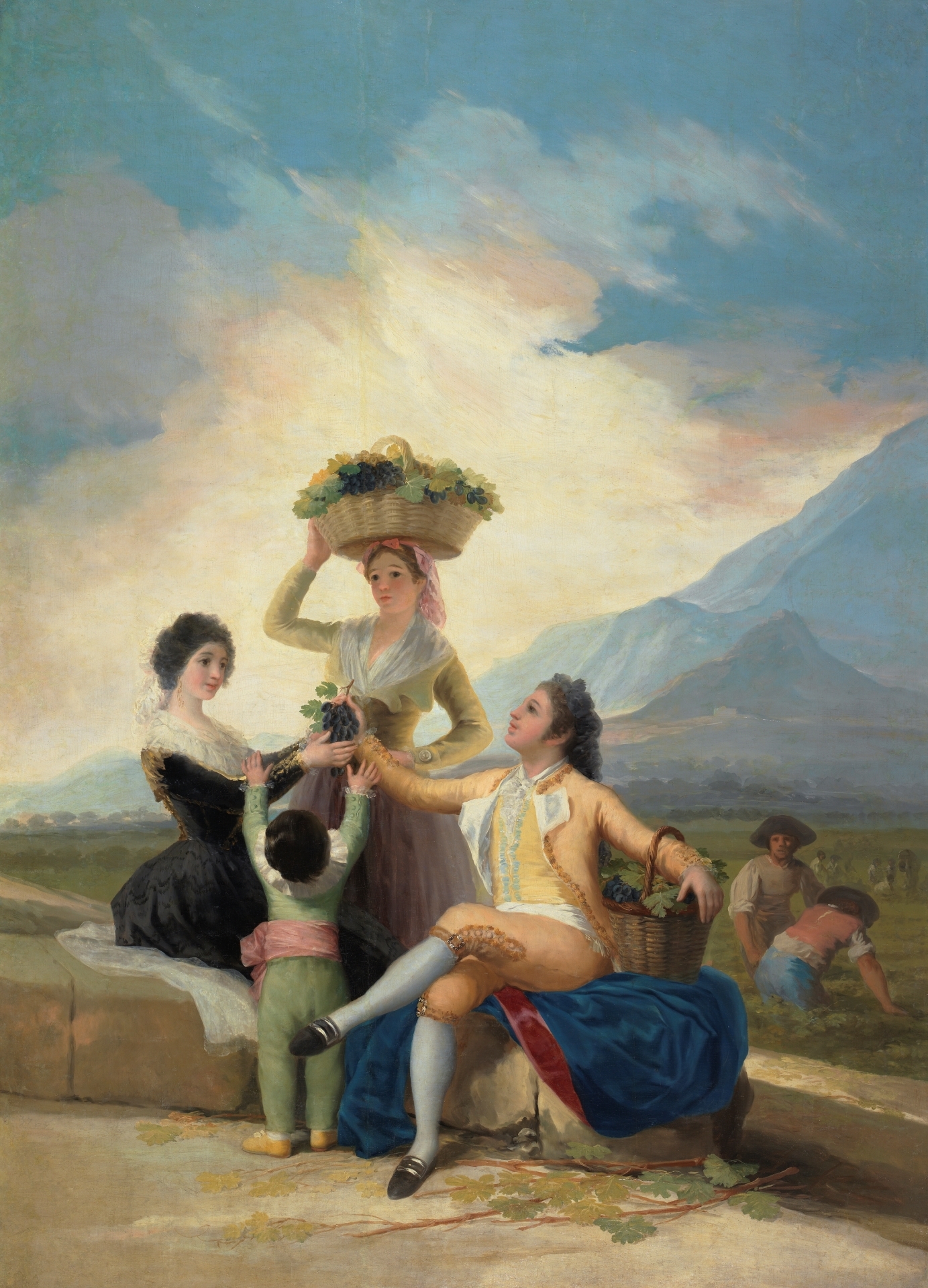
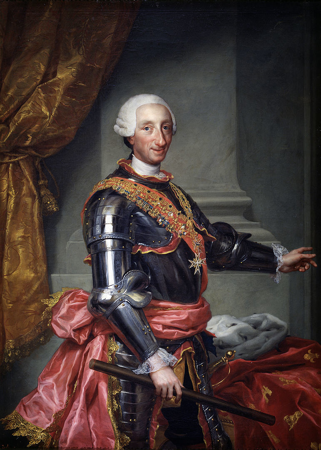
The first-born son of Philip V (1683-1746) and his second wife, Elisabeth Farnese (1692-1766), the future Charles III was educated by Joseph Arnaud, the Jesuit priest Ignace de Laubrussel, and Father Saverio de la Conca. Together with learning to read and write, his training included knowledge of geography, history, religion, military tactics, Latin and modern languages, as well as other disciplines of a more social nature such as horse riding, hunting, dancing and music.
Charles III was not originally destined to reign, as his older brothers, the future Louis I and Ferdinand VI, preceded him in the line of succession to the Spanish throne. However, in early 1731, he was recognised as Duke of Parma and Piacenza, following the death of Antonio Farnese, and heir to the Grand Duchy of Tuscany. Just three years later, in the course of the War of the Polish Succession (1733-1735), Charles was crowned King of Naples and Sicily. His years of government in both kingdoms were marked by a reformist policy that focused on boosting trade and industry, defending of law and order, and sponsoring science, arts and archaeology. With regard to the latter, it is worth noting the King’s patronage of the excavations at Pompeii and Herculaneum, as well as the creation of the Royal Academy and the Royal Museum of Herculaneum during his reign.
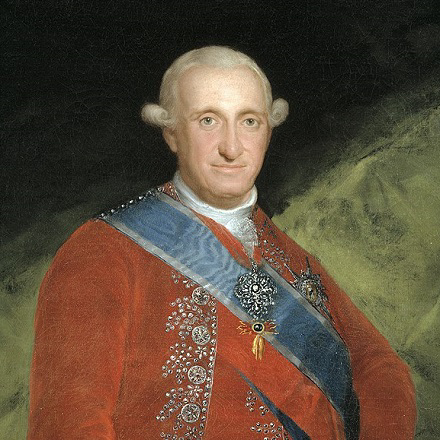
Shortly after ascending to the thrones of Naples and Sicily, Charles married Princess Maria Amalia of Saxony (1724-1760) on 19th June 1738 in Portella (Naples). The royal couple had thirteen children: the Infanta María Isabel Antonia (1740-1741); the Infanta María Josefa (born and died in 1742); the Infanta María Isabel (1743-1749); the Infanta Maria Josepha Carmela (1744-1801), who remained unmarried all her life; the Infanta Maria Luisa (1745-1792), Grand Duchess of Tuscany and Holy Roman Empress by marriage to Leopold II (1747-1792); the Infante Philip of Naples (1747-1777), whose health problems excluded him from the line of succession to the throne; the future Charles IV (1748-1819), who succeeded his father to the Spanish throne; the Infanta María Teresa (1749-1750); the future Ferdinand IV of Naples and III of Sicily (1751-1825), succeeding Charles III in both kingdoms from 1759; the Infante Gabriel (1752-1788); the Infanta María Ana (1754-1755); the Infante Antonio Pascual (1755-1817) and the Infante Francisco Javier (1757-1771). Maria Amalia of Saxony died on 27th September 1760.
After reigning in Southern Italy for almost twenty-five years, Charles III ascended the Spanish throne following the death of his half-brother, Ferdinand VI, without succession on 10th August 1759. His reign coincided with the pinnacle of the Enlightenment in Spain. The new King surrounded himself with a group of reformists and enlightened collaborators and ministers, including the Marquess of Grimaldi, Pedro Rodríguez Campomanes, the Counts of Floridablanca and Aranda, and Pablo de Olavide, among others, who played a leading role in Spanish politics after the Mutinies of 1766 forced the monarch to dispense with the Sicilian Marquess of Esquilache, who had accompanied him to Spain in 1759.
The domestic policy pursued by the King and his ministers was marked by reforms in areas such as the army and navy, central and municipal administration, the judiciary, the economy and state finances. The reformist zeal of Charles III’s governments led to the promulgation of the Royal Military Ordinances of 1768; the creation of new Royal Workshops; the elevation of certain mechanical trades and the limitation of guild privileges that hindered developments in manufacturing; the Intendancies of Sierra Morena and Andalusia, the foundation of the Economic Societies of Friends of the Nation in 1772 and of the Bank of San Carlos in 1782, and the creation of the Supreme Council of State in 1787, among other measures. This Carolinian reformism also extended to overseas territories with the introduction of the Intendencies in 1762, the creation of the Viceroyalty of the Río de la Plata (1776-1777), the development of certain reforms to improve the defence of the American territories, the implementation of measures to combat smuggling more effectively, and the enactment of the Decrees on free trade in 1765 and 1778. With regard to religion, in 1767, the King decreed the expulsion of the Jesuits from Spain and the American viceroyalties, as well as being a staunch defender of boosting royal authority over ecclesiastical jurisdiction.
Just as in Naples and Sicily, Charles III also promoted the arts and sciences in Spain. During the King’s reign, the plans to improve public hygiene and the urban remodelling of Madrid, embellished since the 1770s with some emblematic monuments such as the Cybele foundation and the Gate of Alcalá, for example, are worth highlighting. The creation of the Royal Cabinet of Natural History (1771) and the San Carlos School of Surgery (1780), the inauguration of the Royal Botanical Garden (1781), or the boost to the construction of the General Hospital of Madrid and the Royal Astronomical Observatory, are other noteworthy initiatives from this period.. Charles III’s interest in science, technology, botany and medicine also extended overseas, by way of scientific expeditions to Spanish America, which were funded by the Crown, such as the one led by José Celestino Mutis from 1782 onwards.
Finally, as far as foreign policy was concerned, Charles III abandoned the neutrality that had characterised the reign of Ferdinand VI, and signed the third "Family Pact" with France on 15th August 1761. This diplomatic shift led to Spain's unsuccessful participation in the Seven Years' War (1756-1763). Under the Peace of Paris of February 1763, Spain had to cede East and West Florida to England, as well as certain trading privileges in the Caribbean. However this initial failure prompted a reorganisation and modernisation of the Spanish army, an effective measure which became apparent during the next conflict with the British between 1779 and 1783, this time in support of American independence. After the cessation of hostilities, England was obliged to return the island of Minorca and the two Floridas to Spain, as stipulated in the Peace of Paris of September 1783.
Charles III died in Madrid on 14th December 1788. His remains are buried in the Pantheon of Kings and Queens in the Monastery of El Escorial.
Source: Royal Academy of History (https://www.rah.es)