Loading...

Flandes, Juan de
(Belgium?, 1465 - Palencia, 1519)
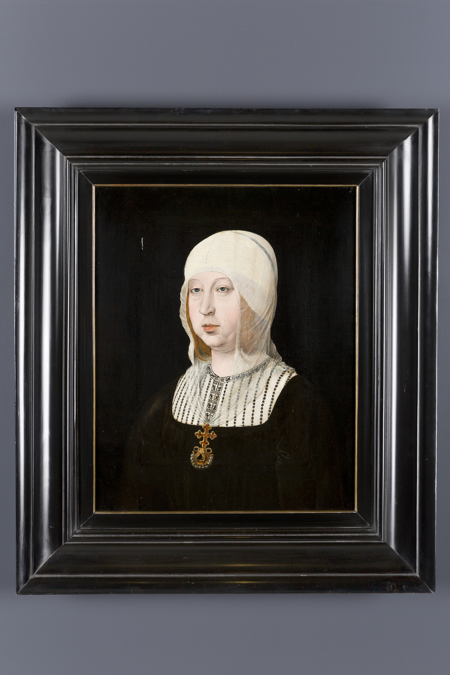
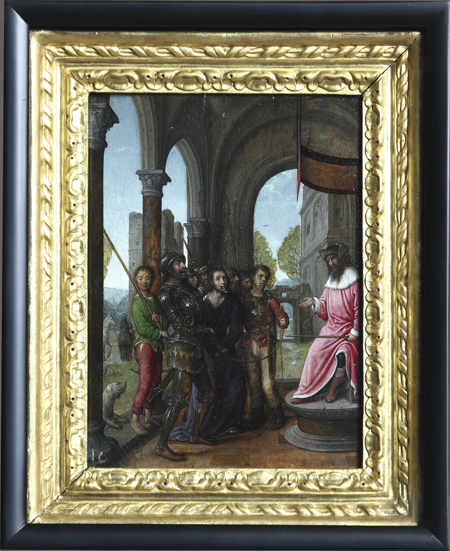
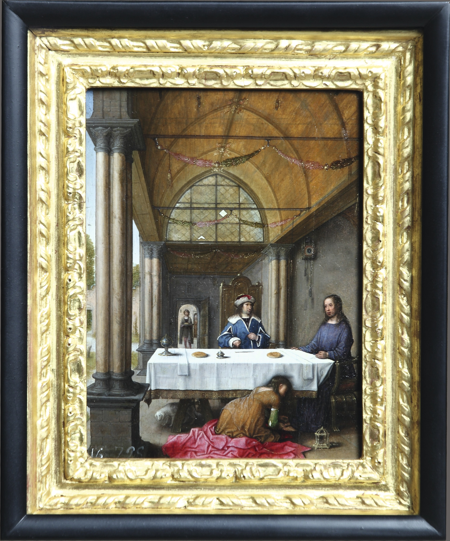
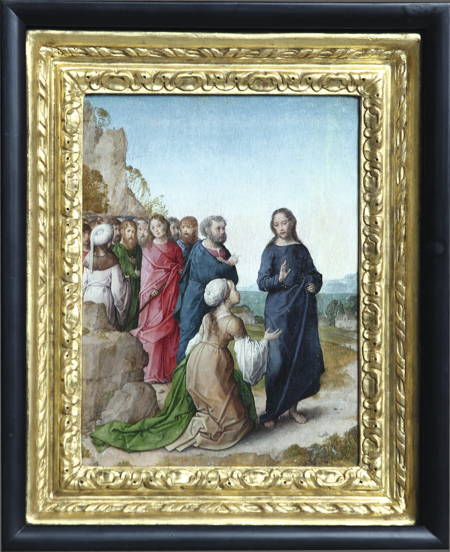
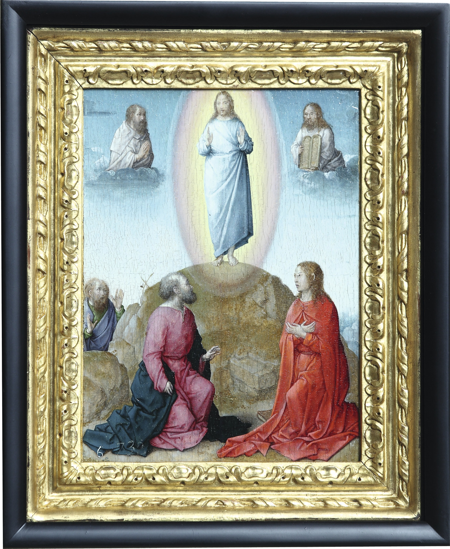
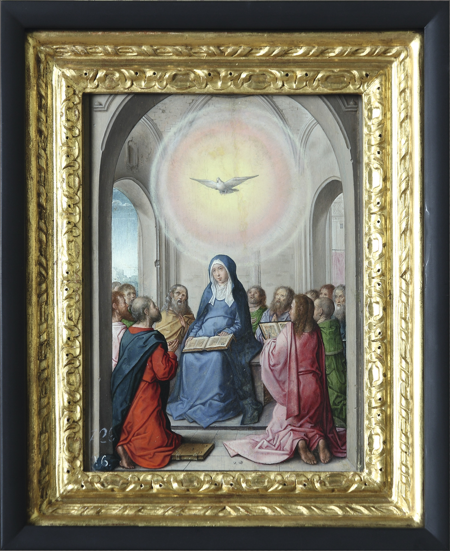
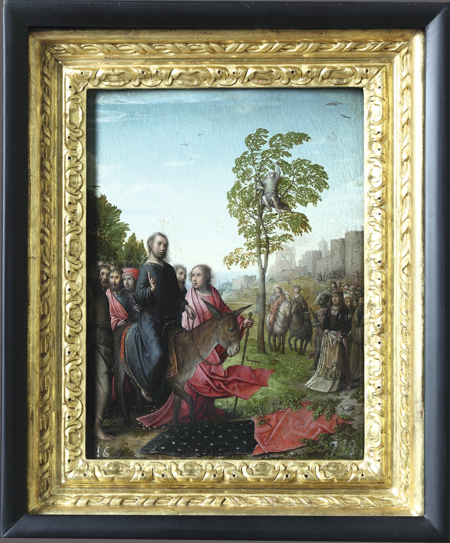
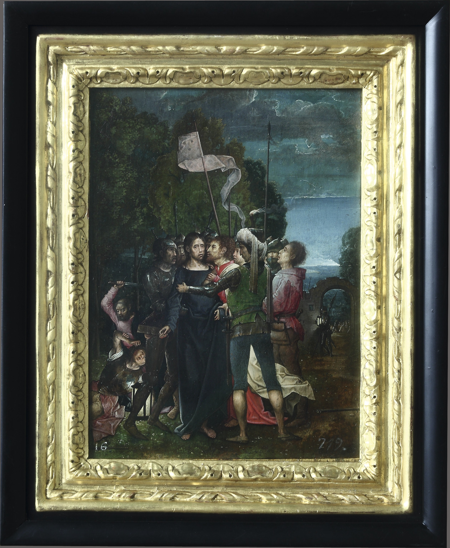
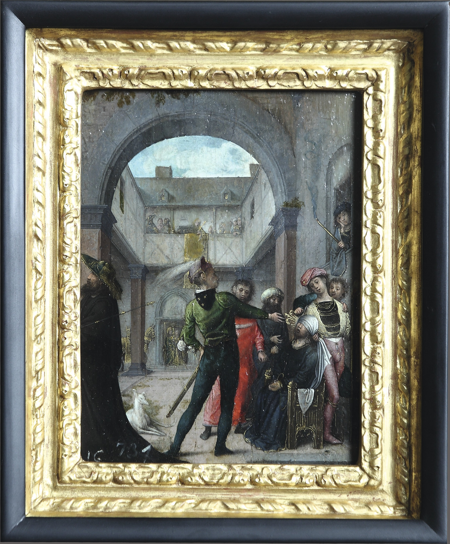
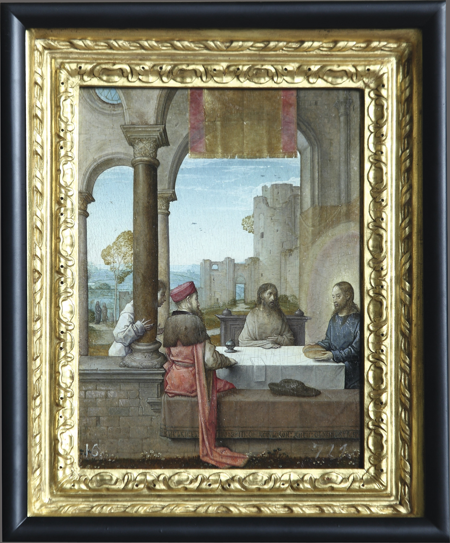
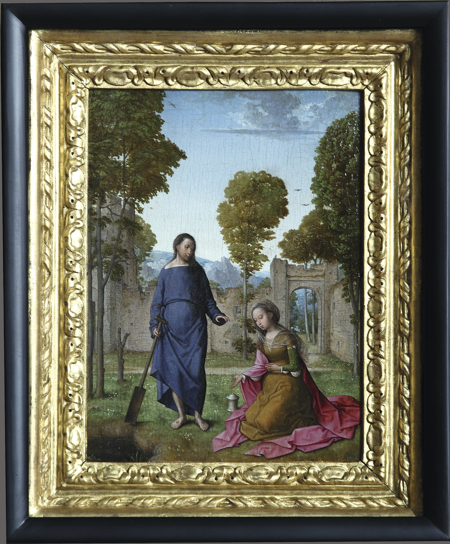
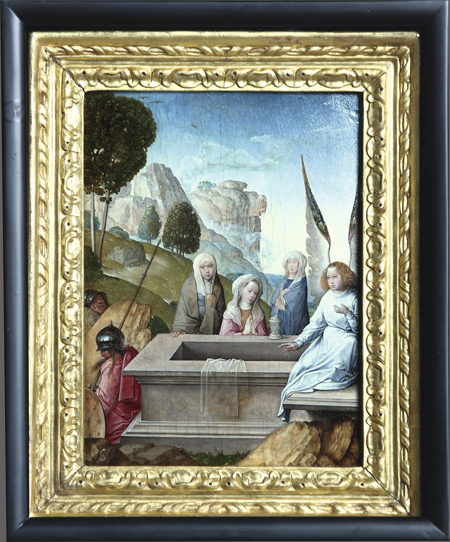
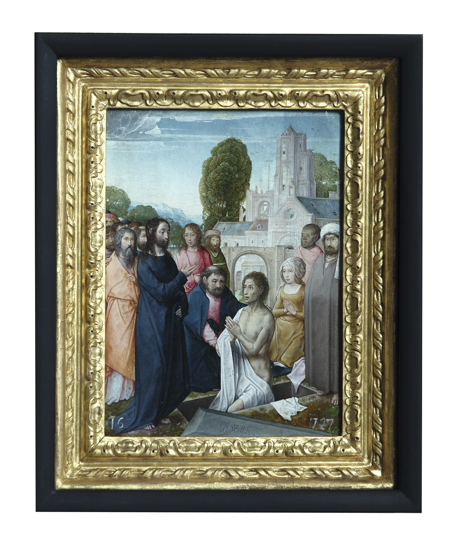
Juan de Flandes (ca. 1465-Palencia, Spain, 1519) was a Flemish painter considered one of the most important representatives of the Spanish Renaissance.
The only conclusive information available on him reveals his work in Castile between 1496 when he entered the service of Isabella the Catholic as court painter and 1519 when he died in Palencia.
Although there is no record of his age when he arrived in Castile in 1496, it may be assumed that he was around thirty years old - at least twenty-five - and therefore was probably born around 1465, or possibly a year or two later. While the surname by which he was known in Castile indicates that he was born in Flanders, this is not certain, as the German and Flemish terms were interchangeable at the time. One of the best historical examples of this is undoubtedly Michel Sittow —court painter to Isabella the Catholic, as was Juan de Flandes—. The former was originally from Reval (Estonia) but trained as a painter in Bruges, and is occasionally referred to in documentation as "Melchior the German" and sometimes as "Michel the Flemish".
Judging by the style of his works, there is no doubt that "Juan Flamenco" —as he is named in the Carthusian monastery of Miraflores— was trained in Flanders.
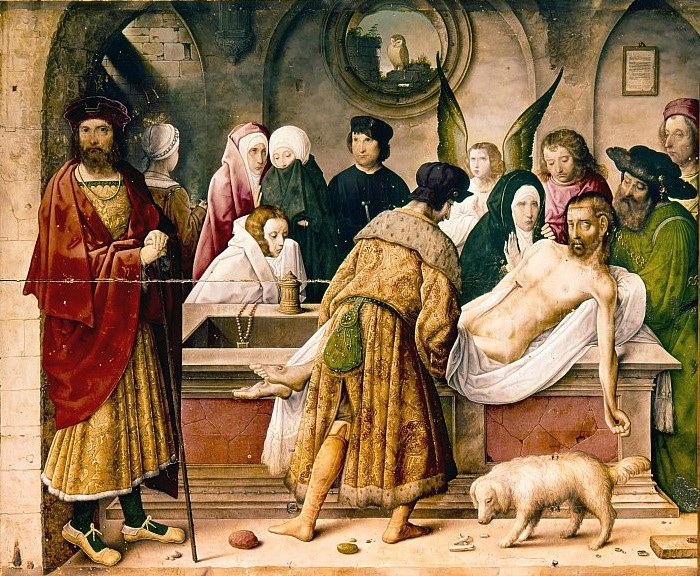
However, his highly personal style and the originality of his compositions make it difficult to reach a conclusion as to where he may have spent his formative years. Although initially associated with Flemish primitive art, in 1924, Winkler linked him to the Ghent school, perceiving in his works a tribute to Hugo van der Goes - evident in The Lamentation over the Dead Christ (Thyssen-Bornemisza Museum, Madrid), which follows a composition by Goes known from several versions, one of them by the painter and his workshop (Gómez Moreno Institute, Rodríguez-Acosta Foundation, Granada). His connection to the illuminator of the Book of Hours of Engelbert of Nassau (Bodleian Library, Ms. Douce 219-220, Oxford), the Master of Mary of Burgundy, has also been pointed out, as it uses the same composition as the latter for his Ecce Homo, ca. 1495 (National Gallery, Prague). In 1967, Vandevivere was of the same opinion, and he made several new arguments, such as the debt owed to Justus van Gent in the chromatic range.
More recently, this hypothesis has been rejected by Weniger (1997) who once again linked Juan de Flandes to the Flemish primitives school, as did Silva (2006), using new arguments to connect him to the paintings of Hans Memling. It is worth noting that the panel of the Virgin and Child, ca. 1495 (sold in New York, 1949), —which pre-dates his arrival in Castile—, repeats one of Memling’s prototypes, that he may have been acquainted with in Bruges (also used by Michel Sittow) and which Juan de Flandes took up again at the end of his life in Palencia (The Virgin and Child, Várez Fisa collection, Madrid). And this is not Juan de Flandes’ only debt to Memling.
While a direct relationship cannot be established, it is true that they have certain stylistic or technical aspects in common, such as the half-gravures of the altarpiece at the University of Salamanca, which are much more significant than a mere prototype, which Juan de Flandes could have had obtained without ever being in Bruges.
Proof of this is that both depict the figures in the foreground as immobile, isolated, without communication between them, and a preponderance of straight, mostly vertical lines that lend a ceremonial tone to their works as a whole. Other similar features include the predominance of geometry in the compositions, the meditative air of the figures, and their relationship to the environment, whether indoors or outdoors. All of these notes may be seen in the works of Juan de Flandes that date after his arrival in Castile in 1496. Some examples are in the altarpiece of the life of John the Baptist, at Miraflores (1496-1499), in scenes such as The Feast of Herod (Mayer van den Bergh Museum, Antwerp), where the narrative is reduced to the essential and there is no room for anecdotes. He retained these notes until the end of his life, except for variations inherent to the evolution of his style.
Source: Royal Academy of History (https://www.rah.es)