Use of Cookies

The Royal Collections Gallery uses its own and third-party cookies, mainly for technical purposes, which are necessary to provide our services and provide you with relevant content. More information in our cookies policy. Cookies Policy.

ACCEPT to confirm that you have read the information and accepted their installation. You can change your browser settings.

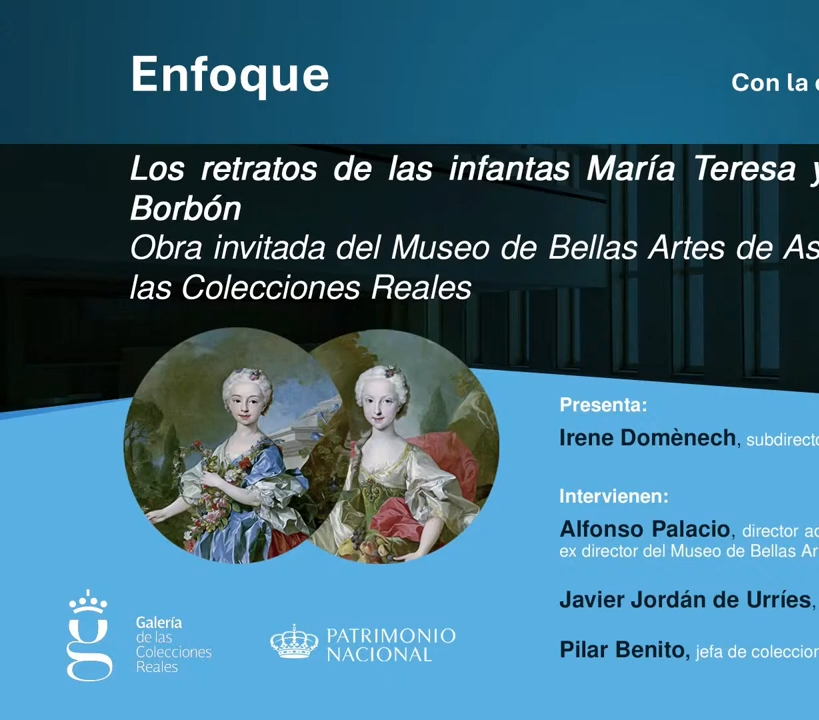
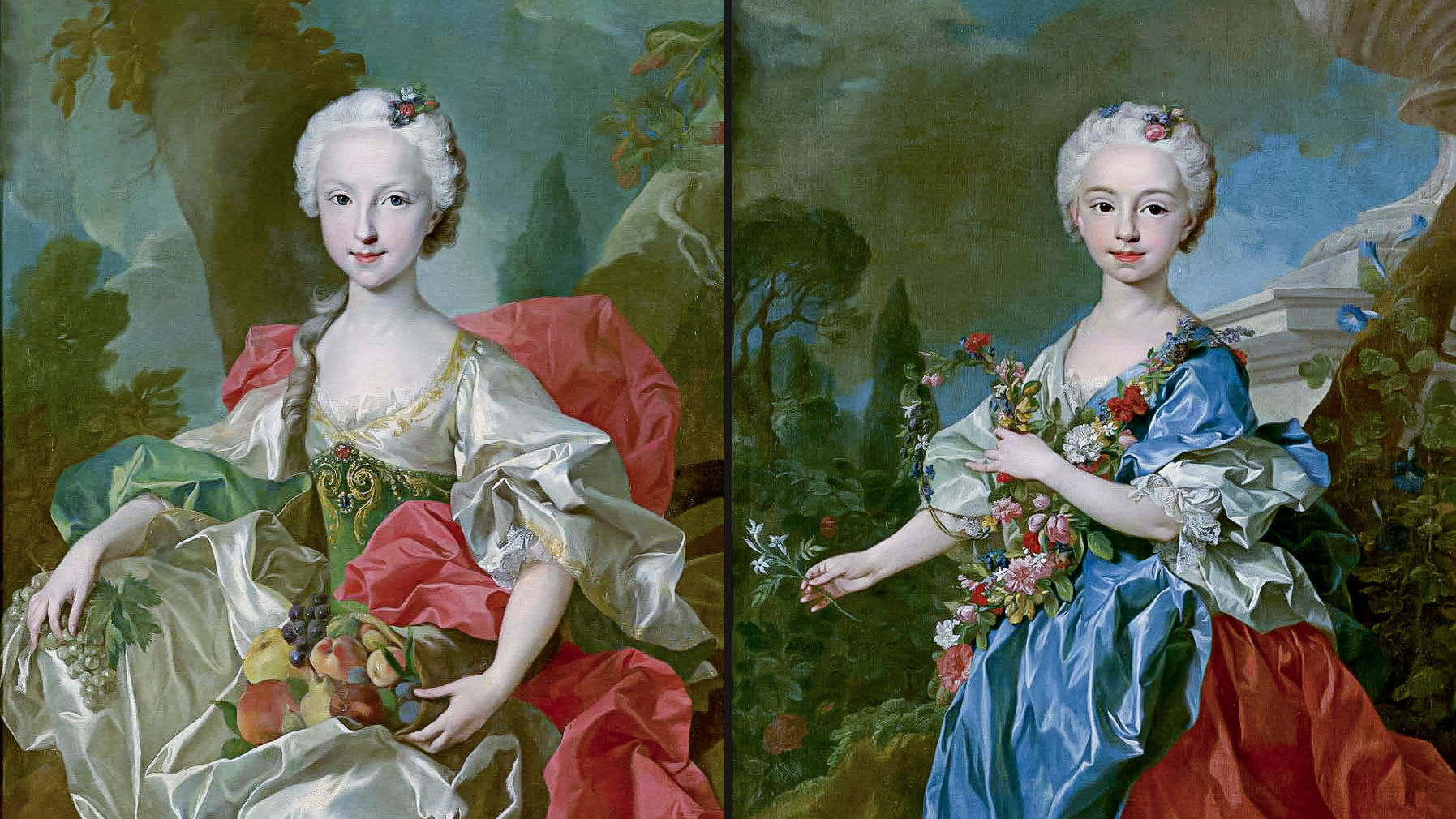
Founded in 1980, over time the Museo de Bellas Artes de Asturias has become a thriving cultural institution. Throughout these more than forty years, its core holdings have been enlarged by various acquisitions and, since 2021, the indefinite loan of a group of works from the collection of the 9th Count of Villagonzalo, including the two superb portraits that are the Gallery’s guest pieces. 

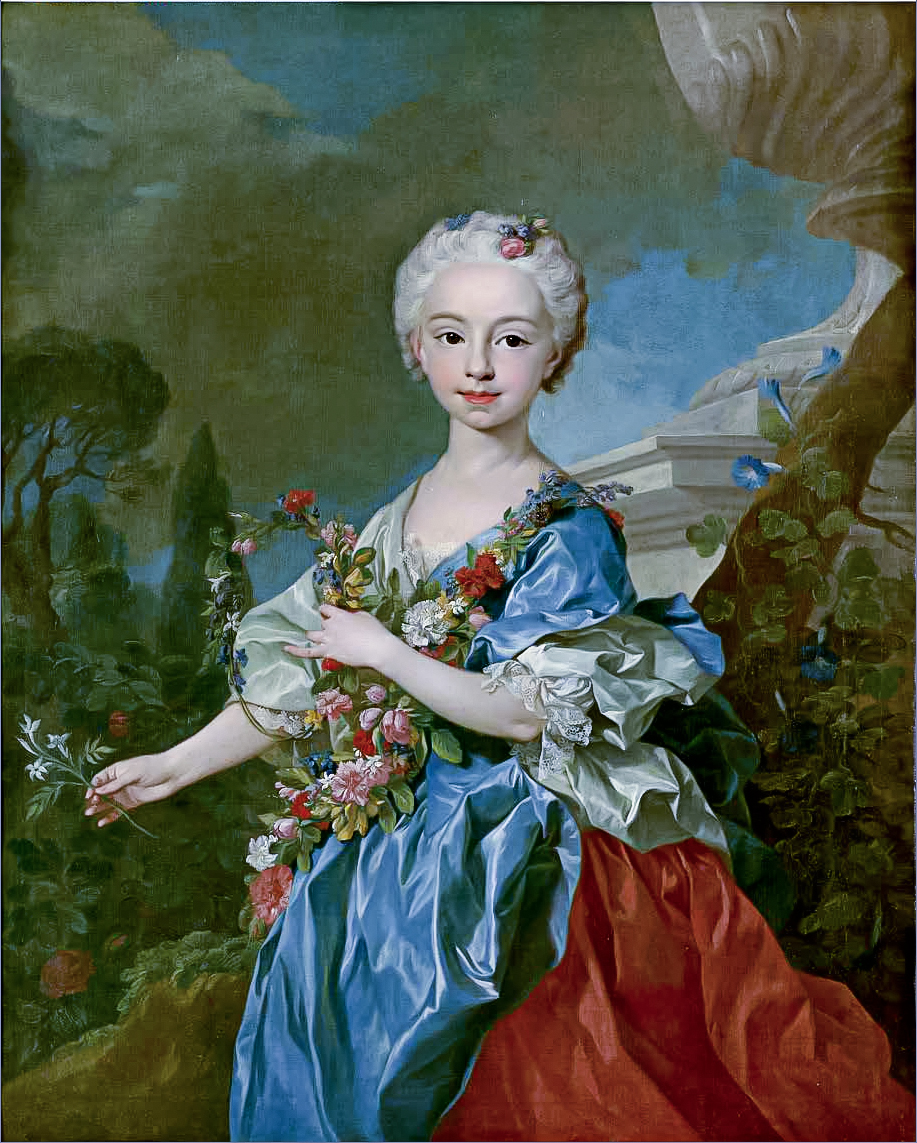
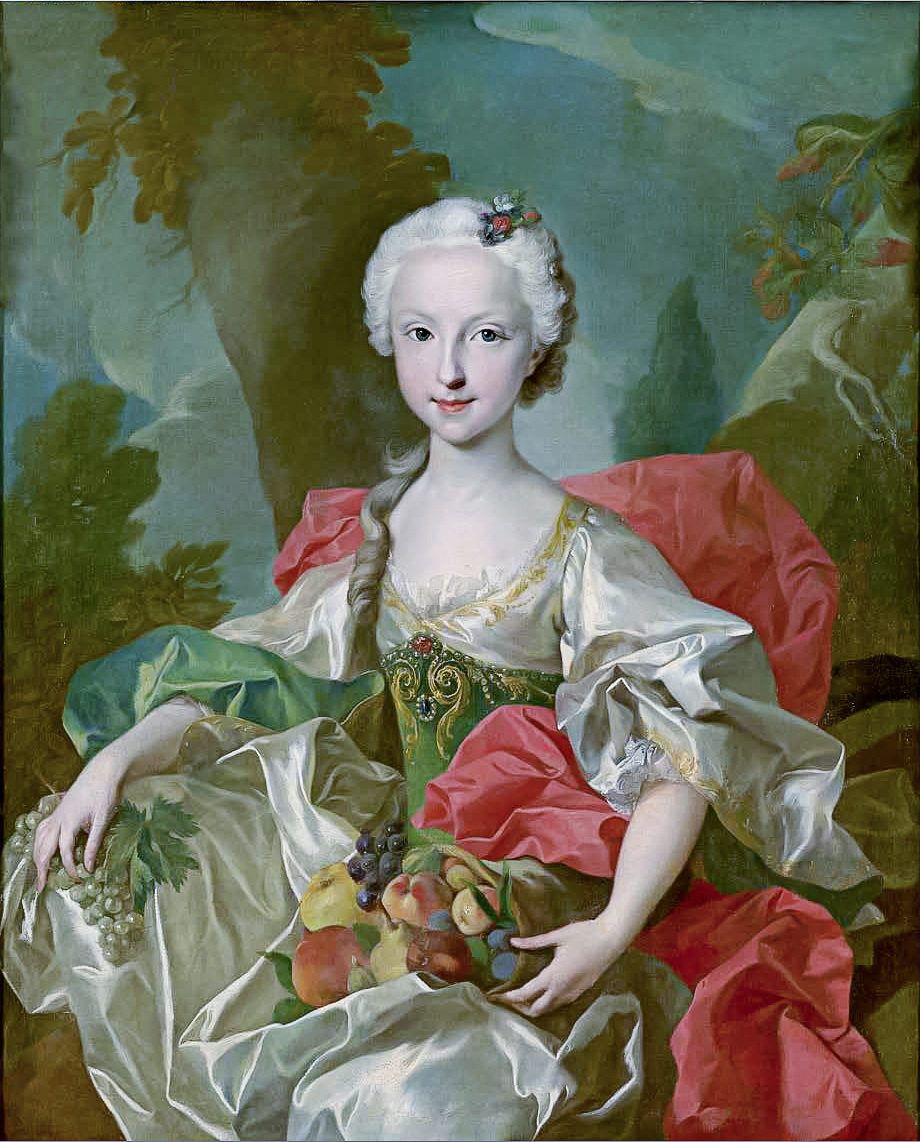
These portraits show two daughters of Philip V and Isabella (or Elisabeth) Farnese executed by Louis-Michel van Loo (1707–1771) in 1737. The French painter had arrived in Madrid on 15 January that year on the recommendation of Hyacinthe Rigaud to replace the court painter Jean Franc, who had died a year and a half earlier. The first works he produced in Spain include the monumental full-length portraits of Philip V on horseback and Isabella Farnese, executed that year and on display in the Royal Collections Gallery at the start of the route around the Bourbon floor, and the longer than half-length portraits he made of some of the infantes in his characteristic vivid colours.

The infantas are depicted in an outdoor setting in court costume sporting satin gowns with sharp, bright folds and fine lace. María Teresa de Borbón (1726–1746), who was born in the Real Alcázar in Madrid, holds a horn of plenty filled with fruits, while her younger sister, the Infanta María Antonia Fernanda (1729–1785), born in the Real Alcázar in Seville during the period the king and his family resided in the city, amuses herself with flowers in a garden, making a garland – possibly an allusion to her foreseeable destiny as a royal. Flowers also adorn her hair, gathered in a bun and powdered, and form an original ‘sash’ draped across her torso. María Teresa married Louis (1729–1765), the dauphin of France, in 1745, though she died soon afterwards after giving birth to her only daughter, María Teresa (1746–1748), who passed away before her second birthday. María Antonia Fernando wed Duke Victor Amadeus of Savoy (1726–1796), future king of Sardinia, in 1750.

Some years afterwards the infantas were painted together  in the large picture The Family of Philip V, executed by Van Loo in 1743 (Museo Nacional del Prado, cat. P002283). Several later individual portraits by the same artist are known: a full-length portrait of María Teresa, dated 1744 (Royal Palace of Versailles, inv. no. MV 3788); one of María Antonia Fernanda in a striking turquoise dress and burgundy bodice with pearls and gemstones, executed about 1747 (Museo Nacional del Prado, cat. P008350 ), and a portrait dated 1750, by which time she was engaged to Victor Amadeus, showing her pointing to the ducal crown of Savoy (Patrimonio Nacional, inv. 1002748) ; and a pair of oval versions in the Royal Palace of Turin (codice di catalogo nazionale: 0100201317 and 0100202101). In those portraits she adopts a pose similar to that of her mother in the painting in the Royal Collections Gallery (Patrimonio Nacional, inv. 10025802).

Image gallery

Title

Portraits of the Infantas María Teresa and María Antonia Fernanda de Borbón

Author

Louis-Michel van Loo (1707-1771)

Date

1737

Characteristics

Oil on canvas

Origin

Museo de Bellas Artes de Asturias

Location

Floor -2. Bourbons Hall. Philip V Area

Credits

Textos: Javier Jordán de Urríes

Sponsors

Ramón Areces Foundation

Collaborators

Museo de Bellas Artes de Asturias

Other related works

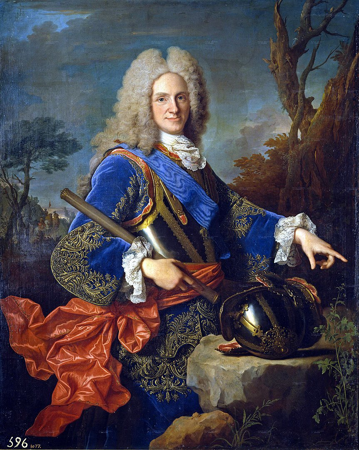
Philip V on Horseback
Louis-Michel van Loo
1737
Royal Collections Gallery
10025803

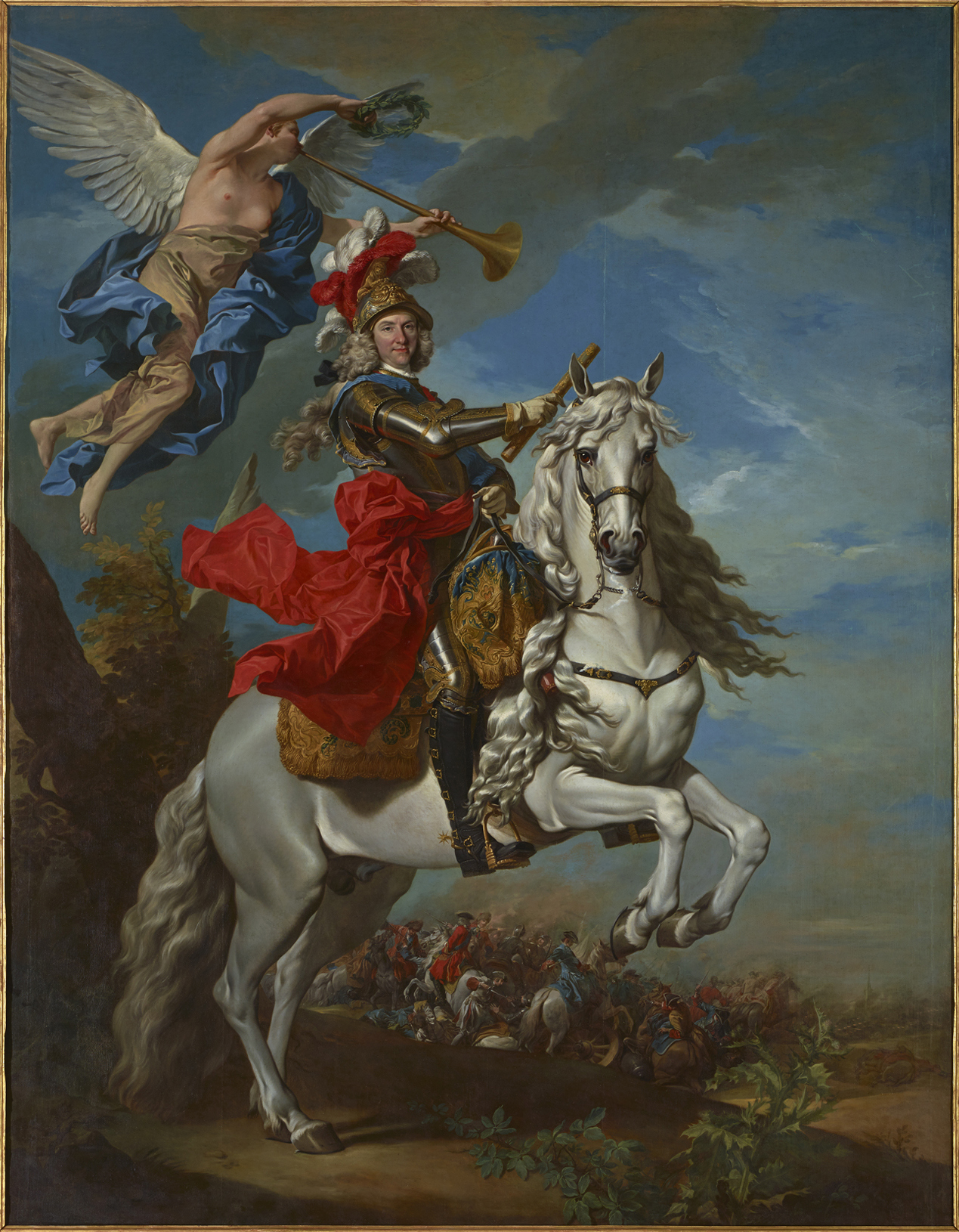
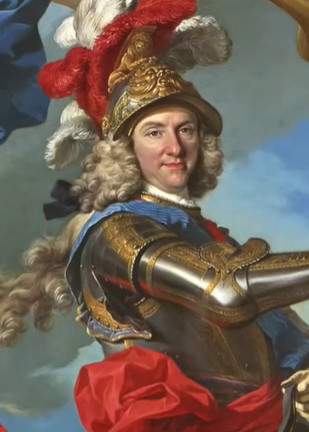
This painting shows Philip V (1683–1746) on a white rearing horse in an outdoor setting, with a battle raging in the background. It is paired with a full-length picture of his wife Isabella (or Elisabeth) Farnese, then aged forty-five, who eschewed the heroic tradition of equestrian portraiture, preferring instead to be depicted in an imagined palace interior sporting court dress.

The grandson of Louis XIV wears full armour inspired by some of the suits made for Philip II – such as the ‘waves’ or ‘clouds’ garniture – housed in the Royal Armoury in Madrid. Fame sounds her trumpet and places a laurel wreath on the sovereign's head, a triumphant symbol that proclaims the success of the Italian wars – involving the conquest of Naples and Sicily – which ended with the acceptance of the peace preliminaries on 18 May 1736. This figure in flight, dressed in a pinkish tunic, is notable for her blue robe with its sharp folds, which matches the blue sash of the French chivalric order of Saint-Esprit draped across Philip’s torso. Similarly, the bright red general's sash tied around his waist is the same colour as the feathers topping his arresting lion-crested helmet.  With his long hair blowing in the wind – like the horse's mane and tail – the king wields the baton of command in his right hand and, in a theatrical gesture, seems to be directing the armed combat depicted in the background. With this work Van Loo emulated another large equestrian portrait of the same monarch which was painted by his predecessor Jean Ranc some fourteen years earlier and is now in the Museo Nacional del Prado. 

The significance that these two portraits by Van Loo may have enjoyed in the period is indicated by a document dated ten years after they were painted. It confirms that these important works, so symbolic in appearance with their royal iconography, did not hang in the royal palaces but were located ‘in the Bedmar houses and in the apartments of Don Luis Wanlo, chief court painter to His Majesty’. However, it is even more surprising to find that in 1747 the canvas of The Family of Philip V, now in the Prado, was not on display in any of the residences of the monarch, by then Ferdinand VI, but was stored ‘without a frame’ in the same rooms. The large painting passed to the Buen Retiro Palace, where it was registered in 1772 and mentioned seven years later by José de Viera in his ‘Praise of Philip V’. The equestrian portrait and its companion piece were kept in different locations in the Royal Palace of Madrid before being moved to the main staircase of the Royal Palace of San Ildefonso in 1881.

Read more

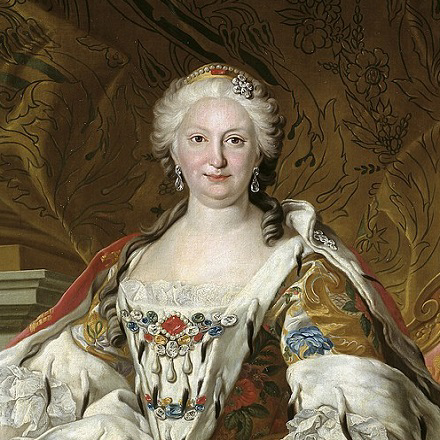
Elisabeth Farnese
Louis-Michel van Loo
1737
Royal Collections Gallery
10025802

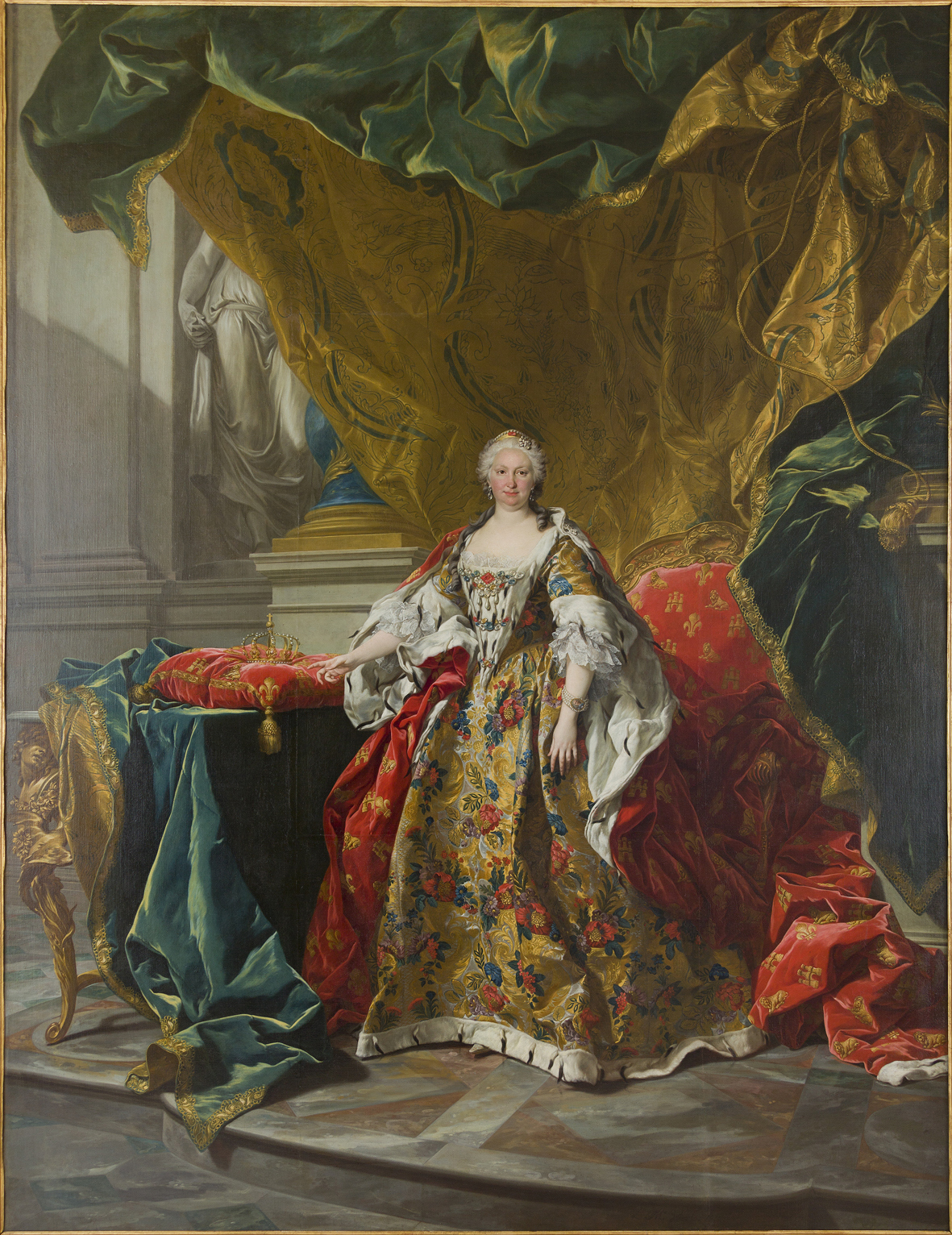
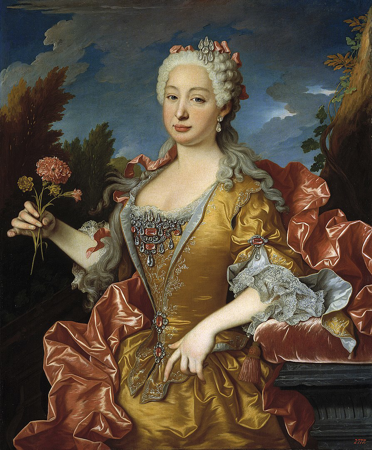
The companion piece to Philip V on Horseback, this portrait shows Queen Isabella (or Elisabeth) Farnese (1692–1766) in a sumptuous palatial interior beside the royal crown. It is based on the scheme employed by Louis-Michel’s father, Jean-Baptiste van Loo, in the portrait of Maria Leszczynska executed in about 1725 (Palace of Versailles) and disseminated years later through an engraving and etching by Nicolas de Larmessin. An identical formula – a motionless, full-length figure surrounded by the symbols of majesty in an architectural setting – is used in another portrait of this queen of France and Navarre made by Louis Tocqué in 1740 (Paris, Musée du Louvre). Larmessin’s above-mentioned print was even employed years later for the composition of a portrait of Marie-Antoinette Josèphe Jeanne of Austria, Queen of France and Navarre.

In this painting Isabella Farnese wears court attire over a hoop skirt: a flower-patterned gown made of figured silk woven with silver-gilt and coloured threads and a large gemstone and pearl brooch on her ermine fur stomacher.  Other pieces of jewellery adorn her hair and ears, and she sports a miniature portrait of her husband on her wrist. The royal crown lying on a cushion made of velvet with gold-embroidered fleurs-de-lis, castles and lions, like the robe and the upholstery of the throne, completes this dazzling representation of royal majesty. Visible in the background behind the sweeping curtain are some lapis lazuli and gilt bronze Solomonic columns and, bearing a clear allegorical message, the colossal sculpture known as the Flora Farnese, one of the most famous pieces in the collection of the queen’s family. 

These portraits of the king and queen are known to have been in Van Loo’s workshop in 1747. The 1772 inventory of the New Palace in Madrid refers to them in the ‘gallery corridor and backrooms’ – in other words, once again in storage. However, on Palm Sunday the following year they were hung in the ‘canopy room’ at the northernmost end of what is now the Banqueting Hall. Three years later the traveller Antonio Ponz describes the pair as being ‘in the room where the king eats’, alongside equestrian portraits of the Habsburgs painted by Velázquez and Rubens. The 1794 inventory of Charles III’s estate refers to the paintings as being in the ‘study’ of the Infante Don Pedro in the Royal Palace of Madrid. Twenty years later they are recorded among those ‘there are in what is called the corridor leading to the galleries, hung and unhung’, and another inventory of the same palace, compiled in 1870, describes them as being in ‘Room no. 27, called antechamber [of the former queen]’. In 1881 they were moved to the main staircase of the Royal Palace of San Ildefonso, on the instructions of Alfonso XII.

Read more

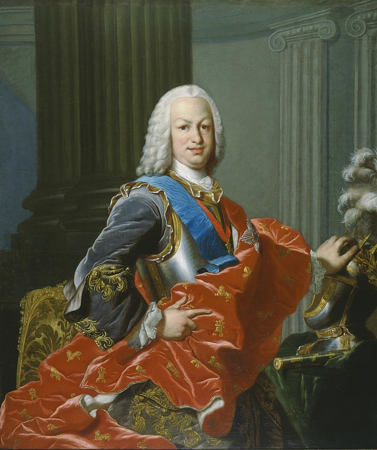
King Ferdinand VI
Louis-Michel van Loo
C. 1750
Royal Collections Gallery
10002069

Louis-Michel van Loo (1707–1771), who hailed from a family of artists of Dutch descent, was an outstanding French portraitist who arrived in Madrid on 15 January 1737 on the recommendation of Hyacinthe Rigaud to replace the court painter Jean Ranc, who had died a year and a half earlier on 1 July 1735. During the fifteen years he spent in Spain, Van Loo pursued a brilliant career in the service of the Bourbon monarchs Philip V and Ferdinand VI before returning to his native France for good in 1752. Throughout this period he witnessed the establishment of the San Fernando Royal Academy in Madrid, of which he was appointed director of painting.

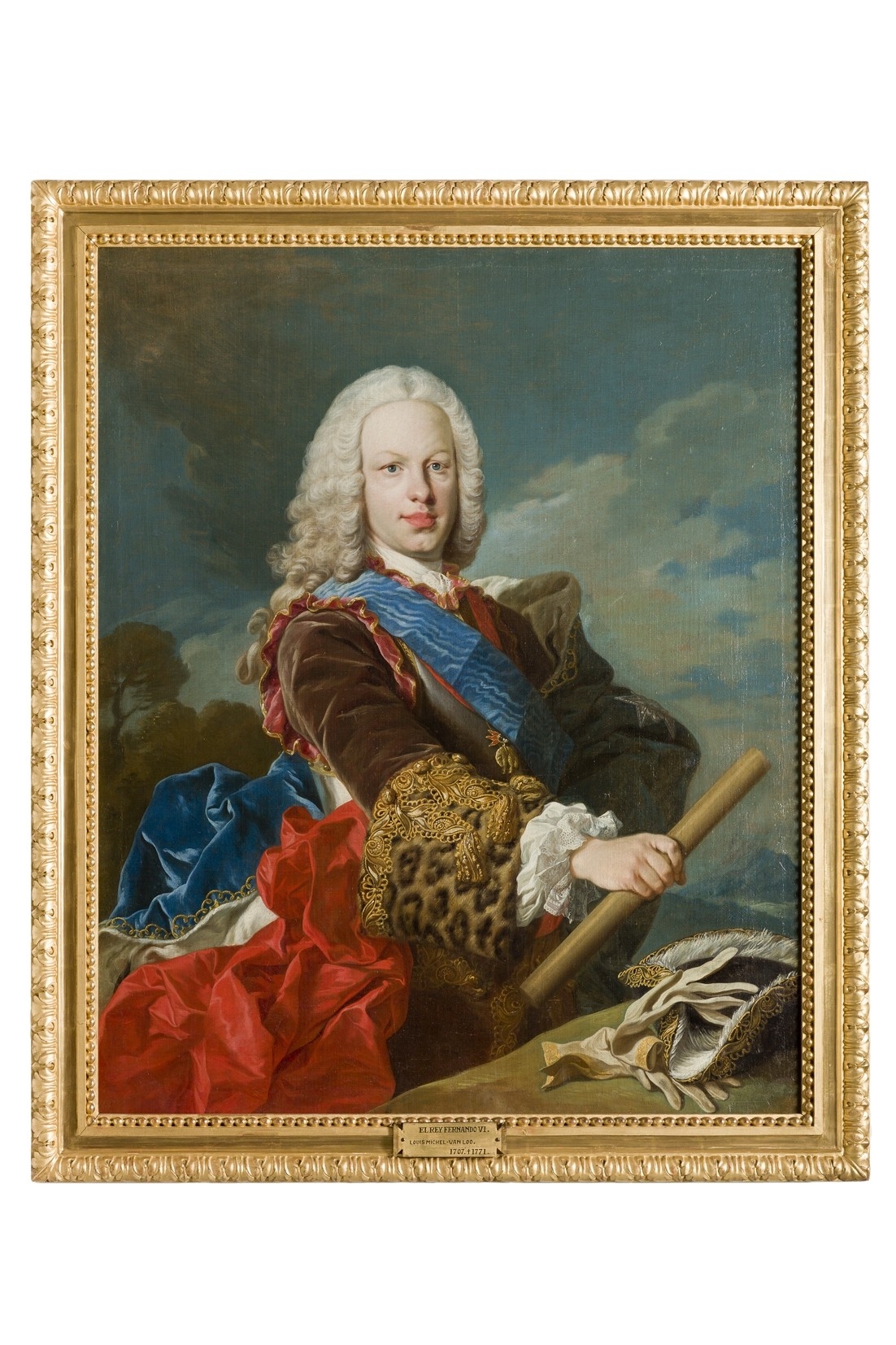
The half-length portrait of Ferdinand VI (1713–1759), a companion piece to that of his wife Queen Barbara (inv. 10002070), shows the monarch at the height of his power. He wields the baton of command theatrically in his right hand in a dashing pose far removed from the reality of his final year when, intensely grieving his wife’s death, he shut himself away in the castle of Villaviciosa de Odón and led an erratic lifestyle. With the vivid colouring characteristic of the French painter, the sovereign is depicted in an outdoor setting, silhouetted against the greyish-white clouds peculiar to the backgrounds of Van Loo’s works. He wears a long white wig and a breastplate over a brown velvet coat with jaguar fur sleeves decorated with abundant silver-gilt embroidery. As is customary in court portraiture, he sports a variety of insignia. Hanging from his neck is the badge of the Golden Fleece, whose golden sheepskin and ruby flames peep out from beneath the sky-blue moiré sash of the French Order of Saint-Esprit draped across his chest, its silver cross sewn to the blue velvet royal robe with ermine lining. Like the robe, his striking red general's sash is notable for its sharp folds, which resemble those found in earlier paintings of Philip V, such as the equestrian portrait also in the Royal Collections Gallery (inv. 10025803), and in the red curtain depicted in the artist’s most famous work, the large painting of The Family of Philip V executed in 1743 (Madrid, Museo Nacional del Prado, cat. P002283). Completing the composition is an elegant black felt tricorn hat adorned with white feathers and rich gold embroidery lying on the foreground rock beside his gloves, as if they had been left there haphazardly.

The elegant frame made of carved and gilded wood with leaves on the outer edge and beading on the sight edge is based on the model created by Isidro Velázquez in 1804 for the Real Casa del Labrador at Aranjuez in 1804.

Read more

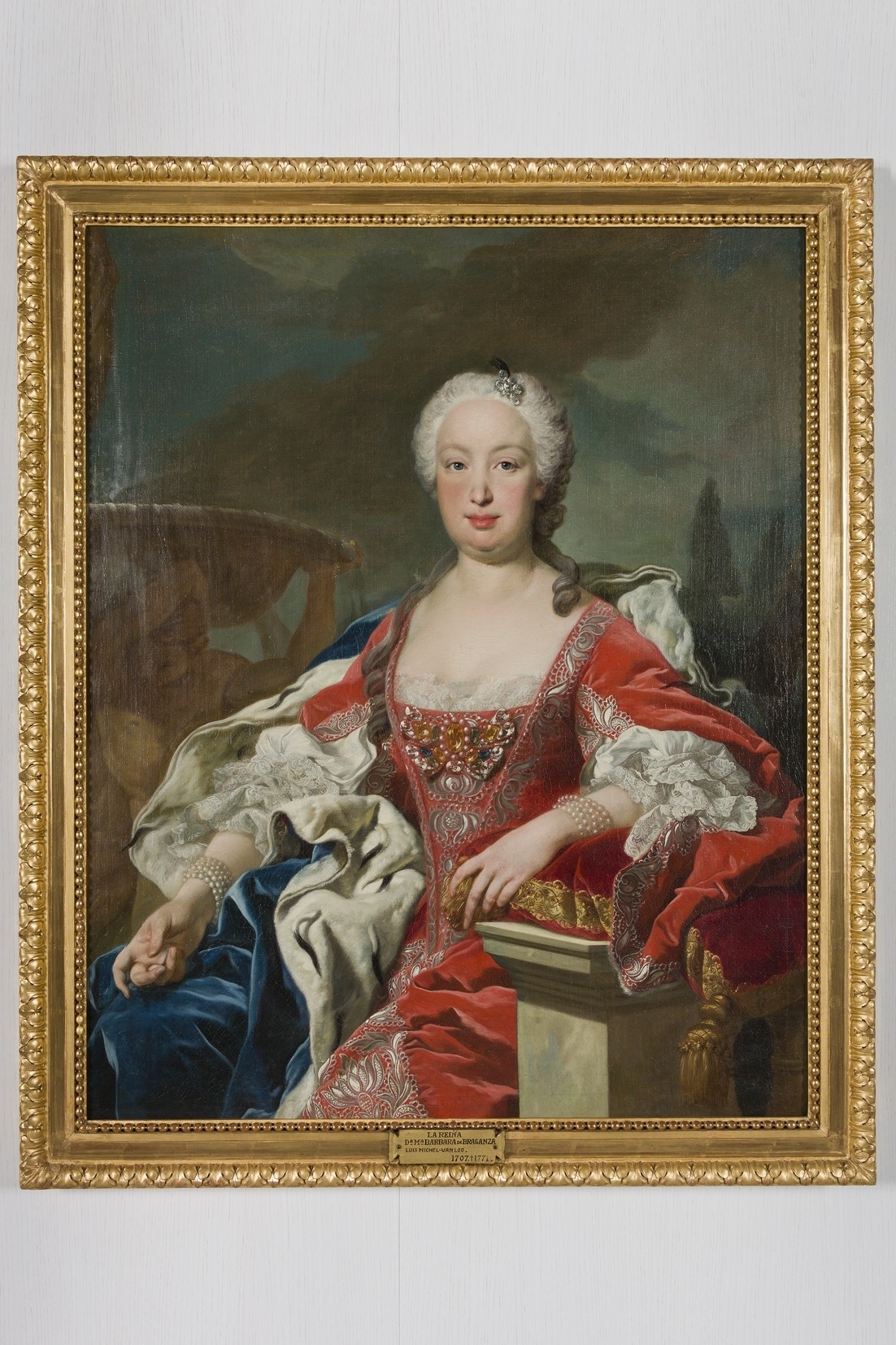
Queen Barbara of Braganza
Louis-Michel van Loo
H. 1750
Galería de las Colecciones Reales
10002070

This portrait of Queen Barbara (1711–1758) is the companion piece to that of her husband Ferdinand VI (inv. 10002069). Born in Portugal, she is also depicted in an outdoor setting, but seated and motionless, dressed in a salmon-pink court gown and a blue velvet royal robe with an ermine lining. With jewels in her hair and on her stomacher and wrists, she leans one arm on a cushion with silver-gilt braid and tassels, which rests in turn on a marble baluster. Behind her Louis-Michel van Loo (1707–1771) depicted a stone fountain with a basin supported by tritons or Atlantes that are vaguely reminiscent of the paintings of Pietro da Cortona and the Triton fountain in the Forum Boarium in Rome. Several copies and versions of this portrait are known. In the closest copy, housed in the Casa Rocca Piccola in Valletta (Malta), the queen’s figure is more stylised, the Atlantes or tritons of the background fountain are slightly turned, the basin is topped with a dolphin, and below the fountain is a royal crown to which she seems to point with her left hand. Greater differences – the crown instead of the fountain – are found in the copy in the Muzeum Narodowe in Warsaw, Poland (inv. 190915 MNW), and in the one attributed to José Vergara Ximeno in the San Carlos Royal Academy of Fine Arts in Valencia, an institution which originated from the Santa Bárbara Academy founded in the queen’s honour. Another portrait in the Universidad Complutense in Madrid is also derived from the Patrimonio Nacional prototype. It displays many changes: a reversal of the colours of the dress and robe, variations in the position of the arms, a different background, no baluster or cushion, and a large, closed fan in the queen’s right hand.

The eldest daughter of King John V of Portugal and Archduchess Maria Anna of Austria, Barbara was Princess of Brazil – the title of the heir to the Portuguese crown – until the birth of her brother Pedro, who died prematurely and was replaced in the line of succession by another brother who later became King Joseph I of Portugal and the Algarves. Barbara received a thorough education at the Portuguese court and showed a keen interest in music, guided by her teacher Domenico Scarlatti. On Wednesday 19 January 1729, she married the then Prince of Asturias in Badajoz. A very well-matched couple, they had no issue. This enabled Carlos de Borbón to return from Italy to take possession of the Spanish throne. 

The elegant frame made of carved and gilded wood with leaves on the outer edge and beading on the sight edge is based on the model created by Isidro Velázquez in 1804 for the Real Casa del Labrador at Aranjuez in 1804.

Read more

Authors and Collectors

Philip V
Monarch

Philip V

(Versalles (Francia), 1683 - Madrid, 1746)

The second son of Louis of Bourbon (1661-1711), commonly known as the Grand Dauphin, heir to the French Crown, and Maria Anna Christine Victoria of Bavaria (1660-1690), the future Philip V grew up at the court of Versailles during the reign of his grandfather, Louis XIV of France. He was educated by François Fénelon, later Archbishop of Cambrai. Grandson of the Infanta Maria Theresa, eldest daughter of Philip IV, on his father’s side, he ascended the Spanish throne after the death of Charles II, who appointed him as his successor in his last will and testament dated 3rd October 1700. 

The first Spanish monarch of the House of Bourbon, Philip V's reign took place in two stages. The first lasted from November 1700 until 10th January 1724, when the monarch abdicated in favour of his eldest son, Louis I. The second stage was from 6th September 1724, when King Louis died of smallpox, until 9th July 1746, the date of his own death. 

Philip V was married twice. His first wife was Princess Maria Luisa Gabriella of Savoy (1688-1714), whom he married in Figueras (Gerona) on 3rd November 1701. The royal couple had four children: the future Louis I (1707-1724), who reigned briefly in 1724; the Infante Felipe (born and died in 1709); the Infante Philip Peter (1712-1719); and Ferdinand VI (1713-1759), who succeeded his father in 1746. After Queen Maria Luisa Gabriella of Savoy died on 14th February 1714, the King married Princess Elisabeth Farnese (1692-1766) of Parma, in Guadalajara on 24th December that same year. The couple had seven more children: the future Charles III of Spain (1716-1788); the Infante Francisco (born and died in 1717); the Infanta Mariana Victoria (1718-1781), Queen of Portugal by marriage to Joseph I (1714-1777); the Infante Philip (1720-1765), Duke of Parma; the Infanta Marie Thérèse (1726-1746), Dauphine of France by marriage to Louis, Dauphin of France (1729-1765); the Infante Luis Antonio (1727-1785), who was to become Archbishop of Toledo and Cardinal of the Holy See; and the Infanta Maria Antonia Ferdinanda (1729-1785), Queen of Sardinia by her marriage to Victor Amadeus III of Savoy (1726-1796).

The early years of Philip V's reign were marked by the outbreak of the War of the Spanish Succession (1701-1714), which pitted France and the Hispanic Monarchy against the powers of the Grand Alliance of The Hague: England, the Dutch Republic and the Holy Roman Empire, joined by Portugal and Savoy in 1703. Although the origins of the conflict lay in Leopold I's defence of the succession rights of his son, Archduke Charles of Austria, it was also influenced by political, economic and commercial factors. In Spain, the War of the Spanish Succession also resulted in a civil conflict. While there was widespread loyalty to Philip V amongst Castilians, Navarrese and the Basque, large sectors of society in Valencia, Aragón, the Balearic Islands and Catalonia, known as "Habsburgists", were in favour of Archduke Charles, who established his court in Barcelona in 1705. 

Throughout 1713, all European powers, with the sole exception of Austria until 1725, recognised Philip V as King of Spain. However, under the Peace Treaty of Utrecht-Rastatt (1713-1714), the Hispanic Monarchy had to relinquish the Netherlands and its territories in Italy, as well as Gibraltar and Minorca to England, which also received certain trade privileges overseas. The end of the War of the Spanish Succession also meant the entry into force of the Nueva Planta Decrees in Valencia, Aragón, Mallorca and Catalonia. These decrees were enacted between 1707 and 1716 and proposed a complete overhauling of the prevailing political and administrative systems of the Hispanic Monarchy up to that time.  

Post-1714, Spain’s foreign policy was dictated by the revisionism of the Treaties of Utrecht-Rastatt and by the Spanish government's interest in reconquering Minorca, Gibraltar and the Italian territories ceded after the peace. This prompted the signing of the first and second "Family Pact” on 7th November 1733 and 25th October 1743 respectively with France, as well as Spain's intervention in the Wars of the Polish Succession (1733-1735) and the Austrian Succession (1740-1748). Although it could not recover Minorca and Gibraltar, Spain managed to conquer the Kingdoms of Naples and Sicily, as well as the Duchy of Parma, granted to the King's sons, the Infantes Charles, the future Charles III, and Philip of Bourbon. Prior to this, the Spanish government had re-established relations with the Holy See by signing the Concordats of 1717 and 1737. 

In terms of domestic policy, Philip V's reign was characterised by reform and administrative rationalisation, driven by the creation of the Secretaries of State and of the Office. Initially, foreigners such as the Frenchman Jean de Orry, the Parmese Cardinal Alberoni, and the Dutch Juan Guillermo Ripperdá shared power with ministers of Spanish origin such as José Grimaldo and Melchor de Macanaz. However, from the late 1720s onwards, the technocrats José Patiño and José del Campillo would become the most influential figures in the government. Improvements in tax administration, the introduction of intendants, restructuring the army and navy, stimulating the development of industry, establishing the Royal Manufacturers and chartered trading companies, and moving the House of Trade of the Indies from Seville to Cadiz (1717) were some measures adopted by Philip V's ministers after the War of the Spanish Succession. 


Within the cultural sphere, notable achievements include the foundation of the Royal Library in 1711, the precursor to the current National Library of Spain; the Royal Academies of Spanish and History in 1714 and 1738 respectively; the University of Cervera in 1717, and other scientific institutions such as the Royal College of Surgeons of Cadiz, for example. A lover of the fine arts, Philip V was also a patron of the Neapolitan singer Carlo Broschi, known as Farinelli, and the painters Miguel Jacinto Meléndez, Jean Ranc and Louis-Michel van Loo, among others. He was also responsible for the building of the Palace of La Granja de San Ildefonso (Segovia) and the Royal Palace of Madrid. 


The King died in Madrid on 9th July 1746. His remains are buried alongside those of his second wife, Elisabeth Farnese, in the crypt of the Royal Collegiate Church of the Holy Trinity in the Palace of La Granja de San Ildefonso. 

Source: Royal Academy of History (https://www.rah.es)

Read more
Elisabeth Farnese
Monarch

Elisabeth Farnese

(Parma (Italia), 1692 - Aranjuez (Madrid), 1766)

Daughter of Odoardo Farnese (1666-1693), Prince of Parma, and Dorothea Sophie of Neuburg (1670-1748), sister of Maria Anna of Neuburg (1667-1740), second wife of Charles II of Spain (1661-1700), Elisabeth Farnese’s upbringing was supervised by her mother, who saw to it that she received a solid artistic and cultural education. Betrothed to the King of Spain in 1714, at the urging of the diplomat Jules Alberoni, of Parma, and the Princesse des Ursins, the chief chambermaid and confidante of the King's first wife, Maria Luisa Gabriella of Savoy (1688-1714), her marriage to Philip V (1683-1746) was celebrated in Guadalajara on 24th December 1714. A woman with a strong personality, one of her first measures was to banish the influential Princesse des Ursins, the person responsible for her marriage.

The King and Queen formed a well-matched couple who had seven children: the future Charles III of Spain (1716-1788); the Infante Francisco (born and died in 1717); the Infanta Mariana Victoria (1718-1781), Queen of Portugal by marriage to Joseph I (1714-1777); the Infante Philip (1720-1765), Duke of Parma; the Infanta Marie Thérèse (1726-1746), Dauphine of France by marriage to Louis Ferdinand of Bourbon, Dauphin of France (1729-1765); the Infante Luis Antonio (1727-1785), who was to become Archbishop of Toledo and Cardinal of the Holy See; and the Infanta Maria Antonia Ferdinanda (1729-1785), Queen of Sardinia by her marriage to Victor Amadeus III of Savoy (1726-1796). 

As Queen, Elisabeth Farnese exercised considerable political influence and protected the careers of ministers such as the Cardinal Alberoni, Juan Guillermo Ripperdá, José Patiño and the Marquess of Villadarias. Moreover, when Philip V was ill, the Queen personally, albeit unofficially, took over the management of state affairs.

After her husband's death on 9th July 1746, Elisabeth Farnese was forced by her stepson, Ferdinand VI, to retire to the Palace of La Granja de San Ildefonso (Segovia). During the thirteen years of her retirement, the Queen concentrated on her cultural interests, such as expanding her art collection, and the construction of the Palace of Riofrío (Segovia). After Ferdinand VI died without heirs on 10th August 1759, Elisabeth Farnese served as interim Governor while her eldest son, the new King Charles III, travelled to Spain. 

The Queen died at Aranjuez Palace on 11th July 1766. Her remains lie alongside those of Philip V in the crypt of the Royal Collegiate Church of the Holy Trinity in the Palace of La Granja de San Ildefonso (Segovia). 

Source: Royal Academy of History (https://www.rah.es)

Read more
Ferdinand VI
Monarch

Ferdinand VI

(Madrid, 1713 - Villaviciosa de Odón (Madrid), 1759)

The fourth and last son of Philip V (1683-1746) and his first wife, Queen Maria Luisa Gabriella of Savoy (1688-1714), the future Ferdinand VI lost his mother when he was less than five months old. As was customary at the time, he spent his early years being cared for by a group of palace maidservants until Philip V ordered that he be placed "in a separate room to be served and attended by men only”, in 1721. That same year, the Count of Salazar and Carlos Arizaga were respectively appointed caretaker and assistant caretaker to the Infante, while the Jesuit priest Ignace de Laubrussel was appointed his tutor. From then on, the Infante Ferdinand’s training would be stricter and more planned, and would include music, dance, fencing and the art of hunting, as well as religion and basic intellectual knowledge. 

On 25th November 1724, the Infante Ferdinand was sworn in as Prince of Asturias before the Cortes, following the death of Louis I and the return of Philip V to the throne. On the occasion of his recognition as heir to the Crown, the King ordered the formation of his first Household, of which the Duke of Béjar was to be chief steward and which also included his former tutor and assistant tutor, the Count of Salazar and Carlos Arizaga. Shortly afterwards, the marriage of Prince Ferdinand to the Portuguese Infanta Bárbara of Braganza (1711-1758) began to be negotiated. The marriage of the Princes of Asturias, which was arranged in order to bring about diplomatic and dynastic rapprochement between the courts of Madrid and Lisbon, was finally ratified in Badajoz on 19th January 1729. The Prince Ferdinand and Bárbara of Braganza were a well-matched couple, but they had no children. 

The future Ferdinand VI's life as heir to the Crown was marked by his tense relationship with Philip V and especially with Queen Elisabeth Farnese. Often manipulated by members of what was known as the "Prince's party", a court faction critical of Philip V's domestic and foreign policies, the Prince of Asturias and his wife became involved in court intrigues, even serious ones that questioned the legitimacy of Philip V's return to the throne in 1724, following the death of Louis I. 

Ferdinand VI became King of Spain on 9th July 1746. Lacking experience in dealing with affairs of state when he ascended the throne, the King was greatly influenced by his wife, Bárbara of Braganza, throughout his reign. Some early measures adopted by the new King were to remove the widowed Dowager Queen Elisabeth Farnese from Madrid, who was forced to return to the Palace of La Granja de San Ildefonso (Segovia), as well as some of her most loyal ministers such as the Marquess of Villadarias. The dismissal of the latter was accompanied by the appointments of José de Carvajal and the Marquess of La Ensenada as heads of Spanish foreign and domestic policy, where both introduced changes with respect to the previous reign.  

In the field of diplomacy, Ferdinand VI advocated "armed neutrality", which led Spain to abandon its traditional alliance with France and to build bridges with Portugal, Austria, England and the Holy See. Specifically, with the former, José de Carvajal negotiated an unpopular Treaty of Limits of Conquests, signed on 13th January 1750, which affected territory in the Americas, and which would later be annulled by Charles III. As for the Holy See, during the reign of Ferdinand VI, the Concordat of 1753 was signed, restoring normal relations between Madrid and Rome.

The King and his ministers were equally active in matters of domestic policy: the promulgation of the Naval Ordinances (1748), the creation of the "Ensenada Cadastre" from 1749 onwards, the boost to the Royal Workshops, the development of certain financial and tax reforms, and the reform of the Royal Households in 1748 were some of the measures adopted during his years of government. Patrons of music, arts and literature, Ferdinand VI and Bárbara of Braganza sponsored the careers of the composer Domenico Scarlatti, the singer Carlo Broschi, also known as Farinelli, and illustrious Spanish writers such as the Benedictine priest Benito Feijoo. The King also encouraged the creation of the Royal Academy of Fine Arts of San Fernando in 1752. 

The last years of Ferdinand VI’s reign were marked by the death of José de Carvajal, his replacement by Ricardo Wall, and the dismissal of the Marquess of La Ensenada. At the same time, the outbreak of the Seven Years' War (1756-1763) in Europe threatened the policy of neutrality that the King had been committed to since the beginning of his reign. In this context, the death of Queen Bárbara of Braganza on 27th August 1758 caused the king to go into seclusion in the castle of Villaviciosa de Odón (Madrid), where he died nearly a year later, on 10th August 1759. Ferdinand VI is buried in the Church of the Royal Salesians in Madrid. 

Source: Royal Academy of History (https://www.rah.es)
Read more
Bárbara of Braganza
Monarch

Bárbara of Braganza

(Lisboa (Portugal), 1711 - Aranjuez (Madrid), 1758)

The first-born daughter of King John V of Portugal (1689-1750) and his wife, the Archduchess Maria Anna of Austria (1683-1754), Bárbara of Braganza was educated at the court of Lisbon. During her childhood, she learned to speak six languages (Latin, French, Italian, German and Spanish, in addition to her native Portuguese) and received lessons from the renowned Neapolitan composer Domenico Scarlatti. 

In 1728, in order to bring about a new diplomatic and dynastic rapprochement between the Kingdoms of Spain and Portugal, the double marriages of Bárbara of Braganza and Ferdinand, Prince of Asturias (1713-1759), and the Spanish Infanta Mariana Victoria (1718-1781) and the heir to the Portuguese throne, the future Joseph I (1714-1777), were arranged. The marriage of the Prince and Princess of Asturias was ratified in Badajoz on 19th January 1729. Prince Ferdinand and Bárbara of Braganza were a close couple, although they had no children. Becoming Queen of Spain after Ferdinand VI's accession to the throne on 9th July 1746, Bárbara of Braganza enjoyed considerable political influence during the reign of her husband, who consulted the Queen on affairs of state. In matters of government, the Queen was especially invested in the smooth running of diplomatic relations between Spain and Portugal, her native country.

A patron of music, arts and literature, Bárbara of Braganza sponsored the careers of the composer Domenico Scarlatti and the singer Carlo Broschi, known as Farinelli; she contributed to the consolidation of Italian opera at the Spanish court and financed the construction of the Church and Convent of the Royal Salesians in Madrid, the latter specialising in female education, another of the Queen's concerns.

Having suffered from asthma, Barbara of Braganza's health worsened in the last years of her life. The Queen died in the Palace of Aranjuez on 27th August 1758. After the death of his wife, Ferdinand VI retired to the Castle of Villaviciosa de Odón (Madrid) where he lived until his death a year later. The remains of Bárbara of Braganza are buried in the Church of the Royal Salesians in Madrid. 

Source: Royal Academy of History (https://www.rah.es)
Read more
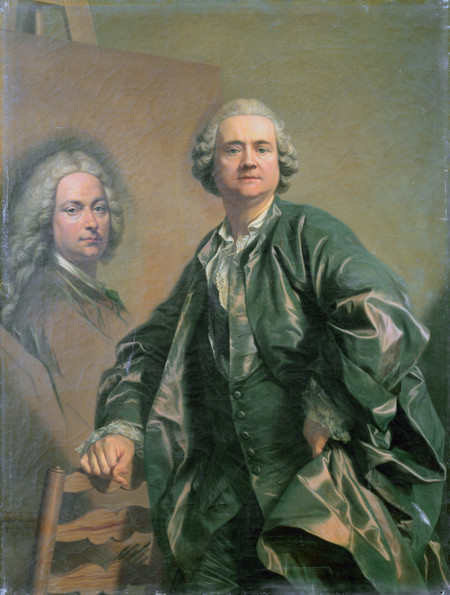
Loo, Louis-Michel van
Author

Loo, Louis-Michel van

(Toulon, 1707 - Paris, 1771)

Loo, Louis-Michel van. Toulon (France), 02.03.1707 - Paris (France), 20.03.1771. Painter.

French painter descended from a family of Dutch artists dating back to the 16th century, of whom Jacob van Loo stood out as a 17th-century master of genre paintings and portraits. Louis-Michel trained in the workshops that were opened one after another by his father, Jean-Baptiste Van Loo, in Turin and Rome, having previously worked, like other members of the saga, in various towns in Provence. To complete his training, the young artist travelled to Paris and entered the Académie Royale, where he won the Grand Prix de Rome in 1726. He returned to the Eternal City in 1727 with his brother François and his uncle...

Read more

Media